Bill· HRH.R. 10241 (119th)referred
I–47 Future Interstate Act of 2026
United States · United States Congress · 3 September 2026
The world's political record
Person
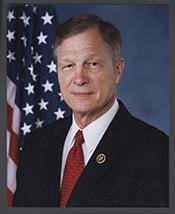
United States · Official source
2,308 records where Brian Babin is listed as a sponsor, author, or other actor. Search with topics and years
United States · United States Congress · 3 September 2026
United States · United States Congress · 2 September 2026
United States · United States Congress · 13 August 2026
United States · United States Congress · 22 July 2026
United States · United States Congress · 16 July 2026
United States · United States Congress · 15 July 2026
United States · United States Congress · 15 July 2026
United States · United States Congress · 29 June 2026
United States · United States Congress · 25 June 2026
United States · United States Congress · 24 June 2026
United States · United States Congress · 18 June 2026
United States · United States Congress · 18 June 2026
United States · United States Congress · 15 June 2026
United States · United States Congress · 10 June 2026
United States · United States Congress · 9 June 2026
United States · United States Congress · 4 June 2026
United States · United States Congress · 3 June 2026
United States · United States Congress · 3 June 2026
United States · United States Congress · 22 May 2026
United States · United States Congress · 21 May 2026
United States · United States Congress · 14 May 2026
United States · United States Congress · 14 May 2026
United States · United States Congress · 13 May 2026
United States · United States Congress · 11 May 2026
United States · United States Congress · 7 May 2026
This concurrent resolution expresses support for law enforcement officers. It also appreciates the contributions and recognizes the sacrifices of law enforcement officers.
United States · United States Congress · 7 May 2026
United States · United States Congress · 4 May 2026
This resolution expresses support for police officers and other law enforcement personnel. The resolution further recognizes law enforcement officers across the United States in the pursuit of preserving safe and secure communities; the need to ensure that such officers have the equipment, training, and resources necessary to protect their health and safety while they are protecting the public; and the law enforcement community for acts of sacrifice and heroism. The resolution expresses condolences and appreciation to the loved ones of each law enforcement officer who has made the ultimate sacrifice in the line of duty.
United States · United States Congress · 30 April 2026
United States · United States Congress · 28 April 2026
United States · United States Congress · 23 April 2026
United States · United States Congress · 23 April 2026
Kayleigh’s Law Act of 2026 This bill establishes a federal statutory framework to require federal courts to issue an order prohibiting contact with a victim (i.e., a no-contact order) in the case of a defendant who is convicted of certain violent crimes or sex crimes. Specifically, in the case of a defendant convicted of a felony offense that is a crime of violence or that involves a sexual act or sexual conduct, on a motion by the victim or federal government, the court must issue a no-contact order. Under the framework, the no-contact order must be imposed at sentencing and be in effect for the lifetime of the defendant unless it is terminated or suspended in accordance with specified procedures. Additionally, no fee may be assessed or collected from a victim in connection with the issuance of a no-contact order.
United States · United States Congress · 22 April 2026
United States · United States Congress · 21 April 2026
United States · United States Congress · 21 April 2026
United States · United States Congress · 21 April 2026
United States · United States Congress · 16 April 2026
United States · United States Congress · 9 April 2026
United States · United States Congress · 30 March 2026
Provider Reimbursement Stability Act of 2026 This bill allows for larger annual adjustments to the Medicare physician fee schedule. It also requires the Centers for Medicare & Medicaid Services (CMS) to make certain corrections to compensate for expenditures under the fee schedule that exceed a certain amount in a given year, and it limits how much certain adjustment factors may vary each year. Current law prohibits annual adjustments to the Medicare physician fee schedule that would result in a more than $20 million difference between the adjusted amount and the non-adjusted amount of total expenditures. The bill increases this threshold to $54.3 million beginning in 2027, with adjustments for inflation every five years beginning in 2032. Additionally, for certain services, the bill requires the CMS to determine the difference between expenditures based on estimated utilization of the service and expenditures based on actual utilization. If this difference exceeds a certain percentage of total expenditures under the fee schedule, the CMS must reconcile this difference by adjusting payments for the following year. This requirement applies to services for which payment was bundled with another service and there was a separate or add-on payment during the previous year. Finally, the CMS must update the prices and rates of each category of direct costs that affect payments (e.g., prices of equipment) at least every five years, with updates made to each category in the same year. The bill also prohibits the CMS from varying a certain adjustment factor by more than 2.5% each year.
United States · United States Congress · 12 March 2026
United States · United States Congress · 5 March 2026
United States · United States Congress · 5 March 2026
United States · United States Congress · 25 February 2026
Gun Owner Registration Information Protection Act This bill prohibits federal funding of, or support for, state databases that list (1) firearms lawfully owned or possessed by individuals, or (2) individuals who lawfully own or possess firearms.
United States · United States Congress · 24 February 2026
United States · United States Congress · 23 February 2026
This resolution supports the designation of National FFA (Future Farmers of America) Week. It also celebrates the 50th anniversary of the chartering of Alaska as a State FFA Association of the National FFA Organization.
United States · United States Congress · 23 February 2026
United States · United States Congress · 20 February 2026
Airspace Location and Enhanced Risk Transparency Act of 2026 or the ALERT Act This bill addresses aviation safety by increasing requirements for aircraft tracking and communication using Automatic Dependent Surveillance-Broadcast (ADS-B) technology and expanding oversight. As background, ADS-B for broadcasting (Out) and receiving (In) transmits information (e.g., location and weather) among aircraft and air traffic control (ATC). The bill requires the Department of Defense (DOD) and the Department of Transportation (DOT) to enter into an agreement regarding the use of collision prevention technologies on DOD aircraft. The agreement must require the use of ADS-B Out as the default practice for DOD helicopters operating in the national airspace, unless such use would affect operational security. For DOD helicopters that are carrying out special missions in the Washington, DC, metropolitan area and are exempt from ADS-B Out transmission requirements, DOD must coordinate with DOT to conduct a safety risk assessment and implement appropriate mitigations. By December 31, 2031, DOD aircraft (other than certain special mission aircraft) must be equipped with and operating integrated ADS-B In technology. With respect to civil aircraft, by December 31, 2031, the Federal Aviation Administration (FAA) must generally require aircraft that are currently required to be equipped with ADS-B Out to also be equipped with ADS-B In. Additionally, among other requirements, the FAA must establish time-on-position limits for supervisory ATC personnel; establish a process to timely notify parties involved in certain near-miss incidents; and evaluate and revise, as necessary, helicopter routes around Ronald Reagan Washington National Airport.
United States · United States Congress · 5 February 2026
United States · United States Congress · 30 January 2026
Safeguard American Voter Eligibility Act or the SAVE America Act This bill requires individuals to provide documentary proof of U.S. citizenship when registering to vote, and requires photo identification to vote, in federal elections. Specifically, the bill prohibits states from accepting and processing an application to register to vote in a federal election unless the applicant presents documentary proof of U.S. citizenship. The bill specifies what documents are considered acceptable proof of U.S. citizenship, such as identification that complies with the REAL ID Act of 2005 that indicates U.S. citizenship. Further, the bill (1) prohibits states from registering an individual to vote in a federal election unless, at the time the individual applies to register to vote, the individual provides documentary proof of U.S. citizenship; and (2) requires states to establish an alternative process to demonstrate U.S. citizenship. Each state must take affirmative steps on an ongoing basis to ensure that only U.S. citizens are registered to vote, which shall include establishing a program to identify individuals who are not U.S. citizens using information supplied by certain sources. Additionally, states must remove noncitizens from their official lists of eligible voters. The bill (1) provides for a private right of action for certain violations, and (2) establishes criminal penalties for certain offenses. Individuals voting in federal elections must present an eligible photo identification document. An individual who votes by absentee ballot must submit a copy of their identification document with both the request for, and the submission of, the absentee ballot.
United States · United States Congress · 30 January 2026
United States · United States Congress · 30 January 2026
NASA Reauthorization Act of 2026 This bill reauthorizes through FY2026 the programs and activities of the National Aeronautics and Space Administration (NASA). The bill also directs NASA to continue planning for the eventual deorbit of the International Space Station (ISS) and to continue lunar and Mars exploration missions. Specifically, the bill requires NASA to submit to Congress a strategy for research and operations in low-Earth orbit. ( Low-Earth orbit generally encompasses an altitude of up to 2,000 kilometers.) With respect to the ISS, which sits in low-Earth orbit, NASA must generally maintain a flight cadence necessary to support productive use of the station through its operational lifetime. The bill provides statutory authority for NASA's acquisition of ISS deorbit capabilities from a commercial entity and specifies that NASA must not, to the greatest extent practicable, reduce or deprioritize ISS activities. (In 2024, NASA contracted with SpaceX for the development of an ISS deorbit vehicle.) Further, NASA must report on the risk to science and technology research posed by lack of access to a low-Earth orbit platform (i.e., after retirement of the ISS). NASA may continue to enter into agreements with U.S. commercial entities for the development of one or more private, low-Earth orbit platforms. Separately, the bill directs NASA to continue efforts to support crewed lunar landings and Mars explorations, including through partnerships with the private sector (i.e., the Moon to Mars and Artemis programs). Finally, NASA must continue researching advanced air mobility, unmanned aircraft systems (i.e., drones), and hypersonic technologies.