Amendment· HAMDTHAMDT 153 (107th)open
An amendment to increase funding for Hispanic-serving institutions by an amount of $16,508,000.
United States · United States Congress
The world's political record
Person
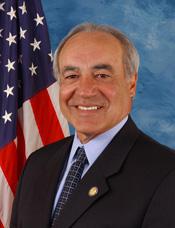
United States · Official source
2,620 records where Rep. Baca, Joe [D-CA-43] is listed as a sponsor, author, or other actor. Search with topics and years
United States · United States Congress
United States · United States Congress
United States · United States Congress
United States · United States Congress
United States · United States Congress
United States · United States Congress
United States · United States Congress · 17 December 2012
Urges European governments and the European Union (EU) to: (1) designate Hizballah as a terrorist organization so that Hizballah cannot use EU territories for fund raising, recruitment, and propaganda; and (2) impose sanctions on Hizballah for providing material support to Bashar al Assad's violent repression against the people of Syria. Supports Bulgaria's investigation into the July 18, 2012, terrorist attack in Burgas, and urges the President to provide related diplomatic, intelligence, and law enforcement support. Supports Bulgaria as a member of the North Atlantic Treaty Organization (NATO) and urges the United States, NATO, and the EU to work with Bulgaria to safeguard its territory and citizens from terrorism. Urges the President to make available to European allies and the European public information about Hizballah's terrorist activities, efforts to subvert democracy in Lebanon, and material support for Bashar al Assad's campaign of violence in Syria.
United States · United States Congress · 13 November 2012
Designates the facility of the United States Postal Service located at 225 Simi Village Drive in Simi Valley, California, as the "Postal Inspector Terry Asbury Post Office Building."
United States · United States Congress · 13 September 2012
Foreclosure Accountability and Transparency Act - Prohibits commencement of a foreclosure action with respect to a federally related residential mortgage loan secured by a first or subordinate lien unless the person commencing the foreclosure complies with specified requirements pertaining to borrower: (1) notification, (2) assistance obtained from a Department of Housing and Urban Development (HUD)-approved housing counseling agency, and (3) application for loan modification or commencement of an alternative to foreclosure. Makes a violation of this Act a bar to a foreclosure action. Requires the person who commenced a foreclosure action, at the completion of such action, to certify that all federal, state, and local laws and regulations were followed and submit all applicable documentation in connection with such action to: (1) the borrower who was a party to the foreclosure action, (2) the recorder's office in the muncipality where the property securing the loan in connection with the covered residential mortgage is located, and (3) the Secretary of HUD.
United States · United States Congress · 10 September 2012
Flexible Refinancing for American Families Act of 2012 - Directs the Federal National Mortgage Association (Fannie Mae) and the Federal Home Loan Mortgage Corporation (Freddie Mac) (government-sponsored enterprises or GSEs) each to carry out a one-year program providing for the refinancing of qualified single-family housing mortgages it owns through a refinancing mortgage having a 50-year term (and for the purchase of and securitization of such refinancing mortgages) in accordance with this Act and the policies and procedures that the Director of the Federal Housing Finance Agency shall establish. Permits the mortgagee, however, upon written 90-day advance notice to the mortgagor, to require payment in full of a 50-year mortgage only 30 years after the beginning of its amortization. Defines a qualified mortgage as one, regardless of whether the mortgagor is current on payments due or in default, that: (1) is an existing first mortgage for purchase of, or refinancing another first mortgage on, a one- to four-family dwelling, including a condominium or a share in a cooperative ownership housing association, that is occupied by the mortgagor as principal residence; (2) is owned or guaranteed by the particular GSE; and (3) was originated on or before enactment of this Act. Specifies the terms and conditions of a refinancing mortgage, including a 50-year term to maturity and a prohibition on borrower fees. Requires waiver or forgiveness of all fees and penalties related to any default or delinquency on the original mortgage. Requires a GSE to pay a fee of up to $1,000 to the servicer of a qualified mortgage refinance. Prohibits any requirement of a property appraisal.
United States · United States Congress · 2 August 2012
Amends the Internal Revenue Code, with respect to the low-income housing tax credit, to qualify for such credit low-income housing units that are available to individuals who have attained the age of 62 and whose incomes are 140% or less of the income limitation required for occupants of such housing units.
United States · United States Congress · 2 August 2012
Expresses the sense of the House of Representatives that Congress should reject the provisions of H.R. 6083, as ordered reported by the House Committee on Agriculture, that reduce the availability or amount of benefits provided under the supplemental nutrition assistance program (SNAP, formerly the food stamp program) in effect under the Food and Nutrition Act of 2008.
United States · United States Congress · 1 August 2012
Designates the facility of the United States Postal Service located at 211 Hope Street in Mountain View, California, as the "Lieutenant Kenneth M. Ballard Memorial Post Office."
United States · United States Congress · 26 July 2012
Fair Minimum Wage Act of 2012 - Amends the Fair Labor Standards Act of 1938 (FLSA) to increase the federal minimum wage for employees to: (1) $8.10 an hour on the first day of the third month after the enactment of this Act; (2) $8.95 an hour after one year; (3) $9.80 an hour after two years; and (4) the amount determined by the Secretary of Labor (based on increases in the Consumer Price Index) after three years, and annually thereafter. Increases the federal minimum wage for tipped employees to $3.00 an hour for one year on the first day of the third month after the enactment of this Act. Provides a formula for subsequent annual adjustments of the wage increase to ensure that it remains equal to 70% of the wage in effect under FLSA for other employees. Directs the Secretary of Labor, 60 days before any increase in the minimum wage, to publish it in the Federal Register and on the Department of Labor's website.
United States · United States Congress · 23 July 2012
Designates the U.S. courthouse located at 333 West Broadway Street in San Diego, California, as the "James M. Carter and Judith N. Keep United States Courthouse."
United States · United States Congress · 18 July 2012
Consumer Credit Access, Innovation, and Modernization Act - Directs the Comptroller of the Currency to charter qualified nondepository creditors known as National Consumer Credit Corporations (Credit Corporations) to offer financial products or services. Requires a qualified nondepository creditor seeking a federal charter to submit an application which includes in part: (1) a business plan for at least a three-year period with its primary business activities serving underserved consumers and small businesses; (2) a market demand forecast, the intended customer base, competition, economic conditions, financial projections, and business risks; (3) a marketing plan that describes the types of financial products or services such creditor intends to offer; and (4) adequate capital structure. Directs the Comptroller to: (1) ensure that Credit Corporations focus their business operations primarily on providing underserved consumers a variety of affordable and commercially viable financial products or services, including some that facilitate personal savings and enhance the credit record of such consumers; (2) facilitate business partnerships among Credit Corporations, insured depository institutions, other nondepository creditors, third-party service providers and vendors, and nonprofit organizations in order to ensure greater credit access for underserved consumers and small businesses; and (3) examine and supervise the Credit Corporations. Requires Credit Corporations to make available to each consumer to whom a financial product or service is being offered: (1) information on how a consumer may obtain financial counseling services, the benefits of following a regular personal savings program, and how consumers can improve their credit ratings; (2) disclose clearly and conspicuously in the loan agreement the true cost of the loan, including all interest, fees, and loan related charges; and (3) offer an underserved consumer who is unable to repay an extension of credit with a loan repayment term of less than 120 days, an extended repayment plan, at no cost to the consumer, at least once in a 12-month period. Prohibits specified practices. Prescribes: (1) a national consumer credit corporation regulatory fee, (2) a usury limit, and (3) civil penalties. Grants enforcement powers to the Comptroller and state attorneys general.
United States · United States Congress · 18 July 2012
Makes: (1) emergency supplemental appropriations for obesity programs of the Centers for Disease Control and Prevention (CDC), and (2) offsetting rescissions of prior year unobligated balances of specified accounts.
United States · United States Congress · 13 July 2012
Help Separated Families Act of 2012 - Amends part E (Foster Care and Adoption Assistance) of title IV of the Social Security Act to: (1) require state child protection standards to ensure that the immigration status alone of a parent, legal guardian, or relative shall not disqualify the parent, legal guardian, or relative from being a placement for a child; and (2) require the state procedures for criminal records checks to require the state to accept foreign identification documents as sufficient identification for purposes of initiating a criminal records check or a fingerprint-based check. Expresses the sense of Congress that the child welfare agency of a state, or of any county or other political subdivision of a state, should grant a waiver of any requirement which would prevent the placement of a child with a relative of the child, on the basis of a minor legal infraction, if the relative would otherwise be considered eligible for such a placement. Requires the state plan for foster care and adoption assistance to notify relatives seeking placement of a child that their immigration status will not be questioned, except to the extent necessary in determining eligibility for relevant services or programs. Prohibits a state or local government agency from filing for termination of parental rights in foster care cases based on the removal of the parent from the United States or the parent's involvement in an immigration proceeding, unless: (1) the state (or local agency) has made reasonable efforts to notify of the intention to file such a petition any parent of the child who has been removed from the United States, and any adult relative of the child, including through the diplomatic or consular offices of the country to which the parent was removed, and to reunify the child with any such parent or relative; or (2) the parent is unfit or unwilling to be a parent of the child.
United States · United States Congress · 12 July 2012
Victory for Veterans Stamp Act of 2012 - Directs the Postal Service to issue a special stamp, to be called the Victory for Veterans Stamp, at a cost of 25 cents each. Makes such Stamp invalid for postage. Requires Stamp sale proceeds to be used as follows: (1) one-third for funding Department of Veterans Affairs (VA) veterans' vocational rehabilitation programs, (2) one-third to the general fund of the Treasury for deficit reduction, and (3) one-third for the Postal Service for modernization and fiscal administration. Requires such Stamp to be made available to the public within six months after the enactment of this Act.
United States · United States Congress · 29 June 2012
Expresses support for the designation of National Sarcoma Awareness Month.
United States · United States Congress · 27 June 2012
Prostate Cancer Detection Research and Education Act - Requires the Secretary of Health and Human Services (HHS), acting through the Director of the National Institutes of Health (NIH), to establish an advisory council on prostate cancer to draft a plan for the development and validation of an accurate test or tests to detect and diagnose prostate cancer. Terminates the advisory council on December 31, 2016. Requires the Director of the National Institutes of Health (NIH) to coordinate and intensify research in accordance with the plan developed under this Act, with particular attention provided to leveraging existing research to develop and validate a test or tests, such as biomarkers or imaging, to detect and accurately diagnose prostate cancer. Requires the Secretary to: (1) carry out a national campaign to increase the awareness and knowledge of prostate cancer, and (2) award grants to nonprofit private entities to test alternative outreach and education strategies to increase the awareness and knowledge of Americans with respect to prostate cancer.
United States · United States Congress · 21 June 2012
USPSTF Transparency and Accountability Act of 2012 - Amends the Public Health Service Act to expand the scope and responsibilities of the United States Preventive Services Task Force to require it to: (1) publish research plans to guide its systematic review of evidence relating to the effectiveness of preventive services; (2) make available reports on such evidence and recommendations for public comment; (3) establish a system for grading preventive care products and services (Grades A, B, C, and D and a Grade I for insufficient information); and (4) convene a preventive services stakeholders board to advise it on developing, updating, publishing, and disseminating evidence-based recommendations on the use of clinical preventive services. Provides for the disclosure and management of conflicts of interest by members of the Task Force and the preventive services stakeholders board. Directs the Government Accountability Office (GAO) to submit a report that: (1) lists current recommendations of the Task Force; (2) compares Task Force recommendations and recommendations of other federal health agencies, national medical professional societies, and patient and disease advocacy organizations; and (3) analyzes the impact of Task Force recommendations on public and private insurance coverage, access, and outcomes, including the impact of morbidity and mortality. Amends title XVIII (Medicare) of the Social Security Act to eliminate the discretion of the Secretary of Health and Human Services (HHS) to deny payment for a Medicare preventive service that has not received an A, B, C, or I grade by the Task Force.
United States · United States Congress · 20 June 2012
TIGER Grants for Job Creation Act - Makes supplemental appropriations of $500 million for each of FY2013 and FY2014 for the Department of Transportation (DOT) for the Transportation Investment Generating Economic Recovery (TIGER) competitive grant program for national infrastructure investment projects for states, local governments, and transit agencies.
United States · United States Congress · 20 June 2012
Recognizes the 40th anniversary of title IX (prohibits sex discrimination in any educational program or activity receiving federal financial assistance, including high school and college sports) and its groundbreaking influence for females throughout the United States. Affirms equal gender treatment of males and females. Declares that the House of Representatives strives to work towards a time when females can achieve true equality in athletics, education, and employment.
United States · United States Congress · 18 June 2012
Recognizes and commends the nation's Catholic sisters, whose inspiring legacy of service continues to enrich our nation. Honors the contributions of Catholic sisters to this country. Stands in solidarity with Catholic sisters' mission to work toward a more just society for all of God's people.
United States · United States Congress · 8 June 2012
Recognizes: (1) the critical importance of the Operational Reserve as a component of the Armed Forces, particularly as a means of preserving combat power during a time of budget austerity; and (2) the dual-status, state-federal National Guard as the foundation of the Operational Reserve and of military manpower. Expresses support for making the Operational Reserve permanent. Repudiates proposals to return the Reserve Components to a diminished or purely strategic role in national security. Affirms the growth of the Operational Reserve as circumstances warrant.
United States · United States Congress · 7 June 2012
National Desert Storm and Desert Shield War Memorial Act - Authorizes the National Desert Storm Memorial Association to establish a commemorative work on federal land in the District of Columbia to commemorate and honor those who, as members of the Armed Forces, served on active duty in support of Operation Desert Storm or Operation Desert Shield. Prohibits the use of federal funds to pay any expense to establish the commemorative work.
United States · United States Congress · 7 June 2012
International Violence Against Women Act of 2012 - Directs the Secretary of State to designate an Ambassador-at-Large for Global Women's Issues. Directs the Secretary to develop a comprehensive strategy to identify countries with significant levels of violence against women and girls that have the government or nongovernmental organizational capacity to implement gender-based violence prevention and response program activities. Authorizes assistance for such countries and urges that 10% of such assistance go to community-based and women's nongovernmental organizations in recipient countries. Authorizes the Secretary to provide guidance to the Secretary of Defense (DOD) on how to: (1) incorporate training on prevention and response into the basic training curricula of foreign military forces and judicial officials, and (2) ensure that U.S. assistance to units involved in regional or multilateral peacekeeping operations includes such training. Directs the Secretary and the Administrator of the United States Agency for International Development (USAID) to ensure that: (1) assistance made available for humanitarian relief, conflict mitigation, and post-conflict reconstruction prevents and responds to violence against women and girls; and (2) assistance made available for disarmament, demobilization, and rehabilitation provides protection in demobilization and transit centers and essential medical care and psychosocial support. Directs the Secretary to: (1) identify critical or widespread incidents of violence against women and girls in situations of armed conflict; (2) determine emergency response measures; and (3) brief Congress, upon request, on the implementation of such emergency response measures.
United States · United States Congress · 18 May 2012
Transfer Control of Ontario Airport Now Act - Directs the city of Los Angeles to transfer the LA/Ontario International Airport to the city of Ontario, California, within 60 days of a determination by the Administrator of the Federal Aviation Administration (FAA) authorizing such transfer. Declares that if the transfer does not occur within the 60-day period: (1) the Secretary of Transportation (DOT) shall be prohibited from approving an airport improvement project (AIP) grant to the Los Angeles World Airports (LAX) until such transfer takes place or the sale of the airport is finalized, and (2) an arbitration commission shall be established to determine the fair market value of the LA/Ontario International Airport. Requires the city of Los Angeles to sell such airport to the city of Ontario no later than 60 days after the Administrator's determination prohibiting the transfer of such airport to the city of Ontario and establishment of its fair market value. Directs the Secretary to continue to withhold AIP grants from LAX until such airport is sold to the city of Ontario.
United States · United States Congress · 18 May 2012
Levee Vegetation Review Act of 2012 - Directs the Secretary of the Army to undertake a comprehensive review of the Corps of Engineers policy guidelines on vegetation management for levees in order to determine whether current federal policy is appropriate for all regions of the United States. Requires the Secretary to examine the guidelines in view of factors including: (1) the varied interests and responsibilities in managing flood risks; (2) preserving, protecting, and enhancing natural resources; (3) protecting the rights of Native Americans pursuant to treaties and statutes; and (4) factors that promote and allow for consideration of potential variances from national guidelines on a regional or watershed basis. Directs Corps of Engineers Regional Integration Teams representing districts, divisions, and headquarters, in consultation with state and federal resources agencies and with participation by local agencies, to recommend to the Chief of Engineers vegetation management policies for levees that conform with state and federal laws and other applicable requirements. Directs the Secretary to: (1) solicit and consider the views of the National Academy of Engineering on the engineering, environmental, and institutional considerations underlying the guidelines; and (2) revise the guidelines based on the results of the review and report to Congress. Requires the revised guidelines to: (1) provide a practical process for approving regional or watershed variances from the national guidelines, and (2) be incorporated into a proposed manual.
United States · United States Congress · 17 May 2012
Eliminate Privacy Notice Confusion Act - Amends the Gramm-Leach-Bliley Act to exempt from its annual privacy policy notice requirement any financial institution which: (1) provides nonpublic personal information only in accordance with specified requirements, (2) does not share information with affiliates under the Fair Credit Reporting Act, and (3) has not changed its policies and practices with regard to disclosing nonpublic personal information from those disclosed in the most recent disclosure sent to consumers. Relieves a financial institution from being required to provide any disclosure if it is licensed by a state and is either subject, or becomes subject in the future, to existing regulation of consumer confidentiality that prohibits disclosure of nonpublic personal information without knowing and express consent of the consumer in the form of laws, rules, or regulation of professional conduct or ethics promulgated either by the court of highest appellate authority or by the principal legislative body or regulatory entity of any state.
United States · United States Congress · 17 May 2012
Voter Empowerment Act of 2012 - Voter Registration Modernization Act of 2012 - Amends the National Voter Registration Act of 1993 (NVRA) to require each state to make available official public websites for online voter registration. Authorizes automated voter registration of certain individuals and establishes other initiatives to promote voter registration, such as same day registration and voter registration of individuals under 18 years of age. Amends the federal criminal code to prohibit hindering, interfering with, or preventing voter registration. Amends the Help America Vote Act of 2002 (HAVA) to establish requirements for states to promote access to voter registration and voting for individuals with disabilities, including a single office for providing related information. Directs the Election Assistance Commission (EAC) to make grants to eligible states to conduct pilot programs enabling individuals with disabilities to register to vote and vote privately and independently at their own residences (including by telephone). Amends HAVA to reauthorize the program of grants to state and local governments to assure voting access for individuals with disabilities. Amends the federal criminal code to prohibit state or local election officials from preventing an individual from registering or voting in any federal election (voter caging), or from permitting a formal challenge under state law to an individual's registration status or eligibility to vote, if the basis for such decision is evidence consisting of: (1) a voter caging document or voter caging list, (2) an unverified match list, (3) an error or omission on voter application or registration documents that is not material to an individual's eligibility to vote, or (4) any other evidence so designated by the Commission. Amends the federal criminal code to prohibit a person, including an election official, from knowingly and willfully attempting to or depriving or defrauding the residents of a state of their free and fair exercise of the right to vote by the communication of election-related information that is known by the person to be materially false, fictitious, or fraudulent. Increases the penalty for voter intimidation. Declares that the right of an individual U.S. citizen to vote in any federal election shall not be denied or abridged because that individual has been convicted of a criminal offense unless he or she is serving a felony sentence in a correctional institution at the time of the election. Prescribes enforcement of this right by public or private civil action. Requires each state to notify in writing any individual convicted of a criminal offense under state law, upon release from state custody or upon sentence to probation, that he or she has the right to vote in a federal election and so may register to vote. Voter Confidence and Increased Accessibility Act of 2012 - Amends HAVA to revise requirements for the audit capacity of voting systems, particularly those for a permanent paper record. Requires the voting system to require the use of an individual, durable, voter-verified paper ballot of the voter's vote that shall be marked and made available for inspection by the voter before the voter's vote is cast and counted, and which shall be counted by hand or read by an optical character recognition device or other counting device. Requires the voting system to provide the voter with an opportunity to correct any system-made error in the voter-verified paper ballot before it is permanently preserved. Requires the Director of the National Science Foundation (NSF) to make grants to eligible entities to study, test, and develop accessible ballot voting, verification, and casting mechanisms and devices and best practices to enhance the accessibility of paper ballot voting and verification mechanisms for individuals with disabilities, for voters whose primary language is not English, and for voters with difficulties in literacy. Prescribes requirements for: (1) publication of poll tapes, (2) treatment of ballots cast at early voting sites and of absentee ballots, and (3) the counting of provisional ballots that will be treated as votes. Prescribes laboratory conflict-of-interest requirements and prohibitions. Requires the NSF Director to make grants to eligible entities to conduct research on the development of election-dedicated voting system software. Requires each state, except when the winning candidate had no opponent or received 80% or more of the votes, to administer audits of federal election results, without advance notice to the precincts selected, consisting of random hand counts of the voter-verified paper ballots. Requires the Election Auditor of a state, as soon as practicable after the completion of an audit, to submit the results to EAC for publication. Prohibits certification of the results of any election until completion of audits. Amends HAVA to: (1) add requirements for counting provisional ballots, (2) require each state to allow early voting and facilitate the ability of voters to vote by mail. Amends the Servicemembers Civil Relief Act to extend the guarantee of voting residency to family members of absent military personnel. Amends the Uniformed and Overseas Citizens Absentee Voting Act (UOCAVA) with respect to pre-election reports on availability and transmission of absentee ballots. Revises the 45-day absentee ballot transmission rule. Permits: (1) use of a single absentee ballot application for subsequent elections, and (2) application of the UOCAVA to Commonwealth of Northern Mariana Islands. Entitles to leave a federal employee who serves as a poll worker. Directs the EAC to: (1) make a grant to each eligible state for poll-worker recruitment and training, and (2) develop materials for a model state poll worker training program. Amends HAVA to make available to any person aggrieved by a violation of uniform and nondiscriminatory election technology and administration requirements the option to file a complaint with the Attorney General or pursue a private right of action to enforce such requirements. Amends the Federal Election Campaign Act of 1971 to make it unlawful for a chief state election administration official, unless he or she or a family member is a candidate, to take an active part in political management or in a political campaign for federal office over which such official has supervisory authority. Amends the NVRA to treat universities as voter registration agencies. Amends the HAVA to establish minimum notification requirements on behalf of voters affected by polling place changes. Directs the Attorney General to: (1) coordinate the establishment of a state-based response system for responding to questions and complaints from individuals voting or seeking to vote, or registering to vote or seeking to, in federal elections; (2) establish and operate a toll-free telephone service to connect directly to such response system; and (3) appoint a Voter Hotline Task Force. Amends HAVA to: (1) reauthorize and extend the EAC, and (2) repeal its exemption from certain government contracting requirements.
United States · United States Congress · 17 May 2012
Saving Taxpayers from Unnecessary GSE Bulk Sale Programs Act of 2012 - Prohibits the Director of the Federal Housing Finance Agency from: (1) disposing of any real estate owned by it, by the Federal National Mortgage Association (Fannie Mae), or by the Federal Home Loan Mortgage Corporation (Freddie Mac) located in California under any initiative for bulk sales of such real estate; and (2) carrying out such initiative.
United States · United States Congress · 16 May 2012
Amends provisions of federal law relating to the U.S. Postal Service (USPS) and its employees to: (1) require the transfer of any surplus government contributions to the Federal Employees' Retirement System (FERS) in FY2012-FY2014 for postal employees to USPS for repayment of debt obligations and to make required payments to the Postal Service Retiree Health Benefits Fund and to the Civil Service Retirement and Disability Fund, and (2) authorize USPS to provide nonpostal services. Expresses the sense of Congress that if USPS is permitted to offer its employees health benefits under a program separate from the Federal Employees Health Benefits Program, the Postmaster General shall work with employee representatives in exclusive bargaining units to establish such a program.
United States · United States Congress · 10 May 2012
Recognizes the need for research into the causes, treatment, and a cure for rhabdomyosarcoma. Commends hospitals, community clinics, educational institutes, and other organizations that are working to increase awareness of rhabdomyosarcoma and conducting research for methods to help patients suffering from it. Expresses support for the designation of Claire Frick Rhabdomyosarcoma Awareness Month.
United States · United States Congress · 9 May 2012
S.O.S. (Save Our Schools) Act of 2012 - Amends the Elementary and Secondary Education Act of 1965 to eliminate the requirement that states conduct the yearly student academic assessments in mathematics, reading or language arts, and science that are used in determining whether states, local educational agencies (LEAs), and schools are making adequate yearly progress (AYP) toward state academic performance standards. Eliminates related requirements, such as those subjecting LEAs and schools to certain improvements, corrective actions, or restructuring, if they fail to make AYP toward state academic performance standards for two consecutive years or more.
United States · United States Congress · 8 May 2012
Pregnant Workers Fairness Act - Declares it an unlawful employment practice for employers, employment agencies, labor organizations, and other specified entities to: (1) not make reasonable accommodations to known limitations related to the pregnancy, childbirth, or related medical conditions of job applicants or employees, unless the accommodation would impose an undue hardship on such an entity's business operation; (2) deny employment opportunities based on the need of the entity to make such reasonable accommodations; (3) require such job applicants or employees to accept an accommodation that they choose not to accept; or (4) require such employees to take leave if another reasonable accommodation can be provided to their known limitations. Sets forth enforcement procedures and remedies under the Civil Rights Act of 1964, Congressional Accountability Act of 1995, Government Employee Rights Act of 1991, and the rights and protections extended to presidential offices. Directs the Equal Employment Opportunity Commission (EEOC) to issue regulations to carry out this Act, including the identification of reasonable accommodations addressing known limitations related to pregnancy, childbirth, or related medical conditions.
United States · United States Congress · 8 May 2012
Relief for Educators To Adjust if Necessary Act or RETAIN Act - Amends part A of title IV (Flexibility and Accountability) of the Elementary and Secondary Education Act of 1965 (ESEA) to replace the existing program under subpart 2 with a new Funding Flexibility for States and High-Need Local Educational Agencies program. Allows states to use funds that they receive under certain ESEA and Education Jobs Fund programs to provide funds to their high-need local educational agencies (LEAs) to prevent the layoff or termination of teachers or other staff in such LEAs. Lists the programs from which states may use funds to prevent such layoffs or terminations as: school improvement programs, under part A of title I; the Reading First program, under subpart 1 of part B of title I; the Education of Migratory Children program, under part C of title I; Prevention and Intervention Programs for Children and Youth who are Neglected, Delinquent, or At-Risk, under part D of title I; the Teacher and Principal Training and Recruiting Fund program, under part A of title II; the Mathematics and Science Partnerships program, under part B of title II; the English Language Acquisition, Language Enhancement, and Academic Achievement Act program, under part A of title III; the 21st Century Community Learning Centers program, under part B of title IV; Innovative programs, under part A of title V of the ESEA; and Education Jobs Fund programs. Allows high-need LEAs to use funds that they receive under certain ESEA and Education Jobs Fund programs to prevent the layoff or termination of teachers or other staff in such LEAs. Lists the programs from which high-need LEAs may use funds to prevent such layoffs or terminations as: school improvement programs, under part A of title I; the Education of Migratory Children program, under part C of title I; Prevention and Intervention Programs for Children and Youth who are Neglected, Delinquent, or At-Risk, under part D of title I; the Teacher and Principal Training and Recruiting Fund program, under part A of title II; the English Language Acquisition, Language Enhancement, and Academic Achievement Act program, under part A of title III; Innovative programs, under part A of title V; Indian Education programs, under part A of title VII of the ESEA; and Education Jobs Fund programs. Prohibits states and high-need LEAs from transferring the funds to such programs if the ESEA requires them to: (1) reserve, allocate, or spend the funds for required activities; (2) provide them to eligible entities; or (3) use them for technical assistance or monitoring.
United States · United States Congress · 8 May 2012
Bring Jobs Home Act - Amends the Internal Revenue Code to: (1) grant business taxpayers a tax credit for up to 20% of insourcing expenses incurred for eliminating a business located outside the United States and relocating it within the United States, and (2) deny a tax deduction for outsourcing expenses incurred in relocating a U.S. business outside the United States. Requires an increase in the taxpayer's employment of full-time employees in the United States in order to claim the tax credit for insourcing expenses.
United States · United States Congress · 27 April 2012
Ensuring Child Care for Working Families Act of 2012 - Amends part A (Temporary Assistance for Needy Families) (TANF) of title IV of the Social Security Act to revise funding requirements for child care assistance to: (1) guarantee child care assistance for a family with a dependent child requiring such care, if the total income of the family does not exceed 200% of the poverty line and the child care assistance will enable an individual in the family to accept employment, remain employed, or participate in an education or training activity; and (2) include Indian tribes and tribal organizations as entities eligible for state grants in amounts equal to those granted to states.
United States · United States Congress · 27 April 2012
Makes the $100,000 payment limit for qualified losses under the traumatic injury protection coverage of Servicemembers' Group Life Insurance inapplicable to any loss directly caused by: (1) armed conflict, (2) training under conditions simulating armed conflict, (3) hazardous service, or (4) a traumatic event caused through an instrumentality of war.
United States · United States Congress · 27 April 2012
Gluten in Medicine Identification Act of 2012 - Amends the Federal Food, Drug, and Cosmetic Act to deem to be misbranded any drug intended for human use that contains an ingredient (other than a polyol) that constitutes or is derived from a grain or starch-containing ingredient and whose label fails to include a parenthetical statement identifying the source of the ingredient so constituted or derived.
United States · United States Congress · 27 April 2012
Expresses support for: (1) the designation of Mental Health Month, and (2) the finding of the President's Commission on Mental Health that the nation's failure to prioritize mental health is a national tragedy. Recognizes that mental well-being is as important as physical well-being for citizens, communities, businesses, and the economy. Applauds the coalescing of national and community organizations in working to promote public awareness of mental health and in providing critical information and support to the people and families affected by mental illness. Encourages organizations and health practitioners to use Mental Health Month as an opportunity to promote mental well-being and awareness, ensure access to appropriate services, and support overall quality of life for those living with mental illness.
United States · United States Congress · 24 April 2012
Social Security Equality Act of 2012 - Amends title II (Old Age, Survivors and Disability Insurance) (OASDI) of the Social Security Act to authorize the treatment of permanent partnerships between individuals of the same gender as marriage for purposes of determining entitlement to OASDI benefits.
United States · United States Congress · 19 April 2012
Native American Suicide Prevention Act of 2012 - Amends the Public Health Service Act to require a state or state-designated eligible entity, as a condition of receiving a grant or cooperative agreement for development or implementation of a statewide youth suicide early intervention and prevention strategy, to agree to consult with each federally recognized Indian tribe and tribal organization and each urban Indian organization regarding such development or implementation.
United States · United States Congress · 18 April 2012
Designates the facility of the United States Postal Service located at 19 East Merced Street in Fowler, California, as the "Cecil E. Bolt Post Office."
United States · United States Congress · 17 April 2012
Amends the Electronic Fund Transfer Act with respect to mandatory fee disclosures on automated teller machines (ATMs) operated by a person other than a financial institution holding a consumer's account. Repeals the requirement that such a fee disclosure appear in a prominent and conspicuous location on or at the ATM. Limits such requirement to appearance of a fee disclosure on the ATM screen.
United States · United States Congress · 17 April 2012
Fairness for World War II and Korean War Spouses Act - Makes the annual rate of pension paid to the surviving spouses of veterans of World War II or the Korean conflict the greater of the following amounts, reduced by the survivor's annual income: (1) the current limit applicable to surviving spouses of veterans of any period of war; or (2) the amount equal to the poverty line, as determined by the Secretary of Health and Human Services (HHS) for the prior year. Prohibits benefits paid by any federal entity from being included in the determination of annual income.
United States · United States Congress · 16 April 2012
Let's Grow Act of 2012 - Directs the Secretary of Agriculture (USDA) (Secretary) to carry out the Green and Healthy Corner Store Initiative to assist qualified convenience stores expand their offering of fruits and vegetables. Directs the Secretary to make grants to provide access to farmers' markets for communities with limited access to affordable and nutritious food, particularly areas of predominantly lower-income communities. Directs the Secretary of Health and Human Services (HHS) to establish a pilot grant program to allow local and tribal governments to conduct food security assessments. Directs the Secretary, regarding the supplemental nutrition assistance program (SNAP, formerly food stamp program), to: (1) establish a Fresh Incentive Program to improve participant access to local fruits and vegetables, and (2) provide grants to urban farmers' markets for installation of electronic benefit transfer (EBT) systems. Directs the Secretary to make grants for a Farm-to-Preschool program that fosters the connection between preschools, Head Start programs, childcare or day care centers, kindergarten readiness programs and in-home care facilities with small- or medium-sized agricultural producers to develop an industry-leading preschool nutrition education and meal program. Establishes in USDA a Healthy Food Financing Initiative to: (1) improve access to healthy foods in underserved areas; (2) create and preserve quality jobs; and (3) revitalize low-income communities by providing loans and grants to eligible food retailers to overcome the higher costs and initial barriers to entry in underserved, urban, suburban, and rural areas. Directs the Secretary to provide grants for urban and Native American community gardens. Authorizes the Secretary to: (1) make grants to convert abandoned or foreclosed property to urban agricultural use; (2) enter into an agreement with the Corporation for National and Community Service to provide the Corporation with funds to support the creation of the HarvestCorps program; and (3) make grants to establish urban farms, gardens, or aquacultural or other facilities for the production of agricultural or aquacultural products or the raising of livestock for sale in the urban area. Directs the Secretary to make grants to: (1) assist nonprofit organizations purchase and convert publicly owned land in underserved areas for use as urban farms or community gardens, and (2) implement urban agricultural workforce training programs. Extends certain payment assistance and conservation access provisions to socially disadvantaged urban farmers and ranchers. Directs the Secretary to establish: (1) an urban entrepreneurship and microenterprise program, and (2) a local farm business and market garden competitive loan program. Directs the Secretary to provide commodities to specified nonprofits to provide nutritious food to at-risk school children on weekends and during extended school holidays during the school year. (At-risk school children are those who participate in the school lunch program and reside in an area served by a school in which at least 50% of the students receive free or reduced price meals under the school lunch or breakfast programs.) Extends: (1) the commodity supplemental food program, and (2) the emergency food assistance program. Directs the Secretary to provide grants: (1) for equipment and technology to increase food bank efficiency; and (2) to schools, museums, and libraries to increase energy efficiency.
United States · United States Congress · 16 April 2012
Recognizes, on the occasion of the 60th anniversary of the Korean War, the importance of the contributions and sacrifices made by Korean War veterans. Supports the designation of 2012-2013 as the Year of the Korean War Veteran.