Bill· HRH.R. 10184 (119th)referred
Consumer Financial Protection Accountability and Reform Act of 2026
United States · United States Congress · 31 August 2026
The world's political record
Person
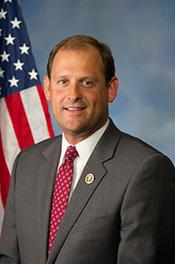
United States · Official source
1,945 records where Andy Barr is listed as a sponsor, author, or other actor. Search with topics and years
United States · United States Congress · 31 August 2026
United States · United States Congress · 10 August 2026
United States · United States Congress · 10 August 2026
United States · United States Congress · 23 July 2026
United States · United States Congress · 22 July 2026
United States · United States Congress · 10 June 2026
United States · United States Congress · 21 May 2026
United States · United States Congress · 13 May 2026
United States · United States Congress · 13 May 2026
United States · United States Congress · 11 May 2026
United States · United States Congress · 4 May 2026
This resolution expresses support for police officers and other law enforcement personnel. The resolution further recognizes law enforcement officers across the United States in the pursuit of preserving safe and secure communities; the need to ensure that such officers have the equipment, training, and resources necessary to protect their health and safety while they are protecting the public; and the law enforcement community for acts of sacrifice and heroism. The resolution expresses condolences and appreciation to the loved ones of each law enforcement officer who has made the ultimate sacrifice in the line of duty.
United States · United States Congress · 21 April 2026
United States · United States Congress · 16 April 2026
United States · United States Congress · 14 April 2026
United States · United States Congress · 9 April 2026
This resolution expresses support for tax policies that support working families and recognizes the tax relief enacted as part of the 2025 reconciliation act.
United States · United States Congress · 26 March 2026
United States · United States Congress · 26 March 2026
United States · United States Congress · 25 March 2026
United States · United States Congress · 24 March 2026
United States · United States Congress · 12 March 2026
United States · United States Congress · 9 March 2026
United States · United States Congress · 3 March 2026
United States · United States Congress · 3 March 2026
United States · United States Congress · 23 February 2026
United States · United States Congress · 23 February 2026
United States · United States Congress · 20 February 2026
United States · United States Congress · 17 February 2026
United States · United States Congress · 12 February 2026
United States · United States Congress · 12 February 2026
United States · United States Congress · 12 February 2026
United States · United States Congress · 11 February 2026
United States · United States Congress · 11 February 2026
United States · United States Congress · 16 January 2026
United States · United States Congress · 15 January 2026
United States · United States Congress · 14 January 2026
United States · United States Congress · 14 January 2026
United States · United States Congress · 13 January 2026
Developing Overseas Mineral Investments and New Allied Networks for Critical Energies Act or the DOMINANCE Act This bill establishes a Bureau of Energy Security and Diplomacy in the Department of State and authorizes several programs to address access to energy and critical minerals. The bureau must formulate and implement policies related to international energy, energy technology, critical minerals, and related supply chains. An assistant secretary is authorized to lead the bureau. The bill authorizes the State Department to establish multi-year energy security compacts with partner countries. The purpose of such compacts is to increase reliable access to energy, electricity, or critical minerals for both parties to the compact. The bill also authorizes the State Department to lead U.S. participation in a Minerals Security Partnership (MSP), whose purpose includes supporting investment in critical mineral mining, processing, and refining projects that enable critical mineral supply chains. The United States must prioritize MSP projects that advance the national and economic security interests of the United States and U.S. allies and partners. Fellowships are authorized to support (1) U.S. citizens attending foreign mining institutions in order to build the capacity of the U.S. mining workforce; and (2) foreign mining academics and professionals being placed at U.S. institutions to help advance research and development initiatives in the U.S. mining industry and expand U.S. mining education and workforce development programs.
United States · United States Congress · 13 January 2026
Fiscal State of the Nation Act This bill requires the congressional budget committees to conduct an annual joint hearing to receive a presentation from the Comptroller General regarding (1) the Government Accountability Office's audit of the financial statement of the executive branch, and (2) the financial position and condition of the federal government.
United States · United States Congress · 9 January 2026
United States · United States Congress · 7 January 2026
Main Street Capital Access Act or the Main Street Act This bill lessens and otherwise modifies banking regulations, including those regarding institution formation, supervision by federal financial regulators, and bank merger requirements. Under the bill, new banks have a three-year phase-in period to meet certain capital requirements. The bill also reduces the leverage ratio for certain rural community banks. Financial regulators must (1) tailor regulatory actions to limit burdens on financial institutions and must consider the institutions' risk profiles and business models, and (2) review their regulations more frequently and expand the scope of these reviews. The bill eases requirements regarding bank mergers, for example, by allowing financial regulators to approve certain bank mergers without considering if the merger is noncompetitive or monopolistic. The bill increases the dollar asset thresholds for various fees, reporting requirements, and other regulatory requirements so that more financial companies and banks are exempt from these requirements. For example, the bill increases the total asset threshold above which financial holding companies need Federal Reserve Board approval to acquire a company, thereby allowing for more acquisitions without board approval. The bill also raises certain asset thresholds so as to allow additional small bank holding companies to operate with higher debt levels and additional small banks to qualify for a longer examination cycle. The bill also provides flexibilities regarding the use of reciprocal deposits, the resolution of failed banks, and other regulated activities.
United States · United States Congress · 23 December 2025
United States · United States Congress · 19 December 2025
United States · United States Congress · 18 December 2025
United States · United States Congress · 18 December 2025
United States · United States Congress · 11 December 2025
United States · United States Congress · 10 December 2025
United States · United States Congress · 10 December 2025
United States · United States Congress · 10 December 2025
Tailoring and Indexing Enhanced Regulations Act of 2025 or the TIER Act of 2025 This bill increases the dollar asset thresholds for various fees, reporting requirements, and regulatory supervision applicable to certain financial companies and banks. For example, the bill increases the asset threshold above which bank holding companies and savings and loan companies must pay certain Federal Reserve Board assessments; financial holding companies need board approval to acquire a company; bank holding companies must report on the company’s financial condition to the Financial Stability Oversight Council; and bank holding companies may be subject to increased supervision if, among other things, they are found to pose a grave threat to U.S. financial stability. Periodically, the Federal Reserve Board must increase statutory thresholds and thresholds established by rule to reflect increases in the gross domestic product.
United States · United States Congress · 9 December 2025
United States · United States Congress · 4 December 2025