Law· HJRESH.J.Res. 72 (102nd)enacted
To designate December 7, 1991, as "National Pearl Harbor Remembrance Day".
United States · United States Congress · 11 January 1991
Designates December 7, 1991, as National Pearl Harbor Remembrance Day.
The world's political record
Person
United States · Official source
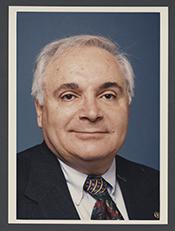
3,515 records where Rep. Bilirakis, Michael [R-FL-9] is listed as a sponsor, author, or other actor. Search with topics and years
United States · United States Congress · 11 January 1991
Designates December 7, 1991, as National Pearl Harbor Remembrance Day.
United States · United States Congress · 10 January 1991
Employee Educational Assistance Act of 1991 - Amends the Internal Revenue Code to make permanent the income tax exclusion of amounts paid under employee educational assistance programs. (Under current law the exclusion expires for taxable years beginning after December 31, 1991.)
United States · United States Congress · 10 January 1991
Authorizes and requests the President to designate the last Friday of April 1991 as National Arbor Day.
United States · United States Congress · 9 January 1991
House Commission on Congressional Reform Act - Establishes the House Commission on Congressional Reform to develop comprehensive and impartial recommendations for the House of Representatives that would improve: (1) institutional integrity; (2) accountability to the public; (3) efficiency; (4) effectiveness; and (5) any other aspects that would serve to increase public confidence in the House. Terminates the Commission within 90 days after submission of its report to the Speaker and Minority Leader of the House.
United States · United States Congress · 7 January 1991
Allows payments under the Civilian Health and Medical Program of the Uniformed Services for certain health care expenses incurred by members and former members of the uniformed services (and their dependents) who are entitled to retired or retainer pay and who are otherwise ineligible for such payments by reason of their entitlement to benefits under title XVIII (Medicare) of the Social Security Act because of a disability.
United States · United States Congress · 7 January 1991
Designates March 25, 1991, as Greek Independence Day: A National Day of Celebration of Greek and American Democracy.
United States · United States Congress · 3 January 1991
Budget Process Reform Act - Title I: Statement of Congressional Purpose - Declares that the purpose of this Act is to facilitate rational, informed, and timely decisions by the Congress. Expresses the sense of the Congress that the Federal budget process should focus the attention of policymakers and the public on the aggregate impact of Federal spending on the economy, and on the tradeoffs that must be made among priorities in order to control overall levels of spending. Declares that the budget process should contain safeguards against delay and inaction, so that temporary shut-downs of the Government may be avoided. Title II: Binding Budget Law - Requires the Congress to enact a binding budget law, in the form of a joint resolution, by April 15 of the calendar year before that in which the fiscal period commences. Requires the budget law to fit on a single page, which sets forth specific budget ceilings in major functional categories. Makes it out of order in the House of Representatives or the Senate to consider any spending bill affecting spending in a major functional category unless and until a joint resolution on the budget is enacted. Amends the Congressional Budget Act of 1974 to prohibit baseline budgeting. Requires the budget to include comparisons of current fiscal year and proposed subsequent fiscal year spending. Requires the President to submit to the Congress on or before the fifteenth day after a joint resolution on the budget is enacted a detailed budget for the fiscal period beginning on October 1 of the current calendar year. Title III: Enforcement Mechanics - Subtitle A: Supermajority Required to Break Budget Law - Requires a two-thirds majority vote in the House and the Senate to consider any spending bill prior to the enactment of the budget law. Requires the Congressional Budget Office to provide to the Congress an estimate of the costs in each major functional category of any spending bill as soon as practicable after its introduction. Limits such estimates to those bills likely to result in costs of more than $10,000,000. Requires a two-thirds affirmative vote in the House and the Senate to consider over-budget spending bills. Requires a two-thirds affirmative vote in the House and the Senate to waive any provision of this Act. Subtitle B: Limited Enhanced Rescission Authority - Amends the Impoundment Control Act of 1974 to limit the President's rescission authority to spending that is above the limits of the budget law. Subtitle C: "Blank Check" Appropriations Prohibited - Declares the intent of the Congress to end open-ended, "blank check" appropriations which typically authorize spending "such sums as may be necessary." Requires fixed-dollar appropriations for every account except social security and interest on the debt. Prohibits open-ended appropriations. Requires Executive agencies to adjust benefit levels to ensure that appropriations for entitlement programs are not exceeded. Restricts budget authority and entitlement authority to one fiscal period. Subtitle D: "Pay As You Go" Requirement for New Spending - Prohibits the Congress from considering any legislation which exceeds the budget ceiling unless it offsets such increased spending with an equal amount of reductions. Requires a two-thirds affirmative vote in the House and the Senate to waive such prohibition. Title IV: Sustaining Mechanism - Makes appropriations to provide for an automatic continuing resolution if for any account an appropriation for a fiscal period does not become law before the beginning of such period. Restricts legislation providing funding to the Committees on Appropriations. Title V: Protection of Social Security - Provides that no reduction in benefits under title II of the Social Security Act (Old Age, Survivors, and Disability Insurance) shall be made as a consequence of this Act. Title VI: Timetable - Revises the timetable for the congressional budget process. Title VII: Conforming Amendments - Makes various technical and conforming amendments, including changing references to a concurrent resolution on the budget to references to a joint resolution on the budget. Title VIII: Definitions and Rules of Interpretation - Sets forth definitions for specified terms. Title IX: Effective Date - Declares the effective date of this Act to be January 1, 1993, applicable to fiscal years beginning after September 30, 1993. Applies to FY 1993 certain provisions of Federal law, including the Congressional Budget Impoundment Control Act of 1974 and the Balanced Budget and Emergency Deficit Control Act of 1985 (Gramm-Rudman-Hollings Act).
United States · United States Congress · 3 January 1991
Permits retired members of the armed forces to be paid retirement pay concurrently with compensation for any service-connected disability if the person's entitlement to such retirement pay is based solely on: (1) age; (2) length of service; or (3) both. Reduces the amount of retirement pay, in the case of individuals receiving both types of pay, by a specified percentage of the disability compensation which decreases as the disability rating increases. Prohibits any reduction in the retirement pay of a disabled person when the disability rating is total. Expresses the sense of the Congress that, once the Federal budget deficit has been reduced, the Congress should reexamine and eliminate any offset of retired pay by a veteran's disability compensation.
United States · United States Congress · 3 January 1991
Amends Federal law to prohibit any State from imposing an income tax on the pension income of any individual who is not a resident or domiciliary of that State.
United States · United States Congress · 3 January 1991
Tourism Policy and Export Promotion Act of 1991 - Declares it to be the national goal to increase U.S. export earnings from U.S. tourism and transportation services and to maintain a travel and tourism export surplus in order to help eliminate the overall U.S. trade deficit. Requires the Secretary of Commerce (Secretary) to publish on a monthly basis a statistical report on U.S. international travel receipts and payments. Requires the Secretary to: (1) identify foreign trade barriers to U.S. travel and tourism; (2) estimate the trade-distorting impact of such barriers on U.S. commerce; and (3) estimate the value of U.S. travel and tourism exports that would have been exported to a foreign country if such barriers did not exist. Requires the Secretary to submit to specified congressional committees a report on such barriers. Directs the Secretary to take appropriate action to ensure that foreign tourists are not unnecessarily delayed when entering the United States. Amends the International Trade Act of 1961 to require each annual tourism trade development plan to focus on those countries in which tourism trade development has the greatest potential for increasing travel and tourism export revenues. Declares that the Congress finds that increased efforts directed at the promotion of rural tourism will contribute to the economic development of rural America. Establishes the Rural Tourism Development Foundation. Requires the Secretary to report to the Congress on: (1) economic effects of the identification and promotion of scenic byways as tourist attractions; and (2) techniques for incorporating scenic byways into tourism development programs. Authorizes appropriations.
United States · United States Congress · 3 January 1991
Authorizes to be appropriated, in addition to sums already authorized, a certain amount to the National Cancer Institute for breast cancer research other than research which involves treatment or clinical trials.
United States · United States Congress · 3 January 1991
Recyclable Materials Technology and Markets Development Act - Directs the Secretary of Commerce to: (1) conduct a study of markets for postconsumer materials (defined as materials that have served their intended end-use by an entity other than an industrial establishment); and (2) establish an Office of Recycling Research and Information in the Department of Commerce. Requires the Director of Recycling Research and Information to: (1) make grants for studies and scientific research relating to recycling of postconsumer materials; and (2) conduct a public outreach program to provide information to secondary school students, State and local governments, and the general public. Requires each manufacturer of a recyclable product to recycle, or provide for the recycling of, increasing minimum percentages of the products manufactured during specified years. Directs the Secretary to designate a product as recyclable if it may feasibly be recycled, as determined by the Secretary. Prohibits manufacturing a product for which the prescribed recycling rate was not met for the preceding year. Provides for civil fines for violating the prohibition. Prohibits manufacturing a nonrecyclable product if a recyclable substitute is readily available. Directs the Secretary to designate a product as nonrecyclable if it is not technically or economically feasible to be recycled. Authorizes the Secretary to require nonrecyclable products to be so labeled. Provides for civil fines for violating the prohibition. Provides for recycling seals of approval for recyclable products and for products containing a certain percentage of recycled postconsumer materials.
United States · United States Congress · 3 January 1991
Makes the Florida panther an endangered species for purposes of the Endangered Species Act of 1973.
United States · United States Congress · 3 January 1991
Permits certain veterans with service-connected disabilities who are retired members of the uniformed services to receive compensation concurrently with retired pay, without deduction from either.
United States · United States Congress · 3 January 1991
Amends the Uniformed Services Survivor Benefits Amendments of 1980 to entitle certain individuals who were widowed before September 21, 1972, and who are not covered by the Military Survivor Benefit Plan to an annuity.
United States · United States Congress · 3 January 1991
Amends title II (Old Age, Survivors and Disability Insurance) of the Social Security Act to remove the limitation on the amount of outside income which a beneficiary may earn without incurring a reduction in benefits.
United States · United States Congress · 3 January 1991
Amends the Internal Revenue Code to make the low-income housing credit permanent.
United States · United States Congress · 3 January 1991
Amends Federal law relating to veterans to provide that the remarriage of a veteran's spouse after age 55 shall not result in termination of dependency and indemnity compensation.
United States · United States Congress · 3 January 1991
Designates the clinical wing at the Department of Veterans Affairs Medical Center in Salem, Virginia, as the Hugh Davis Memorial Wing.
United States · United States Congress · 3 January 1991
Amateur Radio Spectrum Protection Act of 1991 - Amends the Communications Act of 1934 to prohibit the Federal Communications Commission (FCC) from diminishing existing allocations of spectrum (available radio frequencies) to the amateur radio service after January 1, 1991. Requires the FCC to provide replacement spectrum to the service for any frequency reallocation after such date.
United States · United States Congress · 3 January 1991
Amends the Federal Water Pollution Control Act to require the Administrator of the Environmental Protection Agency to give priority consideration to the inclusion of the lower St. Johns River, Florida, in the National Estuary Program.
United States · United States Congress · 3 January 1991
Language of Government Act of 1991 - Declares English to be the official language of the U.S. Government. States that the Government has an affirmative obligation to preserve and enhance the role of English as the official language. Prohibits anyone from being denied Government services because they communicate in English. Prohibits a Government entity from making or enforcing an official act requiring the use of a language other than English. Deems anyone discriminated against for communicating to the Government in English to have been discriminated against on the basis of national origin. Makes available to a person so discriminated against all lawful remedies available under the Civil Rights Act of 1964.
United States · United States Congress · 3 January 1991
Veterans' Compensation Amendments of 1991 - Increases the rates of: (1) veterans' disability compensation; (2) additional compensation for veterans' dependents; (3) the clothing allowance for certain disabled veterans; (4) dependency and indemnity compensation for surviving spouses and children; and (5) supplemental dependency and indemnity compensation for disabled adult children. Authorizes the Secretary of Veterans Affairs to adjust administratively the rates of disability compensation payable to persons who are not in receipt of compensation for service-connected disability or death.
United States · United States Congress · 3 January 1991
Guam Commonwealth Act - Title I: Political Relationship - Creates the Commonwealth of Guam. Grants the people of Guam the right of full self-government through adoption of a Constitution, consistent with U.S. sovereignty over Guam and the supremacy of U.S. law applicable to Guam, and within specified guidelines. Recognizes the right of self-determination of the people of Guam. Directs the U.S. Government, through additional federally-funded programs, to promote preservation of the Chamorro culture, enhanced economic, social, and educational opportunities for Chamorros, and training of Chamorros for employment. Provides that nothing in this Act or the Constitution of Guam shall impair the U.S. citizenship of the residents of Guam or their descendants or their rights and privileges as U.S. citizens under the 14th amendment to the U.S. Constitution. Directs Guam to establish a land trust for the benefit of the indigenous Chamorro people and to establish residency requirements under the Constitution of Guam for voting and holding elective office. Allows this Act to be modified only with the mutual consent of the Governments of the United States and Guam. Title II: Applicability of Federal Law - Makes specified provisions of, and amendments to, the U.S. Constitution applicable to Guam, in addition to those portions which currently apply. Makes Federal laws, rules, or regulations passed after the date of this Act inapplicable unless mutually consented to by the Governments of the United States and Guam. Creates the Joint Commission on the Applicability of Federal Law. Specifies its duties, including: (1) participating in consultations between the Governments of the United States and Guam; (2) studying existing statutes and regulations affecting the U.S.-Guam relationship; (3) reviewing policies and procedures of Federal agencies relating to such relationship; (4) compiling data; (5) drafting modifications in existing laws, regulations, policies, and procedures and obtaining such modifications by negotiation and mediation concerning issues such as land claims and war claims; and (6) seeking to obtain maximum economic development and political autonomy for Guam, consistent with U.S. security interests. Provides that the United States will bear the cost of the work of the Commission. Authorizes the President or his designee to delegate to the Governor of Guam total or partial performance of functions now vested in Federal administrative agencies. Title III: Foreign Affairs and Defense - Grants the United States responsibility for authority with respect to matters relating to foreign affairs and defense that affect Guam. Provides for U.S. consultation with Guam in advance of negotiations toward any treaties or international or executive agreements affecting Guam, and with respect to proposals to increase or decrease Department of Defense activities within Guam. Prohibits the establishment of military security zones or the stationing of foreign military personnel on the Island of Guam without the approval of the Government of Guam except in time of declared war, or the establishment of military bases without consultation with the Governor. Provides for U.S. assistance to Guam in the establishment of offices in the United States and abroad, in becoming a member or participant in appropriate regional and international organizations, and in obtaining from other countries favorable treatment for exports. Prohibits the United States from using the Island of Guam or the water surrounding it for the dumping or storage of nuclear waste or hazardous chemicals. Provides for the clean up by the United States of chemical dump sites used by the military in the past. Requires the United States to compensate any person injured as a result of hazardous materials stored, used, or disposed of by the U.S. Government in Guam or its waters. Title IV: Courts - Specifies provisions governing the relations between U.S. courts and the local courts of Guam, the jurisdiction of the District Court of Guam, and the applicable district court rules. Provides for the appointment of a judge for the District Court of Guam, a U.S. attorney, and a U.S. marshal for Guam. Title V: Trade - Establishes a Guam-United States free trade area, under which neither party may impose duties, quotas, or other restrictions on each other's products, nor shall the United States treat products of Guam as having originated in any other country. Defines "products of Guam" to mean articles that contain at least 30 percent value added in Guam, and specifies costs included in value added. Authorizes Guam to impose, increase, reduce, or eliminate duties and other restrictions on: (1) products that originate outside the customs territory of the United States and that are imported into Guam; and (2) exports from Guam, whether or not products of Guam. Requires the Governor of Guam to certify that the origin of "products of Guam" is, in fact, Guam, and provides for customs inspections of products brought into the United States. Title VI: Taxation - Makes U.S. income tax laws applicable to Guam. Deems such laws to impose a separate tax, payable to the Government of Guam, to be known as the Guam Commonwealth income tax. Grants the Governor the same administrative and enforcement powers and remedies with regard to such tax (pursuant to the laws of Guam) as the Secretary of the Treasury and other executive branch officials have with respect to the U.S. income tax. Sets forth similar enforcement authority with respect to criminal violations, tax liens, and suits to recover erroneously or illegally assessed taxes. Grants the District Court of Guam exclusive jurisdiction over all judicial proceedings in Guam, both criminal and civil, with respect to such tax. Allows the Government of Guam to provide for the rebate or reduction of taxes in order to assist new industries or economic development. Grants Guam the power to determine the nature and amount of taxes imposed upon the income and property of persons within its jurisdiction. Repeals applicable U.S. tax laws one year after Guam has enacted a replacement comprehensive local income tax. Exempts all bonds or other obligations issued by Guam from taxation by Federal, State, or local governments of the United States. Title VII: Immigration - Applies the Immigration and Nationality Act and pertinent Federal regulations to Guam for two years from enactment of this Act. Directs Guam to enact a comprehensive law on immigration to become effective at the end of the two-year period. Provides that such law shall not impair the free movement of U.S. citizens to and from Guam, include the authority to naturalize aliens for U.S. citizenship, or alter the Governor's authority to issue U.S. passports. Authorizes U.S. consular officials to issue visas for travel only to Guam for any alien seeking to enter Guam as a non-immigrant in order to encourage investors and tourists to come to Guam. Title VIII: Labor - Grants preference to qualified residents of Guam in all Federal civil service vacancies occurring in Guam. Grants Guam the authority to enact and enforce all laws regulating or affecting employment in Guam. Provides that all pertinent U.S. laws regulating employment on Guam on the effective date of this Act shall remain applicable until replaced by duly enacted law of the Guam Legislature. Title IX: Transportation and Telecommunications - Precludes application of any U.S. law barring the U.S. registration and use of any foreign-built vessel within the waters around Guam for any purpose. Exempts from the coastwise laws of the United States any shipment of fish or fish products from Guam to any U.S. coastwise destination. Directs the Commission periodically to examine the applicability of such laws and to recommend termination of their applicability upon determining that such laws constrain Guam's economic development. Authorizes the Governor of Guam to sponsor any qualified air service carrier to come to Guam, subject to presidential consultation concerning U.S. foreign policy and security interests. Exempts Guam from all bilateral treaties between the United States and foreign states with respect to scheduling and technical specifications of aircraft, other than safety requirements. Provides that Guam shall remain an "eligible point" for purposes of being ensured essential air transportation to and from the United States. Defines Guam as "domestic" for Federal Communications Commission rate setting purposes. Title X: Land, Natural Resources and Utilities - Grants the Government of Guam the power of eminent domain. Grants Guam jurisdiction over all natural resources of the seabed, subsoil, tidelands, and adjacent territorial waters of the Island of Guam. Sets limits on U.S. acquisition of real property on Guam. Exempts Guam from Federal regulations governing the transfer or sale of excess Federal real property. Provides for the transfer of all excess Federal property to Guam, with specified exceptions. Provides for access and use by the residents of Guam of certain retained Federal property, subject to military security requirements. Authorizes the granting of easements on such property to the Government of Guam in specified circumstances. Directs the United States to transfer ownership of island utilities to Guam. Title XI: United States Financial Assistance - Provides for the return of U.S. revenues from taxes and fees collected in Guam or from its residents or products to the Government of Guam. Makes U.S. laws providing Federal benefits and financial assistance which are applicable to the States likewise applicable to Guam on an equal basis. Directs the Governor of Guam, in preparing an annual budget, to identify the costs and benefits to Guam brought about by its role as one of the principal U.S. military bases. Requires the Governor to submit such information to the Guam Legislature and the Office of Management and Budget for use in reviewing the Governor's request for appropriations for the annual Federal payment to Guam, which request the Governor shall submit to the President for transmission to the Congress each year. Provides for assistance to aid Guam's transition to a Commonwealth, including: (1) U.S. financing of the costs of institutional changes connected with the change in Guam's political relationship with the United States; (2) help in meeting the capital needs of Guam necessary for long-term, self-sustaining development; and (3) establishing an economic development fund to assist expansion of the private sector. Title XII: Technical Amendments and Interpretation - Makes technical and conforming amendments. Calls for this Act to be interpreted liberally to accomplish its purpose of providing for complete, internal self-government for Guam. Requires this Act to be submitted to the registered voters of Guam for ratification after being passed by the Congress. Repeals the Organic Act of Guam.
United States · United States Congress · 3 January 1991
National Commemorative Advisory Act - Establishes the President's Advisory Commission on National Commemoratives to: (1) establish criteria for recommending to the President that a proposed national observance be approved or disapproved; (2) review proposals for national observances submitted in accordance with procedures published by the Commission; and (3) issue recommendations to the President concerning each proposal reviewed.
United States · United States Congress · 3 January 1991
Soldiers' and Sailors' Civil Relief Act Amendments of 1991 - Amends the Soldiers' and Sailors' Civil Relief Act of 1940 to increase from $150 to $600 per month the maximum rental amount of premises from which the dependents of a member of the armed forces in military service may not be evicted or distressed, except upon a court action concerning the right of possession to such rented housing. Authorizes the rent maximum to be increased yearly by the same percentage by which retired pay of members and former members of the armed forces is increased for such year. Provides for a stay of such a court action in the case of a member of the reserves called to active duty for a period of more than 30 days. Requires such reserve member to pay as rent an amount equal to the sum of any basic allowance for quarters and variable housing allowance received for such period of active duty. Provides for the repayment of agreed rent that is unpaid during the period of active duty after such period is completed.
United States · United States Congress · 3 January 1991
Amends title II (Old Age, Survivors and Disability Insurance) of the Social Security Act to eliminate the requirement that the amount of monthly benefits payable to a spouse, surviving spouse, or parent be reduced by the amount such individual receives in monthly payments from a Federal or State pension plan.
United States · United States Congress · 3 January 1991
Amends the Internal Revenue Code to impose a 100 percent tax on income from frozen Iraqi assets. Authorizes the President to modify such tax if the armed forces of Iraq withdraw from Kuwait within the time and in the manner determined by the President.
United States · United States Congress · 3 January 1991
Veterans' Claims Administrative Equity Act of 1991 - Directs the Secretary of Veterans Affairs, if a claim for compensation, dependency and indemnity compensation, or pension is not decided by the Secretary within 180 days of the date on which the claim is filed, to pay benefits in acordance with the claim until the claim is adjudicated. Requires the Secretary, in cases in which a claim is denied, the claimant files a Notice of Disagreement with the Secretary, and the Secretary does not certify the case to the Board of Veterans' Appeals within 180 days of the date of the filing of the Notice, to pay the benefits for which the claim was filed. Directs the Secretary, whenever the Board or the Court of Veterans Appeals remands a case to the Secretary involving a claim for benefits, to pay benefits in accordance with the claim retroactive to the first day of the first month after the month in which the decision appealed was made. Requires the Secretary, whenever a veteran is determined to be eligible for vocational rehabilitation and counseling services and is not interviewed by the Secretary within 60 days of such determination, to arrange for such services to be provided through an accredited agency on a fee basis. Sets forth provisions applying this Act to claims filed before this Act's enactment.
United States · United States Congress · 3 January 1991
Constitutional Amendment - Prohibits a person who has been elected to: (1) the Senate two times from being eligible for election or appointment to the Senate; and (2) the House of Representatives six times from being eligible for election to the House.
United States · United States Congress · 3 January 1991
Constitutional Amendment - Provides for staggered four-year terms for Members of the House of Representatives. Prohibits persons from being elected to the House more than four times or more than three times to four-year terms. Prohibits persons from being elected to the Senate more than twice.
United States · United States Congress · 3 January 1991
Authorizes and requests the President to designate the weeks beginning on November 24, 1991, and November 22, 1992, as National Family Week.
United States · United States Congress · 3 January 1991
Designates the month of May 1991 as National Huntington's Disease Awareness Month.
United States · United States Congress · 3 January 1991
Authorizes and requests the President to designate May 1991 as Older Americans Month.
United States · United States Congress · 3 January 1991
Constitutional Amendment - Grants the President line item veto authority with respect to appropriations bills.
United States · United States Congress · 27 October 1990
Budget Process Reform Act - Title I: Statement of Congressional Purpose - Declares that the purpose of this Act is to facilitate rational, informed, and timely decisions by the Congress. Expresses the sense of the Congress that the Federal budget process should focus the attention of policymakers and the public on the aggregate impact of Federal spending on the economy, and on the tradeoffs that must be made among priorities in order to control overall levels of spending. Declares that the budget process should contain safeguards against delay and inaction, so that temporary shut-downs of the Government may be avoided. Title II: Binding Budget Law - Requires the Congress to enact a binding budget law, in the form of a joint resolution, by April 15 of the calendar year before that in which the fiscal period commences. Requires the budget law to fit on a single page, which sets forth specific budget ceilings in major functional categories. Makes it out of order in the House of Representatives or the Senate to consider any spending bill affecting spending in a major functional category unless and until a joint resolution on the budget is enacted. Amends the Congressional Budget Act of 1974 to prohibit baseline budgeting. Requires the budget to include comparisons of current fiscal year and proposed subsequent fiscal year spending. Title III: Enforcement Mechanisms - Subtitle A: Super majority Required to Break Budget Law - Requires a two-thirds majority vote in the House and the Senate to consider any spending bill prior to the enactment of the budget law. Requires the Congressional Budget Office to provide to the Congress an estimate of the costs in each major functional category of any spending bill as soon as practicable after its introduction. Limits such estimates to those bills likely to result in costs of more than $10,000,000. Requires a two-thirds affirmative vote in the House and the Senate to consider over-budget spending bills. Requires a two-thirds affirmative vote in the House and the Senate to waive any provision of this Act. Subtitle B: Limited Enhanced Rescission Authority - Amends the Impoundment Control Act of 1974 to limit the President's rescission authority to spending that is above the limits of the budget law. Subtitle C: "Blank Check" Appropriations Prohibited - Declares the intent of the Congress to end open-ended, "blank check" appropriations which typically authorize spending "such sums as may be necessary." Requires fixed-dollar appropriations for every account except social security and interest on the debt. Prohibits open-ended appropriations. Requires Executive agencies to adjust benefit levels to ensure that appropriations for entitlement programs are not exceeded. Subtitle D: "Pay As You Go" Requirement for New Spending - Prohibits the Congress from considering any legislation which exceeds the budget ceiling unless it offsets such increased spending with an equal amount of reductions. Requires a two-thirds affirmative vote in the House and the Senate to waive such prohibition. Title IV: Sustaining Mechanism - Makes appropriations to provide for an automatic continuing resolution if for any account an appropriation for a fiscal period does not become law before the beginning of such period. Restricts legislation providing funding to the Committees on Appropriations. Title V: Protection of Social Security - Provides that no reduction in benefits under title II (Old Age, Survivors and Disability Insurance) of the Social Security Act shall be made as a consequence of this Act. Title VI: Timetable - Revises the timetable for the congressional budget process. Title VII: Conforming Amendments - Makes various technical and conforming amendments, including changing references to a concurrent resolution on the budget to references to a joint resolution on the budget. Title VIII: Definitions and Rules of Interpretation - Sets forth definitions for specified terms. Title IX: Effective Date - Declares the effective date of this Act to be January 1, 1991, applicable to fiscal years beginning after September 30, 1991.
United States · United States Congress · 26 October 1990
Makes the Florida panther an endangered species for purposes of the Endangered Species Act of 1973.
United States · United States Congress · 17 October 1990
Expresses the sense of the Congress that the President should declare November 2, 1990, a national day of prayer for: (1) members of American military forces and American citizens stationed or held hostage in the Middle East, and for their families; and (2) American and Iraqi authorities to bring about a just resolution of the Persian Gulf crisis.
United States · United States Congress · 16 October 1990
Salutes and congratulates the people of Poland as they commemorate the 200th anniversary of the adoption of the Polish Constitution on May 3, 1991. Directs the Library of Congress to commemorate the anniversary with appropriate ceremonies.
United States · United States Congress · 11 October 1990
Soldiers' and Sailors' Civil Relief Act Amendments of 1990 - Amends the Soldiers' and Sailors' Civil Relief Act of 1940 (the Act) to provide that an application for a stay of proceedings in a court action involving the military service of an individual shall not constitute an appearance for any purpose. Prohibits an eviction or distress from being made during a period of military service with respect to premises for which the agreed rent does not exceed $1,200 (currently, $150) per month, when such premises are occupied chiefly by the dependents of the person in military service, except upon leave of the court granted upon application or in a proceeding affecting the rights of possession. Extends the power of attorney coverage under the Act to include a power of attorney that by its terms expires after August 2, 1990. Amends the Act to provide professional liability protection for persons ordered to active duty after August 2, 1990, who, prior to such date, were engaged in furnishing health care or other services determined by the Secretary of Defense to be professional services, and who had in effect a professional liability insurance policy that does not continue coverage during the period of active duty. Requires an insurance carrier to suspend and to reinstate coverage of such affected person upon receipt of a written request from such person. Requires such person to request reinstatement within 30 days after release from active duty. Provides a minimum period of required coverage by the carrier following reinstatement, without an increase in the insurance premiums charged. Provides for the stay of a civil or administrative action for damages on the basis of professional liability of a person whose insurance has been suspended under these provisions if: (1) the action is based on an act or omission that occurred before the suspension was effective; and (2) the suspended insurance would, on its face, cover the alleged professional misconduct. States that the period of such stay shall not be included in any statute-of-limitations period. Outlines provisions concerning the death of a person whose professional liability insurance has been suspended and the consequences with respect to the suspended insurance coverage on previous or suspended (stayed) claims. Provides that any person employed and covered under a health insurance policy who goes to active military service or training and upon return is reemployed may not be subject to a waiting period or exclusion of coverage upon such return for a preexisting health or physical condition that occurred before or during the period of service or training. Provides that any person who, by reason of entry into military service, is entitled to the rights and benefits of the Act shall be entitled upon release from such service to reimbursement of any health insurance coverage which: (1) was in effect on the day before such service commenced; and (2) was terminated during the period of such service. Prohibits any health or physical condition occurring before or during the period of such service from being subject to a waiting period or exclusion of coverage upon return from such service. Provides reemployment rights for all reservists (currently, only those serving on active duty for not more than 90 days) upon their return from any active duty other than for training.
United States · United States Congress · 10 October 1990
Amends the Internal Revenue Code to provide a business tax credit for employers of members of the Ready Reserve or National Guard absent from work on active duty in the amount of 50 percent of the actual compensation amount for the taxable year, plus ten percent of the unpaid compensation amount for the taxable year. Limits such credit to $2,000 with respect to any one Ready Reserve-National Guard employee.
United States · United States Congress · 10 October 1990
Designates November 16, 1990, as National Federation of the Blind Day.
United States · United States Congress · 1 October 1990
Designates October 31, 1990, as Pediatric AIDS Awareness Day.
United States · United States Congress · 27 September 1990
Veterans' Health-Care Amendments of 1990 - Title I: Health-Care Benefits - Amends Federal veterans' benefits provisions to authorize the provision of dental care for a dental condition: (1) from which a veteran of World War I is suffering; and (2) when medically necessary in preparation for hospital admission or for a veteran otherwise receiving medical care and services. Increases from $500 to $1,000 the annual per-person limitation on the provision of such dental care. Authorizes the Secretary of Veterans Affairs to periodically review and adjust such yearly limit. Authorizes the Secretary to contract with non-Department of Veterans Affairs facilities for the treatment of any veteran who has a total and permanent service-connected disability. Amends the Veterans' Health Care Amendments of 1986 to extend through FY 1992 an annual report requirement under such Act concerning the furnishing of non-service-connected health care to veterans. Extends through FY 1991 the authority for the operation of the Veterans Memorial Medical Center in the Philippines. Title II: Health-Care Personnel - Provides the qualifications required for social workers employed by the Veterans Health Services and Research Administration of the Department of Veterans Affairs. Requires a minimum two-year service requirement in the Department for graduates of the Department of Veterans Affairs Health Professional Scholarship Program. Authorizes the Secretary to purchase promotional items of nominal value for recruitment purposes. Authorizes a person appointed as a part-time employee of the Administration to receive and retain amounts paid for appearances, speeches, and articles that do not create a conflict of interest. Title III: Health-Care Management - Requires a 60-day congressional notification period before the Secretary may undertake an administrative reorganization within the Department. Revises the definition of "administrative reorganization" for purposes of such provision to include a reduction in force during any fiscal year at a covered field office or facility of 15 percent or more, or of a percentage which, when added to other reductions at such field office or facility, is 25 percent or more of the total number of employees at such office or facility. Revises reporting requirements and definitions with respect to such administrative reorganizations. Prohibits funds from being appropriated for any fiscal year, and prohibits the Secretary from obligating or expending funds, for any major medical project or major medical facility lease unless funds have been specifically authorized by law. Defines a "major medical facility lease" as a lease having an average annual rental amount of more than $300,000 (currently, $500,000). Requires the Geriatrics and Gerontology Advisory Committee to submit to the Secretary such reports as considered appropriate (currently, only one report is required) on all appropriate matters of geriatrics and gerontology. Adds certain assessments to such report requirements. Title IV: Miscellaneous - Requires the Secretary to enter into an agreement with the Secretary of the Navy to facilitate the transfer of all medical follow-up data in possession of the Secretary of the Navy regarding Vietnam-era prisoners of war which has been collected by the Center for Prisoner of War Studies and the Naval Aerospace Medical Institute. Requires a report from the Secretary on such data. Provides funding. Requires the Secretary to report on the implementation of certain benefits notice requirements with respect to health benefits claims decisions. Authorizes the Secretary to use general operating funds to pay for leases for the collocation of at least three regional offices of the Department with Department medical centers.
United States · United States Congress · 27 September 1990
Designates the Department of Veterans Affairs medical center located at 113 Holland Avenue in Albany, New York, as the Samuel S. Stratton Department of Veterans Affairs Medical Center.
United States · United States Congress · 26 September 1990
Authorizes the President, in order to protect health and safety of human life, to decrease the sequester amounts specified in the order issued August 25, 1990, under the Balanced Budget and Emergency Deficit Control Act of 1985 (Gramm-Rudman-Hollings Act). Requires an increase in the sequester amount in other accounts, programs, projects, or activities to the extent amounts were decreased in such order.
United States · United States Congress · 24 September 1990
Designates March 25, 1991, as National Medal of Honor Day.
United States · United States Congress · 18 September 1990
Veterans' Judicial Review Amendments of 1990 - Repeals certain provisions relating to decisions made by the Court of Veterans Appeals in veterans' benefits determinations. Authorizes the Chief Judge of the Court to annually summon the judges of such Court to a judicial conference in order to consider business of the Court and to improve the administration of justice within the Court's jurisdiction. Authorizes the Secretary of Veterans Affairs to release veterans' medical records to the U.S. Court of Veterans Appeals and any other Federal court for use in connection with veterans' appeals under the jurisdiction of such courts.
United States · United States Congress · 13 September 1990
Veterans Entrepreneurship Promotion Act of 1990 - Title I: Definitions - Defines terms used in this Act. Title II: Procurement Assistance - Amends the Small Business Act to direct the President to establish Government-wide goals annually for procurement contracts awarded to small business concerns owned and controlled by veterans. Increases the Government-wide goals for small business participation (including veteran-owned small businesses) from 20 percent to 25 percent of the total value of all prime contract awards for each fiscal year. Mandates that: (1) the Government-wide goal for participation by small business concerns owned and controlled by veterans be at least five percent of such contract and subcontract awards; and (2) that certain reports submitted to the Small Business Administration (SBA) and to the Congress include the extent of participation in the Federal procurement process by small business concerns owned and controlled by veterans. Declares it the policy of the United States to grant small business concerns owned and controlled by veterans the maximum opportunity to participate in the performance of Federal contracts and subcontracts. Requires the Secretary of Veterans Affairs and the Administrator of the Small Business Administration (the Administrator) to implement an outreach and information dissemination program for small business concerns owned and controlled by veterans. Title III: Financing Assistance - Outlines the parameters of a loan assistance program implemented by the SBA for small businesses owned and controlled by veterans. Requires the Administrator to study and report to the Congress and the President on methods to reduce costs incurred by veterans during the loan application process. Title IV: Other Assistance - Directs the Administrator to take steps to ensure that small businesses owned by veterans have access to SBA programs providing entrepreneurial training, business development assistance, counseling, and management assistance. Authorizes the SBA to make grants for veterans' outreach programs with governmental and private sector entities. Mandates the establishment of an interagency working group to develop a comprehensive outreach program for veterans affected by reductions in armed forces personnel. Title V: Information Collection - Requires certain Government agencies to collect information on: (1) businesses owned and controlled by veterans; and (2) the number of such businesses that are first-time recipients of Government contracts. Amends the Small Business Economic Policy Act of 1980 to require the President to report annually to the Congress on small businesses owned and controlled by veterans and by veterans with service-connected disabilities. Title VI: Veterans Business Opportunity and Development Program - Amends the Small Business Act to provide for an Associate Administrator for Veterans Programs who shall be responsible for programs of assistance to small business concerns owned and controlled by veterans. Requires the SBA to enter into negotiations with any Federal agency to perform any specific Government procurement contract through the services of small businesses owned and controlled by veterans. Outlines contracting procedures. Establishes within the SBA a veterans business opportunity and development assistance program to assist exclusively small business concerns eligible under the program's parameters. Vests responsibility for the coordination and formulation of policies relating to Federal assistance to such concerns with the Associate Administrator for Veterans Programs. Restricts an individual's eligibility under the Program to business concern only. Establishes a Division of Program Certification and Eligibility in the Office of Veterans Programs. Requires the Administrator to present an annual program status report to the Congress. Title VII: National Veterans Businesses Council - Establishes the National Veterans Business Council to: (1) review Federal and State initiatives relating to business concerns owned by veterans; and (2) report annually to the President and the Congress regarding private and public sector initiatives and multiyear goals for veteran-owned businesses. Terminates the Council three years after its first meeting. Title VIII: Authorization of Appropriations - Amends the Small Business Act to authorize appropriations.
United States · United States Congress · 11 September 1990
Amends the Balanced Budget and Emergency Deficit Control Act of 1985 (Gramm-Rudman-Hollings Act) to subject the pay of the Vice President, Members of Congress, the Director of the Office of Management and Budget, and heads of cabinet departments of the executive branch to sequestration. Expresses the sense of Congress that the President forgo pay equal to the percentage reduction in effect under an order relating to the budget account for the Office of the President.