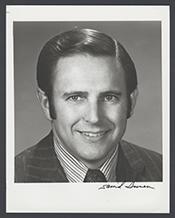
United States · United States Congress · 18 November 1981
Strategic Shipbuilding Security Act of 1981 - Directs that the main propulsion machinery of vessels which are required by law to be constructed or reconstructed in the United States be of at least 50 percent domestic manufacture.
United States · United States Congress · 18 November 1981
Amends the Internal Revenue Code to exclude from gross income up to $5,000 of the pay received by members of the National Guard or a Reserve component of the armed forces.
United States · United States Congress · 17 November 1981
Amends the Internal Revenue Code to revise requirements for the tax deferral of amounts received under variable annuity contracts. Permits the use of an independent investment manager of such annuities. Allows the like-kind exchange of one annuity contract for another. Provides that the tax treatment of any payment made by a contract holder on or before September 25, 1981, shall be determined without regard to Revenue Ruling 81-225 (disallowing tax deferral of amounts received under certain variable annuity contracts).
United States · United States Congress · 17 November 1981
Declares that the Commissioner of Social Security and the Secretary of Health and Human Services should immediately study and report to Congress on ways to correct the benefit disparity caused by the 1977 changes in the social security retirement benefit formula.
United States · United States Congress · 12 November 1981
Expresses the sense of the Congress that the President should: (1) continue to express U.S. opposition to the imprisonment of Mart Niklus; (2) urge the Soviet Union to permit Niklus to emigrate; and (3) inform the Soviet Union that the United States will consider the extent to which countries honor their commitments under international law when evaluating U.S. relations with such countries.
United States · United States Congress · 12 November 1981
Expresses the sense of the Congress that policies of Jewish emigration discrimination and anti-Semitism are morally reprehensible. Urges the President to tell the Soviet Union that the United States opposes these policies and wants emigration restrictions on Soviet Jews removed.
United States · United States Congress · 10 November 1981
National Petroleum Supply Evaluation Act of 1981 - Amends the Energy Policy and Conservation Act to direct the Secretary of Energy, in consultation with others, to investigate the impacts of acquisitions of domestic petroleum companies by major international concerns and to report to Congress concerning such investigation by May 1, 1982. Requires the investigation to evaluate the effect of such acquisition on the exploration, development, production, refining, transportation, distribution, and marketing of domestic petroleum supplies. Prohibits any major international energy concern from acquiring more than five percent of any domestic petroleum company between October 1, 1981, and June 30, 1982.
United States · United States Congress · 5 November 1981
Declares that it is the sense of the House of Representatives that: (1) the United States must manage its assets in a manner more prudent and beneficial to the interests of the American people; (2) all executive branch agencies should inventory their assets, estimate the approximate value of each asset, and identify the uses to which each asset is put; (3) the President should then identify which assets are surplus to Federal needs and should be candidates for liquidation; (4) the President should submit recommendations to Congress on any legislative and administrative revisions that may be needed to carry out such a program of liquidation in an orderly manner; (5) the receipts of this program should be used only to restrain and ultimately reduce the national debt; and (6) the Comptroller General should investigate and recommend to Congress and each agency improved processes for managing Federal assets, estimating their value, and liquidating those which are unneeded.
United States · United States Congress · 4 November 1981
Violent Crime Control Act of 1981 - Title I: Mandatory Sentences For Use of Firearms in Felonies - Amends the Omnibus Crime Control Act of 1970 to revise and increase the mandatory penalties for using or carrying a firearm during commission of a Federal felony. Makes the additional penalties inapplicable to offenses consisting solely of possessing, transporting, or selling a firearm. Increases the additional penalty to two years' imprisonment for a first offense (currently, one to ten years) and to five years for a second or subsequent offense (currently, two to 25 years). Extends to first offenders the stipulations, currently applicable only to second or subsequent offenders, that the court not suspend any sentence, grant probation, or impose concurrent sentences. Prohibits the granting of parole to any offender. Prohibits the Government attorney from plea bargaining with respect to this offense. Title II: Assassination-Related Killings - Amends the Federal criminal code to extend the current offense of killing designated Federal employees to include any Federal public servant engaged in the performance of, or on account of, his or her duties. Replaces the current crimes of Presidential and Congressional assassination with new offenses covering the assassination, assault, kidnapping, or conspiracy to kill or kidnap "United States officials." Includes Cabinet heads and Federal judges within such definition, in addition to the President, Vice President, and Members of Congress. Makes it a Federal crime to kill any civilian in the course of an assassination of a U.S. official. Authorizes the Attorney General to offer a reward of up to $100,000 for information and services concerning these offenses. Makes it the duty of any Federal agency to assist the Attorney General in the investigation and prosecution of violations. Title III: Bail Reform - Bail Reform Act of 1981 - Repeals the Bail Reform Act of 1966 and sets forth new bail procedures. Authorizes a judicial officer to consider the safety of any person of the community when making a pretrial release determination. Establishes as a mandatory release condition that the person not commit a Federal, State, or local crime during release. Authorizes pretrial release upon execution of an unsecured appearance bond. Expands the number of discretionary release conditions. Authorizes a judicial officer to order the detention for up to ten days of a person who is presently on pretrial release for a felony under Federal, State, or local law or on probation or parole or release pending sentencing or appeal for any offense if no conditions will assure his appearance and the safety of the community and any other person. Authorizes a judicial officer to order the pretrial detention of a person upon finding that: (1) no condition will reasonably assure such person's appearance and the safety of any other person and the community; and (2) there is a substantial probability that the person committed the offense. Requires that a detention hearing be held in any case involving: (1) a crime of violence; (2) any offense punishable by life imprisonment or death; or (3) a narcotics offense punishable by at least ten years' imprisonment. Permits the Government or the court to move for a detention hearing in any other case involving a serious risk of flight or obstruction of justice or any offense committed after the person has been convicted of two or more offenses for which a hearing is mandated. Enumerates additional factors to be considered by the judicial officer in making a release determination, including the defendant's past conduct, history of drug or alcohol abuse, criminal history, and the nature and seriousness of the danger to the community or any person. Requires the detention of a person who has appealed his conviction unless the judicial officer finds by clear and convincing evidence that: (1) such person is not likely to flee or pose a danger to another person or property; and (2) the appeal raises a substantial question of law or fact. Requires the detention of a person awaiting sentencing unless the officer finds by clear and convincing evidence that the person is not likely to flee or pose a danger to any other person or the community. Authorizes a U.S. attorney to appeal a release order. Establishes mandatory additional penalties for commission of an offense while on pretrial release. Subjects a person who has been conditionally released and violates a condition of release to revocation of release and prosecution for contempt of court. Grants new authority to law enforcement officers to arrest a person who violates certain pretrial release conditions. Title IV: Insanity Defense Modifications - Amends Rule 12 of the Federal Rules of Criminal Procedure to authorize a new plea of "guilty but insane" for any criminal defendant whose actions constitute all necessary elements of the offense charged but who lacks the requisite state of mind as a result of mental disease or defect. Permits the jury or the court in a non-jury trial to find a defendant guilty but insane. Requires the court in any such case to hold a hearing to determine the present mental condition of the convicted person. Directs the court to commit such person to the custody of the Attorney General upon a finding by a preponderance of the evidence that the person is presently suffering from a mental disease or defect as a result of which release would create a substantial danger to himself or to the person or property of another. Directs the Attorney General to release such person to a State which will assume responsibility for his custody and treatment or otherwise to hospitalize such person in a suitable facility. Requires the court to hold a hearing upon the certification by the director of the facility that such person's release will no longer create a substantial danger to himself or the person or property of another. Directs the court to order the discharge of a person who is found to have recovered. Provides for the hospitalization of persons found guilty, imprisoned persons, and persons due for release who are found to suffer from mental disease or defect. Title V: Modification of the Exclusionary Rule - Declares that evidence obtained in violation of the fourth amendment shall not be excluded in a criminal proceeding if the Government attorney shows by a preponderance of the evidence that the law enforcement officer acted with a reasonable, good faith belief that the search or seizure conformed with fourth amendment requirements. States that evidence obtained in accordance with a warrant is prima facie evidence of good faith belief. Makes the United States liable for damages resulting from a search or seizure conducted by a law enforcement officer acting within the scope of employment in violation of the fourth amendment, unless the Government attorney shows the officer's reasonable good faith belief of constitutional compliance. Permits recovery of actual and punitive damages not exceeding $50,000. Authorizes the court to award reasonable attorney fees. Limits recovery of a person convicted of an offense for which evidence was illegally seized to actual physical personal injury and property damage. Authorizes a Federal agency to discipline an officer who conducts an illegal search or seizure upon a determination, after notice and hearing, that the officer lacked a good faith belief that the action was constitutional. Title VI: Sentencing Reform - Establishes as an independent body in the judicial branch the United States Sentencing Commission to set forth sentencing policies and practices for the Federal criminal justice system. Directs the Commission to promulgate: (1) sentencing guidelines, including appropriate fines and terms of probation and imprisonment; and (2) general policy statements regarding application of the guidelines. Requires the court to consider the Commission's guidelines and policy statements in imposing sentences in a criminal case. Requires the court to state in open court at the time of sentencing the reason for imposing a sentence at a point within the prescribed range or the specific reason for imposing a sentence outside of such range. Provides that in the case of a felony or misdemeanor carrying a maximum imprisonment term of one year, a defendant may appeal a sentence greater than the maximum allowed under the Commission's guidelines which are found by the sentencing court to be applicable, unless contrary to a plea agreement. Permits the Government, with the personal approval of the Attorney General or the Solicitor General, to appeal a sentence less than the applicable minimum. Title VII: Habeas Corpus Changes - Prohibits Federal magistrates from conducting evidentiary hearings in habeas corpus actions brought by State prisoners, except upon consent of the parties. Prohibits the consideration in a habeas corpus proceeding of a Federal question which was not properly presented under State law at trial and on appeal unless the petitioner establishes that the alleged violation of the Federal right was prejudicial and that: (1) the Federal right did not exist at time of trial and has been determined to be retroactive; (2) the State procedures precluded assertion of the right; (3) evidence was suppressed which prevented raising of the claim; or (4) material and controlling facts upon which the claim is based were unknown and could not have been ascertained by reasonable diligence. Establishes a three-year statute of limitations for habeas corpus actions brought by State prisoners. Prohibits a Federal evidentiary hearing from being conducted where State court records demonstrate that the factual issue was litigated and determined, unless the petitioner establishes the existence of at least one of six circumstances (currently, the State findings are presumed to be correct unless the petitioner establishes the existence of a circumstance). Requires the Federal court to view the State court record in the light most favorable to the prosecution. Title VIII: Corrections Construction and Development - Corrections Construction and Program Development Act of 1981 - Authorizes the Attorney General to make grants to States for up to 75 percent of the cost of projects to: (1) construct, expand, and repair correctional facilities; and (2) improve correctional programs and practices. Authorizes appropriations through fiscal year 1985. Amends the Federal Property and Administrative Services Act of 1949 to authorize the Administrator of the General Services Administration to donate surplus property to States for correctional purposes.
United States · United States Congress · 4 November 1981
Interstate Compact - Grants the consent of Congress to the compact between Mississippi and Louisiana which establishes a commission to study the feasibility of providing rapid rail transit service between the two States.
United States · United States Congress · 4 November 1981
Expresses the sense of the Congress that: (1) the United States and Japan should exert maximum efforts to resist Soviet challenges in Asia; (2) Japan should make a greater contribution to its own defense; and (3) Japan's defense expenditures should be at least one percent of its gross national product.
United States · United States Congress · 29 October 1981
Prohibits recovery of damages for the injury or death of a foreign seaman if the incident occurred while such seaman was engaged in certain activities.
United States · United States Congress · 29 October 1981
Constitutional Amendment - Requires Congress, prior to each fiscal year, to adopt a statement of receipts and outlays for that year in which total outlays are no greater than total receipts. Permits Congress in such statement to provide for a specific excess of outlays over receipts by a three-fifths vote directed solely to that subject. Prohibits total receipts for any fiscal year set forth in such statement from increasing by a rate greater than the rate of increase in national income in the last calendar year ending before such fiscal year, unless Congress passes a bill directed solely to approving specific additional receipts and such bill has become law. Permits Congress to waive the provisions of this Act with respect to any fiscal year in which a declaration of war is in effect. Prohibits the Congress from requiring that the States engage in additional activities without compensation equal to the additional costs. Declares that total receipts shall include all receipts of the United States, except those derived from borrowing and total outlays shall include all outlays of the United States except those for repayment of debt principal.
United States · United States Congress · 27 October 1981
Designates that section of the Baltimore-Washington Parkway within the State of Maryland as the Gladys Noon Spellman Parkway. Directs the Secretary of the Interior, in cooperation with the State of Maryland, to erect an appropriate marker commemorating the contributions of Gladys Noon Spellman. Authorizes appropriations.
United States · United States Congress · 27 October 1981
Multinational Force and Observers Participation Resolution - Authorizes the President to assign U.S. military personnel to the Multinational Force and Observers (MFO) to implement the peace treaty between Egypt and Israel. Directs the President to give Congress specified information about the other countries providing military personnel for the MFO before the President assigns U.S. military personnel to the MFO. Requires every possible effort to be made to ensure that at least four foreign countries are represented on the MFO. Authorizes U.S. military personnel assigned to the MFO to perform only the functions specified in the peace treaty and its protocol. Limits the number of such military personnel. Authorizes the President to assign U.S. civilian personnel as observers in the MFO. Limits the U.S. share of the costs of the MFO. Authorizes appropriations to pay the U.S. contribution to the MFO budget. Authorizes Federal agencies to provide support to the MFO, without reimbursement if such support would not significantly increase U.S. costs. Directs the President to report annually to Congress on the MFO, on U.S. participation in the MFO, and on specified discussions with Egypt and Israel. Requires such reports to be as detailed as possible. States that nothing in this resolution is intended to signify congressional approval of any agreement made by the executive branch other than the agreement to participate in the MFO.
United States · United States Congress · 26 October 1981
Authorizes the President to present, on behalf of the Congress, a specially struck gold medal to Queen Beatrix of the Netherlands in recognition of the bicentennial anniversary of diplomatic and trade relations between the Netherlands and the United States. Authorizes the Secretary of the Treasury to coin and sell bronze duplicates of such medal. Authorizes appropriations.
United States · United States Congress · 20 October 1981
Bankruptcy Improvements Act of 1981 - Amends title 11 of the United States Code (Bankruptcy) to establish an eligibility test for liquidation bankruptcy relief based on the individual petitioner's ability to pay a reasonable portion of his debts out of future income. Permits the court to dismiss a bankruptcy case under chapter 7 (liquidation) upon the motion of any party in interest filed not later than 30 days after the meeting of creditors, and after notice and a hearing, if the debtor is ineligible for relief under such title. Requires the bankruptcy judge to preside at any meeting of creditors and to perform such additional judicial duties any may be required. Declares that the value of the creditor's interest in the estate's interest in such property shall be determined in light of the purpose of the valuation and of the proposed disposition or use of such property, and in conjunction with any hearing on such disposition or use or on a plan affecting such creditor's interest. Declares that the value of consumer goods which the debtor seeks to redeem in liquidation shall be presumed to be the established resale market price, if such market exists. Requires the debtor in bankruptcy cases to file a statement of income and expenses. Requires the debtor, if the debtor's schedule of assets and liabilities includes consumer debts which are secured by property of the estate, to file and serve upon each creditor holding such security and the trustee, a statement expressing the debtor's intention with respect to retention or surrender of the collateral. Requires the debtor, at or before the meeting of creditors provided for by such title, to perform his intention with regard to such secured creditors. Repeals the provisions concerning exempt property and makes the States responsible for establishing exemptions to bankruptcy proceedings. Makes any debt which was incurred on or within 90 days before the date of the filing of a petition under such title nondischargeable. Allows creditors to enforce liens which have not been voided in bankruptcy. Permits reaffirmation of consumer debts subject to the debtor's right to rescind any such agreement within 60 days or until a discharge is received, whichever occurs later, by giving a written notice of rescission to the creditor. Declares that at the meeting of creditors the court shall inform the debtor of the nature and effect of a discharge. Eliminates the trustee's power to avoid liens or recover payments made within 90 days of filing petition in bankruptcy (within one year in the case of an insider) unless the creditor had reasonable cause to believe the debtor was insolvent. Permits the court, upon notice and hearing, to require a creditor to accept payments in redemption of the value of a claim secured by a nonpossessory, nonpurchase money security interest in tangible personal property, over a reasonable period not to exceed five years, if such tangible personal property consists of specified objects. Allows a creditor, upon 10 days notice to the debtor and codebtor, to collect any portion of a debt from the codebtor which is not being paid by the debtor through the adjustment of debts of such debtor with a regular income. Requires payments under an adjustment of debts payment plan to commence at the time of the filing of the plan. Provides for the return of such funds after deducting the costs of administration if no plan is confirmed. Provides for the separate classification of co-debtor claims and non-dischargeable claims and authorizes payment of them under an adjustment of debts payment plan. Allows a debtor to choose such a repayment plan of up to five years. Bases such repayment upon the debtor's ability to repay out of future income after taking into account the basic living necessities for the debtor and dependents. Provides for an early discharge of debts where at least 70 percent of all allowed unsecured claims are paid. Permits a hardship discharge of otherwise non-dischargeable debts to the extent the debtor attempted to pay such debts under an adjustment of debts payment plan.
United States · United States Congress · 20 October 1981
Expresses the sense of the Congress that the President should: (1) proclaim the fifth anniversary of the establishment of the Ukrainian Public Group to Promote the Implementation of the Helsinki Accords as a day honoring that Group; and (2) ask the Soviet Union to release the jailed members of the Group and to cease persecuting and jailing Ukrainian citizens seeking their rights.
United States · United States Congress · 15 October 1981
Amends title II (Old Age, Survivors and Disability Insurance) of the Social Security Act to prohibit the payment of title II benefits to an incarcerated felon during any month of confinement. Treats the benefits withheld as having been paid to the felon for purposes of the payment of benefits to other persons so entitled on the basis of the wages and self-employment income of the felon.
United States · United States Congress · 5 October 1981
Amends the Clean Air Act to revise provisions for compliance with emissions standards by vehicles and engines in actual use. Repeals a requirement that manufacturers warrant that new motor vehicles or engines are: (1) designed, built, and equipped so as to conform with emissions standards at the time of sale; and (2) free from defects in materials and workmanship which cause failure to conform for its useful life. Requires, instead, a production warranty that the vehicle or engine is equipped with emission control components designed to enable such vehicle or engine to conform at the time of sale with emissions standards for the first 12 months or first 12,000 miles. Repeals provisions for motor vehicle or engine parts certifications by manufacturers or rebuilders for compliance with emissions standards. Limits a free replacement obligation of manufacturers to emissions control components installed for the sole (currently, sole or primary) purpose of reducing, vehicle emissions. Limits specified performance warranties to: (1) the first 12 months or 12,000 miles; and (2) certain components installed for the sole purpose of emissions control. Revises provisions for manufacturers' instructions for the maintenance, replacement, and repair of emission control parts or components to eliminate requirements that: (1) such instructions correspond to regulations promulgated by the Administrator of the Environmental Protection Agency; and (2) replacement parts be certified. Eliminates provisions for waivers of a prohibition against such instructions, including conditions on the purchaser's using components or services unconnected with the manufacturer. Specifies that waivers of the prohibition against State or local standards for emissions control of new motor vehicles or engines subject to Federal standards will be given only: (1) insofar as numerical emission levels are concerned; and (2) if such standards and new motor vehicle certification and other tests are consistent with Federal standards. Specifies that tampering prohibitions refer to parts or components placed on or in motor vehicles or engines for the sole purpose of controlling emissions. Prohibits State new motor vehicle emission standards in nonattainment areas from including any provision similar to the production or performance warranty provisions under the Clean Air Act. Sets forth effective dates for specified amendments made by this Act.
United States · United States Congress · 1 October 1981
National Commission on Down Syndrome Act - Directs the Secretary of Health and Human Services, in consultation with the Director of the National Institutes of Health, the President's Committee on Mental Retardation, and other concerned organizations, to establish a National Commission on Down Syndrome to formulate a long-range plan for the study, prevention, and treatment of Down Syndrome. Requires a final report to the President and the Congress within 12 months after the Commission is organized. Requires the Secretary to submit a related budget analysis to specified congressional committees. Terminates the Commission three months after submission of the final report. Authorizes specified appropriations.
United States · United States Congress · 1 October 1981
Expresses the sense of Congress that the President should fill the first two vacancies on the Federal Reserve System's Board of Governors with persons having housing experience and small business experience, respectively.
United States · United States Congress · 30 September 1981
Designates the U.S. Department of Agriculture Boll Weevil Research Laboratory building, at Mississippi State University, as the Robey Wentworth Harned Laboratory.
United States · United States Congress · 24 September 1981
Hunger Prevention and African Food Security Act - Amends the Foreign Assistance Act of 1961 to require the President to use at least half of the funds available for development assistance to provide assistance for persons living in absolute poverty as defined by specified standards. Requires special emphasis to be placed on alleviating hunger in Sub-Saharan Africa and particularly on facilitating the participation of women in food production in that region. Amends the Agricultural Trade Development and Assistance Act of 1954 to specify a minimum aggregate value of all famine relief agreements. Requires famine relief agreements to provide that at least one-fifth of the commodities made available for famine relief or funds generated from the sale of those commodities in participating countries shall be used to strengthen food distribution systems in famine-prone countries, especially those in Sub-Saharan Africa. Requires each such agreement to specify the measures taken to ensure that such commodities and funds benefit primarily the poor.
United States · United States Congress · 23 September 1981
Rural Enterprise Zone Development Act of 1981 - Title I: Declares the purpose of this Act to be to provide financial and technical assistance and tax incentives to help restore distressed rural areas. Amends the Agricultural Act of 1961 to define "rural enterprise zone" (zone) as an area under at least one local government's jurisdiction with a population density of less than 200 people per square mile and a total population of between 5,000 and 50,000 people. Requires a local entity to submit a zone plan to the Secretary of Agriculture for approval. Authorizes the Secretary to make: (1) development facility grants; (2) vocational education and agricultural extension service center loans; and (3) industrial and commercial activity loans and loan guarantees. Limits the number of annual zone designations. Authorizes appropriations for fiscal years 1983-1984. Authorizes the Secretary of Commerce to make technical assistance grants and provide related aid to rural enterprise zones. Authorizes appropriations for fiscal years 1983-1984. Title II: Tax Incentives for Small Businesses Located in Rural Enterprise Zones - Small Rural Business Program Tax Act of 1981 - Subtitle A: Designation of Eligible Areas and Businesses - Amends the Internal Revenue Code to add a new subchapter which sets forth criteria for the designation of rural enterprise zones and defines qualified small rural businesses for purposes of providing tax incentives for such businesses. Empowers the Secretary of Agriculture to approve the designation of an area as a rural enterprise zone if a local government submits to the Secretary a plan which meets specified requirements for the establishment of such zones. Limits the number of zones which the Secretary may designate in any calendar year. Sets forth criteria relating to population, poverty, unemployment, and per capital income growth which the Secretary must consider in approving the designation of a rural enterprise zone. Defines a "qualified small rural business" (small rural business) as an actively conducted trade or business which employs individuals who perform a specified number of hours of service for the business in a rural enterprise zone. Disqualifies any business which has had gross receipts in excess of $2,000,000 for any of the three preceding taxable years. Subtitle B: Tax Incentives for Qualified Small Rural Businesses - Amends the Internal Revenue Code to reduce the capital gains tax rates of small rural businesses and investors in rural enterprise zones. Exempts the capital gains of small rural businesses from the minimum tax. Excludes from gross income 50 percent of the total of small rural business income for a taxable year and interest on loans made to such businesses to finance business activity in a rural enterprise zone. Allows small rural businesses a five percent tax credit for interest paid on loans used to finance business activity in a rural enterprise zone. Allows a targeted jobs income tax credit for the hiring of employees for a small rural business. Allows a small rural businesses and their employees a refundable income tax credit for training designed to improve the technical and managerial skills of such employees. Allows a small rural business to elect to use the cash method of accounting. Authorizes accelerated depreciation for small rural business property. Increases by ten percent the investment tax credit for the rehabilitation expenditures of a small rural business.
United States · United States Congress · 15 September 1981
Floral Research and Consumer Information Act - Directs the Secretary of Agriculture to issue research and promotion orders for the plant trade. Prescribes administrative procedure for such orders. Requires the Secretary to appoint a "Floraboard" composed of not more than 75 producers and importers nominated by certified organizations. Requires such Floraboards to develop plans and projects subject to the Secretary's approval. Provides for assessments on the sale of flowers and plants to defray administrative costs. Specifies the terms an order may contain. Requires approval of an order by a referendum of producers. Requires the Secretary to suspend or terminate an order on his own initiative, or at the behest of a referendum under certain circumstances. Exempts certain producers and importers from coverage. Provides for assessment refunds and review of orders upon petition. Vests the district courts of the United States with enforcement jurisdiction. Sets forth criteria for the certification of producer and importer organizations. Enumerates investigative and legal powers of the Secretary with respect to Floraboard orders. Authorizes appropriations.
United States · United States Congress · 11 September 1981
Disapproves the final rule promulgated by the Federal Trade Commission dealing with the matter of the trade regulation rule relating to the sale of used motor vehicles.
United States · United States Congress · 10 September 1981
United States Olympic Development Fund Checkoff Act of 1981 - Permits taxpayers to designate on their income tax returns an election to contribute one dollar of their income tax refunds or one dollar forwarded with returns to support the fund established by this Act. Establishes in the Treasury of the United States a United States Olympic Development Fund. Appropriates to the Fund an amount equivalent to the amount designated on tax returns to be available to the Fund. Directs the Secretary of the Treasury to pay amounts so transferred to the U.S. Olympic Committee for use in a program of expansion and improvement of amateur athletics. Sets forth reporting requirements with respect to the expenditure of such funds by the Committee.
United States · United States Congress · 9 September 1981
Directs the President to immediately begin consultation with the Board of Governors of the Federal Reserve System for the purpose of modifying the Board of Governors' monetary policy to significantly reduce interest rates within the next 90 days. Requires such consultations to include modifications in the areas of: (1) reserve requirements; (2) Federal Open Market Committee activities; and (3) the federal Reserve discount rate; and (4) preventing diversion of substantial sums of available credit and capital for nonproductive purposes.
United States · United States Congress · 4 August 1981
Federal Land Survey Act of 1981 - Directs the Secretary of the Interior to notify affected agencies and the public of the intent to conduct, certify, or record any land survey or resurvey, at least 30 days prior to such intended action. Requires the Secretary to: (1) initiate the survey within six months of the notice of intent; (2) complete the survey affixing a permanent mark designating the year when established and otherwise complying with applicable state statutes; and (3) certify the survey in the appropriate land office within 90 days of its completion. Sets forth certain monumentation requirements for surveys involving both Federal and non-Federal lands. Provides a procedure for removal of any monumentation if the Secretary fails to certify such monument within the 90-day period. Authorizes the Secretary or his designee to conduct land surveys by contract with private sources in accordance with provisions of this Act. Requires the Secretary's designee to cooperate with the Interstate Commerce Commission to conduct cadastral surveys and plat maps necessary to perpetuate land boundaries adjacent to abandoned railroads or utilities. Directs the Secretary of the Interior, the Secretary of Commerce, and the Secretary of Agriculture, in consultation with State governors and the President of the National Academy of Sciences, to: (1) conduct an assessment of multipurpose national cadastre information needs; and (2) develop a feasibility study for the establishment of a multipurpose national cadastre system. Requires the submission of such feasibility report to the Congress within three years of enactment of this Act.
United States · United States Congress · 4 August 1981
Mobile Source Clean Air Act Amendments of 1981 - Title I: Amendments to Title II - Amends title II of the Clean Air Act (Emission Standards for Moving Sources, also known as the "National Emission Standards Act") to provide that where any national ambient air quality standard is established pursuant to such Act for any pollutant, the standard applicable to the emissions of such pollutant shall relate to the achievement of the national ambient air quality standard. Directs the Administrator of the Environmental Protection Agency, in prescribing any such standard, to consider specified factors, including compliance costs, potential inflationary or recessionary effects, and effects on small business competition, consumer costs, and energy use. Requires that more stringent standards shall not become effective for at least: (1) 48 months after final prescription, in the case of heavy-duty vehicles or engines; and (2) 36 months after final prescription, in the case of all other new motor vehicles or engines. Repeals requirements that standards reflecting the greatest degree of emission reduction achievable through application of available technology be contained in regulations applicable to: (1) emissions of carbon monoxide, hydrocarbons, and nitrogen oxides from heavy-duty vehicles or engines manufactured during model years 1979 through 1982; and (2) emissions of particulate matter from vehicles manufactured during and after model year 1981 (or during any earlier model year, if practicable). Repeals requirements that regulations applicable to vehicles or engines manufactured during and after model year: (1) 1983 require a reduction of at least 90 percent of hydrocarbon and carbon monoxide emissions; and (2) 1985 require reduction of at least 75 percent of nitrogen oxides emissions. Provides for notice and opportunity for comment before the Administrator determines that any emission control device, system, or element of design will cause or contribute to an unreasonable risk to public health, welfare, or safety (and therefore may not be used to comply with emission standards). Directs the Administrator to include specified information obtained from manufacturers in making such determination. Excludes methane from any hydrocarbon standard for motor vehicle emissions under such Act. Directs the Administrator to establish an appropriate allowance applicable to the exhaust hydrocarbon standard for those vehicles and engines that emit low levels of evaporative hydrocarbon emissions, except that measurement of such emissions shall not be required in specified new vehicle or motor compliance tests. Revises provisions for regulations applicable to emissions from light-duty vehicles and engines. Eliminates the requirement that regulations applicable to such vehicles manufactured during or after model year 1981 require: (1) reduction of at least 90 percent of carbon monoxide and hydrocarbons emissions from those allowable under standards applicable to 1970 models; and (2) limitation of nitrogen oxides emissions to one gram per vehicle mile. Provides also that regulations applicable to such vehicles manufactured during or after model year 1982 shall not contain standards more stringent than 0.39 grams per vehicle mile of non-methane exhaust hydrocarbons (exclusive of allowances for evaporative hydrocarbons), seven grams per vehicle mile of carbon monoxide, and two grams per vehicle mile of nitrogen oxides. Revises provisions relating to waivers of such standards. Replaces, as a precondition for such waivers, a determination of a potential for both long-term air quality benefit and meeting average fuel economy standards with a determination of a potential to conserve energy. Makes 500,000 units the maximum number of vehicles or engines of each model to which such waivers may apply (the current maximum is five percent of the manufacturer's production or 50,000 of such units, whichever is larger). Revises provisions relating to any future prescribed regulations affecting the manufacture, distribution, or sale of motor vehicles or engines for high altitude areas of the United States to require inclusion of exemptions prescribed for model year 1982 and to permit specified performance adjustments. Prohibits more stringent numerical standards in regulation of high altitude vehicles of any model year than those applicable to vehicles certified under non-high altitude conditions. Prohibits any regulation requiring the installation, on motor vehicles or engines intended for principal use in non- high altitude locations, of any emission controls needed to meet the applicable standards under high altitude conditions. Includes among prohibited acts the failure or refusal of any manufacturer to comply with requests by the Administrator for specified information on new light-duty motor vehicles and their use at high altitudes. Revises provisions for compliance testing and conformity certification to direct the Administrator to evaluate or to require evaluation of (but not necessarily to test or require testing of): (1) any new motor vehicle or new motor vehicle engine submitted by a manufacturer; and (2) any emission control system incorporated in a vehicle or engine submitted by any person. Prohibits the revision of any test applicable to 1981 model heavy-duty vehicles or engines until after the 1986 model year. Repeals a one-year maximum limit on the period which a certificate of conformity may cover. Directs the Administrator to establish: (1) methods and procedures for making tests for determining average emissions from vehicles; and (2) an acceptable quality level for all new motor vehicles equivalent to the level applicable to 1981 model year light-duty vehicles. Repeals a requirement that all light-duty vehicles manufactured during and after model year 1984 comply with specified emission standards regardless of the altitude at which they are sold. Revises provisions for compliance by vehicles and engines in actual use. Bases determinations of nonconformity with regulations by any class or category of vehicles and engines manufactured after a specified date upon the average performance in testing a statistically valid and representative sample. Permits manufacturers to elect to take other actions, in lieu of remedying such nonconformity, with respect to those or other vehicles or engines, consistent with the purposes of such title. Directs the Administrator to consider the effects on competition, in approving a manufacturer's plan to remedy or take other actions with respect to such nonconformity. Repeals a requirement that dealers furnish purchasers of new light-duty motor vehicles certificates of conformity with applicable emission standards, including notice of purchaser warranty rights. Repeals a requirement that the manufacturer remedy, at its own cost, any nonconformity, during a specified period, of a motor vehicle with emission standards. Revises provisions relating to: (1) State standards; and (2) high altitude performance adjustments. Provides that the foregoing amendments made by this title shall take effect with respect to vehicles and engines manufactured in model years beginning more than 60 days after the enactment of this Act. Requires that the economic impact assessment with respect to any motor vehicle emission or fuel standard or regulation under such title also contain an analysis of the noise, safety, and other factors deemed appropriate by the Administrator associated with application of any technology necessary to comply with the standard or regulation. Directs the Administrator to initiate a study and related proceedings, including appropriate informal public hearings, to: (1) develop alternative and practicable approaches to emission control of any air pollutant, subject to such regulation, from new motor vehicles or engines; and (2) evaluate the existing control program. Sets forth the factors to be considered by the Administrator concerning such new approach. Requires that a report of such study, including public comments, be submitted to the appropriate committees of the Congress within one year. Sets forth criteria for proposed regulations under any such new approach. Title II: Study and Conforming Provisions - Amends the Clean Air Act to direct the Administrator, upon the request of any national association of motor vehicle dealers with a membership which includes a majority of U. S. retail franchisers selling imported and domestic new light-duty motor vehicles, to compile data relating to the availability and distribution to dealers located at high altitudes of all models of such vehicles manufactured by any specified manufacturer in a specified model year. Authorizes the Administrator to utilize specified information and to require manufacturers to submit relevant information (except information identifying shipments to individual dealers). Directs the Administrator, within six months after such a request is made, to submit to the Congress and publish in the Federal Register a report setting forth the data so compiled, including specified information.
United States · United States Congress · 29 July 1981
Small Business Innovation Development Act of 1981 - Amends the Small Business Act to direct the Small Business Administration (SBA) to: (1) maintain an information program to provide small businesses an opportunity to participate in Federal small business innovation research (SBIR) programs; (2) coordinate a schedule for release of SBIR solicitations and prepare a master release schedule; (3) monitor SBIR programs within Federal agencies; and (4) report annually to the congressional Small Business Committees on the SBIR programs. Requires each Federal agency with a research and development budget of at least $100,000,000 in FY 1982 or any subsequent fiscal year to spend a specified percentage of its budget in connection with an SBIR program. Requires each Federal agency with a research and development budget of at least $20,000,000 in FY 1982 or any subsequent fiscal year to establish specific goals for funding research and development agreements with small businesses. Directs each Federal agency to report annually to the SBA the number of awards over $10,000 made under the SBIR program and to concerns other than small business concerns. Directs the Administrator of the Office of Federal Procurement Policy, in conjunction with the SBA, to promulgate regulations for the conduct of the SBIR programs. States that this Act does not authorize the appropriation of funds.
United States · United States Congress · 28 July 1981
Petroleum Disruption Management Act of 1981 - Title I: Sequential Management Authority and Activation - Directs the President to prescribe four petroleum disruption management programs and transmit them to Congress for approval: (1) a Strategic Petroleum Reserve distribution program; (2) a private dedicated reserve program (PDR); (3) a national crude oil sharing program; and (4) a petroleum product disruption management program. Prohibits approval of a program unless each House of Congress, within 30 days of transmittal of a program, passes a resolution approving the program. Requires the President to submit a revised program if any program is not approved. Provides for the activation of a program whenever the President determines that a substantial or severe crude oil or energy supply disruption or interruption exists or is imminent, or a program is necessary in order to comply with the international energy program, and an approving joint resolution is passed within six days of transmittal. Limits such programs to 120 days duration, except the President may request additional 120 day periods. Title II: Private Crude Oil and Petroleum Product Storage Incentives - Directs the President to report on the advisability and alternative means of: (1) reducing the tax liability of persons who draw down crude oil and petroleum product reserves during oil supply disruptions; and (2) providing tax or other incentives for the construction of private-sector oil and petroleum product storage facilities and the maintenance of increased private-sector crude oil or petroleum product reserves. Title III: Strategic Petroleum Reserve and Private Dedicated Reserve Distribution - Authorizes the President to distribute crude oil from the Strategic Petroleum Reserve, upon a determination that a substantial crude oil disruption exists, in amounts not in excess of 300,000 barrels daily for no more than 90 days annually. Provides for such distributions on a pro rata basis. Amends the Energy Policy and Conservation Act to prohibit the Strategic Petroleum Reserve Plan from becoming effective unless each House of Congress passes a resolution approving the Plan within 30 days of the Plan's transmittal to Congress. Requires that during a substantial crude oil disruption allocation shall be as provided for in this Act. Requires the Secretary of Energy to submit to Congress a report evaluating the expansion of the physical capacity of the Reserve through the use of temporary storage facilities. Directs the President to promulgate a rule establishing a PDR. Requires the rule establishing the PDR to, among other things: (1) provide for the equitable distribution of crude oil at competitive prices; (2) require designated refiners to provide crude oil to any qualified refiner experiencing a supply disruption; (3) distribute crude oil to such qualified refiners to permit them to operate at 95 percent of the national utilization rate; (4) provide that the obligation of each designated refiner to sell crude oil to qualified refiners shall be a given percentage of each designated refiner's average crude oil runs to distillation units during the previous 12 months; and (5) provide that the price paid by a qualified refiner will not exceed a stated level. Directs the Secretary to submit to Congress a report determining the minimum volume of reserves to be maintained in the Strategic Petroleum Reserve and analyzing the advisability of distributing crude oil from the Reserve in lieu of activating the PDR. Title IV: National Crude Oil Sharing Program - Directs the President to promulgate a rule establishing a national crude oil sharing program. Requires the rule establishing such program to: (1) provide for the equitable sharing of crude oil at competitive prices among all regions during a severe disruption; (2) require refiners to offer for sale any crude oil supplies that would permit their refineries to operate in excess of the national utilization rate; (3) assure that refiners are able to purchase sufficient crude oil to permit operation at the national utilization rate; (4) provide that the price paid by a refiner will not exceed the weight-averaged price during the previous 60 day period; (5) provide for directives requiring a refiner to adjust the percentage yield of a refined petroleum product in order to increase output of that product in a time of short supply; and (6) provide for the adjustment of the quantities of crude oil allocated among refiners so as to ensure desired production levels. Title V: Petroleum Product Programs - Directs the President to promulgate a standby regulation which when implemented will provide: (1) for the mandatory allocation of refined petroleum products produced in or imported into the country in amounts specified in and at ceiling prices specified in such regulation; (2) an emergency use fee; or (3) other action specified in such regulation which is not otherwise specially authorized by other Federal law. Requires the standby regulation to provide for, among other things: (1) the protection of public health, safety and welfare (including maintenance of residential heating), and national defense; (2) maintenance of all public services; (3) maintenance of agricultural operations; (4) preservation of an economically sound and competitive petroleum industry; (5) equitable distribution of refined petroleum products at equitable prices; (6) allocation of refined petroleum products necessary to explore for and extract fuels and minerals; (7) economic efficiency; and (8) minimization of economic distortion. Title VI: Establishment of Advisory Data Collection and Coordination Functions - Directs the President to establish: (1) an Energy Emergency Council to be composed of members of the executive branch, to advise the President on matters relevant to the implementation of this Act and the activation and management of its programs; and (2) an Energy Advisory Committee, to consist of members of the petroleum industry and consumers, to advise the President and the Council on matters relevant to the implementation of this Act and the management and activation of its programs. Directs the Council, after consultation with the Committee, to evaluate the current energy information collection and monitoring systems within the Federal Government. Directs the Secretary to inform the Administrator of the Energy Information Administration whether the energy information now being collected is sufficient, whether changes are needed, and if so, to direct the Administrator to make the necessary changes. Directs the Secretary to submit to Congress a report examining the standards for activation of the programs. Title VII: Miscellaneous Provisions - Sets forth provisions relating to administration and enforcement, including: (1) application of provisions of the Economic Stabilization Act of 1970 to regulations, orders, and Presidential actions undertaken pursuant to this Act; and (2) setting forth monetary penalties for violations of this Act. Amends the Department of Energy Organization Act to include this Act within those Acts for which the Secretary shall provide for making adjustments to any rule, regulation or order in order to prevent special hardship or inequity. Extends, until October 1, 1989, the authority for international voluntary agreements with respect to the International Energy Program under the Energy Policy and Conservation Act. Terminates this Act on October 1, 1989.
United States · United States Congress · 28 July 1981
Expresses the sense of the House of Representatives that the President should: (1) express to the Soviet Union the U.S. opposition to the Soviet's imprisonment of Benedict Scott (Vytautas Skuodis); and (2) take every appropriate action to secure his release from prison and the emigration of him and his family.
United States · United States Congress · 28 July 1981
Expresses the sense of the Congress that U.S. foreign policy should reflect a national strategy of peace through strength with specified principles and goals.
United States · United States Congress · 27 July 1981
Directs the United States Postal Service to provide and sell a postage stamp issue to honor all American servicemen and civilians still unaccounted for as a result of the conflict in Indochina. Provides that such postage stamp shall be of such denomination, and shall be sold for such a time, as the United States Postal Service shall determine.
United States · United States Congress · 15 July 1981
Directs the United States Postal Service to provide and sell a postage stamp issue to honor American servicemen and women who have been prisoners of war or missing in action as a result of their service during military conflict. Provides that such postage stamp shall be of such denomination and shall be sold for such a time as the United States Postal Service shall determine.