Bill· HRH.R. 1225 (97th)referred
A bill for the relief of Kwan Do Sun.
United States · United States Congress · 22 January 1981
Authorizes the granting of a visa and admission to the United States for permanent residence to a named individual.
The world's political record
Person
United States · Official source
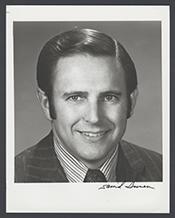
1,034 records where Rep. Bowen, David R. [D-MS-2] is listed as a sponsor, author, or other actor. Search with topics and years
United States · United States Congress · 22 January 1981
Authorizes the granting of a visa and admission to the United States for permanent residence to a named individual.
United States · United States Congress · 22 January 1981
Authorizes the President to present on behalf of the Congress specially struck gold medals to fifty-three individuals held hostage in the United States Embassy in Iran. Directs the Secretary of the Treasury to: (1) strike fifty-three gold medals with suitable emblems, devices and inscriptions; and (2) coin and sell bronze duplicates of such medals. Authorizes appropriations.
United States · United States Congress · 22 January 1981
Requests the President to designate August 13, 1981, as "National Blinded Veterans Recognition Day."
United States · United States Congress · 20 January 1981
Requests the President to designate the first full week of June of each year as "National Garden Week."
United States · United States Congress · 19 January 1981
Amends the Internal Revenue Code to increase from $20,000 to $75,000 in 1981 (with annual adjustments up to $95,000 in 1985 and thereafter) the earned income exclusion for U.S. citizens working abroad who are bona fide residents of a foreign country. Repeals the requirement that, as a condition of their employment, such individuals reside in a hardship area. Reduces from 17 to 11 months the residency requirement for such exclusion. Provides for an income tax exclusion for the value of employer-provided lodging in a camp in cases where satisfactory housing is not generally available. Reduces from 17 to 11 months the foreign residency requirement with respect to the deduction for certain housing expenses of living abroad.
United States · United States Congress · 16 January 1981
Requests the President to designate the week of October 4 through October 10, 1981, as "National Diabetes Week."
United States · United States Congress · 9 January 1981
Amends the Immigration and Nationality Act to authorize the Attorney General to order the deportation of certain nonimmigrant aliens (including foreign students) in the United States who: (1) knowingly participated in a political demonstration resulting or intending to result in personal injury or property damage; or (2) while in the United States, took part in any unlawful activity or advocated the overthrow by violence of any organized government. Permits the Attorney General to suspend deportation of such students.
United States · United States Congress · 9 January 1981
Amends title II (Old Age, Survivors and Disability Insurance) of the Social Security Act to eliminate the five-month period which is presently a prerequisite of eligibility for disability insurance benefits.
United States · United States Congress · 6 January 1981
Veterans' Administration Adjudication Procedure and Judicial Review Act - Title I: Adjudication Procedures - Codifies, for Veterans' Administration (VA) adjudication purposes, the burden of proof and reasonable doubt standard currently provided for by VA regulation. States that a claimant has the burden of submitting sufficient evidence to justify his or her claim, and that if an approximate balance of positive and negative evidence exists regarding the merits of a claim, the VA is to resolve such doubt in favor of the claimant. Stipulates that VA subpoenas may be served either by personal delivery or by registered or certified mail. Increases the size of the Board of Veterans' Appeals from 50 to 65 members. Requires the chairman of such Board to submit an annual report to the appropriate congressional committees concerning the Board's current handling of cases and projections for the subsequent fiscal year. Requires the Board to: (1) provide notice to a claimant and an opportunity for a hearing before a decision may be based on "additional official information" received after a Board decision has previously been made; (2) provide the claimant with an opportunity for a hearing; and (3) make its decision exclusively on evidence and material of record in the proceeding. Removes the requirement that new material sufficient to allow the Board to reopen a previously disallowed claim be in the form of official reports. Provides that the Board's discretionary authority to reopen a claim will not be diminished by a judicial decision following an appeal as provided for by this Act. Requires the Board to mail to the claimant notice of its decision and the reasons for such decision. Provides that, upon the request of a claimant, the Board shall provide an independent advisory medical opinion when there exists substantial medical disagreements with respect to a material issue in a veterans' appeal. Sets forth new procedural rules for adjudication hearings regarding: (1) oaths, affirmations, and witness examination; (2) admissibility of evidence; (3) procedural rights of claimants; (4) disqualification of a hearing officer; (5) the record of the proceedings and the claimants' right to examine and obtain a copy of such record; and (6) the exclusiveness of veterans' adjudication procedures and rights prescribed by the Administrator. Requires the Administrator to provide at each stage of the appeal proceedings written notice to a claimant of procedural rights and procedures. Directs the Administrator to conduct a study of two alternate claims resolution methods, one a new intermediate-level adjudication process, the other an enhanced schedule of formal Appeals Board hearings. Title II: Veterans' Administration Rule Making - Includes the VA's rulemaking procedures under the relevant provisions of the Administrative Procedure Act. Title III: Judicial Review - Provides for judicial review of VA decisions in the Federal court system. States, with regard to jurisdiction: (1) that judicial review of a final decision in a claim for benefits may be obtained in a civil action brought within 180 days of the Board's mailing of notice of its decision, and that such action shall be brought in Federal district court; (2) that in cases not directly involving a claim for benefits a civil action otherwise authorized by law shall not be precluded; (3) the definition of final decision; (4) that the judicial review procedures established under this Act shall not apply to insurance and home loans; (5) that the VA shall file the various materials constituting the record in a case together with its answer to the claimant's complaint; and (6) that the court render a decision on the pleadings. States, with regard to the reviewing court's scope of review, that such court: (1) decide questions of law and interpret constitutional, statutory, and regulatory provisions, but that questions of fact (unless unsupported by substantial evidence) will not be subject to a trial de novo; and (2) in reviewing a final decision of the VA which is adverse to a party solely because such party failed to comply with VA procedures, such court may only review questions concerning such procedures. Sets out provisions regarding remand, survival of actions, and appellate review. Title IV: Attorneys' Fees - Authorizes the Administrator to allow attorneys' fees above the present $10 maximum if the appealing party's claim is allowed by the VA after an initial denial. States that such fee shall be the lesser of: (1) the fee agreed upon by the party and attorney; (2) $500, unless the Administrator approves a greater amount; or (3) if the party and attorney have entered into a contingent-fee agreement, not more than 25 percent of the total of any past-due benefits' awarded on the basis of such party's claim. Provides for the approval of attorneys' fees, in successful veterans' claims brought before a court, as provided for under this Act. Stipulates that such fees shall be determined by such court, and in contingent-fee agreements such fees shall not exceed 25 percent of the total of any past-due benefits awarded on the basis of such claim. Authorizes attorneys' fees of up to $750 in certain unsuccessful veterans' claims. Prohibits the VA from authorizing payment to a claimant's attorney based on past-due benefits unless such benefits are owed as of the date of the VA's or a court's award. Establishes procedures for the review of the VA's or a court's approval of attorneys' fees. States that in the case of a benefits claim resolved before the VA, either the claimant or the attorney may challenge the award in the Federal district court in which the claimant resides or has his principal place of business within 30 days after notice of the attorneys' award. Provides that all parties be given notice. Stipulates that such provisions regarding attorneys' fees shall only apply to claims for benefits under the laws administered by the VA and shall not apply in cases in which the VA is the plaintiff or in which other attorneys' fees statutes are otherwise controlling. Title V: Effective Dates - States that this Act shall become effective 180 days after enactment. Permits review of Board of Veterans' Appeals decisions rendered on or after January 1, 1977, and prior to the effective date of this Act.
United States · United States Congress · 6 January 1981
Amends the Congressional Budget Act of 1974 to add a new title (Title XI: Regulatory Budget Procedure) to require Congress, on or before September 15 of each year, to complete action on a concurrent resolution establishing a regulatory budget for each Federal agency that sets the maximum costs of compliance with all rules and regulations declared by the agency. Directs the President to establish a Business Advisory Council to include representatives of each major industrial and commercial sector, and each geographic region, to provide such information, advice and consultation as required to develop and carry out regulatory costs analysis procedures. Directs the President, in consultation with the Council, to formulate the criteria for determining the costs of compliance with Federal rules and regulations. Requires the head of each agency, using such criteria, to conduct a study of the costs of compliance with rules and regulations set forth by the agency and to submit such reports to the President, Congress, and the Comptroller General. Directs the Comptroller General to review such agency reports and to submit findings to Congress. Requires the President to include regulatory budget recommendations in the Budget to Congress. Directs Congress to utilize such findings and recommendations in developing the regulatory budget for each agency. Requires Congressional committee reports on bills or resolutions to contain a statement of the estimate of the costs of compliance with agency rules or regulations to carry out the provisions of such bill or resolution. Sets forth the rules for consideration of any bill, resolution, or amendment that would cause the level of costs of compliance for any agency to exceed the maximum costs of compliance as established in the regulatory budget for the agency.
United States · United States Congress · 5 January 1981
Provides that remarriage of a veteran's surviving spouse after age 60 shall not result in termination of dependency and indemnity compensation.
United States · United States Congress · 5 January 1981
Amends the Internal Revenue Code to exclude from gross income a corporate stock distribution to a stockholder based upon the reinvestment of stock dividends in the corporation by such stockholder pursuant to his election to participate in a qualified dividend reinvestment plan, as defined in this Act. Limits the amount of such exclusion to $1,500 per year. Establishes a rebuttable presumption that a distribution made by a corporation which purchases its common stock within one year of such distribution shall not be deemed a distribution pursuant to a qualified dividend reinvestment plan.
United States · United States Congress · 5 January 1981
Small Business and Family Farm Preservation Act of 1981 - Amends the Internal Revenue Code to increase the unified credit against estate and gift taxes from $47,000 to $155,800. Increases the amount of the annual gift tax exclusion from $3,000 to $6,000.
United States · United States Congress · 5 January 1981
Limitation on Government Recordkeeping Requirements and Actions Act of 1981 - Prohibits any Federal agency from: (1) requiring any person to maintain, prepare, or produce records (other than records relating to a dangerous material) of an event more than four years after the event has occurred; and (2) commencing an action against a person for a violation of a regulation more than four years after such violation has occurred, except as otherwise provided by the Internal Revenue Code.
United States · United States Congress · 5 January 1981
Amends the Internal Revenue Code to permit taxpayers who do not itemize income tax deductions to claim a deduction from gross income for charitable contributions.
United States · United States Congress · 5 January 1981
Amends the Immigration and Nationality Act to include within the categories of deportable aliens foreign students who knowingly participated in a political demonstration resulting in, or intending to result in, injury or damage to another's person or property. Permits the Attorney General to suspend deportation of such students.
United States · United States Congress · 5 January 1981
Anti-Inflation Tax Act of 1981 - Amends the Internal Revenue Code to require annual cost of living adjustments, based on the Consumer Price Index, to individual income tax rates, the personal tax exemption, withholding requirements, and minimum income tax return amounts.
United States · United States Congress · 5 January 1981
Comprehensive Oil Pollution Liability and Compensation Act - Title I: Oil Pollution Liability and Compensation - Provides that, in addition to the processing and settlement of claims, the Comprehensive Oil Pollution Liability Trust Fund (Fund), established in title II of this Act, is immediately available to pay specified removal costs arising out of an oil pollution incident. Authorizes the Secretary of Transportation to issue regulations designating the person or persons who may obligate available money in the Fund for such purposes. Permits claims for damages for economic loss, incurred within a specified time, to be asserted for: (1) removal costs; (2) injury to or destruction of property or natural resources; and (3) loss of profits or impairment of earning capacity due to such injury or destruction. Specifies the potential claimants who have standing to assert claims involving each such type of damage. Imposes joint, several, and strict liability on the owners and operators of each pollution source. Specifies liability limits, except in cases of gross negligence or willful misconduct, for ships and other vessels. Directs the Secretary of Transportation to establish limits on the liability of classes of facilities used for transporting, producing, processing, storing, or transferring oil. Requires owners or operators of vessels over 300 tons (including foreign vessels) and owners or operators of offshore facilities to establish and maintain evidence of financial responsibility in an amount sufficient to satisfy applicable liability limits. Permits any owner or operator of more than one vessel or offshore facility to establish financial responsibility only to meet the maximum liability of the largest of such vessels or facilities, as the case may be. Provides for the enforcement of such financial responsibility requirements. States, in the case of an owner who is the holder of a leasehold interest or permit for the exploration of oil offshore, that evidence of financial responsibility established for the leasehold shall cover such owner for all facilities located on the leasehold. Provides that where an offshore facility is owned or operated by more than one person, evidence of financial responsibility may be established by any one of the owners or operators or in consolidated form. Requires owners or operators of each tank motor vehicle operated on highways and transporting oil in bulk, with a water capacity of more than 3,500 gallons, to establish and maintain evidence of specified financial responsibility. Limits the total liability of any guarantor, under this title, to the aggregate amount which such guarantor has provided as evidence of financial responsibility (except in cases of bad faith by a guarantor in settling a claim). Specifies procedures whereby the Secretary shall designate and advertise pollution sources. Directs the Secretary to advertise claims to be presented initially to the owner or operator, or to such person's guarantor, in instances in which: (1) the owner and operator of a vessel or facility designated by the Secretary deny such vessel's or facility's involvement; (2) the source of the discharge is a public vessel; or (3) the Secretary is unable to designate the pollution source. Permits claimants either to present a claim to the Fund or to bring an action in an appropriate United States court if liability is denied or the claim is not settled within a specified period. Sets forth procedures for the disposition and appeal of claims submitted to the Fund. Requires both the plaintiff and the defendant in a court action brought against an owner, operator, or guarantor to forward copies of all pleadings to the Fund. Permits the Fund to intervene in such actions. Subrogates any person or Government entity, including the Fund, paying compensation, to all the claimant's claims and rights under this Act. Specifies procedures for and the measure of recovery in actions brought by the fund against owners, operators or guarantors of alleged pollution sources. Grants U.S. district courts exclusive original jurisdiction over all controversies arising under this title, without regard to the citizenship of the parties or the amount in controversy. Declares that the rights and remedies under this Act shall be exclusive with respect to economic loss caused by oil pollution (but does not preclude State imposition of taxes or fees to finance the purchase and prepositioning of oil pollution cleanup and removal equipment). Sets penalties for persons failing to comply with specified provisions in this Act. Authorizes appropriations for this title. Directs the Secretary to submit an annual report to Congress on the administration of this title. Title II: Fund and Tax - Establishes the Fund in the Treasury of the United States. Transfers to the Fund amounts determined by the Secretary of the Treasury to be equivalent to: (1) the amounts received in the Treasury under the petroleum excise tax; (2) the amounts recovered or collected on behalf of such Fund under title I of this Act; and (3) any penalties imposed under title I of this Act or under oil and hazardous substances liability provisions of the Federal Water Pollution Control Act insofar as these relate to petroleum oils. Makes amounts in the Fund available only to pay claims for compensable damages recognizable under title I of this Act (including costs incurred by the United States by reason of such claims). Defines "compensable damages" for purposes of the Act. Restricts interest payable out of the Fund. Provides for certain interfund loans, under specified conditions. Directs the Secretary of the Treasury to consult with the Secretary of Transportation, in the case of the Fund, and with the Administrator of the Environmental Protection Agency, in the case of the Hazardous Substance Trust Fund, concerning such interfund loans. Limits payment of claims by the Fund by requiring a minimum balance of at least $30,000,000 in the Fund. States that claims are to be paid in the order in which they were finally determined. Limits U.S. liability for payment of claims under this Act to the amounts in the Funds established under this title. Prohibits the funds from borrowing any money from the general fund of the Treasury, other than a first year authorization of appropriations as a repayable advance. Sets forth administrative provisions for the Fund, including methods of transfer, management, and investment. Coordinates this title with other provisions in this Act. Provides that nothing in this Act other than this title shall authorize: (1) the establishment of any fund; (2) the payment out of any fund created by this title; (3) the levy or collection of any fee; or (4) the imposition of any requirement with respect to the procedure applicable to rules and regulations prescribed under this title. Provides that, to the extent not inconsistent with this title, any reference in title I of this Act to a fund shall be deemed to refer to the Fund. Provides that, if the balance in any fund is to be transferred to the Fund, then any claim arising before October 1, 1981, which would have been payable out of the other fund shall be payable out of the Fund. Provides that if the Secretary of the Treasury determines that there is: (1) a Trans-Alaska Pipeline (TAP) Liability Fund surplus, then the amount of such surplus shall be treated as an advance payment of the petroleum excise tax on crude oil first transported through the TAP after the date of such determination; or (2) a TAP fund deficit, then the petroleum excise tax on such crude oil shall be increased by two cents per barrel until the total amount of such increased tax equals such deficit. Bases such TAP fund surplus or deficit on whether the amount transferred to the Fund from the TAP Liability Fund is greater or lesser than the total amount of claims which the Secretary of the Interior certifies as outstanding against the TAP Liability Fund at the time of such transfer. Amends the Internal Revenue Code of 1954 to provide for environmental excise taxes on petroleum and certain chemicals. Imposes an excise tax (the "petroleum tax"), for fiscal years 1981 through 1986, of 1.3 cents a barrel on: (1) crude oil received at a U.S. refinery, to be paid by the operator; (2) petroleum products entered into the United States for consumption, use, or warehousing, to be paid by the person entering such product; and (3) any domestic crude oil used in or exported from the United States which has not been taxed under (1), to be paid by the person using or exporting such crude oil. Exempts from such tax domestic crude oil used, on the premises where it was produced, for extracting oil or natural gas. Defines 'crude oil', 'petroleum product', and 'United States' for purposes of the Act. Provides that only one such petroleum tax shall be imposed on any petroleum product. Title III: Regulations, Effective Dates, and Savings Provisions - Specifies the effective dates of specified provisions of this Act. Amends specified laws, including the Deepwater Port Act of 1974, the Federal Water Pollution Control Act, and the Trans-Alaska Pipeline Act, to conform with the provisions of this Act. Requires pro rata rebates to owners of oil when: (1) the amount of actual claims settled is less than the amount of claims certified against the Trans-Alaska Pipeline Liability Fund (TAP fund) or (2) any TAP fund surplus is not used as an advanced payment to the Comprehensive Oil Pollution Liability Fund. Amends the Federal Water Pollution Control Act to provide that the Secretary of the Army shall make any determination with respect to specified provisions applying to certain navigable waters.
United States · United States Congress · 5 January 1981
Amends the Omnibus Crime Control Act of 1970 to revise and increase the mandatory penalties for using or carrying a firearm during commission of a Federal felony. Defines such offense as using a firearm to commit a felony over which the district courts have exclusive jurisdiction or carrying a firearm during such a felony involving violence. Deletes the requirement that the firearm be carried "illegally." Increases the additional penalty imposed for such offense from one to ten years' imprisonment to five to ten years' imprisonment for a first offender and from two to 25 years to ten years to life imprisonment for a second or subsequent offender. Extends to first offenders the directions, currently applicable only to second offenders, that the court not suspend any sentence or grant probation and that the additional sentence not run concurrently with any term of imprisonment imposed for the offense itself. Makes a first offender ineligible for parole for five years and a second or subsequent offender ineligible for ten years. Expresses the sense of Congress that the executive prosecute vigorously such offenses.
United States · United States Congress · 5 January 1981
Amends title II (Old Age, Survivors and Disability Insurance) of the Social Security Act to prohibit the taxation of any title II benefits.
United States · United States Congress · 5 January 1981
Intelligence Identities Protection Act - Amends the National Security Act of 1947 to establish criminal penalties for any person who knowingly discloses information which identifies a U.S. covert intelligence agent. Establishes a maximum penalty of ten years' imprisonment and/or a $50,000 fine for any person who, having had authorized access to classified information which identifies a covert agent, intentionally discloses such information. Establishes a maximum penalty of five years' imprisonment and/or a $25,000 fine for any person who, having had authorized access to classified information, learns the identity of a covert agent and intentionally discloses such information. Establishes a maximum penalty of three years' imprisonment and/or a $15,000 fine for any person who, in the course of an effort to identify covert agents "with intent to impair" U.S. foreign intelligence activities, discloses information identifying an agent. Directs the President to establish procedures requiring Federal agencies to provide assistance in concealing the identity of U.S. intelligence agents.
United States · United States Congress · 5 January 1981
Constitutional Amendment - Prohibits a Federal court from requiring that a person be assigned to, or excluded from, a school on the basis of race, religion, or national origin.
United States · United States Congress · 5 January 1981
Declares the sense of Congress that the Constitution of the United States does not preclude the use of, and that public school authorities should recognize the value of, discretionary periods of silence for silent prayer, meditation, contemplation, or introspection in the public schools.
United States · United States Congress · 13 November 1980
Authorizes, from funds previously approved in appropriations Acts for the homeownership assistance program under the National Housing Act, $125,000,000 to be available for contracts to make periodic mortgage assistance payments entered into on or after October 1, 1980.
United States · United States Congress · 12 November 1980
Amends the Internal Revenue Code to allow income tax deductions related to the rental of a residence to a family member of the taxpayer if such family member pays a fair rental and uses such residence as the principal place of residence.
United States · United States Congress · 12 November 1980
Expresses congressional tribute and thanks to those Americans and Canadians who participated in the rescue of the people onboard the burning passenger vessel Prinsendam off the coast of Alaska during October 4-6, 1980.
United States · United States Congress · 1 October 1980
Designates November 23, 1980, as "The National Day of Prayer and Fasting."
United States · United States Congress · 19 September 1980
Honors Raoul Wallenberg for his work in Hungary during World War II. Expresses the sense of Congress that the U.S. delegation to the Madrid meeting of the Conference on Security and Cooperation in Europe should urge the consideration of the Wallenberg case. Requests the State Department to discover the whereabouts of Raoul Wallenberg from the Soviet Union and secure his return to Sweden.
United States · United States Congress · 19 September 1980
Expresses the sense of the Congress that the peaceful resolution of the Polish workers' strike contributes to international peace. Encourages implementation of the strike settlement without outside interference.
United States · United States Congress · 18 September 1980
Requests the President to designate May 13 of each year as "National Indian Day."
United States · United States Congress · 10 September 1980
Requests the President to designate January 25, 1981, the birthday of Robert Burns (national poet of Scotland), as "Scottish Heritage Day."
United States · United States Congress · 27 August 1980
Urges the peaceful resolution of issues raised by Polish workers in accordance with international agreements. Requests the Polish government to release persons unjustly imprisoned during recent worker unrest. Asks all signatories to observe the Declaration on Principles Guiding Relations between Participating States.
United States · United States Congress · 21 August 1980
Expresses the sense of Congress that the President should convey congressional concern about the deprivation of the rights of Christians by the Soviet Union, particularly the Pentecostals living in the U.S. Embassy in Moscow. Directs the President to report to Congress on the prospects for religious freedom in the Soviet Union.
United States · United States Congress · 19 August 1980
Designates the week of October 6 through October 12, 1980, as "National Productivity Improvement Week."
United States · United States Congress · 30 July 1980
Biomass Research and Development Act of 1980 - Declares it to be the purpose of this Act to: (1) make the cost of energy produced by biomass systems competitive; (2) increase the efficiency of biomass energy production; (3) encourage the development of biomass energy resources on land unsuited for cultivating food; and (4) assure the production of at least three quadrillion British thermal units of energy per year from biomass by 1986. Directs the Secretary of Energy, in consultation with the Secretary of Agriculture, to establish a six-year biomass energy system research and development program to carry out the purposes of this Act. States that the program shall consist of: (1) a feedstocks program; (2) a conversion program; and (3) an end uses program. Authorizes the Secretary of Energy to establish procedures to permit any public or private entity wishing to install a biomass energy system to apply for and receive assistance in purchasing such a system. Directs the Secretary, after the termination of the six year program, to promulgate by rule voluntary performance standards for biomass energy systems. Directs the Secretary to initiate a three-year national biomass resource assessment program. Directs the Secretary to prepare and submit to Congress a comprehensive program management plan for the conduct of the programs established under this Act. Sets forth criteria for program selection. Directs the Secretary to monitor the performance and operation of biomass energy systems assisted or installed under this Act. Directs the Secretary to study and evaluate specified matters related to the development of biomass energy systems and report the findings to Congress. Establishes a biomass energy utilization program for the accelerated procurement and installation of biomass energy systems for power production for Federal facilities. Requires the Secretary to take steps to assure that small business will have adequate opportunities to participate in the programs established under this Act.
United States · United States Congress · 28 July 1980
Authorizes and requests the President to designate November 14, 1980, as "National Operating Room Nurses Day."
United States · United States Congress · 24 July 1980
Farm Labor Contractor Registration Act Amendments of 1980 - Amends the Farm Labor Contractor Registration Act of 1963 to revise the definition of "farm labor contractor" to: (1) broaden specified exclusions from such definition (thus broadening certain exemptions from coverage under such Act); and (2) exclude from such definition (and such coverage) any nonprofit or cooperative association of farmers, growers, or ranchers, duly incorporated under appropriate State laws, and operated solely for the mutual benefit of the members thereof, and any full-time or regular employee of such association or cooperative who engages in such activity solely for such employer. Adds other definitions relating to such revisions. Revises the definition of "agricultural employment" to specify that listed activities take place on a farm or ranch. Limits the definition of "migrant worker" to mean (among individuals engaged in agricultural employment on a farm or ranch on a seasonal or temporary basis) only those who cannot regularly return to their domicile each day after working hours, or who are transported from and to their domicile each workday by the person who recruits, solicits, hires, or furnishes such worker for agricultural employment on a farm or ranch owned or operated by another person.
United States · United States Congress · 21 July 1980
Petroleum Displacement Act of 1980 - Amends the Powerplant and Industrial Fuel Use Act of 1978 to repeal certain prohibitions and limitations on the use of natural gas as a primary energy source in electric powerplants. Repeals the authority of the Secretary of Energy to prohibit the use of petroleum or natural gas or both as a primary energy source in electric powerplants where coal or alternate fuel capability exists. Makes certain technical and conforming amendments.
United States · United States Congress · 2 July 1980
Expresses the sense of the Congress that U.S. foreign policy should reflect a national strategy of peace through strength with specified principles and goals.
United States · United States Congress · 1 July 1980
Permits a taxpayer who is required to change his method of accounting pursuant to Revenue Ruling 80-60 (inventory valuation) and Revenue Procedure 80-5 to effect such a change only for taxable years beginning after December 31, 1979.
United States · United States Congress · 27 June 1980
Amends the Internal Revenue Code to provide homebuilders with an income tax credit for the construction of residences which incorporate a passive solar energy system. Directs the Secretary of the Treasury, after consultation with the Secretaries of Energy and Housing and Urban Development, to prescribe regulations setting forth a solar construction credit table for purposes of determining the amount of the credit for which the incorporator of the solar energy system is eligible. Limits the dollar amount of such credit to $2,000 for calendar years prior to 1986 and phases out the amount of the credit by $500 decrements until 1989 when such credit terminates. Defines "passive solar energy system" as a system which contains a solar collection area, an absorber, a storage mass, a heat distribution method, and heat regulation devices. Requires such system to be installed in a new residence after September 30, 1980 and before January 1, 1989.
United States · United States Congress · 25 June 1980
Appellate Court Reorganization Act of 1980 - Divides the current United States Court of Appeals for the Fifth Circuit into the following two circuits: (1) the Fifth Circuit, composed of the States of Louisiana, Mississippi, and Texas, and consisting of 14 judges; and (2) the Eleventh Circuit, composed of the States of Alabama, Florida, Georgia, and the Canal Zone, and consisting of 12 judges. (The current Fifth Circuit consists of all six States and has 26 judges.) Makes this Act effective July 1, 1981.
United States · United States Congress · 25 June 1980
Directs the Postmaster General to issue a commemorative postage stamp in honor of Father Michael J. McGivney, the founder of the Knights of Columbus, as the Knights of Columbus celebrate their 100th anniversary. Requires that such stamp be issued in the denomination used for first class mail and be placed on sale in 1982.
United States · United States Congress · 20 June 1980
Terminates the export controls imposed by the President on agricultural commodities to the Soviet Union.
United States · United States Congress · 19 June 1980
Appellate Court Reorganization Act of 1980 - Divides the current United States Court of Appeals for the Fifth Circuit into the following two circuits: (1) the Fifth Circuit, composed of the Canal Zone and the States of Louisiana, Mississippi, and Texas, and consisting of 14 judges; and (2) the Eleventh Circuit, composed of the States of Alabama, Florida, and Georgia, and consisting of 12 judges. (The current Fifth Circuit consists of all six States and has 26 judges.) Designates Atlanta, Georgia, the headquarters of the Eleventh Circuit and New Orleans, Louisiana, headquarters of the Fifth Circuit. Makes this Act effective October 1, 1980.
United States · United States Congress · 13 June 1980
Trade Procedures Simplification Act of 1980 - Requires the Attorney General, in consultation with other Federal agency heads, to determine whether: (1) U.S. business conduct and arrangements in various countries to expand exports conflict with basic antitrust principles; and (2) a more liberal enforcement policy for overseas activities would impede implementation of the antitrust laws. Directs the Attorney General to identify conduct and arrangements associated with particular types of export sales which the Attorney General determines would not warrant prosecution under the antitrust laws. Sets forth the procedures for describing such permissible conduct and disclosing such descriptions. Authorizes the Secretary of Commerce to intervene in such suits and to provide legal assistance to exporters. Prohibits prosecution under the antitrust laws of exporters who: (1) have notified the Attorney General of their intention to engage in such designated permissible conduct; or (2) receive an approval, or no objection, from the Attorney General concerning proposed transactions. Requires the Attorney General and the Secretary of Commerce to report to Congress concerning implementation of this Act.
United States · United States Congress · 12 June 1980
Authorizes and requests the President to designate October 12 through October 19, 1980, as "Italian-American Heritage Week."
United States · United States Congress · 9 June 1980
Extends the congratulations of the Congress to the Order of the Sons of Italy in America for their 75th anniversary. Proclaims Sunday, June 22, 1980, as "National Italian-American Day."
United States · United States Congress · 5 June 1980
Prohibits the Secretary of Agriculture from charging in excess of nine percent on price support loans under the Agricultural Act of 1949 on the 1979 and 1980 crops.