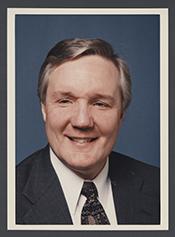
United States · United States Congress · 6 January 1993
Amends the Internal Revenue Code to permanently extend the period during which qualified mortgage bonds and mortgage credit certificates may be issued.
United States · United States Congress · 6 January 1993
Requests the Occupational Safety and Health Administration to publish, within one year, proposed amended regulations that specify the components of an adequate operator training program and that provide that only trained employees be authorized to operate powered industrial trucks.
United States · United States Congress · 6 January 1993
Declares that the President should promptly seek the advice and consent of the Senate to ratification of the Convention on the Rights of the Child, adopted by the United Nations General Assembly with the support of the United States on November 20, 1989.
United States · United States Congress · 5 January 1993
Amends the Internal Revenue Code to make the targeted jobs credit permanent. Increases the maximum age requirement for employment of economically disadvantaged youth from 23 years to 25 years. Establishes economically disadvantaged veterans as members of targeted groups for purposes of the credit.
United States · United States Congress · 5 January 1993
TABLE OF CONTENTS: Title I: Elevation of the Environmental Protection Agency to Cabinet Level Title II: Environmental Role of the United States in International Organizations to Which it Belongs Title III: Establishment of the Commission on Improving Environmental Protection Title IV: Effective Date Department of the Environment Act of 1993- Title I: Elevation of the Environmental Protection Agency to Cabinet Level - Department of the Environment Act - Redesignates the Environmental Protection Agency (EPA) as the Department of the Environment. Encourages the Secretary of the Environment to: (1) assist the Secretary of State in participating in international environmental protection agreements and organizations; (2) conduct research on and develop responses to international environmental problems; and (3) provide assistance to foreign countries and international bodies to improve the environment. Establishes a Bureau of Environmental Statistics and an Advisory Council on Environmental Statistics. Authorizes appropriations. Authorizes grants to, and contracts with, State and local governments to assist in data collection. Directs the Secretary to enter into an agreement with the National Academy of Sciences for a report on the adequacy of the Department's data collection procedures and capabilities. Authorizes appropriations. Sets forth conflict-of-interest disclosure requirements for persons entering into arrangements for services with the Secretary. Requires public notice when the award of a contract may result in a conflict of interests. Title II: Environmental Role of the United States in International Organizations to Which It Belongs - Urges the Secretary of State to convene international conferences to encourage the exchange of information on energy efficiency and environmentally acceptable renewable energy sources. Requires the President to encourage the establishment of an international office to monitor annual generation of carbon dioxide and trace gases on a country-by-country basis. Title III: Establishment of the Commission on Improving Environmental Protection - Establishes the Commission on Improving Environmental Protection to make recommendations on the implementation of Federal environmental laws to protect human health and the environment. Authorizes appropriations. Title IV: Effective Date - Sets forth the effective date.
United States · United States Congress · 5 January 1993
Federal Employees Political Activities Act of 1993 - Prohibits an employee from using or attempting to use official authority or influence to interfere with or affect the result of any election. Prohibits the use of official authority to intimidate, threaten, coerce, or influence: (1) any individual for the purpose of interfering with the right to vote or not to vote for any candidate or measure in any election; (2) any person to give or withhold any political contribution; or (3) any person to engage, or not to engage, in any form of political activity. Prohibits an employee from: (1) giving or offering to give a political contribution to any individual either to vote or to refrain from voting; (2) soliciting, accepting, or receiving a political contribution to vote or refrain from voting; or (3) giving or handing over a political contribution to a superior. Prohibits an employee from soliciting, accepting, or receiving a political contribution: (1) from another employee (or a member of another employee's immediate family) with respect to whom the employee is a superior; or (2) in any room or building occupied in the discharge of official duties by a Federal employee, official, or contractor. Prohibits an employee from getting involved with political contributions with any person who: (1) has, or is seeking to obtain, contractual or other business relations with the employing agency; (2) conducts operations regulated by that agency; or (3) has interests which may be substantially affected by the performance of the employee's official duties. Prohibits an employee from engaging in political activity: (1) while on duty; (2) in any room or building occupied in the discharge of official duties by a Federal employee or official; (3) while wearing a uniform or official insignia identifying the office or position of the employee; or (4) while using any vehicle owned or leased by the Government. Exempts certain high level political appointees from such prohibitions if the costs associated with the political activity are not paid for by money derived from the Treasury. Authorizes leave without pay or accrued annual leave to an employee who is a candidate, upon request, to allow such employee to engage in activities relating to that candidacy. Applies this Act to postal employees and employees of the Postal Rate Commission.
United States · United States Congress · 5 January 1993
Merchant Mariners Fairness Act of 1993 - Provides that certain qualified service of a member of the U.S. merchant marine, including a vessel crewmember of the U.S. Army Transport Service, during World War II constituted active military service for purposes of eligibility for various veterans' benefits under the GI Bill Improvement Act of 1977. Requires the Secretary of Defense to issue an honorable discharge under such Act to each merchant marine member whose qualified service warrants such a discharge. Prohibits the payment of any retroactive benefits under this Act. Mandates a processing fee for any benefit application for such qualified service.
United States · United States Congress · 5 January 1993
Freedom of Choice Act of 1993 - Provides that a State may not restrict the right of a woman to choose to terminate a pregnancy: (1) before fetal viability; or (2) at any time, if such termination is necessary to protect the life or health of the woman. Allows a State to impose requirements medically necessary to protect the life or health of such women. Declares that this Act shall not be construed to prevent a State from: (1) requiring minors to involve responsible adults before terminating a pregnancy; and (2) protecting individuals from having to participate in abortions to which they are conscientiously opposed.
United States · United States Congress · 5 January 1993
Directs the Administrator of the Environmental Protection Agency (EPA) to establish an office in a community in the United States located: (1) not more than ten miles from the border between the United States and Mexico; and (2) as close as practicable to the point that is halfway between San Diego, California, and Brownsville, Texas. Provides that the head of such office shall be the Regional EPA Administrator for the region. Directs the EPA Administrator to delegate to the Regional Administrator functions relating to: (1) administering EPA activities in such region; and (2) coordinating, and cooperating with the Government of Mexico in the implementation of, EPA programs relating to transboundary hazardous waste and air, soil, and water quality problems.
United States · United States Congress · 5 January 1993
Constitutional Amendment - Declares that equality of rights under the law shall not be denied or abridged by the United States or any State on account of sex.
United States · United States Congress · 1 October 1992
Recreational Hunting Safety Enhancement Act of 1992 - Prohibits knowingly and with intent to obstruct or prevent a lawful hunt: (1) harassing, impeding, or interfering with an individual participating in a lawful hunt of Federal land; (2) scaring, herding, harassing, decoying, dispersing, or disturbing animals or fish subject to such a hunt; or (3) taking or abusing property, equipment, or hunting dogs being used in conjunction with such a hunt (obstructing a lawful hunt). Authorizes the Secretary concerned (the Secretary of Agriculture with respect to Federal land included in the National Forest System or the Secretary of the Interior with respect to Federal land administered by the Bureau of Land Management) to impose a civil penalty of up to: (1) $1,000 for each violation; and (2) $5,000 for each such violation if the Secretary concerned determines that the violation involved the use of force or violence, or the threatened use of force or violence, against the person or property of another person. Sets forth provisions regarding: (1) hearing requirements; (2) multiple violations; (3) the imposition of such penalties in addition to other criminal or civil penalties that may be levied against the person as a result of the proscribed activity; and (4) a requirement that, after deduction of costs attributable to collection, such moneys be deposited in a trust fund to be used by the National Fish and Wildlife Foundation to carry out activities of the Foundation and the North American Waterfowl Management Plan described in the North American Wetlands Conservation Act. Amends the Federal criminal code to establish penalties (a fine, imprisonment of one to three years, or both) for obstructing a lawful hunt. Permits injunctive relief to be sought by: (1) the head of a State agency with jurisdiction over fish or wildlife management; (2) the Attorney General; (3) any individual who intends to participate in a lawful hunt on Federal lands; or (4) a hunting or sportsman's organization to which the individual belongs. Specifies that: (1) this Act is not intended to preempt a State law or local ordinance that provides for civil or criminal penalties for a person who obstructs or otherwise interferes with a lawful hunt; and (2) the bringing of an action pursuant to this Act shall not prevent an independent action against a person under a State law or local ordinance.
United States · United States Congress · 30 September 1992
American Jobs Retention Act of 1992 - Prohibits the use of funds under the Foreign Assistance Act of 1961 or the Export-Import Bank Act of 1945 to finance: (1) the establishment of an export processing zone in a foreign country in which the tariff, commercial, tax, labor, environmental, and safety laws of such country do not apply to such zone; (2) any activity carried on by any foreign business within the United States to encourage U.S. businesses to locate or relocate outside of the United States; or (3) activities of a foreign country that contribute to the violation of laws to protect internationally recognized worker rights, including activities within any export processing zone.
United States · United States Congress · 16 September 1992
Prescription Drug User Fee Act of 1992 - Amends the Federal Food, Drug, and Cosmetic Act to provide authority for the Secretary of Health and Human Services to assess and collect fees from manufacturers of prescription drugs beginning in FY 1993. Establishes a schedule for prescription drug application and supplement fees, prescription drug establishment fees, and prescription drug product fees. Provides for the annual adjustment of such fees to reflect increases in the Consumer Price Index for urban consumers or increases in Federal pay. Authorizes the Secretary to waive or reduce fees. Prohibits the assessment of fees for a fiscal year after FY 1993 unless appropriations for salaries and expenses of the Food and Drug Administration (FDA) are equal or greater than such appropriations for FY 1992. Credits such fees to the appropriation account for salaries and expenses of the FDA. Authorizes appropriations for FY 1993 through 1997. Provides a mechanism for collecting unpaid fees. Requires the FDA to make annual reports to the Congress on this Act.
United States · United States Congress · 12 August 1992
Amends the Omnibus Crime Control and Safe Streets Act of 1968 to direct the Bureau of Justice Assistance to pay the same benefit to public safety officers for permanent and total disability as that payable for death benefits (i.e., $100,000; currently, the Bureau is directed to pay up to that amount, to the extent appropriations are provided, subject to specified limitations). Makes this Act applicable with respect to injuries occurring on or after November 29, 1990.
United States · United States Congress · 12 August 1992
Amends the Fair Labor Standards Act of 1938 to provide that inmates of State penal or correctional institutions are not to be treated as employees for purposes of such Act.
United States · United States Congress · 12 August 1992
Authorizes the President, on behalf of the Congress, to present a gold medal to John Birks "Dizzy" Gillespie in recognition of his accomplishments as a musician. Authorizes appropriations. Authorizes the Secretary of the Treasury to provide for the sale of bronze duplicates of the medal.
United States · United States Congress · 12 August 1992
Film Disclosure Act of 1992 - Amends the Lanham Act to require that each public exhibition of a materially altered motion picture (and each copy of such film offered to the public through sale or rental) bear a label which conspicuously discloses the fact of: (1) the film's material alteration from the form in which it was first released to the public; (2) the nature of such alteration; and (3) any objections raised by the artistic authors with reference to such alteration. Delineates the compliance procedure for: (1) distributors or networks that propose to exploit a materially altered film; and (2) motion pictures intended for home use through either retail purchase or rental. Grants an artistic author the right to seek injunctive relief in U.S. district courts to prevent violation of his or her rights under this Act.
United States · United States Congress · 9 July 1992
Supports the planting of 500 redwood trees from California on the northwest coast of Spain in commemoration of the quincentenary of the voyage of Christopher Columbus to the New World. Designates such trees as a gift to the people of Spain made in the name of the people of the United States.
United States · United States Congress · 8 July 1992
Authorizes and directs the Director of the Office of Management and Budget to develop and submit to the President and the Congress a plan to reduce Federal overhead costs by ten percent of FY 1992 levels.
United States · United States Congress · 2 July 1992
Fiscal Accountability and Impact Reform Act (FAIR Act) - States that one purpose of this Act is to assist the Congress in consideration of proposed legislation establishing or revising Federal programs to assure that, to the maximum extent practicable, legislation enacted will: (1) minimize the burden of such legislation on expenditure of scarce local public resources by State and local governments; (2) minimize inefficient allocation of economic resources; and (3) reduce the adverse effect of such legislation on the ability of State and local governments to use local public resources to meet local needs, and on allocation of economic resources, full employment, and international competitiveness. States that a second purpose of this Act is to require Federal agencies to exercise discretionary authority and implement statutory requirements in a manner which, consistent with agency mission and Federal law, minimizes the impact of regulations and other major Federal actions affecting the economy on: (1) the ability of State and local governments to use local public resources to meet local needs; and (2) the allocation of economic resources, full employment, and international competitiveness of American goods and services. Title I: Legislative Reform - Provides that whenever a committee of either House reports a bill to its House which mandates unfunded requirements upon State and local governments or the private sector, the report accompanying that bill shall analyze the effect of the new requirements on: (1) State and local government expenditures necessary to comply with Federal mandates; (2) private businesses; and (3) economic growth and competitiveness. Title II: Agency Impact Analysis - Requires, to the fullest extent practicable, that: (1) the policies, regulations, and public laws of the United States be interpreted and administered in accordance with the purposes of this Act; (2) all Federal agencies, consistent with attainment of the requirements of Federal law, minimize the adverse effects of rules affecting the economy; and (3) Federal agencies take certain actions in promulgating new rules, reviewing existing rules, developing legislative proposals, or initiating any other major Federal action affecting the economy whenever an agency identifies two or more alternatives which will satisfy the agency's statutory obligations. Provides that, whenever an agency publishes a general notice of proposed rulemaking, promulgates a final rule, or before initiating or implementing any other major Federal action affecting the economy, the agency shall prepare and make available for public comment an Economic Impact Assessment. Specifies the contents of such an assessment. Provides for judicial review of final agency actions for compliance with this title.
United States · United States Congress · 2 July 1992
Denounces the sexual misconduct that occurred at the annual Navy Tailhook Association symposium in September 1991. Calls on the Secretary of Defense to ensure that the ongoing Department of Defense investigation of such misconduct is full and uncompromising. Urges the Secretary of the Navy to recommend and initiate full disciplinary procedures against any culpable individuals. Recognizes the importance of equality of opportunity for women and men in the armed forces to achieving mutual respect between the sexes. Urges the Secretary of Defense to make available to female military personnel the same opportunities available to male personnel, to the extent consistent with the protection and security of the United States.
United States · United States Congress · 1 July 1992
Birth Defects Prevention Act of 1992 - Amends the Public Health Service Act to establish birth defects prevention and research programs. Authorizes the Secretary of Health and Human Services, acting through the Director of the Centers for Disease Control (CDC), to award grants to, enter into cooperative agreements with, or provide direct technical assistance in lieu of cash to, States, State health authorities, or health agencies of political subdivisions of a State for collection, analysis, and reporting of birth defects statistics from birth certificates, infant death certificates, hospital records, or other sources and to collect and disaggregate such statistics by gender and racial and ethnic group. Directs the Secretary to establish at least five regional birth defects monitoring and research programs to collect and analyze information on the number, incidence, correlation, and causes of birth defects, to include information regarding gender and different racial and ethnic groups, including Hispanics, non-Hispanic whites, African Americans, Native Americans, and Asian Americans. Authorizes the Secretary, acting through the Director of the CDC, to award grants or enter into cooperative agreements with specified entities to serve as Centers of Excellence for Birth Defects Prevention Research. Requires one of the Centers to focus on birth defects among ethnic minorities. Requires the CDC to establish a clearinghouse for the collection and storage of data and generated from birth defects monitoring programs developed under this Act. Directs the Secretary, acting through the Director of the CDC, to award grants to or enter into cooperative agreements with State departments of health, universities, or other private, or nonprofit entities to develop, evaluate, and implement prevention strategies designed to reduce the incidence and effects or (sic) birth defects. Directs the Secretary to establish an Advisory Committee for Birth Defects Prevention to provide advice and recommendations on prevention and amelioration of birth defects to the Secretary and the Director of the CDC. Requires the Secretary to report biennially to the House Committee on Energy and Commerce and the Senate Committee on Labor and Human Resources regarding the incidence of birth defects, the contribution of birth defects to infant mortality, the outcome of implementation of prevention strategies, and identified needs for research and policy development to include information regarding the various racial and ethnic groups, including Hispanic, non-Hispanic whites, African Americans, Native Americans, and Asian Americans. Authorizes appropriations.
United States · United States Congress · 25 June 1992
Designates the Department of Veterans Affairs medical center in Marlin, Texas, as the Thomas T. Connally Department of Veterans Affairs Medical Center.
United States · United States Congress · 24 June 1992
World University Games Commemorative Coin Act - Authorizes the minting and issuance of five dollar gold coins and one dollar silver coins (at no net cost to the Government) to commemorate American participation in the World University Games. Requires that all surcharges from the sale of such coins be paid to the Greater Buffalo Athletic Corporation to support amateur athletic programs, erect facilities for the use of such athletes, and to underwrite the cost of sponsoring the World University Games.
United States · United States Congress · 24 June 1992
Directs that, in the administration of any benefits program established by or under Federal law which requires the use of data obtained in the most recent decennial census, the 1990 adjusted census data be considered the official data for such census.
United States · United States Congress · 22 June 1992
Nursing Facility Assistance Act of 1992 - Amends titles XVIII (Medicare) and XIX (Medicaid) of the Social Security Act to revise standards for decertification of nurse aide training and competency evaluation programs (programs) operated by nursing facilities. Repeals requirements under Medicaid for preadmission screening and annual resident review by such facilties. Repeals requirements under Medicare and Medicaid respecting: (1) annual external reviews of the use of psychopharmacologic drugs; and (2) repayments to the Federal Government of payments continued pending remediation if corrective action is not taken. Provides for an increase in the minimum amount required under Medicare and Medicaid for the separate deposit of nursing facility residents' personal funds. Provides for reimbursement under Medicaid for amounts spent for programs which are attributable to activities relating to individuals who are not enrolled under a State Medicaid plan. Makes this Act effective as if included in the enactment of the Omnibus Reconciliation Act of 1987.
United States · United States Congress · 18 June 1992
Gulf of Mexico Environmental and Economic Restoration and Protection Act of 1992 - Expresses the sense of the Congress with respect to environmental restoration of the Gulf of Mexico. Establishes a program for protection and preservation of the economic and environmental resources of the Gulf, to be known as the Gulf of Mexico Program. Directs the Administrator of the Environmental Protection Agency (EPA) to establish a Gulf of Mexico Program Office within EPA. Establishes a Gulf of Mexico Executive Board to: (1) prepare and update a joint plan for the Federal, State, interstate, local, and nongovernmental development of economic, ecological, and aesthetic resources of the Gulf and protection of the ecosystem; (2) develop long-range schedules for the collection and analysis of data and for planning and completion of projects in the Gulf and surrounding areas; and (3) approve and fund studies of economic, ecological, and aesthetic resource problems in the Gulf and surrounding areas. Sets forth required contents of the plan and requires the Administrator to submit the plan to the Congress. Provides for State cost-sharing of Gulf restoration activities. Requires the Administrator to award grants for the conduct of research to develop baseline scientific data regarding environmental quality of the Gulf for use in evaluating and implementing the plan. Authorizes grants to be awarded to any Gulf State agency, non-profit research organization, or university which meets eligibility requirements. Sets forth grant proposal, application, and cost-sharing requirements. Authorizes and allocates appropriations.
United States · United States Congress · 16 June 1992
Foreign Aid Reform Act of 1992 - Amends the Foreign Assistance Act of 1961 to declare that economic support assistance should be provided principally through commodity import programs, project assistance, sector programs, or the provision of U.S. goods and services. Permits such assistance to be provided to a foreign government as a cash transfer only pursuant to an agreement requiring the recipient government to spend the cash transfer to purchase U.S. goods and services to the extent that the recipient government purchases goods and services not produced in that country. Exempts from this Act any recipient government that: (1) receives less than $25,000,000 cash transfer assistance for a fiscal year; or (2) as of April 1, 1989, was receiving such assistance and has an agreement with the United States under which it agrees to spend an amount equal to the amount of the cash transfer on U.S. goods and services, to carry 50 percent of all bulk shipments of U.S. grain on privately-owned U.S.-flag commercial vessels, to purchase U.S. grain at levels comparable to those purchased in prior years, and to comply with such requirements in any fiscal year in which it receives such assistance. Authorizes the President to waive the requirements of this Act if it is in the national interest to do so.
United States · United States Congress · 11 June 1992
Cash Management Improvement Act Amendments of 1992 - Amends the Cash Management Improvement Act of 1990 (the Act) to remove the two-year deadline for the Secretary of the Treasury to prescribe regulations for the timely disbursement of Federal funds. Extends the deadline for the Secretary to enter into agreements with States for intergovernmental financing and to prescribe regulations for such financing from October 24, 1992, until July 1, 1993, or by the first day of a fiscal year of the State which begins in 1993, whichever is later. Makes the Act effective on such date. Extends for one year the report to the Congress by the Comptroller General on the implementation of such Act.
United States · United States Congress · 9 June 1992
International Fair Competition Act of 1992 - Makes it unlawful for any person to export an article from a foreign country into, or cause an article to be sold within, the United States at a price that is less than the average total cost of the article, if: (1) the effect of the importation or sale of such articles may be to destroy or injure commerce, prevent the establishment of a line of commerce, or substantially lessen competition or tending to create a monopoly in any line of commerce in any section of the country; and (2) the foreign country's market in the article lacks effective price competition among competitors or is substantially closed to effective international competition. Repeals a provision stating that any person who violates, or conspires to violate, such prohibition is guilty of a misdemeanor, punishable by specified penalties.
United States · United States Congress · 9 June 1992
Declares that the Congress acknowledges and appreciates the commitment, devotion, and sacrifices of present and former military families. Designates November 23, 1992, as National Military Families Recognition Day.
United States · United States Congress · 28 May 1992
Amends the Foreign Assistance Act of 1961 to exclude construction and fire equipment from the definition of "excess defense articles" for purposes of restricting the transfer of such equipment to foreign countries.
United States · United States Congress · 21 May 1992
Tax Extension Act of 1992 - Amends the Internal Revenue Code to extend from August 1, 1992, until August 1, 1993, the provisions governing the allocation of research and experimental expenditures for purposes of determining sources of income. Extends the following provisions from June 30, 1992, until December 31, 1993: (1) the tax credit for increasing research activities; (2) the targeted jobs credit; (3) the authority to issue qualified mortgage bonds and qualified mortgage credit certificates; (4) the authority to issue qualified small issue bonds to finance manufacturing facilities and farm property; (5) employer-provided educational assistance; (6) the tax exclusion for employer-provided group legal services plans; (7) the energy investment credit for solar and geothermal property; (8) the credit for clinical testing expenses for certain drugs for rare diseases or conditions; and (9) health insurance costs of self-employed individuals. Extends the low-income housing credit until December 31, 1993 with modifications. Expands the ten-year anti-churning rule waiver to certain projects substantially assisted, financed, or operated under the National Housing Act. Allows units occupied by certain full-time students to qualify for such credit. Authorizes the Treasury Department to waive penalties for certain de minimis errors and recertifications. Provides that certain community service facilities in projects in qualified census tracts are included in eligible basis as functionally related and subordinate facilities. Allows certain building owners to elect to use apartment size or family size in determining the credit's gross rent limitation. Provides for the tax treatment of resale price control and subsidy lien programs under mortgage revenue bond provisions. Repeals the tax preference for the appreciated property charitable deduction during 1992 and 1993. Requires a report by the Secretary of the Treasury to certain congressional committees on an advance valuation procedure.
United States · United States Congress · 21 May 1992
Designates February 21 through 27, 1993, as American Wine Appreciation Week. Commends the winegrape and fruit growers and vintners of the United States for the production of high quality agricultural products.
United States · United States Congress · 14 May 1992
Amends rule XIV of the Rules of the House of Representatives to prohibit the Speaker of the House from recognizing Members to make special-order speeches. Amends rule XXXIV to prohibit extensions of remarks by Members from being inserted in the Congressional Record, except as they pertain to legislative matters before the House, its committees or subcommittees.
United States · United States Congress · 13 May 1992
Tax Extension Act of 1992 - Amends the Internal Revenue Code to make the low-income housing credit permanent law. Modifies the rule for unused housing credit carryovers allocated among certain States. Expands the ten-year anti-churning rule waiver to certain projects substantially assisted, financed, or operated under the National Housing Act. Allows units occupied by certain full-time students to qualify for such credit. Authorizes the Treasury Department to waive penalties for certain de minimis errors and recertifications. Excludes assistance under the HOME Investment Partnerships Act from the definition whether a building is federally subsidized. Permits the use of tax-exempt bond financing for such purposes. Provides for State housing credit agencies to designate difficult development areas (in lieu of the Secretary of Housing and Urban Development). Allows the use of the rehabilitation investment credit for qualified low-income buildings without regard to whether interior walls are preserved. Prohibit discrimination against section 8 voucher holders in leasing units in qualified low-income buildings. Requires notice before termination of tenancy in such buildings. Allows certain building owners to elect to use apartment size or family size in determining the low-income credit gross rent limitation. Extends the following provisions from June 30, 1992, until December 31, 1993: (1) the authority to issue qualified mortgage bonds and qualified mortgage credit certificates; (2) the authority to issue qualified small issue bonds to finance manufacturing facilities and farm property; (3) employer-provided educational assistance; (4) the tax credit for increasing research activities; (5) the tax exclusion for employer-provided group legal services plans; (6) the targeted jobs credited; and (7) the credit for clinical testing expenses for certain drugs for rare diseases or conditions. Provides for the tax treatment of resale price control and subsidy lien programs under mortgage revenue bond provisions. Excludes from the five-year occupancy requirement under the tax-exempt mortgage revenue bond program any two-family residence which: (1) is a targeted area residence; or (2) is located in an area designated as an economic development zone or enterprise zone by Federal or State law. Suspends, for 1992 and 1993, the tax preference for the appreciated property charitable deduction.
United States · United States Congress · 7 May 1992
Trade Expansion Act of 1992 - Title I: Market Access Provisions - Subtitle A: Enforcement of United States Rights Under Trade Agreements and Response to Certain Foreign Trade Practices - Amends the Trade Act of 1974 to extend through calendar year 1997 the requirement that the United States Trade Representative (USTR) identify U.S. trade liberalization priorities. Expresses the sense of the Congress that foreign countries that have substantial trade surpluses with the United States, and maintain acts, policies, or practices that are major barriers to, or distortions of, potential U.S. export trade, should be identified (for purposes of "Super 301" under the Trade Act of 1974) as priority foreign countries, and such acts, policies, or practices identified as priority practices. Amends the Trade Act of 1974 to authorize any interested person to request the USTR to review to determine whether a foreign country is in material compliance with the terms of a trade agreement. Defines an "interested person" as any person with a significant economic interest that is being or has been adversely affected by a foreign country's failure to comply materially with terms of a trade agreement. Requires the USTR to determine what action to take if a foreign country is found not in material compliance with such agreement. Directs the USTR to initiate an investigation of all acts, policies, and practices of Japan, Korea, and Taiwan that affect the access of U.S. rice to their markets. Requires the USTR to negotiate the elimination of such acts, policies, and practices, and report to the Congress on the progress of such negotiations. Subtitle B: International Trade in Motor Vehicles and Motor Vehicle Parts - Directs the USTR to initiate an investigation of all acts, policies, and practices of Japan that affect the access of U.S. motor vehicles and motor vehicle parts to its market, including but not limited to: (1) acts, policies, and practices utilized in the Japanese automotive distribution system; (2) toleration of anticompetitive activities by private Japanese firms (including "Keiretsu"); (3) exclusionary business practices; and (4) testing requirements and other government regulations. Requires the USTR to negotiate with Japan for a trade agreement that: (1) eliminates such acts, policies, and practices; (2) provides enforcement of Japan's commitments under the Structural Impediments Initiative, the Market -Oriented Sector Specific agreements, and the Action Plan announced at the Tokyo Summit in January 1992 with respect to trade in, and purchase of, motor vehicles and motor vehicles parts; (3) establishes long term goals for the purchase by Japanese motor vehicle manufacturers of high value-added motor vehicle parts and accessories; and (4) establishes procedures for the exchange of information between the United States and Japan that will permit the accurate assessment of the bilateral trade in motor vehicle parts. Requires the USTR to report to the Congress if such negotiations prove unsuccessful. Directs the President to negotiate with Japan for a voluntary restraint agreement that will provide for the imposition of limitations on the aggregate number of Japanese passenger automobiles and light trucks that may be exported to the United States between 1992 and 2000. Authorizes the President to enforce such agreements. Requires specified reports with respect to such negotiations. Expresses the sense of the Congress that the USTR should refer to the U.S. Government all information pertaining to Japanese acts, policies, and practices that adversely affect access to the purchasing by Japanese motor vehicle manufacturers in the United States of U.S. motor vehicle parts by Japanese-owned or-controlled producers. Requires the Board established by the Foreign-Trade Zones Act to: (1) review the operations of U.S. and foreign motor vehicle and motor vehicle parts producers to determine any positive economic effect on the United States of such Act; and (2) take appropriate action, including revocation or modification of a foreign-trade zone or subzone grant, with respect to any producer whose operations in such zone are determined not to have a net positive effect on the U.S. economy. Title II: Customs Modernization - Customs Modernization and Informed Compliance Act - Subtitle A: Improvements in Customs Enforcement - Amends the Tariff Act of 1930 to revise customs procedures with respect to: (1) electronic transmission of forged, altered, or false data to the United States Customs Service with regard to the entry of imported merchandise; (2) penalties for failure to declare imported controlled substances; (3) examination and detention of imported merchandise; (4) certain recordkeeping requirements; (5) examination of books and witnesses; (6) review of protests by the Customs Service; (7) a repeal of a provision relating to the reliquidation on account of fraud; (8) penalties relating to manifests, false drawback or refund claims, and for fraud, gross negligence, and negligence; (9) unlawful unlading or transshipment; (10) public access to Customs Service interpretative rulings and decisions; and (11) seizure of imported merchandise. Subtitle B: National Customs Automation Program - Directs the Secretary of the Treasury (Secretary) to establish the National Customs Automation Program which shall be an automated and electronic system for the processing of commercial imports. Provides for electronic data transmission relating to: (1) remote location filing; (2) effective date of rates of duty on imported merchandise; (3) merchandise manifests; (4) imported merchandise invoices; (5) entry and release of imported merchandise; (6) admissibility in administrative and judicial proceedings of electronically transmitted information; (7) appraisement and liquidations of imported merchandise; (8) the payment of duties; (9) abandonment and damage to imported merchandise; (10) protests of Customs Service decisions; (11) refunds and errors; (12) bonds and other security; and (13) customs house brokers. Requires a refund (drawback) of duties (less one per cent of such duties) on articles produced in the United States with imported merchandise that have been destroyed under Customs Service supervision, provided such articles have not been used prior to such destruction. Sets forth provisions with respect to customs officer's immunity in regard to the appraisement of or collection of duties on imported merchandise. Subtitle C: Miscellaneous Amendments to the Tariff Act of 1930 - Amends the Tariff Act of 1930 to authorize the Secretary to disregard the difference, but not less than $20 (currently ten dollars), between the total estimated duties deposited with respect to imported merchandise and the total amount actually due on such merchandise. Authorizes the Secretary to admit duty-free: (1) gifts from persons in foreign countries to persons in the United States whose value does not exceed $100 (currently, $50), or $200 (currently, $100) in the case of gifts from persons in the Virgin Islands, Guam, and American Samoa; (2) articles accompanying persons for personal or household use whose value does not exceed $200 (currently, $25); or (3) articles whose value does not exceed $200 (currently, five dollars) in other cases. Authorizes the Secretary to waive collection of duties due on merchandise that are worth less than $20, or such greater amount as prescribed by him or her. Requires masters of vessels that have visited a hovering vessel or received merchandise while outside the U.S. territorial sea to report their arrival to the nearest customs facility. Provides for the electronic transmission of vessel documentation to the Customs Service. Requires the following vessels to report to the nearest Customs Service facility within 24 hours (or other period of time) as provided after arrival to a U.S. port: (1) vessels from a foreign port; (2) foreign vessels from a domestic port; (3) U.S. vessels having bonded or foreign merchandise for which entry has not been made; or (4) vessels which visited a hovering vessel or received merchandise outside the U.S. territorial sea. Authorizes the Secretary to permit masters of vessels to make preliminary entry of their vessel with the Customs Service in lieu of or before formal entry is made. Requires U.S. and foreign vessels to obtain clearance from the Customs Service before proceeding from a U.S. port for: (1) a foreign port; (2) another U.S. port (for foreign vessels only), or (for U.S. vessels only) another U.S. port if the vessel has bonded or foreign merchandise for which entry has not been made; or (3) outside the U.S. territorial sea to visit a hovering vessel or to receive merchandise. Exempts from entry and clearance requirements certain passenger vessels on excursion from the U.S. Virgin Islands to the British Virgin Islands and returning, U.S. documented vessels with recreational endorsement, or (as under current law) undocumented U.S. pleasure vessels not engaged in trade, except such vessels must comply upon arrival with specified customs reporting requirements and navigation laws and must not have visited any hovering vessel. Prohibits merchandise, passengers, or baggage from being unladen from any vessel required to make entry or vehicle required to report its arrival until such entry or report of arrival is made and a permit for unlading has been issued by the Customs Service. Authorizes the issuance of such permits through electronic data transmission. Requires every importer of record of merchandise to make and file electronically or otherwise a declaration stating whether such merchandise is imported pursuant to a purchase or purchase agreement and that all other required documents are true and correct. Requires persons who gained any benefit from, or met any obligation to the United States as the result of the prior exportation of merchandise that has returned as undeliverable to inform the Customs Service of the return of such merchandise within a reasonable time. Provides for electronic data transmission of entry information to complete any incomplete entry of imported merchandise. Declares entered or unentered merchandise that remains in customs custody for six months, with an extension at the importer's request of up to a year (currently, for merchandise that remains in custody for one year), and in which duties, taxes, fees, storage, and other charges have not been paid, to be unclaimed merchandise which shall be appraised and sold by the Customs Service at public auction. Authorizes the sale of imported gunpowder and other explosive merchandise that if permitted to remain in a bonded warehouse for six months (currently, one year) would depreciate in value to the extent that its sale would be insufficient to pay such duties, taxes, fees, storage, and other charges. Authorizes the Customs Service, in lieu of sale, to provide notice to interested parties that, unless, within 30 days of such notice, the subject merchandise is entered or withdrawn for consumption and payment made of all duties, taxes, and fees, transfer and storage charges and other expenses that title to such merchandise shall be deemed to vest in the United States. Authorizes the Secretary to pay to a party that has lost a substantial interest in merchandise by virtue of title vesting in the United States, and can establish that it did not receive a vesting notice, an amount from the Customs Forfeiture Fund equal to what such party would have received if such merchandise had been sold and a proper claim filed. Requires any surplus of the proceeds from the sale of such merchandise to be deposited into the Fund if a claim for such surplus is not filed with the Customs Service. Authorizes the Secretary to prescribe regulations for the declaration and entry of merchandise whose value does not exceed a certain amount, not more than $2,500 (currently not greater than $1,250), and/or when different commercial facilitation and risk considerations that may vary for different classes or kinds of merchandise or different classes of transactions may dictate. Requires the Secretary upon seizure and forfeiture of imported merchandise bearing a counterfeit mark to dispose of such merchandise more than 90 days (currently, one year) after such forfeiture. Authorizes withdrawal of imported merchandise from a warehouse for transfer to a foreign trade zone. Authorizes the Customs Service to order the destruction or other appropriate disposition of vessels, vehicles, aircraft, merchandise, or baggage that has been seized under the customs laws if it determines that the expense of keeping such items is disportionate to their value (currently applies only to items of less than $1,000 in value). Authorizes the use of funds from the Customs Forfeiture Fund for the payment of: (1) certain transfer and storage charges and expenses; and (2) claims against Customs Service employees. Requires actions for fraud, gross negligence, and negligence, false drawback or refund claims, and restoration of lawful duties with respect to imported merchandise to be instituted within five years after the alleged violation or discovery of such fraud. Requires the Customs Service to be reimbursed the administrative cost and expense incurred in collecting fees on behalf of other Federal agencies. Authorizes the Secretary to settle, for no more than $50,000 in each case, claims for personal injury, death, or damage to, or loss of, privately owned property caused by an investigative or law enforcement officer of the Customs Service. Authorizes the Secretary to contract with persons for collection services to recover indebtedness arising under the customs laws, provided the Customs Service has exhausted all administrative efforts to collect such indebtedness. Subtitle D: Miscellaneous Provisions and Consequential and Conforming Amendments to Other Laws - Amends the Harmonized Tariff Schedule of the United States to exempt from such Schedule articles which are returned within 45 days after being exported from the United States as undeliverable and which have not left the custody of the carrier or foreign customs service. Prohibits such exportations from satisfying any requirement for exportation in order to receive a benefit from, or meet an obligation, to the United States as a result of such exportation. Declares that certain railway locomotives and railway freight cars on which no duty is owed are not subject to the entry or release requirements for imported merchandise under the Tariff Act of 1930. Exempts instruments of international trade, such as containers, lift vans, rail cars and locomotives, truck cabs and trailers, etc., from formal entry procedures. Requires them to be accounted for however, when imported to and exported from the United States through the manifesting procedures required for international carriers by the U.S. Customs Service. Amends the Internal Revenue Code and other specified Federal law with respect to: (1) certain expenditures from the Harbor Maintenance Trust Fund; and (2) coastwise trade vessels and U.S. vessels visiting foreign ports. Amends Federal law to grant the Court of International Trade exclusive jurisdiction of any civil action for review decisions of the Customs Service that deny, suspend, or revoke accreditation of private customs laboratories. Bars the commencement of such actions unless brought before such Court within 60 days of such decisions. Repeals specified provisions of Federal law. Requires the Commissioner of Customs to report to the Congress each fiscal year after FY 1992 on the collection of duties imposed under the antidumping and countervailing duty laws. Amends the Omnibus Budget Reconciliation Act of 1987 to authorize the Commissioner of Customs to obtain from the operators of centralized cargo examination stations information on fees paid for the provision of services at such stations. Requires the Commissioner to report to specified congressional committees on the payment of such fees. Amends the Customs and Trade Act of 1990 to require the Commissioner of Customs to: (1) devise a methodology for estimating the level of compliance with the U.S. customs laws; and (2) evaluate the extent to which such compliance was obtained during the 12-month period preceeding the 60th day before each fiscal year 1993 through 1995. Directs the Commissioner to initiate, and submit to the Congress, a compliance review of certain carrier services. Title III: Customs and Trade Agency Authorizations for Fiscal Years 1993 and 1994 - Amends the Tariff Act of 1930 to authorize appropriations to the United States International Trade Commission (ITC) for FY 1993 and 1994. Earmarks a specified amount for reception and entertainment expenses. Prohibits use of such funds for any special study, investigation, or report requested by an agency of the executive branch unless such agency reimburses the ITC for its costs. Amends the Customs Procedural Reform and Simplification Act of 1978 to authorize appropriations to the United States Customs Service for FY 1993 and 1994 for: (1) noncommercial operations; (2) commercial operations; and (3) the air interdiction program. Amends the Trade Act of 1974 to authorize appropriaitons to the Office of the United States Trade Representative for FY 1993 and 1994. Amends the Tariff Act of 1930 to authorize apropriations for FY 1993 and 1994 for certain expenditures from the Customs Forfeiture Fund relating to purchases by the Customs Service of evidence of smuggling of controlled substances. Amends the Trade Act of 1974 to eliminate the East-West Trade Statistics Monitoring System. Title IV: Miscellaneous Trade Provisions - Subtitle A: Nontariff Provisions - Directs the President to negotiate trade agreements that eliminate the adverse effects of anticompetitive practices on international trade. Requires the President to report to the Congress on the status of such negotiations. Expresses the sense of the Congress that the President, with respect to ensuring the effectiveness of the U.S. embargo of Cuba, should seek negotiations with countries that trade with Cuba to seek their agreement to restrict trade relations with it. Amends the Omnibus Trade and Competitiveness Act of 1988 to require the Secretary of the Treasury, at the request of the Secretary of Commerce (currently, authorizes the Secretary of the Treasury): (1) to take necessary action to ensure the attainment of the objectives of the machine tool decision of the President on May 20, 1986, and on December 27, 1991; and (2) to enforce any imported machine tool quantitative limitations, restrictions, or other terms contained in related bilateral arrangements. Requires the Secretary of the Treasury to enforce the quantitative limitations and other provisions of bilateral arrangements negotiated with Taiwan on December 31, 1991, pursuant to the President's machine tool decision of May 20, 1986, until bilateral agreements are negotiated with such country pursuant to the President's December 27, 1991, decision. Directs the ITC to report to the Congress propsals for consolidating and simplifying U.S. international trade laws. Requires the Director of the Congressional Research Service to make recommendations to the Congress about establishment of a special unit that would: (1) integrate the resources of the Service, the ITC, and other appropriate agencies; and (2) serve as a central and objective source of information for the Congress on data and trends in trade between the United States and foreign countries. Subtitle B: Foreign Subsidies and Countervailing and Antidumping Duty Amendments - Amends the Tariff Act of 1930 to require completion of reviews by the administering authority of the amount of duty with respect to countervailing and antidumping duty orders by the 270th day after the day on which a request for review was received. (Currently, there is no such deadline for completion of such a review.) Requires the ITC to consider contracts with long lead time as a factor when making material injury determinations with respect to an affected domestic industry in countervailing and antidumping duty investigations. Declares that the presence or absence of any factor the ITC is required to consider shall not give decisive guidance with respect to any threat of material injury determinations. Provides that, with respect to the determination of foreign market value of imported merchandise under investigation, no allowance shall be made to account for differences in input costs that are based on whether the end product made from the input is sold in the home market or exported. Requires the United States Customs Service to report annually to the administering authority on the amount of duties collected during each year under each countervailing and antidumping duty order. Requires the administering authority to make such data available to interested parties. Requires the administering authority, when determining whether imported parts or components are circumventing an antidumping or countervailing duty order or finding, and whether to include such parts or components in such order or finding, to consider: (1) the pattern of trade; (2) the value and sources of supply of parts or components historically used in completion or assembly of the merchandise subject to such order; (3) whether the manufacturer or exporter of such parts or components is related to the person who assembles or completes the merchandise sold in the United States from the parts or components produced in the foreign country with respect to which the order or finding applies; and (4) whether imports into the United States of the parts or components produced in such foreign country have increased after the issuance of such order or finding. Authorizes the administering authority to include within the scope of such order or finding imported parts or components that are used in the completion or assembly of certain merchandise sold in the United States and subject to such order or finding, provided: (1) such merchandise is completed or assembled in the United States from parts or components supplied by the exporter or producer with respect to which such order or finding applies, from suppliers that have historically supplied the parts or components to that exporter or producer, or from any party in the exporting country supplying parts or components on behalf of such exporter or producer; (2) the value of such imported parts and components is significant in relation to the total value of all parts and components used in the assembly or completion operation, excluding packing, of the imported merchandise covered by such order or finding; or (3) consideration of specified factors establishes a pattern of circumvention of a countervailing and antidumping duty order or finding. Enables the administering authority to base such a decision on any of such factors by itself, rather than on all of them together. Sets forth similar provisions for merchandise completed or assembled in other foreign countries. Directs the Secretary of Commerce and the ITC to study and report to the Congress on modification of standards applicable to the initiation of countervailing and antidumping duty actions in order to make petitioning for such initiations less costly and more accessible for domestic petitioners. Requires the USTR to report to the Congress on the operation of the Agreement Concerning the Application of the GATT Agreement on Trade in Civil Aircraft between the United States and the European Community. Expresses the sense of the Congress that the President should not enter into any international trade agreement on antidumping requiring changes in U.S. antidumping laws that would reduce the effectiveness of such laws as a remedy against injurious dumped imports. Urges the President to review antidumping provisions contained in the Draft Final Act Embodying the Results of the Uruguay Round of Multilateral Trade Negotiations dated December 21, 1991 and seek changes to strengthen the effectiveness of U.S. antidumping laws, including, but not limited to, changes in provisions dealing with cumulation of injury and dispute settlement. Expresses the sense of the Congress that the U.S. Government should not condone the use by foreign governments of trade distorting subsidies, including development subsidies, that cause material injury to U.S. industries. Subtitle C: Other Tariff Provisions - Amends the Trade Act of 1974 to remove the Union of Soviet Socialist Republics from the list of countries ineligible for designation as a beneficiary developing country under the Generalized System of Preferences. Amends the Harmonized Tariff Schedule of the United States to create a new tariff classification to cover imports of motor fuel blending stocks. Imposes a duty on such stocks. Revises the classification of linear alkylbenzenesulfonates and linear alkylbenzene sulfonic acids. Revises a specified subheading relating to nonalloy iron and steel pipes and tubes to include non-galvanized forms of such products. Increases the duty on certain other iron and steel pipes and tubes. Imposes a duty on galvanized nonalloy iron and steel pipes and tubes having a specified thickness. Increases the duty on certain stainless steel pipes and tubes. Authorizes the USTR to negotiate compensation for claims made pursuant to the General Agreement on Tariffs and Trade, or any other trade agreement to which the United States is a party, as a result of the amendments made by this Act. Requires the Secretary of the Treasury, with respect to producers of watches in the insular possessions of the United States who are wage certificate holders, to pay to such a holder, at the holder's election, the face value of such certificates less the value of: (1) any duty refunds claimed by the holder under the certificate; and (2) any duty refunds under such certificate that are sold by such holder. Grants duty-free treatment of articles (not over $600 in value) acquired in Bermuda. Grants duty-free treatment to sweaters in which the number of U.S. citizens, nationals, or resident aliens who perform the assembly operations (in Guam) comprise at least 50 percent of the total number of assembly production workers. Sets forth specified exceptions. Provides that stuffed dolls and doll skins that are imported into the United States on or after December 31, 1985, and before October 1, 1988, shall be liquidated as duty free as of October 1, 1988. Declares that a specified production incentive certificate shall be deemed to have been reissued on the 15th day after the enactment of this Act, and shall expire one year after such day. Amends the Tariff Act of 1930 to exempt semiconductors from the country of origin marking requirements under such Act. Amends the Foreign Trade Zones Act to extend until December 31, 1994, the exclusion of bicycle component parts from the exemption from customs laws provided by such Act. Treats certain entries of fabric wholly of polyamide as having been exported from the United States in accordance with and in satisfaction of the temporary importation bond and obligations of The Umbrellas: Joint Project for Japan and U.S.A. Corporation if specified conditions are met. Amends the Harmonized Tariff Schedule of the United States to authorize the extension of time (not to exceed five years) for the exportation of articles to be repaired, altered, or processed, including processes which result in articles manufactured or produced in the United States, that are imported duty-free under bond, provided that any extension beyond the third year must be accompanied by the importer's certification that such articles are to be incorporated into a communications satellite. Subjects to liquidated damages any such articles imported after January 1, 1983, and before the effective date of this Act, that are certified by the importer as having been dedicated for incorporation into a communications satellite, and as not having been exported within the time required because of launch schedule delays. Limits such liquidated damages to a maximum one percent of the liquidated damages established under the bond.
United States · United States Congress · 7 May 1992
Antitrust Reform Act of 1992 - Authorizes Bell operating companies (BOCs) to apply to the Attorney General, notwithstanding the Modification of Final Judgement entered into on August 24, 1982 (AT&T consent decree), for authorization to: (1) engage in research and development related to telecommunications or customer premises equipment; (2) provide information services; (3) manufacture or provide telecommunications equipment, or manufacture customer premises equipment; (4) provide interexchange telecommunications. Requires such application to describe with particularity the nature and scope of each activity, and of each product, service, and geographic market for which authorization is sought. Specifies that the applicable date after which a BOC may apply for authorization: (1) with respect to providing interexchange telecommunications, or an information service relating to an alarm monitoring services, shall be five years after the date of enactment; and (2) in any other case, shall be the date of enactment. Sets forth procedures regarding: (1) the publication of applications in the Federal Register; (2) determinations by the Attorney General, following a comment period by interested persons; and (3) judicial review of such determinations. Makes it unlawful for a BOC to engage in activities to be permitted for BOCs under this Act (such activities) before authorized to do so pursuant to this Act, with exceptions for specified previously authorized activities. Prohibits a BOC with monopoly power in any exchange service market, with respect to such activities (with exceptions), from: (1) discriminating in any relevant market between itself or an affiliated enterprise and any other person (or between any two such other persons) with respect to any product or service related to the provision or use of a telecommunications service if the effect of such action may be to substantially lessen competition or to tend to create a monopoly, in any line of commerce; (2) using proceeds obtained from providing exchange service in such market to subsidize such activities in any relevant market; (3) becoming an affiliated enterprise of, or acquiring any exchange assets of, another BOC; and (4) engaging in such activities with another BOC in any relevant market. Requires: (1) each BOC to advise in writing each of its officers and responsible management personnel of the requirements of this Act and that violations may result in criminal liability; and (2) the chief executive officer of each BOC that is not owned or controlled by another BOC to certify annually in writing to the Attorney General whether such company and its affiliates have complied with the provisions of this Act. Specifies that: (1) it shall be the duty of the U.S. Attorneys to institute proceedings to prevent and restrain violations of this Act in their districts; and (2) whoever knowningly engages (or attempts to engage) in specified activities prohibited by this Act shall be guilty of a felony (and, upon conviction, shall be punished to the same extent provided for a violation of the Sherman Act). Provides a private right of action (for damages and injunctive relief) for violation of this Act. Sets forth provisions with respect to: (1) jurisdiction; (2) subpoenas; and (3) the relationship of this Act to other laws (icluding provision for cumulative penalties). Amends the Clayton Act to include this Act among the antitrust laws.