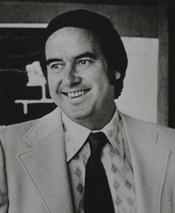
United States · United States Congress · 10 February 1982
Expresses the sense of Congress that the President must take action to prevent nuclear war. States that the United States, in negotiations with nuclear weapon states, should propose halting further testing, production, and deployment of nuclear weapons.
United States · United States Congress · 9 February 1982
Amends the Omnibus Budget Reconciliation Act of 1981 to extend by five months (until September 30, 1982) the period within which an individual must have become a full-time student at a postsecondary educational institution in order to receive, after July 1982, child's insurance benefits on the basis of student status under title II (Old Age, Survivors and Disability Insurance) of the Social Security Act.
United States · United States Congress · 8 February 1982
Declares that any action by the United Nations to prevent a democratic state from exercising its rights to participate in the United Nations will seriously and harmfully affect congressional support for the United Nations.
United States · United States Congress · 2 February 1982
Amends the National Flood Insurance Act of 1968 to include insurance coverage for damage caused by flood-related landslides. Directs the Federal Insurance Administrator, within one year of enactment of this Act, to report to Congress on the feasibility of insuring property which is located outside of, but on the same real estate lot as, a currently insured residential structure. Directs the Secretary of Housing and Urban Development to pay to any person who, during a specified period prior to enactment of this Act, incurred property damage caused by a flood-related landslide. Provides that such amount equal the amount payable if such damage had been covered by such insurance. Authorizes appropriations.
United States · United States Congress · 2 February 1982
Amends the Small Business Act to specify the interest rates for disaster loans made by the Small Business Administration (SBA) to small businesses. Prohibits SBA loans in excess of: (1) $300,000 for each disaster where the borrower is an individual; and (2) $500,000 for each disaster where the borrower is not an individual. Permits the SBA to waive the $500,000 limitation if the loan applicant is a major source of employment in an area suffering a disaster.
United States · United States Congress · 2 February 1982
Declares that the presidential certification submitted to the Congress with respect to sending military aid to El Salvador is void. Directs the President to immediately suspend such assistance. Requires the suspension to remain in effect during FY 1982 and 1983. Prohibits the President from making another such certification until Congress enacts a joint resolution declaring that El Salvador has met specified conditions.
United States · United States Congress · 2 February 1982
Extends congratulations from the Congress to the Italian Government and its antiterrorist police forces for the successful rescue of Brigadier General James L. Dozier. Extends to General Dozier and his family best wishes for a quick recovery and return to normal life.
United States · United States Congress · 15 December 1981
Orphan Drug Act - Amends the Federal Food, Drug, and Cosmetic Act to direct the Secretary of Health and Human Services to promulgate regulations to exempt from such Act drugs intended solely for drug treatment investigations. Defines "drug treatment investigation" as an investigation of a drug which involves human participants with a rare disease or condition. Establishes in the Department of Health and Human Services an interagency committee known as the Committee on Orphan Drug Development. Makes it the function of such committee to promote the development of drugs for rare diseases or conditions (orphan drugs). Requires the Director of the National Institutes of Health (NIH) to submit to the Committee an annual report on the rare disease and condition research activities of NIH. Requires the Committee to report by June 1 of each year to the appropriate congressional committees on its activities and the results of its evaluations, including the report submitted by NIH. Amends the Internal Revenue Code to allow a tax credit for qualified experimental expenses incurred while researching orphan drugs.
United States · United States Congress · 11 December 1981
Amends title XVIII (Medicare) of the Social Security Act to permit an individual to elect hospice care, in lieu of certain other benefits, during two periods of 180 days each during the individual's lifetime. Provides for full reimbursement of reasonable costs to a hospice program, subject to a ceiling. Directs the Comptroller General to conduct a study of the hospice reimbursement method. Defines hospice care as including items and services furnished to the terminally ill in their homes, on an outpatient basis, and on a short term inpatient basis.
United States · United States Congress · 11 December 1981
Expands the membership of the Advisory Commission on Intergovernmental Relations to include three elected school board officials from different States.
United States · United States Congress · 10 December 1981
Expresses the sense of the Congress that the President should instruct the U.S. delegation to the February meeting of the United Nations Commission on Human Rights to tell the Commission that the Soviet Union should stop harassing Soviet Jews and should allow its citizens to practice their religion and to emigrate. Urges the Soviet Union to comply with its human rights obligations. Urges the President to: (1) express, to the Soviet Union, U.S. opposition to harassment of Soviet citizens and to restrictions on emigration; and (2) reiterate that the United States will consider the extent to which other nations honor their commitments under international law when evaluating its relations with such nations.
United States · United States Congress · 8 December 1981
Fair Practices in Automotive Products Act - Title I: Domestic Content Requirements for Motor Vehicles - Sets forth for all motor vehicle manufacturers which produce over 100,000 motor vehicles for ultimate retail sale in the United States "minimum domestic content ratios" (the domestic value, including labor and parts, of the manufacturer's production costs of all automotive products sold in the United States). Requires all vehicle manufacturers producing more than 50,000 motor vehicles for sale in the United States to provide information to the Secretary of Transportation for the purpose of administering this requirement. Authorizes the imposition of import restrictions on manufacturers violating such standards. Title II: Unfair and Deceptive Practices by Vehicle Manufacturers - Defines as an unfair method of competition and deceptive act or practice under the Federal Trade Commission Act the refusal of any vehicle manufacturer to determine whether parts produced in the United States by a parts manufacturer satisfy reasonable replacement part standards established by the vehicle manufacturer. Grants the Federal Trade Commission rulemaking authority to administer this title.
United States · United States Congress · 7 December 1981
Title I: Federal Royalties Collection - Federal Royalties and Rents Collection Act of 1981 - Directs the Secretary of the Interior to: establish a comprehensive system for accounts applicable to: (1) all mineral interests under the Secretary's jurisdiction; and (2) all revenues collected in connection with the sale or lease of such mineral interests. Requires the Secretary, upon promulgation of such system, to submit to Congress: (1) a report concerning such system; and (2) a report concerning the outstanding accounts due the United States from the sale or lease of U.S. mineral interests. Provides for an annual independent audit of Department of Interior accounts relating to the sale or lease of minerals. Makes individuals handling money in connection with a mineral sale or lease liable for negligent losses and requires such individuals to be bonded. Title II: State Collection of Federal Royalties - Amends the Mineral Leasing Act of 1920 to direct the Secretary to collect all money due in connection with public land sales, rentals, interest, and penalties unless there is a State management program for the management of Federal leases. Requires 50 percent of all money collected to be paid to the State within which the leased lands or deposits are or were located, except that the rate shall be 90 percent for Alaska. Requires the Secretary, upon a State's request, to relinquish the administration of all contracts and leases issued by the Secretary within that State to the State, subject to stated requirements. Title III: Miscellaneous Amendments to the Mineral Lands Leasing Act of 1920 - Authorizes the Secretary to promulgate regulations applicable to lessees of oil or gas leases requiring certain: (1) recordkeeping practices; (2) accountability to the Secretary; and (3) reports to the Secretary. Sets forth provisions relating to enforcement of this Act. Title IV: Indian Access to Certain Records - Directs the Secretary of the Interior to: promulgate regulations to make certain records available for mining purposes to lessees of Indian lands.
United States · United States Congress · 3 December 1981
Authorizes the President, on behalf of the Congress, to present a gold medal to Bryan Lewis Allen, the first aviator to cross the English Channel in a self-powered plane. Authorizes appropriations to carry out provisions of this Act.
United States · United States Congress · 21 November 1981
United States Academy of Peace and Conflict Resolution Act - Establishes the United States Academy of Peace and Conflict Resolution. Sets forth the functions of the Academy. Declares that the Academy is an independent nonprofit corporation. Sets forth the powers and duties of the Academy, including establishment of an Endowment of the United States Academy of Peace and Conflict Resolution. Set forth provisions for a Board of Directors and for officers and employees of the Academy. Set forth requirements for Academy program procedures and records. Requires an annual audit of Academy accounts and audit reports to the President and the Congress. Subjects the Academy to specified freedom of information provisions. Provides that, with certain exceptions, the Academy shall not be considered a department, agency, or instrumentality of of the Federal Government. Prohibits the use of any political test or political qualification with respect to personnel financial assistance under this Act. Authorizes appropriations for Academy buildings, grounds, facilities, programs, and administration. Sets forth provisions for availability of appropriations. Requires transfer of income and assets to the U.S. Treasury upon dissolution and final liquidation of the Academy or any other legal entity created pursuant to this Act.
United States · United States Congress · 20 November 1981
Makes it the continuing duty of the Bureau of Labor Statistics to compile and publish the Consumer Price Index (CPI). Requires that no changes be made in the factors used in the formation of the CPI or any similar index, except as authorized by law, if such changes would reduce the amount of the cost of living increases provided by specified Federal retirement programs.
United States · United States Congress · 19 November 1981
Amends the Merchant Marine Act, 1936, to allow the use of gambling devices aboard oceangoing passenger vessels. Requires ten percent of the gross receipts of such gambling operations to be deposited in a special reserve fund. Directs the Secretary of Transportation to prescribe regulations to carry out the purposes of this Act.
United States · United States Congress · 12 November 1981
Expresses the sense of the House of Representatives that guidelines relating to title IX of the Education Amendments of 1972 (concerning sex discrimination in education) should not be repealed or altered.
United States · United States Congress · 10 November 1981
Expresses the sense of the Congress that regulations pertaining to nutritional requirements for meals under the National School Lunch Act be consistent with the goal of such Act to provide one-third of the recommended dietary allowance of nutrients in the school lunch program.
United States · United States Congress · 4 November 1981
World Peace Tax Fund Act - Amends the Internal Revenue Code to permit conscientious objectors to designate their income, estate, or gift tax payments for nonmilitary purposes. Establishes within the Treasury of the United States a World Peace Tax Fund to receive such tax payments. Defines a conscientious objector as an individual who is opposed to war in any form and who has been exempted from combat training in the Armed Forces under the Military Selective Service Act, or who satisfactorily demonstrates that he is conscientiously opposed to war in any form. Requires tax forms to contain a checkoff for taxpayers who wish to claim conscientious objector status and designate their tax payments for the World Peace Tax Fund. Permits the setting aside of criminal or civil penalties imposed upon a taxpayer for nonpayment of tax prior to 1979 if the taxpayer pays the tax and satisfactorily establishes that the nonpayment was due to his religious beliefs. Directs the Comptroller General to determine the percentage of actual appropriations made by the United States from the Federal budget during the preceding fiscal year for military purposes. Requires the publication of such information in the Congressional Record. Establishes a World Peace Tax Fund Board of Trustees. Sets forth the membership structure and duties of the Board. Authorizes appropriations.
United States · United States Congress · 29 October 1981
Public Lands Conservation, Rehabilitation, and Improvement Act of 1981 - Directs the Secretary of the Interior, in cooperation with the Secretary of Agriculture, to establish and administer a public lands conservation, rehabilitation, and improvement program. Requires the Secretary to provide assistance to program agencies (any Federal or State agency responsible for the management of public lands) to establish and operate residential and nonresidential conservation centers to implement program projects. Describes the types of projects which will receive program preference. Limits program projects to those benefitting public lands or Indian lands, except where projects on nonpublic lands benefit associated public or Indian lands or provide significant public benefits. Sets forth requirements for establishing conservation centers and eligibility criteria for enrollees in the program. Makes persons eligible for enrollment and employment in the program if they are: (1) unemployed; (2) between the ages of 16 and 25 years; and (3) citizens, lawful permanent residents, or lawfully admitted alien parolees or refugees. Provides that in the selection of enrollees for the program, preference shall be given to economically, socially, physically, and educationally disadvantaged youth and youth residing in areas having substantial unemployment. Requires program agencies to provide services, facilities, supplies, and equipment for conservation centers as the Secretary deems necessary. Authorizes the Secretary to award grants to, or enter into agreements with, program agencies for the funding and operation of conservation centers. Authorizes appropriations for FY 1983 through 1989. Requires such appropriations to be credited from specified Treasury receipts. States that program enrollees shall not be deemed Federal employees, except as provided in specified provisions of law. Makes the Secretary responsible for the pay of enrollees and coordination of the program with related Federal, State, local, and private activities. Directs the Secretary to submit a report to Congress, within one year of enactment of this Act, on the feasibility of allowing enrollees who have completed two years in the program an exemption from training and service under the Military Selective Service Act. Directs the Secretary to make arrangements with educational institutions for the award of academic credit to enrollees for competencies developed under this Act. Authorizes program agencies to make arrangements with such institutions for academic study by enrollees during nonworking hours. Requires program agencies to provide certification of skills acquired by program participants and to provide job guidance and placement information as may be necessary. Directs the Secretary to report to the President and Congress by March 1 of each year on the activities carried out under this Act.
United States · United States Congress · 29 October 1981
Authorizes the President to present, on behalf of the Congress, a specially struck gold medal to the widow of Roy Wilkins. Authorizes the Secretary of the Treasury to coin and sell bronze duplicates of such medal. Authorizes appropriations.
United States · United States Congress · 22 October 1981
Acid Deposition Control Act - Amends title I (Air Pollution Prevention and Control) of the Clean Air Act to establish a new program entitled "Interstate Transport and Acid Precursor Reduction." Establishes an "acid deposition region" consisting of 31 States (east of or bordering the Mississippi River) and the District of Columbia. Directs the Administrator of the Environmental Protection Agency (EPA) to: (1) study air pollution problems associated with long-range transport of pollutants in the portions of the continental United States not included in the acid deposition region; and (2) report the results to Congress within two years. Establishes an acid deposition regional target providing for a ten-year phased schedule of reductions to achieve an annual average emission level that is 10,000,000 tons of sulfur dioxide below the 1980 baseline level. Directs the Administrator, within six months, to compute and publish a target and a schedule for each affected State. Permits two or more States to agree to change their share of the sulfur dioxide emissions reduction ("reduction"). Requires that State reduction schedules begin within five years, be substantially complete within eight years, and reach the State target within ten years of enactment of this Act. Sets forth formulas for: (1) State reduction fractions (based on 1980 emissions from electric utility steam generating units); and (2) the 1980 baseline level for the region or any State within the region. Requires States within the region to prepare, publish, and submit to the Administrator, within two years of enactment of this Act, State programs of reduction in accordance with the State schedules. Directs the Administrator to approve State programs, within four months of submission, if such programs: (1) were adopted after public notice, opportunity for hearing, and submission to Governors of the other States in the region; and (2) contain enforceable reduction measures, including emission limitations, monitoring requirements, and compliance schedules. Requires State programs to include enforceable continuous emission reduction measures. Lists some measures that State programs may include. Permits a State or any person subject to State program requirements to substitute a reduction of twice as many units of oxides of nitrogen emissions for each unit of required reductions of sulfur dioxide emissions. Provides for an EPA alternative program if a State program: (1) has not been adopted by a State within two years; or (2) has not been approved by the Administrator within two years and four months. Requires, in such cases, that any owner or operator of an electric utility steam generating unit in such State submit, within three years of enactment of this Act, a unit plan and schedule for reductions. Requires unit plans and schedules only from units which: (1) are major stationary sources; (2) are not subject to new source performance standards; and (3) actually emitted, or were permitted to emit, sulfur dioxide during 1980 in excess of a specified rate. Requires that unit plans and schedules provide for a reduction to a specified rate of emissions, according to a phased schedule (beginning within five years, substantially complete within eight years, and finally complete within ten years of the enactment of this Act). Sets forth provisions for approval of unit plans and schedules. Provides that any unit for which a plan has not been submitted and approved must comply with the specified emission limitation within five years of the enactment of this Act. Directs the Administrator to establish a program of purchase and sale of emission reduction credits among stationary sources of sulfur dioxide in five emission reduction credit regions within the acid deposition region. Provides that specified requirements under this Act shall be treated as emission limitation requirements of applicable State implementation plans. Sets forth procedures for petitions for determination that programs or plans will not meet deadlines and for petitions for review of such determinations or denials.
United States · United States Congress · 21 October 1981
Commitment to the Clean Air Act resolution of the Ninety-seventh Congress - Expresses the sense of the House of Representatives that: (1) clean air is fundamentally important for the health and well-being of the citizens, economy, and environment of the United States; and (2) the existing Clean Air Act should be maintained and strengthened subject only to changes that will improve its administration and effectiveness.
United States · United States Congress · 21 October 1981
Gives the endorsement of Congress to the principles relating to family planning set forth in a resolution adopted by the World Conference of the United Nations Decade for Women. Urges the President to take steps to implement those principles in the United States and in other countries.
United States · United States Congress · 14 October 1981
Amends the Department of Housing and Urban Development Act to establish, within the Department, an Office of Housing for the Elderly. Lists the responsibilities of the Office which include coordinating housing programs for the elderly and representing the Assistant Secretary for Housing on matters concerning housing for the elderly. Directs the Assistant Secretary to establish an Advisory Committee on Housing for the Elderly. Requires the Secretary of Housing and Urban Development Act to submit to Congress an annual report on housing for the elderly.
United States · United States Congress · 7 October 1981
Prompt Payment Act of 1981 - Requires Federal agencies to pay interest on overdue payments to businesses for property or services. Requires the Office of Management and Budget (OMB) to prescribe required payment dates. Specifies the procedures for computing such interest. Requires an agency to pay any interest charges out of funds made available for administration of its programs. Authorizes Federal grant recipients to provide for the payment of interest on overdue payments on their procurement contracts. Directs each agency to report to OMB annually on interest payments made during the fiscal year. Requires OMB to report to specified congressional committees on agency compliance with this Act. Requires the Director of OMB to delegate responsibility for OMB functions under this Act to the Office of Federal Procurement Policy.
United States · United States Congress · 7 October 1981
Expresses the sense of the House of Representatives that the provisions of the Internal Revenue Code which provide incentives for energy conservation and development of renewable energy sources should not be repealed or amended to reduce such incentives.
United States · United States Congress · 29 September 1981
Amends the United States Housing Act of 1937 to provide that occupant income limits and rents for public housing units shall be fixed by the appropriate public housing agency and approved by the Secretary of Housing and Urban Development. Limits such rents to 25 percent of the income of a very low income family or 30 percent at the income of other families. Sets minimum rents at the higher of: (1) five percent of the family's gross income; or (2) the portion of the family's welfare assistance designated for housing costs. Specifies amounts to be excluded from family income. Requires that contracts for annual contributions to low income housing projects require the appropriate public housing agency to review the family income of project occupants biennially (currently annually). Establishes the amount of monthly assistance payments to owners who provide housing for lower-income families as the difference between the maximum rent the owners may charge under terms of the assistance contract and an amount to be established by the Secretary equal to: (1) between 15 and 25 percent of the income of a very low income family; (2) 15 percent of the income of a large very low income family or lower income family with exceptional medical or other expenses; (3) 20 percent of the income of a very large lower income family; or (4) between 20 and 30 percent of the income of other families. Amends the National Housing Act to require the Secretary to conduct a biennial (currently annual) review of the income of lower income families living in projects receiving mortgage interest assistance payments. Changes the maximum rent for a unit of such a project to 25 percent of the tenant's income, and the minimum rent of a unit with metered utilities to 20 percent of the tenant's income. Directs the Secretary to make additional assistance payments if required to reduce a tenant's rental payment to 25 percent of the tenant's income. Prohibits reducing such payment below the tenant's utility costs, except in certain circumstances. Amends the Housing and Urban Development Act of 1965 to increase annual rent supplement payments for qualified lower income families to the amount by which the fair market rent of a project unit exceeds 25 percent of the tenant's income. Requires the Secretary to recertify the income of tenants of projects receiving rent supplements biennially (currently annually). Directs the Secretary to use regulations in effect on July 31, 1981, to determine rental payments under this Act.
United States · United States Congress · 22 September 1981
Expresses the sense of Congress that the schedule of cost of living benefit increases as currently in effect under title II (Old Age, Survivors and Disability Insurance) of the Social Security Act should be maintained.
United States · United States Congress · 21 September 1981
Amends the Internal Revenue Code to disallow any income tax deductions for activities of manufacturers of breastmilk substitutes which are inconsistent with the International Code of Marketing Breastmilk Substitutes as adopted by the World Health Organization. Reduces the amount of the foreign tax credit of manufacturers who violate such Code.
United States · United States Congress · 9 September 1981
Medicare Deductible Rollback Act - Amends part A (Hospital Insurance) of title XVIII (Medicare) of the Social Security Act to decrease the multiplier in the inpatient hospital deductible formula from $45 to $40. Amends part B (Supplementary Medical Insurance) of title XVIII to decrease the part B deductible from $75 to $60.
United States · United States Congress · 31 July 1981
Banking Act of 1981 - Title I: General Provisions - Transfers to the Secretary of the Treasury: (1) all the functions of the Comptroller of the Currency and his Bureau; (2) all bank examining and supervisory functions of the Federal Reserve Board (except those relating to the 12 Federal Reserve banks); and (3) all functions, officers, and employees of the Federal Deposit Insurance Corporation. Requests the President to place employees of the Federal Reserve Board in the classified service. Title II: Transitional Provisions - Keeps existing rules and regulations of the transfered agencies in effect. Sets forth procedures for the transfer of records, property and personnel. Title III: Conforming Amendments - Makes conforming amendments to title 12 of the United States Code, the Internal Revenue Code, the Federal Reserve Act, the Bank Holding Company Act of 1956, the Federal Deposit Insurance Act, and other laws.
United States · United States Congress · 31 July 1981
Monetary Policy Reorganization Act - Repeals the Federal Reserve Act. Transfers the functions carried out under such Act to the Department of the Treasury. Establishes a Deputy Secretary for Monetary Affairs to administer those functions. Requires the Deputy Secretary to dispose of all the assets under the control of the Federal Reserve System within 180 days of the enactment of this Act except for those assets needed for check clearing or other services provided directly to U.S. financial institutions or to carry out U.S. monetary policy. Requires the proceeds from the sale of such assets to be paid into the Treasury as miscellaneous receipts. Creates a Monetary Policy Advisory Council to advise the Deputy Secretary on monetary policy.
United States · United States Congress · 30 July 1981
Air Traffic Controller Act of 1981 - Redefines the terms "air traffic controller" and "controller," for purposes of civil service provisions, to mean air traffic control specialists of the GS-2152 series, excluding management officials. Establishes a workweek of four consecutive eight-hour days for controllers. Directs the Office of Personnel Management to issue regulations providing that: (1) a controller shall be eligible for full retirement after 20 years of service as a controller actively engaged in the control of air traffic; (2) payment of the controller's retirement annuity shall commence within 30 days after the retirement date; and (3) the controller shall qualify for vested rights in the retirement program after five years of service. Declares that controllers shall accrue one day of sick leave for each biweekly pay period. Grants the controllers' exclusive representative the right to bargain collectively with their employer concerning wages, hours, and other conditions of employment. Establishes a salary classification system for controllers. Provides for differential payments for hours worked during a night shift, weekend, or an assignment as an on-the-job instructor. Exempts the salary of an air traffic controller from provisions limiting the pay of Federal employees.