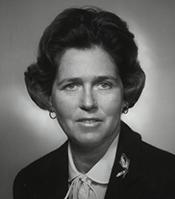
United States · United States Congress · 31 January 1989
Protect Medicare 90 Concurrent Resolution - Expresses the sense of the Congress that Medicare (title XVIII of the Social Security Act) hospital payments for FY 1990 should not be reduced below levels set by current law for such fiscal year.
United States · United States Congress · 24 January 1989
Repeals provisions of the Tax Reform Act of 1986 that establish nondiscrimination requirements for coverage and benefits under certain statutory employee benefit plans. (The consequence is the repeal of section 89 of the Internal Revenue Code.)
United States · United States Congress · 20 January 1989
Global Poverty Reduction Act - Amends the Foreign Assistance Act of 1961 to direct the President to develop a plan to ensure that U.S. development assistance contributes measurably toward eradicating the worst aspects of absolute poverty by the year 2000. Requires that such plan include target dates for reaching specific measurable goals whose attainment would contribute to direct improvements in the living standards of the poorest 40 percent of the population. Specifies that such goals shall include reducing the mortality rate of infants under age five, increasing the female literacy rate, and reducing the percentages of populations below the absolute poverty level by specified amounts by the year 2000. Directs that development activities carried out under this Act shall be consistent with maintaining and restoring the renewable natural resource base. Requires the President to submit the plan to the Congress by July 1, 1990. Requires all U.S. development assistance to be directed at attaining plan goals between October 1, 1990, and December 31, 2000. Requires the President to submit annual reports to the Congress detailing progress toward achieving plan goals. Directs the Comptroller General to review and comment on each report issued. Directs the President to host an international development conference for heads of governments of development assistance donor and recipient countries by October 16, 1989, to conclude an international agreement on eliminating the worst aspects of absolute poverty by the year 2000.
United States · United States Congress · 19 January 1989
United States Coast Guard Bicentennial Medal Act - Directs the Secretary of the Treasury to design, strike, and sell a medal in commemoration of the bicentennial of the U.S. Coast Guard in 1990. Requires the design of the medal to be selected by the Secretary of the Treasury after consultation with the Secretary of Transportation and the Commission of Fine Arts.
United States · United States Congress · 19 January 1989
Amends Federal law to require the reverse side of the first coin redesigned to commemorate the bicentennial of the U.S. Constitution for a two-year period. Provides that the design on the obverse side of U.S. coins shall contain the likenesses of those displayed on current coins and shall be considered for redesign. Requires any such obverse redesigns to conform to the inscription requirements of current law. Requires U.S. coins to be redesigned, at the discretion of the Secretary of the Treasury, over the next six years. Requires the Secretary, in selecting new designs, to consider specified constitutional concepts. Requires the designs to be selected by the Secretary upon consultation with the United States Commission of Fine Arts. Requires that any profits from the sale of uncirculated and proof sets of U.S. coins be deposited in the Treasury and used solely to reduce the national debt.
United States · United States Congress · 19 January 1989
Black Lung Benefits Check Delivery Assurance Act of 1989 - Amends the Federal Mine Safety and Health Act of 1977 to provide that if the regularly scheduled delivery date for black lung benefit checks falls on a weekend or a legal public holiday, then such checks shall be mailed for delivery on the first day preceding the weekend or holiday, even if the delivery would be made before the end of the month for which such checks are issued. Provides that if as a consequence of such modified delivery date the payment is more than the correct authorized amount, no action shall be taken to recover the incorrect portion.
United States · United States Congress · 19 January 1989
Civil Service and Federal Employee Retirement Check Delivery Assurance Act of 1989 - Provides that if the usual delivery date for civil service retirement checks falls on a Saturday, Sunday, or legal public holiday, then such checks shall be mailed a day earlier than usual.
United States · United States Congress · 19 January 1989
Railroad Retirement Benefits Check Delivery Assurance Act of 1989 - Amends the Railroad Retirement Act of 1974 to provide that if the regularly scheduled delivery date for certain railroad benefits checks falls on a weekend or a legal public holiday, then such checks shall be mailed for delivery on the first day preceding the weekend or holiday, even if the delivery would be made before the end of the month for which such checks are issued. Provides that if, as a consequence of such modified delivery date, the payment is more than the correct authorized amount, no action shall be taken to recover the incorrect portion.
United States · United States Congress · 19 January 1989
Expresses the sense of the House of Representatives that the Federal excise taxes on gasoline and diesel fuel should not be increased as a means of reducing the Federal deficit.
United States · United States Congress · 3 January 1989
Congressional Pay Reform Act of 1987 - Amends the Legislative Reorganization Act of 1946 to specify that pay adjustments for Members of Congress shall become effective on March 1 following the beginning of the next Congress after the Congress during which such adjustment is approved. Amends the Federal Salary Act to require the President to transmit to the Congress, within a specified time period, recommendations for rates of pay of Members of Congress and legislative and judicial employees. (Currently such recommendations are included in the Federal budget.) Prohibits the House of Representatives and the Senate from considering any bill or joint resolution carrying an appropriation for compensation of Members of Congress for any fiscal year if it carries an appropriation, or a limitation of appropriations, for any other purpose. Requires a recorded vote on such bill or resolution.
United States · United States Congress · 3 January 1989
Prevention, Identification, and Treatment of Elder Abuse Act of 1989 - Directs the Secretary of Health and Human Services to establish an office known as the National Center on Elder Abuse to: (1) compile an annual summary of recently conducted research on elder abuse; (2) develop and maintain an information clearinghouse on all programs for the prevention and treatment of such abuse; (3) compile training materials for personnel engaged in elder abuse prevention; (4) provide technical assistance for the planning and implementation of programs relating to the problems of elder abuse; and (5) investigate the causes and national incidence of elder abuse. Authorizes the Secretary to make grants to or enter into contracts with public agencies or nonprofit organizations for demonstration projects designed to prevent and treat elder abuse. Sets forth the terms and conditions for such grants. Authorizes the Secretary to make grants to States for the development and implementation of elder abuse prevention and treatment programs. Requires such States to have in effect a State elder abuse law with mandatory reporting provisions. Sets forth other requirements for eligibility. Prohibits the use of assistance for construction of facilities. Directs the Secretary to establish criteria to achieve equitable distribution of assistance among the States. Authorizes appropriations.
United States · United States Congress · 3 January 1989
Amends the Legislative Reorganization Act of 1946 to provide for adjustments in rates of pay for Members of Congress to be deferred until the beginning of the Congress following the Congress in which they would otherwise occur. Requires adjustments to presidential pay recommendations to be made before any adjustments made pursuant to the General Schedule. Prohibits such adjustments from exceeding certain cost-of-living increases under title II (Old Age, Survivors and Disability Insurance) of the Social Security Act.
United States · United States Congress · 3 January 1989
National Lottery Commission Act - Establishes a National Lottery Commission to study lotteries in the United States and other countries and make recommendations on the feasibility of establishing a national lottery. Directs the Commission to transmit a final report of its findings and any recommendations for legislation or administrative action to the President and the Congress within 18 months after the effective date of this Act. Terminates the Commission 30 days after such report is transmitted.
United States · United States Congress · 3 January 1989
Campaign Cost Reduction and Reform Act of 1989 - Title I: Amendments to the Federal Election Campaign Act of 1971 - Amends the Federal Election Campaign Act of 1971 to define a "qualifying House of Representatives candidate" as one whose principal campaign committee includes in its statement of organization a declaration of the candidate's intention to abide by expenditure limitations under such Act, and to use broadcast time under the Communications Act of 1934 or to receive reduced postal rates. Includes in the definition of "contribution": (1) any gift, subscription, loan, advance, or deposit of money or anything of value made by any person for the purpose of encouraging any specific individual who is not a candidate to become a candidate; and (2) with respect to a political committee, any gift, subscription, loan, advance, or deposit of money or anything of value made by such committee with respect to a clearly identified candidate. Revises the exclusion of mailing costs from authorized contributions. Provides that the term "contribution" does not include the value of any advertising rate reduction made available to a qualifying House candidate by a newspaper or magazine, if such reduction is made available to any qualifying candidate during the 90-day period before the election. Includes in the definition of "expenditure": (1) any purchase, payment, distribution, loan, advance, deposit, or gift of money or anything of value made by any person for the purpose of encouraging any specific individual who is not a candidate to become a candidate; and (2) with respect to a political committee, any purchase, payment, distribution, loan, advance, deposit, or gift of money or anything of value made by such committee with respect to a clearly identified candidate. Prohibits a candidate for Federal office from establishing, maintaining, or controlling a political committee, other than an authorized committee of the candidate or a committee of a political party. Declares that an expenditure is not an independent expenditure if: (1) there is any arrangement, coordination, or direction with respect to the expenditure between the candidate and the person making the expenditure; (2) with respect to the election, the person making the expenditure was involved in the candidate's campaign; or (3) the person making the expenditure communicates with, advises, or counsels the candidate relating to such election. Prohibits the personal use of campaign funds after the date of enactment of this Act. Removes certain limitations regarding State-by-State spending by presidential candidates. Prohibits a candidate for the office of Representative from accepting any contribution from a multicandidate political committee which exceeds: (1) $75,000 for a primary, general, or special election; or (2) $25,000 for a runoff election. Prohibits a qualifying House candidate from making expenditures in excess of $50,000 of such candidate's personal funds for an election. Prohibits such candidate from spending in excess of $200,000 with respect to a primary or general election, or $100,000 with respect to a runoff election. Removes such limitation for all House candidates in an election if any candidate receives contributions or makes expenditures aggregating more than 50 percent of the limitation applicable to a qualifying House candidate. Establishes monetary penalties for qualifying House candidates who exceed expenditure limitations. Provides for the accountability of contributions made by intermediaries or conduits. Provides that contributions expended to encourage an individual to become a candidate shall be treated as contributions, whether or not such individual becomes a candidate. Increases from $1,000 to $2,500 the amount a person can contribute to a candidate for the office of President. Limits the use of separate segregated political funds affiliated with certain other organizations (such as labor unions, corporations, and trade associations) solely to the making of contributions. Requires, when independent expenditures are made for television broadcast communications, that a statement appear continuously during such broadcast showing the name of the person or committee making such expenditure. Requires any type of general public communication to include such statement. Prohibits any person from soliciting contributions by false representation as a candidate or as an agent of a candidate, a political candidate, a political committee, or a political party. Title II: Amendments to the Communications Act of 1934 and Title 39, United States Code - Amends the Communications Act of 1934 to authorize the Federal Communications Commission to revoke any station license or construction permit for willful or repeated discrimination against a candidate for Federal office in the amount, class, or period of time made available to such candidate on behalf of such candidacy. Requires broadcast stations to publish broadcast media rates which will be applicable to specified election periods. Requires such stations to give priority to legally qualified candidates in providing access to the use of such station. Exempts debates between candidates from the equal opportunity requirement. Establishes a special broadcast media rate for qualified House candidates. Provides for reduced postage rates for qualified House candidates. Title III: Effective Date and Sunset Provision - Specifies that certain provisions of this Act shall apply only during the period beginning on the date of the regularly scheduled general election of 1990 and ending on the date of the regularly scheduled general election of 1996.
United States · United States Congress · 3 January 1989
Federal Employees' Political Activities Act of 1989 - Prohibits an employee from using or attempting to use official authority or influence to interfere with or affect the result of any election. Prohibits an employee from using or attempting to use official authority to intimidate, threaten, coerce, command, or influence: (1) any individual for the purpose of interfering with the right of any individual to vote as the individual may choose, or of causing any individual to vote, or not to vote, for any candidate or measure in any election; (2) any person to give or withhold any political contribution; or (3) any person to engage, or not to engage, in any form of political activity. Prohibits an employee from using, attempting to use, or permitting the use of any official information, unless such information is available to the general public. Prohibits an employee from: (1) giving or offering to give a political contribution to any individual either to vote or to refrain from voting, or to vote for or against any candidate or measure, in any election; (2) soliciting, accepting, or receiving a political contribution to vote or refrain from voting, or to vote for or against any candidate or measure, in any election; or (3) giving or handing over a political contribution to a superior of the employee. Prohibits an employee from soliciting, accepting, or receiving, or from being in any manner concerned with soliciting, accepting, or receiving, a political contribution: (1) from another employee (or a member of another employee's immediate family) with respect to whom the employee is a superior; or (2) in any room or building occupied in the discharge of official duties by a Federal employee or official or an individual receiving salary or compensation from the Treasury. Prohibits an employee from soliciting, accepting, or receiving a political contribution from, or giving a political contribution to, any person who: (1) has, or is seeking to obtain, contractual or other business or financial relations with the employing agency; (2) conducts operations or activities which are regulated by that agency; or (3) has interests which may be substantially affected by the performance of the employee's official duties. Directs the Special Counsel of the Merit Systems Protection Board to prescribe regulations which exempt employees from such prohibitions. Prohibits an employee from engaging in political activity: (1) while on duty; (2) in any room or building occupied in the discharge of official duties by a Federal employee or official; (3) while wearing a uniform or official insignia identifying the office or position of the employee; or (4) while using any vehicle owned or leased by the Government. Exempts certain high level political appointees from such prohibitions if the costs associated with the political activity are not paid for by money derived from the Treasury. Authorizes leave without pay or accrued annual leave to an employee who is a candidate, upon request, to allow such employee to engage in activities relating to that candidacy. Declares that such request may be denied if the exigencies of the public business so require. Declares that such employee may be required to take leave without pay or accrued annual leave in order to be a candidate if activities relating to the candidacy interfere with the employee's performance of duties. Applies this Act to postal employees and employees of the Postal Rate Commission.
United States · United States Congress · 3 January 1989
Enterprise Zone Improvements Act of 1989 - Title I: Housing and Community Development Provisions - Amends the Housing and Community Development Act of 1987 to require each Federal agency that provides special assistance to enterprise zones or that waives or modifies rules within such zones to report to the Congress and to the Secretary of Housing and Urban Development identifying its actions. Broadens the scope of funding sources for State and local government actions required in connection with tax relief and regulatory simplification in enterprise zones. Directs Federal agencies to seek to provide special assistance to enterprise zones, including expedited processing, priority funding, program set-asides, and technical assistance. Authorizes all Federal agencies to waive or modify rules within enterprise zones. (Under current law, only the Secretary of Housing and Urban Development and, in some cases, the Secretary of Agriculture may do so.) Adds the promotion of affordable housing and law enforcement as objectives justifying waiver or modification of Federal agency rules in an enterprise zone. Title II: Federal Income Tax Incentives - Subtitle A: Credits for Employers and Employees - Allows employers located in enterprise zones a nonrefundable income tax credit for qualified increased employment expenditures and employment of the disadvantaged. Sets the credit amount at ten percent of the increase in payroll plus a specified percentage of wages paid to certain disadvantaged workers through the first 20 years of the enterprise zone designation. Allows a nonrefundable income tax credit to enterprise zone employees for five percent of wages earned. Phases out both credits in the last four years of the enterprise zone designation. Subtitle B: Credits for Investment in Tangible Property in Enterprise Zones - Allows businesses an additional investment tax credit for investments made in certain enterprise zone construction property. Limits the credit to ten percent for new property, including rental property. Requires the recapture of credit amounts upon the early disposition of the property. Subtitle C: Nonrecognition of Qualified Enterprise Zone Capital Gain Where Acquisition of Enterprise Zone Business Property - Provides for the nonrecognition of capital gain on the sale of enterprise zone property if, within one year after the sale, the taxpayer acquires qualified replacement property (generally defined as property related to an enterprise zone or to a business within a zone). Subtitle D: Deduction for Purchase of Enterprise Stock - Allows a taxpayer to deduct up to $100,000 of the aggregate amount paid for the purchase of enterprise stock on its original issue by a qualified issuer. Treats any gain from the disposition of the stock as ordinary income. Subtitle E: Rules Relating to Private Activity Bonds - Declares that: (1) limitations on the cost recovery deductions for property financed with tax-exempt bonds shall not apply to enterprise zone property; and (2) the termination of the small issue exemption shall not apply to bonds whose proceeds are used to finance facilities in enterprise zones. Subtitle F: Ordinary Loss Deduction for Securities of Enterprise Zone Business Which Become Worthless - Permits an ordinary loss deduction for securities of enterprise zone business that become worthless during the taxable year. Subtitle G: Increase in Research Credit for Research Conducted in Enterprise Zones - Increases from 20 percent to 37 1/2 percent the tax credit for increasing research conducted in enterprise zones. Subtitle H: Sense of the Congress with Respect to Tax Simplification - Expresses the sense of the Congress that the Secretary of the Treasury should simplify the administration and enforcement of any provision of the Internal Revenue Code affected by this Act. Subtitle I: Regulations - Directs the Secretary to issue regulations to carry out the provisions of this Act not later than six months after enactment. Title III: Establishment of Foreign-Trade Zones in Enterprise Zones - Requires the Foreign-Trade Zone Board to consider on a priority basis and to expedite the processing of applications for the establishment of foreign-trade zones within enterprise zones. Requires the Secretary of the Treasury to give priority to, and expedite applications for, the establishment of ports of entry necessary to establish such zones.
United States · United States Congress · 3 January 1989
Tech-Prep Education Act - Amends the Carl D. Perkins Vocational Education Act to establish a program of grants to consortia of local educational agencies and community colleges to provide tech-prep education programs. Defines "tech-prep education program" as a combined secondary and postsecondary program which: (1) leads to an associate degree or two-year certificate; (2) provides technical preparation in at least one field of engineering technology, applied science, or mechanical, industrial, or practical art or trade; (3) provides competence in mathematics, science, and communications (including through applied academics); and (4) leads to placement in employment. Directs the Secretary of Education to make grants to pay the Federal share of the cost of activities carried out under this Act to consortia of: (1) local educational agencies or area vocational schools serving secondary school students; and (2) community colleges or postsecondary vocational technical schools. Sets forth the Federal share. Requires each grant recipient to use the grant funds to develop and operate a four-year technical preparation education program with specified curricula. Sets forth application and reporting requirements. Authorizes appropriations for FY 1990 through 1994.
United States · United States Congress · 3 January 1989
Fairness in America Health Care Act of 1989 - Title I: One-Year Delay in Implementation of Medicare Catastrophic Coverage Act of 1988 - Delays, for one year, the implementation of the Medicare Catastrophic Coverage Act of 1988, except for provisions of such Act expanding benefits under part A (Hospital Insurance) of title XVIII (Medicare) of the Social Security Act. Title II: Bipartisan Commission to Review the Medicare Catastrophic Coverage Act - Establishes the Commission to Review the Medicare Catastrophic Coverage Act to study: (1) the effect implementation of such Act will have on Medicare beneficiaries who currently have supplementary coverage; (2) how such Act's benefits compare with the benefits provided by supplementary coverage; (3) the access Medicare beneficiaries who do not have supplementary or Medicaid (title XIX of the Social Security Act) coverage have to necessary health services; (4) the feasibility and likely cost of implementing such Act's drug benefits; and (5) the benefits and financing mechanisms which Medicare beneficiaries prefer. Directs the Commission to report its findings and recommendations to the Congress within six months of this Act's enactment or by September 1, 1989, whichever is earlier.
United States · United States Congress · 3 January 1989
Repeals estate tax provisions of the Internal Revenue Code with respect to inclusion in the gross estate of the value of certain types of transfers with a retained life estate. Applies the repeal retroactively in connection with property transferred after December 17, 1987.
United States · United States Congress · 3 January 1989
Establishes in the House of Representatives the Select Committee on Children, Youth, and Families to conduct a comprehensive study and review of the problems of children, youth, and families.
United States · United States Congress · 29 September 1988
Expresses the sense of the Congress that: (1) an outright prohibition on fraternization between members of the armed forces is not feasible; and (2) the Secretary of Defense should prepare a report which makes recommendations to the President and the Congress for changes in the fraternization policy of the armed forces that may be required to maintain a modern military force.
United States · United States Congress · 15 September 1988
Amends rule XXIV and rule I of the Rules of the House of Representatives to require the rendering of the Pledge of Allegiance in the House at the start of each legislative day.
United States · United States Congress · 13 September 1988
Omnibus National Parks and Public Lands Act of 1988 - Title I: Public Lands - Authorizes the Secretary of the Interior (Secretary) to take necessary actions to exchange specified lands with Phillips County, Montana, if the Secretary determines such exchange to be in the public interest. Disclaims any intent to enlarge or diminish the responsibility of any party under State or Federal law for proper management of such lands or for management or actions related to hazardous substances or materials located on such lands. Requires the Secretary to advise appropriate Federal, State, and county officials, prior to consummating the exchange, of any information the Secretary has concerning hazardous substances or materials located on such lands. Directs the Secretary to: (1) resurvey and prepare a new plat for the townsite of Veteran, Wyoming, to take into account the actual use of streets and alleys on such lands for designation as public reservations; and (2) patent such reservation lands to Goshen County. Provides for an exchange of forest lands between Farmington City, Utah, and the Secretary of Agriculture. Directs the the Secretary of Agriculture, within three years of the date of enactment of this Act, to identify city or State lands which are suitable for transfer to the United States for national forest purposes. Specifies that any such lands exchanged shall be of equal value (as determined by the Secretary of Agriculture) or equalized by payment to or by the Secretary of Agriculture, as long as the payment does not exceed 25 percent of the total value of the lands transferred out of Federal ownership. Authorizes the Secretary of Agriculture, in lieu of such an exchange, to transfer by sale for fair market value such Federal lands to the city or State of Utah, as appropriate. Withdraws all public lands within Kanab City, Utah, from all forms of entry and appropriation under the public lands laws, including the mining laws, and from operation of the mineral and geothermal leasing laws. Terminates such withdrawal five years after the date of the enactment of this Act. Directs the Secretary of the Interior to determine which public lands withdrawn meet the disposal criteria specified in the Federal Land Policy and Management Act of 1976 and to notify Kanab City concerning such determination. Grants Kanab City, for the four-year period beginning on the date of enactment, the exclusive right to purchase any such withdrawn lands that the Secretary has determined to be suitable for disposal. Provides for the public sale of such lands after the expiration of such period, but gives Kanab City the opportunity to meet the high bid offered by any other party. Specifies that all such sales of public lands shall be for fair market value and subject to valid existing rights, as well as subject to any conditions to (or any patent issued in consequence of) such sale as the Secretary determines necessary or appropriate. Authorizes the Secretary to release and quitclaim to the city of Riverdale, Utah, for fair market value all right, title, and interest of the United States in specified property, provided that the city requests such action within one year after the enactment of this Act. Provides that all funds received by the United States shall be credited to the Land and Water Conservation Fund of the Treasury and shall be available for expenditure under the Land and Water Conservation Fund Act of 1965. Directs the Secretary to: (1) conduct a study to determine the feasibility and desirability of protecting and preserving lands and resources associated with the western terminus of the Oregon Trail in Oregon City, Oregon; (2) consult with interested Federal agencies and State and local bodies; (3) coordinate the study with applicable outdoor recreation plans and related plans for the preservation of historic and natural resources in the area; and (4) report his or her findings and recommendations to specified congressional committees. Authorizes appropriations. Directs the Secretary to convey specified lands to the Catholic Diocese of Reno/Las Vegas, Nevada, for administrative cost. Reserves a right-of-way and construction easement to the United States. Directs the Secretary to: (1) conduct a study to determine the feasibility of protecting and preserving certain cultural, historic, and natural resources associated with the coal mining heritage of southern West Virginia; (2) consult with interested Federal agencies, State and local government authorities, and nonprofit organizations; and (3) report to specified congressional committees. Specifies the area to be studied. Authorizes appropriations. Authorizes the Secretary of the Interior to permit entry on desert lands which are part of scenic easement areas of the Dinosaur National Monument, Utah, to certain applicants who convey certain scenic easements to the United States. Michigan Public Lands Improvement Act of 1988 - Grants to the State of Michigan the right, title, and interest of the United States in and to certain public uplands and islands in Michigan waters which were not subject to any claim on January 1, 1988. Allows the Secretary of the Interior to sell certain other lands which were subject to a claim identified on the records of the Bureau of Land Management as of that date to the claimants following resolution on conflicting claims. Deems title to public lands which, on the date of enactment of this Act, was subject to leases issued to the State of Michigan under the Recreation and Public Purposes Act to have vested in the State and to be exempt from Department of the Interior regulations governing leases under such Act. Allows the State to receive, under this Act, lands previously patented to the State under such Act by notifying the Secretary that it intends to relinquish such lands to the United States. Requires the Secretary to transfer such lands back to the State subject to the provisions of this Act, effective simultaneously with the States relinquishment of such lands. Authorizes the Secretary to sell and issue a patent to a tract of public land located in Michigan where the Secretary determines that: (1) such tract does not exceed 1,500 acres and is difficult and uneconomic to manage as part of the public lands and is not suitable for management by another Federal department or agency; and (2) such sale would not be inconsistent with land use plans developed in accordance with the Federal Land Policy and Management Act of 1976. Allows the Secretary, following adjudication of any claims, to convey such land at fair market value, less equities presented by an applicant for such conveyance (such as the amount paid for the land, longevity of the applicant's claim, and taxes paid on the land) and less the value of any improvements. Provides for the description of tracts of such land conveyed on the approved Federal plat of survey. Authorizes the Secretary to either: (1) convey title to a qualified trustee, where a tract does not conform to an existing survey plat, in order to conform the legal description to such plat; or (2) require the applicant to reimburse the United States for the cost of preparing a plat of survey. Prohibits the sale of such lands unless the Secretary, before 30 days prior to such sale, publishes notice in a newspaper of general circulation in the county where the tract is located. Reserves to the United States all mineral rights in the lands transferred under this Act. Prohibits the conveyance or transfer of such lands by Michigan to any person or entity other than a political subdivision of the State. Authorizes the use of such lands only for purposes of public recreation or protection of fish, wildlife, plants, or other natural resources and values. Directs the Secretary to take steps to notify Michigan residents of the uplands and islands to be granted or otherwise transferred to the State. Requires Michigan to notify the Secretary with regard to any grant or transfer or conveyance of such lands by the State to a political subdivision. Requires the State to submit to the Secretary a report within five years of enactment of this Act, and every five years thereafter, as to the present ownership, management, and use of the lands granted or otherwise transferred. Sets forth enforcement procedures. Declares that nothing in this Act shall be construed as affecting the jurisdiction or responsibilities of the State with respect to fish and wildlife in any lands granted to or transferred to the State under this Act. Makes a private land survey conducted in 1955 the legal boundary survey for specified lands in Riverside, County, California. Provides for the reinstatement of the canceled entry of William A. Wright to certain lands in Lamar County, Alabama. Waives the 160-acre limitation on conveyances under the Color-of-Title Act for any claim for a patent that may be filed under such Act for a specified parcel of land in Sumter County, Alabama. Declares that the Southern Pacific Transportation Company has abandoned certain real property situated in Alameda County, California, forming a part of the right-of-way granted by the United States to the Central Pacific Railway Company. Retains all Federal right, title, and interest in such property for management by the Secretary of the Interior as a public recreational trail, and for other recreational purposes compatible with trail use. Exempts specified property embraced within a certain public highway from such Federal interest. Reserves to the United States all oil, coal, or other minerals in such property, including prospecting, mining, and removal rights. Restricts to public highway and related uses under California law that portion of the property embraced within a certain public highway. States that all rights and interests revert back to the United States if: (1) any portion of such property is used for purposes unauthorized by this Act; or (2) if an attempt is made to transfer ownership of such property to any party other than the State of California. Mandates that lands within the Toiyabe National Forest (California) which have been used for purposes of the U.S. Marine Corps Mountain Corps Mountain Warfare Training Center be retained as part of such National Forest. Directs the Secretary of Agriculture to continue to make such lands available to the Marine Corps for such training center. Directs that such lands be open to public recreation and other uses consistent with the primary purpose of the Mountain Warfare Training Center. Directs the Secretary of the Interior, subject to valid existing rights, to transfer specified lands to Clark County, Nevada, for use as a mobile home park for low-income senior citizens. Reserves mineral rights and the right of reversion to the United States. Directs the Secretary to take such actions as appropriate to: (1) reserve rights-of-way and easements for road, public utility, and flood control purposes; and (2) protect the public interest. Transfers specified public lands in Nevada to the Secretary of Agriculture for inclusion in the Toiyabe or the Inyo National Forest. Transfers specified national forest lands to the Secretary of the Interior. Requires lands designed for inclusion in such Forests to be managed so as not to impair their suitability for wilderness designation. Excludes such additional national forest lands from calculations for interstate (California and Nevada) but not intrastate (Nevada) distribution of the Twenty-Five Percent Fund. Authorizes the Secretary to transfer land known as Wilbur Square to Boulder City, Nevada. Amends the Federal Land Policy and Management Act of 1976 (FLPMA) to authorize the Secretary of the Interior to allow the temporary use for specified military purposes of certain public lands in Alaska for up to three years. Limits the use of public lands to areas where such use would not be inconsistent with the plans prepared pursuant to the FLPMA. Makes the using department responsible for any necessary cleanup and decontamination of the lands used and for any other terms and conditions which the Secretary may impose to minimize adverse impacts on the resources and values of such lands. Provides for notification of the public where public safety may require closure to public use of any portion of such lands. Recreation and Public Purposes Amendment Act of 1988 - Allows the Secretary of the Interior to convey lands which may be used by the applicant for the disposal of solid wastes or hazardous substances only if: (1) the Secretary determines that no hazardous substance is present on such land; (2) the applicant furnishes evidence that a copy of the application and information concerning the proposed use of such land has been provided to the Environmental Protection Agency and certain other State and Federal agencies; (3) the applicant gives a warranty that use of such land will be consistent with applicable State and Federal laws and that the applicant will hold the United States harmless from any liability; and (4) the applicant demonstrates that the land meets applicable State and local requirements and needs for solid waste or hazardous substance disposal. Provides for a limited reverter which shall become permanent unless the lands have been used for the purposes specified in the application within five years after the date of conveyance. Requires any party who has transferred ownership of any conveyed lands not used for such specified purposes to pay to the Secretary fair market value for such lands. Provides that no lands covered by an issued patent shall revert to the United States if such lands have been used for the disposal of solid waste or hazardous substances. Authorizes the Secretary, with respect to lands conveyed prior to enactment of this Act, to renounce the United States' reversionary interests in such lands upon finding that lands have been used for the disposal of solid waste or hazardous substances. Authorizes the Secretary, with respect to lands leased prior to enactment of this Act, to convey in fee such leased lands without any provision for reversion to the United States upon finding that such lands have been used for the disposal of solid waste or hazardous substances. Establishes the San Pedro Riparian National Conservation Area, Arizona. Directs the Secretary of the Interior to develop, within two years, a comprehensive management plan for such area to protect the natural riparian, wildlife, cultural, and recreational resources. Prohibits the issuing of new grazing permits for such area for 15 years. Directs the Secretary to establish a San Pedro Riparian National Conservation Area Advisory Committee. Permits the Secretary to acquire land interests within the Area. Requires the Secretary to report within five years, and every ten years thereafter, to the House Interior and Insular Affairs Committee and the Senate Energy and Natural Resources Committee on the implementation of this Act. Authorizes appropriations. Title II: Rivers and Trails - Amends the Wild and Scenic Rivers Act to designate Wildcat River, New Hampshire, as a component of the National Wild and Scenic Rivers System. Directs the Secretary of Agriculture to establish a Wildcat River Advisory Commission to assist in implementing this Act. Terminates such commission ten years after enactment of this Act. Authorizes appropriations. Directs the Secretary of the Interior to permit access across the Buffalo National Park, Arkansas, to certain owners of privately owned lands (as of September 1, 1987) outside the park on an annual basis. Amends the National Trails System Act to provide for a study of the Coronado Trail, the route taken by the Spanish explorer through Arizona, New Mexico, Texas, Oklahoma, and Kansas, for inclusion in such System. Requires the Secretary of the Interior to prepare a comprehensive river conservation study for a specified segment of the Columbia River, Washington. Requires the study to identify and evaluate the outstanding features of the river segment, including fish and wildlife, scenic, recreational, natural, historical, and cultural values, and examine alternatives for their preservation. Requires the Secretary to consult with State, local, and tribal governments with respect to the study and to provide for public comment. Prohibits any Federal agency, for a period of eight years after enactment of this Act, from constructing any dam, channel, or related navigation project on the river segment. Authorizes appropriations. Title III: National Park System - Designates certain lands within the Congaree Swamp National Monument, South Carolina, as the Congaree Swamp National Monument Wilderness. Designates certain other lands within the Monument as potential wilderness additions. Increases the acreage of the Monument to include an area known as the "Citizens Boundary Proposal for Congaree Swamp National Monument." Provides additional funds for the acquisition of additional lands for such Monument. Authorizes appropriations for construction and development within the Monument. Establishes the Zuni-Cibola National Historical Park in New Mexico. Authorizes the Secretary of the Interior to accept a leasehold interest in trust lands of the Zuni Indian Reservation which are necessary for the establishment of such park. Provides for the management of the park by the Secretary. Authorizes the Secretary to accept concurrent jurisdiction from the Zuni Tribe with respect to law enforcement within the park. Exempts all enrolled members of the Tribe from the payment of park admission fees. Authorizes the Secretary to enter into cooperative agreements with the Tribe for the purpose of providing training to Zuni members in the management and preservation of historical properties and needed public services on the Reservation. Directs the Secretary to give employment preference to tribal members with respect to park management. Sets forth requirements with respect to Federal agency activities affecting the park. Establishes the Zuni-Cibola National Historical Park Advisory Commission within the Department of the Interior. Provides that such Commission shall advise the Director of the National Park Service in the planning, management, and administration of the park. Authorizes the Commission to employ an administrative director. Directs the Secretary to develop and transmit a park management plan to the House Committee on Interior and Insular Affairs, the Senate Committee on Energy and Natural Resources, and the Senate Select Committee on Indian Affairs. Authorizes the Secretary to close the park to the public when tribal religious activities are scheduled. Includes the Zuni-Cibola National Historical Park as an area to be accessed by the Masau Trail. Authorizes appropriations. Establishes the Mississippi National River and Recreation Area along the Mississippi River in the St. Paul-Minneapolis Metropolitan Area, Minnesota. Establishes the Mississippi River Coordinating Commission to assist Government authorities in developing and implementing a management plan for such lands and waters. Requires the Commission to submit a plan, within three years, to the Governor of Minnesota and the Secretary of the Interior for review and approval. Requires the Secretary to monitor such Area in the interim. Terminates the Commission after ten years. Authorizes the State, following the termination, to establish a State Commission to take over such Commission's functions. Transfers Federal property within the Area to the Secretary, except for Army Engineer facilities for navigation and other buildings or structures currently in use. Requires Federal entities to notify and receive the approval of the Secretary before engaging in any activities in or affecting such Area. Authorizes the Secretary to acquire land and interests in such Area, as specified. Requires the Secretary to review local plans and ordinances and their enforcement to assure conformance to the plan. Permits the Secretary to acquire lands without the owner's consent after appropriate notice and opportunity to cure a nonconforming plan or ordinance. Permits owners of acquired improved residential property to retain the right to residential use for 25 years or the owner's death. Sets forth other terms and conditions for such use. Authorizes the Secretary to make grants for land acquisition and to provide technical assistance for programs. Authorizes appropriations. Directs the Secretaries of the Army and the Interior to appoint representatives to a Tri-Rivers Management Board to coordinate development of the Mississippi, St.-Croix, and Minnesota Rivers within the St. Paul-Minneapolis Metropolitan Area, Minnesota. Authorizes appropriations. Establishes the Natchez National Historical Park in Mississippi. Authorizes the Secretary of the Interior to acquire land for such park by donations or exchange. Requires the Secretary to transmit to the House Committee on Interior and Insular Affairs and the Senate Committee on Energy and Natural Resources a study of historic properties in the city of Natchez. Directs the Secretary, following completion of such study, but not later than one year after enactment of this Act, to establish historic districts in the city of Natchez. Authorizes the Secretary to enter into cooperative agreements with owners of properties located within such historic districts. Requires the Secretary, within three complete fiscal years after enactment of this Act, to submit to such congressional committees a general management plan for the park. Requires the Secretary to study the feasibility of extending the Natchez Trace within the city of Natchez, including acceptance of donations of rights-of-way. Requires the Secretary, within one year after enactment of this Act, to transmit such study to such congressional committees. Establishes the Natchez National Historical Park Advisory Commission to consult with the Secretary on the management and development of the park. Authorizes appropriations. Directs the Secretary of the Interior to acquire two parcels of land in Florida under authority of the Act to establish the Canaveral National Seashore. Directs the Secretary to manage such parcels for: (1) the protection and interpretation of Seminole Indian archaeological and historic resources; and (2) the establishment of an administrative headquarters and visitor center for the Seashore. Increases appropriations authorized for the development of public facilities for the Seashore. Authorizes appropriations to carry out this Act. Removes the restriction which prohibits the Secretary of the Interior from acquiring in fee by purchase or condemnation more than 600 acres of Antietam National Battlefield, Maryland. Amends the National Parks and Recreation Act of 1978 to remove additional restrictions which authorized only certain scenic easement acquisitions. Establishes the Hamilton Grange National Memorial in the State of New York. Authorizes the Secretary of the Interior to: (1) acquire land, interests therein, and improvements thereon within the boundaries of the memorial by donation; (2) reimburse the owner of such property a specified amount for administrative costs for the transfer; and (3) acquire associated personal property. Directs the Secretary to: (1) administer the memorial as a unit of the National Park System; and (2) submit a general management plan to specified congressional committees within three complete fiscal years after enactment of this Act. Authorizes appropriations. Establishes the Poverty Point National Monument in Louisiana. Requires the Secretary of the Interior, within two years after enactment of this Act, to develop and implement a management plan for such monument. Authorizes the Secretary to enter into cooperative agreements with institutions of higher education and professional societies to conduct further research on Poverty Point, its people, and their culture. Authorizes the Secretary to acquire lands for the establishment of such monument. Establishes the Poverty Point National Monument Advisory Commission. Authorizes appropriations. Prohibits the use of Federal lands to expand any reservoir within Yosemite National Park without specific congressional authorization. Establishes the Delaware and Lehigh Navigation Canal National Heritage Corridor in the Commonwealth of Pennsylvania. Establishes the Delaware and Lehigh Navigation Canal National Heritage Corridor Commission to assist appropriate Federal, State, and local authorities in the development and implementation of an integrated resource management plan for the Corridor. Directs the Commission, within one year after it conducts its first meeting, to submit to the Secretary of the Interior a Cultural Heritage and Corridor Management Plan which: (1) provides an inventory of Corridor property to be preserved and restored because of its national historic or cultural significance; (2) develops a historic interpretive plan; and (3) recommends policies for resource management of the Corridor. Terminates the Commission in five years, with a possible five-year extension. Requires the Secretary to approve or disapprove the Commission's Plan within 60 days after its receipt. Directs the Secretary, following plan approval, to assist the Commission in producing interpretive materials. Requires any Federal entity conducting activities affecting Canal flows or Corridor natural resources to consult and cooperate with the Secretary and the Commission. Authorizes appropriations. Authorizes the Secretary of the Interior to designate the New Jersey Coastal Heritage Route, a vehicular tour route along existing public roads linking natural and cultural sites in New Jersey. Directs the Secretary to complete and report to the appropriate congressional committees within one year a comprehensive inventory of route sites and a general plan. Requires intergovernmental consultation and public participation in the preparation of such inventory and plan. Authorizes the Secretary to provide technical assistance in the development of interpretive materials and conservation methods. Requires that the route be marked with appropriate markers for the public. Authorizes appropriations. Directs the Secretary of the Interior to establish the National Park of American Samoa. Provides for the management of such park. Directs the Secretary to establish an Advisory Board to provide advice on such management. Requires the Secretary and the Governor of American Samoa to review, at least once every ten years, the operation and management of the park. Authorizes appropriations. Amends the National Parks and Recreation Act of 1978 to direct the Secretary of the Interior to study and recommend appropriate initiatives to provide an educational and interpretative program for the Pinelands National Reserve, New Jersey. Requires the Secretary to study New Jersey's Pinelands Development Credit Bank, Pinelands Development Credit System, and Pinelands Municipal Council and submit to the Congress any recommendations for the improvement of their operations. Provides Federal lands for 50 percent of the cost for land acquisition within the Reserve. Establishes in the Department of the Interior the Southwestern Pennsylvania Heritage Preservation Commission to make loans or grants to preserve and protect sites which are related to the industrial development of southwestern Pennsylvania. Requires the Commission to coordinate government activities and develop project guidelines and standards consistent with standards established by the National Park Service for the preservation of historic properties. Requires the Commission to report annually to the Secretary of the Interior on loans, grants, expenses, and income. Requires the Secretary to report annually to the Congress on loans, grants, and other technical assistance provided under this Act. Directs the Commission to require and submit to appropriate congressional committees detailed cost estimates for projects to be funded. Terminates the Commission in ten years. Authorizes appropriations. Makes such funds available only to the extent they are matched by equivalent funds from non-Federal sources. Directs the Secretary of the Interior to designate a vehicular tour route in southwestern Pennsylvania, to be known as the Southwestern Pennsylvania Industrial Heritage Route, linking sites of historic, cultural, natural, and recreational interest. Authorizes the Secretary to erect informational markers, to accept donations of informational devices, and to provide technical assistance in the development of interpretive devices and materials. Authorizes appropriations. Prohibits using such funds for the maintenance of roads or related structures. Includes specified lands within the boundary of the Guadalupe Mountains National Park, Texas. Authorizes appropriations for the construction of a fence to protect the natural and cultural resources of such lands. Redesignates the Salinas National Monument, New Mexico, as the Salinas Pueblo Missions National Monument. Authorizes the Secretary of the Interior to acquire certain lands within the John Muir National Historic Site, California, to be administered as part of the Site. Directs the Secretary to acquire only such interests in the John Muir grave Site as may be necessary to preserve the Site in its present undeveloped condition and to provide maintenance of the Site. Authorizes appropriations. Authorizes the Secretary, acting through the Director of the National Park Service, to enter into a cooperative agreement with the East Bay Regional Park District of Oakland, California, for the operation and maintenance by such District of trails on lands within such historical site. Increases the authorization of appropriations for the acquisition of land for the Women's Rights National Historical Park in Seneca Falls and Waterloo, New York. Title IV: Miscellaneous Provisions - Authorizes the Secretary of Agriculture to establish the Lewis and Clark National Historic Trail Interpretive Center. Specifies lands to be donated by the State of Montana for the establishment of such center. Provides that such lands shall revert to the State of Montana if the Secretary uses such lands for any purpose other than those authorized under this Act. Requires the Secretary to administer the Center in a manner that will best provide for the interpretation of the accomplishments of the Lewis and Clark Expedition along the Lewis and Clark National Historic Trail in Montana. Directs the Secretary, within two years after the establishment of the Center, to submit to specified House and Senate committees a plan for development and interpretation of the Center. Authorizes the Secretary to enter into: (1) cooperative agreements with the State of Montana for rescue, firefighting, and law enforcement services with respect to the Center; and (2) cooperative agreements with Federal, State, or local public agencies for the development and operation of facilities and services in furtherance of this Act. Encourages the Secretary, with Montana, to develop a cooperative management plan for the entire Giant Springs Park. Authorizes and directs the Secretary to enter into an agreement with the Portage Route chapter of the Lewis and Clark Heritage Foundation or a similarly affiliated organization to provide educational materials to the public that highlight the travels of Lewis and Clark or other historical features of the area. Authorizes appropriations, including specified sums for the construction of the Center. Requires the Secretary of the Interior to act through the Bureau of Land Management (the National Park Service under current law) to construct and operate a visitor facility in or near Fort Benton under the Missouri River area management plan. Amends the Archaeological Resources Protection Act of 1979 (the Act) to revise the definition of "archaeological resource" to eliminate the condition that an item be "of archaeological interest." Prohibits attempts at (as well as acts of) excavation, removal, damage, or other alteration or defacement of any archaeological resource located on public or Indian lands, without a permit. Lowers to $500 (currently $5,000) the threshold commercial or archaeological value of an archaeological resource (including cost of restoration or repair) above which, for certain violations of the Act, specified criminal penalties are mandated. Directs each Federal land manager to: (1) establish a program to increase public awareness of the significance of, and the need to protect, archaeological resources located on public lands and Indian lands; and (2) report annually to specified congressional committees on actions taken under such program. Designates specified lands in the Olympic National Park, Washington, as the Olympic Wilderness and a component of the National Wilderness Preservation System. Authorizes the Secretary of the Interior to maintain and replace, as appropriate, the Wolf Creek underground powerline to Hurricane Ridge. Authorizes funds to the Secretary to make payment to the Clallam County Historical Society and Museum of Port Angeles, Washington, as compensation for: (1) its interest in the National Park Service visitor center, Pioneer Memorial Museum, and Olympic National Park, Washington; and (2) its participation in the construction of the Pioneer Memorial Museum. Revises provisions relating to the forfeiture of property used in connection with killing, trapping, capturing, or damaging animals or plants in the Park. Directs the Secretary to complete a study for the location of a year-round visitor center in the Kalaloch area of the Olympic National Park. Designates specified lands in the North Cascades National Park, Ross Lake National Recreation Area, and Lake Chelan National Recreation Area, Washington, as the Stephen Mather Wilderness and a component of the National Wilderness Preservation System. Provides that no law shall affect the jurisdiction of the Federal Power Commission to proceed with specified hydroelectric projects within the Park. Authorizes the Secretary to acquire lands outside of the Park for the construction of a back country information center and a headquarters site for such park, Ross Lake National Recreation Area, and Lake Chelan National Recreation Area. Authorizes appropriations. Revises provisions relating to mineral resources and renewable natural resource use within the recreation areas of the Park. Designates specified lands in the Mount Rainier National Park, Washington, as the Mount Rainier Wilderness and as a component of the National Wilderness Preservation System. Sets forth provisions relating to the administration of the wilderness areas and Park lands. Authorizes the Secretary to maintain and replace as necessary the powerline from Longmire to Paradise. Amends the Wild and Scenic Rivers Act to set forth provisions regarding the boundaries of the Klickitat River, Washington. Directs the Secretary of Agriculture or the Secretary of the Interior, as appropriate, to take such actions as are necessary to protect cave resources on Federal lands, including: (1) restricting the use of such resources; (2) entering into volunteer management agreements with the caving community; and (3) appointing advisory committees. Requires that such resources be considered in subsequent land management plans. Authorizes the Secretary to disturb such resources and to exempt certain caves on Federal or Indian lands from the protections of this Act if deemed appropriate. Restricts the release of information concerning the nature or location of any Federal cave. Requires the Secretary to provide such information to the Governor of a State in which a cave resource is located and permits such release to a bona fide research institution if requested in writing along with a commitment to protect the confidentiality of such information. Establishes a permit program for the collection or removal of natural resources from caves on Federal or Indian lands. Requires a permittee to post a bond or cash deposit to offset potential damage and to ensure compliance with this Act. Revokes permits for violations of this Act or permit conditions. Requires the Secretary of the Interior to delegate permit authority to an Indian tribe for caves on Indian lands at a tribe's request. Requires a tribe's permission before the removal of any cave resource on such tribe's land. Entitles a tribe to notice before the issuance of a permit if the Secretary determines that possible harm or destruction of a religious or cultural site may occur. Excludes Federal cave resources within the National Park or Wildlife Refuge Systems from this program. Imposes criminal penalties for the alteration of a cave or interference with cave resources, including the sale or exchange of cave resources removed without permission. Establishes civil penalties for violations of this Act or permit conditions. Authorizes appropriations. Places permit fees and fines in a special fund in the Treasury for cave resource management. Requires each Secretary to issue regulations implementing the provisions of this Act.
United States · United States Congress · 9 September 1988
Expresses the sense of the Congress that the Secretary of Labor, in cooperation with the ACTION Agency, should publicize and promote projects under the Retired Senior Volunteer Program and the Older American Community Service Employment Program that encourage and recruit older individuals to provide child care services in community-based child care centers.
United States · United States Congress · 2 August 1988
Expresses the sense of the Congress that India should allow Sikhs full access to the Golden Temple and remove all military presence from the shrine. Urges the Government of India to use restraint in resolving the dispute with the Sikh people in the Punjab. Calls for a political solution to restore home rule in the Punjab, with religious freedom and human rights guarantees.
United States · United States Congress · 27 July 1988
Declares it to be the policy of the United States to enhance its security and that of the democratic countries of Central America by assisting in the achievement of: (1) democracy in Nicaragua; (2) an end to Soviet, Cuban, and other Communist bloc military or security assistance to Nicaragua; (3) an end to Nicaraguan aggression and subversion against other countries in Central America; and (4) the reduction of the military and security forces of Nicaragua. Requires the President to report bimonthly to the Congress concerning: (1) Nicaraguan violations of certain Central American peace agreements; and (2) the receipt by Nicaragua of Soviet, Cuban, Communist bloc, and other foreign military or security assistance. Authorizes the President to transfer to the Agency for International Development from specified Department of Defense appropriations accounts a specified amount of funds to provide humanitarian assistance, civic action, and nonmilitary training to the Nicaraguan democratic resistance and to strengthen resistance human rights programs. Sets forth specific requirements for the transportation of such assistance, including the indemnification of leased aircraft and the provision of passive air defense equipment for such aircraft. Authorizes the President to transfer a specified amount of funds from Defense Department appropriations accounts to departments and agencies he may designate to be held in escrow to provide additional assistance (including lethal assistance) for the Nicaraguan democratic resistance. Prohibits making such funds available for such additional assistance unless the President certifies to the Congress that: (1) no definitive ceasefire is in place that was agreed to by the Government of Nicaragua and the Nicaraguan democratic resistance; (2) the failure to achieve such a ceasefire results from the lack of good faith efforts by the Government of Nicaragua to comply with certain Central American peace agreements; and (3) the Nicaraguan democratic resistance has engaged in good faith efforts to achieve such a ceasefire. Suspends any lethal assistance being provided after such a certification is made during any time an agreed ceasefire is in place in Nicaragua. Provides that the general authorities and limitations of specified Acts shall be deemed to have been met for the transfer and the use of funds as provided in this Act. Declares that the Congress encourages the President to submit proposals for bilateral and multilateral action to: (1) provide additional economic assistance to the democratic countries of Central America; (2) facilitate the ability of Central American economies to grow through the development of their infrastructure, expansion of exports, and the strengthening of increased investment opportunities; (3) provide a more realistic plan to assist Central American countries in managing their foreign debt; and (4) develop these initiatives in concert with Western Europe, Japan, and other democratic allies. Provides that if the Government of Nicaragua and the Nicaraguan democratic resistance sign a comprehensive final peace agreement: (1) the President shall terminate the trade embargo imposed against Nicaragua; and (2) a specified amount of funds shall be made available to provide assistance for the relocation and reintegration into Nicaraguan civil society of members of the Nicaraguan democratic resistance. Authorizes the President to provide additional economic incentives to Nicaragua if, after 180 days after such final agreement is signed, the President certifies to the Congress that the Government of Nicaragua is continuing to comply with that agreement. Specifies such economic incentives as: (1) designating Nicaragua as a beneficiary country for purposes of the Caribbean Economic Recovery Act; (2) designating Nicaragua as a beneficiary developing country for purposes of the generalized system of preferences; and (3) authorizing loan assistance to Nicaragua under the Export-Import Bank Act of 1945.
United States · United States Congress · 14 July 1988
Resolves that the Congress should implement policies under which: (1) the Bell operating companies would be permitted to provide information services, conduct research, design and market software, and design, manufacture, and market telecommunications equipment and customer premises equipment; and (2) statutory safeguards would ensure that these Bell activities would not harm telephone service customers or competition in the information services or manufacturing industries and would prevent cross subsidies between regulated and unregulated service offerings.
United States · United States Congress · 30 June 1988
Expresses the sense of the Congress that the Government of Nicaragua should: (1) fulfill its pledge in the Esquipulas II agreement to grant a general amnesty to all political prisoners; (2) cease inhumane torture and holding prisoners incommunicado; (3) end random arrests for purposes of political intimidation; (4) allow human rights observers in all parts of prison facilities; (5) compensate former political prisoners; and (6) cease human rights violations.
United States · United States Congress · 29 June 1988
Directs the American Battle Monuments Commission to restore, operate, and maintain the Pacific War Memorial and other historical and memorial sites on Corregidor in the Republic of the Philippines. Specifies that the Commission may do so only after an agreement has been entered into between the United States and the Republic of the Philippines. Requires the Commission to carry out the purposes of this Act with private funds, except to the extent funds were appropriated pursuant to authorizations under this Act. Authorizes the Commission to solicit private contributions. Establishes a fund in the Treasury for the deposit of such contributions. Authorizes appropriations.
United States · United States Congress · 23 June 1988
Title I: Municipal Incinerator Emissions - Amends the Clean Air Act to direct the Environmental Protection Agency (EPA) to promulgate performance standards to control emissions of particulate matter, sulfur dioxide, oxides of nitrogen, carbon monoxide, lead, cadmium, dioxins, dibenzofurans, hydrogen chloride, and mercury from municipal waste incineration units. Requires that such standards reflect the greatest degree of emission limitation achievable through application of the best available control technologies and practices. Deems specified practices and control technologies to be available. Requires that such standards be promulgated within one year of this Act's enactment, take effect within 18 months of enactment, and be reviewed and, if necessary, revised within three years of promulgation and every five years thereafter. Sets forth emission control standards which will be applicable should the EPA fail to promulgate standards. Requires the EPA to promulgate a timetable, within one year of this Act's enactment, for existing municipal waste incineration units to comply with emission control standards, taking into account the remaining useful life of the unit and the threat the unit poses to human health and the environment. Sets forth the maximum number of years which such timetable may allow for the compliance, providing more time as a unit's additional pollution control equipment costs represent a larger proportion of its capital costs. Requires owners or operators of municipal waste incineration units to monitor emissions at the point such emissions move into ambient air and at such other points as necessary to protect human health and the environment and to report the results of such monitoring. Sets monitoring standards, including ones for continuous and periodic monitoring. Sets a 20-year limit on unit permits. Provides for the termination of such a permit if: (1) the unit is not in compliance with permit terms and conditions; (2) compliance with additional conditions is necessary to protect human health and the environment, or will impose minimal costs on the unit owner or operator and reduce air emissions below levels specified in the permit; or (3) enforceable contracts for the treatment or disposal of the unit's ash for the succeeding five years do not exist. Requires that a permit be reviewed at least once every five years. Authorizes concurrent State enforcement of unit emission standards, provided such enforcement is equivalent to Federal enforcement under this Act. Requires that civil penalties imposed against municipalities pursuant to this Act be applied in support of public programs and activities that enhance the protection of the health and environment of their residents. Directs the EPA to establish a model State program, within 18 months of this Act's enactment, for the training and certification of municipal waste incinerator personnel. Requires that incinerator personnel be certified pursuant to a State or EPA training and certification program which is consistent with such program. Subjects any person engaged in the manufacture or sale of municipal waste incineration units or components who misrepresents the performance characteristics of incinerator technology or equipment to a civil monetary penalty plus costs and damages caused by such misrepresentation. Includes as major emitting facilities under the Clean Air Act municipal incinerators capable of charging more than 50 tons of refuse per day. (Currently, only incinerators charging more than 250 tons per day are included.) Title II: Solid Waste Disposal Act Amendment - Amends the Solid Waste Disposal Act to direct the EPA to promulgate regulations, within one year of this Act's enactment, for the safe management of municipal incinerator ash. Requires that landfills into which such ashes are disposed be monofills with groundwater monitoring, two synthetic liners, an additional lower liner, a leachate collection system above all liners, and a leak detection system between the two synthetic liners. Authorizes the disposal of ash in a landfill other than a monofill if requirements more stringent than those imposed on monofills apply. Authorizes the EPA to waive the applicability of this Act's landfill design requirements to solid waste management units receiving incinerator ash if an alternative design will provide at least as effective protection of human health and the environment as such requirements. Prohibits a State from issuing a permit to any new or modified municipal waste incineration unit after 18 months after this Act's enactment unless the State prepares a solid waste management plan which provides cost-effective maximization of resource conservation and the protection of human health and the environment through solid waste reduction, source separation or control, recycling, and other measures. Prohibits the issuance of a permit to a unit unless an ash management plan demonstrating compliance with this Act's requirements has been submitted for the ash from such unit. Requires that before a new or modified unit begins operations it have sufficient capacity to treat or dispose of its ash for the succeeding five years. Directs the EPA, in developing regulations for the management of municipal incinerator ash, to issue criteria and testing procedures for identifying the characteristics of such ash which may pose a hazard to human health or the environment. Authorizes the EPA to require the owner or operator of a municipal incinerator or any facility involved in ash management to test the ash in accordance with such criteria and testing procedures. Requires that any ash which is identified as posing a hazard to human health or the environment be: (1) disposed of pursuant to this Act's requirements; or (2) treated, in accordance with regulations to be promulgated by the EPA, so as to remove the hazards associated with such ash, including the migration of hazardous constituents. Subjects facilities receiving municipal incinerator ash to a permit or other prior approval program and conditions in accordance with a State's solid waste management program. Provides public notice and the opportunity or an informal public hearing prior to the issuance of a permit to an ash management facility. Authorizes the EPA to issue a corrective action order or commence a civil action against the offending facility when there has been a release of a hazardous ash constituent. Directs the EPA to publish guidelines, within one year of this Act's enactment, identifying items or materials that should be removed from municipal waste prior to incineration in order to reduce air emissions.
United States · United States Congress · 16 June 1988
Designates the Labor Day Weekend beginning on September 3, 1988, as National Drive for Life Weekend. Calls on people to observe that weekend with a pledge to not drink and drive.
United States · United States Congress · 15 June 1988
Amends Federal law to authorize Federal employees who are separated from service (for other than gross misconduct) and individuals who cease to meet unmarried dependent child requirements to continue Federal health benefits coverage. Authorizes coverage for former employees up to 18 months and for unmarried dependents up to 36 months at their own cost. Authorizes the Office of Personnel Management to prescribe regulations for continued coverage for certain former spouses, legally separated individuals, and members of employee organization plans.
United States · United States Congress · 8 June 1988
Targeted Relief Disclosure Resolution of 1988 - Amends rule X of the Rules of the House of Representatives to require each report accompanying each bill or joint resolution of a public character reported by the Committee on Ways and Means to identify: (1) each provision which is intended to provide special benefits with respect to five or fewer taxpayers, transactions, events, items of property, projects, or issuances of bonds; (2) each beneficiary of such provision; (3) the Member of Congress who sponsored the inclusion of each such beneficiary; and (4) an estimate by the Joint Committee on Taxation of the loss in revenues resulting from such provision with respect to each such beneficiary for the fiscal year for which such loss in revenues first occurs and each of the five fiscal years thereafter.
United States · United States Congress · 12 May 1988
Designates the period of July 25 through July 31, 1988, as National Week of Recognition and Remembrance for Those Who Served in the Korean War. Authorizes and requests the President to urge that the American flag be flown at half staff on July 27, 1988, in honor of those Americans who died as a result of their service in Korea.