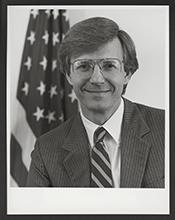
United States · United States Congress · 20 March 1989
Utah Public Lands Wilderness Act of 1989 - Designates certain specified lands in Utah as components of the National Wilderness Preservation System. Provides for continuation of existing grazing on such lands. Requires those areas in Utah administered by the Secretary of the Interior which are not designated as wilderness to be managed for multiple use.
United States · United States Congress · 15 March 1989
Terrorist Alien Removal Act of 1989 - Amends the Immigration and Nationality Act to make terrorist activity (as defined by this Act) grounds for deportation. Establishes removal procedures for alien terrorists, including a special removal hearing which shall be open to the public.
United States · United States Congress · 15 March 1989
Research and Experimental Credit Extension and Reform Act of 1989 - Amends the Internal Revenue Code to make permanent the income tax credit for qualified research expenditures by repealing the provisions that would terminate the credit for expenses incurred or paid after 1989. Revises the method for computing: (1) base period research expenses, adding a factor reflecting the gross national product growth rate; and (2) the tax credit, adding an alternative computation component. Applies the credit to in-house research expenses that the taxpayer pays or incurs for the principal purpose of using the research results in the active conduct of a future trade or business.
United States · United States Congress · 14 March 1989
Eliminates post-1968 service in the National Guard as a prerequisite to civil service retirement credit for former National Guard technicians. Amends the National Guard Technicians Act of 1968 to eliminate post-1968 service as a prerequisite for National Guard technicians for receipt of credit in the determination of length of Federal civil service for purposes of leave, Federal employees' death and disability compensation, group life and health insurance, severance pay, tenure, and status. Sets forth rules for applying provisions of this Act to affected individuals.
United States · United States Congress · 14 March 1989
Fair Labor Standards Amendments of 1989 - Amends the Fair Labor Standards Act of 1938 (the Act) to increase the minimum wage per hour from $3.35 in 1989 to: (1) $3.65 in 1990; (2) $3.95 in 1991; and (3) $4.25 in 1992 and thereafter. Increases the tip credit under the Act from 40 percent to 45 percent for 1990 and to 50 percent for 1991 and thereafter. (The tip credit deems the amount paid to a tipped employee, for minimum wage purposes, to be increased by an amount determined by the employer, but not by an amount in excess of the specified percentage of the applicable minimum wage rate). Increases the small business exemption by revising the definition of an enterprise engaged in commerce, for purposes of coverage under the Act ("the enterprise test"). Exempts from such coverage enterprises whose annual gross volume of sales or business is less than $500,000 (currently $362,500), effective in 1989. Requires employers who were covered in 1988, but who are exempt under the new threshold, to continue to pay the $3.35 per hour minimum wage. Allows employers to pay newly hired workers 80 percent of the minimum wage or $3.35, whichever is higher, for up to 180 days. Prohibits any displacement of other employees because of such lower rate of pay.
United States · United States Congress · 8 March 1989
Designates September 15, 1989, as National POW/MIA Recognition Day. Recognizes the National League of Families POW/MIA flag as the official symbol of the United States' commitment to resolving the fates of Americans still prisoner or missing in action in Southeast Asia.
United States · United States Congress · 23 February 1989
Amends the National Trails System Act to designate as components of the National Trails System: (1) the California National Historic Trail, extending from Independence and Saint Joseph, Missouri, and Council Bluffs, Iowa, to various points in California and Oregon; and (2) the Pony Express National Historic Trail, extending from Saint Joseph, Missouri, through Kansas, Nebraska, Colorado, Wyoming, Utah, and Nevada to Sacramento, California.
United States · United States Congress · 23 February 1989
Makes the legal defense of discretionary function provided under specified Federal law inapplicable to any legal or administrative proceeding for damages arising out of U.S. violation of occupational safety or health standards or U.S. negligence at any workplace owned or operated by or under contract with the United States.
United States · United States Congress · 23 February 1989
Amends title XVIII (Medicare) of the Social Security Act to determine the payments to be made to hospitals under Medicare's prospective payment system on the basis of a blend of hospital-specific rates and a national rate, depending on the degree to which costs vary within specific diagnosis-related groups. Eliminates the urban or rural classification of an area as a consideration in hospital payment determinations. Requires the Secretary of Health and Human Services to: (1) identify relevant labor markets for hospitals; (2) establish a methodology to determine the proportion of hospital costs which are wage-related and compare the hospital wage level in each labor market with the national average hospital wage level; and (3) take into account differences among hospitals in part- and full-time employment patterns.
United States · United States Congress · 22 February 1989
Amends Federal law to extend the immediate retirement provisions applicable to Federal law enforcement officers to: (1) revenue officers for the Internal Revenue Service; (2) customs inspectors for the U.S. Customs Service; (3) customs canine enforcement officers for the U.S. Customs Service; and (4) inspectors for the Immigration and Naturalization Service.
United States · United States Congress · 21 February 1989
1991 Mount Rushmore Commemorative Coin Act - Requires the Secretary of the Treasury to issue a specified number of five-dollar gold coins, one-dollar silver coins, and half-dollar clad coins in commemoration of the Mount Rushmore National Memorial. Provides that such coins shall be considered legal tender. Requires the Secretary to begin issuing such coins on January 1, 1991. Directs the Secretary to obtain silver for the minting of such coins from stockpiles established under the Strategic and Critical Materials Stock Piling Act and to obtain gold pursuant to authority under existing law. Provides that the design of such coins shall be selected by the Secretary after consultation with the Mount Rushmore National Memorial Society of Black Hills. Specifies the sales price of such coins as the face value plus costs. Requires that all sales of such coins include a surcharge of $35 per coin for five-dollar coins, $7 per coin for one-dollar coins, and $1 for half-dollar coins. Requires that of the total surcharges received by the Secretary from the sale of such coins: (1) 50 percent shall be returned to the Treasury for purposes of reducing the national debt; and (2) 50 percent shall be paid to the Society to assist efforts to improve the Mount Rushmore National Memorial. Authorizes the Comptroller General to audit such payments. Requires the Secretary to ensure that the minting and issuance of such coins shall not result in any net costs to the Government.
United States · United States Congress · 9 February 1989
Current Level Enhanced Rescission Act of 1989 - Amends the Impoundment Control Act of 1974 to include in any special message the President sends to the Congress in connection with a proposed rescission of budget authority amendatory language to enable the affected programs to continue to function lawfully at the proposed new budget level. Amends the Congressional Budget and Impoundment Control Act of 1974 to authorize the President, on the same day the President approves any appropriation bill, to transmit to the Senate and the House of Representatives one or more special messages proposing to rescind amounts of budget authority included in the bill. Limits: (1) the amounts subject to rescission (the proposal may not reduce a program below its previous fiscal year level); and (2) each special message to one item of budget authority. Prescribes procedures to govern the expedited treatment of such messages in the Senate and the House of Representatives. Makes any proposed rescission amount available for obligation unless both Houses of Congress agree to the bill or joint resolution accompanying the related special message within 60 days of its transmission.
United States · United States Congress · 9 February 1989
Anabolic Steroid Restriction Act of 1989 - Amends the Federal criminal code to provide criminal penalties for knowingly: (1) receiving, depositing, or causing to be deposited or delivered by mail any anabolic steroid or controlled substance for use in humans other than the treatment of disease pursuant to the order of a physician, except as otherwise permitted by law; and (2) using any communication facility in committing, causing, or facilitating a violation of such prohibition. Makes any property involved in a violation of this Act subject to forfeiture.
United States · United States Congress · 9 February 1989
Comprehensive Lyme Disease Act of 1989 - Amends the Public Health Service Act to authorize the Secretary of Health and Human Services to make grants with respect to Lyme disease: (1) through the Director of the National Institutes of Health, for research and treatment; and (2) through the Director of the Centers for Disease Control, for public education. Authorizes appropriations for FY 1990 through 1992.
United States · United States Congress · 7 February 1989
Volunteer Protection Act of 1989 - Prescribes circumstances under which volunteers working for nonprofit organizations or government entities shall be immune from personal financial liability for acts on behalf of the organization or entity. Sets forth exceptions to and conditions on the granting of such immunity that a State may impose. Requires the Secretary of Health and Human Services to increase by one percent the fiscal year allotment which would otherwise be made to a State to carry out the Social Services Block Grant Program under title XX of the Social Security Act if such State has, within two years, certified to the Secretary that it has enacted a State law which provides such immunity. Provides for the continuation of such increase based on an annual recertification.
United States · United States Congress · 7 February 1989
Designates July 27, 1989, as National Korean War Veterans Recognition Day and expresses the gratitude of the Congress and the Nation for the contributions made by the Korean War veterans.
United States · United States Congress · 7 February 1989
Expresses the sense of the Congress that the Soviet Union should: (1) continue to abide by the agreement governing the withdrawal of its armed forces from Afghanistan; (2) give all necessary aid and information to assist in the removal of mines deployed in Afghanistan by Soviet and allied Afghan armed forces; (3) provide all funds, equipment, and personnel necessary for such removal; and (4) set aside funds to provide medical care and assistance to those Afghan people injured as a result of, and to pay claims for property damage caused by, mines which were not removed.
United States · United States Congress · 2 February 1989
Establishes the Medicare Geographical Classification Review Board to decide on a rural hospital's application for classification as an urban hospital for Medicare payment purposes. Amends the Omnibus Budget Reconciliation Act of 1987 to alter the Rural Health Care Transition Grant Program to extend and increase authorized appropriations for such program through FY 1992, and permit the Secretary to waive the hospital grant limit. Expands, from four to ten hospitals, a Medicare demonstration program covering additional costs incurred by teaching hospitals in sending their residents to rural hospitals for training. Requires the Secretary to establish five-year Medicare demonstration programs covering costs incurred by five hospitals in providing clinical training to undergraduate nurses. Extends the regional referral center classification of hospitals so classified as of September 30, 1989, and the payment rates applicable to such hospitals under the Medicare program, through FY 1994.
United States · United States Congress · 2 February 1989
Fastener Quality Assurance Act of 1989 - Prohibits the offering for sale or sale in interstate commerce of any fastener (screw, nut, bolt, stud, similar threaded device, or washer) unless it is part of a lot which: (1) conforms to standards and specifications represented by the manufacturer or ordered by the purchaser; and (2) has been inspected, tested, and certified according to this Act. Requires manufacturers to have a fastener lot sample inspected by a laboratory accredited under an approved system (including one owned or affiliated with the manufacturer if it is so accredited). Authorizes the laboratory, upon determination of conformance with the appropriate standards and specifications, to provide the manufacturer certificates with respect to such lot. Directs the Secretary of Commerce to issue regulations to implement this Act. Prohibits any manufacturer from selling any primary container or lesser quantity of fasteners manufactured in the United States unless delivery to the first purchaser is accompanied by an original certificate from an accredited laboratory. Prohibits any person from selling any primary container or lesser quantity of fasteners manufactured outside the United States to any importer or end user unless delivery is accompanied by a certificate. Allows delivery to an importer or private label distributor without the required certificate if: (1) the manufacturer discloses in writing the appropriate standards and specifications; and (2) the importer or private label distributor assumes responsibility in further sale or offer of sale unless delivery to the first subsequent purchaser is accompanied by an original certificate from an accredited laboratory. Requires that a copy of the original certificate be provided to subsequent wholesale purchasers. Requires persons who make material physical alterations to a fastener subsequent to manufacture to have the altered fastener inspected and tested before offering it for sale or selling it unless delivery is accompanied by a disclosure of the alteration and a warning. Requires subsequent disclosures of the alteration in resales. Prohibits commingling of fasteners from different lots in the same primary container or other package. Requires fastener manufacturers or private label distributors to comply with requirements of a program for recordation of insignias. Directs the Secretary to establish such a program, including regulations to ensure traceability. Sets forth civil remedies, including declaratory and injunctive relief, and criminal penalties, including fines and imprisonment, for violations of this Act. Provides that nothing in this Act shall be construed to: (1) preempt any rights or causes of action that any buyer may have respect to any seller of fasteners under the law of any State, except insofar as such State law conflicts with this Act; and (2) limit or otherwise affect the authority of the National Institute of Standards and Technology or any voluntary consensus standards organizations to establish, modify, or withdraw any standards and specifications under any other law or authority in effect on the date of enactment of this Act.
United States · United States Congress · 2 February 1989
Agricultural Program Reporting and Recordkeeping Improvement Act of 1989 - Requires the Secretary of Agriculture to report to the appropriate congressional committees specific proposals to reduce agricultural producer recordkeeping and paperwork requirements. Requires a feasibility study of paperwork reduction through fee-based access to a computerized network utilizing electronic data transmission and video-conferencing.
United States · United States Congress · 2 February 1989
Extends regards to the people of France on the occasion of the bicentennial of Bastille Day. Urges the people of the United States to observe the bicentennial on July 14, 1989. Finds that France and the United States remain committed to the principles of the Declaration of the Rights of Man and of the Citizen and the Bill of Rights.
United States · United States Congress · 31 January 1989
National Observance Advisory Act - Establishes the President's Advisory Commission on National Observances to: (1) establish criteria for recommending to the President that a proposed national observance be approved or disapproved; (2) review proposals for national observances submitted in accordance with procedures published by the Commission; and (3) issue recommendations to the President concerning each proposal reviewed.
United States · United States Congress · 31 January 1989
Amends the Internal Revenue Code to allow an income tax deduction for interest on any indebtedness incurred to pay the educational expenses of the taxpayer, spouse, or dependent. (Under current law, such a loan must be secured by an interest in real property.)
United States · United States Congress · 27 January 1989
Amends the Education and Training for a Competitive America Act of 1988 to extend through FY 1992 the authorization of appropriations for the Access Demonstration Programs (for training of secondary school personnel, including guidance counselors).
United States · United States Congress · 27 January 1989
Agricultural Commodity-Based Plastics Development Act of 1989 - Directs the Administrator of the General Services Administration to encourage the development and use of degradable agricultural commodity-based plastic through a system of preferential Government procurement. Authorizes FY 1990 through 1992 appropriations to pay the difference in costs between conventional products and degradable plastic products. Directs the Administrator to establish an interagency working group to coordinate activities under this Act. Requires annual reports to the appropriate congressional committees.
United States · United States Congress · 27 January 1989
Constitutional Amendment - Prohibits the Congress from making any appropriation that would result in total fiscal year appropriations in excess of estimated fiscal year revenues. Authorizes suspension of this prohibition in time of war or national emergency. Prohibits any increase in the national debt. Requires repayment of this debt during the 100-year period following ratification, at a rate of ten percent repayment per ten-year period.
United States · United States Congress · 24 January 1989
Repeals provisions of the Tax Reform Act of 1986 that establish nondiscrimination requirements for coverage and benefits under certain statutory employee benefit plans. (The consequence is the repeal of section 89 of the Internal Revenue Code.)
United States · United States Congress · 20 January 1989
Amends the Federal criminal code to make it a criminal offense to disclose for financial profit any classified secret information to any foreign government (with the intention or belief that such information will be used to injure the United States or be used to the advantage of the foreign country). Authorizes the death penalty if such disclosure severely jeopardizes the national security of the United States. Requires a separate sentencing hearing before a jury or (upon motion of the defendant) the judge. Sets forth mitigating factors which preclude the death sentence.
United States · United States Congress · 20 January 1989
Repeals a provision of the Internal Revenue Code that disallows the income tax deduction of 25 percent of the health insurance costs of self-employed individuals after tax year 1989 (thus extending the deduction indefinitely).
United States · United States Congress · 20 January 1989
Expresses the sense of the Congress that the Secretary of Labor, in cooperation with the ACTION Agency, should publicize and promote projects under the Retired Senior Volunteer Program and the Older American Community Service Employment Program that encourage and recruit older individuals to provide child care services in community-based child care centers.
United States · United States Congress · 19 January 1989
Amends Federal law to require the reverse side of the first coin redesigned to commemorate the bicentennial of the U.S. Constitution for a two-year period. Provides that the design on the obverse side of U.S. coins shall contain the likenesses of those displayed on current coins and shall be considered for redesign. Requires any such obverse redesigns to conform to the inscription requirements of current law. Requires U.S. coins to be redesigned, at the discretion of the Secretary of the Treasury, over the next six years. Requires the Secretary, in selecting new designs, to consider specified constitutional concepts. Requires the designs to be selected by the Secretary upon consultation with the United States Commission of Fine Arts. Requires that any profits from the sale of uncirculated and proof sets of U.S. coins be deposited in the Treasury and used solely to reduce the national debt.
United States · United States Congress · 3 January 1989
Authorizes the Secretary of the Interior to acquire certain properties in Independence, Missouri, to add to the Harry S Truman National Historic Site. Authorizes the owners of such property to retain the right of use and occupancy of the property for up to 25 years or until death, whichever is later. Requires the Secretary to pay the owners the fair market value for such property. Authorizes appropriations.
United States · United States Congress · 3 January 1989
Directs the Secretary of Agriculture to conduct a study of the classification of anhydrous ammonia as a poisonous gas for purposes of the Hazardous Materials Transportation Act. Prohibits the Secretary of Transportation from implementing the classification of anhydrous ammonia as a poisonous gas for purposes of such Act until the Secretary of Agriculture has reported to the Congress.
United States · United States Congress · 3 January 1989
Deceptive Mailings Prevention Act of 1989 - Amends Federal law to declare as nonmailable any mail matter which is designed to resemble a bill, invoice, or statement of account due, but which in fact constitutes a solicitation of donations. Requires such mail matter to bear on its face in conspicuous type that it is a solicitation of donations and that the addressee is under no obligation to make any payment. Declares as nonmailable any mail matter which constitutes a solicitation by a non-governmental entity: (1) for the purchase of products or services which are provided free of charge or at a lower price by the Federal Government, or which are substantially the same as such products or services; (2) for the purchase of products or services and which contains a seal, insignia, trade or brand name, or any other term or symbol which reasonably could be interpreted or construed as implying Federal Government connection, approval, or endorsement; and (3) for the contribution of funds and which contains a seal, insignia, trade or brand name, or any other term which could reasonably be interpreted or construed as implying Federal Government connection, approval, or endorsement. Allows the mailing of such matter if it contains a conspicuous disclaimer that it is not a Government document. Establishes penalties for violations of this Act.
United States · United States Congress · 3 January 1989
Rural Transportation Equity Act of 1989 - Amends the Urban Mass Transportation Act of 1964 to increase from 2.93 percent to six percent the amount allocated in any fiscal year for public transportation projects in non-urbanized areas. Authorizes appropriations for FY 1990 through 1995 for State Initiative Block Grants based upon a specified formula to determine rural population ratios and entitlement. Redesignates the Urban Mass Transportation Administration of the Department of Transportation as the Public Transportation Administration. Directs the Secretary of Transportation to: (1) encourage the appointment of State ombudsmen to coordinate rural transportation resources and planning in each State; (2) establish a rural mobility working group in the Public Transportation Administration to ensure the coordination of all activities with an impact on rural and specialized transportation (and to serve as a single information clearinghouse on such activities); and (3) report annually to the Congress regarding assistance programs provided to rural and specialized transportation operations.