Bill· HJRESH.J.Res. 171 (99th)open
A joint resolution to designate 1985 as the "Oil Heat Centennial Year".
United States · United States Congress · 27 February 1985
Designates 1985 as the Oil Heat Centennial Year.
The world's political record
Person
United States · Official source
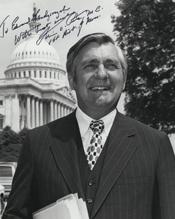
3,398 records where Rep. Conte, Silvio O. [R-MA-1] is listed as a sponsor, author, or other actor. Search with topics and years
United States · United States Congress · 27 February 1985
Designates 1985 as the Oil Heat Centennial Year.
United States · United States Congress · 27 February 1985
Expresses the sense of the House of Representatives that the Congress should: (1) preserve current provisions of the Federal tax code which provide tax incentives for charitable contributions; and (2) withhold its support from any tax proposal which undermines the structure of deductions on which contributors to tax-exempt, nonprofit charities now rely.
United States · United States Congress · 26 February 1985
Designates the month of May 1985 as Better Hearing and Speech Month.
United States · United States Congress · 26 February 1985
Designates the week beginning on May 5, 1985, as National Asthma and Allergy Awareness Week.
United States · United States Congress · 26 February 1985
Expresses the sense of the Congress that the United States should initiate negotiations with its principal trading partners and other nations to obtain agreement on tariff and tax preferences to be accorded to exports by small businesses.
United States · United States Congress · 25 February 1985
Colorado River Floodway Protection Act - Establishes under the Secretary of the Interior the Colorado River Floodway Task Force to prepare recommendations concerning the management of land within the Colorado River Floodway. Establishes the Colorado River Floodway, with boundaries to be determined by floodflow levels downstream of Davis Dam. Directs the Secretary to file with the appropriate congressional committees maps of the floodway, and to provide each State, local, or Federal agency affected by such floodway system with copies of such maps. Permits the Secretary to make minor modifications to such maps after timely notice to the State or agency involved. Directs the Secretary to review such maps at least once every five years and to make all necessary changes. Denies the availability of new expenditures or new financial assistance for any purpose within the Floodway, with specified exceptions. Allows the appropriate Federal officer to make Federal expenditures or financial assistance available within the Floodway for: (1) any dam, channel, levee, or other structure whose purpose is flood control, water conservation, power, or water quality drainage facility, or other remedial or corrective measure; (2) the maintenance and expansion of publicly operated roads, structures, or facilities, with specified exceptions; and (3) certain other activities whose purposes are consistent with this Act, such as fish and wildlife enhancement projects, air and water navigation aids, scientific research, emergency assistance, and riverbank stabilization projects. Requires the Director of the Office of Management and Budget to make written certification each year after FY 1984 that each Federal agency concerned has complied with the provisions of this Act. Requires the Secretary, within one year of enactment of this Act, to submit a report on the Floodway to the appropriate congressional committees, detailing the work of the task force and any recommendations the Secretary may have. Amends the National Flood Insurance Act of 1968 to limit new flood insurance coverage on new construction or substantial improvements to structures within the Floodway to a date 90 days after the enactment of this Act. Denies the granting of Federal leases on land located within the Floodway unless the Secretary determines that the proposed use of such land will be consistent with the purposes of this Act. Requires pre-Act Federal land lessees to take reasonable steps to minimize any land use inconsistent with the purposes of this Act. Authorizes appropriations. Prohibits the granting of leases between Hoover Dam and Davis Dam unless the Secretary determines that the lease would be consistent with the operation of Lake Mohave.
United States · United States Congress · 25 February 1985
Authorizes the Armored Force Monument Committee, the United States Armor Association, the World Wars Tank Corps Association, the Veterans of the Battle of the Bulge, the 11th Armored Cavalry Regiment Association, the Tank Destroyer Association, the 1st, 2nd, 3rd, 4th, 5th, 6th, 7th, 8th, 9th, 10th, 11th, 12th, 13th, 14th, and 16th Armored Division Associations, and the Council of Armored Division Associations to erect a memorial in or near Arlington National Cemetery, Virginia, to honor and commemorate the American Armored Force. Directs the Secretary of the Interior, with the approval of the National Commission of Fine Arts and the National Capital Planning Commission, to select the site and approve the design and plans. Obligates the United States to expenses of maintenance only. Requires the commencement of the erection of the memorial within five years with a certification of sufficiency of funds necessary before commencement.
United States · United States Congress · 25 February 1985
Expresses the sense of the House of Representatives that the President should: (1) continue to express U.S. opposition to the exile of Igor Ogurtsov; and (2) urge the Soviet Union to provide Igor Ogurtsov with medical care, grant his release from exile, and accept his application for an exit visa and allow him to emigrate without forcing him to renounce his views.
United States · United States Congress · 21 February 1985
Authorizes the President, on behalf of the Congress, to present a gold medal to the family of Harry Chapin in recognition of Harry Chapin's efforts to address issues of world hunger. Authorizes appropriations. Authorizes the Secretary of the Treasury to provide for the sale of bronze duplicates of the medal.
United States · United States Congress · 21 February 1985
Children's Justice Act - Amends the Child Abuse Amendments of 1984 to authorize a Children's Justice Grant program. Authorizes the Secretary of Health and Human Services to make additional grants to States under specified provisions of the Child Abuse Prevention and Treatment Act for identification, treatment, and prevention of sexual abuse. Makes a State eligible for such assistance if the Secretary determines that the State, within one year after the enactment of this Act, has enacted specified legal and administrative changes with respect to the investigation and prosecution of child sexual abuse cases. Requires a State, to be eligible for such assistance, to have in effect a child sexual abuse program which includes at least one statute or administrative procedure to carry out the following categories of reforms: (1) handling such cases so as to reduce the trauma to the child victim; (2) improving the chances of successful prosecution or legal action against child molesters; and (3) improving procedures to protect children from sexual abuse. Directs the Secretary to issue necessary regulations for such assistance program. Authorizes appropriations for FY 1986 and 1987.
United States · United States Congress · 21 February 1985
National Training Incentives Act of 1985 - Declares that it is the policy and responsibility of the Federal Government to encourage cooperation between employers and employees to promote training programs which will assist employees, should they be displaced from the work force, in training for a trade or occupation for which present and future employment opportunities exist. Enumerates congressional findings with respect to the inadequacies of existing employment and training programs, the importance of such programs to the national security and economy, the current funding of such programs, the impact of foreign trade competition on the U.S. economy and job market, and the inadequacies of the unemployment compensation system. Title I: Amendments to Internal Revenue Code of 1954 Relating to Employee Training - Amends the Internal Revenue Code to establish an employee training credit for employers. Adds such employee training credit to those credits which are included in the current year business credit for purposes of determining the general business income tax credit for a taxable year. (The Internal Revenue Code provisions for such general business income tax credit permit three-year carrybacks and 15-year carryforwards of unused credits, with specified limitations.) Makes such employee training credit for any taxable year equal to 25 percent of the excess, if any, of: (1) the qualified training expenses of the taxpayer for such taxable year, over (2) the base period training expenses of such taxpayer. Defines "qualified training expenses" as the aggregate amount of expenses paid or incurred by the taxpayer during the taxable year in connection with the training of employees under approved training programs. Defines "base period training expenses" as the average of the qualified training expenses for each year in the base period. Defines "base period" as the five taxable years of the taxpayer immediately preceding the taxable year for which the determination is being made ("the determination year"). Sets forth transitional rules for the first four determination years beginning after December 31, 1984. Sets minimum base period training expenses by providing that, in the case of any determination year of the taxpayer for which the qualified training expenses exceed 200 percent of the base period training expenses, "50 percent of such qualified training expenses" shall be substituted for "the base period training expenses" in the formula to determine the amount of the credit. Defines "approved training program," for purposes of such employee training credit, to include: (1) any apprenticeship program registered or approved by Federal or State agencies; (2) any employer-designed or employer-sponsored training program which meets certain requirements prescribed by the Secretary of Labor (Secretary); (3) any cooperative education; (4) any training program designated by the Secretary which is carried out under the supervision of an institution of higher education; or (5) any other training program approved by the Secretary. Sets forth the special tax rules for the aggregation of qualified training expenses, allocations of such credits, and adjusted to such employee training credit amount for acquisitions and dispositions of a trade or business. Specifies that the employee training credit shall be in addition to any other deduction or credit allowed for the same expenses under the Federal tax law. Amends the Internal Revenue Code to exempt from any penalty tax early withdrawal from an individual retirement account or annuity (IRA) of a displaced worker if such withdrawals are made to pay training expenses, do not exceed the allowable amount, and are made in accordance with the requirements of this Act. Incorporates provisions of title II of this Act relating to the definition of displaced workers, training expenses, and allowable IRA distributions within the Internal Revenue Code provisions relating to individual retirement accounts and annuities. Title II: Withdrawals from Individual Retirement Accounts and Annuities for Job Training for Displaced Workers - Entitles a displaced worker to apply to the Secretary of Labor (Secretary) for certification of such individual's status as a displaced worker. Defines a "displaced worker" as any individual, as of the time of application for a certificate, who has at least 20 quarters of coverage under title II (Old Age, Survivors and Disability Insurance) of the Social Security Act, who has received employment counseling within the past year from an agency approved by the Secretary, and who is in one of the following categories: (1) receiving regular State unemployment compensation; (2) exhausted the right to receive such compensation; (3) unemployed, or received notification of termination of employment within six months, due to permanent closure of a plant or facility; or (4) unemployed for six months or more and with limited opportunity for employment in a similar trade or occupation within a reasonable commuting distance. Permits displaced workers to withdraw amounts from their individual retirement account or annuity (IRA) to pay the expense (tuition, fees, books, supplies, or required equipment) of an eligible training program. Limits the amounts of such IRA withdrawal to $4,000 per year (with cost-of-living adjustments), minus aggregate amounts distributed for training expense payments in the four immediately preceding taxable years. Requires withdrawals from an IRA for training expenses to be made only through the use of a voucher issued by the account trustee or insurance company custodian upon presentation to such trustee or custodian by the displaced worker of a displaced worker certificate and an invoice or statement evidencing that such worker has enrolled in an eligible training program. Sets forth requirements for the presentation and redemption of vouchers for payment of job training expenses. Prohibits depositary institutions from assessing any penalty against a displaced worker for early withdrawals from an IRA to pay such training expenses. Permits adjustments in the rate of return on certain investments when IRA funds are withdrawn to pay such training expenses. Provides that the participation of displaced workers in an eligible training program shall not disqualify such workers for unemployment compensation to which they are otherwise entitled. Defines "eligible training program" as a training program offered by an institution of higher education, a postsecondary vocational institution, a proprietary institution of higher education, or any other institution approved by the Secretary which prepares students for gainful employment in a trade or occupation in which present and future employment opportunities exist. Requires the Secretary to promulgate regulations for: (1) the application of an educational institution for qualification of its training program; and (2) criteria for determining whether such a job training program qualified as an eligible training program under the terms of this Act. Directs the Secretary, for purposes of determining whether certain job training programs qualify as eligible training programs, to consider any determination relating to such programs made by: (1) the Administrator of Veterans Affairs or a State approving agency for veterans' educational programs; (2) a private industry council established under the Job Training Partnership Act or other official or group empowered to make determinations under such Act; (3) the Secretary of Education; (4) any State education agency; or (5) a nationally recognized accrediting agency which the Secretary determines to be reliable in evaluating the quality of job training programs. Sets forth nondiscrimination requirements for institutions offering such job training programs. Requires the Secretary to minimize the amount of paperwork and time necessary to certify any individual as a displaced worker or any training program as an eligible training program. Title III: State Employment Service Responsibilities - Directs the Secretary of Labor to allocate funds to States to reimburse administrative costs of public employment offices which provide certification for displaced workers, labor market and training information, and job search services. Authorizes appropriations for such purpose for FY 1986 and thereafter. Directs the Secretary to submit a report to the Congress on a nationwide computerized job bank and matching program authorized under the Job Training and Partnership Act. Title IV: Miscellaneous Provisions - Amends the Job Training Partnership Act to direct the private industry councils established under such Act to make information on job training programs available throughout their service delivery areas. Exempts such councils from limitations on expenditures imposed by such Act in providing such information. Excludes from the computation of the amount of the expected family contribution to a student for Pell Grant purposes any unemployment compensation received by such student or any IRA distribution used to pay training expenses of such student, provided such student is certified as a displaced worker under the terms of this Act.
United States · United States Congress · 21 February 1985
High Technology Research and Scientific Education Act of 1985 - Title I: The Credit for Increasing Research Activities - Amends the Internal Revenue Code to make permanent the tax credit for research and development (R&D) expenditures. Modifies the definition of qualified research for purposes of the R&D credit to narrow the category of eligible activities for which the credit is allowable. Provides that in-house and contract research expenses paid or incurred by a regular corporation (not an S corporation, a personal holding company, or a service corporation) will constitute qualified research expenses for R&D credit purposes if the corporation undertakes the research with the intention to use the result thereof in the active conduct of a present or future trade or business. Provides that in the case of research being conducted in partnership form, research expenses will constitute qualified research expenses if they are incurred by the partnership in carrying on a trade or business as applied at the partnership level, and the credit is apportioned among the partners in accordance with general partnership rules. Provides exceptions to this general rule where: (1) there is a joint venture enterprise of regular corporations; or (2) not all of the members of the joint venture are regular corporations, but each member's own trade or business would satisfy the trade or business test with respect to the partnership's research expenditures. Provides that for these two exceptions the research expenses will flow through to the partners, with the trade or business test being applied at the partner level. Title II: Promotion of University Research and Scientific Investigation - Establishes a new income tax credit equal to 20 percent of that portion of a corporation's payments to universities (and other qualified non-profit tax-exempt organizations for basic research) which exceeds a fixed, historical "minimum university basic research" floor. Defines the "minimum university basic research" floor as one percent of the annual average of the corporate taxpayer's combined qualified in-house research expenses, contract research expenses and university basic research payments for the base period composed of the period from 1981 through 1983. Provides that the amounts of research expenses which fall below the floor shall remain eligible for the present R&D credit and are included in the corporation's base period for purposes of calculating the present R&D credit. Treats the amounts which exceed the "minimum university basic research" floor as ineligible for the present R&D credit and excludes such amounts from the corporate taxpayer's base year research expenses for purposes of calculating the corporations R&D credit under present law. Provides that a corporation's payments to universities for basic research that is eligible for the new tax credit shall be reduced to the extent that the corporation's general (i.e., not designated for research purposes) charitable giving to all universities falls below historical levels (the annual average of undesignated payments for three of the immediately preceding four years as selected by the taxpayer). Makes additions to the list of organizations to which corporate payments for basic research may be made and be eligible for the tax credit. Allows a corporation an income tax deduction for contributions of scientific or technical property to an institution of higher education. Defines scientific property to mean tangible personal property (including computer software) used in a trade or business, which is donated for the direct education of students or faculty, for research and experimentation, or for research training in the United States in mathematics, the physical, biological, or chemical sciences, engineering, or advanced computer sciences. Sets forth a formula for determining the amount of the allowable deduction for contributions of scientific property. Provides for an income tax exclusion for the scholarships, fellowship grants, student loan forgiveness, or stipends of a graduate student in mathematics, engineering, computer science, or the physical or biological sciences. Provides that such tax exclusion is not forfeited merely because the student is required, as a condition of the scholarship or fellowship, to perform future service in teaching or research.
United States · United States Congress · 21 February 1985
Designates August 4, 1985, as Freedom of the Press Day.
United States · United States Congress · 21 February 1985
Designates March 22, 1985, as National Energy Education Day.
United States · United States Congress · 21 February 1985
States that the Congress recognizes the vital role of the Bureau of Apprenticeship and Training and commits itself to the maintenance of a strong and effective Federal presence in apprenticeship programs.
United States · United States Congress · 21 February 1985
Expresses the sense of the House of Representatives that: (1) the President should express to the Soviet Union U.S. opposition with respect to the harassment and arrests of Hebrew teachers and Jewish activists in the Soviet Union; and (2) the Soviet Union should comply with its commitments under specified international human rights agreements and cease its persecution of individuals on the basis of their Jewish faith.
United States · United States Congress · 21 February 1985
Declares that it is the sense of the House of Representatives that the President should award the Presidential Medal of Freedom to David Phillip Vetter, of Spring, Texas, to be presented to his family in his memory (as the oldest survivor of congenital severe combined immunodeficiency (SCID)).
United States · United States Congress · 20 February 1985
Amends the Federal Tort Claims Act to allow members of the armed forces to bring claims for damages against the United States for personal injury or death arising out of medical or dental care furnished by a Department of Defense hospital.
United States · United States Congress · 20 February 1985
Designates 1985 as the 75th Anniversary of the Boy Scouts of America.
United States · United States Congress · 20 February 1985
Designates the week beginning May 12, 1985, as National Digestive Diseases Awareness Week.
United States · United States Congress · 20 February 1985
Prohibits ending the voluntary restraint on imports of Japanese autos until U.S. exports to Japan are substantially increased and the U.S. trade deficit with Japan is substantially reduced.
United States · United States Congress · 19 February 1985
African Famine Relief and Recovery Act of 1985 - Amends the Foreign Assistance Act of 1961 to authorize the President to provide assistance for famine relief, rehabilitation, and recovery in Africa. Requires that not less than 80 percent of the funds appropriated for such relief shall be used for grants to private and voluntary organizations and international organizations. Requires that at least 18 percent of funds appropriated for such relief shall be used for emergency health projects. Requires that a specified amount of funds appropriated for such relief shall be transferred to the operating expenses of the Agency for International Development for management support activities relating to emergency food assistance for Africa. Authorizes supplemental appropriations for FY 1985 for such relief. Authorizes supplemental appropriations for FY 1985 to the Department of State for migration and refugee assistance in Africa. Requires that not less than 54 percent of the funds appropriated for such assistance shall be made available to the United Nations Development Program Trust Fund for refugee assistance in Africa. Requires the remaining amount to be used by the Bureau for Refugee Programs of the Department of State for emergency relief and recovery efforts in Africa. Requires that amounts appropriated pursuant to this Act shall be available only for aid in those African countries that have suffered during 1984 and 1985 from exceptional food supply problems due to drought and other calamities. Requires such assistance to be provided without regard to the prohibition against aid to countries which have nationalized or expropriated property of U.S. citizens. Requires that the President shall ensure that such assistance is provided to the famine victims for whom it is intended. Requires the President to report to the Congress by June 30, 1985, on: (1) the emergency needs for African famine assistance; and (2) the projected FY 1985 contribution by the United States to meet an appropriate share of such needs. Expresses the sense of the Congress that the President should submit a request for supplemental funding for emergency African famine assistance if available funding is insufficient to meet the projected contribution.
United States · United States Congress · 19 February 1985
Liberty Double-Eagle Bullion Coin Act - Requires the Secretary of the Treasury to mint and issue gold double-eagle coins. Sets forth specifications for and the design of such coins. Makes such coins legal tender. Permits the sale of such coins at a price equal to the cost of minting and issuing such coins plus a surcharge equal to the amount by which the fair market value of gold bullion held by the United States and used in the minting of the coins exceeds the statutory maximum value of any gold certificates outstanding against the bullion. Requires the revenue from such surcharges to be used to reduce the national debt. Authorizes appropriations.
United States · United States Congress · 19 February 1985
Authorizes the Administrator of Veterans Affairs to provide mortage protection life insurance to certain veterans unable to obtain commercial life insurance at a standard rate because of service-connected disabilities. Establishes guidelines for such insurance regarding: (1) amount of insurance; (2) premium rates; (3) payment of insurance; and (4) policy provisions.
United States · United States Congress · 19 February 1985
Amends the Internal Revenue Code to allow an income tax credit for contributions made by taxpayers to reduce the public debt. Sets the amount of such credit at 25 percent of the value of the contribution.
United States · United States Congress · 19 February 1985
Makes supplemental appropriations for FY 1985 to: (1) the Department of Agriculture for Public Law 480 famine relief programs in Africa, including funds for transporting 1,100,000 metric tons of farm commodities; (2) the Agency for International Development for international disaster assistance programs for famine relief in Africa; and (3) the Department of State for migration and refugee assistance in Africa.
United States · United States Congress · 19 February 1985
Urges the United States and the People's Republic of China to begin talks aimed at creating a jointly administered United States-People's Republic of China Student Exchange for Understanding Program. Sets forth certain aspects of such exchange program.
United States · United States Congress · 19 February 1985
Designates April 1985 as National School Library Month.
United States · United States Congress · 19 February 1985
Designates 1985 as the Year of the Teacher.
United States · United States Congress · 7 February 1985
National Acid Deposition Control Act of 1985 - Title I: Acid Deposition Control and Assistance Program - Amends the Clean Air Act to mandate emission reductions and retrofit technology for the 50 fossil fuel fired electric utility generating plants which the Administrator of the Environmental Protection Agency identifies and lists as having had the largest total emissions of sulfur dioxide during the calendar year 1980. Permits the owner or operator of such a plant to substitute a fossil fuel fired steam generating unit in the same State or plant for an identified electric utility, subject to the Administrator's approval. Requires substitute units to meet certain performance standards beyond their useful lives. Requires emission limitations compliance schedules to require the use of technological systems of continuous emission reduction for each steam generating unit in the generating plant (other than steam units serving as substitutes) and the reduction of sulfur dioxide emissions to 90 percent or 70 percent of 1980 emissions levels. Determines compliance on a plantwide basis and on the basis of average annual emissions. Subjects substitute unit compliance schedules to the same requirements but evaluates compliance for the unit rather than plantwide. Directs owners or operators of listed plants and substitute units to submit a compliance schedule to the Administrator for approval. Directs the Administrator to promulgate a schedule for listed plants without an approved schedule. Requires schedules to mandate contracts for technological systems by the start of 1993, system installation by 1995, and compliance with emission standards for 1995 and subsequent years. Directs the Administrator to make available 90 percent of a system's construction and installation costs from the Acid Deposition Control Fund, Conditions payments upon minimizing rate increases to the customers of the utility. Directs the Administrator to compute each State's share of the 12 million ton reduction in sulfur dioxide emissions required within ten years of enactment of this Act. Counts a State's excess tonnage from fossil fuel fired electric utility plants and steam generating units and industrial process emitters of sulfur dioxide. Sets forth the formula for determining a State's share of total reductions using such excess tonnage. Permits States to reallocate reductions among themselves so long as total reductions meet specified requirements. Directs each State to submit a plan for Administrator approval, detailing how such State is going to reduce its share of emissions to compliance levels in ten years. Subjects States without an approved plant to back-up emission limitations which represent between a 75 and 80 percent reduction for 1980 emission levels or the national average best available control technology emissions limit for industrial process emissions. Permits States discretion in means of compliance. Sets forth fund availability conditions, including an approved State plan and funding based upon a State's share of the total required emission reductions. Allows States to use such funds to effect the requirements of this Act in whatever way the State deems appropriate. Establishes in the Treasury the Acid Deposition Control Fund to provide funding for emissions reductions from specified appropriations. Sets forth conditions and administrative provisions for such Fund. Directs the Secretary of the Treasury to report annually to the Congress on the current and five-year projected financial condition of the Fund. Imposes a fee on each kilowatt hour of electric energy generated by an electric utility in the contiguous States. Exempts electricity generated by nuclear or hydroelectric power. Directs the Administrator to make payments to utilities who provide electricity to low-income individuals in order to reduce rates for such customers. Establishes civil and criminal penalties and empowers the Administrator to bring civil actions against an electric utility in violation of the fee requirement. Terminates the fee after ten years. Directs the Administrator to carry out a demonstration project of the limestone injected multistaged burner (LIMB) technology, using limited funds. Directs the Administrator to make grants and contracts to accelerate research for developing other advanced industrial processes to reduce levels of sulfur dioxide and oxides of nitrogen. Authorizes appropriations for FY 1986 through 1991. Title II: Control of Nitrogen Oxide Emissions - Directs the Administrator to revise nitrogen oxides emissions standards for electric utility steam generating units which burn bituminous or subbituminous coal. Sets maximum subbituminous emissions at 0.30 pounds per million Btu's and maximum bituminous coal emissions at 0.40 pounds per million Btu's, based on a 30-day rolling average. Requires the Administrator to promulgate emissions standards for new, large fossil-fuel-fired steam generating units. Establishes oxides of nitrogen emissions standards for light duty trucks after model year 1987. Title III: Acid Deposition Damage Mitigation Program - Establishes a grants program for States with Administrator-approved plans for mitigating water quality damage caused by a acid deposition. Limits such grants to 80 percent of State-expended funds for mitigation. Apportions funds among the States upon the basis of need.
United States · United States Congress · 7 February 1985
Designates the month of October 1985 as National Foster Grandparent Month.
United States · United States Congress · 7 February 1985
Authorizes and requests the President to designate the week of May 12 through May 18, 1985, as Senior Center Week.
United States · United States Congress · 7 February 1985
Expresses the sense of the Congress that: (1) in order to encourage private investment in developing countries, it is necessary to encourage the private sector to be involved with other nations in efforts to alleviate hunger; and (2) American institutions in the public and private sectors should jointly develop commitments and a plan to end world hunger.
United States · United States Congress · 7 February 1985
Expresses the sense of the Congress that the President and the Secretary of State should take all diplomatic and legal means possible to achieve worldwide compliance with the International Whaling Commission moratorium on commercial whaling.
United States · United States Congress · 6 February 1985
Amends the Internal Revenue Code to extend the targeted jobs income tax credit from 1985 to 1990. Increases the amount of wages which may be taken into account for such credit from $6,000 to $10,000 per year. Revises the definition of "members of economically disadvantaged families" to increase from 70 percent to 80 percent of the Bureau of Labor Statistics' lower living standard the amount of income a family may have in order to qualify as a member of a targeted group.
United States · United States Congress · 6 February 1985
Designates November 1985 as American Liver Foundation National Liver Awareness Month.
United States · United States Congress · 6 February 1985
Authorizes and requests the President to designate the week of June 16 through June 22, 1985, as National Safety in the Workplace Week.
United States · United States Congress · 6 February 1985
Designates the month of October 1985 as National High-Tech Month.
United States · United States Congress · 6 February 1985
Designates the month of October 1985 as National Down Syndrome Month.
United States · United States Congress · 6 February 1985
Authorizes and requests the President to designate the week of March 10 through March 16, 1985, as National Employ-the-Older-Worker Week.
United States · United States Congress · 6 February 1985
States that the Congress supports the restoration of democratic institutions and human rights in Chile. Calls upon Chile to negotiate with the democratic opposition. Provides that until Chile returns to democracy: (1) U.S. military and economic assistance to Chile should be denied and all joint military activities ceased; (2) the Overseas Private Investment Corporation should not issue additional investment insurance to Chile; and (3) the United States should oppose all loans and grants to Chile by certain international financial institutions unless such assistance is directed to programs which serve the needs of the people.
United States · United States Congress · 4 February 1985
Designates May 1985 as Nation Community College Month.
United States · United States Congress · 31 January 1985
Amends part A (General Provisions) of title XI of the Social Security Act to direct the Secretary of Health and Human Services to invite each State having an approved plan under part A (Aid to Families with Dependent Children) of title IV of the Social Security Act to submit an application to establish and conduct a demonstration project for the purpose of testing whether the provision of mandatory education or vocational training (or both) for the caretaker parents of dependent children under six years of age in families receiving AFDC would enable such families to leave the AFDC rolls quickly and assist such parents in securing long-term gainful employment at earnings levels sufficient to maintain their families without public assistance. Requires any State desiring to establish and conduct such a demonstration project to submit an application to the Secretary within six-months after the enactment of this Act. Directs the Secretary to approve ten of the proposed projects. Requires six of the approved projects to be located in urban areas and four to be located in predominantly rural areas. Prohibits the approval of a project unless: (1) it is of sufficient size and scope to demonstrate program and cost effectiveness and to permit the drawing of valid inferences for evaluation and permit the drawing of valid inferences for evaluation and policy recommendations; (2) it will be conducted for a period of not less than three nor more than five years; (3) it covers all caretaker parents in families which are eligible for aid under the applicable State plan and which include one or more children under six years of age; (4) it provides for participation by caretaker parents on a voluntary basis; and (5) it complies fully with all other requirements and will contribute to the purposes of this Act. Defines "caretaker parent". Directs a State, in conducting an approved demonstration project, to: (1) offer each caretaker parent in a jurisdiction involved an opportunity to participate in the project; (2) establish an individualized program for the education or vocational training of each participating caretaker parent; and (3) permit such parent to receive education or training under the program so established (from the time the youngest child in the care of such parent is six-months old, or earlier with a physician's written permission) until either the parent is employed and self-sufficient, the parent is no longer a caretaker parent, or the family has become ineligible for aid; and (4) require the project to maintain support services, including child care, transportation, and health care services for each participant. Directs the Secretary to pay each State with an approved demonstration project 90 percent of the costs incurred by the State in establishing and carrying out such project. Requires the remainder of the costs incurred to be paid from non-Federal sources. Requires the education or training for caretaker parents in such program to meet the following requirements: (1) for caretaker parents without a high school diploma the education must lead to such diploma; (2) after receipt of such diploma (or in the case of an individual already having a high school diploma or better), the caretaker parent must participate in an approved post-secondary education program, an approved vocational education program, or a program of employment and training under auspices of the Job Training Partnership Act; (3) the award of an academic scholarship to a caretaker parent shall not result in any loss of eligibility or benefits under AFDC or any other public assistance program, so long as the scholarship payments are made directly to the appropriate educational institution; (4) the education and training must include instruction in family management and life skills, employment and job search training, career counseling, and community-supported recreational activities; (5) appropriate English language and adjustment training must be provided for caretaker parents from immigrant groups who have language or cultural adjustment difficulties; (6) special training must be provided for physically handicapped participants; (7) education and training for each participant in the project must be provided for at least 20 hours per week and must be coordinated with available child care services; (8) any caretaker parent who has completed all of the education and training required by this Act shall remain a participant in the project for 20 hours a week of job search and placement assistance (with coordinated child care) until either the parent is employed and self-sufficient or the family has become ineligible for AFDC. Provides that in the case of a caretaker parent who ceases to be a participant in the project because he or she has completed all of the education and training required by this Act and has become employed: (1) the parent will be provided with child care services, as necessary, without charge for a six-month period, and thereafter for a certain period subject to the payment of a gradually increasing portion of the cost of such services; and (2) the parent shall be considered for a 15-month period to be still a project participant for purposes of receiving Medicaid (title XIX of the Social Security Act) and shall thereafter be similarly considered to still be a participant for such purposes but subject to stated conditions. Requires all of the child care and transportation which is necessary for a caretaker parent to participate in a demonstration project to be included, without charge to the caretaker parent, as a part of the project. Requires each approved project to be designed so as to provide an effective demonstration of: (1) the planning and design of quality and cost-effective approaches to child and infant care; (2) the cost-effective utilization of existing publicly-funded educational, vocational, and other training programs; (3) coordination with other community service providers, including job developers; and (4) cost-effective and creative approaches to the utilization of transportation facilities. Prohibits participation in an approved project by a caretaker parent from resulting in any loss of eligibility or benefits under AFDC or any other public assistance program. Permits a State to make participation mandatory if: (1) it is necessary to operate a project in a cost-effective manner; (2) participants would not be disadvantaged financially or otherwise; and (3) children in need of assistance would not be disadvantaged. Provides that if any caretaker parent who is required to participate in a project refuses to undergo any education or training required by this Act or otherwise fails to participate in an approved demonstration project, without a reasonable basis for such refusal or failure as determined on medical, psychological, psychiatric, or other grounds by an appropriate licensed practitioner in accordance with regulations prescribed by the Secretary (subject to a State being granted a waiver): (1) such parent's needs shall not be taken into account in determining need under AFDC with respect to the parent's family; and (2) any AFDC payments shall be made in the form of protective payments. Requires each approved demonstration project to have a voluntary advisory group to assist in developing the program and in monitoring the project. Sets forth reporting requirements (including reports to Congress). Requires each State in which a demonstration project is located to submit to the Secretary such information as the Secretary may require concerning a project.
United States · United States Congress · 31 January 1985
Designates the week of November 11 through November 17, 1985, as National Reye's Syndrome Week.
United States · United States Congress · 31 January 1985
Authorizes and requests the President to designate the week of April 21 through April 27, 1985, as National Organ Donation Awareness Week.
United States · United States Congress · 31 January 1985
Designates the month of April 1985 as National Child Abuse Prevention Month.
United States · United States Congress · 30 January 1985
Title I: General Accounting Office Investigation and Report - Directs the General Accounting Office to investigate the situation of displaced nationals of El Salvador, including determinations of those Salvadorans in Central America, unlawfully in the United States, or returned from the United States to El Salvador. Requires a report to the Congress. Title II: Congressional Review - Provides that such report shall be referred to the appropriate committees for hearings and committee reports. Title III: Temporary Stay of Deportation - Provides for a temporary stay of detention and deportation for specified Salvadorans presently in the United States.
United States · United States Congress · 30 January 1985
Social Security Reorganization Act of 1985 - Title I: Establishment of the Social Security Administration - Amends title VII (Administration) of the Social Security Act to establish as an independent executive agency a Social Security Administration, headed by a Social Security Board. Provides that it shall be the duty of the Administration to administer the programs established by titles II (Old Age, Survivors and Disability Insurance) and XVI (Supplemental Security Income) of the Social Security Act. Establishes in the Administration a General Counsel and an Inspector General. Requires the Board to study and make recommendations as to the most effective methods of providing economic security through social insurance and as to legislation and matters of administrative policy. Establishes in the Administration: (1) a Commissioner of Social Security; (2) a Deputy Commissioner of Social Security; and (3) an Office of the Beneficiary Ombudsman, to be headed by a Beneficiary Ombudsman who shall represent the interests of beneficiaries under the Old Age, Survivors and Disability Insurance program and the Supplemental Security Income Program within the Administration. Requires the annual report of the Board to include a description of the activities of the Beneficiary Ombudsman. Requires the Board to make annual budgetary recommendations relating to the Administration. Requires that appropriations requests by the Administration for staffing and personnel be based upon a comprehensive workforce plan as established by the Board. Provides for the apportionment of administrative costs. Requires the annual report of the Board to include a section reflecting the use of budget authority provided to the Administration. Requires that authority for automated data processing procurement and facilities construction be provided in the form of contract authority covering the total cost of such acquisitions. Makes amounts needed for the liquidation of contract authority so provided available from the Federal Old-Age and Survivors Insurance Trust Fund and the Federal Disability Insurance Trust Fund to the extent that such amounts are not needed to meet current obligations for benefit payments. Specifies the authorities which are to be delegated to the Board from the Administrator of the General Services Administration. Requires the Board to cause a seal of office to be made and judicial notice taken thereof. Provides for the transfer to the Administration of all functions carried out by the Secretary of Health and Human Services with respect to the programs and activities to be carried out by the Administration under this Act. Abolishes the position of Commissioner of Social Security in the Department of Health and Human Services. Title II: Miscellaneous and Conforming Amendments - Sets forth a contributor and beneficiary bill of rights under which: (1) all individuals are required to be treated fairly by the Board and the Secretary; (2) the Secretary and the Board are prohibited from discriminating on the basis of age, sex, race, creed, color, handicap, national origin, or economic condition; and (3) the Board and the Secretary should maintain prompt, professional, and effective service which is responsive to the community. Requires the Secretary of Health and Human Services and the Board to report to Congress within 120 days after the beginning of each regular session on their administration under this Act. Requires the Secretary to study and make recommendations on the most effective methods of providing economic security and on the administrative policy for the programs which he or she administers. Title III: Effective Dates and Transitional Rules - Sets forth effective date and transitional rule provisions.
United States · United States Congress · 30 January 1985
Amends the National Labor Relations Act to authorize the Secretary of Labor to prohibit the awarding of Federal contracts to persons who have violated certain judicial orders or orders issued by the National Labor Relations Board. Limits the period of such ban to not more than three years after the Secretary has certified the identity of such person to the Comptroller General. Permits the awarding of Federal contracts to such person during the period of the ban if the Federal agency or department, after notice and opportunity for hearing to all interested parties, certifies to the Secretary that there is no other source for the material or services furnished by such person.
United States · United States Congress · 30 January 1985
Designates August 1985 as Polish American Heritage Month.