Bill· HJRESH.J.Res. 899 (94th)referred
Joint resolution to designate April 13, 1976, as Thomas Jefferson Day.
United States · United States Congress · 1 April 1976
Designates April 13, 1976 as "Thomas Jefferson Day."
The world's political record
Person
United States · Official source
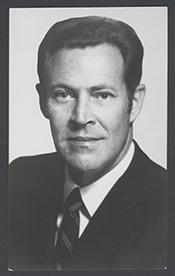
569 records where Rep. Cotter, William R. [D-CT-1] is listed as a sponsor, author, or other actor. Search with topics and years
United States · United States Congress · 1 April 1976
Designates April 13, 1976 as "Thomas Jefferson Day."
United States · United States Congress · 30 March 1976
Expresses the objection of Congress to the proposed sale to Egypt of C-130 aircraft (including spare parts, ground support equipment, training, and ancillary support), as described in the statement submitted to the Speaker of the House and the chairman of the Committee on Foreign Relations of the Senate on March 25, 1976 (transmittal number 76-74).
United States · United States Congress · 18 March 1976
Requires express Congressional approval prior to any: (1) sale of defense articles or services to Egypt under the Foreign Military Sales Act; (2) extension of any credit or guarantee to Egypt under such Act; and (3) issuance of an export license for arms, ammunition, or implements of war to Egypt under the Mutual Security Act of 1954.
United States · United States Congress · 18 March 1976
Directs the President to express the request of the United States Government that the Government of the Union of Soviet Socialist Republics provide Valentyn Moroz with the opportunity to accept the invitation of Harvard University to join the Harvard Ukrainian Research Institute for the 1976-77 academic year.
United States · United States Congress · 17 March 1976
Requires express Congressional approval prior to any: (1) sale of defense articles or services to Egypt under the Foreign Military Sales Act; (2) extension of any credit or guarantee to Egypt under such Act; and (3) issuance of an export license for arms, ammunition, or implements of war to Egypt under the Mutual Security Act of 1954.
United States · United States Congress · 17 March 1976
Prohibits any person doing business in the United States from selling wheat to the Soviet Union until October 1, 1976, unless the President determines that such sales will not cause serious domestic price increases. Imposes a fine of not more than $10,000 or imprisonment for not more than one year, or both, for violation of this Act.
United States · United States Congress · 11 March 1976
Authorizes the nonrecognition of gain or loss, under the Internal Revenue Code, on the transfer of rail properties or stock or securities of a transferor railroad corporation to the Consolidated Rail Corporation pursuant to an order under the Regional Rail Reorganization Act to carry out the final system plan, in exchange solely for stock of the Consolidated Rail Corporation and certificates of value of the United States Railway Association. Prohibits the carryover of any net operating loss of a transferor corporation to the Consolidated Rail Corporation. Makes technical and conforming amendments.
United States · United States Congress · 11 March 1976
Designates the week beginning April 4, 1976, as "National Drafting Week." Authorizes and requests the President to issue a proclamation calling upon the people of the United States to observe such week with appropriate ceremonies and activities.
United States · United States Congress · 4 March 1976
Equal Opportunity for Displaced Homemakers Act - Requires the Secretary of Health, Education, and Welfare to establish a multipurpose service program for displaced homemakers, including: (1) job counseling and training services; (2) health education and counseling services; (3) financial management services; (4) educational services; and (5) outreach and information services with respect to Federal employment, education, health, and unemployment assistance programs. Defines a "displaced homemaker" as an individual who: (1) has worked in the home, providing unpaid household services for family members; (2) is not gainfully employed; (3) has had, or would have, difficulty in securing employment; and (4) has been dependent on the income of another family member but is no longer supported by such income, or has been dependent on Federal assistance but is no longer eligible for such assistance.
United States · United States Congress · 1 March 1976
Requires trials of defendants charged with an offense involving the use of firearms to be commenced within 60 days of defendant's arrest or the filing of an information or indictment. Excludes specified periods of necessary delay from calculation of the time in which the trial must begin. Requires dismissal of the information or indictment if a defendant, through no fault of his own, is not brought to trial as required by this Act. Requires pretrial motions, with specified exceptions, to be made within 30 days of the defendant's arrest, summons, or charge, whichever occurs first. Allows the Judicial Conference of the United States to grant a six-month postponement of the effective date of these provisions to applying courts with extreme backlogs. (Adds 18 U.S.C. 3161-3).
United States · United States Congress · 26 February 1976
Amends the Internal Revenue Code to exclude life insurance companies from filing consolidated returns with an affiliated group of corporations.
United States · United States Congress · 24 February 1976
Provides for the disposal under the Federal Property and Administrative Services Act of 1949 of surplus real property at not less than 25 percent of fair market value to States and their political subdivisions, agencies, and instrumentalities for economic development purposes where such areas meet special needs arising from actual or threatened severe unemployment arising from the closing of Federal facilities.
United States · United States Congress · 24 February 1976
Authorizes and requests the President to issue a proclamation designating the week beginning on November 7, 1976, as "National Respiratory Therapy Week".
United States · United States Congress · 10 February 1976
Expresses the solidarity of the American people in efforts to enlarge human freedom by the participants in the second Brussels conference, February 17 to 19, 1976.
United States · United States Congress · 27 January 1976
Expresses the sense of the House of Representatives that the people of Angola should be allowed to determine their own political future without foreign interference. Expresses support for efforts by the Organization of African Unity to achieve a settlement of the conflict in Angola. Calls upon all countries to terminate military assistance to any group in Angola. States that the President should do his utmost to seek an agreement among the various parties involved in hostilities or in the support of such hostilities in Angola to terminate such hostilities. Directs the President to refrain from providing assistance of any kind, for military activities in Angola, until specifically approved by Congress.
United States · United States Congress · 21 January 1976
Amends the Gun Control Act of 1968 to require that whoever uses or carries a firearm during the commission of a felony for which he may be prosecuted in a Federal court be sentenced to a term of imprisonment for not less than one year nor more than ten in addition to the punishment provided for the commission of such felony. Requires that in the case of a second or subsequent such conviction, the felon be sentenced to a term of imprisonment for not less than five nor more than 25 years. Declares that: (1) the execution of imposition of any term of imprisonment imposed under this Act may not be suspended, and probation or parole may not be granted; and (2) any such term of imprisonment may not be imposed to run concurrently with any term of imprisonment imposed for the commission of such felony. (Amends 18 U.S.C. 924(c))
United States · United States Congress · 19 January 1976
Designates January 22 of each year (the anniversary of the proclamation which declared Ukraine to be a free and independent republic) as Urkrainian Day.
United States · United States Congress · 8 December 1975
Declares it to be the sense of the House of Representatives that: (1) the Government of the United States should maintain and protect its sovereign rights and jurisdiction over the canal and zone, and should in no way cede, dilute, forfeit, negotiate, or transfer any of these sovereign rights, power, authority, jurisdiction, territory, or property that are indispensably necessary for the protection and security of the United States and the entire Western Hemisphere; (2) that there be no relinquishment or surrender of any presently vested United States sovereign right, power, or authority or property, tangible or intangible, except by treaty authorized by the Congress and duly ratified by the United States; and (3) that there be no recession to Panama, or other divestiture of any United States-owned property, tangible or intangible, without prior authorization by the Congress (House and Senate), as provided in article IV, section 3, clause 2 of the United States Constitution.
United States · United States Congress · 1 December 1975
Provides for the recognition of representatives of the Polish Legion of American Veterans as claims agents for claims arising under laws administered by the Veterans' Administration. (Amends 38 U.S.C. 3402(a)(1))
United States · United States Congress · 20 November 1975
Provides for the recognition of representatives of the Polish Legion of American Veterans as claims agents for claims arising under laws administered by the Veterans' Administration. (Amends 38 U.S.C. 3402(a)(1))
United States · United States Congress · 14 November 1975
Confers honorary United States citizenship upon Christopher Columbus.
United States · United States Congress · 13 November 1975
Prohibits the exploration for and the mining of and the purchase of all valuable mineral deposits within any area of the National Park System. Repeals laws or provisions of laws which permit mining in: (1) Glacier Bay National Monument; (2) Death Valley National Monument; (3) Coronado International Memorial, Arizona; (4) Mount McKinley National Park; and (5) Organ Pipe Cactus National Monument. Authorizes the Secretary of the Interior to promulgate such regulations as are necessary to govern existing valid mineral rights in the National Park System.
United States · United States Congress · 13 November 1975
Expedites the holding of hearings under titles II, (Old-Age, Survivors, and Disability Insurance) XVI, (Supplemental Security Income Benefits) and XVIII (Medicare) of the Social Security Act by establishing uniform review procedures under such titles.
United States · United States Congress · 28 October 1975
Authorizes the Secretary of the Interior, in consultation with the heads of other departments affected by this Act, to issue and revise regulations from time to time, relating to the trapping and capturing of animals and birds. Imposes a fine of $500 and/or imprisonment of up to one year for violations of this Act. Establishes an advisory commission of 7 members to consult with the Secretary and make recommendations with respect to regulations concerning trapping and capturing of animals and birds. Imposes a fine of $5,000 and/or imprisonment or of one year, for the sale, shipment, or transport, of any unapproved trap or any animal skin or hide or bird feathers taken in violation of this Act. Outlines those trapping regulations specifically applicable to Federal lands. Authorizes the Secretary to enter into cooperative agreements with any affected State pursuant to which the Secretary shall assist such State to enable it to comply with the provisions of this Act. Authorizes to be appropriated such sums as may be necessary to carry out the provisions of this Act.
United States · United States Congress · 22 October 1975
Requires that the prevailing fees recognized under title XVIII (Medicare) of the Social Security Act for fiscal year 1976 be not less than those for fiscal year 1975. Extends for three years the existing authority of the Secretary of Health, Education, and Welfare to grant temporary waivers of nursing staff requirements for small hospitals in rural areas. Maintains the present system of coordination of the Medicare and Federal Employees' Health Benefit programs. Provides for the correction of a technical error in the law that prevents increases in the medicare part B premiums.
United States · United States Congress · 22 October 1975
Condemns the resolution adopted by the Third Committee of the United Nations General Assembly which equates Zionism with racism, and urges the U.N. General Assembly to disapprove such resolution.
United States · United States Congress · 8 October 1975
Rail Rehabilitation Act - Title I: Findings, Purpose, and Definitions - States that the purposes of this Act are to designate an Interstate Railroad System; to organize an Administration of the Department of Transportation to acquire, rehabilitate, maintain, modernize, and to restructure the rail lines included within such System; to transfer to the States responsibility for maintenance of rail lines not included within such System; to require minimum standards of maintenance for rail lines; to establish rights of access by rail carriers to rail lines they do not own; and to provide Federal funding to the Administration and to States for rehabilitation of rail lines. Defines terms used in the Act. Title II: Interstate Railroad System - Requires each rail carrier to provide the Secretary of Transportation with specified data describing the current condition of the railroad, and with a verified statement identifying all railroad lines of the carrier. Designates the Initial Interstate Railroad System, and rail lines which shall be excluded from such system. Directs the Rail Services Planning Office to hold hearings and recommend additions to and deletions from such system. Requires the Secretary, after giving full consideration to such recommendations, to prepare and release a concise descriptive study of an Intermediate Interstate Railroad System, including future maintenance standards of each rail line in the system. States that after hearings and recommendations by the Office, the Secretary shall prepare and submit to the Congress a final Interstate Railroad System Plan designed to promote and enhance the ability of rail carriers to provide modern, efficient, and economical interstate rail freight and passenger service responsive to present and future needs and demands. Requires the Secretary to determine and publish a rehabilitation, capital improvement, and maintenance program for the resporation of all rail lines in the system to the future maintenance standards set forth in the Final System. Stipulates that rail properties acquired by the National Railroad Passenger Corporation shall be part of the final system. Directs the Administrator of the Federal Rail Property Administration to revise the future maintenance standards so long as such revision reflects changes in the anticipated use of the individual lines. Title III: Federal Rail Property Administration - Establishes in the Department of Transportation the Federal Rail Property Administration. Grants the Administration power to acquire rail lines and property and to enter into leases with a railroad company which deeds rail lines to the Administration. Sets forth conditions governing such leases. Permits railroads to offer to transfer all facilities which are included in the System to the Administration, whereupon the Administration shall enter into a lease and accept title to the facilities so offered. Requires the Secretary to develop programs of rehabilitation and capital improvements for rail properties owned by the Administration. States that such programs shall be incorporated into and be made terms of the lease of such property. Directs the Administrator to report annually to the President and to Congress on the extent and condition of all properties owned by the Administration, and on the condition of all other rail properties in the Nation. Title IV: Funding - Authorizes appropriations for each year beginning with the year in which this Act is enacted and continuing for a period of ten years such sums as are necessary for (1) rehabilitation of lines as required under this Act, and (2) to provide the materials used in maintenance as required under this Act. Imposes a Rail User Charge on all railroads operating on facilities of the Administration. Authorizes additional sums of money for reports, expenses, and maintenance materials. Title V: State and Local Rail Service Discontinuance and Abandonment - Permits abandonment of rail service on properties not designated part of the final system. Sets forth conditions governing discontinuation of service. Title VI: Labor Contracts - States that all contracts between rail carries and labor organizations for maintenance of properties transferred to the Association shall remain in full force, notwithstanding any other provision of this Act. Title VII: Northeast Corridor - Directs the National Railroad Passenger Corporation to operate high speed rail passenger service in the Northeast Corridor. Authorizes appropriations for improvement of the Northeast Corridor.
United States · United States Congress · 8 October 1975
Expresses the sense of Congress that the United States Government while engaged in a lessening of tensions with the People's Republic of China, do nothing to compromise continued close relations with the Republic of China.
United States · United States Congress · 29 September 1975
Expresses the sense of the Congress that the signing in Helsinki of the Final Act of the Conference on Security and Cooperation in Europe did not change in any way the longstanding policy of the United States on nonrecognition of the Soviet Union's illegal seizure and annexation of the three Baltic nations of Estonia, Latvia, and Lithuania.
United States · United States Congress · 25 September 1975
Marine Fisheries Conservation Act - Declares it to be the finding of Congress: (1) that stocks of fish which United States fishermen depend on have been the target of concentrated foreign fishing which has increased dramatically during the past decade; (2) that certain species are depleted to the point where survival of the fisheries is threatened; (3) that foreign fishing fleets in United States waters have interfered extensively with the efforts of United States fishermen; and (4) that international agreements have not been effective in halting the depletion of valuable coastal and anadromous species caused by overfishing. States that it is the purpose of this Act to conserve and manage the fisheries resources off the United States coasts and the anadromous fisheries resources of the United States in the high seas by establishing an exclusive fisheries conservation and management zone in the area extending 200 nautical miles seaward of the United States within which the United States will assume management responsibility and authority, and by declaring such responsibility and authority on the high seas beyond such zone with respect to anadromous species. Defines terms used in this Act. Applies the term "anadromous species" to those species of fish which spawn in fresh or estuarine waters of the United States and which migrate to ocean waters. Title I: Establishment of United States Fisheries Conservation and Management Zone Extending to the 200-Mile Limit - Establishes a fisheries conservation and management zone contiguous to the territorial sea of the United States having as a seaward boundary a line drawn so that each point on the line is 200 miles from the baseline from which the breadth of the territorial sea is measured. States that the United States will exercise the same exclusive rights in respect to fisheries in the zone as it has in its territorial sea. Title II: International Fisheries Agreements - Prohibits foreign fishing vessels from fishing within the fishery zone, or from fishing seaward of the zone for anadromous species covered by a management plan developed pursuant to this Act, unless each such vessel has a permit issued by the Secretary of Commerce. Sets forth the procedures by which foreign vessels may apply for permits. States the conditions under which the Secretary will grant tentative approval of such an application and sets forth considerations which may require a statement of conditions and restrictions on such a tentative permit. States that the Secretary shall approve an application for fishing by foreign vessels for a species with respect to which a fishery management plan is being developed pursuant to this Act only if the Secretary determines that such species is not depleted. Provides for Congressional review of applications for permits. Declares that if neither house of Congress objects to such application, the Secretary of State shall transmit to the nation concerned a statement of the conditions and restrictions determined by the Secretary of Commerce to apply. Provides for the suspension or revocation of permits and for the issuance of warnings to permit-holders quilty of minor infractions of regulations. States that nothing in this Act shall be construed to extend to foreign vessels the right or privilege to engage in fishing for any Continental Shelf Species. Declares that no international fisheries agreement pertaining to fishing in waters defined in this Act or pertaining to species of fish under the management or conservation authority of the United States pursuant to this Act shall be extended or renewed except pursuant to this Act. Requires that, within 90 days after the date of enactment of this Act, the Secretary of State shall commence negotiations with each foreign nation, off of whose coast United States vessels are engaged in fishing for specific stocks of fish, for the purpose of entering into an international fishery agreement under which such foreign nation will grant to United States vessels equitable access, consistent with reasonable management and conservation practices, to such fish stocks within 200 nautical miles off the coast of such nation. Directs the Secretary of State, upon determining that: (1) any foreign nation is refusing to commence negotiations, or fails to negotiate in good faith, with the United States in order to preserve United States foreign fishing rights; or (2) although an international fishery agreement is in force and effect, a foreign nation is not complying with its obligations under the agreement, to certify that determination to the Secretary of the Treasury. Directs the Secretary of the Treasury, in such case, to take action to prohibit the importation into the customs territory of the United States of any seafood product of the foreign nation. Directs that the same action be taken against foreign nations which seize any United States fishing vessel. Directs the Secretary of State, upon the request of, and in cooperation with, the Secretary of Commerce, to initiate and conduct negotiations with any foreign nation participating in a fishery for any highly migratory species for the purpose of entering into international fisheries agreements that would establish an appropriate international fisheries organization having authority to manage and conserve such highly migratory species. Requires the approval of both houses of Congress of all proposed international fishery agreements, other than agreements which are treaties, before such agreements may enter into force and effect. Sets forth the procedures for disapproving such proposed agreements. Title III: Management of the Fisheries - States that the fisheries management responsibility and authority of the United States extends to: (1) any coastal species within the fisheries zone; (2) any anadromous species wherever found throughtout the range of such species in the high seas; and (3) any Continental Shelf species. Declares that no one country exercises management responsibility and authority to any highly migratory species, and that such species shall be managed pursuant to international fishery agreements. Sets forth standards for the management of fisheries pursuant to this Act. States that management and conservation measures shall be designed to achieve the optimum sustainable yield of a stock of fish on a continuing basis. Declares that such measures shall not discriminate between residents of different States. Establishes seven regional marine fisheries councils to be known as the New England Marine Fisheries Council, the Mid-Atlantic Marine Fisheries Council, the Southern Atlantic Marine Fisheries Council, the Gulf Marine Fisheries Council, the Pacific Marine Fisheries Council, the Alaska Marine Fisheries Council, and the Western Pacific Marine Fisheries Council. Sets forth the composition of each Council. Describes the term of membership of each member, and provides for the reimbursement of members for travel expenses and in return for their services. States that the functions of the Councils are: (1) to solicit, by means of public hearings to the extent practicable, and evaluate on a continuing basis comments and recommendations from all interested persons in the geographical area concerned with respect to the administration and implementation of the provisions of this Act; (2) to develop fishery management plans for adoption by the Secretary, and take such other actions with respect to fishery management plans as may be required; and (3) to submit to the Secretary, within 30 days after the close of each calendar quarter, a report setting forth the results of the Council's activities under this Act during such quarter. Sets forth the procedure for the development by the Councils' of fishery management plans for coastal, anadromous, and Continental Shelf species. States that such plans shall contain the necessary conservation measures for the species or fishery concerned, and shall specify and conditions or limitations on fishing which the Council believes should be implemented. Permits each such plan: (1) to designate zones where and periods when fishing shall be limited; (2) to recognize present and historical use of the fishery in establishing limitations on the access to the fishery; (3) to establish limitations on the catch; (4) to prohibit, limit, or specify types of fishing gear which may be used; (5) to specify licensing requirements; and (6) to report pertinent statistics to the Secretary with respect to type of fishing gear used, size of catch, and other factors. Directs the Secretary to review each such plan submitted to him and to recommend such changes as he believes to be necessary. Provides for the review of proposed fishery management plans by the public. Requires that public hearings be held on objections to any plan before final revision of a plan. Authorizes the Secretary to promulgate emergency fishery management plans within 90 days after the enactment of this Act. States that such plans may be issued with respect to species which are depleted, in imminent danger of becoming depleted, or under intensive and unregulated use. Stipulates that such plans may remain in effect for 180 days. Provides for the assertion of Federal jurisdiction over species of fish which move in waters under State jurisdiction when such action is necessary to insure the effectiveness of a management plan. Establishes a civil penalty of up to $25,000 per day for specified violations of provisions of this Act. Establishes criminal penalties for: (1) refusing to permit the inspection of a fishing vessel by authorized Federal representatives; or (2) forcibly interfering with any authorized representative in the inspection of a vessel. Provides for a fine of up to $50,000 except that such fine may be doubled and a prison term of up to ten years may be imposed for the use of a deadly or dangerous weapon in refusing or interfering with an inspection. Provides for the forfeiture of the catch, vessel, or fishing gear of any vessel which violates specified provisions of this Act. States that this Act shall be enforced by the Secretary of Commerce and the Secretary of the Department in which the Coast Guard is Operating. Title IV: Amendments to Other Laws Relating to the Fisheries and Miscellaneous Provisions - Revises the Fishermen's Protective Act to direct the Secretary of State to assist any United States vessels seized by a foreign country while engaged in fishing on the high seas for a specific stock of fish, when United States vessels have previously fished for such stock in the same area, and when the United States recognizes the rights or claims to fisheries conservation and management jurisdiction in such area by the seizing country. Revises specified other acts pertaining to fisheries as necessary to accomodate the provisions of this Act.
United States · United States Congress · 19 September 1975
Provides loans to local governments required to comply with occupational safety and health standards under State plans approved by the Secretary of Labor pursuant to the Occupational Safety and Health Act of 1970. States that such loans may be made only for that part of the cost of compliance in excess of $5,000.
United States · United States Congress · 8 September 1975
Authorizes the President to issue a proclamation designating Sunday, September 14, 1975, as "National Saint Elizabeth Seton Day" and calling upon the people of the United States to observe that day with appropriate ceremonies.
United States · United States Congress · 1 August 1975
Expresses the House of Representatives strong disapproval of efforts to expel Israel from the United Nations. States that if Israel is expelled the United States should reassess its relationship with the United Nations General Assembly. Provides that such reassessment shall include possible withdrawal from that body.
United States · United States Congress · 31 July 1975
Congressional Public Financing Act - Adds a new subtitle to the Internal Revenue Code: the Congressional Election Campaign Fund Act. Directs the Secretary of the Treasury to maintain in the Presidential Election Campaign Fund a separate account to be known as the Congressional Election Payment Account. Directs the Secretary to deposit into the Congressional Election Payment Account that portion of the annual amounts designated by taxpayers on their income tax returns that equals the excess above 25 percent of the total amount made available in the last Presidential election. Authorizes the Federal Election Commission to conduct an examination and audit of the campaign contributions raised for purposes of obtaining matching funds and the qualified campaign expenditures made by all candidates for Federal office and official political party committees who received payments under this Act. Provides criminal penalties for violations of this Act. Provides for payments of funds in amounts matching the contributions received by candidates for the office of U.S. Senator or U.S. Representative. Imposes limitations on the amounts of such funds to be disbursed to any individual candidate, and restricts the uses to which such matching funds may be put.
United States · United States Congress · 28 July 1975
Increases the Federal share of a rail service continuation subsidy under the Regional Rail Reorganization Act to 100 percent during each of the two fiscal years following the effective date of the final system plan, 90 percent during the succeeding fiscal year, and 70 percent for each fiscal year thereafter. Requires the United States Railway Association to analyze specific railroad branch lines for inclusion in the final system plan.
United States · United States Congress · 22 July 1975
Expresses the sense of the Congress that the President should convene the National Security Council in order to devise a viable strategy for combating the smuggling of opium and heroin from Turkey. Directs that a strategy report be submitted to Congress. Calls for the immediate suspension of all foreign assistance to Turkey until that government implements adequate controls to prevent smuggling into the U.S. of Turkish-grown or processed opium and heroin.
United States · United States Congress · 22 July 1975
Expresses congressional disapproval of sales to Jordan of the Hawk missile and Vulcan antiaircraft systems as proposed by the President on July 10, 1975.
United States · United States Congress · 21 July 1975
Animal Welfare Act Amendments - Provides, under the Federal Laboratory Animal Welfare Act, that no animals shall be delivered to any intermediate handler or common carrier for transportation in commerce unless the animals are accompanied by a veterinarian's certificate certifying that the animals are sound and healthy. States that specified animals shall not be delivered for transportation if they are less than eight weeks of age. Provides that no intermediate handler or common carrier shall participate in any practice under which the cost of such animal or its transportation is to be paid and collected upon delivery of the animal to the consignee. Imposes civil penalties for violations of this Act. Makes it unlawful to transport in interstate or foreign commerce any live dog or animal trained to participate in dog or animal fighting ventures.
United States · United States Congress · 11 July 1975
Provides for the Federal incorporation of the National Ski Patrol System. Makes the purpose of the corporation the promotion, in all and any ways, of public safety in skiing. Provides that the principal office of the corporation shall be located in Denver, Colorado. Requires the corporation to maintain a designated agent in the District of Columbia. Provides for the membership of the corporation. Sets forth the powers and the limitations of such corporation. Prohibits corporation participation in any political activity or in any attempt to influence legislation.
United States · United States Congress · 11 July 1975
Provides that the gross income, under the Internal Revenue Code, of an employee shall not include (1) amounts directly or indirectly received as payment or reimbursement for legal services under group legal service plans, (2) the value of legal services rendered under such plans, or (3) contributions by employers to such plans.
United States · United States Congress · 9 July 1975
Directs the Secretary of Health, Education, and Welfare to make grants under the Public Health Service Act for research projects respecting the use of amniocentesis, other techniques for the detection of birth defects, and programs to inform women of the various uses of amniocentesis. Permits the Secretary to make grants to assist in the cost of establishing and maintaining genetic counseling programs. Requires the Secretary to establish a program under which women may have all or part of the cost of having amniocentesis performed on them paid by the United States. Stipulates that no grants may be made unless an application has been submitted to and approved by the Secretary. Authorizes appropriations for fiscal year 1976 and each succeeding fiscal year of sums necessary to carry out the purposes of this Act. Requires the Secretary to prepare and submit to the Congress an annual report on the anniocentesis program.
United States · United States Congress · 8 July 1975
Housatonic River Act - Designates a segment of the Housatonic River in Connecticut for inclusion in the Wild and Scenic Rivers System.
United States · United States Congress · 26 June 1975
Emergency Housing Act - Title I: Stimulation of Housing Construction - Emergency Home Purchase Assistance Amendments - States that mortgages purchased by the Government National Mortgage Association under the Emergency Home Purchase Assistance Act may not have an interest rate in excess of 7 1/2 percent. Increases the total amount of mortgage purchases and commitments which may be made by the Secretary of Housing and Urban Development under such Act to $10,000,000,000. Requires that at least 80 percent of such funds be used to purchase mortgages having original principal obligations not exceeding $36,000. Authorizes the Secretary to purchase specified mortgages of multifamily residences not purchasable under present law. Title II: Emergency Mortgage Relief - Emergency Homeowners' Relief Act - States it to be the purpose of this Act to prevent widespread mortgage foreclosure and distress sale of homes resulting from temporary loss of employment and income through a program of emergency loans and advances and mortgage relief payments to homeowners. Sets forth as conditions for the extension of assistance under this Act: (1) that the holder of the mortgage has indicated his intention to foreclose to the mortgagor; (2) that mortgage payments have been delinquent for at last three months; (3) that adverse economic conditions have caused the mortgagor to become involuntarily unemployed or underemployed and to have incurred a substantial reduction in income as a result; (4) that there is a reasonable prospect that the mortgagor will be able to make the adjustments necessary for a full resumption of mortgage payments; and (5) that the mortgaged property is the principal residence of the mortgagor. States that assistance provided under this Act will be in the form of either: (1) emergency mortgage relief loans or advances of credit; or (2) emergency mortgage relief payments. Sets the limits of such payments at $250 per month for up to 12 months with one 12-month extension available. Provides that payments be repaid on such terms as the Secretary prescribes. Authorizes the Secretary to insure financial institutions against losses which they might sustain as a result of emergency loans or advances of credit made pursuant to this Act. States that the aggregate amount of loans and advances insured shall not exceed $1,500,000 at any one time. Authorizes the Secretary to make emergency mortgage relief payments to certain mortgagees on behalf of distressed homeowners. Establishes the Emergency Homeowners' Relief Fund on the books of the United States Treasury for making mortgage relief loans and payments pursuant to this Act. Authorizes to be appropriated such sums as may be necessary for the purposes of this Act. Directs the Secretary and the Federal supervisory agencies with respect to financial institutions to take steps to encourage forebearance in residential mortgage loan foreclosures, and to request all mortgagees to give such agencies at least 30 days notice prior to instituting foreclosure proceedings. Directs the Secretary to report to Congress within 60 days after enactment and at 60-day intervals thereafter on the actions taken under this Act. Authorizes the Federal Deposit Insurance Corporation to make such advances to any insured bank as the Corporation determines to be necessary to facilitate participation in the program authorized by this title.
United States · United States Congress · 23 June 1975
Revises the Internal Revenue Code in order to change the braket tax on cigars to an ad valorem tax. States that the tax on cigars weighing more than three pounds per thousand shall be eight and one-half percent of the wholesale price but not more than $20 per thousand. Defines wholesale price as manufacturer's suggested delivered price. Provides that records of manufacturers shall be available for inspection by any internal revenue officer during business hours.
United States · United States Congress · 18 June 1975
Provides that a charitable organization shall be denied exemption from taxation under the Internal Revenue Code where amounts paid or incurred by such organization during each taxable year to influence legislation exceed specified sums of money, or where a significant portion of the activities of such organization consists of carrying on propaganda or otherwise attempting to influence legislation. Designates charitable organizations to which this Act applies, and defines the term "influencing legislation". Disallows deductions to charitable organizations where the contribution is made for the purpose of influencing legislation.
United States · United States Congress · 5 June 1975
Increases the Federal share of a rail service continuation subsidy under the Regional Rail Reorganization Act to 100 percent during each of the two fiscal years following the effective date of the final system plan, 90 percent during the succeeding fiscal year, and 70 percent for each fiscal year thereafter. Requires the United States Railway Association to analyze specific railroad branch lines for inclusion in the final system plan.
United States · United States Congress · 20 May 1975
Revises the Act creating the American Revolution Bicentennial Advisory Council to increase the number of appointments and permit the appointment of members from the New England States.
United States · United States Congress · 19 May 1975
Railroad Right-of-Way Improvement Act - Declares it the purpose of this Act to provide, during times of high unemployment, assistance to create employment opportunities in rebuilding the Nation's railroad rights-of-way. Authorizes the Secretary of Transportation to provide financial assistance during times of high unemployment for the purpose of providing employment for unemployed and under employed persons in jobs maintaining or rebuilding railroad rights-of-way. Authorizes, for such purposes, appropriations of $500,000,000 for fiscal year 1975; $1,000,000,000 for fiscal year 1976, and $1,000,000,000 for fiscal year 1977. Requires such funds be expended only for wages and employment benefits. Prohibits further obligation of such funds to be made subsequent to a determination by the Secretary that the rate of national unemployment (seasonally adjusted) has receded below 4.5 percent for three consecutive months. Requires applications for financial assistance for a railroad right-of-way employment program to contain specified assurances. Directs the Secretary to transmit to Congress at least annually a detailed report setting forth the activities conducted under this Act.
United States · United States Congress · 14 May 1975
Expresses the sense of the Congress that during the Nation's present economic crisis, and so long as the national unemployment rate remains at 6 percent or more, the emergency unemployment program established by the Emergency Jobs and Unemployment Assistance Act of 1974 should be extended to continue benefits for involuntarily unemployed individuals when 25 percent or more workers entitled to compensation thereunder are unable to find jobs during the period for which they are eligible for benefits.
United States · United States Congress · 6 May 1975
Authorizes the Secretary of the Interior to establish national parks of at least 500 acres in those States which presently do not have a national park. Provides that each park established under this Act shall contain picnic and playground areas, an outdoor stage, sports facilities, bicycle paths and nature walks. Stipulates that such parks shall be administered by the Secretary through the National Park Service. Directs each park established by this Act to be opened in time for the bicentennial celebration, July 4, 1976. Authorizes the appropriation of such funds as are necessary to carry out the purposes of this Act.