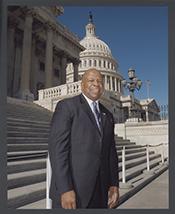
United States · United States Congress · 29 June 2012
Recognizes the 103rd anniversary of the founding of the National Association for the Advancement of Colored People (NAACP). Honors the NAACP for its work to ensure the political, educational, social, and economic equality of all persons.
United States · United States Congress · 27 June 2012
Prostate Cancer Detection Research and Education Act - Requires the Secretary of Health and Human Services (HHS), acting through the Director of the National Institutes of Health (NIH), to establish an advisory council on prostate cancer to draft a plan for the development and validation of an accurate test or tests to detect and diagnose prostate cancer. Terminates the advisory council on December 31, 2016. Requires the Director of the National Institutes of Health (NIH) to coordinate and intensify research in accordance with the plan developed under this Act, with particular attention provided to leveraging existing research to develop and validate a test or tests, such as biomarkers or imaging, to detect and accurately diagnose prostate cancer. Requires the Secretary to: (1) carry out a national campaign to increase the awareness and knowledge of prostate cancer, and (2) award grants to nonprofit private entities to test alternative outreach and education strategies to increase the awareness and knowledge of Americans with respect to prostate cancer.
United States · United States Congress · 18 June 2012
Recognizes and commends the nation's Catholic sisters, whose inspiring legacy of service continues to enrich our nation. Honors the contributions of Catholic sisters to this country. Stands in solidarity with Catholic sisters' mission to work toward a more just society for all of God's people.
United States · United States Congress · 7 June 2012
Comprehensive Dental Reform Act of 2012 - Title I: Medicare and Medicaid - Amends titles XVIII (Medicare) and XIX (Medicaid) of the Social Security Act to cover dental services. Increases the federal medical assistance percentage (FMAP) for funding under Medicaid for dental services. Directs the Secretary of Health and Human Services (HHS) to award grants to states and eligible entities to develop certain case management programs that: (1) identify eligible individuals in need of dental services, with a particular focus on pregnant women, individuals with disabilities, and older adults, and provide them with information regarding dental providers in proximity to their residence; (2) recruit licensed dental providers and coordinate their voluntary provision of medically recommended dental services at no charge; (3) provide community-level oral health education; and (4) identify and coordinate transportation necessary to overcome mobility impairments and transportation barriers. Title II: Public Health Programs - Amends the Public Health Service Act to establish, revise, and extend funding for grant programs for: (1) educating nondental medical and other professionals about oral health care; (2) providing dental services in hospital emergency rooms or in community settings; (3) providing scholarships and education loans for dental therapists and oral health professional students; (4) providing comprehensive oral health services to low-income individuals and individuals in underserved areas; (5) building, operating, or expanding dental clinics in schools; (6) funding research by the Centers for Disease Control and Prevention (CDC) to prevent and manage oral health diseases; and (7) providing rural health clinics with mobile and portable, comprehensive dental services and outreach for senior-care facilities and facilities that provide federal health care and nutrition benefits for women and children. Title III: Department of Veterans Affairs and Department of Defense Matters - Removes restrictions on the authority of the Secretary of Veterans Affairs (VA) to provide dental care to veterans (thereby requiring such care on the same basis as other VA-provided medical care and services). Authorizes such Secretary to carry out a demonstration program to train and employ alternative dental health care providers (providers) in order to increase access to dental health care services (dental services) for veterans in rural and other underserved communities. Authorizes the Secretary of Defense (DOD) to carry out a similar demonstration program to train and employ such providers in order to increase access to dental services for members of the Armed Forces and their dependents who lack ready access to such services. Title IV: Federal Bureau of Prisons - Authorizes the Director of the Bureau of Prisons to carry out a demonstration program to establish programs to train and employ alternative dental health care providers to increase access to dental health services for prisoners within the custody of the Bureau of Prisons. Allows dental services provided under the demonstration program to be administered by alternative dental health care providers and any other dental care providers who are licensed to provide clinical care, through telehealth-enabled collaboration and supervision. Title V: Indian Health Service - Authorizes the Secretary of HHS, through the Indian Health Service, to carry out a demonstration program to establish programs to train and employ alternative dental health care providers to help eliminate oral health disparities and increase access to dental services through health programs operated by the Indian Health Service, Indian tribes, tribal organizations, and urban Indian organizations. Allows dental services provided under the demonstration program to be administered by alternative dental health care providers and any other dental care providers who are licensed to provide clinical care, through telehealth-enabled collaboration and supervision. Title VI: Reports to Congress - Directs the Secretary of HHS, by October 1, 2016, to submit a report that provides a comprehensive cost-benefit analysis regarding the expansion of coverage for dental services pursuant to this Act, including whether the provision of such services resulted in a reduction in total health care costs for individuals under the Medicare and Medicaid programs. Directs the Comptroller General (GAO): (1) by October 1, 2015, to submit a report that provides a comprehensive analysis and evaluation of the implementation and utilization of the expanded coverage for dental services under this Act for individuals enrolled in Medicare and Medicaid, and (2) by October 1, 2016, to submit a report that provides a comprehensive analysis and evaluation of the demonstration programs authorized by this Act for the training and employment of alternative dental health care providers. Title VII: Funding - Amends the Internal Revenue Code to impose an 0.025% excise tax on the purchase of a security: (1) if such purchase occurs on a trading facility located in the United States, or (2) the purchaser or seller is a U.S. person. Defines "security" to include: (1) stocks, partnership interests, notes, bonds, debentures, or other evidences of indebtedness; and (2) interests in a derivative financial instrument (i.e., any option, forward contract, futures contract, notional principal contract, or any similar financial instrument). Exempts from such tax: (1) initial issues of securities; (2) any note, bond, debenture, or other evidence of indebtedness which has a fixed maturity of not more than 100 days; and (3) securities traded pursuant to certain lending arrangements.
United States · United States Congress · 7 June 2012
Expresses the sense of the House of Representatives that federal employees should be commended for: (1) their tireless work and extensive efforts on behalf of the people of the United States; and (2) the benefits they bring to the public welfare, the progress of democracy, and the United States as a whole.
United States · United States Congress · 5 June 2012
Defense Base Act Insurance Improvement Act of 2012 - Amends the Defense Base Act (the Act) to require satisfaction through the Government Defense Base Act self-insurance program of insurance and benefits requirements imposed on defense contractors with respect to on-job injuries. Directs the Secretaries of Defense (DOD) and Labor to jointly: (1) develop and execute an implementation strategy for a self-insurance program for insurance required by the Act, and (2) report to Congress on such strategy and on the implementation of this Act.
United States · United States Congress · 22 May 2012
Gray Market Drug Reform and Transparency Act of 2012 - Amends the Federal Food, Drug, and Cosmetic Act to: (1) make it a prohibited act and a misbranding for a wholesale distributor of prescription drugs to purchase or receive a prescription drug from a pharmacy or a pharmacist, (2) require annual reporting by wholesale distributors of prescription drugs, (3) require the Secretary of Health and Human Services (HHS) to establish and maintain a national database of information reported by wholesale distributors of prescription drugs and to require such database to include information on actions taken by states against wholesale distributors (e.g., disciplinary actions and license revocations), (4) require the Secretary to assess and collect fees from wholesale distributors of prescription drugs, and (5) require wholesale distributors of prescription drugs to provide to recipients of a prescription drug in shortage the sales price for such drug at the time of its sale and at the time of any prior sale of such drug when it was in shortage.
United States · United States Congress · 17 May 2012
Voter Empowerment Act of 2012 - Voter Registration Modernization Act of 2012 - Amends the National Voter Registration Act of 1993 (NVRA) to require each state to make available official public websites for online voter registration. Authorizes automated voter registration of certain individuals and establishes other initiatives to promote voter registration, such as same day registration and voter registration of individuals under 18 years of age. Amends the federal criminal code to prohibit hindering, interfering with, or preventing voter registration. Amends the Help America Vote Act of 2002 (HAVA) to establish requirements for states to promote access to voter registration and voting for individuals with disabilities, including a single office for providing related information. Directs the Election Assistance Commission (EAC) to make grants to eligible states to conduct pilot programs enabling individuals with disabilities to register to vote and vote privately and independently at their own residences (including by telephone). Amends HAVA to reauthorize the program of grants to state and local governments to assure voting access for individuals with disabilities. Amends the federal criminal code to prohibit state or local election officials from preventing an individual from registering or voting in any federal election (voter caging), or from permitting a formal challenge under state law to an individual's registration status or eligibility to vote, if the basis for such decision is evidence consisting of: (1) a voter caging document or voter caging list, (2) an unverified match list, (3) an error or omission on voter application or registration documents that is not material to an individual's eligibility to vote, or (4) any other evidence so designated by the Commission. Amends the federal criminal code to prohibit a person, including an election official, from knowingly and willfully attempting to or depriving or defrauding the residents of a state of their free and fair exercise of the right to vote by the communication of election-related information that is known by the person to be materially false, fictitious, or fraudulent. Increases the penalty for voter intimidation. Declares that the right of an individual U.S. citizen to vote in any federal election shall not be denied or abridged because that individual has been convicted of a criminal offense unless he or she is serving a felony sentence in a correctional institution at the time of the election. Prescribes enforcement of this right by public or private civil action. Requires each state to notify in writing any individual convicted of a criminal offense under state law, upon release from state custody or upon sentence to probation, that he or she has the right to vote in a federal election and so may register to vote. Voter Confidence and Increased Accessibility Act of 2012 - Amends HAVA to revise requirements for the audit capacity of voting systems, particularly those for a permanent paper record. Requires the voting system to require the use of an individual, durable, voter-verified paper ballot of the voter's vote that shall be marked and made available for inspection by the voter before the voter's vote is cast and counted, and which shall be counted by hand or read by an optical character recognition device or other counting device. Requires the voting system to provide the voter with an opportunity to correct any system-made error in the voter-verified paper ballot before it is permanently preserved. Requires the Director of the National Science Foundation (NSF) to make grants to eligible entities to study, test, and develop accessible ballot voting, verification, and casting mechanisms and devices and best practices to enhance the accessibility of paper ballot voting and verification mechanisms for individuals with disabilities, for voters whose primary language is not English, and for voters with difficulties in literacy. Prescribes requirements for: (1) publication of poll tapes, (2) treatment of ballots cast at early voting sites and of absentee ballots, and (3) the counting of provisional ballots that will be treated as votes. Prescribes laboratory conflict-of-interest requirements and prohibitions. Requires the NSF Director to make grants to eligible entities to conduct research on the development of election-dedicated voting system software. Requires each state, except when the winning candidate had no opponent or received 80% or more of the votes, to administer audits of federal election results, without advance notice to the precincts selected, consisting of random hand counts of the voter-verified paper ballots. Requires the Election Auditor of a state, as soon as practicable after the completion of an audit, to submit the results to EAC for publication. Prohibits certification of the results of any election until completion of audits. Amends HAVA to: (1) add requirements for counting provisional ballots, (2) require each state to allow early voting and facilitate the ability of voters to vote by mail. Amends the Servicemembers Civil Relief Act to extend the guarantee of voting residency to family members of absent military personnel. Amends the Uniformed and Overseas Citizens Absentee Voting Act (UOCAVA) with respect to pre-election reports on availability and transmission of absentee ballots. Revises the 45-day absentee ballot transmission rule. Permits: (1) use of a single absentee ballot application for subsequent elections, and (2) application of the UOCAVA to Commonwealth of Northern Mariana Islands. Entitles to leave a federal employee who serves as a poll worker. Directs the EAC to: (1) make a grant to each eligible state for poll-worker recruitment and training, and (2) develop materials for a model state poll worker training program. Amends HAVA to make available to any person aggrieved by a violation of uniform and nondiscriminatory election technology and administration requirements the option to file a complaint with the Attorney General or pursue a private right of action to enforce such requirements. Amends the Federal Election Campaign Act of 1971 to make it unlawful for a chief state election administration official, unless he or she or a family member is a candidate, to take an active part in political management or in a political campaign for federal office over which such official has supervisory authority. Amends the NVRA to treat universities as voter registration agencies. Amends the HAVA to establish minimum notification requirements on behalf of voters affected by polling place changes. Directs the Attorney General to: (1) coordinate the establishment of a state-based response system for responding to questions and complaints from individuals voting or seeking to vote, or registering to vote or seeking to, in federal elections; (2) establish and operate a toll-free telephone service to connect directly to such response system; and (3) appoint a Voter Hotline Task Force. Amends HAVA to: (1) reauthorize and extend the EAC, and (2) repeal its exemption from certain government contracting requirements.
United States · United States Congress · 17 May 2012
Voter Confidence and Increased Accessibility Act of 2011 [ sic ] - Amends the Help America Vote Act of 2002 (HAVA) to revise requirements for the audit capacity of voting systems, particularly those for a permanent paper record. Requires the voting system to require the use of an individual, durable, voter-verified paper ballot of the voter's vote that shall be marked and made available for inspection by the voter before the voter's vote is cast and counted, and which shall be counted by hand or read by an optical scanner or other counting device. Requires the voting system to provide the voter with an opportunity to correct any system-made error in the voter-verified paper ballot before it is permanently preserved. Requires each paper ballot used to be: (1) suitable for a manual audit, and (2) counted by hand in any recount or audit conducted with respect to any federal election. Sets forth a special rule for treatment of disputes when paper ballots have been shown to be compromised. Requires the Director of the National Science Foundation (NSF) to make grants to eligible entities to study, test, and develop accessible ballot voting, verification, and casting mechanisms and devices and best practices to enhance the accessibility of paper ballot voting and verification mechanisms for individuals with disabilities, for voters whose primary language is not English, and for voters with difficulties in literacy. Specifies additional voting system requirements and prohibitions. Requires the NSF Director to make grants to eligible entities to conduct research on the development of election-dedicated voting system software. Makes available additional funding to enable states to meet the costs of the requirements imposed by this Act. Provides for complaints to the Attorney General by persons aggrieved by violations of HAVA. Requires each state to administer audits of federal election results, without advance notice to the precincts selected, consisting of random hand counts of the voter-verified paper ballots. Makes an exception from this requirement for elections in which the winning candidate had no opponent or received 80% or more of the vote total. Prescribes requirements for determination of the number of ballots counted under the audit. Prescribes the process for administering audits. Requires the Election Auditor of a state, as soon as practicable after the completion of an audit, to submit the results to the Election Assistance Commission (EAC) for publication. Prohibits certification of the results of any election until completion of audits. Provides for payments to states for the costs of conducting audits. Exempts from this Act any election for which a recount under state law will commence before certification of the election results. Repeals the EAC's exemption from certain federal government contracting requirements.
United States · United States Congress · 15 May 2012
Military Family Home Protection Act - Amends the Servicemembers Civil Relief Act to allow a court, in an action to enforce an obligation on real or personal property secured by a mortgage against a servicemember on active duty, a totally disabled veteran, or the surviving spouse of a member who died during military service, to either: (1) stay the proceedings for a period of time as justice and equity require, or (2) adjust the obligation to preserve the interests of all parties. Prohibits the sale, foreclosure, or seizure of the subject property for the service period, as well as the 12-month period after: (1) the servicemember is discharged or redeployed from a contingency operation, (2) the veteran is retired, or (3) the death of the servicemember (in the case of a surviving spouse). Increases the civil penalties for violations of the sale or foreclosure prohibitions. Prohibits an individual from being denied or refused credit solely by reason of eligibility for relief under this Act. Requires each lending institution acting as a creditor to such servicemember, veteran, or surviving spouse to designate an employee responsible for ensuring the institution's compliance with the requirements of this Act. Requires any such institution that had prior annual assets of $10 billion or more to maintain on its primary website a toll-free number for information with respect to the protections afforded under this Act.
United States · United States Congress · 9 May 2012
Overdraft Protection Act of 2012 - Amends the Truth in Lending Act to prohibit a depository institution from engaging in unfair or deceptive acts or practices in connection with overdraft coverage, or in acts designed to evade the provisions of this Act. Requires each depository institution that provides overdraft coverage for transaction accounts clearly and conspicuously to disclose overdraft coverage fees and that, if a consumer does not opt-in to such overdraft coverage: (1) the consumer's transaction may be declined if there are insufficient funds in the related transaction account, and (2) the consumer will not be charged a fee if such transaction is declined. Subjects to the consumer's written, electronic, or other consent overdraft coverage fees in connection with use of an automatic teller machine (ATM) or point of sale transaction. Requires a depository institution to provide specified consumer disclosures regarding its overdraft protection program, including: (1) periodic statements for any transaction account that has an overdraft coverage program feature, (2) prompt notification of the account's overdraft status, and (3) the overdraft coverage fee as an annual percentage rate (APR), permitting consumers to compare meaningfully the overdraft coverage to alternative forms of overdraft options and other sources of credit. Prescribes overdraft coverage fee limits. Prohibits an overdraft coverage fee if the overdraft results solely from a debit hold amount that exceeds the actual dollar amount of the transaction. Requires a depository institution to provide consumers who have not consented to participate in an overdraft coverage program transaction accounts with the same terms as those provided to consumers who have consented to participate in such program. Prohibits a depository institution from charging a non-sufficient fund fee for any ATM or debit card transaction. Prohibits a depository institution from reporting negative information regarding consumer use of overdraft coverage to any consumer reporting agency when the overdraft amounts and coverage fees are paid under the terms of an overdraft coverage program. Directs the Consumer Financial Protection Bureau (CFPB) to study whether consumers are being subjected to abusive practices with respect to prepaid card overdraft coverage.
United States · United States Congress · 8 May 2012
Pregnant Workers Fairness Act - Declares it an unlawful employment practice for employers, employment agencies, labor organizations, and other specified entities to: (1) not make reasonable accommodations to known limitations related to the pregnancy, childbirth, or related medical conditions of job applicants or employees, unless the accommodation would impose an undue hardship on such an entity's business operation; (2) deny employment opportunities based on the need of the entity to make such reasonable accommodations; (3) require such job applicants or employees to accept an accommodation that they choose not to accept; or (4) require such employees to take leave if another reasonable accommodation can be provided to their known limitations. Sets forth enforcement procedures and remedies under the Civil Rights Act of 1964, Congressional Accountability Act of 1995, Government Employee Rights Act of 1991, and the rights and protections extended to presidential offices. Directs the Equal Employment Opportunity Commission (EEOC) to issue regulations to carry out this Act, including the identification of reasonable accommodations addressing known limitations related to pregnancy, childbirth, or related medical conditions.
United States · United States Congress · 7 May 2012
Directs the Secretary of Defense (DOD) (Secretary) to: (1) assess and develop a uniform definition of hazing, applicable to members of the Armed Forces (members), for inclusion in the Uniform Code of Military Justice (UCMJ); and (2) submit such definition to Congress. Expresses the sense of Congress that such definition should cover, at a minimum, any situation in which a member suffers or is exposed to any cruelty, indignity, humiliation, hardship, harm, harassment, or oppression, or the deprivation or abridgment of any right, by another member. Requires the Secretary to develop and implement a comprehensive policy on the prevention of and response to hazing involving members. Directs the Secretary and the Secretary of Homeland Security (DHS) to develop and implement a centralized, case-level database for the collection and maintenance of information regarding hazing, including incidents occurring at officer candidate schools, military academies and their preparatory schools, and basic training and professional schools for enlisted members. Requires such Secretaries to: (1) submit to Congress a plan to implement the database, and (2) complete implementation within 15 months after the enactment of this Act. Directs the Secretary to report to Congress: (1) a description of the current status of the Defense Incident-Based Reporting System, and (2) an explanation of how such System will relate to the database. Requires annual reports from each Secretary on the hazing incidents involving members. Directs the Comptroller General (GAO) to report to Congress on the policies to prevent hazing and the systems initiated to track incidents of hazing in each of the military departments.
United States · United States Congress · 27 April 2012
Gluten in Medicine Identification Act of 2012 - Amends the Federal Food, Drug, and Cosmetic Act to deem to be misbranded any drug intended for human use that contains an ingredient (other than a polyol) that constitutes or is derived from a grain or starch-containing ingredient and whose label fails to include a parenthetical statement identifying the source of the ingredient so constituted or derived.
United States · United States Congress · 18 April 2012
Amends the Higher Education Opportunity Act to prohibit postsecondary educational institutions from using revenues derived from federal educational assistance funds for: (1) advertising and promotion; (2) identifying and attracting prospective students; or (3) other activities the Secretary of Education may proscribe, such as paying for the promotion or sponsorship of education or military-related associations. Excepts from that prohibition activities that are required as a condition of receiving funds under title IV (Student Assistance) of the Higher Education Act of 1965, specifically authorized under title IV, or otherwise specified by the Secretary.
United States · United States Congress · 18 April 2012
Ensuring Access to Quality Complex Rehabilitation Technology Act of 2012 - Amends title XVIII (Medicare) of the Social Security Act to cover, as medical and other health services, complex rehabilitation technology items designed and configured for a specific qualified individual to meet that individual's unique: (1) medical, physical, and functional needs related to a medical condition; and (2) capacities for basic activities of daily living (ADLs) and instrumental ADLs. Directs the Secretary of Health and Human Services (HHS) to: (1) designate complex rehabilitation technology items (excluding adaptive equipment to operate motor vehicles or certain prosthetic devices and orthotics); and (2) establish eligibility criteria for them. Prescribes requirements for payments for CRT items. Directs the Secretary to establish standards for clinical conditions for CRT item payment as well as quality standards for suppliers of such items. Directs the Secretary to establish a Healthcare Procedure Coding System (HCPCS) coding subset that uses specified HCPCS codes for CRT items. Requires payment for replacement of a CRT item (or any part of one), without regard to certain continuous use or useful lifetime restrictions established for items of durable medical equipment (DME), if a qualified ordering practitioner determines that a replacement item (or part) is necessary.
United States · United States Congress · 17 April 2012
Making Adoption Affordable Act of 2012 - Makes permanent provisions of the Economic Growth and Tax Relief Reconciliation Act of 2001 allowing an increased tax credit for adoption expenses and an increased exclusion from gross income for amounts paid by an employer for adoption expenses. Amends the Internal Revenue Code to reinstate and make permanent: (1) the increase in the tax credit for adoption expenses and the increased exclusion from gross income for amounts paid by an employer for adoption expenses that were enacted by the Patient Protection and Affordable Care Act, (2) the annual inflation adjustments for such increased amounts, and (3) the refundability of the tax credit for adoption expenses.
United States · United States Congress · 16 April 2012
Safe Skies Act of 2012 - Directs the Secretary of Transportation (DOT), not later than the effective date of a specified Department of Transportation (DOT) final rule, to take appropriate actions to ensure that DOT flight, duty, and rest requirements under that rule apply to all-cargo flights to the same extent they apply to passenger flights.
United States · United States Congress · 16 April 2012
Recognizes, on the occasion of the 60th anniversary of the Korean War, the importance of the contributions and sacrifices made by Korean War veterans. Supports the designation of 2012-2013 as the Year of the Korean War Veteran.
United States · United States Congress · 29 March 2012
Waterways Are Vital for the Economy, Energy, Efficiency, and Environment Act of 2012 or WAVE4 Act - Directs the Secretary of the Army, acting through the Chief of Engineers, to require certain delivery process reforms for qualifying construction and major rehabilitation projects for navigation infrastructure of inland and intracoastal waterways. Directs the Secretary, working in conjunction with the Inland Waterways Users Board, to submit to Congress a 20-year program for making capital investments on inland and intracoastal waterways. Authorizes such program to be based on the 20-year capital investment strategy contained in the Inland Marine Transportation System (IMTS) Capital Projects Business Model, Final Report published on April 13, 2010, as approved by the Board. Amends the Internal Revenue Code to limit expenditures from the Inland Waterways Trust Fund to 50% of the total cost of the construction or rehabilitation project. Prohibits expenditures from the Fund for: (1) construction or rehabilitation of dams, or (2) rehabilitation expenditures equal to or exceeding $100 million.
United States · United States Congress · 28 March 2012
Humphrey-Hawkins 21st Century Full Employment and Training Act of 2012 - Directs the Secretary of Labor to establish a Full Employment National Trust Fund with two separate accounts for: (1) Employment Opportunity Grants to states, local governments, and Indian tribes for job-creating activities in communities whose economy is not at a level of full employment; and (2) Workforce Investment programs. Establishes arbitration procedures for resolution of disputes for grant recipients. Requires the Secretary of Labor to post a whistleblower hotline on the Department of Labor's website for the public to report noncompliance with the Act's requirements. Directs the Secretary to convene a national employment conference to bring together leaders of small, medium, and large businesses, labor, government, and other parties to discuss employment, with particular attention to structural unemployment and the plight of disadvantaged youth. Amends the Workforce Investment Act of 1998 to revise member composition requirements for state and local workforce investment boards to include at least 25% of the chief executive officers of minority-serving, community-based organizations. Amends the Internal Revenue Code to impose a tax on certain covered securities transactions, payable by trading facilities or purchasers that deal in such transactions. Requires a transferor with respect to any outbound securities transaction to deduct and withhold a tax equal to the tax imposed on covered securities transactions.
United States · United States Congress · 28 March 2012
Homeowner Tax Fairness Act - Amends the Internal Revenue Code to: (1) extend through 2015 the exclusion from gross income of income attributable to the discharge of indebtedness on a principal residence, (2) extend through 2014 the tax deduction for mortgage insurance premiums, (3) exclude from gross income any National Mortgage Settlement amount, and (4) deny a tax deduction for any National Mortgage Settlement amount paid in exchange for a full release of the potential civil claims of the United States under the Servicemembers Civil Relief Act. Defines "National Mortgage Settlement amount" as any amount received pursuant to the settlement in a legal action against Bank of America Corporation filed in U.S. District Court on March 12, 2012, which is: (1) a payment for transitional assistance; (2) a payment from the Borrower Payment Fund under the National Mortgage Settlement to a borrower whose home was finally sold or taken in foreclosure after December 31, 2007, and before January 1, 2012; or (3) a payment received as a result of a foreclosure or excess charge of interest that the Department of Justice (DOJ) has determined was not in compliance with the Servicemembers Civil Relief Act.
United States · United States Congress · 26 March 2012
End Trafficking in Government Contracting Act of 2012 - Amends the Trafficking Victims Protection Act of 2000 to expand the authority of a federal agency to terminate a grant, contract, or cooperative agreement involving grantees or contractors who engage in severe forms of trafficking in persons to include grantees or contractors who: (1) engage in acts that directly support or advance trafficking in persons, (2) destroy an employee's immigration documents or fail to repatriate such employee upon the end of employment, (3) solicit persons for employment under false pretenses, (4) charge recruited employees exorbitant placement fees, or (5) provide inhumane living conditions. Requires the Interagency Task Force to Monitor and Combat Trafficking to monitor all known cases and activities involving trafficking in persons that are reported to certain officials of the Department of Defense (DOD). Prohibits the head of an executive agency from entering into a grant, contract, or cooperative agreement valued at $1 million or more if performance will predominantly be conducted overseas unless a representative of the recipient of such grant, contract, or cooperative agreement certifies that the recipient has implemented a plan and procedures to prevent trafficking in persons. Requires a contracting or grant officer of an executive agency who receives credible evidence that a recipient of a grant, contract, or cooperative agreement has engaged in trafficking in persons or other prohibited activities to request the agency's Inspector General to investigate allegations of trafficking and to take remedial actions, including the suspension of payments under the grant, contract, or cooperative agreement. Amends the federal criminal code to impose a fine and/or prison term of up to five years on any individual who knowingly and with intent to defraud recruits, solicits, or hires a person outside the United States, or attempts to do so, to work on on a government contract performed on government facilities outside the United States by means of materially false or fraudulent pretenses, representations, or promises regarding such employment.
United States · United States Congress · 26 March 2012
Federal Information Security Amendments Act of 2012 - Amends the Federal Information Security Management Act of 2002 (FISMA) to reestablish the oversight authority of the Director of the Office of Management and Budget (OMB) with respect to agency information and security policies and practices. Expands the term "information security" to include authentication. Defines "authentication" as the use of digital credentials to assure users' identities and validate access. Extends the security requirements of federal agencies to include responsibilities for: (1) ensuring complementary and uniform standards for information systems and national security systems, (2) securing facilities for classified information, and (3) maintaining sufficient personnel with security clearances. Directs senior agency officials to continuously conduct risk-commensurate: (1) testing and evaluation of information of security controls and techniques, and (2) threat assessments by monitoring information infrastructure and identifying potential system vulnerabilities. (Current law requires only periodic testing and evaluation.) Directs agencies to determine information security levels in accordance with information security classifications and standards promulgated under the National Institute of Standards and Technology Act. Directs agencies to collaborate with OMB and appropriate public and private sector security operations centers on security incidents that extend beyond the control of an agency. Requires that security incidents be reported to the appropriate security operations center and agency Inspector General through an automated and continuous monitoring capability. Requires each agency to delegate to its Chief Information Officer the authority and primary responsibility for developing, implementing, and overseeing an agencywide information security (AIS) program. Directs agencies to implement an OMB-approved AIS program that is consistent with components across and within agencies. Requires that such program include automated and continuous monitoring to: (1) mitigate risks associated with security incidents before substantial damage is done; and (2) notify and consult with appropriate security operations response centers, law enforcement agencies, Inspectors General, and other entities or as directed by the President.
United States · United States Congress · 21 March 2012
Moving Ahead for Progress in the 21st Century or MAP-21 - Authorizes appropriations out of the Highway Trust Fund (HTF) (other than the Mass Transit Account) equal to current federal highway spending levels plus inflation for FY2012 and FY2013 for: (1) certain new and existing core federal-aid highway programs, and (2) Federal Highway Administration (FHWA) administrative expenses. Revises the National Highway System (NHS) program. Prescribes requirements for acceleration of project delivery. Jason's Law - Declares a national priority to address specified kinds of projects for the shortage of long-term parking for commercial motor vehicles on the NHS. Resources and Ecosystems Sustainability, Tourist Opportunities, and Revived Economies of the Gulf Coast States Act of 2012 - Establishes a Gulf Coast Restoration Trust Fund for deposit of administrative and civil penalties paid in connection with the Deepwater Horizon incident. Amends the Federal Water Pollution Control Act to require Gulf Coast state allocation and expenditures from the Fund for specified recovery activities. Establishes within the National Oceanic and Atmospheric Administration (NOAA) a Gulf Coast Ecosystem Restoration Science, Observation, Monitoring, and Technology Program. Extends the Land and Water Conservation Fund through FY2022. America Fast Forward Financing Innovation Act of 2011 [ sic ]- Amends the the Transportation Infrastructure Finance and Innovation Act to revise the Department of Transportation (DOT) program of direct loans, loan guarantees, and credit for surface transportation projects. Federal Public Transportation Act of 2012 - Amends the Transportation Equity Act for the 21st Century (TEA-21) and the Safe, Accountable, Flexible, Efficient Transportation Equity Act: A Legacy for Users (SAFETEA-LU) to repeal specified programs and revise other specified public transportation policies and programs. Motor Vehicle and Highway Safety Improvement Act of 2012 or Mariah's Act - Authorizes appropriations for specified highway safety programs and grants through FY2013. Directs the Secretary of Transportation to: (1) improve public accessibility to information on the publicly accessible vehicle safety databases of the National Highway Traffic Safety Administration (NHTSA), and (2) establish within NHTSA a Council for Vehicle Electronics, Vehicle Software, and Emerging Technologies to build, integrate, and aggregate NHTSA expertise in passenger motor vehicle electronics and other new and emerging technologies. Requires the Secretary to issue a final rule to establish frontal crash protection requirements for child restraint systems for children weighing over 65 pounds. Commercial Motor Vehicle Safety Enhancement Act of 2012 - Revises requirements for: (1) commercial motor vehicle registration, (2) commercial motor vehicle safety, and (3) driver safety. Safe Roads Act of 2012 - Directs the Secretary to establish a national clearinghouse for records relating to alcohol and controlled substances testing of commercial motor vehicle operators. Revises requirements for enforcement of various specified regulations regarding commercial motor vehicles. Motorcoach Enhanced Safety Act of 2012 - Directs the Secretary to prescribe regulations requiring: (1) installation of safety belts in motorcoaches at each designated seating position, and (2) other elements of motorcoach safety. Prescribes additional registration requirements for household goods motor carriers. Surface Transportation and Freight Policy Act of 2012 - Declares a national surface transportation and freight policy. Directs the Secretary to develop and implement a National Surface Transportation and Freight Performance Plan. Hazardous Materials Transportation Safety Improvement Act of 2012 - Revises hazardous material (hazmat) transportation safety requirements. National Rail System Preservation, Expansion, and Development Act of 2012 - Revises requirements regarding: (1) federal and state roles in rail planning and development tools, (2) the Northeast Corridor Infrastructure and Operations Advisory Commission and Amtrak, (3) rail safety, and (4) freight rail. Sport Fish Restoration and Recreational Boating Safety Act of 2012 - Amends the Federal Aid in Fish Restoration Act to extend through FY2013 allocations to states for fish restoration and management projects. Highway Investment, Job Creation, and Economic Growth Act of 2012 - Extends Highway Trust Fund expenditure authority and related highway taxes. Amends the Internal Revenue Service to require transfers of specified funds and taxes as well as a 100% levy on payments to Medicare providers and suppliers. Transportation Research and Innovative Technology Act of 2012 - Authorizes appropriations for FY2012-FY2013 for specified transportation research and innovative technology programs, including intelligent transportation systems research. Reauthorizes certain programs and activities under the Secure Rural Schools and Community Self-Determination Act of 2000, the Internal Revenue Code, and federal civil service law (regarding phased retirement). Authorizes certain special measures to counter money laundering and efforts to impede significantly U.S. tax enforcement. Revises requirements for overflights of National Parks.
United States · United States Congress · 7 March 2012
Hatch Act Modernization Act of 2012 - Amends the Hatch Act to: (1) eliminate the prohibition against state and local employees seeking partisan elective office; (2) make employees of the District of Columbia subject to the provisions applicable to state and local employees (currently, District employees are subject to the provisions applicable to federal employees); and (3) revise penalties for violations to allow penalties other than termination of employment.
United States · United States Congress · 5 March 2012
United States-Israel Enhanced Security Cooperation Act of 2012 - States that it is U.S. policy to: (1) reaffirm the commitment to Israel's security as a Jewish state, (2) provide Israel with the military capabilities to defend itself and help preserve its qualitative military edge, (3) expand military and civilian cooperation, (4) assist in a negotiated settlement of the Israeli-Palestinian conflict that results in two states living side by side in peace and security, and (5) encourage Israel's neighbors to recognize Israel's right to exist as a Jewish state. Expresses the sense of Congress that the United States should take specified actions to assist in Israel's defense.
United States · United States Congress · 1 March 2012
Removing Barriers to Colorectal Cancer Screening Act of 2012 - Amends title XVIII (Medicare) of the Social Security Act to waive coinsurance for colorectal cancer screening tests (thus covering 100% of their cost under Medicare part B [Supplementary Medical Insurance Benefits for the Aged and Disabled]).
United States · United States Congress · 1 March 2012
Affirms that it is a vital national interest of the United States to prevent Iran from acquiring a nuclear weapons capability and warns that time is limited to prevent that from happening. Urges increasing economic and diplomatic pressure on Iran to secure an agreement that includes: (1) suspension of all uranium enrichment-related and reprocessing activities, (2) complete cooperation with the International Atomic Energy Agency (IAEA) regarding Iran's nuclear activities, and (3) a permanent agreement that verifiably assures that Iran's nuclear program is entirely peaceful. Supports: (1) the universal rights and democratic aspirations of the Iranian people, and (2) U.S. policy to prevent Iran from acquiring nuclear weapons capability. Rejects any U.S. policy that would rely on efforts to contain a nuclear weapons-capable Iran. Urges the President to reaffirm the unacceptability of an Iran with nuclear-weapons capability and oppose any policy that would rely on containment as an option in response to the Iranian nuclear threat.
United States · United States Congress · 29 February 2012
Recognizes the significance of Black History Month as an important time to recognize the contributions of African-Americans in the nation's history. Encourages the continued celebration of this month to provide an opportunity for all peoples of the United States to learn more about the past and to better understand the experiences that have shaped the nation. Recognizes that the ethnic and racial diversity of the United States enriches and strengthens the nation. Encourages states to include in their year-round educational curriculum the history and contributions of African-Americans in the United States and around the world.
United States · United States Congress · 27 February 2012
Recognizes: (1) that no ethnic, demographic, religious, or cultural group has been unaffected by our economic struggles; and (2) the significance of the supplemental nutrition assistance program (SNAP). Supports adequate funding for SNAP as a means of preventing hunger and strengthening the nation.
United States · United States Congress · 16 February 2012
Military and Veterans Education Protection Act - Amends title IV (Student Assistance) of the Higher Education Act of 1965 to require proprietary institutions of higher education to derive at least 10% of their revenue from sources other than title IV or federal educational assistance programs for military personnel and veterans, or become ineligible for title IV funding and participation in those programs. (Currently, this 90/10 rule requires these schools to derive at least 10% of their revenue from sources other than title IV or become ineligible for title IV funding.)
United States · United States Congress · 16 February 2012
Recognizes Ms. Whitney Houston (an entertainer and a humanitarian) as a world icon and a once-in-a-lifetime talent. Honors Ms. Houston for her charitable efforts. Extends the deepest condolences to her family.
United States · United States Congress · 15 February 2012
Directs the Speaker of the House of Representatives and the President Pro Tempore of the Senate to make arrangements for the presentation of a congressional gold medal to Jack Nicklaus in recognition of his service to the nation in promoting excellence and good sportsmanship. Directs the Secretary of the Treasury to strike such gold medal and to strike and sell duplicate bronze medals at a price sufficient to cover the costs of the gold and bronze medals.
United States · United States Congress · 9 February 2012
Disclosure of Information on Spending on Campaigns Leads to Open and Secure Elections Act of 2012 or DISCLOSE 2012 Act - Amends the Federal Election Campaign Act of 1971 to redefine the term "independent expenditure" as an expenditure by a person that, when taken as a whole, expressly advocates the election or defeat of a clearly identified candidate, or is the functional equivalent of express advocacy because it can be interpreted by a reasonable person only as advocating the election or defeat of a candidate, taking into account whether the communication involved mentions a candidacy, a political party, or a challenger to a candidate, or takes a position on a candidates, qualifications, or fitness for office. Expands the period during which certain communications are treated as electioneering communications. Prescribes: (1) disclosure requirements for corporations, labor organizations, and certain other entities; and (2) disclaimer requirements for campaign-related disbursements and for certain communications. Requires any communication transmitted through radio or television to include an individual or organizational disclosure statement, together with: (1) the Top Two Funders List of the persons providing the largest and second largest aggregate payments of $10,000 or more for a radio communication, and (2) the Top Five Funders List of the five persons providing the largest aggregate payments of $10,000 or more for a television communication. Repeals the prohibition against political contributions by individuals age 17 or younger. Requires a covered organization which submits regular, periodic reports to its shareholders, members, or donors on its finances or activities to include in each report, in a clear and conspicuous manner, the information included in the statements it has filed about campaign-related disbursements the organization has made during the period covered by the report. Amends the Lobbying Disclosure Act of 1995 to require semiannual reports on certain election campaign contributions filed with the Secretary of the Senate or the Clerk of the House of Representatives by registered lobbyists (or persons or organizations required to register as lobbyists) to contain: (1) the amount of any independent expenditure of $1,000 or more made by each such person or organization, along with the name of each candidate being supported or opposed and the amount spent supporting or opposing that candidate; and (2) the amount of any electioneering communication of $1,000 or more made by such person or organization, along with the name of the candidate referred to in the communication and whether the communication involved was in support of or in opposition to the candidate.
United States · United States Congress · 9 February 2012
Harriet Tubman National Historical Parks Act - Establishes in Caroline, Dorchester, and Talbot Counties, Maryland, the Harriet Tubman Underground Railroad National Historical Park as a unit of the National Park System. Establishes in Auburn, New York, the Harriet Tubman National Historical Park also as a unit of the National Park System. Authorizes the Secretary of the Interior to enter into cooperative agreements with certain entities for the historic preservation, restoration, interpretation, and maintenance of such historical parks. Requires the Secretary to complete a general management plan for them.
United States · United States Congress · 8 February 2012
For the People Voter Protection Initiative - Condemns the passage of legislation that would unduly burden an American's ability to register and vote. Opposes any state election law or proposed legislation that would have a disproportionate impact on vulnerable communities across the country.
United States · United States Congress · 1 February 2012
Authorizes the award of a single gold medal to John H. Johnson (creator of Ebony magazine) in recognition of his outstanding work, leadership, and service. Permits the Secretary of the Treasury to strike and sell duplicates in bronze of the gold medal, at a price sufficient to cover the costs of the medals.
United States · United States Congress · 23 January 2012
Egg Products Inspection Act Amendments of 2012 - Amends the Egg Products Inspection Act to revise housing and treatment of egg-laying hens and related enforcement provisions. Directs the Secretary of Agriculture (USDA) to delegate to the California Department of Food and Agriculture certain enforcement authority with respect to eggs produced, shipped, handled, transported or received in California prior to the date that is 18 years after the date of enactment of this Act.
United States · United States Congress · 23 January 2012
Sympathizes with the families of women and children victimized by sexual and other forms of gender-based violence in Haiti. Urges treatment of the issue of violence against women and children as a priority for U.S. humanitarian and reconstruction efforts in Haiti. Supports passage of Haiti's first comprehensive law on the prevention, punishment, and elimination of gender-based violence.
United States · United States Congress · 18 January 2012
Constitutional Amendment - Declares that all campaigns for President and Members of the U.S. House of Representatives and the U.S. Senate shall be financed entirely with public funds. Prohibits contributions to any candidate for federal office from any other source, including the candidate. Prohibits any expenditures in support of any candidate for federal office, or in opposition to any such candidate, from any other source, including the candidate.
United States · United States Congress · 13 January 2012
Honors: (1) those who lost their lives due to the tragic earthquake of January 12, 2010; and (2) the sacrifice of the men and women of the government of Haiti, the U.S. government, the United Nations (U.N.), and the international community for their response to the calamity. Expresses solidarity with the people of Haiti as they work to rebuild their neighborhoods, livelihoods, and country. Reaffirms the commitment of the House of Representatives to support long-term Haitian reconstruction. Supports the Administration's efforts to prevent the spread of cholera, treat persons who contract the disease, provide technical assistance to the Haitian Ministry of Public Health, and improve water, sanitation, and health systems. Urges the President and the international community to: (1) focus assistance on Haiti's public sector capacity to provide basic services, (2) develop and improve communications and participatory mechanisms to more substantially involve Haitian civil society at all stages of the cholera and post-earthquake responses, and (3) give priority to programs that protect vulnerable populations. Urges the President to: (1) make necessary resources available to U.S. and U.N. agencies, nongovernmental organizations, private volunteer organizations, and regional institutions; (2) assess long-term needs for investing in public health and building water and sanitation infrastructure, particularly in relation to the cholera epidemic; (3) lead humanitarian and development efforts with the government of Haiti, the Haitian Diaspora, and international actors; and (4) work with Haitian authorities and private landowners to prevent the forced eviction of internally displaced person communities.
United States · United States Congress · 20 December 2011
Temporary Payroll Tax Cut Continuation Act of 2011 - Title I: Temporary Payroll Tax Relief - Amends the Tax Relief, Unemployment Insurance Reauthorization, and Job Creation Act of 2010 to: (1) extend through 2012 the 2% reduction in the self-employment tax rate for self-employment income not exceeding the excess of $18,350 over any wages and compensation paid to a self-employed taxpayer, and (2) extend through February 29, 2012, the 2% reduction in employment tax rates for employee wages and compensation not exceeding $18,350. Title II: Temporary Extension of Unemployment Compensation Provisions - Amends the Supplemental Appropriations Act, 2008 with respect to the state-established individual emergency unemployment compensation account (EUCA). Extends the final date for entering a federal-state agreement under the Emergency Unemployment Compensation (EUC) program through March 6, 2012. Postpones the termination of the program until August 15, 2012. Amends the Assistance for Unemployed Workers and Struggling Families Act to extend until March 7, 2012, requirements that federal payments to states cover 100% of EUC. Amends the Unemployment Compensation Extension Act of 2008 to exempt weeks of unemployment between enactment of this Act and August 15, 2012, from the prohibition in the Federal-State Extended Unemployment Compensation Act of 1970 (FSEUCA of 1970) against federal matching payments to a state for the first week in an individual's eligibility period for which extended compensation or sharable regular compensation is paid if the state law provides for payment of regular compensation to an individual for his or her first week of otherwise compensable unemployment. (Thus allows temporary federal matching for the first week of extended benefits for states with no waiting period.) Amends the FSEUCA of 1970 to postpone similarly from December 31, 2011, to February 29, 2012, termination of the period during which a state may determine its "on" and "off" indicators according to specified temporary substitutions in its formula. Amends the Railroad Unemployment Insurance Act, as amended by the American Recovery and Reinvestment Act of 2009, the Worker, Homeownership, and Business Assistance Act of 2009, and the Tax Relief, Unemployment Insurance Reauthorization, and Job Creation Act of 2010, to extend through February 29, 2012, the temporary increase in extended unemployment benefits for employees with 10 or more years of service as well as for those with less than 10 years. Title III: Temporary Extension of Health Provisions -Amends title XVIII (Medicare) of the Social Security Act (SSA) to set the update to the single conversion factor in the formula for the physicians' fee schedules for the first two months of 2012 at zero (thus freezing the physician payment update for the first two months of 2012). Requires the conversion factor for the remaining portion of 2012 and subsequent years to be computed as if the zero update for the first two months of 2012 had never applied. Amends the Tax Relief and Health Care Act of 2006, as modified by other federal law, to extend section 508 hospital reclassifications for two months through November 30, 2011. ("Section 508" refers to Section 508 of the Medicare Modernization Act of 2003 [MMA], which allows the temporary reclassification of a hospital with a low Medicare area wage index, for reimbursement purposes, to a nearby location with a higher Medicare area wage index, so that the "Section 508 hospital" will receive the higher Medicare reimbursement rate.) Extends through February 29, 2012, the 1.0 floor on geographic indexing adjustments to the work portion of the physician fee schedule. Extends through February 29, 2012, the process allowing exceptions to limitations on medically necessary therapy caps. Amends the Medicare, Medicaid, and SCHIP Benefits Improvement and Protection Act of 2000 to extend until February 29, 2012, an exception to a payment rule that permits laboratories to receive direct Medicare reimbursement when providing the technical component of certain physician pathology services that had been outsourced by certain (rural) hospitals. Amends SSA title XVIII to extend the bonus and increased payments for ground ambulance services until March 1, 2012. Amends the Medicare Improvements for Patients and Providers Act of 2008 (MIPPA) to extend the payment of certain urban air ambulance services until February 29, 2012. Extends increased payments for super rural ambulance services until March 1, 2012. Amends MIPPA to extend the physician fee schedule mental health add-on payment provision through February 29, 2012. Extends through February 29, 2012, hold harmless provisions under the prospective payment system (PPS) for hospital outpatient department (OPD) services. Extends the minimum payment for bone mass measurement through the first two months of 2012. Amends SSA title XIX (Medicaid) to extend the Qualifying Individual (QI) Program through February 29, 2012, at specified allocations. xtends the Transitional Medical Assistance (TMA) Program through February 29, 2012. Amends part A (Temporary Assistance for Needy Families) (TANF) of SSA title IV to extend the TANF program through February 29, 2012. Title IV: Mortgage Fees and Premiums - Amends the Housing and Community Development Act of 1992 to require the Director of the Federal Housing Finance Agency (FHFA) to require each government-sponsored enterprise (GSE) (the Federal National Mortgage Association [Fannie Mae] and the Federal Home Loan Mortgage Corporation [Freddie Mac]) to charge a guarantee fee in connection with any guarantee of the timely payment of principal and interest on securities, notes, and other obligations based on or backed by mortgages on residential real properties designed principally for the occupancy of from one to four families. Requires the FHFA Director to prohibit a GSE from consummating any offer for a guarantee to a lender for mortgage-backed securities if: (1) the guarantee is inconsistent with the requirements of this Act; or (2) the risk of loss is allowed to increase, through the lowering of the underwriting standards or other means, for the primary purpose of meeting the requirements of this Act. Requires direct deposit into the Treasury of any amounts received from fee increases imposed by this Act that are necessary to comply with the minimum increase required by this Act. Requires the Director to require each GSE, as part of its annual report, to: (1) describe changes made to up-front fees and annual fees as part of the guarantee fees negotiated with lenders, changes to the riskiness of the new borrowers compared to previous origination years or book years, and any adjustments required to improve for future origination years or book years, in order to be in complete compliance with guarantee fee requirements; and (2) assess how the changes in such guarantee fees met the requirements of this title. Amends the National Housing Act with respect to requirements for each mortgage secured by a 1- to 4-family dwelling that is an obligation of the Mutual Mortgage Insurance Fund. Directs the Secretary of Housing and Urban Development (HUD), in addition to other required or authorized premiums, to establish and collect through FY2021 annual premium payments of up to 10 basis points of the remaining insured principal balance for any mortgage for which the Secretary collects an annual premium on the remaining insured principal balance. Title V: Other Provisions - Subtitle A: Keystone XL Pipeline - Directs the President, acting through the Secretary of State, to grant a permit for the Keystone XL pipeline project application filed on September 19, 2008. Waives such requirement if the President determines that the Keystone XL pipeline would not serve the national interest. Requires the President, in that case, to report to certain congressional committees and officials a justification for his determination, including consideration of economic, employment, energy security, foreign policy, trade, and environmental factors. Declares that a permit for such pipeline shall take effect by operation of law if after 60 days following enactment of this Act the President fails to: (1) determine that the Keystone XL pipeline would not serve the national interest, or (2) grant the permit. Subtitle B: Budgetary Provisions - Amends the Congressional Budget Act of 1974 to make it out of order in the Senate to consider a bill, resolution, amendment, motion, or conference report that includes an emergency designation. Permits waiver or suspension of such prohibition, or successful appeals from a ruling of the Chair, only by an affirmative vote of three-fifths (60 votes) of the Senate. Prohibits the budgetary effects of this Act from being entered on either PAYGO scorecard maintained pursuant to the Statutory Pay-As-You-Go Act of 2010.
United States · United States Congress · 20 December 2011
Riya Wilson Act - Amends title IV (Grants to States for Aid and Services to Needy Families with Children and for Child-Welfare Services) of the Social Security Act to require an approved state plan that is required in order to be eligible for federal payments for foster care and adoption assistance to provide that such state has in effect procedures that require the state child welfare agency to promptly report information on missing or abducted children to law enforcement authorities for entry into the National Crime Information Center (NCIC) database. Amends the Crime Control Act of 1990 to require a state reporting a missing child under the age of 21 to the NCIC to: (1) require the state law enforcement agency that entered the report to include a recent photograph in information updating a record, and (2) notify the National Center for Missing and Exploited Children of each report received relating to a child reported missing from a foster care family home or childcare institution.
United States · United States Congress · 15 December 2011
Modifies the Coast Guard Academy cadet nomination process by requiring that half of each incoming class be composed of cadets nominated by: (1) the Vice President or, if there is no Vice President, the President pro tempore of the Senate; (2) a Senator; (3) a Member of the House of Representatives; and (4) the various delegates to Congress, including a Resident Commissioner and Resident Representative. Entitles each Senator, House Member, Delegate, Resident Commissioner, and Resident Representative to nominate three persons each year. Requires nominees to be citizens or nationals of the United States and meet any minimum requirements established by the Secretary of the respective department in which the Coast Guard is operating. Directs the Superintendent of the Academy to furnish any Member of Congress, upon written request, the name of the nominating authority responsible for the nomination of any named or identified person for appointment to the Academy.
United States · United States Congress · 8 December 2011
End Racial Profiling Act of 2011 - Prohibits any law enforcement agent or agency from engaging in racial profiling. Defines "racial profiling" to mean the practice of a law enforcement agent or agency relying, to any degree, on race, ethnicity, national origin, gender, or religion in selecting which individual to subject to routine or spontaneous investigatory activities, or in deciding upon the scope and substance of law enforcement activity following the initial investigatory activity, except when there is trustworthy information relevant to the locality and timeframe that links a person of a particular race, ethnicity, national origin, gender, or religion to an identified criminal incident or scheme. Authorizes the United States or an individual injured by racial profiling to enforce this Act in a civil action for declaratory or injunctive relief. Requires: (1) federal law enforcement agencies to maintain adequate policies and procedures to eliminate racial profiling and to cease existing practices that permit racial profiling; and (2) state or local governmental entities or state, local, or tribal law enforcement agencies that apply for grants under the Edward Byrne Memorial Justice Assistance Grant Program and the Cops on the Beat Program to certify that they maintain adequate policies and procedures for eliminating racial profiling and have eliminated any existing practices that permit or encourage racial profiling. Requires the Attorney General to issue regulations to ensure that administrative complaint procedures and independent audit programs provide an appropriate response to allegations of racial profiling by law enforcement agents or agencies. Authorizes the Attorney General to award grants and contracts for the collection of data relating to racial profiling and for the development of best practices and systems to eliminate racial profiling. Requires: (1) the Attorney General to issue regulations for the collection and compilation of data on racial profiling, and (2) the Department of Justice Bureau of Justice Statistics to analyze the data collected for any statistically significant disparities. Requires the Attorney General to submit annual reports on racial profiling by law enforcement agencies.
United States · United States Congress · 8 December 2011
School Access to Emergency Epinephrine Act - Amends the Public Health Service Act to require the Secretary of Health and Human Services (HHS), in awarding grants to states under the children's asthma treatment grants program, to favor states that require their public elementary and secondary schools to: (1) permit authorized personnel to administer epinephrine to any student believed to be having an anaphylactic reaction, and (2) maintain a supply of epinephrine that is prescribed by a licensed physician and is stored in a secure and easily accessible location. (States given this preference are also required by current law to require those schools to authorize students, under certain conditions, to self-administer medication to treat their asthma or anaphylaxis.) Requires such states to also have a Good Samaritan law protecting school employees and agents from liability related to the administration of epinephrine to students believed, in good faith, to be having an anaphylactic reaction.
United States · United States Congress · 7 December 2011
United States Call Center Worker and Consumer Protection Act - Requires a business enterprise that employs 50 or more employees, excluding part-time employees, or 50 or more employees who in the aggregate work at least 1,500 hours per week, exclusive of overtime, in a call center to notify the Secretary of Labor at least 120 days before relocating such center outside of the United States. Subjects violators to a civil penalty of up to $10,000 a day. Directs the Secretary to maintain and make publicly available a list of all such employers that relocate a call center. Requires such an employer to remain on the list for up to three years after each relocation. Makes such an employer ineligible for federal grants or federal guaranteed loans for five years after being added to the list, except where the employer demonstrates that a lack of such loan or grant would threaten national security, result in substantial job loss in the United States, or harm the environment. Requires the head of federal or state executive agency or military department, when awarding a civilian or defense-related contract, to give preference to a U.S. employer that does not appear on the list. Requires a business entity that initiates or receives a customer service communication to require each of its employees or agents participating in the communication to disclose their physical location at the beginning of each such communication unless all involved employees or agents are located in the United States. Exempts any communication: (1) initiated by a consumer if the consumer knows or reasonably should know that the employee or agent is located outside the United States, or (2) related to the provision of emergency services. Requires such a business entity, upon request, to transfer a customer to a customer service agent who is physically located in the United States. Authorizes the Federal Trade Commission (FTC) to exclude certain classes or types of business entities or customer services communications from the requirements of this Act under exceptionally compelling circumstances. Sets forth enforcement provisions.