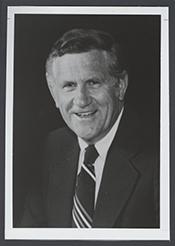
United States · United States Congress · 26 April 1989
Amends the District of Columbia Code to set an 18-month limit on the term of imprisonment which may be imposed for contempt in child custody cases. Requires the District of Columbia Court of Appeals to hear an appeal from an order of the Superior Court of the District of Columbia holding an individual in contempt and imposing imprisonment on such individual in the course of a child custody case within 60 days after such individual requests such appeal.
United States · United States Congress · 26 April 1989
Amends the Internal Revenue Code to exclude from the gross income of an individual otherwise taxable amounts derived from the whole or partial surrender, cancellation, or exchange of any life insurance policy if: (1) the individual is age 65 or older on the date of the transaction; and (2) the amounts in question are used to pay premiums for an insurance policy covering at least 12 months of medically necessary nonemergency care for the individual or a spouse meeting the same 65-year age requirement.
United States · United States Congress · 25 April 1989
Death Penalty Act of 1989 - Amends the Federal criminal code to require a sentence of death or life imprisonment without release for anyone who commits first degree murder under any of the following circumstances: (1) the person murdered was a Federal, State, or local elected official, Federal or State judge, Federal or state law enforcement officer, an employee of a Federal or State prison, or an official of the Federal Bureau of Prisons, under certain circumstances; (2) the person murdered was a witness or informant in a criminal case and the murder was on account of such person's being a witness or informant; (3) the murder was one in a series of related murders committed by the same defendant; (4) the defendant killed more than one person in the same criminal episode; (5) the murder took place as a part of or during a pattern of racketeering activity; (6) the murder was committed in order to compel a third person or a government organization to do or abstain from any act; or (7) the murder was committed through the use of a machinegun or semiautomatic weapon. Requires the fact finder to consider specified mitigating and aggravating factors in determining whether a sentence of death is justified. Sets forth procedures for a separate hearing to determine the punishment to be imposed upon a defendant once such defendant is found guilty and if the Government has given the required notice to the defendant that it believes the death penalty is justified. Provides for a right of appeal of a death sentence by the defendant. Prohibits the death penalty from being carried out upon a person who lacks the mental capacity to understand the death penalty or upon a pregnant woman, or a person who is under 18 years of age at the time the crime was committed, or upon a person who is mentally retarded. States that no State or Federal prison employee shall be required to participate in any execution if such participation is contrary to the moral or religious convictions of the employee. Directs the Attorney General to establish a unit within the Department of Justice to conduct investigations and prosecutions of offenses under this Act. Prohibits personnel assigned to such unit from engaging in other functions for the Department. Authorizes appropriations for FY 1990 through 1992.
United States · United States Congress · 25 April 1989
Amends the Internal Revenue Code to extend the targeted jobs income tax credit through 1992 (under current law the credit will expire after December 31, 1989). Amends the Economic Recovery Tax Act of 1981 to authorize appropriations through FY 1992 in connection with the targeted jobs credit. Raises from 23 to 25 years the age limitation with respect to economically disadvantaged youth targeted for credit purposes. Adds as a targeted group under the credit economically disadvantaged individuals who have completed a qualified drug rehabilitation program.
United States · United States Congress · 25 April 1989
Amends the Federal criminal code to provide enhanced criminal penalties for kidnapping children. Provides a minimum sentence of ten years' imprisonment (life imprisonment if any listed aggravating conduct exists) for such violation. States that persons sentenced under this Act shall not be granted a probationary or suspended sentence, and shall not be eligible for parole during the first five years (20 years if the offender engaged in any listed aggravating conduct) of such imprisonment. Includes as aggravating conduct: (1) selling the victim of such offense; (2) sexually abusing such victim; (3) using such victim for pornography; or (4) intentionally harming such victim physically to a life-threatening extent.
United States · United States Congress · 25 April 1989
Amends title II (Old Age, Survivors and Disability Insurance) of the Social Security Act to continue to provide child's insurance benefits to an eligible individual who has attained age 18 and marries an individual who has attained age 18 and is eligible for Supplemental Security Income (title XVI of the Act) benefits.
United States · United States Congress · 25 April 1989
Declares that it is the sense of the Congress that: (1) any proposal to distribute needles to drug addicts in order to curb the spread of acquired immune deficiency syndrome (AIDS) should be rejected; and (2) Federal AIDS policy should include a strong public education component and discourage behavior which increases exposure to the AIDS virus.
United States · United States Congress · 18 April 1989
Expresses the sense of the Congress that, in seeking to reduce the Federal deficit, any proposal which would diminish, defer, or otherwise adversely affect periodic cost-of-living adjustments in Federal retirement benefits should be uniformly applied.
United States · United States Congress · 17 April 1989
Holloway-Schulze Toddler Tax Credit Act of 1989 - Amends the Internal Revenue Code to allow the custodial parent a refundable income tax credit for each dependent child under the age of six (five in 1990 through 1993). Establishes the credit amount as the lesser of $1,000 or 12 percent of income below $10,000 for a single qualified dependent. Limits application of the credit to two eligible dependents. Reduces the credit for taxpayers earning more than $10,000. Makes this credit and the employment-related dependent care credit mutually exclusive. Applies phase-in amounts for tax years beginning in 1990 through 1993. Indexes post-1994 credit amounts. Provides for advance toddler tax credit payments by employers to employees who provide certification of eligibility. Requires taxpayers to file information returns to reflect these payments. Reduces the amount of the employment-related dependent care credit for taxpayers with adjusted gross income above $50,000. Disallows application of the credit with respect to a taxpayer's dependent under age 13 who is physically and mentally capable of self-care. Repeals the income tax exclusion applied in connection with amounts furnished to an employee in accordance with an employer dependent care assistance program.
United States · United States Congress · 13 April 1989
Death Penalty Implementation Act of 1989 - Amends the Federal judicial code to establish a 60-day statute of limitations for habeas corpus actions brought by a person who has been sentenced to death. Requires a court to begin proceedings on an application for such action not later than 30 days after it is filed. Prohibits a court from entertaining an application without the consent of the person who has been sentenced to death. Requires the chief executive of the State in which a person has been sentenced to death to either set a date for the execution of sentence or exercise executive clemency not later than 30 days after such person has exhausted all possibilities of appeal and collateral challenge to the conviction and sentence.
United States · United States Congress · 13 April 1989
Amends the Harmonized Tariff Schedule of the United States to provide separate subheadings in such Schedule for certain gloves, mittens, and mitts designed for use in sports.
United States · United States Congress · 13 April 1989
Drug-Free Housing Act of 1989 - Amends the United States Housing Act of 1937 to make ineligible for public housing assistance, and expedite procedure for evicting, persons involved in drug-related criminal activity.
United States · United States Congress · 10 April 1989
Authorizes the President to transfer a specified amount of unobligated funds of the Department of Defense for nonlethal assistance to the Nicaraguan democratic resistance that includes: (1) economic assistance for specified administrative costs; (2) gasoline, fuel, and spare parts for aircraft; (3) communication radios with batteries; (4) clothing; (5) political and civic action education programs; and (6) military training courses. Requires the Secretary of State to publish a report detailing the obligation of such nonlethal aid in the Federal Register every 90 days. Declares that the Congress will consider authorizing the President to transfer funds for providing military assistance to the resistance after February 27, 1990, unless the President has certified that the Nicaraguan Government has held free elections toward establishment of a democratic government.
United States · United States Congress · 10 April 1989
Urges the President to initiate consultations for a trade agreement with countries that are members of the Association of Southeast Asian Nations (ASEAN) establishing a U.S.-ASEAN free trade area. Sets forth the negotiating objectives for such agreement.
United States · United States Congress · 10 April 1989
Urges the President to initiate consultations for a trade agreement with Taiwan establishing a U.S.-Taiwan free trade area. Sets forth the negotiating objectives of such agreement.
United States · United States Congress · 10 April 1989
Urges the President, pursuant to provisions of the Omnibus Trade and Competitiveness Act of 1988 relating to bilateral agreements that eliminate tariff and nontariff trade barriers, to initiate consultations with Korea to determine the feasibility of negotiations for a trade agreement that creates a free trade area between it and the United States. Sets forth the negotiating objectives for such an agreement.
United States · United States Congress · 10 April 1989
Declares that it is the sense of the House of Representatives that: (1) anti-Semitic activity will not be tolerated in the United States; (2) any anti-Semitic act must be treated as an attack on all faiths; and (3) Shalom International of California is commended for building bridges to the Jewish community and for building a group to stand against anti-Semitism.
United States · United States Congress · 6 April 1989
Missing Service Personnel Act of 1989 - Requires the responsible uniformed service commander, after receiving notice that a person under his command is missing, to conduct an informal investigation to determine such person's whereabouts and, if appropriate, to place such person in a missing status. Requires the commander, if a person has been placed in such status, to notify the officer holding general court-martial authority over such person (or, in the case of a missing civilian, the Secretary concerned), who shall convene a board of initial inquiry within 45 days. Requires such board to: (1) investigate evidence relating to the disappearance of such person; (2) recommend whether to continue such person in a missing status or make a finding that such person has deserted, is absent without leave, or is dead; and (3) report its recommendations and findings. Provides for the convening of a board of further inquiry, if a board of initial inquiry recommends that such person be continued in a missing status, within one year of such recommendation. Requires such board to analyze any information which has become available since the board of initial inquiry issued its report, to determine whether such person should be continued in a missing status or declared dead, and to report its findings. Directs the Secretary concerned, upon the written request of a member of the immediate family of a missing person who, before the date of the enactment of this Act, was determined by the Secretary to be dead, to: (1) convene a board of further inquiry to determine whether such finding of death should be upheld or such person should be placed in a missing status; and (2) report its findings. Requires the Secretary, within three years after a board of further inquiry recommends a missing status for any person, to reconvene such board to review such status. Specifies the composition of such boards. Directs the Secretary to invite each member of the immediate family of the missing person to the meetings of a board of initial inquiry unless attendance would place such member in danger. Requires the Secretary to: (1) invite family members of missing persons to meetings of boards of further inquiry; (2) schedule such meetings at convenient locations and times; (3) provide such family members with reasonable notice of such meetings; and (4) open such meetings to the general public. Authorizes each board to hold meetings, take testimony, receive evidence, and secure directly from any U.S. department or agency any information necessary to carry out its duties. Provides for the appointment of counsel by the officer or Secretary concerned to represent the missing person. Requires that, if a board determines that a missing person is dead, it shall include in its report a detailed description of the location and date of death, whether the body has been recovered, and whether a licensed practitioner of forensic medicine determined that the body recovered is that of the missing person. Prohibits any such board from declaring a missing person dead unless: (1) evidence other than the passage of a period of less than 50 years suggests that such person is dead; (2) no evidence which reasonably suggests that such person is alive is in the possession of the Government; (3) representatives of the Government have made a complete search of the area where such person was last seen (unless the United States is not granted access to such area); and (4) Government representatives have checked the records of the government or entity having control over the area where such person was last seen (unless the Government is not granted access to such records). Provides for judicial review of determinations of death upon the filing of a written petition by any member of the missing person's immediate family. Directs the Secretary of the uniformed service in which a missing person serves to make certain that such person's personnel file contains all information in the possession of Federal departments and agencies pertaining to the disappearance or whereabouts of such person. Requires the Secretary to make certain that, if classified information is withheld, such file contains: (1) a notice that the information exists; and (2) a notice of the date of the most recent review of the classification status of the information. Sets forth penalties for knowingly withholding information pertaining to the disappearance or whereabouts of a missing person from that person's personnel file. Requires the Secretary concerned to make the contents of such file available to a member of the immediate family of such person upon written request.
United States · United States Congress · 6 April 1989
Natural Gas Decontrol Act of 1989 - Amends the Natural Gas Policy Act of 1978 to declare that the price guidelines for the first sale of natural gas do not apply to: (1) expired, terminated or post-enactment contracts executed after the date of enactment of this Act; (2) certain renegotiated contracts; and (3) gas produced from a well the surface drilling of which began after a specified date. Repeals wellhead price controls.
United States · United States Congress · 5 April 1989
Authorizes the President to present a gold medal, on behalf of the Congress, to each of the following individuals in recognition of their contributions to this Nation's cultural heritage: (1) Frank Capra; (2) James Stewart; and (3) Fred Zinnemann. Requires the Secretary of the Treasury to design a different gold medal for each such individual. Authorizes appropriations. Authorizes the Secretary to strike and sell bronze duplicates of such medals at a price sufficient to cover the costs of such duplicates and the gold medals. Requires the appropriations to be reimbursed out of the sales proceeds. Designates all such medals as National Medals.
United States · United States Congress · 5 April 1989
Educational Excellence Act of 1989 - Title I: Improving Elementary and Secondary Education - Part A: Presidential Merit Schools - Presidential Merit Schools Act - Amends the Elementary and Secondary Education Act of 1965 (ESEA) to establish the Presidential Merit Schools Program to recognize and reward public and private elementary and secondary schools that have made substantial progress in: (1) raising student educational achievement, especially in reading, writing, and mathematics; (2) creating a safe and alcohol- and drug-free school environment; and (3) reducing the dropout rate. Authorizes appropriations for FY 1990 through 1993. Authorizes State educational agencies (SEAs) to designate as a Merit School any public or private elementary or secondary school nominated through procedures established by the SEA. Sets forth requirements for selection criteria established by the Secretary of Education (the Secretary) and by SEAs. Provides that each Merit School will be awarded a Presidential Certificate of Merit, as well as funds to further its educational program. Prohibits Federal, State or local reduction of other assistance to a school because it receives such an award. Part B: Magnet Schools of Excellence - Magnet Schools of Excellence Act of 1989 - Amends ESEA to establish the Magnet Schools of Excellence Program of grants to support public elementary or secondary schools that: (1) offer the highest quality instruction in an academic or vocational discipline or create a unique and effective learning environment; (2) are open to students from beyond the immediate school attendance area; and (3) are capable of attracting students from a variety of backgrounds. Authorizes appropriations for FY 1990 through 1993. Sets forth criteria for selection of applications. Limits such grants to any one school to no more than two years, and requires satisfactory progress in order to receive the grant for the second year. Prohibits Federal, State, or local reduction of assistance to a school because it receives such an award. Part C: Alternative Certification for Teachers and Principals - Alternative Certification of Teachers and Principals Assistance Act of 1989 - Amends ESEA to establish a program of assistance for Alternative Certification of Teachers and Principals. Authorizes appropriations for FY 1990. Repeals this Part as of October 1, 1990. Part D: Presidential Awards for Excellence in Education - Amends ESEA to establish the Presidential Awards for Excellence in Education Program to recognize and reward outstanding elementary and secondary school teachers. Authorizes appropriations for FY 1990 through 1993. Makes any full-time public or private elementary or secondary school teacher of academic or vocational subjects eligible for such an award. Makes teachers of religion (other than religion as an academic discipline) ineligible. Allows various individuals, groups, or institutions to nominate teachers for such awards. Requires State panels to select award recipients using criteria approved by the Secretary. Sets the amount of such an award at $5,000, and allows the recipient to use it for any purpose. Part E: Effective Date - Sets the effective date of the amendments made by this title. Title II: National Science Scholars - Amends the Higher Education Act of 1965 (HEA) to establish the National Science Scholars Program to recognize student excellence and achievement in the physical, life, and computer sciences, mathematics, and engineering. Authorizes appropriations for FY 1990 through 1993. Authorizes the Secretary to award scholarships to outstanding students selected as National Science Scholars by the President. Allows students who satisfy certain requirements to receive such scholarships for the first year of undergraduate study and, if they satisfy additional requirements, additional scholarships to cover the remaining undergraduate years. Directs the Secretary to appoint a panel of experts to recommend academic achievement criteria for use in the nomination of scholars. Sets forth requirements for initial and continuation awards. Sets the scholarship amount at $10,000 for an academic year, but reduces such amount based on cost of attendance and other grant or scholarship assistance, and adjusts for insufficient appropriations. Requires that scholarship recipients, to the extent they are otherwise qualified, be given priority consideration for federally financed summer employment in research and development centers. Title III: Other Programs - Amends the Drug-Free Schools and Communities Act of 1986 to establish a Drug-Free Schools Urban Emergency Grants program. Authorizes appropriations for FY 1990 through 1993. Directs the Secretary ot use program funds to award a small number of one-time grants to local educational agencies in urban areas with the most severe drug problems to assist them in developing and implementing comprehensive approaches to eliminating such problems. Amends HEA to authorize appropriations for FY 1990 through 1993 for special awards to historically Black colleges and universities. Makes institutions that receive such awards ineligible for other specified awards, and makes institutions that do not receive them eligible for those other awards.
United States · United States Congress · 5 April 1989
Amends the Tax Reform Act of 1986 to delay until 1990 the effective date of the new nondiscrimination requirements for coverage and benefits under certain statutory employee benefit plans (Internal Revenue Code section 89). Amends Internal Revenue Code provisions relating to such plans to: (1) decrease from 80 percent to 70 percent the coverage requirement under the alternative coverage test; (2) increase from 17 1/2 hours to 35 hours per week the threshold number of work hours triggering requirements with respect to part-time employees; and (3) exempt a number of employee categories from the requirements.
United States · United States Congress · 5 April 1989
Flag Protection and Student Accountability Act - Amends the Higher Education Act of 1965 to prohibit individuals who have been convicted of desecrating the American flag from receiving Federal student financial assistance.
United States · United States Congress · 5 April 1989
Foods Are Not Drugs Act of 1989 - Amends the Federal Food, Drug, and Cosmetic Act to exclude from the definitions of "drug" and of "food additive" foods for special dietary use, i.e. vitamins and minerals, where such foods are promoted or offered for sale in the diagnosis, mitigation, treatment, or prevention of disease. Provides that food shall be considered misbranded if oral representations have been made with respect to the food which are false or misleading in any particular.
United States · United States Congress · 5 April 1989
Targeted Relief Disclosure Resolution of 1989 - Amends rule X of the Rules of the House of Representatives to require each report accompanying each bill or joint resolution of a public character reported by the Committee on Ways and Means to identify: (1) each provision which is intended to provide special benefits with respect to five or fewer taxpayers, transactions, events, items of property, projects, or issuances of bonds; (2) each beneficiary of such provision; (3) the Member of Congress who sponsored the inclusion of each such beneficiary; and (4) an estimate by the Joint Committee on Taxation of the loss in revenues resulting from such provision with respect to each such beneficiary for the fiscal year for which such loss in revenues first occurs and each of the five fiscal years thereafter.
United States · United States Congress · 23 March 1989
Common Sense Budget Act of 1989 - Amends Federal law to require both the President and the Congress to draft a budget based on estimates of current fiscal year spending, proposing increases or decreases based on this level (rather than on an estimated baseline). Amends the Congressional Budget Act of 1974 to require the Congressional Budget Office to use such a current fiscal year baseline in its report to the congressional budget committees, projecting growth for entitlement and discretionary spending based on current fiscal year spending.
United States · United States Congress · 23 March 1989
Used Oil Recycling Act of 1989 - Amends the Solid Waste Disposal Act to prohibit the Administrator of the Environmental Protection Agency from listing or identifying as a hazardous waste any: (1) recycled oil; (2) used oil transferred to a person who certifies that such oil will be rerefined, processed, or reclaimed for a beneficial purpose or stored less than 12 months prior to such transfer; and (3) used oil which has been removed from the engine of a light duty motor vehicle or household appliance by the owner, transferred to a service station dealer, and stored by the dealer for less than 12 months. Requires the Administrator to determine whether to list as a hazardous waste used oil which is a solid waste and does not satisfy the above-listed criteria. Directs the Administrator to establish management standards for the storage, testing, transportation, treatment, exportation and importation, and processing of used oil. Requires such standards to be designed to protect human health and the environment by encouraging and expanding reliance on recycling of used oil. Exempts generators of used oil from recordkeeping or reporting requirements if such generators: (1) enter into an agreement for delivery of such oil to a recycling facility whose owner or operator certifies compliance with such standards or recycles such oil; (2) do not mix the oil with any hazardous wastes; and (3) maintain necessary records relating to the oil. Prohibits mixing used oil with any hazardous waste identified under such Act except where: (1) such mixing involves an identified hazardous waste and the resulting mixture does not exhibit a characteristic identified in such Act; and (2) the used oil mixture is burned to recover useful energy such that protection of human health and the environment is assured. Deems owners or operators of facilities which process used oil for fuel to have permits for recycling activities if in compliance with management standards. Directs the Administrator to conduct inspections of such facilities to determine compliance with such standards. Requires the Administrator to implement educational programs to inform the public about the environmental and safety hazards associated with improper handling of used oil and the benefits of used oil recycling. Authorizes appropriations. Directs the Administrator to promulgate regulations concerning the procurement of used oil fuel by Federal agencies subject to the requirements of the Solid Waste Disposal Act.
United States · United States Congress · 23 March 1989
Honest Compensation Act - Amends the Supplemental Appropriations Act, 1983 to prohibit Members of Congress from accepting honoraria after December 31, 1990. Amends the Legislative Reorganization Act of 1946 to defer pay adjustments for Members until the beginning of the next Congress. Amends the Federal Salary Act of 1967 to prohibit the recommendations of the President with respect to congressional salaries from taking effect unless a joint resolution of approval is passed by the House of Representatives and the Senate by a recorded vote. Amends the Federal Election Campaign Act of 1971 to prohibit the personal use of campaign funds by congressional candidates.
United States · United States Congress · 23 March 1989
Natural Gas Decontrol Act of 1989 - Amends the Natural Gas Policy Act of 1978 to declare that the price guidelines for the first sale of natural gas do not apply to deliveries taking place under: (1) expired, terminated, or post-enactment contracts executed after the date of enactment of this Act; (2) certain renegotiated contracts; and (3) gas produced from a well the surface drilling of which began after a specified date. Repeals wellhead price controls.
United States · United States Congress · 23 March 1989
Uniform Product Liability Act of 1989 - Governs any product liability action brought in either State or Federal court against a manufacturer or product seller for personal injury, property damage, or commercial loss, superseding State law whenever this Act establishes a rule of law applicable to recovery for the harm in question. Describes the scope of preemption. Authorizes States to develop or implement alternative procedures, standards, or systems not inconsistent with this Act. Denies manufacturer liability for harm caused by an unreasonable or unforeseeable use or alteration of a product or by a danger known to be inherent to the product and incapable of mitigation. Describes conditions under which a manufacturer will not be held liable for harm caused by product design or failure to warn. Describes conditions governing product seller liability, holding a seller liable only if the claimant establishes by a preponderance of the evidence that: (1) the seller's failure to exercise reasonable care with respect to the product was the proximate cause of the harm in question; or (2) the harm was caused by the product's failure to conform to the seller's express warranty. Describes: (1) defenses applicable in product liability cases; (2) the respective liability of codefendants; and (3) standards and limitations to govern awards of punitive damages. Imposes a two-year statute of limitations with respect to product liability actions, with longer periods applicable in cases involving capital goods and aviation accidents. Prescribes coordination requirements in connection with product liability actions that also involve workers' compensation awards. Directs any court in which a product liability action is brought to give the parties the opportunity to engage in nonbinding arbitration with respect to the claim in question. Describes conditions to govern such arbitration.
United States · United States Congress · 21 March 1989
Title I: Statehood Centennial Coin - Statehood Centennial Commemorative Coin Act of 1989 - Directs the Secretary of the Treasury to mint and issue not more than a specified number of one-dollar silver coins and five-dollar palladium coins in commemoration of the 100th anniversary of the statehood of Idaho, Montana, North Dakota, South Dakota, Washington, and Wyoming. Sets forth certain features of such coins and provides for their design, issuance, and sale. Requires the Secretary to provide a specified amount of all surcharges to the Documents West exhibition program with the remaining amount of surcharges to be deposited in the Treasury to be used to reduce the national debt. Requires the Secretary to obtain silver for the one-dollar coins only from stockpiles established under the Strategic and Critical Materials Stock Piling Act. Requires the Secretary to obtain palladium for the five-dollar coins by purchase of palladium mined and refined in the United States. Grants the Comptroller General the right to examine records and other data of the Idaho Centennial Commission. Title II: Silver Proof Sets - Silver Coin Proof Set Act - Authorizes the Secretary to mint and issue silver coin proof sets. Sets forth certain specified features of such coins and provides for their sale to the public. Requires the Secretary to obtain silver for such coins by purchase from stockpiles established under the Strategic and Critical Materials Stock Piling Act and from Treasury stocks on hand.
United States · United States Congress · 21 March 1989
Amends title XVI (Supplemental Security Income) (SSI) of the Social Security Act to exclude parental income and resources from the determination of a disabled child's SSI eligibility if such child requires the level of care provided in a hospital, skilled nursing facility, or intermediate care facility, but care outside such a facility is appropriate and, when considered with the SSI benefits to which such child is entitled, less costly than care within such a facility. Specifies the SSI benefit rate to which such children are entitled.
United States · United States Congress · 21 March 1989
Anti-Terrorism Sanctions Act of 1989 - Requires the President to revoke the most-favored-nation trade status of certain foreign countries that repeatedly support international terrorism. Prohibits duty-free treatment for the products of such countries under the Trade Act of 1974 or the Caribbean Basin Economic Recovery Act. Prohibits the Secretary of Commerce from consulting with the governments of such countries regarding international travel and tourism. Allows the President to waive any sanction under this Act with respect to any foreign country if such waiver would be in the best interests of the United States. Requires the President to give 30 days' notice to the Congress concerning any waiver.
United States · United States Congress · 20 March 1989
Utah Public Lands Wilderness Act of 1989 - Designates certain specified lands in Utah as components of the National Wilderness Preservation System. Provides for continuation of existing grazing on such lands. Requires those areas in Utah administered by the Secretary of the Interior which are not designated as wilderness to be managed for multiple use.
United States · United States Congress · 20 March 1989
Repeals provisions of the Internal Revenue Code that limit the deductibility of contributions to individual retirement plans by active participants in employer-maintained retirement plans.
United States · United States Congress · 20 March 1989
Urges the British Government to ensure direct elections in 1991 and 1994 to the Legislative Council of Hong Kong. Calls upon the President to communicate to the People's Republic of China and the British Government the importance the United States attaches to the democratic and human rights of Hong Kong's citizens and the retention of Hong Kong's capitalist system.
United States · United States Congress · 16 March 1989
International Financial Security Act of 1989 - Amends the Export Administration Act to state congressional findings that loans and other transfers of capital to the Soviet Union and its allies increase the ability of those countries to obtain sensitive goods and technology and to more easily divert funds to purposes inimical to U.S. interests. Declares that it is U.S. policy to use export controls to: (1) restrict the export of capital, the extension of credit, or the transfer of financial resources to destinations or persons abroad in order to promote the national security, including antiterrorism, the foreign policy interests of the United States, the advancement of emigration of Soviet Jews and other ethnic minorities, and human rights policies of the Soviet Union and other East Bloc countries; and (2) restrict the export of goods and technology where such export will likely support terrorism against U.S. citizens or benefit terrorists or countries supporting international terrorism. Authorizes the President to restrict the export or transfer of: (1) goods and technology if such export will likely support terrorism against U.S. citizens or benefit terrorists or countries supporting international terrorism; and (2) money or other financial assets to the governments of Warsaw Pact countries or countries supporting international terrorism. Provides for negotiations with other countries to obtain their cooperation with such export controls on capital, goods, and technology. Requires export license applications for the export of capital to be submitted to the Secretary of the Treasury, who shall make all determinations with respect to such application. Requires the annual report on the administration of the Export Administration Act of 1979 to include a report on actions taken to carry out export controls on capital. Amends the Federal Deposit Insurance Act to require that any notice of a change in control of an insured bank include the nationality of the person or persons making the acquisition. Sets forth criminal penalties for violation of any change in control requirement. Requires Federal banking agencies to disapprove any proposed acquisition which would result in the ownership or control of an insured bank by a Warsaw Pact country or a national agency or instrumentality of any such country. Requires federally-insured banks to include in reports of condition and reports to shareholders, and make available to the public, information concerning the number and amount of each untied loan made to any Warsaw Pact country.
United States · United States Congress · 16 March 1989
Expresses the sense of the Congress that the States should ratify the 1789 proposed amendment to the Constitution which provides that no law varying the compensation for the services of Members of Congress shall take effect until an election of Representatives has intervened.
United States · United States Congress · 15 March 1989
Waste Reduction Act - Makes it the national policy to reduce or prevent pollution at its source whenever feasible. Directs the Administrator of the Environmental Protection Agency (EPA) to establish an office within the EPA which will be independent of the EPA's single-medium program offices and have the authority to review and advise such offices on their activities to promote a multi-media approach to source reduction. Directs the Administrator to develop and implement a strategy to promote source reduction. Identifies several review, coordination, outreach, and organizational actions that the Administrator must take as part of such strategy. Requires the Administrator to: (1) make matching grants to States for programs promoting the use of source reduction techniques by businesses; and (2) establish a Source Reduction Clearinghouse to compile information generated by States receiving grants on management, technical, and operational approaches to source reduction. Requires that such information be made available to the public. Requires filings of annual toxic chemical release forms required under the Superfund Amendments and Reauthorization Act of 1986 to include toxic chemical source reduction and recycling reports for toxic chemicals which are the subject of such filings. Includes in such reports information, on a facility-by-facility basis, as to: (1) the amounts and disposition of each toxic chemical; (2) the source reduction practices used with respect to such chemicals; (3) measurements of changes from past to anticipated levels of chemical reduction and recycling; and (4) the techniques used to identify source reduction opportunities. Makes such information available to the public. Directs the Administrator to report to the Congress within one year of this Act's enactment and biennially thereafter on the results of actions taken to implement source reduction strategies. Authorizes appropriations.
United States · United States Congress · 15 March 1989
Terrorist Alien Removal Act of 1989 - Amends the Immigration and Nationality Act to make terrorist activity (as defined by this Act) grounds for deportation. Establishes removal procedures for alien terrorists, including a special removal hearing which shall be open to the public.
United States · United States Congress · 15 March 1989
Includes service in the U.S. merchant marine between May 26, 1940, and January 1, 1948, as military service for the purpose of determining civil service retirement benefits.
United States · United States Congress · 15 March 1989
Foreign Aid Impact Assessment Act - Requires the President to submit to the Congress, by December 31, 1989, and December 31 of each third year thereafter, a report analyzing the impact and effectiveness of U.S. economic assistance provided during the preceding three fiscal years. Directs that such report include for each recipient country: (1) an analysis of the impact of such assistance on the country's economic development, including a description of the specific objectives sought and the extent to which they were not achieved and why; (2) a description of the amount and nature of the assistance provided by other donors during that period; (3) a discussion of the commitment of the host government to addressing the country's needs in each development sector; (4) a description of the trends in each sector; (5) statistical and other information necessary to the evaluation; and (6) a comparison of the analysis provided in the report with relevant analyses by international or nongovernmental organizations or donor countries. Requires that each report: (1) be submitted to the Congress as a separate document; and (2) identify those countries in which economic assistance has been most and least successful, explain why the assistance was not more successful, and specify what the United States has done as a result.