Bill· HRH.R. 864 (101st)referred
To repeal the Medicare Catastrophic Coverage Act of 1988.
United States · United States Congress · 6 February 1989
Repeals the Medicare Catastrophic Coverage Act of 1988.
The world's political record
Person
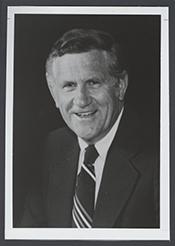
United States · Official source
2,232 records where Rep. Dannemeyer, William E. [R-CA-39] is listed as a sponsor, author, or other actor. Search with topics and years
United States · United States Congress · 6 February 1989
Repeals the Medicare Catastrophic Coverage Act of 1988.
United States · United States Congress · 6 February 1989
Directs the Secretary of the Interior to display the American flag at the apex of the Vietnam Veterans Memorial in the District of Columbia.
United States · United States Congress · 6 February 1989
Authorizes and requests the President to designate the weeks beginning on November 19, 1989, and November 18, 1990, as National Family Week.
United States · United States Congress · 2 February 1989
Federal Employees Long-Term Care Insurance Act - Directs the Office of Personnel Management to arrange for the optional conversion of a portion of a Government employee's life insurance policy to long-term care insurance.
United States · United States Congress · 2 February 1989
Amends the Internal Revenue Code to include parsonage allowances as compensation for purposes of the limitation on benefits payable under defined benefit plans.
United States · United States Congress · 2 February 1989
Bicentennial House Restoration Amendments of 1989 - Amends rule I of the Rules of the House of Representatives to direct the Speaker of the House, immediately after the reading of a veto message and without intervening motion or business, to state the question on reconsideration of the vetoed measure. Directs the Speaker to provide for the visual coverage of House proceedings on a uniform basis throughout each day's session. Requires the Speaker to announce a legislative program at the beginning of each congressional session which includes: (1) target dates for the consideration of specified major budgetary, authorization, and appropriation bills; (2) an indication of those weeks during which the House will be in session; (3) those weeks set aside for district work periods; and (4) the target date for the adjournment of that session. Amends rule X to require each standing committee, not later than March 1 in the first session of a Congress, to adopt its oversight plans in a meeting open to the public. Authorizes the Speaker of the House to appoint special ad hoc oversight committees to review specific matters within the jurisdiction of two or more committees. Amends rule XI to require each committee to include in its biennial report to the House a separate section summarizing its legislative and oversight activities during that Congress. Amends rule X to direct the Speaker of the House to initially refer each bill, resolution, or other matter to one committee of principal jurisdiction. Eliminates the Speaker's authority to refer any such matter initially to two or more committees for concurrent consideration. Requires standing committees to be elected by the House within seven legislative days (currently, seven calendar days) after the commencement of a Congress. Requires standing committees to hold organizational meetings not later than three legislative days after election. Requires the membership of each committee (except the Committee on Standards of Official Conduct), select committee, and conference committee (and each subcommittee, task force, or subunit thereof) to reflect the ratio of majority to minority Members. Provides that such ratio be reflected for standing committees at the beginning of each Congress, and for select and conference committees at the time of appointment. Prohibits any standing committee from establishing more than six subcommittees, and any Member serving at any one time on more than four subcommittees. Defines "subcommittee" as any subunit of a standing committee established for a period of more than six months. Amends rule XI to prohibit the vote by any member of any committee or subcommittee from being cast by proxy. Requires open committee meetings unless disclosure of matters to be considered would endanger national security, tend to defame, degrade or incriminate any person or otherwise violate any law or rule of the House, or involve committee personnel. Provides that a majority of members of each committee or subcommittee shall constitute a quorum for the transaction of any business. Requires committee rollcall votes on a motion to report any bill or resolution of a public character to include the names of Members voting for or against such measure. Requires each nonrecord vote to include the names of those Members actually present at the time the bill or resolution is ordered reported. Prohibits Rules Committee reports from being considered on the subsequent calendar day of the same legislative day. Prohibits the Rules Committee from reporting any order of business resolution which prohibits a motion to recommit, including instructions in the form of an amendment, unless it is a Senate measure for which a House-passed measure has been substituted. Prohibits the consideration of any resolution reported from the Committee on Rules providing for the consideration of any bill or joint resolution which limits the right of Members to offer germane amendments unless the chairman of the Committee has announced in advance that less than an open amendment process might be recommended by the Committee. Prohibits the consideration of any order of business resolution reported from the Committee on Rules which provides that the House shall be considered to have automatically adopted a motion, amendment, or resolution, or to have passed a bill, joint resolution, or conference report, unless the consideration of such order of business resolution is agreed to by not less than two-thirds of the Members voting, and the yeas and nays shall be considered as ordered when the Speaker puts the question on consideration. Prohibits the consideration of any budget waiver resolution reported by the Committee on Rules unless an explanatory statement accompanies it. Prohibits the House from considering any primary expense resolution until the Committee on House Administration has reported and the House has adopted a resolution establishing the committee staff personnel ceiling for the year. Requires such committee to specify in any primary or supplemental expense resolution the number of staff positions authorized therein. Authorizes the House to consider any supplemental expense resolution in excess of such ceiling by a vote of two-thirds of the Members present. Prohibits the overall staff ceiling of the 101st Congress from exceeding 90 percent of the total committee staff personnel employed at the end of the 100th Congress. Amends rule XIV to establish a Commemorative Calendar comprised of unreported bills and resolutions respecting commemorative holidays and celebrations. Provides for the call of the Commemorative Calendar on the first and third Tuesdays of each month. Amends rule XV to require an automatic rollcall vote on any bill or joint resolution making appropriations, providing revenue, or adjusting the rate of pay of Members, or on final adoption of any concurrent resolution on the budget which provides an increase in the statutory debt limit. Amends rule XXI to establish procedures for the consideration of any bill or joint resolution making continuing appropriations for a period of 30 days or less. Establishes limitations for the consideration of reconciliation bills. Requires bills or resolutions which authorize the enactment of new budget authority to be reported on or before the May 15 preceding the fiscal year to which such authority applies. Amends rule XXIV to include the Pledge of Allegiance in the daily order of business. Amends rule XXVII to establish new procedures for the consideration of motions to suspend the rules. Prohibits such motion if the measure or matter would enact new budget or spending authority in excess of a specified amount. Requires the printing in the Congressional Record, and weekly update thereafter, of a motion to discharge a committee from consideration of a bill or resolution when 100 Members have signed such motion. Amends rule XXXVIII to grant a House conferee three calendar days in which to file supplemental, minority, or additional views. Establishes procedures for the consideration of legislation granting the President special rescission authority with respect to any budget authority for which an authorization has not been enacted. Provides for application of certain labor laws to the House. Directs the Committee on Rules to report to the House by December 31, 1989, on realigning the jurisdictions of House committees.
United States · United States Congress · 2 February 1989
Extends regards to the people of France on the occasion of the bicentennial of Bastille Day. Urges the people of the United States to observe the bicentennial on July 14, 1989. Finds that France and the United States remain committed to the principles of the Declaration of the Rights of Man and of the Citizen and the Bill of Rights.
United States · United States Congress · 31 January 1989
National Observance Advisory Act - Establishes the President's Advisory Commission on National Observances to: (1) establish criteria for recommending to the President that a proposed national observance be approved or disapproved; (2) review proposals for national observances submitted in accordance with procedures published by the Commission; and (3) issue recommendations to the President concerning each proposal reviewed.
United States · United States Congress · 31 January 1989
Amends the Internal Revenue Code to allow an income tax deduction for interest on any indebtedness incurred to pay the educational expenses of the taxpayer, spouse, or dependent. (Under current law, such a loan must be secured by an interest in real property.)
United States · United States Congress · 31 January 1989
Inflation Tax Relief Act of 1989 - Amends the Internal Revenue Code to require indexing, based on the gross national product deflator, of the adjusted basis of certain assets (corporate stock and tangible property that is a capital asset of property used in a trade or business) that have been held for more than one year at the time of sale or other transfer, solely for the purpose of determining gain or loss.
United States · United States Congress · 31 January 1989
Constitutional Amendment - Grants the President line item veto authority with respect to appropriations bills.
United States · United States Congress · 27 January 1989
Domestic Energy Security Act of 1989 - Title I: National Energy Security Tax Credits - Amends the Internal Revenue Code (IRC) to establish a crude oil and natural gas exploration and development tax credit. Allows a 20 percent credit for qualified investments. Establishes a marginal production income tax credit for producers who maintain economically unproductive oil wells. Applies the credit to domestic crude that is: (1) from stripper well property; (2) heavy oil; (3) oil recovered through a tertiary recovery method; or (4) harsh environment oil (produced from Arctic areas or in submerged lands). Fixes the credit at 20 percent of the qualified cost (determined in accordance with a formula set forth in this Act) of each barrel produced by the producer during the taxable year. Title II: Additional Exploration and Production Incentives - Amends the IRC to treat certain geological and geophysical costs and surface casing costs as intangible drilling and development costs that a taxpayer may elect to capitalize or to deduct for income tax purposes. Permits a percentage depletion income tax deduction for proven oil and gas wells that have been transferred to a new owner. Exempts oil and gas wells from application of the net income limitation on percentage depletion. Increases from 65 percent to 100 percent the taxable income limitation on the percentage depletion deduction for oil and gas property. Extends the income tax credit for producing fuel from a nonconventional source to qualified fuels from wells or facilities in service before January 1, 1998. (The change represents a seven-year extension of the credit.) Affirms natural gas found in tight sands formations as a qualified fuel with respect to the credit, without exceptions. Title III: Amendments to the Alternative Minimum Tax - Repeals provisions that identify intangible drilling costs as a tax preference item for purposes of determining alternative minimum tax liability and corporate preference reductions. Title IV: Miscellaneous Tax and Administrative Amendments - Declares Revenue Ruling 77-176 (and other rulings that reach similar results) to be inapplicable with respect to the income tax treatment of mineral sharing arrangements. (The Revenue Ruling addresses situations in which a driller receives from a lessee an operating interest in oil and gas property as consideration for drilling a well on the leased tract.) Revises provisions governing the time when economic performance occurs for the purpose of income tax deductions or credits in connection with removal of offshore oil or gas production facilities. Specifies expressly the types of oil and gas exploration and development costs that are exempt from the required application of uniform cost capitalization rules.
United States · United States Congress · 27 January 1989
Local Television Service Act of 1988 - Amends the Communications Act of 1934 to mandate a policy under which the Federal Communications Commission (FCC) allocates VHF (very high frequency) commercial television broadcasting channels in ways that assure no fewer than one such channel to each Principal Metropolitan Statistical Area (PMSA) of more than 1,000,000 persons, if technically feasible. Directs the FCC to: (1) order reallocation of a channel or the hyphenation of a community of license within such a PMSA if a VHF commercial television broadcast station licensee notifies the FCC that it wishes such action; (2) issue a license to the licensee under the changed conditions for a term equal to the term remaining on the existing license; and (3) permit the license to be renewed for another term without considering other applications for the same channel, if certain findings are made. Requires the FCC to initiate rulemaking to ensure primary program service from at least one VHF commercial television station to any PMSA in question that is not receiving such service. Directs the FCC to report to the Congress on these proceedings and on recommendations to achieve the expressed policy.
United States · United States Congress · 27 January 1989
Repeals the Medicare Catastrophic Coverage Act of 1988.
United States · United States Congress · 27 January 1989
Designates October 6, 1989, as German-American Day.
United States · United States Congress · 27 January 1989
Designates April 9, 1989, as National Former Prisoner of War Recognition Day.
United States · United States Congress · 27 January 1989
Constitutional Amendment - Declares that the right to life is the paramount and most fundamental right of a person. Defines "person" to include the unborn for the purpose of the right to life guarantee. States that nothing in this article shall prohibit a law allowing medical procedures required to prevent the death of either the pregnant woman or the unborn offspring.
United States · United States Congress · 27 January 1989
Designates the week beginning May 14, 1989, as National Osteoporosis Prevention Week of 1989.
United States · United States Congress · 27 January 1989
Expresses the sense of the Congress opposing further restrictions on the mortgage interest income tax deduction.
United States · United States Congress · 24 January 1989
Repeals provisions of the Tax Reform Act of 1986 that establish nondiscrimination requirements for coverage and benefits under certain statutory employee benefit plans. (The consequence is the repeal of section 89 of the Internal Revenue Code.)
United States · United States Congress · 24 January 1989
Declaration of Personhood Act - Declares that all human beings, from the moment of conception and without regard to age, health, or condition of dependency, are persons entitled to the guarantees contained in the fifth, 13th, and 14th amendments to the Constitution. Prohibits abortion.
United States · United States Congress · 24 January 1989
Preborn Children's Civil Rights Act of 1989 - Prohibits the use of Federal funds to perform, promote, or do research on any procedure to take the life of a preborn child (except for medical procedures required to prevent the death of either the pregnant woman or her preborn child). Prohibits the Federal Government from entering into any contract for insurance which provides for payment or reimbursement for abortion services. States that no institution receiving Federal financial assistance shall: (1) discriminate against any employee, applicant, or student on the basis of that person's opposition to abortion; or (2) require any employee or student to participate, directly or indirectly, in abortion procedures, counseling, or an insurance program which includes abortion coverage. States that attorney's fees shall not be allowed in any civil action involving a law prohibiting or restricting abortions. Provides for Supreme Court review of lower court decisions which declare State and local anti-abortion statutes unconstitutional.
United States · United States Congress · 24 January 1989
Human Fetal Tissue Transportation Act of 1989 - Prohibits interstate importation, exportation, or transportation of human fetal tissue, except as permitted under this Act. Requires any person who transports such tissue to notify the Secretary of Health and Human Services (Secretary) semiannually of each such transportation, with specified information. Requires the Secretary to establish regulations restricting or prohibiting interstate importation, exportation, or transportation of human fetal tissue and the operation of human fetal tissue storage facilities as necessary to protect the public health or promote the general welfare. Prohibits operation of a human fetal storage facility, except with a license issued under this Act. Requires the Secretary to issue or renew such license for any organization which meets the requirements of this Act. Authorizes the Secretary to limit, suspend, or revoke any license for material misrepresentations, failure to provide certain information, or failure to comply with regulations. Authorizes the Secretary to conduct investigations or inspections necessary to carry out this Act. Requires the Secretary to furnish the Attorney General information indicating noncompliance with this Act. Establishes penalties of fines or imprisonment for violations of this Act. Declares that this Act shall not affect any provision of State law, except to the extent such law is inconsistent with this Act, and then only to the extent of the inconsistency. Defines "human fetal tissue" to be matter yielded by an aborted human pregnancy and any biochemical product derived from such matter.
United States · United States Congress · 24 January 1989
Parent Drug Awareness Act - Amends the Federal Food, Drug, and Cosmetic Act to require that drugs derived from a human fetus be labeled accordingly.
United States · United States Congress · 24 January 1989
Tax Exemption Equity Act of 1989 - Amends the Internal Revenue Code to deny tax-exempt status to organizations that directly or indirectly perform or finance abortions. Denies the income, estate, and gift tax charitable contribution deductions for donations to them.
United States · United States Congress · 24 January 1989
Equal Opportunity for Medical Licensure and Reciprocity Act of 1989 - Prohibits discrimination against any person who graduated from a medical school outside the United States and who is a licensed physician in the United States: (1) in equal access to practice medicine within any U.S. jurisdiction; (2) by law, regulation, policy, or requirements; and (3) by conditions or requirements which differ from the conditions or requirements as applied to graduates of U.S. medical schools. Applies the prohibition to any medical specialty as well as to the general practice of medicine. Prohibits the Secretary of Health and Human Services from making a grant, loan guarantee, or interest subsidy to, or for the benefit of, any school of medicine, unless the application contains assurances that the school will not discriminate against a graduate of a non-U.S. medical school. Requires States to adopt medical licensure and medical reciprocity standards which provide equal opportunity to any graduate of a non-U.S. medical school, as compared to any graduate of a U.S. medical school, provided the non-U.S. medical school graduate has completed the U.S. postgraduate training and obtained a license to practice medicine in any U.S. State.
United States · United States Congress · 24 January 1989
Constitutional Amendment - Declares that the right to life vests in a human being at the moment of fertilization.
United States · United States Congress · 20 January 1989
Provides that a court-ordered allocation of military retired pay to a former spouse of a member of the armed forces which is based upon the treatment of such retired pay as property of both the member and the former spouse shall terminate upon the remarriage of the former spouse.
United States · United States Congress · 20 January 1989
Repeals the War Powers Resolution.
United States · United States Congress · 20 January 1989
Repeals a provision of the Internal Revenue Code that disallows the income tax deduction of 25 percent of the health insurance costs of self-employed individuals after tax year 1989 (thus extending the deduction indefinitely).
United States · United States Congress · 20 January 1989
Amends the Internal Revenue Code to allow an individual taxpayer a refundable income tax credit, in an amount based on adjusted gross income (minimum credit of $150), for each dependent below the age of compulsory school attendance in the State where the taxpayer resides. Sets the maximum credit amount as the total employee tax withheld from the taxpayer's wages during the year under the Federal Insurance Contributions Act. Disallows application of the nonrefundable dependent care income tax credit with respect to a taxpayer's dependents under age 13, unless the child is physically or mentally incapable of self-care.
United States · United States Congress · 20 January 1989
Disapproves the recommendations of the President relating to pay rates of Members of Congress.
United States · United States Congress · 20 January 1989
Expresses the sense of the Congress that the Secretary of Labor, in cooperation with the ACTION Agency, should publicize and promote projects under the Retired Senior Volunteer Program and the Older American Community Service Employment Program that encourage and recruit older individuals to provide child care services in community-based child care centers.
United States · United States Congress · 19 January 1989
United States Coast Guard Bicentennial Medal Act - Directs the Secretary of the Treasury to design, strike, and sell a medal in commemoration of the bicentennial of the U.S. Coast Guard in 1990. Requires the design of the medal to be selected by the Secretary of the Treasury after consultation with the Secretary of Transportation and the Commission of Fine Arts.
United States · United States Congress · 19 January 1989
National Commemorative Events Advisory Act - Establishes the President's Advisory Commission on National Commemorative Events to: (1) establish criteria for recommending to the President that a proposed commemorative event be approved or disapproved; (2) review proposals for national commemorative events submitted in accordance with procedures published by the Commission; and (3) issue recommendations to the President concerning each proposal reviewed.
United States · United States Congress · 19 January 1989
Amends the Tax Reform Act of 1986 and the Technical and Miscellaneous Revenue Act of 1988 to delay until 1990 the effective date of the new nondiscrimination requirements (Internal Revenue Code section 89) for coverage and benefits under certain statutory employee benefit plans.
United States · United States Congress · 19 January 1989
Black Lung Benefits Check Delivery Assurance Act of 1989 - Amends the Federal Mine Safety and Health Act of 1977 to provide that if the regularly scheduled delivery date for black lung benefit checks falls on a weekend or a legal public holiday, then such checks shall be mailed for delivery on the first day preceding the weekend or holiday, even if the delivery would be made before the end of the month for which such checks are issued. Provides that if as a consequence of such modified delivery date the payment is more than the correct authorized amount, no action shall be taken to recover the incorrect portion.
United States · United States Congress · 19 January 1989
Civil Service and Federal Employee Retirement Check Delivery Assurance Act of 1989 - Provides that if the usual delivery date for civil service retirement checks falls on a Saturday, Sunday, or legal public holiday, then such checks shall be mailed a day earlier than usual.
United States · United States Congress · 19 January 1989
Requires the early mailing of benefit checks for military retired and retainer pay, Retired Serviceman's Family Protection Plan annuities, and military Survivor Benefit Plan annuities if the day regularly designated for the delivery of such checks falls on a Saturday, Sunday, or legal holiday.
United States · United States Congress · 19 January 1989
Air Travel Rights for Blind Individuals Act - Amends the Federal Aviation Act of 1958 to preclude an air carrier from establishing aircraft seating restrictions based upon a passenger's visual acuity or use of a white cane or dog guide or other such means of assistance.
United States · United States Congress · 19 January 1989
Repeals the Medicare Catastrophic Coverage Act of 1988.
United States · United States Congress · 19 January 1989
Railroad Retirement Benefits Check Delivery Assurance Act of 1989 - Amends the Railroad Retirement Act of 1974 to provide that if the regularly scheduled delivery date for certain railroad benefits checks falls on a weekend or a legal public holiday, then such checks shall be mailed for delivery on the first day preceding the weekend or holiday, even if the delivery would be made before the end of the month for which such checks are issued. Provides that if, as a consequence of such modified delivery date, the payment is more than the correct authorized amount, no action shall be taken to recover the incorrect portion.
United States · United States Congress · 19 January 1989
Constitutional Amendment - Proclaims the English language to be the official language of the United States. Prohibits the United States or any State from requiring the use of any other language. States that this article shall not prohibit any law, program, or policy to: (1) provide educational instruction in a language other than English for the purpose of making students proficient in English; (2) teach a foreign language to students who are already proficient in English; (3) protect public health and safety; or (4) allow translators for litigants, defendants, or witnesses. Authorizes the Congress and the States to enforce this article by appropriate legislation.
United States · United States Congress · 19 January 1989
Condemns the Soviet occupation of Afghanistan. Holds the Soviet-backed Afghan regime responsible for continuing human rights abuses. Calls for: (1) a halt to the placement of lethal weapons in the Afghan countryside; (2) the withdrawal of all Soviet forces from Afghanistan by February 15, 1989; (3) restoration of a freely chosen Afghan Government; (4) close scrutiny by the international community of human rights abuses in Afghanistan; and (5) continued support of the Afghan people through the provision of material if Soviet forces are not withdrawn.
United States · United States Congress · 19 January 1989
Expresses the sense of the House of Representatives that the Federal excise taxes on gasoline and diesel fuel should not be increased as a means of reducing the Federal deficit.
United States · United States Congress · 4 January 1989
Amends title II (Old Age, Survivors and Disability Insurance) of the Social Security Act to provide that a beneficiary shall be entitled to a prorated benefit for the month in which he or she dies.
United States · United States Congress · 4 January 1989
Repeals a provision of the Omnibus Budget Reconciliation Act of 1987 that includes employee tips within the employer social security tax base.
United States · United States Congress · 4 January 1989
Amends the Internal Revenue Code to reduce the alternative tax rate on capital gains realized by a corporation from 34 percent to 15 percent, subject to adjustments to avoid tax increases due to inflation. Eliminates the holding period requirement with respect to capital assets associated with the tax.
United States · United States Congress · 4 January 1989
Expresses the sense of the House of Representatives that neither the President nor the Congress should impose import fees on the importation of crude oil or refined petroleum products.
United States · United States Congress · 3 January 1989
Deceptive Mailings Prevention Act of 1989 - Amends Federal law to declare as nonmailable any mail matter which is designed to resemble a bill, invoice, or statement of account due, but which in fact constitutes a solicitation of donations. Requires such mail matter to bear on its face in conspicuous type that it is a solicitation of donations and that the addressee is under no obligation to make any payment. Declares as nonmailable any mail matter which constitutes a solicitation by a non-governmental entity: (1) for the purchase of products or services which are provided free of charge or at a lower price by the Federal Government, or which are substantially the same as such products or services; (2) for the purchase of products or services and which contains a seal, insignia, trade or brand name, or any other term or symbol which reasonably could be interpreted or construed as implying Federal Government connection, approval, or endorsement; and (3) for the contribution of funds and which contains a seal, insignia, trade or brand name, or any other term which could reasonably be interpreted or construed as implying Federal Government connection, approval, or endorsement. Allows the mailing of such matter if it contains a conspicuous disclaimer that it is not a Government document. Establishes penalties for violations of this Act.