Law· HJRESH.J.Res. 530 (100th)enacted
A joint resolution designating May 1988 as "Take Pride in America Month".
United States · United States Congress · 31 March 1988
Designates May 1988 as Take Pride in America Month.
The world's political record
Person
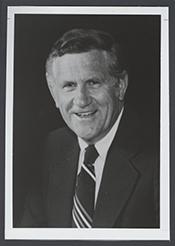
United States · Official source
2,232 records where Rep. Dannemeyer, William E. [R-CA-39] is listed as a sponsor, author, or other actor. Search with topics and years
United States · United States Congress · 31 March 1988
Designates May 1988 as Take Pride in America Month.
United States · United States Congress · 31 March 1988
Declares that all human beings, from the moment of conception and without regard to age, health, or condition of dependency, are persons entitled to the guarantees contained in the fifth, 13th, and 14th amendments to the Constitution. Prohibits abortion.
United States · United States Congress · 31 March 1988
Expresses the sense of the Congress that the Surgeon General should declare that drunk driving is a national crisis.
United States · United States Congress · 30 March 1988
Federal Law Enforcement Officers Death Penalty Act of 1988 - Amends the Federal criminal code to subject any person who is found guilty of the first degree murder of a Federal law enforcement officer, or certain other Federal officials or employees, to the penalty of death. Establishes procedures for the imposition of the death penalty in such cases. Provides that no person who was less than 18 years of age may be sentenced to death. Sets forth mitigating and aggravating factors to be considered by the jury in determining whether the death sentence will be imposed. Requires the Government to serve notice upon the defendant a reasonable time before trial or acceptance of a plea that it intends to seek the death penalty, as well as notice of the aggravating factors upon which it will rely. Provides that no presentence report shall be prepared in such cases. Requires a separate sentencing hearing before a jury or the court (upon motion by the defendant) when the defendant is convicted and the Government has filed notice that it intends to seek the death penalty. Allows the Government and the defendant to present any information relevant to a mitigating or aggravating factor without regard to the rules of evidence, but permits information to be excluded where its probative value is substantially outweighed by the danger of creating unfair prejudice, confusing the issues, or misleading the jury. Conditions imposition of the death penalty on a unanimous finding by the jury or, if there is no jury, the court, that: (1) the aggravating factors found to exist sufficiently outweigh any mitigating factor found to exist; or (2) in the absence of a mitigating factor, the aggravating factors alone are sufficient to justify a sentence of death. Requires the court to instruct the jury not to consider the race, color, national origin, creed, or sex of the defendant in its consideration of the death sentence. Directs the court to impose the death sentence upon a finding that such sentence is justified. Establishes procedures for appeal from a death sentence. Requires the court of appeals, upon consideration of the record and the information and procedures of the sentencing hearing, and any special finding, to affirm the decision if: (1) the sentence was not imposed under influence of passion, prejudice, or arbitrariness; and (2) the information supports the special finding of the existence of an aggravating factor. Requires the court to provide a written explanation of its determination. Establishes procedures for the implementation of the death sentence.
United States · United States Congress · 30 March 1988
Designates the period of April 17 through April 24, 1988, as Jewish Heritage Week.
United States · United States Congress · 29 March 1988
AIDS Assault Act of 1988 - Amends the Federal criminal code to provide criminal penalties for any person who, under certain circumstances, engages in conduct knowing or having reason to believe that such conduct will infect another person with AIDS. Amends the Public Health Service Act to require the Secretary of Health and Human Services to promulgate regulations requiring entities which collect or distribute blood or blood components or derivatives, in order to receive a license under such Act, to permit directed and autologous blood donations.
United States · United States Congress · 24 March 1988
Imposes a civil penalty upon any person who mails to any individual or group of individuals at their place of residence: (1) any unsolicited sexually oriented advertisement; or (2) any unsolicited obscene, lewd, lascivious, indecent, filthy, or vile article, matter, thing, device, or substance.
United States · United States Congress · 24 March 1988
Designates the week of September 25, 1988, as Religious Freedom Week.
United States · United States Congress · 22 March 1988
Family Care Package of 1988 - Amends the Internal Revenue Code to revise the income tax personal exemption deduction, permitting a taxpayer to deduct amounts with respect to qualified dependents, as follows: (1) $5,000 for any child under age six; (2) $4,000 for any child between the ages of six and 19; (3) $5,000 for a person (including a spouse) mentally or physically incapable of self-care; and (4) $4,000 for any person aged 55 or older (including a spouse). Applies the $5,000 amount authorized for a handicapped dependent if a dependent is both handicapped and at least 55 years old. Repeals the dependent care tax credit as of tax year 1989.
United States · United States Congress · 21 March 1988
Amends the Department of Defense Appropriations Act, 1988 to require, as a condition to the appropriation of funds for naval operation and maintenance, that any work under the New Threat Upgrade overhaul program which was assigned by the Navy to be performed by a specified public shipyard as of a specified date shall be contracted for performance by that shipyard.
United States · United States Congress · 16 March 1988
Amends Federal law to direct the President to annually proclaim the first Thursday in May as a National Day of Prayer. (Current law directs the President to set aside and proclaim a suitable day each year, other than a Sunday, for such purpose.)
United States · United States Congress · 16 March 1988
Designates the week beginning January 15, 1989, as National Free Enterprise Week.
United States · United States Congress · 15 March 1988
Trademark Law Revision Act of 1988 - Amends the Lanham Act to permit a person who has a bona fide intention to use a trademark in commerce to apply to register the trademark. (Current law provides only for registration of a trademark already in use in commerce.) Requires that such trademark actually be used in commerce before it becomes a registered trademark. States that an application on an intent-to-use basis constitutes constructive use of the mark which must be resolved either through ultimate registration or other disposition before a later application for the same mark may be registered. Permits concurrent registrations by consent regardless of filing dates. Modifies the time period within which proof of a mark's distinctiveness may be offered. Eliminates the separate register for service marks. Eliminates the separate register for collective and certification marks, permitting the use of the former to indicate that their owners perform the connected service or sell the goods associated with such marks. States that when the first use of a mark is made by a related company (a licensee), then that use will inure to the benefit of the applicant or registrant. Halves the terms of registration and renewal to ten years each. Requires the deletion of marks where in the sixth year of registration their registrant does not file the required affidavit of use. Prohibits the assignment of an intent-to-use application prior to registration unless such application is assigned to the applicant's successor in business. States that a security interest in a mark is obtained only by filing in the Patent and Trademark Office and includes both the mark and the goodwill accompanying the mark. Provides for the examination of applications for registration submitted on the basis of intent-to-use. Sets forth procedures for such applications. Modifies conditions under which a mark becomes subject to cancellation because it has become a generic name. Grants the Trademark Trial and Appeal Board the authority to limit or modify the goods or services identified in a registration or application to avoid the likelihood of confusion and to determine trademark ownership rights when they are at variance with the register. Limits when final judgments may be entered in intent-to-use cases to the time such mark is registered. Eliminates the one year use requirement for applying to register a mark on the supplemental register and states that the use of such register does not constitute an admission that the mark has not acquired secondary meaning. Requires a registrant to prove the likelihood of confusion even when the right to use the mark in question is incontestable. Modifies available remedies. States that injunctive relief is not available in intent-to-use cases. Provides for a cause of action to protect trademarks against disparagement and tarnishment and for relief of a registrant claiming dilution of a famous mark registered on the principal register. Requires applicants for registration of marks in the U.S. based on foreign registration to state a bona fide intention to use such mark in commerce. Modifies definitions under such Act to reflect the creation of the intent-to-use system. Excludes use in commercials and promotion from the definition of use in commerce.
United States · United States Congress · 15 March 1988
National Appliance Energy Conservation Amendments of 1988 - Amends the Energy Policy and Conservation Act to include fluorescent lamp ballasts within the list of products covered by the Act. Directs the Secretary of Energy to prescribe by July 1, 1989, test procedures for such ballasts manufactured on or after January 1, 1990. Directs the Federal Trade Commission to prescribe labeling rules for such ballasts according to specified guidelines. Sets forth energy efficiency standards for such ballasts. Preempts State energy conservation standards for such ballasts unless such standards were prescribed or enacted before the date of enactment of this Act.
United States · United States Congress · 10 March 1988
Nuclear Standardization and Safety Reform Act of 1988 - Title I: Establishment of Agency - Establishes the Nuclear Safety Agency as an independent regulatory agency to succeed the Nuclear Regulatory Commission. Sets forth the Agency's officers and administration (including a Director and Deputy Director to be appointed by the President with the advice and consent of the Senate). Abolishes the Nuclear Regulatory Commission. Transfers Commission functions, assets, and staff to the Nuclear Safety Agency. Sets forth transition procedures. Title II: Standardization and Licensing - Amends the Atomic Energy Act of 1954 to direct the Agency to establish procedures for the preapproval of a limited number of standardized facility designs for production or utilization facilities for a ten-year period. Authorizes the Agency to consider design approval requests for any major subsystem that represents discrete elements of a production or utilization facility. Requires the Agency to specify by regulation the criteria and requirements for any subsystem approval. States that a design approval shall be considered to be a license. Sets forth guidelines for the issuance of a design approval, including ten-year renewal terms. Authorizes the Director to issue a site approval permit for a ten-year period even if an application for a construction permit or operating license has not been filed. Outlines the site approval procedure and the procedures for facility construction permits and operating licenses. Title III: Conforming Amendments - Sets forth conforming amendments. Title IV: Effective Date - Sets forth the effective date of this Act.
United States · United States Congress · 10 March 1988
Requires that, for pre-1980 tax years, the Federal income tax deductibility of flight training expenses be determined without considering whether the taxpayer received reimbursement through veterans' educational programs.
United States · United States Congress · 10 March 1988
Changes the definition of "Vietnam era," for purposes of veterans' benefits, to include, in the case of a veteran who served on active duty in the armed forces in Cambodia, Laos, Thailand, North Vietnam, South Vietnam, or the adjacent waters, the period from March 1, 1961 through August 4, 1964. Amends the Airport and Airway Improvement Act of 1982 to apply such definition to veterans' employment preference.
United States · United States Congress · 9 March 1988
Designates the week of November 6 through November 12, 1988, as National Women Veterans Recognition Week.
United States · United States Congress · 9 March 1988
Designates the month of September 1988 as Partnerships in Education Month.
United States · United States Congress · 1 March 1988
Women in Development Act of 1988 - Requires the Administrator of the Agency for International Development (AID) to take specific steps to strengthen the Agency's women in development policy, including: (1) incorporating the active participation of local women and local women's organizations in its development activities; (2) instructing Agency staff and contractors to collect sex-disaggregated data and to insure that country strategies, projects, and programs are designed so that the percentage of women receiving assistance in proportion to the higher of their traditional participation in the targeted activities or their proportion of the population; (3) insuring that project and program evaluations include an assessment of the extent to which the project integrates women in the development process and of the project's impact on women; (4) increasing the number and responsibility of women in professional positions within AID; and (5) establishing within AID a task force on women in development. Amends the Foreign Assistance Act of 1961 to require that a minimum (currently, maximum) of $10,000,000 in funds made available for foreign assistance programs be used for programs to promote the participation and integration of women in the development process in developing countries. Requires the Administrator to report to the Congress annually on the implementation of this Act. Authorizes appropriations to be made available for the United Nations Development Fund for Women and the United Nations International Research and Training Institute for the Advancement of Women.
United States · United States Congress · 1 March 1988
Calls upon the President to: (1) maintain U.S. military and humanitarian assistance to the Afghan resistance until the Soviet Union withdraws its forces from Afghanistan; and (2) ensure that any political solution to the war in Afghanistan guarantees the self-determination of the Afghan people.
United States · United States Congress · 25 February 1988
Firearms Detection Act of 1988 - Amends the Federal criminal code to prohibit the manufacture or importation of any plastic firearm unless the barrel of such firearm is constructed, in whole or in part, of a metallic substance and is susceptible to being detected by a magnetometer, or: (1) certain identifying information is engraved, cast, or stamped in a metallic substance and is susceptible to being detected by a magnetometer; and (2) the polymer portions of the frame or receiver, barrel, and slide or cylinder have been infused with a compound sufficient to render such firearm capable of being detected by airport security x-ray systems. Defines the term "plastic firearm" to mean a firearm, the frame or receiver, and slide or cylinder of which is constructed entirely of a polymer or ceramic. States that no provision of this Act shall apply to: (1) any firearm manufactured, imported, or possessed prior to the date of enactment of this Act; or (2) conduct by or under the authority of the Federal or State governments. Requires the detection devices at all federally-controlled airport security checkpoints to be set to detect all existing firearms manufactured in, or imported into, the United States. Allows any Federal agency with jurisdiction over security operations to provide security personnel, equipment, and procedures sufficient to ensure the ability to detect all such firearms.
United States · United States Congress · 25 February 1988
Designates the week beginning June 12, 1988, as National Scleroderma Awareness Week.
United States · United States Congress · 24 February 1988
Clean Air Act Amendments of 1988 - Amends the Clean Air Act to require the Administrator of the Environmental Protection Agency (Administrator) to revise attainment dates for areas which failed to attain the national ambient air quality standard for ozone or carbon monoxide by 1988. Requires States with revised attainment dates to conduct an inventory of emissions of each of the air pollutants which contributed to its failure to attain the air quality standard and submit, for the Administrator's approval, a revision of the State implementation plan for each area which failed to attain such standard for ozone or carbon monoxide by 1988. Requires that each implementation plan revision contain a schedule and enforceable measures to ensure that the standard is met before the revised attainment date. Credits States which establish such schedules with emissions inventory reductions which are projected to be achieved through certain existing and proposed air pollution control measures. Prohibits new or modified major stationary sources of air pollutants from receiving an operating permit unless increased emissions from such sources of the pollutants which are subject to this Act are offset by a greater reduction of such emissions from existing units in the area. Requires the size of such reduction to reflect the extent to which the area exceeds the air quality standard for the pollutant. Requires that the revised implementation plan for an area which requires more than ten years to meet standards for ozone and carbon monoxide include: (1) long-term urban planning measures to reduce emissions of the applicable air pollutants; and (2) a schedule for increasing in annual increments the percentage of new motor vehicles registered in the area which are low emission vehicles. Directs the Administrator to modify the revised attainment dates for areas which fail to attain the air quality standard for ozone or carbon monoxide by such revised date. Requires States, as before, to conduct an inventory of the air pollutants which contributed to such failure and submit, for the Administrator's approval, a revision of the State implementation plan for offending areas. Authorizes the Administrator to impose greater emission reduction requirements on existing units, as part of the new stationary unit permit process, and sewer hook-up fees on new facilities in offending areas if the revision of the State implementation plan for such area is not implemented. Directs the Administrator to conduct a study of the extent to which the interstate transport of air pollutants contributes to concentrations of ozone or carbon monoxide in nonattainment areas. Authorizes the Administrator to require any State to revise the implementation plan for an area which contributes significantly to concentrations of ozone or carbon monoxide in any nonattainment area in another State. Directs the Administrator to report to the Congress within three years of this Act's enactment on a study monitoring the formation of ozone and quantifying populations exposed to ozone concentrations which exceed the air quality standard. Requires the manufacturer of each new motor vehicle or engine to warrant to the purchaser that such vehicle or engine is: (1) equipped with emission control components enabling it to conform with emission control regulations at the time of sale; and (2) free from defects in materials and workmanship which cause it to fail to conform with such regulations during the first two years or 24,000 miles, whichever occurs first. Eliminates certain restrictions on the maintenance, replacement, and repair of emission control components. Prohibits States from establishing or enforcing a warranty or prescribed maintenance requirement for new motor vehicles on engines which is not identical to the corresponding Federal warranty or prescribed maintenance requirements. Permits individuals engaged in the automotive business to remove emission control components provided such removal is necessary for routine maintenance of the vehicle. Gives the owner of any motor vehicle or engine the responsibility of replacing and maintaining emission control devices at any facility of his or her choosing, unless such device is covered by a warranty not required by the Clean Air Act. Authorizes manufacturers to condition their emission control warranties on a purchaser's use of parts or services provided without charge pursuant to the purchase agreement.
United States · United States Congress · 24 February 1988
Expresses disapproval of the refusal of the U.S.S.R. to recognize the sovereignty of the Baltic Republics. Designates June 14, 1988, as Baltic Freedom Day. Authorizes and requests the President to submit the issue of the Baltic Republics to the United Nations.
United States · United States Congress · 23 February 1988
Authorizes the Secretary of the Interior, in order to provide for water conservation, to: (1) construct a new lined canal or to line the presently unlined portions of the All-American Canal of the Boulder Canyon Project; and (2) implement measures to replace incidental fish and wildlife values foregone. Provides that the water conserved by the project shall be available for beneficial consumptive use within California as specified in existing water delivery contracts. Entitles participating contractors to a proportionate share of the water conserved. Directs the Secretary to study the impact of the project on the operation and maintenance of the existing All-American Canal and its Coachella Branch and to provide for certain additional costs if necessary. Requires the cost of the project to be paid from funds advanced by the participating contractors and in accordance with terms and conditions acceptable to the Secretary. Provides that title to all constructed facilities shall rest with the United States, subject to disposal by the Secretary at his discretion as permitted under certain existing repayment contracts.
United States · United States Congress · 18 February 1988
Expresses the sense of the Congress that the President should commence negotiations with Mexico to establish, not later than five years after the adoption of this resolution, a free trade area between the United States and Mexico.
United States · United States Congress · 17 February 1988
Designates the week beginning May 15, 1988, as National Rural Health Awareness Week.
United States · United States Congress · 17 February 1988
Designates October 6, 1988, as German-American Day.
United States · United States Congress · 16 February 1988
Amends the Internal Revenue Code to allow an individual taxpayer a refundable income tax credit, in an amount based on adjusted gross income (minimum credit of $150), for each dependent below the age of compulsory school attendance in the State where the taxpayer resides. Sets the maximum credit amount as the total employee tax withheld from the taxpayer's wages during the year under the Federal Insurance Contributions Act. Disallows application of the nonrefundable dependent care income tax credit with respect to a taxpayer's dependents under age 15, unless the child is physically or mentally incapable of self-care.
United States · United States Congress · 8 February 1988
Designates September 16, 1988, as National POW/MIA Recognition Day.
United States · United States Congress · 3 February 1988
Amends the Internal Revenue Code to exempt from the required application of uniform inventory cost capitalization rules any animal produced in a farming business, regardless of the animal's preproductive period.
United States · United States Congress · 3 February 1988
Designates February 16, 1989, as Lithuanian Independence Day.
United States · United States Congress · 2 February 1988
Child Protection and Obscenity Enforcement Act of 1988 - Title I: Child Pornography - Amends the Federal criminal code to make it illegal to use a computer to transport information in interstate or foreign commerce concerning the visual depiction of minors engaging in sexually explicit conduct (child pornography). Establishes criminal penalties for buying, selling, or transferring the custody of a minor: (1) knowing that, as a consequence of the sale or transfer, the minor will be used in child pornography; or (2) with the intent to promote child pornography. States that such sale or transfer must involve: (1) the minor or other actor traveling in interstate or foreign commerce; (2) communications in interstate or foreign commerce; or (3) conduct in a territory or possession of the United States. Requires any person who produces a book, magazine, periodical, film, videotape, or other matter which contains any visual depiction of sexually explicit conduct (which is shipped or intended for shipment in interstate or foreign commerce, or contains material shipped in interstate or foreign commerce) to maintain certain records regarding the performers portrayed in such conduct. Directs the Attorney General to issue regulations regarding the maintenance and availability of such records. Includes the sexual exploitation of children as a predicate offense to the Racketeer Influenced and Corrupt Organizations (RICO) statute. Title II: Obscenity - Makes it a Federal criminal offense to receive or possess, with the intent to distribute, obscene matter which has been transported in interstate or foreign commerce. Makes it a Federal criminal offense to knowingly use a facility or means of commerce to sell or distribute obscene matter in interstate or foreign commerce. Establishes a rebuttable presumption, with respect to Federal criminal offenses involving obscene matter, that obscene matter produced in one State (or outside the United States) which is subsequently located in another State (or in the United States) was transported, shipped, or carried in interstate (or foreign) commerce. Establishes criminal and civil forfeiture procedures with respect to Federal offenses involving obscene material and child pornography. Includes communications by means of cable or subscription television within the prohibition against broadcasting obscene language. Amends the Communications Act of 1934 to modify the penalty provisions of such Act with respect to obscene telephone communications. Amends the Federal criminal code to establish criminal penalties for the possession or sale of obscene matter on Federal property. Adds obscenity offenses to the list of crimes for which the Government may obtain wiretaps.
United States · United States Congress · 2 February 1988
Amends the Toxic Substances Control Act to change to November 1, 1989 (or February 1, 1990, if no regulations have been promulgated by the Administrator of the Environmental Protection Agency) the date by which a local educational agency (LEA) must submit an asbestos management plan developed pursuant to regulations under such Act to the Governor of the State. Changes to August 1, 1990, the date by which each LEA must begin the implementation of such plan. Changes to May 1, 1989, the date by which the LEA must inspect for asbestos-containing material in each school building under its authority. Changes to November 1, 1989, the date by which such LEAs must implement an operation and maintenance plan with respect to friable asbestos-containing material in school buildings. Changes to February 1, 1990, the date by which LEAs must develop an asbestos management plan for submission to the Governor of the State.
United States · United States Congress · 27 January 1988
Designates the week of May 8 through May 14, 1988, as National Osteoporosis Prevention Week of 1988.
United States · United States Congress · 27 January 1988
Designates August 9, 1988, as National Neighborhood Crime Watch Day.
United States · United States Congress · 27 January 1988
Expresses the sense of the House of Representatives that the Congress should freeze the Federal budget for FY 1989. States that discretionary programs in the Federal budget for FY 1989 should be frozen at FY 1988 levels.
United States · United States Congress · 25 January 1988
Designates October 7, 1988, as National Teacher Appreciation Day.
United States · United States Congress · 21 December 1987
Mandates that any new bus acquired after October 1, 1991, for mass transportation operation predominantly in a nonattainment area (as defined under the Clean Air Act for ozone or any mobile-source pollutant) be operated exclusively on alcohol, natural gas, or LP gas. Directs the Secretary of Transportation to provide States with supplemental grants equal to 50 percent of the amount by which bus acquisition costs exceed the acquisition cost of a comparable diesel-fueled bus. Limits the number of buses covered by such grants to 1,000. Authorizes the Secretary to provide States with a supplemental grant for the purchase and installation of facilities to provide alcohol, natural gas, or LP-gas for such bus. Cites circumstances under which the Administrator of the Environmental Protection Agency may delay or suspend implementation of this Act. Authorizes appropriations for fiscal years after FY 1991.
United States · United States Congress · 18 December 1987
Requires the Secretary of Commerce to ensure that during any decennial census: (1) no member of the armed forces, civilian employee of the Department of Defense, or dependent of such member or employee, is excluded based on such member or employee being assigned to a post outside the United States; and (2) any alien not lawfully admitted for permanent residence is not included.
United States · United States Congress · 18 December 1987
Declares that the President should award the Presidential Medal of Freedom to Martha Raye in honor of her service in the form of entertainment and nursing care to members of the U.S. armed forces.
United States · United States Congress · 17 December 1987
Deplores the Soviet Government's active persecution of religious believers in the Ukraine and its forcible liquidation of the Ukrainian Orthodox and Ukrainian Catholic Churches. Sends greetings to the Ukrainian people on the Millennium of Christianity in the Ukraine. Urges the President, the Secretary of State, the U.S. delegation to the United Nations, and the U.S. delegation to the Vienna Review Meeting of the Conference on Security and Cooperation in Europe to continue to speak out forcefully against violations of religious liberty everywhere and, specifically, in the Ukraine. Calls upon the Soviet Government to release all those imprisoned for their religious beliefs. Discourages U.S. officials from attending the commemoration of the Millennium in the Soviet Union so long as individuals remain imprisoned for their religious beliefs and the Ukrainian Catholic and Ukrainian Orthodox churches remain outlawed. Urges the U.S. Government to call on the Soviet Government to ban its prohibition of the Ukrainian Orthodox and Ukrainian Catholic Churches.
United States · United States Congress · 16 December 1987
Criminal Justice Reform Act of 1987 - Title I: Exclusionary Rule - Exclusionary Rule Reform Act of 1987 - Amends the Federal criminal code to provide that evidence obtained by a search or seizure undertaken in an objectively reasonable belief that it was in conformity with the fourth amendment to the U.S. Constitution is admissible. States that evidence obtained pursuant to and within the scope of a warrant constitutes prima facie evidence of such a reasonable belief. States that, except as provided by statute or a rule of procedure prescribed by the Supreme Court pursuant to statutory authority, evidence which is otherwise admissible shall not be excluded on the ground that the evidence was obtained in violation of a law, rule, or regulation. Title II: Habeas Corpus - Reform of Federal Intervention in State Proceedings Act of 1987 - Amends the Federal judicial code to condition consideration of a habeas corpus claim by a prisoner on a showing of actual prejudice resulting from the Federal right violated and that: (1) State or Federal Government action precluded assertion of that right; (2) the Federal right did not previously exist; (3) the factual basis of the claim could not have been discovered by reasonable diligence; or (4) the violation asserted probably resulted in an erroneous conviction, a sentence predicated on an erroneous conviction, or a sentence predicated on an erroneous factual determination. Establishes a one-year statute of limitations for habeas corpus actions brought by State prisoners, and a two-year statute of limitations for similar motions made by Federal prisoners. Vests authority to issue certificates for probable cause for appeal of habeas corpus orders exclusively in the courts of appeals. Permits denial on the merits of habeas corpus writs notwithstanding the failure to exhaust State remedies. Prohibits the granting of a habeas corpus writ with respect to any claim which has been fully and fairly adjudicated in State proceedings. Title III: Capital Punishment - Capital Punishment Procedures Act of 1987 - Amends the Federal criminal code to establish criteria for the imposition of the death penalty for Federal crimes. Requires the Government, for any offense punishable by death, to serve notice upon the defendant a reasonable time before trial or acceptance of a plea, stating that the death penalty is justified and setting forth the aggravating factors upon which it will rely. Requires a separate sentencing hearing before a jury, or the court upon motion by the defendant, when the defendant is found guilty or pleads guilty to an offense punishable by death. Allows the defendant and the Government to present any information relevant to sentencing, without regard to the rules of evidence, but permits evidence to be excluded where its probative value is substantially outweighed by the danger of creating unfair prejudice, confusing the issues, or misleading the jury. Specifies mitigating factors which the defendant must establish by a preponderance of the information and aggravating factors which the Government must prove beyond a reasonable doubt. Sets forth special aggravating factors for espionage, treason, homicide, and the attempted murder of the President. Directs the court, or the jury by unanimous vote, to impose the death penalty upon a finding that such sentence is justified based on consideration of both the aggravating and mitigating factors. States that no person who was under 18 years of age at the time of the offense may be sentenced to death. Requires the court to instruct the jury not to consider the race, color, national origin, creed, or sex of the defendant or victim in its consideration of the sentence. Establishes procedures for appeal from a death sentence. Requires the court of appeals, upon consideration of the record and the information and procedures of the sentencing hearing, to affirm the decision if: (1) the sentence was not imposed under the influence of passion, prejudice, or any other arbitrary factor; and (2) the information supports the finding of aggravating factors. Requires the court to provide a written explanation of its determination. Sets forth procedures for the implementation of the sentence of death. Limits the circumstances under which the offense of delivering defense information to aid foreign governments is punishable by death. Provides for the imposition of the death penalty for: (1) murder committed by prisoners in Federal prisons; (2) kidnappings which result in the death of any person; (3) hostage takings which result in the death of any person; (4) attempting to kill the President of the United States (if such attempt results in bodily injury or comes dangerously close to causing the President's death); (5) "murder for hire"; (6) murder in the aid of a racketeering activity; (7) international terrorism (where the killing is a first degree murder); and (8) engaging in a criminal enterprise activity which results in death. Increases the minimum sentence to life imprisonment for the crime of bank robbery which results in death.
United States · United States Congress · 8 December 1987
Amends the Internal Revenue Code with respect to the targeted jobs income tax credit. Extends the credit to employees who begin work in 1989 through 1991. (Current law terminates the credit for employees who begin work after December 31, 1988.) Includes as a targeted group individuals aged 65 or older who are members of economically disadvantaged families. Revises the minimum employment period requirement for purposes of this credit.
United States · United States Congress · 8 December 1987
Expresses the sense of the Congress that, in celebration of the millennium of the Christianization of Kievan-Rus', the Soviet Union should: (1) comply with its international obligations and allow Christians to practice their faith without harassment; (2) grant a general amnesty for all Christians who have been imprisoned because of their religious beliefs; (3) allow religious believers to practice their faith freely; (4) permit unlimited publication, distribution, and importation of religious materials; and (5) allow closed churches to reopen, new churches to be built, and theological seminaries to open or expand.
United States · United States Congress · 19 November 1987
Amends the Federal judicial code to grant U.S. district courts personal jurisdiction over citizens and subjects of foreign states in actions relating to the purchase or use of a product manufactured outside of the United States (provided such citizen or subject knew or should have known that the product would be imported for sale or use in the United States). Permits removal of such actions (without regard to whether all interested parties were properly joined and served) to an appropriate Federal district court. States that the law of the place of injury shall govern all issues concerning liability and damages in such actions.
United States · United States Congress · 18 November 1987
Dwight David Eisenhower Commemorative Coin Act of 1987 - Directs the Secretary of the Treasury to mint and issue not more than a specified number of one dollar silver coins in commemoration of the 100th anniversary of the birth of Dwight David Eisenhower. Sets forth certain features of such coins and provides for their design, issuance, and sale. Terminates the minting of the coins after December 31, 1990. Requires the Secretary to deposit in the Treasury all surcharges received from the sale of the coins, to be used to reduce the national debt.
United States · United States Congress · 10 November 1987
Authorizes the Vietnam Women's Memorial Project, Inc., to establish a commemorative statue within the Vietnam Veterans Memorial to recognize and honor the women of the U.S. armed forces who served in the Vietnam war. Expresses the sense of the Congress that after the addition of such statue, no further commemorative works should be added to the Memorial. Directs the Secretary of the Interior to select a site for the statue within the Memorial. Makes the design proposal subject to the approval of the Secretary and the National Capital Planning Commission. Prohibits the United States and the District of Columbia from paying any expense of establishing the statue.
United States · United States Congress · 10 November 1987
Expresses the sense of the Congress that the President, the Secretary of State, and the Permanent Representative of the United States to the United Nations should be commended for, and should continue, their efforts to place Cuba on the human rights agenda of the United Nations. Commends specified countries for their votes in favor of considering human rights violations in Cuba. Urges specified countries to reconsider their positions with respect to this issue. Urges the United States to: (1) take the votes into account in determining U.S. bilateral and other assistance to all countries which are members of the United Nations Human Rights Commission; and (2) continue to emphasize how other countries vote on fundamental issues, such as human rights, in determining financial support for the United Nations and for the Commission. Urges the Commission to include among the highest priorities of its human rights agenda at its 44th session in Geneva, Switzerland, in 1988, consideration of human rights violations in Cuba.