Law· HJRESH.J.Res. 200 (98th)enacted
A joint resolution designating March 21, 1984, as "National Single Parent Day".
United States · United States Congress · 15 March 1983
Designates March 21, 1984, as National Single Parent Day.
The world's political record
Person
United States · Official source
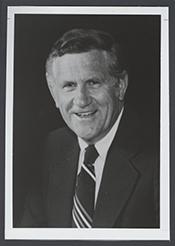
2,232 records where Rep. Dannemeyer, William E. [R-CA-39] is listed as a sponsor, author, or other actor. Search with topics and years
United States · United States Congress · 15 March 1983
Designates March 21, 1984, as National Single Parent Day.
United States · United States Congress · 15 March 1983
Expresses the sense of the Congress that provisions of the Internal Revenue Code requiring cost-of-living adjustments for income tax rates should not be repealed and that the effective date of such provisions should not be postponed.
United States · United States Congress · 14 March 1983
Amends the Internal Revenue Code to allow a refundable income tax credit for expenses incurred in the care of elderly family members. Sets such credit at 30 percent of the expenses incurred for taxpayers with incomes of $10,000 or less. Reduces the rate of such credit, but not below 20 percent, by one percent for each $2,000 of taxpayer income in excess of $10,000. Limits such credit to taxpayers with an adjusted gross income of less than $50,000. Imposes a maximum $7,000 limit on the amount of elderly care expenses that can be taken into account. Defines "qualified family member" as any individual who: (1) is related to the taxpayer by blood or marriage; (2) is at least 75 years of age (or diagnosed with senile dementia); and (3) has a family income of $15,000 or less. Defines "qualified elderly care expenses" as payments for: (1) home health agency services; (2) homemaker services; (3) adult day care; (4) respite care; or (5) certain health care equipment and supplies.
United States · United States Congress · 11 March 1983
Limits the total amount provided in expense resolutions for each House committee for the first session of the 98th Congress to the amount expended by such committee for the second session of the 97th Congress. Limits the amount provided in such expense resolutions for the Select Committee on Children, Youth, and Families to the amount specified in H. Res. 122, 98th Congress.
United States · United States Congress · 9 March 1983
United States Olympic Checkoff Act of 1983 - Amends the Internal Revenue Code to allow taxpayers to designate on their income tax returns a contribution of one dollar of their income tax refunds or any cash amount voluntarily forwarded with their returns to support the U.S. Olympic Trust Fund. Establishes in the Treasury a U.S. Olympic Trust Fund (trust fund). Appropriates to such trust fund an amount equal to the amount designated on tax returns. Directs the Secretary of the Treasury to pay amounts so transferred to the U.S. Olympic Committee. Allows specified administrative expenses to be paid from such trust fund.
United States · United States Congress · 9 March 1983
Establishes a Superfund Commission to examine the Superfund program under the Comprehensive Environmental Response, Compensation, and Liability Act of 1980. Sets a deadline for the Commission's report to the Congress. Terminates the Commission upon submission of its report. Directs the Administrator of the Environmental Protection Agency to make available a specified amount from the Hazardous Substance Response Trust Fund to carry out this Act. Authorizes appropriations for FY 1984 to reimburse such Fund for amounts provided to the Commission.
United States · United States Congress · 9 March 1983
Expresses the sense of the Congress that the national security policy should reflect a national strategy of peace through strength. Sets forth the principles and goals of such a policy.
United States · United States Congress · 8 March 1983
Enterprise Zone Act of 1983 - Title I: Designation of Enterprise Zones - Amends the Internal Revenue Code to provide for the designation of enterprise zones by the Secretary of Housing and Urban Development for purposes of extending the tax incentives and regulatory flexibility measures provided by this Act. Specifies that State and local governments shall nominate areas for such designation. Limits the designation of enterprise zones to 75 nominated areas per year over three years (one third of which such designations shall remain in effect. Specifies that the Secretary may designate such zones only if: (1) the area is within the jurisdiction of the local government; (2) the boundary of the area is continuous; (3) the area has a population of at least 4,000 if any portion thereof is located within a standard metropolitan statistical area (with a population of at least 50,000) or 1,000 otherwise, or is within an Indian reservation; and (4) the area meets specified unemployment and poverty requirements. Requires nominating local governments, as a condition of the Secretary's designation, to agree in writing to follow a course of action which may include reducing tax rates, improving local services, simplifying or streamlining regulation of business, or receiving commitments of private entities to assist employees and residents of the area. Terminates the authority of the Secretary to designate enterprise zones on June 30, 1986, or three years after the publication of regulations pertaining to such zones, whichever is later. Describes areas to which preference shall be given in deciding to designate enterprise zones. Exempts enterprise zones from certain requirements relating to Federal environmental policy. Requires the Secretary to prepare and submit to the Congress every four years a report on the effects of such enterprise zones' designation. Requires that any property tax reduction effected by a local government under the terms of this Act be disregarded for purposes of determining the eligibility of a State or local government for Federal assistance or benefits. States that designation of an enterprise zone shall not give displaced persons from such an area any rights or benefits under the Uniform Relocation Assistance and Real Property Acquisition Policies Act of 1970. Title II: Federal Income Tax Incentives - Subtitle A: Credits for Employers and Employees - Allows employers located in enterprise zones a nonrefundable income tax credit for increased employment expenditures and employment of the disadvantaged. Allows a three year carryback and 15 year carryover of such credit. Sets the amount of such credit at ten percent of the increase in payroll (taking into account a maximum of $15,000 in wages per year per employee) plus 50 percent of the wages paid to certain disadvantaged workers for the first three years of the enterprise zone designation. Phases out such credit in the last three years of the enterprise zone designation. Disallows a deduction for the portion of wages taken into account for such credit. Allows employees located in enterprise zones a nonrefundable income tax credit equal to five percent of qualified wages earned per year (taking into account a maximum of $9,000 in wages per year). Phases out such credit in the last three years of the enterprise zone designation. Subtitle B: Credits for Investment in Tangible Property in Enterprise Zones - Allows businesses an additional investment tax credit for investment in certain tangible property located in enterprise zones. Limits such credit to five percent for zone personal property and ten percent for new zone construction property, including rental property. Requires that the property subject to such credit be predominantly used in the zone, be purchased after zone designation, and not be acquired from relatives or related corporations. Requires the recapture of such credit upon early disposition of the property. Phases out such credit in the last three years of the enterprise zone designation. Subtitle C: Reduction in Capital Gain Tax Rates - Eliminates the capital gains tax on property of corporations acquired after the enterprise zone designation and used in a zone business. Qualifies certain low-income rental housing located in an enterprise zone for such treatment. Permits property to remain qualified for purposes of the revised capital gains treatment after a designation of an enterprise zone has terminated. Exempts gain from the sale or exchange of property used in a business in an enterprise zone from the computation of the minimum tax. Allows noncorporate taxpayers to deduct from gross income 100 percent of any net capital gain from qualified enterprise zone property. Subtitle D: Rules Relating to Industrial Development Bonds - Provides that limitations on the cost recovery deductions for property financed with tax-exempt industrial development bonds shall not apply to enterprise zone property. Provides that the termination of the small issue exemption shall not apply to industrial development bonds the proceeds of which are used to finance facilities in such enterprise zones. Subtitle E: Sense of the Congress with Respect to Tax Simplification - Expresses the sense of the Congress that the Internal Revenue Service should simplify the administration and enforcement of any provision of the Internal Revenue Code affected by this Act. Title III: Regulatory Flexibility - Revises the definition of "small entity" for purposes of the analysis of regulatory functions to include qualified businesses (as defined in Title II of this Act), governments, and nonprofit enterprises operating within enterprise zones. Authorizes Federal agencies, upon the request of a designating government, to waive or modify rules and regulations which pertain to the carrying out of projects or activities within an enterprise zone. Requires agencies to approve such request if the resulting benefits of job creation, community development, or economic revitalization outweigh the public interest in continuing the rule unchanged. Disallows waiver or modification of a rule that would directly violate a statutory requirement (including the Davis-Bacon Act and Fair Labor Standards Act) or which would present a danger to the public health and safety. Provides that such waivers or modifications of a rule shall remain in effect as long as the zone designations remain in effect. Amends the Department of Housing and Urban Development Act to direct the Secretary of Housing and Urban Development to promote the coordination of all enterprise zone programs and consolidate all periodic reports required under such programs into one summary report. Title IV: Establishment of Foreign-Trade Zones in Enterprise Zones - Requires the Foreign-Trade Board to consider on a priority basis, and expedite the processing of, applications for the establishment of foreign-trade zones within enterprise zones. Requires the Secretary of the Treasury to give priority to, and expedite applications for, the establishment of ports of entry necessary to establish such zones. States that to the maximum extent practicable foreign-trade zones should be established within enterprise zones.
United States · United States Congress · 8 March 1983
Tobacco Deregulation Act of 1983 - Amends the Agricultural Act of 1949 and the Agricultural Adjustment Act of 1938 to repeal specified tobacco programs, including: (1) price supports; (2) parity payments; (3) review and adjustment of quotas; and (4) marketing quotas. Amends the Agricultural Trade Development and Assistance Act of 1954 and the Commodity Credit Corporation Charter Act to prohibit agricultural commodity assistance for tobacco. Amends the Agricultural Adjustment Assistance Act to prohibit the Secretary of Agriculture from issuing any tobacco handling orders. Makes such provisions applicable to the 1984 and subsequent tobacco crops. Repeals provisions relating to compacts among States providing for the control or production of, or commerce in, tobacco within such States. Withdraws congressional consent to such compacts.
United States · United States Congress · 8 March 1983
Authorizes and requests the President to designate the week of April 10 through April 16, 1983, as National Mental Health Week.
United States · United States Congress · 3 March 1983
Amends the Internal Revenue Code to allow members of the clergy to deduct expenses related to tax-exempt housing allowances.
United States · United States Congress · 3 March 1983
Authorizes and requests the President to designate the week of October 2, 1983, as National Port Week.
United States · United States Congress · 2 March 1983
Natural Gas Consumer Regulatory Reform Amendments of 1983 - Title I: Purchased Gas Cost - Amends the Natural Gas Policy Act of 1978 to prohibit, until 1986, the guaranteed passthrough to natural gas customers of price increases resulting from an interstate pipeline paying more for its gas, unless the pipeline applies to the Federal Energy Regulatory Commission (FERC) for an increase and such application is approved. Directs the FERC to permit recovery if the costs sought to be recovered were just, reasonable, and prudently incurred. Title II: Removal of Wellhead Price Control and Repeal of Jurisdiction Over Certain First Sales - Provides for the removal of price controls on all first sales of natural gas by January 1, 1986. Repeals FERC jurisdiction over all interstate sales of committed or dedicated natural gas, as of January 1, 1985. Repeals provisions permitting the President or Congress to reimpose price controls. Title III: Transitional Price and Contract Provisions - Sets forth transitional pricing provisions establishing price limits which terminate upon the removal of all price controls. Grants purchasers subject to a take-or-pay contract the right to refuse volumes in excess of 70 percent of available deliverability. Authorizes either party to a contract for the first sale of natural gas which was in effect as of enactment to terminate the contract beginning January 1, 1985, provided the terminating party: (1) gives notice as specified; (2) does not materially breach the contract prior to the end of the notice as specified; and (3) offers the other party a release from all future duties and obligations. Sets forth the obligations of parties upon termination. Provides that no price escalator clause can operate to establish a price for natural gas higher than the gas cap price (a price used in determining maximum price during the transitional period). Title IV: Removal of Impediments to Interstate Movements of Gas - Revises provisions relating to interstate and intrastate sales and transportation to: (1) authorize the FERC to permit any interstate pipeline to transport natural gas on behalf of any person; (2) authorize the FERC to permit any intrastate pipeline or local distribution company to transport natural gas on behalf of any person; and (3) authorize the FERC to permit any pipeline or local distribution company to sell natural gas to any pipeline or local distribution company. Authorizes the FERC to permit any pipeline or local distribution company to assign surplus gas to any other pipeline or distribution company. Provides that interstate pipelines and local distribution companies shall not be subject to FERC jurisdiction on the basis of their buying natural gas in certain "covered transactions." Directs the FERC to order any interstated pipeline, upon application by a producer of natural gas or by a purchaser of natural gas from a producer, to carry gas under contract between producer and purchaser upon such terms and subject to such conditions as it considers just and reasonable if the Commission finds that the pipeline has the available capacity. Provides that the consideration for such carriage shall be five cents per million Btu's plus the cost of such transportation. Title V: Repeal of Certain Restrictions on Natural Gas and Petroleum Use Pricing - Amends the Powerplant and Industrial Fuel Use Act of 1978 to repeal: (1) prohibitions on the use of natural gas and petroleum as a primary energy source in new electric powerplants and new major fuel-burning installations; (2) the prohibition on the construction of new powerplants without alternate fuel capability; (3) the authority of the Secretary of Energy to prohibit the use of natural gas in certain boilers used for space heating; (4) the prohibition on the use of natural gas for decorative outdoor lighting; and (5) the authority of the Secretary to restrict increased uses of petroleum by existing powerplants. Repeals the incremental pricing provisions of the Natural Gas Policy Act of 1978.
United States · United States Congress · 2 March 1983
Administrative Rulemaking Reform Act - Amends the Administrative Procedure Act to revise rulemaking requirements. Exempts from notice and comment requirements: (1) only those matters pertaining to military or foreign affairs functions which are properly classified under executive order to be kept secret in the interest of the national defense or foreign policy; and (2) temporary emergency rules. Eliminates the current exemption for: (1) matters concerning public property, loans, grants, benefits, or contracts; (2) interpretive rules; and (3) general policy statements. Directs a Federal agency to: (1) make a reasonable attempt to notify persons likely to be affected by a proposed rulemaking; and (2) send a notice of a proposed rulemaking to any person requesting it. Requires each rulemaking notice to include: (1) the purpose, projected effective date, and text of the proposed rule; and (2) a list of the studies upon which the agency intends to rely in the rulemaking. Pemits an agency to: (1) invite persons representing different points of view to submit suggestions regarding the content of a proposed rule; or (2) create an advisory committee to report such suggestions. Directs an agency to give interested persons 45 days after notice of a rulemaking to submit written comments on the proposed rule. Permits an agency to extend such period and to hold hearings to receive oral comments. Requires an agency to: (1) implement appropriate procedures to resolve any controversial factual issue which will materially affect the substance of a proposed rule; and (2) state its resolution of such issue not later than the date the final rule is published. Requires each agency to maintain a public file of all relevant material and required statements for each rulemaking as well as the objections to the rule and the reasons for rejecting those objectives. Sets forth the procedure for the promulgation of a rule to replace an emergency rule. Terminates an emergency rule 210 days after it is issued or on the effective date of the rule replacing it, whichever occurs first. Declares that no person shall be required to comply with a rule adopted not in accordance with the Administrative Procedure Act, but permits a person to challenge such rule or raise it as a defense in an agency proceeding or a criminal prosecution. Directs an agency to submit a copy of each rule promulgated, with specified exceptions, to each House of Congress. Declares that the rule shall not become effective if: (1) within 60 days of continuous session of Congress (days) one House adopts a concurrent resolution disapproving the rule and the other House does not disapprove such resolution within 30 days thereafter; or (2) within 60 days a committee of either House has reported or been discharged from consideration of such a resolution and within 90 days both Houses have adopted it. Prohibits an agency from promulgating a new rule identical to one disapproved unless a statute affecting the subject matter of the rule is adopted. Authorizes either House to adopt a resolution directing agency reconsideration of a rule, other than an emergency rule. Declares that a new rule shall not become effective if: (1) within 60 days after it is promulgated a committee of either House has reported or been discharged from consideration of such a resolution; and (2) within 90 days after the rule is promulgated either House has adopted such resolution. Directs an agency to reconsider and repromulgate a revised rule within 60 days after such a resolution is adopted or the rule shall lapse. Requires an agency to repromulgate an existing rule within 180 days after the adoption of a resolution of reconsideration with respect to such rule or the rule shall cease to be effective. Sets forth House and Senate procedures for considering such resolutions of disapproval or reconsideration. Directs a court reviewing an agency rule to set aside any rule found to be unwarranted by material in the rulemaking file.
United States · United States Congress · 2 March 1983
Designates the week of May 29, 1983, as National Tourism Week.
United States · United States Congress · 1 March 1983
Educational Opportunity and Equity Act of 1983 - Amends the Internal Revenue Code to allow an income tax credit for 50 percent of the tuition paid to an elementary or secondary educational institution for any dependents who have not attained the age of 20. Limits such credit to: (1) $100 in 1983; (2) $200 in 1984; and (3) $300 in 1985 and thereafter. Phases out such credit for families with adjusted gross incomes between $40,000 and $60,000 per year. Makes ineligible for such credit families with an adjusted gross income in excess of $60,000 per year. Disallows such credit for tuition paid to schools found to maintain racially discriminatory policies. Requires all educational institutions which receive tuition payments for which such credit is taken to file with the Secretary of the Treasury a statement, subject to the penalties for perjury, declaring that the institution does not follow a racially discriminatory policy. Requires a taxpayer claiming such credit to attach a copy of such statement to the income tax return. Authorizes the Attorney General, upon the filing a petition alleging racial discrimination, to bring an action for declaratory judgment against an educational institution to determine whether the institution has followed a racially discriminatory policy.
United States · United States Congress · 28 February 1983
Designates the square dance as the national folk dance of the United States.
United States · United States Congress · 24 February 1983
American Eagle Gold Coin Act of 1983 - Directs the Secretary of the Treasury to mint gold coins to be referred to as "American Eagles." Sets forth the specifications for two types of such gold coins. Declares that coins minted under this Act shall not be legal tender for public debts, public charges, taxes, duties or dues, but may be used for the payment of private debts. Sets forth the dates by which the Secretary shall begin delivery of such coins. Sets forth the formula by which the Secretary shall determine the daily price of such coins. Declares that the Secretary shall charge no seigniorage in excess of the gold bullion value except to the extent necessary to cover the expenses for production of such coins. Permits the exchange of gold bullion for such American Eagle coins. Permits the Secretary to prescribe necessary regulations. Declares that the gold coins be subject to taxation in the same manner as other currency of the United States.
United States · United States Congress · 23 February 1983
Increases from 26 to 30 the number of members of the Advisory Commission on Intergovernmental Relations, by adding: (1) one elected officer of a local government of an area with a population of less than 10,000 and one elected school board member, to be appointed by the President; and (2) one judge of a U.S. court of appeals or district court and one chief justice or judge of a State court of last resort, to be appointed by the Chief Justice of the United States.
United States · United States Congress · 23 February 1983
Amends the Federal Power Act to exempt conduit hydroelectric facilities from the requirements for the development of water power and resources under such Act. Permits the operator of such a facility to apply for a license under such Act for the exempt facility.
United States · United States Congress · 22 February 1983
Directs the President to designate March 18, 1983, as National Energy Education Day.
United States · United States Congress · 17 February 1983
Designates the week beginning February 20, 1983, as Clergy Appreciation Week.
United States · United States Congress · 15 February 1983
Natural Gas Import Policy Act of 1983 - Suspends an order issued under the Natural Gas Act authorizing the importation of natural gas unless: (1) the price and terms of the applicable import contract have been renegotiated to be responsive to current market prices and demand; and (2) the renegotiated contract and tariff adjustments have been filed with the Secretary of Energy and the Federal Energy Regulatory Commission (FERC). Provides that in the case of any terminal or attendant facility located in the United States and constructed for the importation of Algerian natural gas (the authority for which is suspended by this Act), FERC shall permit recovery of the costs prudently incurred in connection with the construction of such facility to the same extent and in the same manner as if such facility were used and useful for the importation and transportation of natural gas (without regard to the suspension under this Act of importation authority). Prohibits FERC from permitting any rate of return on such costs. Includes "liquefied natural gas" within the term "natural gas" for purposes of this Act.
United States · United States Congress · 15 February 1983
Amends the Federal Reserve Act to require the Board of Governors of the Federal Reserve System to transmit to the Congress a monetary early warning report within seven days after the Federal Open Market Committee takes any action which will change existing trend rates of growth of the monetary aggregates. Specifies the contents of such report. Requires revised reports 30 days and 90 days thereafter.
United States · United States Congress · 10 February 1983
Amends the Automobile Dealers Day in Court Act to prohibit a manufacturer from selling, leasing, or offering to sell or lease any passenger car, truck, or stationwagon to any person (or any other dealer) at a price lower than the price at which the same model is sold to its franchised dealers. Prohibits a manufacturer from imposing restrictions on some purchasers of automobiles, but not others. Requires that all rebates, discounts, refunds or other promotional inducement or benefit be provided to all ultimate purchasers of the same model of motor vehicle during the same period of time. Establishes an exception to the Act for the sale of automobiles to Federal, State or local governmental units. Applies this Act to importers of covered motor vehicles who import directly or through distributorships. Allows an automobile dealer to recover reasonable attorneys fees resulting from an action under this Act. Limits standing for a cause of action for termination of an agreement under this Act to dealers who comply with all reasonable provisions of the franchise agreement in question.
United States · United States Congress · 8 February 1983
Amends the Internal Revenue Code to make permanent the deduction for charitable contributions by taxpayers who do not itemize deductions.
United States · United States Congress · 7 February 1983
Expresses the sense of Congress that the Railroad Retirement Board and representatives of railroad employees and carriers should jointly or independently study methods of financing the railroad retirement program, including a ton-mile tax. Requires a report to Congress by March 30, 1983, on the alternatives studied.
United States · United States Congress · 3 February 1983
Constitutional Amendment - Prohibits a law varying the compensation of Members of Congress from taking effect until after an election of Representatives.
United States · United States Congress · 2 February 1983
Grants a Federal charter to the Catholic War Veterans of the United States of America, Incorporated.
United States · United States Congress · 2 February 1983
Residential Mortgage Pension Investment Act of 1983 - Amends the Employee Retirement Income Security Act of 1974 and the Internal Revenue Code to exempt from specified prohibited transaction provisions any qualified mortgage transaction engaged in by an employee benefit plan, provided such transaction is at "arm's length" (i.e. if the terms of the transaction are at least as favorable to the plan as those of similar transactions involving unrelated parties).
United States · United States Congress · 2 February 1983
Authorizes the President to present, on behalf of the Congress, to Mrs. Paul W. Bryant, a gold medal in recognition of the late Paul W. "Bear" Bryant.
United States · United States Congress · 2 February 1983
Amends rule XLIX of the Rules of the House of Representatives to require a two-thirds vote on legislation that increases the statutory limit on the public debt.
United States · United States Congress · 31 January 1983
Constitutional Amendment - Establishes a Commission to fix the annual rate of pay for Members of Congress on July 1 of each even-numbered year to take effect on the 3rd of January of the next calendar year.
United States · United States Congress · 27 January 1983
Authorizes the Secretary of the Army to sell to any State or State-authorized entity ammunition for military weapons for use for avalanche-control purposes.
United States · United States Congress · 27 January 1983
Designates September 21, 1983, as National Historically Black Colleges Day.
United States · United States Congress · 27 January 1983
Urges the United States Postal Service to issue a postage stamp commemorating members of the uniformed services who have been prisoners of war or missing in action especially those missing as a result of the conflict in Southeast Asia.
United States · United States Congress · 26 January 1983
Confers U.S. citizenship on Corporal Wladyslaw Staniszewski, posthumously.
United States · United States Congress · 26 January 1983
Amends title II (Old Age, Survivors and Disability Insurance) of the Social Security Act to prohibit entitlement to title II benefits in the case of an individual who is not a U. S. citizen or national if such individual: (1) is not a permanent resident of the United States; or (2) is outside the United States. Prohibits the payment of title II benefits to any dependent or survivor of such an individual on the basis of such individual's wages and self-employment income. Makes such prohibition inapplicable if the benefit involved is payable to such an individual as the dependent or survivor of: (1) a U. S. citizen or national; (2) a permanent resident of the United States; or (3) a U. S. citizen or national residing outside the United States if the relationship required for such individual's entitlement already existed at the time such national or citizen reached age 50. Authorizes the payment of title II benefits to an individual who is not entitled to benefits pursuant to this Act until the total amount of such benefits equals the total amount of any taxes paid on the wages and self-employment income on which the benefits are based.
United States · United States Congress · 26 January 1983
Authorizes and requests the President to designate the week beginning March 11, 1984, as National Surveyors Week.
United States · United States Congress · 26 January 1983
Constitutional Amendment - Declares that nothing in the Constitution shall be construed to prohibit prayer in public schools or institutions. States that no person shall be required by the United States or any State to participate in prayer.
United States · United States Congress · 26 January 1983
Designates September 22, 1983, as American Businesswomen's Day.
United States · United States Congress · 25 January 1983
Directs the Comptroller General to audit, each fiscal year, the Federal Reserve Board, the Federal Advisory Council, the Federal Open Market Committee, and all Federal Reserve banks and their branches. Requires the Comptroller General, within six months after the end of each fiscal year, to report to Congress on the results of such audit.
United States · United States Congress · 25 January 1983
Declares it to be the policy of the Government that: (1) Federal procurement should be accomplished on a competitive basis wherever possible through the General Services Administration (GSA); (2) the use of multiple award schedules should be restricted to cases where competitive single awards are not feasible, sales volume justifies centralized procurement, and a valid need exists for functionally similar items with different prices and features; and (3) where the volume of products purchased is too low to provide a price advantage and commercial "off-the-shelf" products can be substituted for products designed to Government specifications, individual agencies should purchase items locally subject to review by GSA. Directs the Administrator of GSA to implement such policy, the recommendations on procurement contained in the Comptroller General's report of May 2, 1979, and the policy statement prepared by the Office of Acquisition Policy in response to such report. Directs the Administrator, within 60 days after enactment, to issue transitional regulations governing purchases from any multiple award schedule. Requires that such regulations: (1) include the requirement that whenever any agency procurement officer or employee determines that an item in such a schedule is available from a commercial source in the area at a lower cost and under conditions which are no less favorable to the Government than is the case under the schedule, the item shall be purchased from that source; and (2) establish procedures for the audit and review of any such purchase and the enforcement of such regulations by GSA. Repeals such regulations on the effective date of the regulations which are issued to implement the procurement policy declared by this Act and which apply to any item on a multiple award schedule. Requires the Administrator to submit to Congress periodic reports on actions taken, and legislation needed, to carry out this Act.
United States · United States Congress · 6 January 1983
Prohibits Federal involvement in the performance of abortions, except when the life of the mother would be endangered if the child were carried to term. Includes the following activities within the scope of this prohibition: (1) performance of an abortion by a Federal agency; (2) use of appropriated funds to perform or reimburse or refer for abortions; (3) promotion or assistance in the performance of abortions abroad; (4) contracting for insurance which pays or reimburses for abortions; (5) discrimination against an individual on the basis of that person's opposition to abortions; and (6) the withholding from a handicapped infant of nutritional sustenance, medical or surgical treatment by an institution receiving Federal assistance. Provides for expedited Supreme Court review of State laws restricting abortions or infanticide whenever such laws have been invalidated by a lower court.
United States · United States Congress · 6 January 1983
Congressional Pay Reform Act - Amends the Legislative Reorganization Act of 1946 and the Federal Salary Act of 1967 to specify that pay adjustments for Members of Congress shall become effective on the March 1 following the beginning of the next Congress after the Congress during which such adjustment is approved. Conditions such adjustment on the adoption of a concurrent resolution by each House of Congress. Requires a recorded vote on such resolution to reflect the vote of each Member. Prohibits any congressional employee from being paid at a rate exceeding the rate payable for Senators and Members of the House of Representatives. Requires the President to transmit to the Congress, within a specified time period, recommendations for rates of pay of Members of Congress, legislative, and judicial employees. Prohibits the House of Representatives and the Senate from considering any bill or joint resolution carrying an appropriation for compensation of Members of Congress for any fiscal year if such bill or joint resolution carries an appropriation or a limitation on appropriations for any other purpose.
United States · United States Congress · 6 January 1983
Amends the Internal Revenue Code to permit States and local governments to provide statements of tax refunds, credits, and offsets to individuals at any time during the calendar year for which such governments make a return, but not later than January 31 of the year following the year of the return. (Current law requires such statements to be furnished in January of the year following the year of the return.) Eliminates the requirement to furnish such statements with respect to any refunds, credits, or offsets made before January 1, 1983.
United States · United States Congress · 6 January 1983
Amends the Tax Equity and Fiscal Responsibility Act of 1982 to repeal the provisions which require the withholding of tax on interest and dividends.
United States · United States Congress · 6 January 1983
Authorizes and requests the President to designate the week beginning on November 20, 1983, as National Family Week.
United States · United States Congress · 6 January 1983
Expresses the sense of the House of Representatives that Presidential Proclamation 4771, dated July 2, 1980, is valid, remains in effect, and that therefore it remains the duty of young men to register with the Selective Service System in accordance with the Military Selective Service Act.
United States · United States Congress · 6 January 1983
Declares that it is the sense of the Congress that the Budget Committee of the House consider in detail the option of a freeze on Federal spending at FY 1983 levels in developing concurrent budget resolutions for FY 1984, 1985, and 1986.