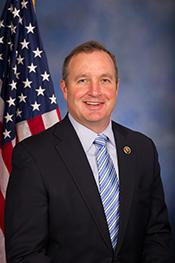
United States · United States Congress · 18 September 2015
Amends the Illegal Immigration Reform and Immigrant Responsibility Act of 1996 to prohibit an alien who is not in a lawful immigration status from being eligible for any postsecondary education benefit unless every citizen and national of this country is eligible to receive that benefit in no less of an amount, duration, or scope. (This replaces a prohibition against a state's offering such aliens postsecondary benefits on the basis of their residence in the state that are more generous than those offered citizens or naturals of this country without regard to their state residence.) Allows any citizen or national who is enrolled at a postsecondary educational institution that is alleged to have violated that prohibition to bring a civil action against any state official overseeing the institution to obtain appropriate relief, attorneys' fees, and court costs.
United States · United States Congress · 17 September 2015
No Exemptions for EPA Act of 2015 This bill removes the government's discretionary function exemption from tort claims in connection with a response under the Comprehensive Environmental Response, Compensation, and Liability Act (CERCLA), thereby allowing claims against the Environmental Protection Agency for damages caused by its response at a hazardous waste cleanup site under CERCLA.
United States · United States Congress · 16 September 2015
Social Security Beneficiary 2nd Amendment Rights Protection Act This bill amends titles II (Old Age, Survivors and Disability Insurance) (OASDI) and XVI (Supplemental Security Income) (SSI) of the Social Security Act to prohibit any determination by the Commissioner of Social Security with respect to an individual, including one that OASDI and SSI benefits to which that individual is entitled shall be paid to a representative payee, from being considered to be a determination that the individual has been adjudicated as a mental defective to make it unlawful for the individual to engage in the shipment or transport of firearms or ammunition or receive any firearm or ammunition which has been shipped or transported in interstate or foreign commerce.
United States · United States Congress · 11 September 2015
Impeaches Regina McCarthy, Administrator of the Environmental Protection Agency (EPA), for high crimes and misdemeanors regarding testimony on the EPA's Clean Water Rule defining "waters of the United States." Sets forth the articles of impeachment.
United States · United States Congress · 10 September 2015
Adjusting Davis-Bacon for Inflation Act Increases from $2,000 to $50,000 the contract threshold requiring the locally prevailing wage rate to be paid to various classes of laborers and mechanics working under federally-financed or federally-assisted contracts for construction, alteration, and repair of public buildings or public works (Davis-Bacon Act).
United States · United States Congress · 9 September 2015
Declares that: the atrocities committed against Christians and other ethnic and religious minorities targeted specifically for religious reasons are crimes against humanity and genocide; each of the Contracting Parties to the United Nations Convention on the Prevention and Punishment of the Crime of Genocide and other international agreements forbidding war crimes and crimes against humanity, particularly the governments of countries and their nationals who are in any way supporting these crimes, are reminded of their legal obligations under the Convention and these international agreements; the United Nations (U.N.) and the Secretary-General are called upon to assert leadership by calling the atrocities war crimes, crimes against humanity, and genocide; the member states of the U.N., with an appeal to the Arab States that wish to uphold religious freedom and justice, should collaborate on measures to prevent further war crimes, crimes against humanity, and genocide, and collaborate on the establishment of tribunals to punish those responsible for the ongoing crimes; the governments of the Kurdistan Region of Iraq, the Hashemite Kingdom of Jordan, the Lebanese Republic, and other countries are commended for having undertaken to shelter and protect those fleeing extremist violence; and those who force the migration of religious communities from their ancestral homelands, including specifically the Nineveh Plain and Mount Sinjar, should be prosecuted in accordance with the laws of the place where their crimes were committed and under applicable international criminal statutes and conventions.
United States · United States Congress · 9 September 2015
Justice for Victims of Iranian Terrorism Act This bill prohibits the President from waiving, suspending, reducing, providing relief from, or otherwise limiting the application of sanctions against Iran under any provision of law, or refraining from applying sanctions pursuant to requirements under the Atomic Energy Act of 1954 (as amended by the Iran Nuclear Agreement Review Act of 2015) for any nuclear agreement with Iran, until the President has certified to Congress that Iran has paid each judgment: that was brought against it, or against it and any other country; for which Iran was not immune from the jurisdiction of U.S. courts under specified terrorism exceptions to immunity under the judicial code; and that was entered during the period March 4, 2000-May 22, 2015.
United States · United States Congress · 8 September 2015
States that: the Iran Nuclear Agreement Review Act of 2015, commonly referred to as the Corker-Cardin bill, does not apply to the Joint Comprehensive Plan of Action (JCPOA) regarding Iran because the JCPOA is fundamentally different from the agreement as represented to Congress by the Administration and the Corker-Cardin bill is only applicable to an agreement that is not a treaty; Article II of the U.S. Constitution declares that the President shall have power, by and with the advice and consent of the Senate, to make treaties, but only if two-thirds of the Senators present concur; the JCPOA is a treaty and, pursuant to Article II, the Senate must give its advice and consent to ratification if the JCPOA is to be effective and binding upon the United States; and not later than 30 days after the date of the adoption of this resolution, the Senate should schedule and consider a resolution of ratification with respect to the JCPOA.
United States · United States Congress · 4 August 2015
States that Congress does not favor the nuclear agreement with Iran (Joint Comprehensive Plan of Action) transmitted by the President to Congress on July 19, 2015, for purposes of prohibiting the taking of any action involving statutory sanctions relief by the United States pursuant to such agreement.
United States · United States Congress · 31 July 2015
Protecting American Lives Act This bill amends the Illegal Immigration Reform and Immigrant Responsibility Act of 1996 to declare that a person or agency shall not prohibit or restrict a federal, state, or local government entity from undertaking any of the following law enforcement activities (current law refers to information activities) regarding an individual's immigration status: notifying the federal government regarding the presence of inadmissible and deportable aliens who are encountered by law enforcement personnel of a state or political subdivision of a state (political subdivision), or complying with federal law enforcement information requests. A federal, state, or local government entity or official shall not issue ordinances, administrative actions, general or special orders, or departmental policies that violate federal law or restrict a state or political subdivision from complying with federal law or coordinating with federal law enforcement. A state or political subdivision that has in effect a statute, policy, or practice that prohibits state or local law enforcement officers from assisting or cooperating with federal immigration law enforcement in the course of carrying out the officers' routine law enforcement duties shall not be eligible to receive: (1) funds for the incarceration of undocumented criminal aliens or for the Cops on the Beat program, or (2) any other law enforcement or Department of Homeland Security (DHS) grant. States or political subdivisions not in compliance shall: (1) be ineligible to receive such assistance for at least one year, and (2) become eligible for such assistance only after DHS certifies that the jurisdiction is in compliance. Withheld funds shall be reallocated to complying states or political subdivisions. States and political subdivisions shall provide DHS with identifying information regarding each incarcerated alien who is believed to be inadmissible or deportable. Nothing in this Act shall require state or local law enforcement officials to: (1) provide DHS with information related to a victim of a crime or witness to a criminal offense, or (2) otherwise report or arrest such a victim or witness. A state or a political subdivision acting in compliance with a DHS detainer that temporarily holds aliens in its custody so that they may be taken into federal custody, or transports the aliens for transfer to federal custody, shall be considered to be acting under color of federal authority for purposes of determining its liability, and immunity from suit in civil actions brought by the aliens under federal or state law. It is the sense of Congress that DHS has probable cause to believe that an alien is inadmissible or deportable when it issues a detainer regarding the alien under the standards in place on the date of introduction of this Act. The Immigration and Nationality Act is amended to increase mandatory minimum sentences for the illegal re-entry of an alien who: (1) was previously denied admission, excluded, deported, or removed; or (2) was removed for certain criminal convictions or excluded for security-related grounds.
United States · United States Congress · 29 July 2015
Childhood Cancer Survivorship, Treatment, Access, and Research Act of 2015 or the Childhood Cancer STAR Act This bill amends the Public Health Service Act to permit the National Institutes of Health (NIH) to provide support to collect the medical specimens and information of children, adolescents, and young adults with cancer to improve the understanding of these cancers and of the effects of treatment. The national childhood cancer registry is reauthorized through FY2020 and revised to require the Centers for Disease Control and Prevention to award grants to states to improve tracking of childhood cancers. This bill amends the Federal Food, Drug, and Cosmetic Act to require manufacturers and distributors of investigational drugs to publish policies for compassionate use of the drugs. The Department of Health and Human Services must: (1) support pilot programs to develop or study models for monitoring and caring for childhood cancer survivors throughout their lives, (2) convene a Workforce Development Collaborative on Medical and Psychosocial Care for Pediatric Cancer Survivors, (3) establish a task force on standards for high-quality childhood cancer survivorship care, and (4) carry out a demonstration project to improve care coordination as childhood cancer survivors transition to adult care. The NIH must support research on: (1) outcomes for, and barriers faced by, pediatric cancer survivors within minority or medically underserved populations; and (2) follow-up care for pediatric cancer survivors, including research on the late effects of cancer treatment and long-term complications. The Government Accountability Office must make recommendations to address barriers to childhood cancer survivors obtaining and paying for adequate medical care.
United States · United States Congress · 29 July 2015
Prohibiting the Life-Ending Industry of Fetal Organ Exchange Act or the Pro-LIFE Act This bill amends the Public Health Service Act to prohibit the transfer of fetal tissue in exchange for valuable consideration, including payments associated with the transportation, implantation, processing, preservation, quality control, or storage of human fetal tissue.
United States · United States Congress · 29 July 2015
Dental and Optometric Care Access Act or the DOC Access Act This bill amends the Public Health Service Act to prohibit group health plans and individual health insurance coverage from setting rates for items and services provided by a doctor of optometry, of dental surgery, or of dental medicine for which the plan or insurer does not pay a substantial amount. An agreement between a plan or insurer and such a doctor: (1) may only be changed with the doctor's acknowledgement and acceptance, and (2) may not last longer than two years if the agreement is for limited scope dental or vision benefits. Such a doctor must be allowed to participate in a: (1) plan or coverage without accepting terms for ancillary services or procedures, and (2) provider network without participating in a specific limited scope dental or vision benefit plan. Plans and insurers may not: (1) directly communicate with an enrolled individual in a manner that interferes with an existing doctor-patient relationship or a state or federal requirement, or (2) restrict such a doctor's choice of laboratories or suppliers. The bill establishes a private right of action for a person adversely affected by a violation of this Act.
United States · United States Congress · 29 July 2015
Academic Partnerships Lead Us to Success or the A PLUS Act This bill allows each state to receive federal elementary and secondary education funds on a consolidated basis and manage the funds to advance the educational policy of the state. States must submit to the Department of Education a declaration of intent no less than every five years. Each declaration must be formulated by a combination of specified state officials or by referendum and must list the programs for which consolidated funding is requested. States may use such funds for any educational purpose permitted by state law, but must make certain assurances that they will use fiscal control and fund accounting procedures, abide by federal civil rights laws, advance educational opportunities for the disadvantaged, and use federal funds to supplement rather than supplant state funding. Each declaration state shall: (1) inform the public about its student achievement assessment system; (2) report annually on student progress toward the state's proficiency standards by specified student groups; and (3) provide for the equitable participation of private school children and teachers in the same manner as provided for under current law.
United States · United States Congress · 29 July 2015
Resettlement Accountability National Security Act of 2015 This bill prohibits the admission of refugees into the United States until Congress passes a joint resolution giving the Department of Homeland Security authority to resume admitting refugees. Requires the Government Accountability Office to report to Congress on refugees who received benefits under any of the following programs: Medicare, Medicaid, disability insurance under title II of the Social Security Act, the supplemental nutrition assistance program (SNAP, formerly the food stamp program), and section 8 rental assistance.
United States · United States Congress · 29 July 2015
Restore the Oath of Allegiance Act This bill requires that the naturalization oath of allegiance be the same formulation, subject to the same potential omissions or alterations, as the formulation of the oath administered on July 20, 2015.
United States · United States Congress · 29 July 2015
Preserving Public Access to Public Waters Act This bill directs the Department of the Interior and the Department of Commerce to obtain approval from the relevant fish and wildlife management agency of a state or territory before restricting fishing access to state or territorial marine waters that are within the jurisdiction of the National Park Service or the Office of National Marine Sanctuaries, including coastal waters and estuaries.
United States · United States Congress · 29 July 2015
Expresses the sense of the House of Representatives that: (1) H.R. 3590 of the 111th Congress, the Service Members Home Ownership Tax Act of 2009, as passed by the House, was not a "bill for raising revenue" within the meaning of Article I, Section 7 of the Constitution; (2) H.R. 3590, the Patient Protection and Affordable Care Act (PPACA), as passed by the Senate, was a "bill for raising revenue"; and (3) PPACA was not within the power of the Senate to "propose or concur with Amendments as on other Bills" within the meaning of Article I, Section 7, clause 2 of the Constitution.
United States · United States Congress · 28 July 2015
Government Refusal of Abortion in Contracting and Enterprise or the GRACE Act This bill prohibits a federal entity from entering into a contract with a person or entity that donates or matches employee donations to Planned Parenthood Federation of America, Inc., or any of its affiliates or clinics. This prohibition applies to contracts entered into after the enactment of this Act and to subcontracts (at any tier) awarded under such contracts.
United States · United States Congress · 27 July 2015
Employee Rights Act Amends the National Labor Relations Act (NLRA) to make it an unlawful labor practice for a labor organization or its agents to interfere with the rights of employees to organize and select representation to collectively bargain. Adds a requirement that representatives be selected by secret ballot in an election conducted by the National Labor Relations Board (NLRB) by a majority of the employees in a unit. Defines "majority" for purposes of determining the majority of employees in an election to mean the majority of all employees in the unit, and not the majority of employees voting in the election. Requires the NLRB, in cases where an existing certified or voluntarily recognized bargaining unit experiences turnover, expansion, or alteration by merger of more than 50% of the unit's employees, to conduct a secret paper ballot among the unit employees: (1) between the 120th day and 110th day before the collective bargaining agreement's expiration or before the end of three years, if there is an agreement between the labor organization and the employer; or (2) within 30 days, if there is no agreement between such parties. Requires the NLRB to decide, before the election of a labor organization as the exclusive collective bargaining representative of all employees of an appropriate unit, whether such unit shall be the employer unit, craft unit, plant unit, or subdivision unit. Requires the NLRB to give 14 days advance notice before a hearing when it is investigating an election petition if it has reasonable cause to believe that a question of representation affecting commerce exists. Revises the requirement that the NLRB direct an election by secret ballot, and certify its results, whenever it finds upon the record of such a hearing that a question of representation exists. Adds a requirement that the NLRB also review all post-hearing appeals before finding that such a question exists. Requires an employer to provide the NLRB a list consisting only of employee names and home addresses of all eligible voters within 7 days after an NLRB determination of the appropriate unit or following any agreement between the employer and the labor organization regarding eligible voters. Prohibits an election after the filing of a petition unless and until: (1) a hearing is conducted before a qualified hearing officer on any and all material, factual issues regarding jurisdiction, statutory coverage, appropriate unit, unit inclusion or exclusion, or eligibility of individuals; and (2) the issues are resolved by a regional Director, subject to appeal and review, or by the NLRB. Declares that election results shall not be final nor any labor organization be certified as a bargaining representative unless the NLRB has ruled on: (1) each pre-election issue not resolved before the election; and (2) the NLRB conducts a hearing and resolves each issue pertaining to the conduct or results of the election. Makes any labor organization found to have interfered with, restrained, or coerced employees in the exercise of their rights to form or join a labor organization or to refrain from forming or joining (including the filing of a decertification petition) liable for lost wages and unlawfully collected union dues and fees, if any, and an additional amount as liquated damages. Amends the Labor-Management Reporting and Disclosure Act of 1959 (Landrum-Griffin Act) to permit an election by secret ballot to be conducted through votes cast by electronic ballot cast in the privacy of a voting booth. Requires every employee in a bargaining unit represented by a labor organization, regardless of membership status, to have the same right as members to vote by secret ballot to ratify a collective bargaining agreement with, or to engage in, a strike or refusal to work of any kind against their employer. Prohibits the use of an employee's union dues for any purpose not directly related to the labor organization's collective bargaining, unless that employee authorizes such expenditure in writing. Prohibits a strike without the consent of a majority of all unit employees affected, determined by a secret ballot vote conducted by a neutral, private organization chosen by agreement between the employer and the labor organization. Requires each labor organization to make the independently verified annual audit report of its financial condition and operations available to all of its members and represented nonmembers. Makes it unlawful for a person to use force or violence, or threaten the use of force or violence, to restrain, coerce, or intimidate a person, or attempt to, in order to obtain from any person any right to represent employees, compensation, or other term or condition of employment. Subjects persons who willfully violate such prohibitions to both civil and criminal penalties.
United States · United States Congress · 27 July 2015
Expresses the sense of the House of Representatives that: (1) the July 16, 2015, attack upon members of the Armed Forces at the Navy Operational Support Center and Marine Corps Reserve Center and the Armed Forces Career Center in Chattanooga, Tennessee, meets the criteria for the award of the Purple Heart, and (2) the Secretary of the Navy should award the Purple Heart to the members of the Marine Corps and Navy who were killed or wounded in the attack.
United States · United States Congress · 27 July 2015
This bill amends title XVIII (Medicare) of the Social Security Act to prohibit the application of Medicare competitive acquisition rates to complex rehabilitative wheelchairs and accessories. (A competitive bidding program has replaced the use of established fee schedule amounts to determine payments under Medicare for certain durable medical equipment such as wheelchairs.)
United States · United States Congress · 23 July 2015
Sportsmen's Conservation and Outdoor Recreation Enhancement Act This bill reauthorizes several programs supporting the conservation of wildlife habitat. The bill amends the Federal Land Transaction Facilitation Act by extending until July 25, 2022, the Department of the Interior's authority to sell certain public land and use the proceeds from those sales for acquiring land located within or adjacent to federal lands. When prioritizing the acquisition of inholdings (private land that is surrounded by public land) and nonfederal lands with exceptional resources, Interior and the Department of Agriculture (USDA) must consider the extent to which an acquisition of land would increase the public availability of resources for, and the public's access to, hunting, fishing, and other recreational activities. The bill also removes from the scope of the Act land that is eligible for sale under specified public land laws. The bill reauthorizes through FY2020 the North American Wetlands Conservation Act and the Partners for Fish and Wildlife Act. The bill reauthorizes through FY2020 and revises the National Fish and Wildlife Foundation Establishment Act and the Neotropical Migratory Bird Conservation Act. Interior and USDA must ensure that specified amounts from the Land and Water Conservation Fund are made available each year for securing public access to federal land for hunting, fishing, and other recreational purposes through land transactions.
United States · United States Congress · 23 July 2015
Protecting Life and Taxpayers Act of 2015 This bill prohibits federal funding of an entity unless the entity certifies that, during the period of funding, the entity will not perform, and will not provide funds to any other entity that performs, an abortion, except in cases of rape or incest or where a physical condition endangers the woman's life unless an abortion is performed. This applies to a hospital only if the hospital funds a non-hospital entity that performs abortions.
United States · United States Congress · 23 July 2015
This bill prohibits action involving any measure of statutory sanctions relief by the United States unless the Senate provides its advice and consent to ratification of the Joint Comprehensive Plan of Action (JCPA) under article II, section 2 of the U.S. Constitution. (The JCPA is the agreement signed at Vienna July 14, 2015, by Iran, China, France, Germany, the Russian Federation, the United Kingdom, and the United States, with the High Representative of the European Union for Foreign Affairs and Security Policy, and all related implementing materials and agreements.)
United States · United States Congress · 21 July 2015
Defund Planned Parenthood Act of 2015 This bill prohibits, for a one-year period, the availability of federal funds for any purpose to Planned Parenthood Federation of America, Inc., or any of its affiliates or clinics, unless they certify that the affiliates and clinics will not perform, and will not provide any funds to any other entity that performs, an abortion during such period. The restriction will not apply in cases of rape or incest or where a physical condition endangers a woman's life unless an abortion is performed. The Department of Health and Human Services and the Department of Agriculture must seek repayment of federal assistance received by Planned Parenthood Federation of America, Inc., or any affiliate or clinic, if it violates the terms of the certification required by this Act.
United States · United States Congress · 21 July 2015
This bill prohibits the Social Security Administration from providing to the National Instant Criminal Background Check System (NICS) the name of any individual entitled to benefits, including any individual whose benefits are paid to a representative payee, unless a federal court has determined the individual to be mentally defective. (Current law prohibits the sale or transfer of a firearm to and the purchase or possession of a firearm by a person who has been adjudicated as a mental defective or committed to a mental institution.)
United States · United States Congress · 21 July 2015
Farmers Undertake Environmental Land Stewardship Act or the FUELS Act This bill directs the Environmental Protection Agency (EPA) to ease the application of the Spill Prevention, Control, and Countermeasure (SPCC) rule on certain farms. The rule requires certain non-transportation-related facilities to prevent, prepare, and respond to oil discharges that may reach navigable waters or adjoining shorelines. Among other requirements, the rule requires those facilities to: (1) certify compliance with their SPCC plans; and (2) based on the plan, construct containment facilities that would hold the contents of aboveground oil storage tanks if they should spill. The bill increases the oil storage thresholds that necessitate compliance with those requirements by raising the aggregate aboveground oil storage capacity thresholds for: (1) farms required to have an SPCC plan, (2) farms that self-certify their SPCC plan, and (3) farms that require a certification of their SPCC plan from a professional engineer. The bill also raises the aboveground oil storage capacity of containers that must be included in calculating the aggregate aboveground storage capacity.
United States · United States Congress · 20 July 2015
Enhancing Safety at Military Installations Act This bill directs the Department of Defense (DOD) to issue a new directive authorizing trained military personnel to carry military-issued firearms on military bases and Armed Forces recruitment facilities. Army Regulation 190-14, entitled "Carrying of Firearms and Use of Force for Law Enforcement and Security Duties," and DOD Directive Number 5210.56, entitled "Use of Deadly Force and the Carrying of Firearms by DOD Personnel Engaged in Law Enforcement and Security Duties" are repealed. Any provision in any other law, rule, regulation, or executive order that prohibits trained military personnel from carrying officially issued firearms on military bases and Armed Forces recruitment facilities shall have no force or effect. Trained military personnel shall not be prohibited from carrying officially issued firearms on military bases or Armed Forces recruitment facilities.
United States · United States Congress · 20 July 2015
This bill repeals the Consumer Financial Protection Act of 2010, which established the Consumer Financial Protection Bureau. The bill revives or restores the provisions of law amended by such Act as if it had not been enacted.
United States · United States Congress · 16 July 2015
Gulf States Red Snapper Management Authority Act This bill amends the Magnuson-Stevens Fishery Conservation and Management Act to direct the Department of Commerce to establish a Gulf States Red Snapper Management Authority (GSRSMA) that consists of the principal fisheries manager of each of the five Gulf of Mexico coastal states: Alabama, Florida, Louisiana, Mississippi, and Texas. The GSRSMA must: establish a deadline for each Gulf coastal state to submit to the GSRSMA a fishery management plan for the long-term sustainability of Gulf of Mexico red snapper, review those plans and approve them if they meet the requirements of this bill, provide standards for each Gulf coastal state to use in developing fishery management measures to sustainably manage the Gulf of Mexico red snapper in the coastal waters adjacent to the state, and provide an opportunity for public participation before approving a plan. For three years, Commerce must continue to manage the commercial sector of the Gulf of Mexico red snapper fishery in coordination with the Gulf of Mexico Fishery Management Council. The bill establishes a plan certification process. After the three-year period and once a plan is certified, Commerce must transfer management of the Gulf of Mexico red snapper to the GSRSMA. Each Gulf coastal state must then implement and enforce approved plans for the fishery in the coastal waters adjacent to it. If the Gulf of Mexico red snapper in the coastal waters adjacent to a Gulf coastal state is experiencing overfishing or is subject to a rebuilding plan, the state must certify to the GSRSMA that it has implemented the necessary measures to end overfishing or rebuild the fishery and has implemented a harvest monitoring program. A process is established for closing a red snapper fishery within the waters adjacent to the state territorial waters of the Gulf coastal state if those measures have not been implemented. Commerce must provide all federal funding to the Gulf States Marine Fisheries Commission for all necessary stock assessments, research, and management for the red snapper fishery. The Commission shall be responsible for administering federal funds to each of the Gulf coastal states for management of the fishery.
United States · United States Congress · 16 July 2015
National Disaster Tax Relief Act of 2015 Amends the Internal Revenue Code to provide tax relief for disasters declared in 2012, 2013, 2014, and 2015 by: allowing an election to expense qualified disaster expenses (i.e., for the abatement of hazardous substances, removal of debris, demolition, and repair of business-related property); increasing the tax deduction for charitable contributions for disaster relief for individual and corporate taxpayers; allowing through 2015 the deduction of losses and net operating losses attributable to disasters; allowing waivers of requirements relating to mortgage revenue bonds; extending through 2015 the additional allowance for depreciation of business property (bonus depreciation); allowing an increase through 2015 of the new markets tax credit limitation amount within a federally-declared disaster area; permitting the use of tax-exempt retirement plan funds in federally-declared disasters without penalty; allowing an additional tax exemption for individuals who are displaced as a result of a federally-declared disaster; allowing an exclusion from gross income of imputed income from the cancellation of indebtedness resulting from federally-declared disasters; providing a special rule to allow individuals affected by a disaster in 2012, 2013, 2014, or 2015 to claim a full earned income tax credit; increasing the rehabilitation tax credit for buildings affected by a federally-declared disaster; permitting one additional advance refunding of a tax-exempt bond that is outstanding on the date on which a federally-declared disaster occurs; allowing the issuance of qualified disaster area recovery bonds; allowing an additional allocation of the low-income housing tax credit in 2016 to states affected by a federally-declared disaster occurring in 2012, 2013, 2014, or 2015; allowing payments of disaster assistance to tax-exempt mutual ditch or irrigation companies without affecting their tax-exempt status; allowing an exclusion from gross income for disaster mitigation payments received from state and local governments; allowing a tax deduction for payments to a tax-exempt natural disaster fund; allowing a five-year replacement period for property located in a disaster area for purposes of the exclusion of gain from an involuntary conversion; allowing employers a business-related tax credit for up to 40% of wages paid to employees in a disaster area; and allowing an enhanced tax deduction for medical expenses related to an injury occurring in a disaster area.
United States · United States Congress · 16 July 2015
Commemorative Coins Reform Act of 2015 This bill prohibits surcharges generated by the sale of any numismatic item or commemorative coin program from being paid to a non-federal organization, except with respect to sales and production costs. Surcharges must be used to recover all numismatic operation and program costs allocable to the program under which a numismatic item is produced and sold. Any excess surcharges must be transferred to the general fund of the Treasury for deficit reduction purposes.
United States · United States Congress · 16 July 2015
Expresses disapproval of the Joint Comprehensive Plan of Action agreed to by the P5+1 and Iran on July 14, 2015. Reaffirms the commitment of the House of Representatives to: (1) prevent Iran from ever acquiring a nuclear weapons capability, and (2) encourage global stability and security by strongly supporting strategic regional allies.
United States · United States Congress · 14 July 2015
This bill amends the federal judicial code to prohibit federal courts from deciding any issue on the authority of foreign law, except to the extent that the Constitution or an Act of Congress requires the consideration of that foreign law.
United States · United States Congress · 14 July 2015
It is the sense of Congress that: (1) the U.S. government should officially recognize Jerusalem as the capital of Israel, and (2) the U.S. embassy in Israel should be located in Jerusalem.
United States · United States Congress · 9 July 2015
Merchant Marine of World War II Congressional Gold Medal Act This bill requires the Speaker of the House of Representatives and the President pro tempore of the Senate to arrange for the award, on behalf of Congress, of a single gold medal to the U.S. Merchant Marine of World War II, in recognition of their dedicated and vital service during World War II.
United States · United States Congress · 9 July 2015
Medical Controlled Substances Transportation Act of 2015 This bill amends the Controlled Substances Act to allow a physician to transport controlled substances to another practice setting or disaster area if the physician is registered to dispense, or conduct research with, controlled substances listed on schedules II, III, IV, or V, and the physician enters into a specific agreement with the Drug Enforcement Administration (DEA). The agreement must require a physician to provide advance notification to the DEA, limit the duration of transport to 72 hours, and maintain records of the controlled substances dispensed. A “disaster area” is the area covered by a President's major disaster declaration.
United States · United States Congress · 9 July 2015
Urges the U.S. government to work with European governments and European law enforcement agencies encouraging them to: partner with, share information, and train Jewish community groups to strengthen preparedness and response to anti-Semitic attacks; consider formal partnerships in the United States, United Kingdom, and France between government entities and Jewish community security groups as examples of such partnering; support assessments of the environments of hate crimes and anti-Semitism, including analysis of crimes and law enforcement and community response, and cooperation between European governments and intergovernmental and interorganizational entities; help Jewish communities develop safety standards; implement a standardized pan-European information-sharing and alerting system among governments, inter-governmental agencies, and Jewish communities; ensure that law enforcement personnel are trained to monitor, prevent, and respond to anti-Semitic violence, and that senior officials with commensurate authority and resources have been appointed to combat anti-Semitism; and work with law enforcement associations and other relevant professional entities to combat anti-Semitism. Supports the mandate of the United States Special Envoy to Monitor and Combat Anti-Semitism as part of the broader policy priority of fostering international religious freedom. Urges the Department of State to continue U.S. reporting on anti-Semitism by the Department and the Special Envoy to Combat and Monitor Anti-Semitism.
United States · United States Congress · 9 July 2015
Mobilizing Against Sanctuary Cities Act Prohibits a state or local government from receiving federal financial assistance for a minimum of one year if it restricts or prohibits a government entity or official from: (1) sending to or receiving from the responsible federal immigration agency information regarding an individual's citizenship or immigration status, or (2) maintaining or exchanging information about an individual's status. Restores assistance eligibility upon a Department of Justice (DOJ) determination that the jurisdiction no longer restricts or prohibits such actions. Directs DOJ to report each year to Congress regarding state or local jurisdictions that restrict or prohibit such actions.
United States · United States Congress · 9 July 2015
E nforce the Law for Sanctuary Cities Act Amends the Immigration and Nationality Act to make a state or local subdivision ineligible for state criminal alien assistance program funding if it: (1) has in effect any law, policy, or procedure prohibiting or restricting communication with the Immigration and Naturalization Service or other government entity regarding an individual's citizenship or immigration status; or (2) prohibits state or local law enforcement officials from gathering information regarding an individual's citizenship or immigration status. Withholds specified Department of Justice funds under parts Q and E of title I of the Omnibus Crime Control and Safe Streets Act of 1968 from such states or local subdivisions.
United States · United States Congress · 8 July 2015
Clear Law Enforcement for Criminal Alien Removal Act of 2015 or the CLEAR Act of 2015 States that: (1) state and local law enforcement personnel, in the course of their routine duties, have the inherent authority to investigate, apprehend, or transfer to federal custody aliens in the United States (including interstate transportation of such aliens to detention centers) in order to assist in the enforcement of U.S. immigration laws; and (2) effective two years after enactment of this Act, a state that has in effect a statute, policy, or practice prohibiting such law enforcement assistance shall not receive certain federal incarceration assistance. Provides for the listing of immigration violators in the National Crime Information Center database. Directs states and localities to provide the Department of Homeland Security (DHS) with specified information about apprehended aliens who are believed to be in violation of U.S. immigration laws. Provides federal reimbursement for related state and local costs. (States that such provision shall not require state or local enforcement officials to provide DHS with information related to a victim of a crime or witness to a criminal offense.) Directs DHS to make grants to states and political subdivisions that enforce immigration laws in the course of their routine law enforcement duties for special equipment and facilities related to arresting, detaining, or transporting illegal aliens. Directs DHS to: (1) construct or acquire 20 additional detention facilities for aliens detained pending removal (or a decision on removal), and (2) consider the transfer of military installations under base closure laws for such purposes. Amends the Immigration and Nationality Act regarding illegal aliens apprehended by state or local authorities to provide for: (1) federal custody upon state or local request, and (2) state or local compensation for related incarceration and transportation costs. Directs the Department of Justice or DHS to ensure that the detention of an alien subject to removal is in an adequate state or local prison, detention center, or other comparable facility prior to his or her removal examination. Directs DHS to establish immigration-related training for state and local personnel. Provides: (1) personal liability immunity to the same extent as corresponding federal immunity for state or local personnel enforcing immigration laws within the scope of their duties under this Act, and (2) civil rights money damage immunity for state or local agencies enforcing immigration laws unless their personnel violated criminal law in such enforcement. Continues the institutional removal program, which shall be expanded to all states. Authorizes state or local detention of an illegal alien after completion of such alien's prison sentence for: (1) up to 14 days to facilitate federal transfer, or (2) until transfer to U.S. Immigration and Customs Enforcement. Authorizes appropriations for FY2016 and subsequent fiscal years for the state criminal alien assistance program.
United States · United States Congress · 7 July 2015
Supports the right of the people of Ukraine to freely elect their government and determine their future. Urges the Administration to expedite assistance to Ukraine to facilitate the political, economic, and social reforms necessary for elections that meet international standards. Condemns outside attempts, including by the government of Russia, its agents or supporters, to interfere in Ukraine's elections.
United States · United States Congress · 7 July 2015
Nullifies the rule submitted by the U.S. Army Corps of Engineers and the Environmental Protection Agency relating to the definition of "waters of the United States" under the Clean Water Act and published on June 29, 2015.
United States · United States Congress · 25 June 2015
Taking Account of Institutions with Low Operation Risk Act of 2015 or the TAILOR Act of 2015 This bill directs the Office of the Comptroller of the Currency, the Board of Governors of the Federal Reserve System, the Federal Deposit Insurance Corporation, the National Credit Union Administration, and the Consumer Financial Protection Bureau (federal financial institutions regulatory agencies) to: take into consideration the risk profile and business models of institutions subject to regulatory action; determine the necessity, appropriateness, and impact of applying that action to such institutions; and tailor regulatory action so as to limit the burden of regulatory compliance as befits the risk profile and business model involved. The federal financial institutions regulatory agencies shall also consider: the impact that such regulatory action has upon the ability of the institution to flexibly serve evolving and diverse customer needs, the potential unintended impact of examination manuals or other regulatory directives that work in conflict with the tailoring of such regulatory action, and the underlying policy objectives of the regulatory action and statutory scheme involved. In addition, a federal financial institutions regulatory agency must disclose in every notice of a proposed and final rulemaking for a regulatory action how it has applied this Act. The Financial Institutions Examination Council shall report to Congress on the extent to which regulatory actions tailored pursuant to this Act result in differential regulation of similarly-situated institutions of diverse charter types with respect to comparable regulations. The agencies must also apply the requirements of this Act to all regulations adopted five years before the introduction of this Act and ending on the date of its enactment.
United States · United States Congress · 25 June 2015
Condemns the practice of state-sanctioned forced organ harvesting in China. Calls on China and the Communist Party of China to end the practice of organ harvesting from prisoners of conscience. Encourages the U.S. medical community to help raise awareness of unethical organ transplant practices in China. Demands an end to the persecution of the Falun Gong spiritual practice and the release of all Falun Gong practitioners and other prisoners of conscience. Calls on the Department of State to: (1) conduct a more detailed analysis on state-sanctioned organ harvesting from non-consenting prisoners of conscience in the annual Human Rights Report, and (2) report annually to Congress on implementation of the immigration provision prohibiting visas to Chinese and other nationals engaged in coerced organ or bodily tissue transplantation.
United States · United States Congress · 25 June 2015
Condemns: (1) the Assad regime for its atrocities against the Syrian people, including its weaponized use of chlorine; and (2) the use of any toxic chemical, including chlorine, as a weapon in Syria. Maintains that: (1) those who have engaged in such unlawful actions should be held accountable by the international community and urges the President to report to Congress on the use of chemical weapons, including chlorine, in Syria; and (2) no party in Syria should use, develop, acquire, or transfer chemical weapons, including weapons employing chlorine. Calls on the Administration to: (1) continue offering material support to programs and individuals collecting evidence of the use of chemical weapons inside of Syria, and (2) facilitate the future transfer of such evidence for use in prosecuting those responsible. Urges the international community to establish a comprehensive strategy regarding Syria which may include establishing a no-fly zone in Syria.
United States · United States Congress · 25 June 2015
Centennial Monetary Commission Act of 2015 This bill establishes the Centennial Monetary Commission to: (1) examine how U.S. monetary policy since the creation of the Federal Reserve Board in 1913 has affected the performance of the U.S. economy in terms of output, employment, prices, and financial stability over time; (2) evaluate various operational regimes under which the Board and the Federal Open Market Committee may conduct monetary policy in terms achieving the maximum sustainable level of output and employment and price stability over the long term; and (3) recommend a course for U.S. monetary policy going forward. The Commission shall evaluate as a tool of monetary policy: (1) macro-prudential supervision and regulation, and (2) the lender-of-last-resort function of the Board.
United States · United States Congress · 25 June 2015
Stop Catch and Release Act of 2015 This legislation amends the Immigration and Nationality Act to require mandatory detention of any alien who is unlawfully present in the United States and arrested for inadmissible or deportable crimes. The bill transfers release authority from the Department of Justice to the Department of Homeland Security (DHS). DHS may release the alien to an appropriate authority for proceedings related to the arrest, but DHS must resume custody for any period that the alien is not in custody of the appropriate authority. If the alien is not convicted of crimes for which the alien was arrested, then DHS must continue to detain the alien until removal proceedings are completed. DHS must complete the removal proceedings within 90 days.
United States · United States Congress · 25 June 2015
SCOTUScare Act of 2015 This bill amends the Patient Protection and Affordable Care Act (PPACA) to limit the health plans the federal government may make available to Supreme Court Justices and Supreme Court employees to those that are created under PPACA or offered through a health insurance exchange.