Resolution· HCONRESH.Con.Res. 288 (111th)referred
Supporting National Men's Health Week.
United States · United States Congress · 14 June 2010
Expresses support for the annual National Men's Health Week.
The world's political record
Person
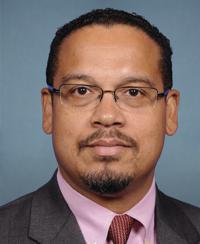
United States · Official source
3,969 records where Rep. Ellison, Keith [D-MN-5] is listed as a sponsor, author, or other actor. Search with topics and years
United States · United States Congress · 14 June 2010
Expresses support for the annual National Men's Health Week.
United States · United States Congress · 10 June 2010
Improving Nutrition for America's Children Act - Amends the Richard B. Russell National School Lunch Act and the Child Nutrition Act of 1966 to revise the school lunch and breakfast programs, the summer food service program, the child and adult care food program (CACFP), and the special supplemental nutrition program for women, infants, and children (WIC program). Reauthorizes appropriations for such programs through FY2015. Includes among such revisions: (1) encouraging the direct certification of children who receive other public assistance as eligible for free meals under the school lunch and breakfast programs; (2) establishing new mechanisms by which schools or local educational agencies (LEAs) with very high proportions of low-income children can receive federal reimbursement for free or reduced price meals under such programs without collecting individual paper applications from households; (3) establishing a program awarding competitive grants to states and, through them, competitive subgrants to LEAs to establish or expand the school breakfast program at low-income schools; (4) expanding the access of low-income rural areas to the summer food service program; (5) requiring updates to meal patterns and nutrition standards for the school lunch and breakfast programs based on recommendations made by the Food and Nutrition Board of the National Research Council of the National Academy of Sciences (NAS); (6) requiring the establishment of science-based nutrition standards for all foods sold in schools outside the school lunch and breakfast programs; (7) requiring LEAs participating in the school lunch and breakfast programs to establish local school wellness policies for their schools that include goals for nutrition promotion and education, physical activity and education, and other school-based activities that promote student wellness; (8) requiring reimbursable meals and snacks provided under the CACFP to meet the most recent Dietary Guidelines for Americans and certain authoritative scientific recommendations; (9) encouraging WIC program participants to breastfeed; and (10) requiring WIC electronic benefit transfer (EBT) systems to be implemented nationwide by October 1, 2020.
United States · United States Congress · 8 June 2010
Urges the government of the Republic of Rwanda and President Paul Kagame to release Professor Peter Erlinder from jail and allow him to return to the United States.
United States · United States Congress · 28 May 2010
National Farm-to-School Act of 2010 - Expresses the sense of Congress regarding the benefits of farm-to-school programs and the federal role in furthering such programs. Amends the Richard B. Russell National School Lunch Act to require the Secretary of Agriculture to provide competitive matching grants and technical assistance to schools, local educational agencies (LEAs), institutions of higher education, and certain governmental and nongovernmental entities to implement or expand farm-to-school programs. Authorizes such grants to come in the form of implementation grants, training and technical assistance grants, or planning grants. Defines farm-to-school programs as those that connect schools and small- and medium-sized agricultural operations to: (1) serve locally produced, healthy foods in school cafeterias; (2) improve student nutrition; (3) provide agriculture, health, and nutrition education opportunities to students; and (4) support local and regional agriculture and the growth of rural communities. Directs the Secretary to prepare, and provide Congress with, a list identifying all the programs of the Department of Agriculture (USDA) that with little or no modification can be used to facilitate the participation of small- and medium-sized agricultural operations in farm-to-school programs. Declares that the value-added agricultural product market development grant program may be accessed by small- and medium-sized agricultural operations and their associations to support farm-to-school programs. Directs the Secretary, through the USDA Economic Research Service, to conduct a nationwide assessment of, and report to Congress on, the economic impact of farm-to-school programs on small- and medium-sized agricultural operations and rural communities. Requires the Secretary to establish an Internet-based forum for sharing and exchanging information on farm-to-school programs nationwide.
United States · United States Congress · 28 May 2010
Congratulates Principal Tim King and all of the students, teachers, administrators, and support personnel at Urban Prep Charter Academy for Young Men--Englewood Campus (Chicago, Illinois) for achieving a 100% college acceptance rate for its first graduating class of 2010.
United States · United States Congress · 28 May 2010
Amends Rule XI (Procedures of Committees and Unfinished Business) of the Rules of the House of Representatives regarding public disclosure by the Committee on Standards of Official Conduct of written reports and findings of the board of the Office of Congressional Ethics. Prohibits the Committee from making a public statement if the board transmits a report on a matter recommending its dismissal or that it is unresolved due to a tie vote. States that if the Committee establishes an investigative subcommittee respecting such matter, the board's report and findings shall not be made public until the Committee has taken its final vote on the subcommittee's conclusions. Requires: (1) the subcommittee to conclude its review within one year after the board transmits a report respecting any matter; and (2) the Committee to make public the report and findings upon conclusion of review of the matter if misconduct is found. Prohibits release of any report, however, if dismissal is recommended or if the matter is unresolved due to a tie vote. States that if, after receipt of a written report and any findings and supporting documentation regarding a referral from the board, or of a referral of the matter from the board to the Committee at the Committee's request, the Committee agrees to a request from an appropriate law enforcement or regulatory authority to defer taking action on the matter, then the Committee shall make no public disclosure unless and until it has acted on the matter. Provides that if a report regarding a board's referral is deemed frivolous by an affirmative vote of a majority of the members of the Committee, it may take such action as it, by such vote, considers appropriate in the circumstances. Revises procedures by which all board members, upon the request of two members, shall undertake a preliminary review of any alleged violation by a Member, officer, or employee of the House of any law, rule, regulation, or other standard of conduct. Requires the board's receipt of a sworn complaint from a citizen asserting personal knowledge of such alleged violation before commencement of such review. Requires the Office to seal all of its records respecting a matter immediately if the Committee: (1) votes to dismiss any matter as frivolous or unfounded that is referred from the board; and (2) orders the records sealed. Directs the board to amend its rules to define the standard of proof required to: (1) undertake a preliminary review; (2) commence a second-phase review of any matter under consideration; and (3) refer any matter to the Committee.
United States · United States Congress · 28 May 2010
Congratulates the Convention on International Trade in Endangered Species of Wild Fauna and Flora on its 35th anniversary. Recognizes the important contributions the Convention has made in regulating international trade in endangered species and protecting such species worldwide. Recognizes the increasing importance of the Convention in addressing multiple and compounding threats on species and ecosystems arising from over-exploitation, habitat loss, invasive species, disease, and the effects of climate change. Applauds the Convention's recent leadership in reaffirming strong protections for the African elephant, and other endangered species. Urges: (1) renewed, expanded, and accelerated commitments to the Convention by all Parties to ensure the Convention's contribution to species conservation; (2) the U.S. delegation to the Convention to utilize international cooperation to encourage other Parties to the Convention to collaborate effectively to curb excessive exploitation of species for international trade; and (3) the Convention to adopt stronger protections for the polar bear, sharks, bluefin tuna, and other endangered species at the 16th meeting of the Conference of the Parties in 2013.
United States · United States Congress · 27 May 2010
Obstetric Fistula Prevention, Treatment, Hope, and Dignity Restoration Act of 2010 - Authorizes the President to provide assistance, including through international organizations, national governments, and international and local nongovernmental organizations, to: (1) address the social and health issues that lead to obstetric fistula; and (2) support treatment of obstetric fistula. Provides that such assistance shall promote the coordination facilitated by the International Obstetric Fistula Working Group.
United States · United States Congress · 27 May 2010
Puppy Uniform Protection and Safety Act - Amends the Animal Welfare Act to define a "high volume retail breeder" as a person who, in commerce, for compensation or profit: (1) has an ownership interest in or custody of one or more breeding female dogs; and (2) sells, via any means of conveyance, more than 50 of the offspring of such dogs for use as pets in any one-year period. Considers such a breeder of dogs to be a dealer. Requires dealers to include on licensing applications and annual renewals the total number of dogs exempted from exercise on the premises of the dealer in the preceding year by a licensed veterinarian. Requires the Secretary of Agriculture to promulgate requirements for the exercise of dogs at facilities owned or operated by a dealer, including requiring daily access to exercise that: (1) allows the dogs to move sufficiently in a way that is not forced, repetitive, or restrictive; and (2) is in an area that is spacious, cleaned at least once a day, free of infestation by pests or vermin, and designed to prevent the dogs from escaping. Allows an exemption if: (1) a licensed veterinarian determines that a dog should not exercise because of the health, condition, or well-being of the dog; and (2) such determination is reviewed and updated at least once every 30 days by the veterinarian, unless the basis for the determination is a permanent condition. Subjects such a determination to review and approval by the Secretary.
United States · United States Congress · 26 May 2010
Recognizes the 50th anniversary of the National Council for International Visitors and its efforts to promote excellence in citizen diplomacy. Commends the achievements of the thousands of citizen diplomats who have worked for generations to share the best of the United States with foreign leaders, specialists, and scholars. Supports the designation of Citizen Diplomacy Day.
United States · United States Congress · 25 May 2010
Debt Settlement Consumer Protection Act of 2010 - Amends the Consumer Credit Protection Act to prohibit debt settlement providers from providing a debt settlement service or receiving a fee from a consumer without a signed written contract meeting specified requirements. Prohibits debt settlement providers from engaging in certain acts or practices, including: (1) making loans or offering credit or soliciting or accepting any note, mortgage, or negotiable instrument other than a check signed by the consumer and dated no later than the date of signature; (2) taking a confession of judgment or power of attorney to confess judgment against the consumer or appearing as the consumer or on the consumer's behalf in any judicial or non-judicial proceedings; (3) taking any release or waiver of an obligation to be performed on the part of the debt settlement provider or any right of the consumer; (4) receiving any third-party compensation for providing the consumer with a debt settlement service; or (5) purchasing debts or engaging in debt collection. Permits debt settlement providers to charge enrollment and settlement fees, but no others. Requires a debt settlement provider who receives funds from a consumer to hold them for a consumer settlement account in a properly designated trust account in a federally insured depository institution not affiliated with the provider. Permits a consumer to cancel a contract with a debt settlement provider at any time, in accordance with specified requirements and procedures. Declares void and unenforceable: (1) a consumer's waiver of any consumer protection or right provided under this Act; and (2) any contract for a debt settlement service that does not comply with this Act. Prohibits a debt settlement provider from engaging in certain advertising, marketing, or other communication practices except in accordance with specified requirements. Authorizes the Federal Trade Commission (FTC) to prescribe rules governing advertising and marketing practices, record retention, and provision of accountings to consumers, as well as debt relief service rules. Subjects a debt settlement provider to civil liability (including punitive damages) for noncompliance with this Act. Empowers the FTC to enforce this Act. Authorizes a state to bring a civil action in federal court on behalf of its residents for noncompliance with this Act.
United States · United States Congress · 25 May 2010
Veteran Employment Transition Act of 2010 - Amends the Internal Revenue Code to revise the definition of "qualified veteran" for purposes of the work opportunity tax credit to mean recently discharged veterans and disadvantaged veterans. Defines "recently discharged veteran" to mean: (1) any individual who has served on active duty (other than active duty for training) in the Armed Forces for more than 180 total days (whether consecutive or not); (2) any individual who has been discharged or released from active duty for a service-connected disability; and (3) any member of the National Guard who has served for more than 180 total days (whether consecutive or not) in active duty, full-time National Guard duty, or duty in state status. Defines "disadvantaged veteran" as any veteran who is certified as being a member of a family receiving assistance under a supplemental nutrition assistance program and is entitled to compensation for a service-connected disability. Requires the Department of Defense (DOD) and the National Guard to inform military personnel who are discharged or released from active duty of the work opportunity tax credit and provide them with documentation relating to eligibility for and use of such credit.
United States · United States Congress · 25 May 2010
Expresses the sense of the House of Representatives regarding FY2011-FY2012 appropriation amounts for Job Corps, AmeriCorps, and the Peace Corps.
United States · United States Congress · 20 May 2010
War is Making You Poor Act - Limits amounts made available to the Department of Defense (DOD) in any appropriations Act for fiscal year 2011 that may be available for the base budget or for overseas contingency operations in Iraq, Afghanistan, or Pakistan. Amends the Internal Revenue Code to allow individual taxpayers whose modified adjusted gross income is $35,000 or less ($70,000 for married couples) a tax credit (designated as the War is Making You Poor Tax Credit) equal to their net income tax liability for the first taxable year beginning in 2011.
United States · United States Congress · 20 May 2010
Responsible GSE Affordable Housing Investment Act of 2010 - Amends the Federal Housing Enterprises Financial Safety and Soundness Act of 1992 to revise requirements for determination of compliance with the multifamily special affordable housing goal. Requires the Director of the Federal Housing Finance Agency to establish standards for the multifamily special affordable housing goal that proportionately reduce the number of units receiving credit for any mortgage purchase by the Federal Home Loan Mortgage Corporation (Freddie Mac) or the Federal Home Loan Mortgage Association (Fannie Mae) (government-sponsored enterprises or GSEs) that facilitates the conversion of dwelling units available at rental rates affordable to low-income families to dwelling units such families could not afford. Requires such standards to provide no credit toward achievement of the goal for any mortgage purchase for multifamily housing that involves an aggregate amount of project debt that is not reasonable. Requires the Director to require the GSE to apply this same standard to any mortgages backing any GSE-purchased security to determine whether the units financed by such mortgages are eligible for credit toward achievement of the housing goal.
United States · United States Congress · 19 May 2010
Honors the accomplishments and legacy of Norman Yoshio Mineta for his groundbreaking contributions to the Asian American and Pacific Islander community and for his dedication and service to the United States. Memorializes the sacrifices and suffering that many Asian Americans and Pacific Islanders endured in the pursuit of truth, liberty, justice, and equality for all.
United States · United States Congress · 18 May 2010
COBRA Health Benefits Extension Act of 2010 - Extends COBRA coverage (health insurance continuation benefits) until the earlier of: (1) the first date in which an individual is eligible for coverage under an employment-based health plan; or (2) the date on which such individual becomes eligible for health insurance coverage through an American Health Benefit Exchange under the Patient Protection and Affordable Care Act (PPACA). Directs the Secretary of Labor to provide rules setting forth the form and manner in which prompt notice to individuals of such continued coverage shall be made. Allows a state to enforce the provisions of this Act with respect to COBRA continuation coverage provided under a state program. Provides that this Act shall: (1) have no effect on termination of continuation coverage for any reason other than expiration of a period of a specified number of months; and (2) supersede any provision of the law of a state or political subdivision that limits or precludes access by a qualified beneficiary, whose COBRA continuation coverage has been extended under this Act, to a state high risk pool established under PPACA solely by reason of such extension.
United States · United States Congress · 18 May 2010
Urges Major League Baseball to find a more suitable location than Phoenix for its All-Star Game, should Arizona Senate Bill 1070 remain in effect.
United States · United States Congress · 13 May 2010
Small Business Lending Fund Act of 2010 - Establishes in the Treasury the Small Business Lending Fund, administered by the Secretary of the Treasury. Authorizes the Secretary to establish: (1) the Small Business Lending Fund Program; and (2) a program to allocate federal funds to participating states to expand credit availability to small businesses. Makes the Fund available to the Secretary to purchase up to $30 billion in preferred stock and other financial instruments (capital investments) from eligible depository institutions, bank holding companies, or savings and loan holding companies (eligible institutions) having total assets of $1 billion or less or of between $1 billion and $10 billion. Prohibits the Secretary from denying an application by an eligible institution for a capital investment under the Program solely on the basis of its composite rating under the Uniform Financial Institutions Rating System (or an equivalent). Sets forth financial incentives for small business lending by such eligible institutions. Grants the Secretary additional authorities to implement this Act, taking into consideration: (1) increasing the availability of credit for small businesses; and (2) providing funding to eligible institutions that serve small businesses in low- and moderate-income, minority, and other underserved communities. Terminates the authority to make capital investments in eligible institutions one year after the date of enactment of this Act. States that: (1) the Program is established as separate and distinct from the Troubled Asset Relief Program (TARP) under the Emergency Economic Stabilization Act of 2008 (EESA); and (2) an institution shall not be considered a TARP recipient by virtue of a capital investment under this Act.
United States · United States Congress · 13 May 2010
Demands that Hamas: (1) immediately and unconditionally release Israeli soldier Gilad Shalit; (2) allow access to the Israeli captives by competent medical personnel and representatives of the International Committee of the Red Cross; and (3) provide Gilad Shalit the humane treatment all captives are entitled to as a fundamental human right, including communication with his family. Expresses: (1) commitment to the survival of Israel as a Jewish and democratic state within recognized and secure borders; (2) support in resolving the Israeli-Palestinian conflict through the creation of a democratic, viable, and independent Palestinian state living in peace alongside Israel; (3) sympathy for Gilad Shalit's family; and (4) commitment to seek the release of Gilad Shalit and other missing Israeli soldiers. Recalls Israeli soldiers Ehud Goldwasser, Eldad Regev, Zecharya Baumel, Zvi Feldman, Yehuda Katz, Ron Arad, Guy Hever, and Majdy Halabi. Condemns: (1) Hamas for the cross border attack and kidnapping of Gilad Shalit; and (2) Iran and Syria for their support for international terrorism.
United States · United States Congress · 12 May 2010
Get the Lead Out Act - Amends the Safe Drinking Water Act to exempt from prohibitions on the use or sale of lead pipes, solder, and flux: (1) pipes or pipe or plumbing fittings or fixtures, including backflow preventers, that are used exclusively for nonpotable services such as manufacturing, industrial processing, irrigation, outdoor watering or any other uses where the water is not anticipated to be used for human consumption; or (2) toilets, bidets, urinals, fill valves, flushometer valves, tub fillers, shower valves, service saddles, or water distribution main gate valves that are two inches in diameter or larger. Redefines "lead free" under such Act to mean: (1) not containing more than 0.2% lead when used with respect to solder and flux (current law); and (2) not more than a weighted average of 0.25% when used with respect to the wetted surfaces of pipes and pipe and plumbing fittings and fixtures. Establishes a formula to calculate the weighted average lead content of a pipe or pipe or plumbing fitting or fixture.
United States · United States Congress · 11 May 2010
Improvements in Global Maternal and Newborn Health Outcomes while Maximizing Successes Act or Improvements in Global MOMS Act - Amends the Foreign Assistance Act of 1961 to authorize the President to furnish assistance to reduce mortality and improve maternal health and the health of newborns in developing countries, including HIV/AIDS prevention programs. Directs the President to implement a comprehensive strategy as part of the Global Health Initiative to reduce mortality and improve the health of mothers and newborns in developing countries.
United States · United States Congress · 11 May 2010
Reaffirms: (1) the commitment of the United States to promote the safety, health, and well-being of refugees; and (2) the goals of World Refugee Day.
United States · United States Congress · 6 May 2010
Encourages all citizens to join in a national effort to salute AmeriCorps members and alumni and raise awareness about the importance of national and community service. Acknowledges the significant accomplishments and contributions of AmeriCorps members, alumni, and community partners.
United States · United States Congress · 6 May 2010
Supports the designation of May as National Foster Care Month.
United States · United States Congress · 6 May 2010
Expresses the sense of the House of Representatives that the Congress should unwaveringly uphold the dignity and independence of older Americans by supporting efforts that guarantee for them: (1) financial security; (2) quality and affordable health and long-term care; (3) protection from abuse, scams, and exploitation; (4) a strong economy now and for future generations; and (5) safe and livable communities with adequate housing and transportation options.
United States · United States Congress · 5 May 2010
Big Oil Bailout Prevention Act of 2010 - Amends the Oil Pollution Act of 1990 to: (1) increase the liability of the party responsible for an offshore facility, except a deepwater port, from which oil is discharged into or upon navigable waters or adjoining shorelines to the total of all discharge removal costs plus $10 billion (currently, $75 million) for each incident; and (2) direct the President to promulgate regulations to allow advance payments from the Oil Spill Liability Trust Fund to states and localities to prepare for and mitigate substantial threats from the discharge of oil. Amends the Internal Revenue Code to eliminate: (1) the $1 billion per incident limitation on expenditures from the Oil Spill Liability Trust Fund for cleanup of oil spills: and (2) restrictions on the borrowing authority of such Trust Fund. Makes this Act effective on April 15, 2010.
United States · United States Congress · 5 May 2010
Great Teachers for Great Schools Act of 2010 - Amends title II of the Elementary and Secondary Education Act of 1965 (ESEA) to create a new part E (Building School Capacity for Effective Teaching). Directs the Secretary of Education to allot funds to states for subgrants to local educational agencies (LEAs) to implement professional development systems that represent comprehensive, sustained, and intensive approaches to improving teachers' and principals' effectiveness that: (1) foster collective responsibility for improved student performance; (2) constitute professional learning that primarily occurs several times each week among established teams of teachers, principals, and other instructional staff; and (3) may be supported by activities such as courses, workshops, institutes, networks, and conferences. Requires states to first award subgrants to LEAs: (1) that demonstrate the greatest need for such funds; (2) in which the average graduation rates are less than 65%, if applicable; and (3) in which children who are eligible for free and reduced price meals under the school lunch program constitute at least 40% of the population of children aged 5 to 17 they serve. Allows LEA subgrantees to use school improvement funds received under title I of the ESEA to supplement professional development activities under this Act, which are to be integrated and aligned with their state's school improvement efforts under title I. Requires the professional development programs to include a system of formal evaluations conducted by states, LEAs, institutions of higher education, or external agencies experienced in conducting qualitative research.
United States · United States Congress · 5 May 2010
Eunice Kennedy Shriver Act - Reauthorizes the Special Olympics Sport and Empowerment Act of 2004 for FY2011-FY2015. Directs the Secretary of State to act through the Assistant Secretary of State for Educational and Cultural Affairs in awarding grants or entering agreements with Special Olympics for activities outside the United States. Includes community-based prevention among the activities for which the Secretary of Health and Human Services (HHS) may award grants or enter into agreements with Special Olympics. Requires grant or agreement applications to include a description of specific measurable annual benchmarks, as well as long-term goals and objectives, to be achieved through specified activities, which must include: (1) activities to increase the full participation of people with intellectual disabilities in inclusive school and community activities with nondisabled people; (2) education programs that dispel negative stereotypes about people with intellectual disabilities; and (3) activities to increase the participation of people with intellectual disabilities in Special Olympics outside of the United States. Requires annual reports by Special Olympics to describe demographic data about Special Olympics participants. Authorizes the Secretary of Education to award grants or enter into contracts or cooperative agreements to promote the expansion of Best Buddies, including activities to increase the participation of people with intellectual disabilities in social relationships and other aspects of community life, including education and employment, within the United States. Directs the Secretary of Education to award competitive grants to institutions of higher education to establish Eunice Kennedy Shriver Institutes for Sport and Social Impact. Requires recipients to use grant funds to advance the quality of life and inclusion of people with intellectual disabilities through research and evaluation, technical assistance, training, data collection, evaluation, collaboration, and dissemination of evidence-based best practices.
United States · United States Congress · 5 May 2010
Endocrine Disruptor Screening Enhancement Act of 2010 - Amends the Safe Drinking Water Act to require the Administrator of the Environmental Protection Agency (EPA), in carrying out the Estrogenic Substances Screening Program: (1) not later than one year after this Act's enactment, to publish a list of at least 100 substances for testing of endocrine disrupting substances that may be in drinking water and a plan for the identification of additional substances for testing with the goal of testing all substances that have been placed on the Drinking Water Preliminary Contaminant Candidate List; (2) to give priority in selecting substances for listing to substances that pose the greatest public health concern; (3) not later than two years after enactment of this Act, to publish guidance on developing and updating protocols for testing of possible endocrine disruptors; (4) within four years after this Act's enactment, to issue test orders for all substances on the list; (5) not later than 180 days after this Act's enactment, to publish an electronic, publicly searchable database that contains information regarding the testing program; and (6) within six months after receipt of testing results, to determine whether to take administrative action related to the substance. Authorizes the Administrator to accelerate testing for a substance if: (1) such substance is known to be found in sources of drinking water; (2) a substantial population is known to be exposed to the substance; and (3) the substance is either suspected to be an endocrine disruptor or has a structural similarity to a substance known to be an endocrine disruptor. Requires the Administrator, not later than one year after this Act's enactment, to publish guidance on how the Administrator will make determinations on whether to require accelerated testing for such substances. Authorizes any person to petition the Administrator to add a substance to the list or the plan and to issue an order requiring the substance to be tested on an accelerated basis.
United States · United States Congress · 5 May 2010
Condemns the abduction and retention of all minor children being held in Japan away from their U.S. parents in violation of their human rights and U.S. and international law. Calls on: (1) the government of Japan to facilitate the resolution of all abduction cases and related issues; and (2) the President and the Secretary of State to seek to identify all U.S. citizen minor children who have been wrongfully removed to, and retained in, Japan. Expresses the sense of the House of Representatives that the United States should: (1) recognize the issue of child abduction to, and retention of, U.S. citizen minor children in Japan as a central foreign policy issue; (2) work with the government of Japan to enact consular procedures and legal agreements to prevent parental abduction; (3) review its advisory services from the Department of State, the Department of Justice (DOJ), and the Armed Forces to ensure that timely assistance is given to U.S. citizens and service members in preventing the wrongful retention or removal of minor children; and (4) urge the Department of State to include international child abduction and Japan's actions regarding abductions as a human rights violation under its Country Reports on Human Rights Practices.
United States · United States Congress · 29 April 2010
Global Resources and Opportunities for Women to Thrive Act of 2010 or GROWTH Act of 2010 - Targets assistance for women in developing countries with respect to: (1) microenterprises; (2) small and medium enterprises; (3) private property rights and land tenure security; (4) employment access; (5) trade benefits; (6) exchanges with U.S. entrepreneurs; (7) Millennium Challenge Account assistance; and (8) indigenous women's organizations. Directs the Secretary of State to establish the Global Resources and Opportunities for Women to Thrive (GROWTH) Fund to enhance economic opportunities for very poor, poor, and low-income women in developing countries with a focus on: (1) increasing women-owned enterprise development; (2) increasing property rights for women; (3) increasing women's access to financial services; (4) increasing women in leadership in implementing organizations, such as indigenous nongovernmental organizations, community-based organizations, and regulated financial intermediaries; (5) improving women's employment benefits and conditions; and (6) increasing women's ability to benefit from global trade.
United States · United States Congress · 29 April 2010
Democracy is Strengthened by Casting Light on Spending in Elections Act or DISCLOSE Act - Amends the Federal Election Campaign Act of 1971 (FECA) to prohibit: (1) independent expenditures and payments for electioneering communications by government contractors if the value of the contract is at least $50,000; and (2) recipients of assistance under the Troubled Asset Relief Program (TARP) of the Emergency Economic Stabilization Act of 2008 (EESA) from making any contribution to any political party, committee, or candidate for public office, or to any person for any political purpose or use, or from making any independent expenditure or disbursing any funds for an electioneering communication. Applies the ban on contributions and expenditures by foreign nationals to foreign-controlled domestic corporations. Treats as contributions: (1) any payments by any person (except a candidate, a candidate's authorized committee, or a political committee of a political party) for coordinated communications; and (2) political party communications made on behalf of candidates if made under the control or direction of a candidate or a candidate's authorized committee. Revises the definition of independent expenditure to mean, in part, an expenditure that, when taken as a whole, expressly advocates the election or defeat of a clearly identified candidate, or is the functional equivalent of express advocacy. Requires any person making independent expenditures exceeding $10,000 to file a report within 24 hours. Increases the period before a general election during which a communication shall be considered an electioneering communication. Requires corporations, labor organizations, and other covered organizations to include specified additional information in reports on independent expenditures of at least $10,000. Sets forth special rules for the use of general treasury funds by covered organizations for campaign-related activity. Authorizes covered organizations to make optional use of a separate Campaign-Related Activity Account for making disbursements for campaign-related activity. Prescribes additional information to be included in certain radio or television communications by persons (including significant funders of campaign-related communications of a covered organization) other than a candidate, a candidate's authorized committee, or a political committee of a political party. Amends the Lobbying Disclosure Act of 1995 to require registered lobbyists to report information on independent expenditures or electioneering communications of at least $1,000 to the Secretary of the Senate and the Clerk of the House of Representatives. Requires certain covered organizations to disclose to shareholders, members, or donors information on disbursements for campaign-related activity. Authorizes judicial review of the provisions of this Act.
United States · United States Congress · 29 April 2010
Smuggled Tobacco Prevention Act of 2010 or the STOP Act - Amends the Internal Revenue Code to restrict the sale, lease, importation, or delivery of tobacco production machines to persons lawfully engaged in: (1) the sale, lease, or delivery of such machines; (2) the manufacture or processing of tobacco products, including for personal use; or (3) the application of unique identification markings onto tobacco product packages. Defines "tobacco production machine" as a machine used to manufacture, process, or package tobacco products or to apply unique identification markings to packages of tobacco products. Requires any person leasing, importing, exporting, or delivering a tobacco production machine to keep records relating to any transfers or deliveries of such machines. Requires manufacturers and importers of tobacco products to affix a unique identification marking to each package of tobacco products prior to sale or distribution of such products. Directs the Secretary of the Treasury to design a system of unique identification markings that does not interfere with state and local tax stamps and markings. Requires wholesalers of tobacco products to obtain permits for selling or exporting tobacco products. Establishes new criminal offenses relating to the distribution of tobacco products. Increases the civil penalty for tobacco-related infractions from $1,000 to $10,000. Establishes in the Treasury the Anti-Contraband Tobacco Trafficking Fund to finance the enforcement provisions of this Act and other laws relating to contraband or illegal tobacco products using the increased civil and criminal fines provided by this Act. Amends the Tariff Act of 1930 to impose a civil penalty for the importation of tobacco products and cigarette papers and tubes by fraudulent means.
United States · United States Congress · 29 April 2010
Recognizes that Asian American and Pacific Islander communities enhance the rich diversity of the United States. Celebrates the contributions of Asian Americans and Pacific Islanders to the United States.
United States · United States Congress · 28 April 2010
School Meals Stigma Reduction Act - Amends the Richard B. Russell National School Lunch Act to allow local educational agencies (LEAs) to revise previously submitted meal claims to approve children retroactively for up to 90 days for free or reduced price meals under the school lunch program. Requires children who are eligible for free meals under the school lunch or breakfast programs to be provided the meal that is provided on any given day, regardless of unpaid fees. Requires children who are eligible for reduced price meals under the school lunch or breakfast programs to be provided the meal that is provided on any given day, as long as the child pays the reduced-price meal fee that day, regardless of unpaid fees. Directs LEAs that wish to implement a substitute meal policy for children with unpaid school meal fees to ensure that it doesn't stigmatize the children. Requires LEAs to directly certify children who owe at least a week of meal fees as eligible for free meals or provide their households with the materials and encouragement to apply for such meals. Prohibits LEAs attempting to collect unpaid school meal fees from a household from taking any action directed at the household's child or using a debt collector.
United States · United States Congress · 28 April 2010
Safe, Accountable, Fair, and Efficient Banking Act of 2010 or the SAFE Banking Act of 2010 - Amends the Bank Holding Company Act of 1956 to prohibit a bank holding company from holding more than 10% of the total amount of deposits of insured depository institutions in the United States. Directs the Board of Governors of the Federal Reserve System to require any bank holding company having a deposit concentration in violation of this Act to sell or transfer assets to unaffiliated firms to bring the company into compliance with this Act. Prescribes minimum leverage ratios (6% of average total consolidated assets) and balance sheet leverage ratios (6% of tier 1 capital for all outstanding balance sheet liabilities) for tier 1 capital maintained by a bank holding company or financial company. Authorizes the Board and other federal regulators to grant an emergency temporary exemption from such ratio requirements where necessary to prevent an imminent threat to the financial stability of the United States. Directs the Board to: (1) establish a leverage ratio and a balance sheet leverage ratio for all operating subsidiaries of bank holding companies and financial companies; and (2) require a noncompliant bank holding company or financial company to raise capital, sell, or otherwise transfer assets or off-balance sheet items to unaffiliated firms (prompt corrective action). Prohibits a bank holding company from possessing nondeposit liabilities exceeding 2% percent of the annual gross domestic product (GDP) of the United States. Authorizes the Board to: (1) set a separate liability limit for certain bank holding companies primarily engaged in the business of insurance; and (2) exclude specified deposits from its calculation of nondeposit liabilities if necessary to ensure consistent and equitable treatment of institutions with international operations. Prohibits a financial company from possessing nondeposit liabilities exceeding 3% of the U.S. annual GDP. Requires the Board to conduct, and report to Congress on, an annual capital assessment to estimate losses, revenues, and reserve needs for bank holding companies and financial companies. Amends the Securities Exchange Act of 1934 to instruct the Securities and Exchange Commission (SEC) to issue a rule requiring certain issuers of securities to record all assets and liabilities on their balance sheets and all financings of assets for which the issuer has more than minimal economic risks or rewards.
United States · United States Congress · 28 April 2010
Urges the Administration to raise, at all appropriate fora, the case of Tristan Anderson, a U.S. citizen from Oakland, California, who, on March 13, 2009, was critically injured at a demonstration in the West Bank village of Ni'lin after being struck in the head by a tear gas canister fired by Israeli Border Police. Encourages the governments of the United States and Israel to intensify their cooperation in determining the circumstances that led to this incident and to ensure that any incident of this kind never occurs again. Expresses sympathy to Tristan Anderson and his family, friends, and loved ones during this trying time.
United States · United States Congress · 22 April 2010
America COMPETES Reauthorization Act of 2010 - Establishes, revises, and extends specified science, technology, education, and mathematics (STEM) programs, as well as engineering, research, and training programs. Authorizes appropriations for FY2011-FY2015 for: (1) the National Science Foundation (NSF); (2) the National Institute of Standards and Technology (NIST); and (3) the Department of Energy (DOE) for activities of the Office of Science.
United States · United States Congress · 22 April 2010
Prohibits the use, production, sale, importation, or exportation of atrazine (pesticide) or an atrazine product.
United States · United States Congress · 22 April 2010
Groundwork USA Trust Act of 2010 - Establishes the Groundwork USA Trust Program. Authorizes the Secretary of the Interior, in consultation with the Groundwork USA national office, to award grants to eligible nonprofit organizations to: (1) provide training, research, and technical assistance to individuals and organizations to facilitate the inventory of brownfield sites, site assessments, remediation of brownfield sites, community involvement, or site preparation; (2) reclaim vacant and derelict lands for conservation, recreation, and economic development; (3) clean up and care for neglected areas; (4) return brownfields to economically productive use; (5) integrate environmental education, food security, health and fitness, resource management, and job training; (6) encourage businesses, local governments, nonprofits, and communities to work together for sustainable environmental care and enhancement; (7) support businesses, local governments, nonprofits, and communities in efforts to improve their local environment; (8) acquire real property and buildings to rehabilitate and improve upon for the local community and perform maintenance on such property and buildings; and (9) develop programs that encourage regional and national partnering with other environmental organizations. Limits the maximum amount for a grant award under the program to $400,000 for any fiscal year. Requires annual reporting by grant recipients.
United States · United States Congress · 22 April 2010
Global Sexual and Reproductive Health Act of 2010 - Authorizes the President to provide assistance to: (1) support the achievement of universal access to sexual and reproductive health in developing countries and to ensure that individuals and couples can freely and responsibly determine the number, timing, and spacing of their children and have the means to do so; (2) reduce the incidence of unsafe abortion in developing countries and provide care for women experiencing injury or illness from complications of unsafe abortion; (3) ensure that sexual and reproductive health services are provided in developing countries at every phase of a humanitarian emergency; and (4) ensure access to sexual and reproductive health care for young people in developing countries. Directs the President to implement a strategy to improve and create linkages among the various components of sexual and reproductive health to ensure that individual men and women are provided with a continuum of appropriate sexual and reproductive health services. States that assistance under this Act shall: (1) promote coordination between and among donors, the private sector, nongovernmental and civil society organizations, and governments in order to support sexual and reproductive health programs in developing countries; and (2) be used for the conduct of formative research and to monitor and evaluate program effectiveness.
United States · United States Congress · 22 April 2010
Housing Assistance Council Program Reauthorization Act of 2010 - Authorizes the Secretary of Housing and Urban Development (HUD) to provide financial assistance to the Housing Assistance Council to develop the ability and capacity of community-based housing development organizations to undertake community development and affordable housing projects and programs in rural areas. Authorizes the Council to use such assistance for rural community-based housing development organizations to acquire: (1) technical assistance, training, support, and advice to develop the business and administrative capabilities of such organizations; and (2) loans, grants, or other financial assistance to them to carry out community development and affordable housing activities for low- and moderate-income families.
United States · United States Congress · 21 April 2010
Positive Reduction of Incarceration by Maximizing Education (PRIME) Act of 2010 - Directs the Attorney General, through the Director of the Office of Juvenile Justice and Delinquency Prevention, to establish national, regional, and local public awareness campaigns focused on promoting the advantages of continued education among youth.
United States · United States Congress · 21 April 2010
Flexible Licensing Compliance for Nonprofit Housing Employees Act of 2010 - Delays until January 1, 2011, the effective date of any regulations of the Secretary of Housing and Urban Development (HUD) regarding licensing or registration requirements under the S.A.F.E Mortgage Licensing Act of 2008 for engaging in the business of a loan originator.
United States · United States Congress · 21 April 2010
Amends the federal criminal code to impose a fine and/or maximum prison term of five years for anyone who knowingly sells or offers to sell an animal crush video in interstate or foreign commerce for commercial gain. States that this prohibition shall not be construed to prohibit the selling or offering to sell videos that depict hunting. Defines "animal crush video" as any visual depiction of animals being intentionally crushed, burned, drowned, or impaled that: (1) depicts actual conduct in which a living animal is tortured, maimed, or mutilated that violates any criminal prohibition on intentional cruelty under federal law or the law of the state in which the depiction is sold; and (2) taken as a whole, does not have religious, political, scientific, educational, journalistic, historical, or artistic value.
United States · United States Congress · 21 April 2010
Celebrates the life of Dr. Dorothy Irene Height and recognizes her lifelong dedication and leadership in the struggle for civil rights for all people.
United States · United States Congress · 20 April 2010
Promoting Fair Work Opportunities for Persons with Disabilities Act - Amends part A (Temporary Assistance for Needy Families) (TANF) of title IV of the Social Security Act to deem individuals with disabilities complying with a modified employability plan to be meeting work participation requirements. Gives states the option to disregard in determining work participation rates any SSI (Supplemental Security Income) (SSA title XVI) and Social Security disability insurance applicants or recipients.
United States · United States Congress · 20 April 2010
Broadband for First Responders Act of 2010 - Amends the Communications Act of 1934 to increase the electromagnetic spectrum allocation for public safety services by 10 megahertz and reduce such allocation for commercial use by the same amount. Directs the Federal Communications Commission (FCC) to: (1) allocate the paired electromagnetic spectrum bands of 758-763 megahertz and 788-793 megahertz (referred to as D Block) for public safety broadband communications and assign such paired bands to public safety; (2) establish rules to permit a public safety broadband licensee to authorize public safety service providers to construct and operate a wireless public safety broadband network in the licensee's spectrum if such authorization would expedite public safety broadband communications; (3) require that any wireless public safety broadband network be fully interoperable, provide for user roaming, be disaster survivable, and have the appropriate level of cyber security; (4) establish regulations to authorize the shared use of the public safety broadband spectrum and network infrastructure by entities that are not defined as public safety services; (5) establish regulations to allow use of the public safety broadband spectrum by emergency response providers; and (6) develop a public safety agency statement of requirements that enables nationwide interoperability and roaming across any communications system using public safety broadband spectrum.
United States · United States Congress · 20 April 2010
Expresses: (1) deepest condolences for the horrific loss of life and the physical and psychological damage caused by the January 12, 2010, earthquake that struck Haiti; and (2) solidarity with Haitians, Haitian-Americans, and all those who lost loved ones or have otherwise been affected by the tragedy. Commends and honors the efforts of the Israelis who worked on the ground in Haiti, the State of Israel, the Israel Defense Forces (IDF), and the Israeli people for their contributions to earthquake relief in Haiti.