Bill· HRH.R. 10334 (119th)referred
To require validation of electronic filing identification numbers used to electronically file tax returns and other documents.
United States · United States Congress · 10 September 2026
The world's political record
Person
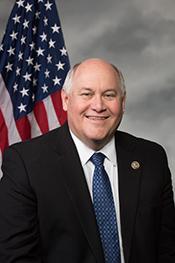
United States · Official source
801 records where Ron Estes is listed as a sponsor, author, or other actor. Search with topics and years
United States · United States Congress · 10 September 2026
United States · United States Congress · 23 July 2026
United States · United States Congress · 9 June 2026
United States · United States Congress · 4 June 2026
This resolution calls on (1) all other countries to cease and desist from implementing any digital services tax (DST) or similar measure, repeal existing DSTs, and immediately stop unfairly targeting U.S. companies; and (2) U.S. government agencies to use all available methods and resources to protect U.S. companies from the discriminatory effects of DSTs. It also supports appropriate tax and trade tools, including Section 301 investigations into the implementation or proposal of DSTs by any nation. (Section 301 of the Trade Act of 1974 authorizes the Office of the U.S. Trade Representative to investigate and take action to enforce U.S. rights under trade agreements and respond to certain foreign trade practices.)
United States · United States Congress · 21 May 2026
United States · United States Congress · 30 April 2026
United States · United States Congress · 2 April 2026
United States · United States Congress · 30 March 2026
Provider Reimbursement Stability Act of 2026 This bill allows for larger annual adjustments to the Medicare physician fee schedule. It also requires the Centers for Medicare & Medicaid Services (CMS) to make certain corrections to compensate for expenditures under the fee schedule that exceed a certain amount in a given year, and it limits how much certain adjustment factors may vary each year. Current law prohibits annual adjustments to the Medicare physician fee schedule that would result in a more than $20 million difference between the adjusted amount and the non-adjusted amount of total expenditures. The bill increases this threshold to $54.3 million beginning in 2027, with adjustments for inflation every five years beginning in 2032. Additionally, for certain services, the bill requires the CMS to determine the difference between expenditures based on estimated utilization of the service and expenditures based on actual utilization. If this difference exceeds a certain percentage of total expenditures under the fee schedule, the CMS must reconcile this difference by adjusting payments for the following year. This requirement applies to services for which payment was bundled with another service and there was a separate or add-on payment during the previous year. Finally, the CMS must update the prices and rates of each category of direct costs that affect payments (e.g., prices of equipment) at least every five years, with updates made to each category in the same year. The bill also prohibits the CMS from varying a certain adjustment factor by more than 2.5% each year.
United States · United States Congress · 26 March 2026
United States · United States Congress · 20 March 2026
United States · United States Congress · 19 March 2026
United States · United States Congress · 5 March 2026
United States · United States Congress · 5 March 2026
United States · United States Congress · 2 March 2026
United States · United States Congress · 23 February 2026
This resolution supports the designation of National FFA (Future Farmers of America) Week. It also celebrates the 50th anniversary of the chartering of Alaska as a State FFA Association of the National FFA Organization.
United States · United States Congress · 12 February 2026
United States · United States Congress · 15 January 2026
United States · United States Congress · 7 January 2026
This resolution expresses the sense of the House of Representatives that (1) Congress should adopt a fiscal target to reduce the federal budget deficit to 3% of gross domestic product or less as soon as possible and no later than the end of FY2030; and (2) after the target is achieved, Congress should continue to pursue further deficit reduction with the goal of achieving a balanced federal budget.
United States · United States Congress · 10 December 2025
United States · United States Congress · 10 December 2025
United States · United States Congress · 19 November 2025
Congressional Budget Office Scheduling Reform Act This bill requires the Congressional Budget Office (CBO) to annually publish a schedule of the expected publication dates of its major recurring reports. The schedule must must include, at a minimum, the expected publication dates for the baseline for the budget year and subsequent updates, the report on options to reduce the deficit, the report on the accuracy of budgetary projections for the most recently completed fiscal year, and the report on programs or activities with unauthorized appropriations. CBO must (1) publish the schedule on its public website no later than December 31 of each year, and (2) update the schedule during the following calendar year as necessary.
United States · United States Congress · 7 November 2025
This resolution honors the service and sacrifice of America's veterans.
United States · United States Congress · 7 November 2025
United States · United States Congress · 24 October 2025
This concurrent resolution denounces socialism and opposes the implementation of socialist policies in the United States.
United States · United States Congress · 21 October 2025
United States · United States Congress · 26 September 2025
United States · United States Congress · 18 September 2025
United States · United States Congress · 16 September 2025
This resolution (1) condemns the assassination of Charles "Charlie" James Kirk and all forms of political violence; and (2) honors the life, leadership, and legacy of Charlie Kirk.
United States · United States Congress · 11 September 2025
United States · United States Congress · 10 September 2025
United States · United States Congress · 26 August 2025
United States · United States Congress · 12 August 2025
Child Interstate Abortion Notification Act This bill creates new federal crimes related to transporting a minor across state lines for an abortion. Specifically, the bill makes it a crime to knowingly transport a minor across a state line to obtain an abortion without satisfying the requirements of a parental involvement law in the minor's resident state. A parental involvement law requires parental consent or notification, or judicial authorization, for a minor to obtain an abortion. The bill prohibits an individual who has committed incest with a minor from knowingly transporting the minor across a state line to receive an abortion. Finally, the bill makes it a crime for a physician to knowingly perform or induce an abortion on an out-of-state minor without first notifying the minor's parent.
United States · United States Congress · 29 July 2025
Protecting Air Ambulance Services for Americans Act of 2025 This bill authorizes payment changes under Medicare for air ambulance services based on certain collected data and requires additional reporting from providers of these services. Current law requires providers of air ambulance services to report certain information regarding general costs and utilization to the Department of Health and Human Services; private health insurers are also required to report information relating to coverage of these services. The bill authorizes the Centers for Medicare & Medicaid Services to revise payment rates under Medicare for air ambulance services based on this data, and it requires providers of air ambulance services to specifically report information relating to costs and utilization under Medicare. The bill also requires the Government Accountability Office to report on the data that is collected under current law requirements and to recommend changes to Medicare payment rates accordingly.
United States · United States Congress · 23 July 2025
Fixing Emergency Management for Americans Act of 2025 or the FEMA Act of 2025 This bill reestablishes the Federal Emergency Management Agency (FEMA) (currently within the Department of Homeland Security) as an independent, cabinet-level agency. It also makes broad changes to FEMA’s disaster and hazard mitigation assistance programs. The bill generally transfers FEMA’s current functions and authorities to the independent FEMA, except for certain security-related programs. The bill makes various changes to the Public Assistance program, including by establishing new grants for expedited funding to repair or replace disaster-damaged facilities, establishing block grants that recipients may choose instead of Public Assistance for smaller disasters, expediting and expanding uses of funding for emergency response and debris removal, and allowing use of excess administrative funds for increasing recipients’ disaster management capacity. The bill makes various changes to the Individual Assistance program, including by expanding eligibility for housing assistance, expanding mitigation and direct (non-financial) assistance for residences, reducing certain restrictions on funds duplicating program benefits, and establishing a unified disaster application system. The bill makes various changes to FEMA’s mitigation programs, including by establishing mitigation plans with preapproved projects, authorizing an entire Hazard Mitigation Grant Program grant to be provided before costs are incurred, changing pre-disaster mitigation assistance to noncompetitive formula grants, and allowing recipients to combine mitigation project funds from multiple federal programs. Additionally, federal entities must publish various information relating to disaster assistance and conduct various studies on related topics (e.g., preliminary damage assessments, fast-moving disasters, and government emergency alerting systems).
United States · United States Congress · 22 July 2025
United States · United States Congress · 22 July 2025
United States · United States Congress · 16 July 2025
United States · United States Congress · 14 July 2025
United States · United States Congress · 2 July 2025
United States · United States Congress · 12 June 2025
Improving Access to Medicare Coverage Act of 2025 This bill deems an individual receiving outpatient observation services in a hospital as an inpatient for purposes of satisfying the three-day inpatient hospital-stay requirement with respect to Medicare coverage of skilled nursing facility (SNF) services. (Generally, individuals must have been an inpatient at a hospital for at least three days in order to qualify for SNF services. An individual's time spent under observation at a hospital for purposes of determining whether the individual should be admitted does not count towards this requirement.)
United States · United States Congress · 11 June 2025
Stop the Baseline Bloat Act of 2025 This bill changes the assumptions that the Congressional Budget Office uses to calculate the baseline for discretionary spending. (A baseline is a projection of federal spending and receipts during a fiscal year under current law.) Specifically, the bill changes the assumptions used for the discretionary spending baseline to exclude (1) resources designated as an emergency requirement, and (2) resources provided in supplemental appropriations laws.
United States · United States Congress · 6 June 2025
United States · United States Congress · 4 June 2025
United States · United States Congress · 20 May 2025
Improving Seniors' Timely Access to Care Act of 2025 This bill establishes several requirements and standards relating to prior authorization processes under Medicare Advantage (MA) plans. Specifically, MA plans must (1) establish an electronic prior authorization program that meets specified standards; (2) annually submit to the CMS for publication specified prior authorization information, including the percentage of requests approved and the average response time; and (3) meet other standards, as set by the Centers for Medicare & Medicaid Services (CMS), relating to the quality and timeliness of prior authorization determinations. The CMS and the Office of the National Coordinator for Health Information Technology must publish on the CMS' website a report that analyzes the information received from MA plans, the feasibility of implementing real-time decision making with respect to prior authorization requests, and the impact of decisions that are made using artificial intelligence on patient access.
United States · United States Congress · 7 May 2025
United States · United States Congress · 30 April 2025
United States · United States Congress · 8 April 2025
United States · United States Congress · 1 April 2025
United States · United States Congress · 1 April 2025
United States · United States Congress · 31 March 2025
Seniors’ Access to Critical Medications Act of 2025 This bill temporarily expands flexibilities under the Stark law (i.e., the Physician Self-Referral Law) for certain physicians who dispense covered outpatient drugs under the Medicare prescription drug benefit at the physician's office location (e.g., through an integrated pharmacy). The Stark law generally prohibits physicians from referring patients to receive services that are payable under Medicare or Medicaid from entities in which the physician or an immediate family member has a financial relationship. Specifically, the bill allows, from 2026-2030, physicians to dispense such drugs from the physician's office, including through in-person pickup by a caregiver or via mail, if (1) the physician prescribed the drug, (2) the beneficiary has an ongoing relationship with the physician, (3) the beneficiary had at least one face-to-face visit with the physician in the prior year, and (4) the physician bills for the drug. These requirements also apply to physicians within the same group practice. The Government Accountability Office must report on pharmacies or pharmacy networks that dispense significantly more covered drugs under the Medicare prescription drug benefit after the bill's enactment, the extent to which such pharmacies and networks are owned by physicians or integrated into physician practices, and the common characteristics of these types of arrangements.