Resolution· HRESH.Res. 1524 (119th)referred
Expressing support for the designation of the week of September 19 through September 26, 2026, as "National Estuaries Week".
United States · United States Congress · 10 September 2026
The world's political record
Person
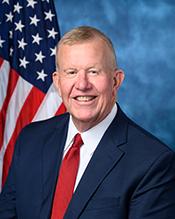
United States · Official source
473 records where Mike Ezell is listed as a sponsor, author, or other actor. Search with topics and years
United States · United States Congress · 10 September 2026
United States · United States Congress · 8 September 2026
United States · United States Congress · 20 August 2026
United States · United States Congress · 22 July 2026
United States · United States Congress · 21 July 2026
United States · United States Congress · 14 July 2026
United States · United States Congress · 14 July 2026
United States · United States Congress · 13 July 2026
United States · United States Congress · 30 June 2026
Securing Agriculture's Workforce Act of 2026 This bill expands the H-2A agricultural visa program; creates online platforms for H-2A employers, workers, and agencies; and codifies certain wage calculations. Under current law, workers on H-2A visas are only allowed to perform agricultural work of a seasonal or temporary nature. Under the bill, the seasonal work requirement is removed, thus allowing H-2A workers to qualify for agricultural work that occurs year-round. The bill also expands the type of agricultural work that qualifies, including reforestation, aquaculture, and livestock work. The Department of Agriculture must issue rules to define agricultural labor or services for purposes of the H-2A program. The bill also establishes an H-2A visa pathway for current unauthorized agricultural workers who otherwise meet requirements. The Department of Labor must maintain a national, publicly accessible online job registry and database of all job offers submitted by employers seeking a labor certification required to employ H-2A workers. The Department of Homeland Security must establish an online platform for employers to submit information and documentation for review by federal agencies in the course of admitting H-2A workers. The H-2A program requires employers to provide workers with wage rates at or above those set in regulations and such wages must not adversely affect the wages and working conditions of workers similarly employed in the United States. The bill codifies the current calculation method for the adverse effect wage rate as set in regulation.
United States · United States Congress · 29 June 2026
United States · United States Congress · 25 June 2026
United States · United States Congress · 11 June 2026
United States · United States Congress · 10 June 2026
United States · United States Congress · 9 June 2026
United States · United States Congress · 9 June 2026
United States · United States Congress · 4 June 2026
United States · United States Congress · 20 May 2026
United States · United States Congress · 19 May 2026
United States · United States Congress · 13 May 2026
United States · United States Congress · 12 May 2026
United States · United States Congress · 7 May 2026
This concurrent resolution expresses support for law enforcement officers. It also appreciates the contributions and recognizes the sacrifices of law enforcement officers.
United States · United States Congress · 4 May 2026
This resolution expresses support for police officers and other law enforcement personnel. The resolution further recognizes law enforcement officers across the United States in the pursuit of preserving safe and secure communities; the need to ensure that such officers have the equipment, training, and resources necessary to protect their health and safety while they are protecting the public; and the law enforcement community for acts of sacrifice and heroism. The resolution expresses condolences and appreciation to the loved ones of each law enforcement officer who has made the ultimate sacrifice in the line of duty.
United States · United States Congress · 28 April 2026
United States · United States Congress · 23 April 2026
Kayleigh’s Law Act of 2026 This bill establishes a federal statutory framework to require federal courts to issue an order prohibiting contact with a victim (i.e., a no-contact order) in the case of a defendant who is convicted of certain violent crimes or sex crimes. Specifically, in the case of a defendant convicted of a felony offense that is a crime of violence or that involves a sexual act or sexual conduct, on a motion by the victim or federal government, the court must issue a no-contact order. Under the framework, the no-contact order must be imposed at sentencing and be in effect for the lifetime of the defendant unless it is terminated or suspended in accordance with specified procedures. Additionally, no fee may be assessed or collected from a victim in connection with the issuance of a no-contact order.
United States · United States Congress · 22 April 2026
United States · United States Congress · 21 April 2026
United States · United States Congress · 20 April 2026
United States · United States Congress · 2 April 2026
United States · United States Congress · 2 April 2026
United States · United States Congress · 25 March 2026
United States · United States Congress · 25 February 2026
Gun Owner Registration Information Protection Act This bill prohibits federal funding of, or support for, state databases that list (1) firearms lawfully owned or possessed by individuals, or (2) individuals who lawfully own or possess firearms.
United States · United States Congress · 25 February 2026
United States · United States Congress · 20 February 2026
Airspace Location and Enhanced Risk Transparency Act of 2026 or the ALERT Act This bill addresses aviation safety by increasing requirements for aircraft tracking and communication using Automatic Dependent Surveillance-Broadcast (ADS-B) technology and expanding oversight. As background, ADS-B for broadcasting (Out) and receiving (In) transmits information (e.g., location and weather) among aircraft and air traffic control (ATC). The bill requires the Department of Defense (DOD) and the Department of Transportation (DOT) to enter into an agreement regarding the use of collision prevention technologies on DOD aircraft. The agreement must require the use of ADS-B Out as the default practice for DOD helicopters operating in the national airspace, unless such use would affect operational security. For DOD helicopters that are carrying out special missions in the Washington, DC, metropolitan area and are exempt from ADS-B Out transmission requirements, DOD must coordinate with DOT to conduct a safety risk assessment and implement appropriate mitigations. By December 31, 2031, DOD aircraft (other than certain special mission aircraft) must be equipped with and operating integrated ADS-B In technology. With respect to civil aircraft, by December 31, 2031, the Federal Aviation Administration (FAA) must generally require aircraft that are currently required to be equipped with ADS-B Out to also be equipped with ADS-B In. Additionally, among other requirements, the FAA must establish time-on-position limits for supervisory ATC personnel; establish a process to timely notify parties involved in certain near-miss incidents; and evaluate and revise, as necessary, helicopter routes around Ronald Reagan Washington National Airport.
United States · United States Congress · 12 February 2026
United States · United States Congress · 4 February 2026
United States · United States Congress · 30 January 2026
United States · United States Congress · 22 January 2026
United States · United States Congress · 15 January 2026
This bill designates a portion of Interstate Route 680 in Omaha, Nebraska, as the Hal Daub Freeway. Harold John Daub Jr. served in the House of Representatives from 1981-1989 and as the mayor of Omaha, Nebraska, from 1995-2001.
United States · United States Congress · 15 January 2026
United States · United States Congress · 14 January 2026
United States · United States Congress · 14 January 2026
United States · United States Congress · 13 January 2026
United States · United States Congress · 9 January 2026
This bill designates the facility of the United States Postal Service located at 825 Highway 198 in Beaumont, Mississippi, as the "Jeremy Malone Post Office".
United States · United States Congress · 9 January 2026
United States · United States Congress · 11 December 2025
United States · United States Congress · 10 December 2025
United States · United States Congress · 9 December 2025
Next Generation 9–1–1 Act This bill establishes a grant program to support implementation of next generation 9-1-1 (NG9-1-1) systems by state, territorial, and tribal governments and requires other related activities. NG9-1-1 means a secure, interoperable, Internet Protocol-based (IP-based) system for receiving 9-1-1 requests for emergency assistance. (IP-based 9-1-1 systems have capabilities that legacy telephone systems do not, including enhanced location-finding and the ability to receive text and multimedia messages.) Under the bill, the National Telecommunications and Information Administration (NTIA) must provide grants to state, territorial, and tribal governments (and entities established by those governments) to support the implementation and maintenance of NG9-1-1 systems. Grant funds may also be used for public outreach on NG9-1-1, implementation of cybersecurity measures, and, subject to certain limits, training and administrative costs. Entities applying for grants must submit a plan for NG9-1-1 coordination and implementation that ensures interoperability and reliability, incorporates cybersecurity tools, and meets other requirements related to technology and procurement. Applicants must also certify that they have established, or will establish within a specified time frame, a sustainable funding mechanism to support NG9-1-1 and effective cybersecurity resources. The NTIA must advise applicants on the preparation of implementation plans and provide technical assistance to grant recipients. Further, the NTIA must establish (1) an advisory board to provide recommendations with respect to the grant program and other topics related to NG9-1-1; and (2) a cybersecurity center to coordinate with state, local, and regional governments on the sharing of cybersecurity information related to NG9-1-1.
United States · United States Congress · 21 November 2025
United States · United States Congress · 21 November 2025
United States · United States Congress · 19 November 2025