Bill· HRH.R. 3283 (119th)referred
FARMER Act
United States · United States Congress · 8 May 2025
The world's political record
Person
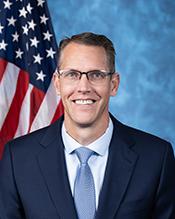
United States · Official source
922 records where Rep. Feenstra, Randy [R-IA-4] is listed as a sponsor, author, or other actor. Search with topics and years
United States · United States Congress · 8 May 2025
United States · United States Congress · 8 May 2025
United States · United States Congress · 7 May 2025
More Opportunities for Moms to Succeed Act or the MOMS Act This bill establishes requirements to enable the collection of certain child support during pregnancy, establishes grants for supportive services for women that promote alternatives to abortions, and requires the Department of Health and Human Services (HHS) to establish a website with pregnancy resources other than those about abortions. Specifically, the bill requires states to apply child support obligations to the time period during pregnancy under the Child Support Enforcement program. (The program enables states to receive federal matching funds for expenses related to child support enforcement activities and related services.) Such child support applies at the request of the mother and may be applied retroactively. Also, HHS must award grants to nonprofits to provide pregnant and postpartum women, and women parenting young children, with services or information on topics including health care (excluding abortions), child care, and employment assistance. It also requires HHS to provide grants to health care providers in rural or medically underserved areas, as well as tribal areas, to purchase equipment enabling telehealth visits for prenatal and postnatal care (e.g., monitoring devices). Additionally, the bill requires HHS to establish a public website to inform pregnant and postpartum women, and women parenting young children, of nearby services and resources on topics including health care, material or legal support, and alternatives to abortion. States must, as a condition of receiving certain federal funds, provide lists of nonprofit child placement agencies for potential inclusion on the site.
United States · United States Congress · 7 May 2025
United States · United States Congress · 6 May 2025
Precision Agriculture Loan Program Act of 2025 This bill establishes a loan program within the Farm Service Agency to assist agricultural producers in purchasing precision agriculture equipment and technology, such as geospatial mapping, data management and analytics software, and network connectivity products and solutions. Under this program, the maximum aggregate loan amount of a precision agriculture loan is $500,000. Precision agriculture refers to managing, tracking, or reducing crop or livestock production inputs, including seed, feed, fertilizer, chemicals, water, and time, at a heightened level of spatial and temporal granularity to improve efficiencies, reduce waste, and maintain environmental quality.
United States · United States Congress · 6 May 2025
United States · United States Congress · 1 May 2025
United States · United States Congress · 1 May 2025
Ensuring Community Access to Pharmacist Services Act This bill provides for permanent coverage under Medicare of certain pharmacist services. Specifically, the bill provides for permanent coverage of testing and treatment services provided by pharmacists relating to (1) COVID-19, influenza, respiratory syncytial virus (RSV), and streptococcal pharyngitis (strep throat); and (2) other public health needs in relation to a declared public health emergency. (Similar authorities were temporarily granted during the COVID-19 public health emergency.) Such services must be provided in accordance with the applicable state laws governing pharmacists' scope of practice.
United States · United States Congress · 1 May 2025
United States · United States Congress · 30 April 2025
United States · United States Congress · 30 April 2025
United States · United States Congress · 28 April 2025
Safe American Food Exports Act of 2025 or the SAFE Act of 2025 This bill provides statutory authority for the Department of Agriculture to negotiate in advance for regional export ban agreements for known animal disease threats that apply only to areas affected by animal disease outbreaks to enable the continuation of exports from areas not affected by an outbreak. The Animal and Plant Health Inspection Service, the Food Safety and Inspection Service, and the Foreign Agricultural Service, in consultation with the Office of the U.S. Trade Representative, may negotiate the regionalization, zoning, compartmentalization, and other agreements regarding outbreaks of known animal disease threats of trade significance with countries with export markets for livestock animals or animal products from the United States. The bill also specifies that such a negotiation should seek to take into account accepted global research advances.
United States · United States Congress · 17 April 2025
United States · United States Congress · 10 April 2025
United States · United States Congress · 10 April 2025
Adoption Tax Credit Refundability Act of 2025 This bill makes the federal adoption tax credit refundable. The bill also requires the Internal Revenue Service to provide for a standardized third-party affidavit for purposes of verifying a legal adoption. As background, individuals may claim a tax credit for qualified expenses to adopt a child. The maximum amount of the tax credit is $17,280 per child for 2025, which is adjusted annually for inflation. Income limitations apply. Under current law, the adoption tax credit is not refundable but may be carried forward for up to five subsequent tax years to reduce taxable income in those years.
United States · United States Congress · 10 April 2025
United States · United States Congress · 10 April 2025
Genome to Phenome Initiative Reauthorization Act of 2025 or the AG2PI Act of 2025 This bill reauthorizes the Agricultural Genome to Phenome Initiative (AG2PI) of the National Institute of Food and Agriculture through FY2030. The AG2PI competitive grant program seeks to (1) expand knowledge concerning genomes and phenomes of crops and animals that are of importance to the U.S. agriculture sector, and (2) support and coordinate research.
United States · United States Congress · 10 April 2025
Combating Organized Retail Crime Act of 2025 This bill expands federal enforcement of criminal offenses related to organized retail and supply chain crime. The term organized retail and supply chain crime includes criminal offenses involving the interstate transportation of stolen property, the sale or receipt of stolen goods, or theft from an interstate or foreign shipment that is committed by, in coordination with, or at the instruction of an organization. First, with respect to criminal offenses involving the interstate transportation of stolen property or the sale or receipt of stolen goods, the bill broadens the scope of conduct that qualifies as offenses by allowing prosecutions to be based on the aggregate value of stolen items over a 12-month period. Additionally, the bill makes the offenses predicate offenses (i.e., underlying offenses) for prosecutions under the federal money laundering statute and authorizes the criminal forfeiture of any property obtained from the proceeds of an offense. Second, with respect to criminal offenses involving theft from an interstate or foreign shipment, the bill also makes an offense an underlying offense for prosecution under the federal money laundering statute and authorizes the criminal forfeiture of any associated property. Third, the bill expands the federal money laundering statute to include offenses involving general-use prepaid cards, gift certificates, or store gift cards. Finally, the bill temporarily establishes a center within the Department of Homeland Security to coordinate federal law enforcement activities related to organized retail and supply chain crime.
United States · United States Congress · 10 April 2025
Deregulating Restrictions on Interstate Vehicles and Eighteen-wheelers Act or the DRIVE Act This bill prohibits the Federal Motor Carrier Safety Administration (FMCSA) from issuing any rule or regulation to require vehicles that have a gross vehicle weight of more than 26,000 pounds and are operating in interstate commerce to be equipped with a speed limiting device set to a maximum speed. The FMCSA issued an advance notice of supplemental proposed rulemaking on this subject on May 4, 2022.
United States · United States Congress · 8 April 2025
United States · United States Congress · 8 April 2025
United States · United States Congress · 7 April 2025
United States · United States Congress · 3 April 2025
United States · United States Congress · 1 April 2025
United States · United States Congress · 1 April 2025
United States · United States Congress · 1 April 2025
United States · United States Congress · 1 April 2025
United States · United States Congress · 27 March 2025
Portable Ultrasound Reimbursement Equity Act of 2025 This bill provides for Medicare coverage of ultrasound tests performed at a beneficiary's home. The Centers for Medicare & Medicaid Services must provide for separate payments for portable ultrasound services in the same manner and to the same extent as for portable X-ray services.
United States · United States Congress · 27 March 2025
United States · United States Congress · 27 March 2025
United States · United States Congress · 25 March 2025
Fortifying Refrigeration Infrastructure and Developing Global Exports Act of 2025 or the FRIDGE Act of 2025 This bill expands the Foreign Market Development Cooperator Program to include funding for technical assistance for infrastructure-related projects to ensure U.S. agricultural commodities are not damaged or lost due to infrastructure deficiencies in new and developing markets. This Foreign Agricultural Service (FAS) program funds projects that address long-term opportunities to reduce foreign import constraints or expand export growth opportunities. Specifically, the bill directs FAS to enter into contracts or other agreements with trade organizations to enhance the infrastructure capabilities (including cold chain capacity and port improvements) in new and developing foreign markets through needs assessments, training, and other technical assistance.
United States · United States Congress · 24 March 2025
United States · United States Congress · 24 March 2025
United States · United States Congress · 18 March 2025
Innovative Feed Enhancement and Economic Development Act of 2025 or the Innovative FEED Act of 2025 This bill provides for the regulation of zootechnical animal food substances as food additives. The bill defines zootechnical animal food substance as a substance that is added to the food or drinking water of animals and that affects only the animal's gastrointestinal tract, with the intended purpose of affecting the byproducts of the animal's digestion, reducing foodborne pathogens, or altering the animal's gastrointestinal biome. The definition does not include substances that are used to treat or prevent diseases in animals, hormones, or active ingredients of animal drugs. Labels for zootechnical animal food substances must include a disclaimer that the substance may not be used to treat or prevent diseases in animals.
United States · United States Congress · 18 March 2025
Restore Protections for Dialysis Patients Act This bill specifies certain requirements for private health insurers regarding coverage of individuals with end stage renal disease (ESRD) who are also covered under Medicare. In particular, the bill specifies that insurers may not limit benefits, including limiting network composition, in a manner that will affect ESRD Medicare beneficiaries differently compared to others without ESRD. The bill additionally specifies that insurers are not required to include a particular renal dialysis provider or a particular number of such providers as part of their networks.
United States · United States Congress · 18 March 2025
United States · United States Congress · 18 March 2025
This resolution expresses the sense of Congress that Congress and the Administration must work together to pursue effective food and agricultural trade policies that include specified components. Among others, these components include (1) a renewed commitment to secure market access and maintain global competitiveness for the U.S. food and agriculture industries; and (2) consideration of comprehensive trade agreements, enforcement of existing trade agreements, and elimination of certain nontariff trade barriers.
United States · United States Congress · 18 March 2025
United States · United States Congress · 18 March 2025
United States · United States Congress · 18 March 2025
United States · United States Congress · 18 March 2025
This resolution supports the designation of National Agriculture Day.
United States · United States Congress · 18 March 2025
United States · United States Congress · 14 March 2025
Crop Insurance for Future Farmers Act This bill amends the federal crop insurance program (FCIP) to increase the premium assistance rate for beginning and veteran farmers or ranchers. (FCIP offers subsidized crop insurance policies that producers can purchase to cover a wide variety of crops and livestock.) Specifically, the bill amends the amount of percentage points that are added to the premium assistance rate for beginning farmers or ranchers and veteran farmers or ranchers for an applicable insurance policy or plan (currently 10 percentage points) to provide 15 percentage points in each of the 1st and 2nd reinsurance years, 13 percentage points in the 3rd year, 11 percentage points in the 4th year, and 10 percentage points in each of the 5th through the 10th reinsurance years. Under the bill, farmers and ranchers, and veteran farmers and ranchers, are eligible to qualify for the program for 10 years, an increase from 5 years under current law. Specifically, to be considered a beginning farmer or rancher, a person must not have actively operated and managed a farm or ranch for more than 10 crop years. To be considered a veteran farmer or rancher, a veteran must have (1) not operated a farm or ranch for more than 10 crop years, or (2) first obtained veteran status in the past 10 years.
United States · United States Congress · 14 March 2025
United States · United States Congress · 14 March 2025
Fair and Open Competition Act of 2025 or the FOCA Act of 2025 This bill requires that federal contracts for construction projects neither require nor prohibit a bidder, offeror, contractor, or subcontractor from entering into agreements with one or more labor organizations with respect to such projects or related projects. Under the bill, the controlling documents for federal construction contracts (such as bid specifications and project agreements) may not require or prohibit a bidder, offeror, contractor, or subcontractor from entering into or adhering to such labor agreements. Additionally, the controlling documents may not discriminate against or give preference to a bidder, offeror, contractor, or subcontractor who signs or refuses to sign such a labor agreement. These requirements also apply to any (1) construction manager acting on behalf of the federal government with respect to such contract, (2) recipient of a federal grant or financial assistance for construction projects or construction manager acting on the recipient's behalf, and (3) party to a federal cooperative agreement for construction projects or construction managers acting on the party's behalf. An agency may exempt a project from this prohibition to avert an imminent threat to public health or safety or to serve the national security.
United States · United States Congress · 11 March 2025
Metastatic Breast Cancer Access to Care Act This bill expedites payment of Social Security Disability Insurance (SSDI) benefits and eligibility for Medicare coverage for those with metastatic breast cancer (i.e., breast cancer that has spread to other sites in the body). Specifically, the bill eliminates the 5-month waiting period for SSDI benefits and the subsequent 24-month waiting period for Medicare coverage for individuals with metastatic breast cancer. Under current law, individuals generally must wait 5 months after the onset of disability to begin receiving SSDI benefits and an additional 24 months to become eligible for Medicare.
United States · United States Congress · 11 March 2025
United States · United States Congress · 11 March 2025
United States · United States Congress · 10 March 2025
United States · United States Congress · 10 March 2025