Resolution· HRESH.Res. 589 (119th)reported
Providing for the public release of certain documents, records, and communications related to the investigation of Jeffrey Epstein.
United States · United States Congress · 17 July 2025
The world's political record
Person
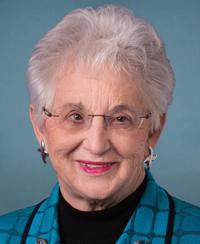
United States · Official source
2,034 records where Rep. Foxx, Virginia [R-NC-5] is listed as a sponsor, author, or other actor. Search with topics and years
United States · United States Congress · 17 July 2025
United States · United States Congress · 2 July 2025
United States · United States Congress · 25 June 2025
United States · United States Congress · 25 June 2025
United States · United States Congress · 11 June 2025
United States · United States Congress · 11 June 2025
United States · United States Congress · 9 June 2025
United States · United States Congress · 5 June 2025
This resolution condemns the June 1, 2025, targeted act of terror in Boulder, Colorado, as an act of ideologically motivated violence and reaffirms the House of Representatives' commitment to protecting the rights of all Americans to assemble peacefully and practice their faith without fear of violence.
United States · United States Congress · 4 June 2025
United States · United States Congress · 4 June 2025
United States · United States Congress · 4 June 2025
Preventing the Abuse of Immigration Parole Act This bill places limits on the authority of the Department of Homeland Security (DHS) to parole individuals into the United States. Currently, DHS is allowed to parole non-U.S. nationals ( aliens under federal law) temporarily into the United States on public benefit or urgent humanitarian grounds. Under the bill, the total number of parolees allowed annually is capped at 3,000. Additionally, parole may not be granted to nationals of China, Russia, Iran, North Korea, Cuba, or Syria without a waiver from the Department of State. The bill also eliminates DHS’s authority to parole refugees into the United States on separate public interest grounds.
United States · United States Congress · 23 May 2025
United States · United States Congress · 20 May 2025
Improving Seniors' Timely Access to Care Act of 2025 This bill establishes several requirements and standards relating to prior authorization processes under Medicare Advantage (MA) plans. Specifically, MA plans must (1) establish an electronic prior authorization program that meets specified standards; (2) annually submit to the CMS for publication specified prior authorization information, including the percentage of requests approved and the average response time; and (3) meet other standards, as set by the Centers for Medicare & Medicaid Services (CMS), relating to the quality and timeliness of prior authorization determinations. The CMS and the Office of the National Coordinator for Health Information Technology must publish on the CMS' website a report that analyzes the information received from MA plans, the feasibility of implementing real-time decision making with respect to prior authorization requests, and the impact of decisions that are made using artificial intelligence on patient access.
United States · United States Congress · 8 May 2025
United States · United States Congress · 1 May 2025
Improving Access to Workers' Compensation for Injured Federal Workers Act of 2025 This bill expands the role of nurse practitioners and physician assistants in providing services to injured federal workers under the federal workers' compensation program. Specifically, under the program, nurse practitioners and physician assistants acting within the scope of their practice may (1) prescribe or recommend treatment for injured federal workers; (2) certify the nature of an injury and probable extent of disability; (3) provide prescribed treatment for injured federal workers; and (4) participate, with a physician designated by the Department of Labor, in a mandatory workers' compensation examination of an injured worker. In general, only physicians may fulfill these roles under current law.
United States · United States Congress · 24 April 2025
This resolution calls on elected officials, faith leaders, and civil society leaders to condemn and counter acts of anti-Semitism.
United States · United States Congress · 17 April 2025
United States · United States Congress · 9 April 2025
This resolution provides for the consideration of the Senate amendment to H. Con. Res. 14, which establishes the congressional budget for the federal government for FY2025 and sets forth budgetary levels for FY2026-FY2034.
United States · United States Congress · 7 April 2025
United States · United States Congress · 7 April 2025
United States · United States Congress · 1 April 2025
Freedom of Association in Higher Education Act of 2025 This bill establishes freedom of association protections for college students in single-sex social organizations. Specifically, the bill gives students (or groups of students) enrolled at institutions of higher education (IHEs) the right to form or join social organizations, including single-sex social organizations. Additionally, the bill prohibits IHEs that participate in federal student aid programs from taking adverse actions against single-sex social organizations or students who are members or prospective members of such organizations based solely on the practice of limiting membership to only individuals of one sex; taking actions that require or coerce members or prospective members of such organizations to waive protections provided under the bill, including as a condition of enrolling in the IHE; or imposing a recruitment restriction on a single-sex social organization that is not imposed upon other student organizations, unless the organization and IHE have entered into a written agreement allowing the restriction.
United States · United States Congress · 27 March 2025
Freedom from Unfair Gun Taxes Act of 2025 This bill prohibits a state or any political subdivision of a state from imposing or collecting an excise tax on the sale of a firearm, ammunition, or any part or component of a firearm or ammunition by a manufacture or dealer.
United States · United States Congress · 27 March 2025
United States · United States Congress · 26 March 2025
This bill directs the Federal Motor Carrier Safety Administration (FMCSA) to permanently allow states to exempt school bus drivers from the “under-the-hood” testing requirement for a commercial driver's license (CDL). As background, on December 2, 2024, the FMCSA renewed an exemption through November 28, 2026, that allows states to exempt all school bus driver applicants for a CDL from the engine compartment portion of the pre-trip vehicle inspection skills testing requirement, commonly referred to as the under-the-hood testing requirement. States must meet certain terms and conditions for the exemption. Under the bill, the FMCSA must make permanent the December 2, 2024, exemption, thus permanently allowing states to exempt school bus drivers from the under-the-hood testing requirement. States must meet the additional terms and conditions for an exemption, which include (1) restricting school bus drivers who are issued a CDL based on the exemption to the intrastate operation of school buses, and (2) requiring states to conduct the remaining pre-trip vehicle inspection components of the skills test. Further, the FMCSA must require any state participating in the exemption to submit an annual report describing the number of drivers that obtain a CDL under the exemption.
United States · United States Congress · 26 March 2025
United States · United States Congress · 26 March 2025
United States · United States Congress · 24 March 2025
United States · United States Congress · 21 March 2025
Improving Law Enforcement Officer Safety and Wellness Through Data Act of 2025 This bill requires the Department of Justice to report on (1) targeted attacks on law enforcement officers, (2) the feasibility of incorporating such attacks into existing crime reporting systems, and (3) the mental health resources that are available to law enforcement officers.
United States · United States Congress · 18 March 2025
United States · United States Congress · 14 March 2025
Fair and Open Competition Act of 2025 or the FOCA Act of 2025 This bill requires that federal contracts for construction projects neither require nor prohibit a bidder, offeror, contractor, or subcontractor from entering into agreements with one or more labor organizations with respect to such projects or related projects. Under the bill, the controlling documents for federal construction contracts (such as bid specifications and project agreements) may not require or prohibit a bidder, offeror, contractor, or subcontractor from entering into or adhering to such labor agreements. Additionally, the controlling documents may not discriminate against or give preference to a bidder, offeror, contractor, or subcontractor who signs or refuses to sign such a labor agreement. These requirements also apply to any (1) construction manager acting on behalf of the federal government with respect to such contract, (2) recipient of a federal grant or financial assistance for construction projects or construction manager acting on the recipient's behalf, and (3) party to a federal cooperative agreement for construction projects or construction managers acting on the party's behalf. An agency may exempt a project from this prohibition to avert an imminent threat to public health or safety or to serve the national security.
United States · United States Congress · 11 March 2025
United States · United States Congress · 10 March 2025
Disclose Getting Involved in Foreign Transactions Act or the Disclose GIFT Act This bill requires certain institutions of higher education (IHEs) to disclose gifts or contracts between covered individuals (e.g., researchers) and foreign sources. This bill applies to an IHE that (1) is an eligible institution for purposes of federal student aid programs, and (2) has received more than $50 million in federal funds in any of the previous five calendar years (with at least part to support research and development) or that receives certain other federal funds. Specifically, the bill requires an IHE to maintain a policy requiring covered individuals employed at the IHE to annually disclose gifts received from, or contracts entered into with, a foreign source; a publicly available and searchable database with the disclosed information, excluding personally identifiable information; and a plan to identify and manage potential information gathering by foreign sources through espionage targeting covered individuals that may arise from such gifts or contracts. The bill requires the Department of Education (ED) to investigate possible violations of this bill and outlines the various penalties for each violation. Additionally, ED must maintain a single point of contact to, among other duties, receive and respond to inquiries and requests for technical assistance from IHEs regarding compliance with the requirements of the bill. IHEs must also establish policies and designate compliance officers. The Government Accountability Office must study and report on ways to improve intergovernmental agency coordination for implementing and enforcing disclosure reporting requirements.
United States · United States Congress · 5 March 2025
Streamlining Program Efficiency and Expanding Deployment for BEAD Act or the SPEED for BEAD Act This bill makes certain changes to the Broadband, Equity, Access, and Deployment (BEAD) Program, including by expanding the broadband technologies that may qualify for funding and prohibiting states from regulating broadband rates in connection with the program. (The BEAD Program is administered by the National Telecommunications and Information Administration (NTIA) and provides funding to eligible entities for broadband deployment, connectivity, mapping, and adoption projects. Eligible entities include U.S. states, territories, and the District of Columbia.) Specifically, the bill establishes that projects using any broadband technology (e.g., satellite, fixed wireless, or fiber) may qualify for funding, provided the technology meets specified performance criteria. (Original BEAD rules established a preference for fiber projects.) The bill also explicitly prohibits eligible entities from regulating, setting, or otherwise mandating pursuant to the BEAD Program (1) rates charged for broadband service, or (2) methodologies used to calculate such rates. The prohibition includes rate regulation carried out in conjunction with the existing requirement that subgrantees offer at least one low-cost broadband service option to certain subscribers. Further, the bill prohibits the NTIA and eligible entities from establishing or enforcing conditions, preferences, or other requirements related to collective bargaining and labor agreements; climate change; diversity, equity, and inclusion; and other topics. The bill also modifies the purposes for which the funds may be used and the treatment of unused funds. Finally, the bill replaces the term Equity in the program’s name with Expansion .
United States · United States Congress · 5 March 2025
United States · United States Congress · 25 February 2025
United States · United States Congress · 25 February 2025
Conrad State 30 and Physician Access Reauthorization Act This bill modifies the Conrad 30 Waiver program, which incentivizes qualified foreign physicians to serve in underserved communities. It also extends statutory authority for the program for three years from this bill's enactment. Individuals coming to the United States under a J-1 nonimmigrant visa to receive medical training typically must leave the country and reside for two years abroad before being eligible to apply for an immigrant visa or permanent residence. The Conrad program waives this requirement for individuals who meet certain qualifications, including serving for a number of years at a health care facility in an underserved area. The bill increases the number of waivers that a state may obtain each fiscal year from 30 to 35 if a certain number of waivers were used the previous year, and provides for further adjustments depending on demand. A physician may be employed at an academic medical center to meet the Conrad program's employment requirements if the physician's work is in the public interest, even if the medical center is not in an underserved area. Employment contracts for physicians under the Conrad program shall contain certain information, such as the maximum number of on-call hours per week the physician shall have to work. Certain physicians (along with the physician's spouse and children) shall be exempt from the direct annual numerical limits on immigration, including those physicians that have met certain requirements related to visas for physicians to serve in underserved areas.
United States · United States Congress · 24 February 2025
America Works Act of 2025 This bill expands the applicability of work requirements for Supplemental Nutrition Assistance Program (SNAP) recipients who are able-bodied adults without dependents (ABAWDs). As background, these SNAP recipients have work-related requirements in addition to the general SNAP work registration and employment and training requirements. Specifically, the bill amends the exemptions to this requirement. First, the bill applies the work requirements for ABAWDs to adults who are not over 65 years old, whereas these requirements currently apply to adults who are not over 55 years old. Second, the ABAWD exemption for a parent or household member with responsibility for a dependent child is restricted to a dependent child under the age of seven. Currently, the child must be under the age of 18. Third, the bill repeals the ABAWD exemptions for homeless individuals, veterans, and certain foster care individuals (those who are 24 years old or younger and were in foster care on the date of attaining 18 years of age or a higher age). In addition, under current law, an ABAWD waiver program allows state exemptions based on an area having an unemployment rate of over 10% or an insufficient number of jobs. The bill amends the exemption to require the unemployment rate to be based on the rate for the county, instead of the area. Further, the bill repeals the provision that allows a state exemption if that area does not have a sufficient number of jobs.
United States · United States Congress · 21 February 2025
United States · United States Congress · 21 February 2025
Disengaging Entirely From the United Nations Debacle Act of 2025 or the DEFUND Act of 2025 This bill directs the President to terminate U.S. membership in the United Nations (U.N.) and all formally affiliated bodies. It also ends U.S. participation in all U.N. conventions and agreements. Funds may be appropriated to facilitate U.S. withdrawal from the U.N. No funds may be made available for contributions or payments to any U.N. body. The bill prohibits U.S. participation in any U.N. peacekeeping operation. The bill also repeals diplomatic immunity for officers and employees of the U.N. and for officers and employees of foreign government missions to the U.N. The bill repeals various acts related to the U.N., including the United Nations Participation Act of 1945, the United Nations Headquarters Agreement Act, and a joint resolution establishing U.S. membership in the World Health Organization. The United States may not rejoin the U.N. or any formally affiliated body without the advice and consent of the Senate. Any agreement to rejoin the U.N. or a formally affiliated body must include the right of the United States to withdraw from the agreement.
United States · United States Congress · 13 February 2025
United States · United States Congress · 13 February 2025
This concurrent resolution declares that Congress should not impose any new performance fee, tax, royalty, or other charge relating to the public performance of sound recordings on a local radio station for broadcasting sound recordings over the air, or on any business for such public performance of sound recordings.
United States · United States Congress · 13 February 2025
This bill specifies a legal standard for determining whether an individual is considered an independent contractor rather than an employee for the purposes of federal labor laws that address issues such as the federal minimum wage, overtime compensation, and collective bargaining. The rights and protections provided by these laws exclusively apply to employees. Under the bill, an individual is considered an independent contractor if (1) another individual or entity does not exercise significant control over the details of how the individual's work is performed, without regard to any control the other individual or entity may exercise over the final result of the work performed; and (2) while performing such work, the individual has opportunities and risks inherent with entrepreneurship (for example, the discretion to exercise professional judgment). The bill also sets forth factors that may not be used to determine whether an individual is an employee. Specifically, factors such as whether another individual or entity requires the individual to meet certain legal, health and safety, insurance, or performance requirements may not be used to make such a determination.
United States · United States Congress · 7 February 2025
No Kill Switches in Cars Act This bill repeals a requirement that the National Highway Traffic Safety Administration prescribe a federal motor vehicle safety standard that requires certain passenger vehicles to be equipped with advanced drunk and impaired driving prevention technology. Currently, there is no federal motor vehicle safety standard that requires the technology. In general, advanced drunk and impaired driving prevention technology is a passive system that (1) monitors a driver's performance to identify driver impairment, or (2) accurately detects whether a driver's blood alcohol concentration is equal to or greater than 0.08%. The system must also prevent or limit vehicle operation if the system determines the driver may be intoxicated or impaired.
United States · United States Congress · 6 February 2025
Defending Education Transparency and Ending Rogue Regimes Engaging in Nefarious Transactions Act or the DETERRENT Act This bill expands oversight and disclosure requirements related to foreign sources and institutions of higher education (IHEs). Specifically, the bill requires an IHE to annually disclose to the Department of Education (ED) any year in which the IHE receives a gift from a foreign country of concern (e.g., China or Russia) or foreign entity of concern of any dollar amount; receives a gift or contract from a foreign source (other than a foreign country of concern or foreign entity of concern) that is valued at $50,000 or more, considered alone or in combination with all other gifts or contracts within a calendar year (current disclosure threshold is $250,000 or more), or which has an undetermined monetary value; enters into a contract with a foreign country of concern or foreign entity of concern after receiving a waiver for such contract; or is substantially controlled by a foreign source. Additionally, the bill prohibits IHEs from entering into contracts with a foreign country of concern or with a foreign entity of concern without obtaining a waiver, requires certain IHEs to disclose gifts or contracts between covered individuals (e.g., researchers) and foreign sources, and requires private IHEs with specified assets or investments to file annual investment disclosure reports. The bill requires ED to investigate possible violations of this bill and outlines the various penalties for each violation. Penalties may include losing eligibility for federal student financial aid.
United States · United States Congress · 5 February 2025
AM Radio for Every Vehicle Act of 2025 This bill requires the Department of Transportation (DOT) to issue a rule requiring AM radio capabilities to be standard in all new passenger vehicles. (AM radio is often used to deliver emergency alerts and news and entertainment programming; some newer vehicles do not include AM equipment.) Specifically, this bill applies to passenger vehicles (1) manufactured in the United States for sale in the United States, imported into the United States, or shipped in interstate commerce; and (2) manufactured after the rule's effective date. The rule must require all such vehicles to have devices that can receive signals and play content transmitted by AM stations or digital audio AM stations installed as standard equipment and made easily accessible to drivers. Prior to the rule's effective date, manufacturers that do not include devices that can access AM radio as standard equipment (1) must inform purchasers of this fact through clear and conspicuous labeling, and (2) may not charge an additional or separate fee for AM radio access. DOT may assess civil penalties for any violation of the rule. The Department of Justice may also bring a civil action to enjoin a violation. The rule, including DOT’s authority to enforce it, must expire 10 years after the bill’s enactment. Further, the Government Accountability Office must study and report on the dissemination of emergency alerts to the public, including by conducting an assessment of AM radio relative to other Integrated Public Alert and Warning System communication technologies.
United States · United States Congress · 5 February 2025
Preventing Aliens Through Rivers or Land Act or the PATROL Act This bill prohibits the Department of Justice (DOJ) from bringing certain civil actions against a state for building a physical structure impacting navigable waters along the U.S. border for security purposes. Specifically, the DOJ is prohibited from bringing an action for (1) the construction of a bridge, causeway, dam, dike, or other structure over or in a port, harbor, or other navigable water of the United States without federal approval; or (2) the creation of any obstruction to the navigable capacity of waters of the United States without federal approval.
United States · United States Congress · 5 February 2025
Fair Access to Banking Act This bill places restrictions on certain banks, credit unions, and payment card networks if they refuse to do business with a person who complies with the law. Restrictions include prohibiting the use of electronic funds transfer systems and lending programs, termination of an institution's depository insurance, and specified civil penalties. Banks and other specified financial institutions are allowed to deny financial services to a person only if the denial is justified by a documented failure of that person to meet quantitative, impartial, risk-based standards established in advance by the institution. This justification may not be based upon reputational risks to the institution. The bill establishes the right for a person to bring a civil action for a violation of this bill.
United States · United States Congress · 5 February 2025
Antisemitism Awareness Act of 2025 This bill provides statutory authority for the requirement that the Department of Education’s Office for Civil Rights take into consideration the International Holocaust Remembrance Alliance's (IHRA's) working definition of antisemitism when reviewing or investigating complaints of discrimination based on race, color, or national origin in programs or activities that receive federal financial assistance. According to the IHRA's working definition, antisemitism is a certain perception of Jews, which may be expressed as hatred toward Jews.
United States · United States Congress · 4 February 2025
Crime Victims Fund Stabilization Act of 2025 This bill adds a new source of revenue for the Crime Victims Fund (CVF). Specifically, the bill requires certain civil monetary penalties collected from settlements and judgments in cases involving fraud and false claims against the federal government to be deposited into the CVF through FY2029. The CVF supports federal, state, and local programs and activities to compensate and assist victims of crimes. Currently, the CVF is funded by deposits from a variety of sources, including federal criminal fines, penalties, and assessments; forfeited bail bonds; and certain other gifts, donations, and bequests.
United States · United States Congress · 31 January 2025
This resolution provides amounts for the expenses of the House Committee on Rules for the 119th Congress.