Bill· HJRESH.J.Res. 393 (102nd)open
Designating October 1992 as "National Breast Cancer Awareness Month".
United States · United States Congress · 30 January 1992
Designates October 1992 as National Breast Cancer Awareness Month.
The world's political record
Person
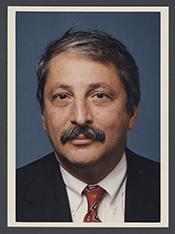
United States · Official source
3,903 records where Rep. Gejdenson, Sam [D-CT-2] is listed as a sponsor, author, or other actor. Search with topics and years
United States · United States Congress · 30 January 1992
Designates October 1992 as National Breast Cancer Awareness Month.
United States · United States Congress · 30 January 1992
Designates April 15, 1992, as National Recycling Day.
United States · United States Congress · 30 January 1992
Designates February 6, 1992, as National Women and Girls in Sports Day.
United States · United States Congress · 30 January 1992
Expresses the sense of the Congress that the President should attend the United Nations Conference on Environment and Development in June 1992 as the leader of the U.S. delegation.
United States · United States Congress · 29 January 1992
American Rail Industry Competitiveness Act of 1992 - Sets forth congressional findings and purposes with respect to revitalization of the American rail car industry. Directs the Secretary of Transportation (Secretary) to establish, through the making of grants and loans, a program of financial assistance to private and public entities to promote research and development (R and D) in the domestic rail car industry, to facilitate growth in the engineering and design capabilities of domestic rail car companies, and in general to promote the competitiveness of the American rail car industry. Sets forth specified requirements with respect to such grants and loans. Authorizes appropriations. Amends the Stevenson-Wydler Technology Innovation Act of 1980 to require the Secretary, through the establishment of a new Cooperative Research Center or utilization of an existing Center, to promote the development of U.S. rail car technology. Amends the Federal Transit Act to require the Secretary to designate one university transportation center with responsibility for R and D relating to rail car technology. Requires the Secretary to provide additional grants to such center to conduct R and D, training, and technology transfers with respect to such technology in order to promote the growth and development of the American rail car industry. Amends the Internal Revenue Code to reduce the corporate capital gains tax for rail industry stock held for more than three years by a domestic rail car company. Establishes alternative rates for capital gains on rail industry stock held by noncorporate taxpayers. Allows, until January 1, 1998, domestic rail car companies a special tax credit for R and D activities. Allows a rail industry start-up credit of ten percent of qualified rail start-up expenditures incurred until December 31, 1998. Provides for the treatment of the rail tax incentives in computing the alternative minimum tax. Classifies rail car property as five-year property for purposes of determining depreciation under the accelerated cost recovery system. Amends the Carl D. Perkins Vocational Education Act to require the Secretary, with respect to the award of grants to States for business-labor-education partnership training programs, to give priority to projects that are specifically targeted to the training of skilled workers and technicians in high technology aspects of the domestic rail car industry. Requires the Secretary to select one State for the establishment of a pilot vocational educational program designed to promote high technology training (including the retraining of individuals employed or previously employed in industries with declining labor demand) in the rail car supply industry. Directs the Secretary of Education to report to the Congress on progress made to promote vocational education and training in the American rail car industry. Amends the Federal Transit Act to direct the Secretary to require each mass transportation assistance grantee that operates a rail transit system to submit, by October 1 of each year, a ten-year and 20-year schedule setting forth anticipated rail car acquisitions (by timing and volume) during the upcoming ten- and 20- year periods. Requires the Secretary to develop, and annually update, ten- and 20-year projections of such acquisitions. Requires the Secretary to submit to the Congress a plan under which the Federal Transit Administration will: (1) develop more precise rail car procurement forecasting; and (2) manage the timing of the award of Federal grants to assure a stable national rail car replacement plan and provide regular and reliable cycles of rail car procurement. Requires the Secretary to establish a Federal Clearinghouse to serve as a source of the data on the domestic rail car industry.
United States · United States Congress · 29 January 1992
Economic Revitalization and Federal Excess and Surplus Property Utilization Improvement Act of 1992 - Title I: Findings and Purposes - Sets forth the purposes of this Act involving the utilization of excess and surplus Government heavy equipment and construction materials infrastructure and development. Title II: Definitions - Sets forth the definitions of terms used in this Act. Title III: Disposal of Defense Articles - Amends the Federal Property and Administrative Services Act of 1949 to require the Secretary of Defense to: (1) evaluate inventories of heavy equipment and construction materials and ensure that those items which are not needed for an identifiable military mission will be classified as excess and disposed of; (2) declare as excess those inventory items which cost over a certain amount to store, maintain, and repair; (3) develop a cost-effective plan for returning excess items to the United States for disposal; (4) report to specified congressional committees on the status of, and disposal plans for, such inventory items; and (5) annually review and evaluate the utilization by recipients of excess nonlethal supplies and excess defense articles pursuant to programs administered by the Department of Defense in order to ensure that such items are being utilized accordingly. Requires the heads of Federal agencies overseeing Federal laboratories to evaluate their inventories of scientific equipment. Requires all such equipment not needed for current or anticipated Federal purposes to be disposed of. Requires appropriate reports to specified congressional committees. Directs the Administrator (Administrator) of the General Services Administration (GSA) to make available excess heavy equipment and construction materials to a Federal agency based on the agency's ability to use such items for official business. Prohibits Federal agencies receiving excess heavy equipment and construction materials from transferring such equipment to other Federal or non-Federal agencies or organizations. Requires excess heavy equipment and construction materials received by a Federal agency to be returned to GSA if the Administrator determines that the equipment is not being efficiently used or if the official business of the agency for which the equipment is being used has been completed. Excludes heavy equipment and construction materials from the definition of "nonlethal excess supplies" used under armed forces provisions, and from the definition of various terms used for excess property in the Foreign Assistance Act of 1961. Title IV: Distribution Of Excess And Surplus Heavy Equipment And Construction Materials - Gives the Administrator authority over the disposal of all excess and surplus heavy equipment and construction materials. Requires such disposal to be done pursuant to this Act. Requires the Administrator to make all excess and surplus heavy equipment and construction materials available to the States after such items have been disposed of to Federal agencies. Requires the Administrator, after providing actual notice to the States of the availability of excess heavy equipment and construction materials, to deliver such items requested by the States on a fair and equitable basis according to public need and efficiency of utilization. Requires the Administrator to make the equipment and materials available without cost, except that if transportation is requested by the State, the Administrator may assess fees for transportation costs. States that for no less than 12 months after original delivery, the Administrator shall retain all right, title, and interest in heavy equipment and construction materials which have an acquisition cost greater than $10,000. Provides that if a State can show that the equipment or materials were well maintained and were efficiently used in the furtherance of public purposes and that the equipment can reasonably be expected to be maintained and used in the furtherance of public purposes, the Administrator shall transfer to the State all right, title, and interest in the equipment or materials. Requires States, within 12 months after regulations to implement this paragraph have been issued, to establish a program under which equipment and construction materials are allocated to eligible users in order to continue to be eligible to receive excess heavy equipment and construction materials. Allows such a program to be operated by the State or by State-Certified Equipment Centers. Requires the Administrator to offer grants for the establishment of such Centers. Sets forth provisions providing for disposals under specified conditions of urgency, such as when the President certifies that a foreign nation has dire need for particular pieces of heavy equipment and construction materials. States that Indian tribes and historically black colleges shall have equal standing with the States in acquiring excess heavy equipment and construction materials. Amends the Housing and Community Development Act of 1974 to authorize the use of community development block grant funds to establish such Centers and to establish State infrastructure and economic development plans. Authorizes appropriations for GSA grants to establish such Centers. Title V: State And Community Infrastructure And Economic Development - Amends the Housing and Community Development Act of 1974 to require the Secretary of the Department of Housing and Urban Development (Secretary) to establish a computerized database and standardized forms which States shall use to develop infrastructure and economic development plans utilizing priority lists of anticipated needs submitted to the States by counties and other units of local government, and which also utilize State-Certified Equipment Centers and advanced planning techniques. Requires the Secretary to make grants to States that want to establish such a plan, with priority to States with high long-term unemployment rates and pressing infrastructure needs. Requires the Secretary to establish a national infrastructure and economic development strategy to help States implement their plans to encourage cooperation among the States, and to coordinate Federal infrastructure and economic development programs and resources. Requires the Secretary to update such strategy every two years and to transmit a document containing such strategy to specified congressional committees. Authorizes appropriations for grants to States that want to establish such a plan. Title VI: Effective Date And Applicability - Specifies the effective dates of this Act and requirements for the promulgation of regulations.
United States · United States Congress · 22 January 1992
Title I: Short Title, Findings, and Definitions - Trade Enhancement Act of 1992 - Sets forth congressional findings and purposes with respect to access to Japanese markets by U.S. manufacturers of motor vehicles and motor vehicle parts. Title II: Merchandise Trade Deficit Reduction - Sets forth annual merchandise trade deficit reduction targets with respect to Japan's trade deficit with the United States. Requires the Secretary of Commerce (Secretary) to compute annually whether the target has been met for each year, and if it has not, to publish in the Federal Register the import and production restriction implementation period for such year. Authorizes the Secretary to impose temporary quantitative import restrictions on Japanese or Japanese-related motor vehicles (foreign motor vehicles) entered during the first three months of the calendar year following the year for which such computation is made. Requires the Secretary to submit a report to the Congress. Expresses the sense of the Congress that representatives of the United States and Japan should continue discussions regarding measures, to be selected by the Japanese Government, to achieve the merchandise trade deficit reduction targets. Urges the United States Trade Representative (USTR) during such discussions to address market access priorities for U.S. exports to Japan. Title III: Import and Production Restrictions to Be Implemented If Trade Deficit Reduction Target Not Met - Directs the Secretary to compute for calendar years 1993 through 1999 quantitative import restrictions on foreign motor vehicles and domestic motor vehicle production restrictions for transplanted Japanese-related auto manufacturers, except such computations are not required for calendar years 1997 through 1999 if trade deficit reduction targets for calendar years 1992 through 1996 are met. Sets forth civil penalties. Requires each person that has one or more motor vehicle or motor vehicle parts manufacturing facilities within the United States to certify to the Secretary whether it is a domestic vehicle or parts manufacturer or a transplanted Japanese-related vehicle manufacturer. Sets forth provisions with respect to: (1) the Secretary's authority to obtain information and data; and (2) enforcement of this Act. Sets forth civil penalties. Sets forth provisions with respect to the enforcement and judicial review of such penalties. Requires the Secretary to report annually to the Congress on implementation of this Act. Title IV: Negotiations and Other Actions - Requires the USTR to enter into negotiations with Japan to enter into a bilateral agreement that: (1) provides a phased-in increase in the use by transplanted motor vehicle manufacturers of domestically-produced motor vehicle parts to the point where such parts constitute 60 percent or more of the total parts used in the production of such vehicles; and (2) eliminate those aspects of the Japanese automotive distribution system that affect the access of domestically-produced motor vehicle parts to Japanese markets. Directs the USTR to enter into negotiations with representatives of the European Community, Japan, and the governments of other major vehicle-producing countries to enter into multilateral agreements that rationalize world-wide market access and production of motor vehicles and motor vehicle parts. Considers acts, practices, and policies of Japan (including, but not limited to, acts, policies, and practices utilized in the Japanese automotive distribution system known as "Keiretsu") that affect the access of manufacturers of domestic motor vehicle parts to the Japanese market as being unjustifiable and burdensome or restrictive to U.S. commerce, according to the Trade Act of 1974. Adds to response authority under such Act authority to increase the percentage of domestically-produced motor vehicle parts used in the production of motor vehicles for purposes of the qualification of Japanese manufacturers as domestic vehicle manufacturers. Specifies certain objectives to be included in negotiations with Japan if the USTR decides to take action with respect to such practices. Requires the USTR to make certain estimates with respect to the percentage of the Japanese market that is accounted for by domestic motor vehicle parts manufacturers. Directs the Secretary to commence an antidumping duty investigation under the Tariff Act of 1930 to determine whether imports or sales (or the likelihood of sales) of Japanese motor vehicle parts to the United States warrant the imposition of antidumping duties. Requires the Secretary of the Treasury to study and report to the Congress on the extent to which: (1) "Keiretsu" operations in the United States are in compliance with the internal revenue laws, particularly those relating to transfer pricing; and (2) the Internal Revenue Service is auditing such operations. Amends the Harmonized Tariff Schedule of the United States to classify for the purposes of tariff treatment certain light trucks as motor vehicles for the transport of goods.
United States · United States Congress · 22 January 1992
Designates March 25, 1992, as Greek Independence Day: A National Day of Celebration of Greek and American Democracy.
United States · United States Congress · 3 January 1992
Amends the Internal Revenue Code to make permanent the provisions permitting small issues of tax-exempt bonds to finance manufacturing facilities and farm property.
United States · United States Congress · 26 November 1991
Amends the Federal judicial code to provide that the U.S. District Court for the District of Columbia shall have original and exclusive jurisdiction, and exclusive venue, over any civil action challenging the award of a defense procurement contract in an amount in excess of $25,000.
United States · United States Congress · 26 November 1991
Nuclear Weapons Stockpiles Information Act - Requires the annual budget material submitted to the Congress by the President to include an unclassified report prepared jointly by the Secretaries of Energy and of Defense concerning the nation's nuclear defense stockpile, including information on existing and proposed future inventories and production of nuclear weapons and fissile materials. Requires the first such report to include a historical record of U.S. nuclear weapons production and materials inventories between 1945 and 1990. Prohibits funds appropriated to the Departments of Energy or of Defense from being obligated to provide financial assistance to enterprises of the Soviet Ministry of Atomic Power and Industry of the Soviet Union or its successor entities until the President certifies to the Congress that information on past and present Soviet nuclear weapons production and fissile materials inventories has been made available to the public of the Soviet Union.
United States · United States Congress · 26 November 1991
Amends the Trade Act of 1974 to require the United States Trade Representative to include in the National Trade Estimate information with respect to the Arab boycott of U.S. persons who do business with or invest in Israel, or who do business with a person who does business with or invests there.
United States · United States Congress · 26 November 1991
Equal Remedies Act of 1991 - Amends Federal law relating to damages in cases of intentional employment discrimination to remove provisions limiting the dollar amount of damages awarded for pecuniary and nonpecuniary losses and punitive damages.
United States · United States Congress · 25 November 1991
Consumer Products Safe Testing Act - Declares the policy that Federal departments and agencies shall encourage the development and use of product testing procedures that accurately reflect the acute health effects on humans of certain products, including consumer products and products containing hazardous or toxic substances, but which do not rely upon animals. Directs each Federal department or agency head (head), within one year, to: (1) review and evaluate any regulation, guideline, or recommendation issued by such department or agency which requires, recommends, or encourages the use of the Draize or other animal acute toxicity test for the purpose of evaluation of the safety of a regulated product; (2) review and evaluate nonanimal alternatives with the potential for partial or full replacement of the products regulated; and (3) promulgate regulations, guidelines, or recommendations that specify that a nonanimal acute toxicity test or battery of tests (NATT) should be used instead of an animal acute toxicity test unless that head determines that the NATT is less likely to predict the acute health effects on humans of a product than the animal acute toxicity test. Requires the appropriate head, if a determination is made that no NATT is as likely to predict the human reaction to the regulated product as the Draize or other animal acute toxicity test, to publish in the Federal Register an explanation of all options considered and the justification for continuing the animal acute toxicity test, which shall be subject to public comment. Provides for periodic review of animal acute toxicity testing regulations. Makes this Act inapplicable to regulations, guidelines, or recommendations related to medical research.
United States · United States Congress · 23 November 1991
Declares that it is the sense of the Congress that the President should submit to the Congress a proposal for reforming the U.S. health care system.
United States · United States Congress · 22 November 1991
Designates 1993 as the Year of American Craft: A Celebration of the Creative Work of the Hand.
United States · United States Congress · 21 November 1991
Taxpayer Bill of Rights Act of 1991 - Title I: Additional Safeguards to Protect Taxpayers' Rights - Subtitle A: Taxpayers' Advocate - Amends the Internal Revenue Code to establish in the Internal Revenue Service (IRS) the Office of Taxpayers' Advocate, headed by the Taxpayers' Advocate, appointed by the President, by and with the advice and consent of the Senate. Requires the Office to: (1) assist taxpayers in resolving problems with the IRS; (2) identify areas in which taxpayers have problems in dealings with the IRS; (3) propose changes in the administrative practices of the IRS to mitigate such problems; and (4) identify potential legislative changes which may be appropriate to mitigate such problems. Requires the Taxpayers' Advocate to annually report to specified congressional committees on Office activities. Requires the Commissioner of Internal Revenue to establish procedures requiring a formal response to all recommendations submitted to the Commissioner by the Taxpayers' Advocate. Authorizes the terms of a Taxpayer Assistance Order to require the Secretary of the Treasury to take certain actions (currently, only to cease or refrain from taking such actions). Subtitle B: Modifications to Installment Agreement Provisions - Requires prior notification to taxpayers under an installment agreement to pay tax liability before altering, modifying, or terminating such an agreement. Provides for administrative review of denials of requests for installment agreements. Suspends the failure to pay penalty during any period an installment agreement is in effect. Subtitle C: Interest - Extends from ten days to 21 days the period for which interest will not be imposed after notice and demand for payment, if such payment is less than $100,000. Provides for the abatement of interest in the case of an assessment due to the error or delay of an IRS managerial act. Increases the interest rate for overpayment of tax from two percent to three percent (making such rate equal to the interest rate for underpayment of tax). Waives interest on all overpayments refunded within 45 days after a return is filed. Subtitle D: Joint Returns - Requires separate deficiency notices in the case of a joint income tax return if the most recent data available to the IRS shows that such spouses did not file a joint return with each other. Allows the disclosure of collection activities to an individual requesting such information in the case of a joint return where such individual is no longer married to or resides in the same household as the other joint filer. Removes limitations on filing a joint return after filing separate returns. Subtitle E: Collection Activities - Authorizes the Secretary, if it is determined to be in the best interest of the taxpayer and the United States, to: (1) withdraw a notice of a lien; (2) return property that has been levied upon; and (3) offer compromises in civil or criminal cases. Requires the Secretary, at the request of the taxpayer, to make reasonable efforts to notify credit reporting agencies and financial institutions of such withdrawal notice. Subtitle E (sic): Erroneous and Fraudulent Information Returns - Requires payee statements to provide the phone number of the person providing payment. Establishes civil damages for the fraudulent filing of information returns. Requires the Secretary to take reasonable steps to corroborate the accuracy of an information return when making a determination of a deficiency by a third party, when such return is disputed by the taxpayer. Subtitle F: Modifications to Penalty for Failure to Collect and Pay Over Tax - Declares that a person shall not be liable for any penalty for failure to collect and pay over tax if such person: (1) is not a significant owner, or highly compensated employee of the trade or business; (2) notifies the Secretary within ten days after such failure; and (3) such notification was before any notice by the Secretary with respect to such failure. Requires the Secretary to disclose certain information where more than one person is liable for a penalty. Subtitle G: Awarding of Costs and Certain Fees - Repeals the "substantially justified" test for determining whether a taxpayer may recover costs and fees incurred as part of an administrative or court proceeding. Provides for the awarding of reasonable litigation or administrative costs to a prevailing party who represents himself in an administrative or court proceeding. Makes IRS employees personally liable in certain cases. Provides that any failure to agree to an extension of time for the assessment of any tax shall not be taken into account in determining whether a prevailing party has exhausted all administrative remedies. Subtitle H: Other Provisions - Revises provisions on the required content of tax due, deficiency, and other notices. Provides for the treatment of returns prepared for or executed by the Secretary for purposes of certain tax penalties. Provides protection for taxpayers who rely on certain guidance published by the IRS. Title II: Form Modifications, Studies - Subtitle A: Form Modifications - Directs the Secretary to: (1) ensure that taxpayers are aware of permission to pay tax in installments, extensions of time for payment of tax, and compromises of tax liability; (2) improve procedures for taxpayers to notify the Secretary of changes in names and addresses; (3) include in a specified publication a section on the rights and responsibilities of divorced individuals; (4) ensure that employees are aware of their responsibilities under the Federal tax system and that the public is aware of penalties for failure to collect and pay over tax; and (5) notify taxpayers any payments that cannot be associated with any outstanding tax liability. Subtitle B: Studies - Requires the Secretary to report to the tax-writing committees on: (1) a pilot program for appeals of certain enforcement actions (including lien, levy, and seizure actions; (2) a study on ways to assist the elderly, physically impaired, foreign-language speaking, and other taxpayers with special needs to comply with IRS laws; (3) the scope and content of the IRS taxpayer-rights education program for its officers and employees; and (4) cases involving complaints about misconduct of IRS employees and the disposition of such complaints. Requires the Comptroller General to report to the tax-writing committees on: (1) a study of notices of deficiency; (2) the accuracy and clarity of 25 of the most commonly used IRS forms, notices, and publications; and (3) a study of IRS employee-suggestion programs.
United States · United States Congress · 21 November 1991
Calls upon the President, as part of the Uruguay Round General Agreement on Tariffs and Trade (GATT) talks, to initiate negotiations to make GATT compatible with the Marine Mammal Protection Act and other U.S. health, safety, labor, and environmental laws, including laws to protect the environment outside of the United States. Declares that the Congress will not approve legislation to implement any trade agreement (including the Uruguay Round of the GATT and the U.S.-Mexico Free Trade Agreement) that jeopardizes such laws, including the Federal Food, Drug, and Cosmetic Act and the Clean Air Act.
United States · United States Congress · 21 November 1991
Expresses the sense of the Congress that the United States should recognize the concerns of the people of the South Pacific and call upon the Government of France to cease all nuclear testing at Moruroa and Fangataufa Atolls, French Polynesia.
United States · United States Congress · 20 November 1991
Pacific Yew Act of 1991 - Directs the Secretaries of Agriculture and of the Interior (Secretaries) to pursue a policy to provide for: (1) the long-term conservation of the pacific yew on lands under their jurisdiction; and (2) a sustainable supply of it for medicinal purposes. Requires the Secretary concerned to ensure that timber sales awarded after the enactment of this Act and such sales completed prior to such enactment but still unharvested be conducted in a specified manner. Directs the Secretaries to establish a special task force in each of their respective Departments to ensure that the purposes of this Act are achieved through the: (1) implementation of the policy required by it; and (2) guidelines and plan developed by the Interagency Pacific Yew Committee (established later on in this Act). Requires the Secretaries to inventory pacific yew on lands under their jurisdiction. Directs the Secretaries to jointly establish an interdisciplinary Interagency Pacific Yew Committee to submit interim guidelines for the harvest, management, and conservation of the pacific yew until the Committee develops a proposed conservation and management plan for it. Requires the Secretaries to submit such plan to specified congressional committees. Sets forth requirements for the interim guidelines and the management and conservation plan. Establishes procedures for implementation of them. Directs the Secretaries to encourage and assist in research regarding the: (1) ecology of the Pacific Yew; (2) development of alternative methods of procuring taxol (a cancer-treating drug made from the pacific yew), including use of other yew parts in addition to bark, the sustainable harvest of yew needles, and the use of other yew species; and (3) propagation of Pacific Yew and other yew species in agricultural or commercial settings. Directs the Secretary concerned to ensure: (1) development, implementation, and enforcement of processes for the collection and sale of Pacific Yew resources to minimize the illegal harvest and sale of them; and (2) timely access to Pacific Yew resources so that collection of Pacific Yew parts can occur before the taxol properties of such parts are degraded. States that nothing in this Act shall be interpreted as modifying the provisions of the Endangered Species Act. Directs the Secretaries concerned to report with recommendations to specified congressional committees on ways to increase the harvest of Pacific Yew if sufficient amounts of it cannot be harvested in compliance with this Act and other Federal law to supply the necessary amounts of taxol required for medicinal purposes.
United States · United States Congress · 19 November 1991
Designates December 1, 1991, as World AIDS Day.
United States · United States Congress · 14 November 1991
Sets forth U.S. policy on assistance to El Salvador. Permits funds made available for military assistance for El Salvador for FY 1992 in excess of $21,000,000 to be obligated only with the prior notification of specified congressional committees. Authorizes the transfer of such funds to the Demobilization and Transition Fund for El Salvador established under the Foreign Operations, Export Financing, and Related Programs Appropriations Act, 1991. Makes such funds available only for costs of the demobilization, retraining, relocation, and reemployment in civilian pursuits of former combatants in the conflict in El Salvador. Permits the obligation of amounts in the Fund only if the President, prior to obligation of funds, notifies: (1) specified congressional committees; and (2) the Congress that the El Salvadoran Government and representatives of the Farabundo Marti National Liberation Front (FMLN) have reached a permanent settlement of the conflict. Prohibits any U.S. assistance to El Salvador if the head of the El Salvadoran Government is deposed by military coup or decree. Resumes such assistance only pursuant to a law enacted by the Congress. Permits the delivery of military assistance to the armed forces of El Salvador only with the prior approval of the elected president of El Salvador.
United States · United States Congress · 12 November 1991
House of Representatives Campaign Spending Limit and Election Reform Act of 1991 - Title I: Expenditure Limitations, Contribution Limitations, Matching Funds, and Reduced Third-Class Mail Rate for Eligible House of Representatives Candidates - Amends the Federal Election Campaign Act of 1971 to set forth limitations regarding House of Representatives election expenditures, contributions, and matching funds. Limits aggregate contributions received and expenditures made by an eligible House of Representatives candidate in an election cycle to $600,000, with specified additional limitations in general, special, and runoff elections. Establishes the Make Democracy Work Fund (the Fund) for payment of funds and initial expenditures incurred by the Federal Election Commission (FEC) in the administration of this Act. Outlines FEC examination, audit, and repayment procedures to determine candidate compliance with this Act. Subjects FEC actions to judicial review. Directs the FEC to report to the House of Representatives regarding: (1) candidate expenditures made and balances remaining in the Fund after each election; and (2) a detailed explanation and justification of rules, regulations, and forms it has issued under this Act. Precludes a House of Representatives candidate from receiving funds from the Make Democracy Work Fund without prior certification that any television commercial was prepared or distributed by the candidate in a manner that readily permits closed captioning of the commercial's oral content by way of specified broadcast technology. Amends Federal Postal Service law to provide reduced third-class mailing rates to eligible House of Representatives candidates during a general election period. Title II: Limitations on Political Committee and Large Donor Contributions That May Be Accepted By House of Representatives Candidates; Miscellaneous Provisions Relating To Contributions Under The Federal Election Campaign Act of 1971 - Sets forth limitations on political committee and large donor contributions (and contributions by dependents not of voting age) that may be accepted by House of Representatives candidates. Mandates that contributions to candidates from State and local political party committees be aggregated. Increases the amount that multicandidate political committees may contribute to national political party committees. Deems corporate or labor union expenditures for candidate appearances, debates, or voter guides to be contributions if the corporate or labor organization expressly advocates the election or defeat of a candidate or favors one candidate over another. Title III: Requirement of Budget Neutrality - Provides that the net costs of providing certain benefits under this Act must be fully offset by specified measures that either raise revenues or reduce spending by a specified deadline (thus achieving budget neutrality). Title IV: Independent Expenditures - Modifies definitions relating to independent expenditures. Sets forth reporting requirements for certain independent expenditures. Title V: Bundling and Soft Money - Prohibits any person from acting as conduit or intermediary for any contribution to any candidate, except in specified circumstances. States that such persons are likewise prohibited from conducting or participating in joint fundraising activities with or on behalf of any candidate. Sets forth limitations upon the combined political activities of political committees of political parties. Prohibits incumbents and candidates for Federal office from soliciting contributions to certain organizations substantially engaged in voter registration or get-out-the-vote campaigns. Mandates that political committees established and maintained by a national political party shall report all receipts and disbursements during the reporting period, whether or not in connection with an election for Federal office. Title VI: Prohibitions Relating to Political Committees and Foreign Nationals - Prohibits a candidate for Federal office from establishing, maintaining, or controlling any political committee other than a principal campaign committee, or certain authorized committees (thereby prohibiting the use of leadership committees). Allows such leadership committees to continue making contributions until one year after January 1, 1993, after which time all funds must be disbursed in one or more specified manners. Prohibits an unauthorized political committee from using the name of any candidate in any fundraising activity on its behalf in a context which suggests that the committee is the candidate's authorized committee. Prohibits a foreign national from controlling, influencing, or participating in election-related activities, including making contributions or expenditures relating to any political election or the administration of a political committee. Title VII: Campaign Surplus - Mandates that the funds exceeding $600,000 of incumbents who are House of Representatives candidates be deposited in a separate account subject to the Federal Election Campaign Act of 1971. Title VIII: Campaign Advertising - Prescribes guidelines for campaign advertising related to: (1) printed communication; and (2) broadcast or cablecast communication. Amends the Communications Act of 1934 to entitle House of Representatives candidates to the lowest unit rate charged by a licensee for the same amount of time (currently, the same class and amount of time for the same period on the same date, during the 30 (currently 45) days prior to the primary election and the 45 (currently 60) days prior to the general election). Prohibits the licensee from pre-empting such a candidate's use of the station except in an emergency. Title IX: Contribution Solicitation - Proscribes the solicitation of contributions by false representation by any person as a candidate or as a representative of a candidate or of a political party or committee. Title X: Reporting Requirements - Requires certain reports to identify any person (other than a committee) who contributes more than $50 (currently, more than $200). Directs the FEC to: (1) require with respect to specified reports that operating expenditures be reported on an election cycle basis, by category, as specified by the FEC; and (2) maintain computerized indices of contributions of $50.00 or more. Title XI: Effective Date - Sets forth the effective date of this Act.
United States · United States Congress · 12 November 1991
Justice for Wards Cove Workers Act - Amends the Civil Rights Act of 1991 to remove a provision excluding from application of the Act any disparate impact case filed before March 1, 1975, and decided after October 30, 1983. (Wards Cove Packing Co. Inc. v. Atonio, 1989, held that, in cases brought under Title VII of the Civil Rights Act, the burden is on the plaintiff to prove an employer had no business necessity for a practice with discriminatory effects.)
United States · United States Congress · 7 November 1991
Congratulates Levon Ter-Petrosian for becoming the first democratically elected President of the Republic of Armenia. Commends the Armenian people for successfully executing Armenia's first free, fair, and democratic presidential election. Urges the President to recognize Armenia's declaration of independence, extend full diplomatic recognition, and support Armenia's application to join international organizations.
United States · United States Congress · 6 November 1991
Urges the President to rescind a Department of Defense directive which bans gays, lesbians, and bisexual Americans from military service.
United States · United States Congress · 5 November 1991
Designates December 4, 1991, as Federal Civilian Employee Remembrance Day to recognize contributions provided by Federal civilian employees during the attack on Pearl Harbor and during World War II.
United States · United States Congress · 5 November 1991
Expresses the sense of the Congress that: (1) the leaders of Armenia, Azerbaijan, Byelorussia (a.k.a. Belarus), Georgia, Kazakhstan, Kyrgyzstan (a.k.a. Kirghizia) Moldavia (a.k.a. Moldova), Russia, Tajikistan, Turkmenistan, Ukraine, and Uzbekistan should accept and implement all commitments on human rights, fundamental freedoms, and humanitarian cooperation contained in the Helsinki Final Act, the Charter of Paris for a New Europe, or any other document of the Conference on Security and Cooperation in Europe; and (2) the President should convey to the leaders of these republics that respect for human rights and fundamental freedoms is a vital element in achieving genuine security and cooperation in Europe and should keep the Congress informed of the status of human rights and fundamental freedoms in each of these republics.
United States · United States Congress · 30 October 1991
Treats heart disease and hypertension as personal injuries or sickness for purposes of excluding from gross income the disability benefits received by former police officers or firefighters.
United States · United States Congress · 29 October 1991
1996 Atlanta Centennial Olympic Games Commemorative Coin Act - Provides for the minting and sale of commemorative gold and silver coins to support the 1996 Atlanta Centennial Olympic Games and the programs of the United States Olympic Committee.
United States · United States Congress · 29 October 1991
Long Island Sound Restoration Act - Directs the Administrator of the Environmental Protection Agency to carry out a demonstration program to make annual grants to the States of New York and Connecticut for: (1) demonstrating methods of restoring and maintaining the water quality of designated bays and harbors of Long Island Sound at which water quality standards pursuant to the Federal Water Pollution Control Act have not been achieved or at which other significant water quality degradation has occurred; (2) demonstrating the importance of controlling nonpoint sources of pollution in restoring and maintaining water quality; (3) enhancing opportunities for water-dependent recreational activities, maintaining a healthy ecosystem, protecting and enhancing marine life, minimizing health risks associated with human consumption of shellfish and finfish, and ensuring that social and economic benefits to the public associated with the Sound are advanced; and (4) advancing goals and recommendations of the Comprehensive Conservation and Management Plan of the Long Island Sound Study. Requires the States of New York and Connecticut, in order to be eligible for grants, to designate bays and harbors of the Sound at which eligible activities will be carried out. Sets forth designation requirements. Requires grants to be used to: (1) carry out eligible activities and monitoring programs at designated bays and harbors; and (2) educate the public on the implementation and results of such activities. Allocates 2/3 and 1/3 of the amounts appropriated in a fiscal year for such grants to New York and Connecticut, respectively. Sets the non-Federal share of the costs of such activities at 30 percent. Authorizes appropriations.
United States · United States Congress · 28 October 1991
Amends the Internal Revenue Code to require the Secretary of the Treasury to take into account the amounts estimated to be transferred to the Presidential Election Campaign Fund (Fund) during the fiscal year before the one in which the presidential election involved occurs before determining that the Fund is insufficiently funded to satisfy the full entitlements of eligible candidates (thus triggering pro rata reductions in payments to them). Directs the Secretary to base deposits into the Presidential Primary Matching Payment Account on estimated income to such Fund.
United States · United States Congress · 24 October 1991
Nuclear Testing Moratorium Act - Prohibits the Secretary of Energy from conducting any explosive nuclear weapons test during the one-year period following the enactment of this Act unless the President certifies to the Congress that the Soviet Union has conducted such a test during such period.
United States · United States Congress · 24 October 1991
Expresses the sense of the House of Representatives that: (1) it should be U.S. policy to pursue discussions regarding Syria and terrorism at the Middle East peace conference in Madrid, Spain, in October and November of 1991; and (2) Syria should renounce all forms of terrorism, cease all support of terrorism, and close all terrorist training bases on Syrian territory and Syrian-controlled Lebanese territory.
United States · United States Congress · 23 October 1991
Commends: (1) the participants in the Middle East Peace Conference scheduled to convene in Madrid on October 30, 1991; (2) Secretary of State Baker for bringing the parties to the Arab-Israeli conflict to the negotiating table; (3) President Bush for his support of the peace process; and (4) Israel and the Soviet Union for resuming diplomatic relations. Encourages: (1) the participants to continue to overcome their distrust and enmity in the pursuit of peace and security; and (2) Secretary Baker to continue his active role to facilitate the parties in their direct negotiations. Restates the Congress's unequivocal support of, and commitment to, the peace process.
United States · United States Congress · 22 October 1991
Designates 1992 as the Year of Reconciliation Between American Indians and Non-Indians.
United States · United States Congress · 22 October 1991
Designates December 1991 as Bicentennial of the District of Columbia Month.
United States · United States Congress · 22 October 1991
Expresses the sense of the Congress that the President should: (1) condemn the use of force in Yugoslavia; (2) recognize the independence of the Republics of Croatia and Slovenia; and (3) work for the cessation of hostilities leading to a negotiated settlement and peace in the region.
United States · United States Congress · 17 October 1991
Expresses the sense of the Congress that: (1) the International Red Cross/Red Crescent Movement should include Magen David Adom (MDA) as a legitimate national society of the Movement; (2) the Star of David should be recognized as a legitimate symbol of humanitarian concern when utilized by MDA; and (3) all other national societies of the Movement should support full MDA membership.
United States · United States Congress · 8 October 1991
Economic Equity Act - Title I: Employment Opportunities - Subtitle A: Nontraditional Employment for Women Act - Nontraditional Employment for Women Act - Amends the Job Training Partnership Act to modify requirements regarding women in nontraditional employment (defined as occupations or fields where women comprise less than 25 percent of the individuals) relating to: (1) job training plans and coordination and special services plans; (2) the duties of the State job training coordinating council; and (3) the use of certain funds. Requires States to develop demonstration programs to train and place women in nontraditional employment. Subtitle B: Worker Retraining Act of 1991 - Worker Retraining Act of 1991 - Mandates grants to not more than ten States to plan, establish, and operate worker retraining initiatives to allow employed low-income individuals to advance from low skill to higher skill positions. Authorizes appropriations. Subtitle C: Women in Apprenticeship Occupations and Nontraditional Occupations Act - Women in Apprenticeship Occupations and Nontraditional Occupations Act - Requires the Department of Labor to promote an outreach program to employers to inform employers of the availability of technical assistance in preparing the work place to employ women in apprenticeable occupations and other nontraditional occupations. Mandates a report to the Congress on the participation of women in apprenticeable and other nontraditional occupations. Subtitle D: Glass Ceiling Act of 1991 - Glass Ceiling Act of 1991 - Establishes a Glass Ceiling Commission to study and report to the President and appropriate committees of the Congress concerning: (1) eliminating artificial barriers to the advancement of women and minorities; and (2) increasing the opportunities and developmental experiences of women and minorities to foster advancement to management and decision making positions in business. Establishes the National Award for Diversity and Excellence in American Executive Management. Allows a recipient business to publicize the receipt of the award and use the award in its advertising, if the business agrees to help other U.S. businesses improve with respect to the promotion of opportunities and developmental experiences of women and minorities to foster the advancement of women and minorities to management and decision making positions. Authorizes appropriations. Terminates the Commission and the authority to make awards four years after enactment of this Act. Subtitle E: Women and Minorities in Science and Mathematics Act of 1991 - Women and Minorities in Science and Mathematics Act of 1991 - Amends the Higher Education Act of 1965 with regard to women and minorities who are underrepresented in science and mathematics to mandate grants and contracts for education programs. Modifies existing provisions regarding: (1) off-campus programs; (2) adult and continuing education staff development; (3) research and research application in adult and continuing education; (4) the "talent search" and "upward bound" programs; (5) midcareer teacher retraining; (6) school, college, and university partnerships; (7) professional development resource centers; (8) congressional teacher scholarships; (9) model and cooperative education; (10) graduate education programs; (11) Harris fellowships; (12) graduate assistance in areas of national need; (13) the Minority Science Improvement Program; and (14) science and engineering access programs. Subtitle F: Commission on the Advancement of Women in the Science and Engineering Work Forces Act - Commission on the Advancement of Women in the Science and Engineering Work Forces Act - Establishes the Commission on the Advancement of Women in the Science and Engineering Work Forces. Title II: Women in Business - Subtitle A: Act for Microenterprise - Act for Microenterprise - Amends the Social Security Act to exclude business assets from consideration in determining: (1) eligibility for aid and services to needy families with children (AFDC); and (2) income and resources in connection with provisions relating to supplemental security income (SSI). Excludes income from a business with five or fewer employees, during the first year of the business, from consideration in determining the amount of aid under AFDC and SSI. Amends the Internal Revenue Code (IRC) to require approval of any State law making unemployment compensation payable to individuals starting microenterprises. Requires State law to entitle an individual performing services in a microenterprise to receive regular or extended unemployment compensation. Amends the Housing and Community Development Act of 1974 to allow assistance under certain provisions of the Act to be used for: (1) loans to commercial enterprises with five or fewer employees, one or more of whom own the enterprise; and (2) counseling, technical assistance, educational programs, planning, and training to facilitate such commercial enterprises. Amends the Small Business Act to set forth Congressional findings regarding microenterprises and implementation of loan programs under specified provisions of the Small Business Act and the Small Business Investment Act of 1958. Amends the Home Owners' Loan Act to add references to microenterprise loans to provisions defining "qualified thrift investments." Requires each Federal banking agency to establish a division to be known as the Microenterprise Technical and Operations Office to offer technical assistance, training, outreach, and other support. Subtitle B: Microlend for the Future Act - Microlend for the Future Act - Authorizes the Administrator of the Small Business Administration to make loans and grants to community based organizations for the startup and expansion of microenterprises, with the organizations using the loans to make loans and the grants to provide technical assistance to microenterprises. Authorizes appropriations. Subtitle C: Women's Business Procurement Assistance Act of 1991 - Women's Business Procurement Assistance Act of 1991 - Amends the Small Business Act to add references to small businesses owned and controlled by women to provisions concerning: (1) Government-wide goals for participation of small businesses in procurement; (2) U.S. policy on small business participation in Federal procurement and on timely payment by prime contractors to small business subcontractors; and (3) a clause required to be included in Federal agency contracts. Requires that each Federal agency having procurement powers: (1) designate a specialist responsible for programs to assist small businesses owned and controlled by women; and (2) engage in affirmative efforts to identify and solicit offers from such businesses. Establishes in the Small Business Administration the Office of Women's Business Ownership. Subtitle D: Equal Surety Bond Opportunity Act - Equal Surety Bond Opportunity Act - Prohibits discrimination by a surety in any aspect of a surety bond transaction: (1) on the basis of race, color, religion, national origin, sex, marital status, or age; (2) because the applicant has exercised any right under this title; or (3) because the applicant previously obtained a bond through certain means. Specifies activities not constituting discrimination. Provides for civil and equitable relief and prohibits a company from being approved as a surety by the Secretary of the Treasury unless the company is in full compliance with the requirements of this subtitle. Amends Federal Law to require surety companies to be in compliance with this subtitle. Subtitle E: Small Business Access to Surety Bonding Survey Act of 1991 - Small Business Access to Surety Bonding Survey Act of 1991 - Requires the Comptroller General to conduct a survey and report to specified congressional committees on the experiences of businesses, especially small businesses, in obtaining surety bonds from corporate surety firms. Title III: Economic Justice - Subtitle A: Pay Equity Technical Assistance Act - Pay Equity Technical Assistance Act - Directs the Secretary of Labor to carry out a continuing program regarding reducing or eliminating, conducting research on, and providing technical assistance concerning wage disparities based on sex, race, or national origin. Subtitle B: Legislative Pay Equity Study - Declares that it is congressional policy that persons employed in the legislative branch shall receive equal pay for comparable work. Establishes the Commission on Employment Discrimination in the Legislative Branch. Subtitle C: Part-Time and Temporary Workers Protection Act - Amends the Employee Retirement Income Security Act of 1974 (ERISA) to set forth special participation, vesting, and accrual rules applicable to part-time and temporary employees. Allows limited reductions in employer-provided group health plan premiums for part-time employees. Modifies, for provisions relating to protection of employee benefit rights, the definition of "employee" to include persons who have performed at least 500 hours of service per year. Subtitle D: Child Support Enforcement Improvements Act of 1991 - Child Support Enforcement Improvements Act of 1991 - Shields a depository institution from liability under Federal or State law for disclosing any financial record of an individual to a State child support enforcement agency attempting to establish, modify, or enforce a child support obligation. Prohibits the recipient enforcement agency from improperly disclosing the information and provides for civil damages. Amends the Fair Credit Reporting Act to allow a consumer reporting agency to furnish a consumer report to such an enforcement agency that is making such an attempt. Amends the Social Security Act to require that a State plan for child and spousal support include certain procedures relating to the provision by an absent parent of medical insurance coverage for one or more children of a custodial parent. Increases the incentive payment to States for successful enforcement of court orders for the coverage. Modifies requirements concerning: (1) regulation of the interception of refunds from the internal revenue service; and (2) employer withholding of support payments. Provides for a national network to build on the statewide child support enforcement systems States are developing. Subtitle E: Dependent Care Tax Credit Refundability - Amends the IRC to allow as a limited refundable credit a portion of: (1) expenses for household services and for the care of a qualifying individual; and (2) respite care expenses. Subtitle F: Pell Grant Eligibility Expansion Act - Amends the Higher Education Act of 1965 to remove provisions prohibiting, in certain circumstances, basic educational opportunity grants (BEOGs) to less than half-time students. Subtitle G: Federal Council on Women Act - Federal Council on Women Act - Establishes in the legislative branch the Federal Council on Women to make recommendations on a wide range of issues and concerns relating to women. Title IV: Retirement Equity - Subtitle A: Pension Reform Act of 1991 - Pension Reform Act of 1991 - Amends the Tax Reform Act of 1986 to modify requirements relating to the effective date of the application of nondiscrimination rules to integrated plans. Amends the IRC to repeal provisions relating to nondiscrimination requirements and permitted disparity with regard to contributions to pension plans, including simplified pension plans. Modifies minimum coverage requirements for qualified pension, profit-sharing, and stock bonus plans with regard to whether an employer operates separate lines or a single line of business. Amends the IRC and ERISA to modify minimum vesting standards to remove provisions relating to multiemployer plans. Requires the Comptroller General to report to specified congressional committees on alternative: (1) methods of requiring employee pension benefit plans to provide cost-of-living and other adjustments to benefits; and (2) pension portability mechanisms for preserving and enhancing the real value of deferred vested pension benefits. Allows a domestic relations court order entered after enactment of this Act and amending an order originally entered before 1985 to be considered a qualified domestic relations order for purposes of certain provisions of the Retirement Equity Act of 1984. Subtitle B: Spousal Pension Equity Act - Spousal Pension Equity Act - Amends provisions of the IRC relating to limitations on the amount of annual compensation taken into account to prohibit aggregation of spousal incomes when both spouses are licensed to perform services in the same professional field and perform the services for the employer. Subtitle C: Social Security Care Provider Act of 1991 - Social Security Care Provider Act of 1991 - Amends title II (Old Age, Survivors, and Disability Insurance) (OASDI) of the Social Security Act to change the formula for determining the number of an individual's benefit computation years. Subtitle D: Social Security Modernization Act of 1991 - Social Security Modernization Act of 1991 - Amends OASDI to require, provided this method increases benefits, that the combined earnings of an individual and his or her spouse, during their marriage, be divided equally for determining OASDI benefits. Terminates the amendment made by this subtitle after the year 2015. Mandates studies every five years by the appropriate congressional committees to determine the effect of the termination on beneficiaries. Subtitle E: Former Military Spouses - Amends the National Defense Authorization Act for Fiscal Year 1991 to apply amendments relating to retired pay to any divorces, dissolutions of marriage, annulments, and legal separations (currently, to any such events that occur more than 90 days after enactment of the Act). Subtitle F: Federal Employees Former Spouses - Amends the Civil Service Retirement Spouse Equity Act of 1984 to modify requirements for entitlement of a former spouse of a Federal employee or Member of Congress to a survivor annuity. Allows any former spouse who becomes eligible, because of this subtitle, for a survivor annuity, to enroll in a health benefits plan under specified provisions of Federal law.
United States · United States Congress · 8 October 1991
Designates October 15, 1991, as Up With People Day.
United States · United States Congress · 8 October 1991
Sets forth congressional findings with respect to China's: (1) exploiting the labor of Chinese prisoners to produce cheap products for export; (2) detaining many prisoners past the expiration of their sentences in violation of internationally recognized human rights; and (3) holding such prisoners in conditions that fall below international standards for the treatment of prisoners. Urges China to: (1) allow international inspections of detention places suspected of producing export goods; (2) release the texts of government policies regarding such exportation; (3) detail steps it will take to prohibit the export of Chinese prison-made products; and (4) reform the Chinese political, judicial, penal, and economic systems so that Chinese citizens are not jailed for their political and religious beliefs (and receive fair and open trails for any crimes of which they are accused), Chinese prisoners are compensated for their work, and workplace conditions in Chinese prisons are safe and humane. Urges Hong Kong and other nations through which Chinese products are transshipped to: (1) prohibit the importation of Chinese forced labor products; and (2) investigate trading companies suspected of dealing in prison-made goods.
United States · United States Congress · 3 October 1991
Omnibus Export Amendments Act of 1991 - Title I: Export Administration Act Amendments - Export Administration Act Amendments of 1991 - Amends the Export Administration Act of 1979 (the Act) with respect to the export of U.S. goods and technology to foreign countries. Requires the Secretary of Commerce (Secretary) to grant an export distribution license primarily on the basis of the reliability of an applicant and foreign consignees to prevent the diversion of items to an unauthorized use or consignee. (Currently, refers to "controlled countries" only). Requires the Secretary to modify each item on the control list to specify performance and other identifying characteristics of technical data subject to national security and foreign policy controls, or to export controls under the Nuclear Non-Proliferation Act of 1978. Declares that no later than December 31, 1991, no permission may be required for the export of goods or technology to, or reexport of such items from, a country which maintains export controls on such items cooperatively with the United States pursuant to the agreement with the Coordinating Committee (CoCom). Authorizes the Secretary to require permission for export or reexport of such items (including supercomputers, nuclear sensitive technology, and devices for surreptitious interception of wire or oral communications) to unreliable end users. Authorizes the Secretary to require permission to export or reexport such items pursuant to special multilateral control arrangements agreed to by CoCom, if all countries in which such items are produced agree to equivalent licensing requirements. Requires the Secretary, if he or she determines a country is noncompliant with the CoCom or other applicable control agreement, to require permission to export or reexport such items to such country, and to reexport them from that country. Declares that no permission may be required to reexport U.S. technology from a country when the technology to be reexported is incorporated in other technology, and other specified conditions are met. Requires the Secretary, with respect to the definition of "supercomputer," to establish and publish in the Federal Register a performance-based indexing system to ensure that such definition and all controls and security safeguard procedures on supercomputer exports and reexports are commensurate with technological advances. Sets forth circumstances under which such safeguards are not required. Declares it is U.S. policy that licensing treatment of controlled countries should be revised for those countries that: (1) represent a lesser strategic threat; and (2) implement an effective export control system. Requires the Secretary of State to seek agreement of CoCom to remove Poland, Hungary, Czechoslovakia, Latvia, Lithuania, and Estonia from the list of controlled countries. Requires the President to make a determination whether the Soviet Union or any successor confederation should be removed from such list. Requires all licenses for the export of goods or technology for civil end uses to be given a presumption of approval. Requires the Secretary to issue regulations implementing the agreement reached in the Coordinating Committee High Level Meeting of June 6 and 7, 1990, and May 23, 1991, relating to removal of controls, national discretion, and favorable consideration of export licenses. Directs the Secretary of State to seek the approval of CoCom with respect to the proposal that no permission be required to export computers (the export of which to China would require only notification of CoCom members) to any country. Requires the Secretary to submit to specified congressional committees a report describing the implementation of the agreement reached at the CoCom Meeting. Prohibits items from being included on both the Commodity Control List and the United States Munitions List. Subjects all mass market computer software (including encryption software) to control under this Act and not under the Arms Export Control Act. Terminates such prohibition on June 30, 1993. Requires the Secretary of State to propose to the CoCom that exports of telecommunications equipment and technology for civil end use to any country, other than a country for which no permission to export is required, require no more than notification of the CoCom. Requires the President to submit to specified congressional committees a study of the national security implications of the transfer of telecommunications equipment and technology to controlled countries under the Act. Requires the Secretary, in implementing the national discretion and favorable consideration procedures agreed to by CoCom, to: (1) consider the actions of other CoCom members in approving or denying export licenses that are subject to such procedures; and (2) seek to ensure that U.S. exports are not placed at a competitive disadvantage. Sets forth requirements with respect to the issuance or denial of a license for the export of goods and technology subject to such CoCom procedures. Declares it to be U.S. policy: (1) in considering the submission of general exception cases to CoCom, to ensure consistency in the treatment of U.S. exporters and exporters from CoCom countries, and to support democracy and economic development in Eastern Europe and the Soviet Union or any successor confederation; and (2) to provide specific guidelines to U.S. exporters with respect to goods, sectors, and end users eligible for such exceptions, and to notify such exporters of all agreements adopted by CoCom with respect to such exceptions. Requires the control list to reflect multilateral control agreements reached by CoCom. Requires the Secretary to: (1) review for removal at least once each year, all goods and technology on the control list; and (2) make such review the basis for proposed revision of the International Industrial list. Terminates, as of September 30, 1992, and as of the end of each two-year period thereafter, all national security controls on the export of goods and technology to countries other than a controlled country, unless the Secretary determines that such items would make a significant contribution to the military potential of another country and would prove detrimental to U.S. security. Requires the United States to propose a policy to CoCom for all countries. Requires the Secretary of State, no later than November 1, 1992, and not later than the end of each two-year period thereafter, to submit to CoCom a proposal to terminate such controls on controlled countries. Declares that an export control shall be considered to be unilaterally maintained by the United States if it is a restriction, condition, or interpretation imposed by the Secretary upon goods or technology, or upon a license application for the export of such items, that is not imposed in similar circumstances by other governments of CoCom. Requires the Secretary to ensure that no new unilateral controls are created. Declares that, in specified circumstances, approval shall be presumed for license for export to a country of any controlled goods, without regard to their technical specifications, for trade show purposes. Declares that any license for the export of goods or technology shall also authorize the export of operation technical data related to such items, whether or not such data is referenced in such license, if the technical level of the data does not exceed the minimum level necessary to install, repair, or use such items. Changes from discretionary to mandatory the Secretary's authority to establish indexing procedures which provide for automatic increases (instead of the currently authorized annual increases) in the performance levels of certain goods or technology subject to export licensing controls. Requires removal of goods or technology which no longer meet the performance levels increased pursuant to such procedures from the commodity control list, unless the Secretary determines that removal of controls will permit exports detrimental to U.S. national security, and reports that determination to specified congressional committees. Directs the Secretary to require technical advisory committees to recommend indexing procedures for certain goods or technology. Requires the Secretary to review, and report to the Congress on, the goods and technology available from newly industrialized countries to determine if such items are of such sophistication that they warrant multilateral export controls. Requires the Secretary of State to propose to CoCom to initiate negotiations with such countries to reach agreements with respect to the restriction of exports or to obtain their participation in CoCom if the Secretary determines that such multilateral controls are warranted. Requires the Secretary of State to submit to CoCom any U.S. proposal that would apply a final determination affecting U.S. exports to controlled countries. Makes the Secretary a member of the permanent U.S. delegation to CoCom. Requires the Secretary to terminate licensing benefits to countries that fail to maintain export restrictions comparable to those maintained by CoCom. Requires the Secretary to publish the full text of CoCom's three International Control Lists, together with all notes and understandings concerning the list agreed to by CoCom. Provides for the confidentiality of such matter if it is determined that its publication would be contrary to national or international security, or inconsistent with U.S. obligations to CoCom. Prohibits the export or sale of controlled goods or technology to countries determined to have repeatedly provided support to international terrorism. Subjects Iran, Iraq, Libya, and Syria to such prohibition for a three-year period. Authorizes the Secretary to approve license applications for the export of goods and technology to countries of concern regarding chemical and biological weapons proliferation only after consultation with the Secretary of Defense and the Secretary of State. Increases the criminal and civil penalties for violations of the national security and foreign policy export control laws of the United States. Limits civil penalties for each violation to no more than $50,000. Requires the President to apply specified economic sanctions against foreign persons who violate negotiated agreements to restrict exports for national security purposes or an export control system maintained by a controlled country that is receiving licensing benefits from CoCom because of its status as a lesser strategic threat. Includes as a sanction against foreign violators the revocation of any issued export license and the entry of an order by the Secretary denying all export privileges to such person. Declares that all goods or technology seized for violation of the export laws shall be forfeited to the United States. Makes sums for export enforcement under the Act available for undercover investigative operations for the detection and prosecution of violations of such Act by the Office of Export Enforcement of the Department of Commerce. Provides for the judicial and administrative review of specified determinations made under the Act. Opposes preferential treatment in the licensing of exports to China because of its human rights abuses. Urges the denial of permission to export goods and technology (chemical weapons and missile technology) to China unless it gives adequate assurances regarding end-use and nontransfer of such items to a country or project of concern. Prohibits the export of U.S. satellites that are intended for launch from a Chinese launch vehicle. Authorizes the President to waive this ban on a case-by-case basis. Expresses the sense of the Congress that no exports to the Soviet Union, or any successor confederation, should be made if the Soviet Union restricts the emigration of Jews. Amends the Act to authorize appropriations to the Department of Commerce for FY 1992. Extends the Act through September 30, 1992. Title II: Export Promotion - Amends the Export Enhancement Act of 1988 to increase from eight to 20 the number of missions that the Secretary may designate abroad and for which senior Commercial Service Officers will be able to use the diplomatic title of Minister-Counselor. Requires the Secretary to report to the Congress on the adequacy of the training of officers and employees of the United States and Foreign Commercial Service in areas of writing commercial reports, language skills, cultural awareness, and public speaking. Includes within the definition of "multilateral development bank" the European Bank for Reconstruction and Development. Authorizes the Commercial Service to acquire personal services by contract to assist it in trade and promotion programs and in its automation efforts. Directs the Secretary to increase the number of Commercial Service Officers in Taiwan, Japan, and Canada by three over the number assigned to each country in calendar year 1989. Revises the qualifications of participants in the Market Development Cooperator Program to include expertise in the area of methods of distribution of goods and services. Requires the Secretary to report to specified congressional committees on progress made in implementing such Program. Requires the Secretary of State, not later than May 31 of each year (currently, every January 31), to report to specified congressional committees on the economic policy and trade practices of every country the United States has as a trading partner. Requires the President to establish the Trade Promotion Coordinating Committee to streamline international trade promotion activities of the United States. Requires the Comptroller General, not later than June 30, 1992, to transmit to specified congressional committees a report that analyzes the progress of Federal and State coordination of export promotion activities. Amends the Export Administration Amendments Act of 1985 to authorize appropriations for FY 1992 to the Department of Commerce for export promotion programs. Title III: Nuclear Nonproliferation - Nuclear Proliferation Prevention Act of 1991 - Amends the Atomic Energy Act of 1954 to restrict the export of nuclear weapon items to a non-nuclear weapon state, unless: (1) such state maintains International Atomic Energy Agency (IAEA) safeguards on all its peaceful nuclear activities; and (2) the export, retransfer, or activity is under the terms of an agreement for cooperation. Prohibits the Nuclear Regulatory Commission from issuing any license for the export of highly enriched uranium. Directs the President to undertake negotiations with foreign nations which participate in the Nuclear Suppliers Group to establish specified multilateral nuclear non-proliferation controls. Sets forth sanctions for violations of this Act. Amends the Nuclear Non-Proliferation Act of 1978 to require the United States to enter into negotiations with other nations and groups of nations to improve the effectiveness of the safeguards of the IAEA. Title IV: Miscellaneous Provisions - Expresses the sense of the Congress that the Soviet Union should cease military assistance to Cuba. Requires the President to submit to the Congress an analysis of the impact on efforts to achieve peace in the Middle East of specified Palestine Liberation Organization (PLO) attacks against Israelis. Directs the Secretary of the Treasury to submit to the Congress a report on illegal activities of the PLO in the United States.
United States · United States Congress · 3 October 1991
Low-Level Radioactive Waste Policy Amendments Act of 1991 - Amends the Low-Level Radioactive Waste Policy Act to remove class C waste from the low-level program. Directs the Nuclear Regulatory Commission to issue regulations governing the siting of low-level radioactive waste disposal facilities, including requirements that any candidate site be located: (1) in a low population density area with estimated limited future population growth potential; and (2) at least five kilometers from the residential property limits of the nearest urban community at the time of site selection and from schools and other facilities primarily serving children.
United States · United States Congress · 3 October 1991
Solid Waste Metals Reduction Act - Prohibits the intentional introduction of lead, cadmium, mercury, or hexavalent chromium into a package or packaging component during manufacturing or distribution. Sets forth the maximum allowable concentration level of the sum of such elements in packaging. Makes such regulations inapplicable (for a specified period) for packaging: (1) that was manufactured prior to this Act's effective date; (2) to which lead, cadmium, mercury, or hexavalent chromium have been added to comply with Federal health or safety requirements or, because it is essential for the protection, safe handling, or function of the contents of the package, provided that the manufacturer, supplier, or distributor petitions the Environmental Protection Agency (EPA) for the exemption; or (3) that would not exceed the maximum concentration levels set forth in this Act but for the addition of post-consumer materials. Provides for the renewal of exemptions if the Administrator determines that a renewal is warranted. Requires packaging manufacturers or suppliers to furnish certificates of compliance (with respect to this Act's requirements) to distributors. Makes certificates of compliance, upon request, available to EPA and the public. Authorizes the assessment of civil penalties for violations of this Act.
United States · United States Congress · 3 October 1991
Designates March 12, 1992, as Girl Scouts of the United States of America 80th Anniversary Day.
United States · United States Congress · 3 October 1991
Designates 1992 as The Year of the American Indian.
United States · United States Congress · 2 October 1991
Expresses the sense of the House of Representatives that: (1) the President should make clear that the United States supports the restoration of the democratically elected government of President Aristide in Haiti; (2) all U.S. assistance to the Haitian Government should remain suspended until democratic government is restored; (3) the Haitian military should respect the human rights of the Haitian people; (4) the Organization of American States should be commended for condemning the coup and for its Santiago commitment creating a new automatic mechanism to respond to the interruption of legitimate elected government; and (5) the international community should take all appropriate action to restore democratic government in Haiti.
United States · United States Congress · 1 October 1991
Breast Cancer Screening Safety Act of 1991 - Amends the Public Health Service Act to require certification in order for a facility to perform or interpret mammograms, inspect equipment, perform needle localizations or other procedures using mammography equipment, or conduct quality assurances oversight related to mammography. Authorizes the Secretary of Health and Human Services to issue and renew certificates for up to two years. Allows the Secretary to approve a private nonprofit organization to be an accreditation body which meets certain requirements, including inspecting facilities. Directs the Secretary to: (1) establish standards for facilities to assure the safety and accuracy of mammography; (2) specify organizations eligible to certify individuals to perform radiological procedures; (3) specify boards eligible to certify individuals to interpret screening mammograms; (4) establish standards regarding the qualifications for individuals to interpret screening mammograms; and (5) specify boards eligible to certify individuals to inspect screening mammography equipment and oversee quality assurance practices. Directs the Secretary to conduct annual announced and unannounced inspections of certified facilities. Provides for: (1) intermediate sanctions for certain violations; (2) suspension, revocation, and limitation of certificates; and (3) injunctions. Requires fees for certificate issuance and renewal, and for inspections, sufficient to cover costs. Requires annual publication of a list of facilities convicted of fraud and abuse, false billings, or kickbacks, facilities that have had certificates revoked, suspended, or limited, and facilities that have been the subject of a sanction or other similar matters. Allows the Secretary to exempt facilities in a State with more stringent requirements from compliance with this Act. Directs the Secretary to: (1) make grants for research on new methods of establishing a Mammography Registry; and (2) based on the research, establish the Registry. Amends title XVIII (Medicare) of the Social Security Act to require that screening mammographies paid for under Medicare be performed by a facility: (1) certified under this Act; and (2) in compliance with specified provisions of this Act.
United States · United States Congress · 1 October 1991
Declares it is U.S. policy that the European Community's Third Country Meat Directive is an unfair nontariff trade barrier and that it is in the public interest to remove barriers to exports of U.S. meat products. Directs the President to prohibit the importation of all European Community meat products.