Law· HJRESH.J.Res. 356 (102nd)enacted
Designating December 1991 as "Bicentennial of the District of Columbia Month".
United States · United States Congress · 22 October 1991
Designates December 1991 as Bicentennial of the District of Columbia Month.
The world's political record
Person
United States · Official source
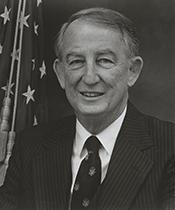
1,645 records where Rep. Gibbons, Sam [D-FL-11] is listed as a sponsor, author, or other actor. Search with topics and years
United States · United States Congress · 22 October 1991
Designates December 1991 as Bicentennial of the District of Columbia Month.
United States · United States Congress · 17 October 1991
Directs the Administrator of the Environmental Protection Agency (EPA), acting through the Office of Research and Development, to enter into an arrangement with the National Academy of Sciences to conduct a study of the environmental research basis for wetlands delineation. Requires the Academy to report the findings of the study to the Congress, along with recommendations for legislative and administrative actions. Authorizes appropriations. Expresses the sense of the Congress that the EPA should not adopt proposed revisions to the Federal Manual for Delineating Wetlands until six months after the Academy submits such report.
United States · United States Congress · 11 October 1991
Declares that Members of Congress are no longer exempted from Federal laws, including the: (1) Americans with Disabilities Act; (2) title VII of the 1964 Civil Rights Act; (3) Equal Opportunity Act; (4) Occupational Safety and Health Act; (5) Fair Labor Standards Act; and (6) Freedom of Information Act. Makes it illegal to furnish any Member of the Congress, at the expenses of the Federal Government, free or at reduced costs: (1) medicine; (2) hospital care; (3) ambulance services; (4) meals; (5) flowers or plants; (6) pictures or picture frames; (7) haircuts; or (8) other items, services, or privileges, except official office expenses such as supplies and stationery.
United States · United States Congress · 9 October 1991
Approves the extension of nondiscriminatory treatment (most-favored-nation treatment) to the products of the Soviet Union transmitted to the Congress by the President on October 9, 1991.
United States · United States Congress · 3 October 1991
Designates 1992 as The Year of the American Indian.
United States · United States Congress · 23 September 1991
Directs the Sergeant at Arms of the House of Representatives, after consultation with the Speaker of the House and the Comptroller General, to establish procedures to assure that check cashing at the Sergeant at Arms Bank is conducted in a manner consistent with standard banking practices. Requires such procedures to: (1) provide for overdraft protection, suspension or termination of check privileges, or other means of protection against returned checks; and (2) be strictly and uniformly applied to all users with public disclosure. Requires a report to the Speaker by January 3, 1992, on carrying out this Act.
United States · United States Congress · 17 September 1991
Repeals a specified provision of the Comprehensive Anti-Apartheid Act of 1986 prohibiting the importation of gold coins from the Soviet Union.
United States · United States Congress · 17 September 1991
Designates 1992 as the Year of the Gulf of Mexico. Directs all Federal and State agencies which have responsibility for matters affecting the Gulf to work to increase public awareness regarding the immeasurable value of this resource and current conditions which threaten its aesthetic and economic value.
United States · United States Congress · 12 September 1991
Extends nondiscriminatory treatment (most-favored-nation treatment) to the products of Estonia, Latvia, and Lithuania. Expresses the sense of the Congress that the President should take prompt action to provide preferential tariff treatment to such products under the Generalized System of Preferences.
United States · United States Congress · 12 September 1991
Designates October 30, 1991, as Refugee Day.
United States · United States Congress · 2 August 1991
Intermodal Carriers Competitiveness Act of 1991 - Prohibits a State, political subdivision, or interstate agency of two or more States from adopting or enforcing any law, rule, regulation, or standard relating to interstate or intrastate rates, routes, services, or terms of service of any national intermodal carrier with respect to the provision of surface transportation of property in the State.
United States · United States Congress · 2 August 1991
Pollution Prevention, Community Recycling, and Incinerator Control Act - Amends the Solid Waste Disposal Act to prohibit the issuance of permits for construction or expansion to municipal solid waste incinerators. Prohibits Federal agencies, State or local governments, or other waste management jurisdictions from issuing permits to such incinerators after December 31, 1999, unless the applicant demonstrates and the State finds that: (1) an annual waste composition analysis of the solid waste generated within the area to be served by the facility is conducted by the applicant and by entities from which the facility accepts waste; (2) such entities divert specified percentages of glass, paper, metals, plastics, and yard and food waste to waste management methods other than incineration; (3) the facility will not interfere with diversion rates; (4) it is not feasible to manage the remaining solid waste through source reduction, reuse, or recycling; (5) the facility will not adversely affect the environment or human health and is not situated in a nonattainment area identified under the Clean Air Act; (6) the facility will not harm the local economy; (7) the full cost of the facility over its entire life will be less costly than reducing, recycling, or composting waste; (8) the waste management jurisdiction conducts a public participation process (including a technical assistance grant to local community groups concerned about the project); (9) the proposed construction or expansion is approved by the unit of local government in whose boundaries the facility would be sited; (10) firms operating the facility are in compliance with environmental and public health statutes, have paid outstanding fines for violations of such statutes, and make disclosure statements available; and (11) an approved environmental impact statement is completed. Directs the Administrator of the Environmental Protection Agency to: (1) promulgate standards for waste composition analyses; and (2) review diversion rates triennially and require higher rates, if feasible. Treats ash from municipal solid waste incinerators as a hazardous waste under the Solid Waste Disposal Act. Requires such ash to be managed in a monofill containing only such ash and designed to: (1) prevent the migration of constituents during the operation of the facility; and (2) prevent the infiltration of precipitation during any closure or postclosure monitoring period. Provides for compliance with such requirement by existing incinerators within three years of the enactment of this Act. Prohibits the use of such ash for any purpose. Prohibits the incineration of household hazardous waste, batteries, chlorinated plastics, consumer electronics, and yard waste in such incinerators. Prohibits the issuance of permits or prior approval for the construction or expansion of hazardous waste incinerators unless: (1) waste composition analyses are conducted by the applicant and generators of waste to be incinerated at the facility; (2) specified toxics use reduction requirements have been met and the facility will not interfere with the implementation of such requirements; (3) the facility will not adversely affect the environment or human health; (4) the facility will not harm the local economy; (5) there is no safer disposal or treatment technology available for any of the wastes; (6) the waste management jurisdiction conducts a public participation process (including a technical assistance grant to local community groups concerned about the project); (7) the proposed construction or expansion is approved by the unit of local government in whose boundaries the facility would be sited; (8) firms operating the facility are in compliance with environmental and public health statutes, have paid outstanding fines for violations of such statutes, and make disclosure statements available; and (9) an approved environmental impact statement is completed. Requires hazardous waste generators, as part of the permit process, to report annually on the use, and reduction of the use, of toxic or hazardous substances at their facilities. Directs permit applicants to demonstrate that the State in which the incinerator is located, and each State in which generators of hazardous waste to be incinerated at the facility are located, are implementing toxics use reduction programs. Applies this Act's requirements to any facility that burns hazardous waste.
United States · United States Congress · 2 August 1991
Approves the extension of nondiscriminatory treatment (most-favored nation treatment) to the products of the Soviet Union, Estonia, Latvia, and Lithuania transmitted to the Congress by the President on August 2, 1991.
United States · United States Congress · 31 July 1991
Marine Mammal Public Display Reform Act of 1991 - Amends the Marine Mammal Protection Act of 1972 to prohibit issuance of a permit for the taking of any marine mammal in the waters of a State for public display if: (1) issuance of the permit would be inconsistent with State law; and (2) the Governor of such State submits to the Secretary of the department in which the National Oceanic and Atmospheric Administration is operating and the Secretary of the Interior notice of disapproval of the issuance of such permit.
United States · United States Congress · 31 July 1991
Designates May 1992 as National Amyotrophic Lateral Sclerosis Awareness Month.
United States · United States Congress · 30 July 1991
Amends the Internal Revenue Code to restore the following estate tax provisions in effect prior to enactment of the Technical and Miscellaneous Revenue Act of 1988 with respect to noncitizen international organization employees: (1) the marital deduction for decedents who are resident (domiciled) in the United States regardless of the spouse's citizenship; (2) the rule that 50 percent of jointly held property is includable in the decedent's estate, regardless of the spouse's citizenship and the source of payment for the property; and (3) the estate tax rates applied to employees who are nonresident noncitizens.
United States · United States Congress · 29 July 1991
Medicare Physician Payment Reform Amendments of 1991 - Amends title XVIII (Medicare) of the Social Security Act to revise the transition rules for phasing in the resource-based relative value scale (RB RVS) method of payment for physician services to prohibit adjustments for asymmetry in the transition and for behavioral responses. Declares spending under this Act to be an emergency requirement under the Balanced Budget and Emergency Deficit Control Act of 1985 (Gramm-Rudman-Hollings Act) and exempt from sequestration.
United States · United States Congress · 18 July 1991
Designates August 29, 1991, as National Sarcoidosis Awareness Day.
United States · United States Congress · 17 July 1991
Designates October 1991 as Country Music Month.
United States · United States Congress · 16 July 1991
Domestic Corporation Taxation Equality Act of 1991 - Amends the Internal Revenue Code to prohibit, with specified exceptions, the States from imposing tax on corporate taxpayers on a worldwide unitary basis, unless a taxpayer unconditionally elects to be taxed that way. Includes an express prohibition against the unitary method with respect to a domestic corporation whose average U.S. payroll, property, and sales represent less than 20 percent of its total payroll, property, and sales. Permits a State to tax dividends received by domestic corporations from their foreign affiliates only to the extent that the State excludes from the tax base of the U.S. corporation: (1) at least 85 percent of such dividends; or (2) the portion of such dividends that effectively bears no Federal income tax after application of the foreign tax credit.
United States · United States Congress · 16 July 1991
Amends the Internal Revenue Code to permit deferred compensation plans of State and local governments and tax-exempt organizations to make distributions to a participant if: (1) the total does not exceed $3,500; and (2) such amount may be distributed only if no amount has been deferred during the two-year period ending on the date of distribution and there has been no prior distribution. Allows the plan to distribute such amount without the participant's consent under such circumstances. Allows participants to make one change in their deferred distribution date. Provides for a cost-of-living adjustment to the maximum deferral amount per year.
United States · United States Congress · 16 July 1991
Designates May 1992 as National Trauma Awareness Month.
United States · United States Congress · 11 July 1991
Community Right-To-Know More Act of 1991 - Amends the Solid Waste Disposal Act to revise congressional findings, objectives, and national policy provisions. Title I: Expansion of Toxics Release Inventory - Requires owners or operators of facilities subject to toxic chemical release requirements under the Emergency Planning and Community Right-To-Know Act of 1986 that meet threshold requirements under this Act to include supplemental information comparable to that required in toxic chemical release forms for transfers or releases of chemicals that are: (1) priority pollutants relating to steam electric power point source pollutants under the Federal Water Pollution Control Act; (2) specified hazardous wastes listed under the Solid Waste Disposal Act; (3) specified chemicals listed under the Clean Air Act; (4) pesticides with respect to which the registration has been denied, cancelled, or is under suspension or pesticides undergoing administrative review or that are classified for restricted use; (5) chemicals listed under the Safe Drinking Water Act for which maximum contaminant levels have been proposed; (6) chemicals identified as carcinogens by the Carcinogen Assessment Group of the Environmental Protection Agency (EPA), the International Agency for Research on Cancer, or the National Toxicology Program; (7) extremely hazardous substances listed pursuant to the Emergency Planning and Community Right-To-Know Act of 1986; (8) chemicals listed in 90 California Regulatory Notice Register 990 as reproductive toxins; or (9) listed under the Emergency Planning and Community Right-To-Know Act of 1986 that are not used at a level that meets threshold requirements for reporting but are released to the environment or transferred to an offsite waste management facility in amounts meeting the threshold under this Act. Provides that a facility meets the threshold requirements with respect to a chemical listed under this Act if the facility: (1) uses the chemical at a level that meets the threshold requirement for reporting under the Emergency Planning and Community Right-To-Know Act of 1986; or (2) releases to the environment or transfers to an offsite waste management facility a chemical in an amount greater than or equal to 100 pounds annually in the case of metals or metal compounds or 2,000 pounds annually for any other chemical. Authorizes the EPA Administrator to establish lower thresholds for any chemical, user segment, or facility. Permits authorized States to establish lower thresholds for facilities in their jurisdictions. Authorizes the Administrator to delete a carcinogen or reproductive toxin from the list under this Act if it is not otherwise listed under this Act or the Emergency Planning and Community Right-To-Know Act of 1986. Applies toxic chemical release reporting requirements to facilities employing at least ten full-time employees that are not currently subject to such requirements, but meet threshold reporting requirements under this Act or the Emergency Planning and Community Right-To-Know Act of 1986. Title II: Toxics Use Reduction - Requires owners or operators of covered facilities to submit: (1) annual toxics use reduction reports for each covered chemical for which such facilities are required to file toxic chemical release forms or supplemental information pursuant to title I; and (2) annual plans for reducing the use of covered chemicals. Sets forth report and plan requirements and submission deadlines. Authorizes the Administrator to modify such plans. Requires the Administrator to establish an advisory board to determine a professional code of practice for toxics use reduction materials accounting and planning. Directs owners or operators of facilities in violation of standards, permit conditions, or regulations pertaining to the management or release of covered chemicals, upon the request of 50 citizens or employees, to establish a workplace toxic use reduction committee to provide ongoing dialogue and appraisal of the progress toward pollution prevention. Requires the committee to meet at least quarterly to review a facility's progress on toxics use reduction. Directs the Administrator to implement a strategy to promote toxics use reduction. Requires the Administrator, Federal agencies, and States or political subdivisions, in issuing or approving regulatory action under specified environmental, consumer protection, occupational health and safety, and energy Acts, to make toxics use reduction an integral part of the planning, decisionmaking, and rulemaking process. Authorizes the Administrator to require owners or operators of facilities to provide records and information and grants the Administrator access to records, products, or raw materials. Requires the Administrator to establish a technical assistance and research program to promote and study toxics use reduction. Directs the Administrator to analyze information on production units reported by facilities for purposes of classifying such units into groups that use similar production processes and covered chemicals. Authorizes the Administrator to classify such units into groups on the basis of industrial categories according to Standard Industrial Classification codes. Requires the Administrator to: (1) classify ten groups, to be referred to as user segments; (2) evaluate the reduction in the use and generation of covered chemicals by each production unit in each user segment; and (3) prepare and make available to the public an annual percentile ranking of each unit according to use and generation as byproduct. Authorizes the Administrator to promulgate regulations to establish minimum toxics use reduction performance requirements for production units in user segments. Sets forth regulation requirements. Applies provisions of the Emergency Planning and Community Right-To-Know Act of 1986 concerning trade secrets, the provision of information to health professionals, and public availability of information to toxics information under this Act. Waives Federal facility compliance with toxics use reduction and reporting requirements upon the request of the Secretary of Defense and the President's determination that such waiver is in the interest of national security. Directs the Administrator to study and report to the appropriate congressional committees on methods of encouraging the reporting of toxics information through the use of computer telecommunication and other means. Requires the Director of the Office of Technology Assessment to study and report to the Administrator and the Congress on the provision to the public of toxic release inventory information and related information required to be submitted to the Administrator. Prescribes civil and administrative penalties for violations of toxics use reduction and reporting requirements. Sets forth provisions concering civil actions with respect to such violations. Requires the Administrator to establish a grant program to assist States and local governments in establishing innovative toxics use reduction programs. Directs States to make 75 percent of a grant available to local governments for carrying out toxics use reduction. Bases the awarding of grants on the extent to which chemical substances are manufactured, processed, used, and disposed of in a State, the extent of exposure to such substances in a State, and the population density of a State. Authorizes appropriations for such grants and for toxics use reduction under this Act. Requires the Administrator to: (1) implement a procurement policy that reduces, avoids, or eliminates the acquisition of agency procurement items made with or containing covered chemicals and hazardous secondary materials; and (2) make recommendations to the Congress for a national toxics use reduction procurement policy covering all procuring agencies, Federal facilities, and government contractors. Amends the Pollution Prevention Act of 1990 to increase the amounts authorized to be appropriated for functions under such Act and to increase and extend the authorization of appropriations for technical assistance grants to States. Title III: Waste Stream Reporting - Amends the Solid Waste Disposal Act to revise recordkeeping and reporting requirements for hazardous waste generators. Directs hazardous waste generators to report annually to the Administrator and authorized State agencies on the quantity of hazardous waste generated from each catastrophic event, remedial action, or one-time event not associated with production processes. Sets forth reporting requirements for generators of solid waste in amounts in excess of 11,000 pounds a month and for facilities managing solid and certain special wastes generated by fossil fuels combustion, mining, and activities involving cement kilns. Reqiures the Administrator to: (1) maintain publicly accessible databases for hazardous, solid, and special waste stream data reported under this Act; (2) make the data accessible on a cost reimbursable basis; and (3) report to the Congress on links between EPA databases and changes that would facilitate links between all major EPA operations.
United States · United States Congress · 10 July 1991
Social Security Trust Fund Integrity and Benefits Improvement Act of 1991 - Title I: Benefit Improvements - Amends title II (Old Age, Survivors and Disability Insurance) (OASDI) of the Social Security Act to: (1) increase the amount of outside income which beneficiaries who have attained retirement age may earn without incurring a reduction in benefits; (2) increase survivors' benefits for those widows and widowers whose spouses died before they reached age 65; (3) repeal provisions which require that a widow or widower must have become disabled within seven years of their spouse's death or within seven years of the end of their eligibility for benefits as the surviving parent of a young child in order to be eligible for disability benefits; (4) raise the social security payroll tax exemption for State election officials and workers, and index the exempt amount beginning in 1993; and (5) increase the OASDI contribution and benefit base on a graduated basis beginning in 1992. Directs the Comptroller General to conduct a study and report to the Congress on the disability determination process and the appeals process applicable to disability determinations under the OASDI program and title XVI (Supplemental Security Income) (SSI) of the Social Security Act. Title II: Clarification of Budgetary Provisions - Amends the Balanced Budget and Emergency Deficit Control Act of 1985 (Gramm-Rudman-Hollings Act) to exclude the appropriations for the administration of the Federal Old-Age and Survivors Insurance Trust Fund and the Federal Disability Insurance Trust Fund from Federal budget deficit calculations and to exempt such appropriations from sequestration under such Act. Title III: Social Security Administration - Amends title VII (Administration) of the Social Security Act to establish the Social Security Administration as an independent executive agency. Transfers to the Administration all functions carried out by the Secretary of Health and Human Services pertaining to such programs.
United States · United States Congress · 9 July 1991
Expresses the sense of the Congress that the United States should: (1) promote the maximum conservation and protection of whale, dolphin, and porpoise populations; (2) work to strengthen and maintain the current International Whaling Commission moratorium on the commercial killing of whales; (3) work to strengthen the Commission by reaffirming its competence to regulate whaling on all species of cetaceans and take actions to assure global protection for small cetaceans; and (4) in promoting protection, make use of diplomatic channels, domestic and international law, and all other means.
United States · United States Congress · 26 June 1991
World Cup USA 1994 Commemorative Coin Act - Directs the Secretary of the Treasury to issue a specified number of five-dollar gold coins, one-dollar silver coins, and half-dollar clad coins in commemoration of the 1994 World Cup and the unique appeal of soccer. Sets forth certain features of such coins and provides for their design, issuance, and sale. Requires that all sales include a surcharge of $35 per coin for the five-dollar coins, $7 per coin for the one-dollar coins, and $1 per coin for the half-dollar coins. Requires that all surcharges be paid to the Organizing Committee to organize and stage the 1994 World Cup. Requires that ten percent of such funds shall be made available through the U.S. Soccer Federation Foundation, Inc., for distribution to institutions for scholastic scholarships to qualified students.
United States · United States Congress · 26 June 1991
Constitutional Amendment - Requires the Congress and the President, prior to each fiscal year, to agree on an estimate of total receipts (except those derived from borrowing) for that fiscal year by enactment of a law devoted solely to that subject. Prohibits outlays for that year (except those for repayment of debt principal) from exceeding this amount unless the Congress, by a three-fifths roll call vote of each House, authorizes a specific excess of outlays over receipts. Requires a three-fifths roll call vote of each House to increase the public debt. Directs the President to submit a balanced budget to the Congress. Requires the approval of a majority of the total membership of each House by roll call vote before any bill to increase revenue may become law. Waives these provisions when a declaration of war is in effect. Makes this article effective beginning with FY 1995 or with the second fiscal year after its ratification, whichever is later.
United States · United States Congress · 19 June 1991
Medicare Physician Regulatory Relief Amendments of 1991 - Amends title XVIII (Medicare) of the Social Security Act to: (1) prohibit the denial of physician claims because of patient failure to complete Medicare secondary payer questionnaires; (2) prohibit carriers from using extrapolation to recover the amounts they reimbursed physicians for claims for which Medicare disallows payment, if the physician requests that each such claim be individually identified; (3) prohibit the imposition of specified user fees on physicians; (4) require consideration of physician comments in annual carrier performance reviews; (5) allow individuals (including physicians) to file administrative appeals when they have suffered damages as a result of the failure of a carrier to carry out Medicare policies; and (6) require review of medical necessity denials by physicians in the same medical specialty as the physician providing the service. Amends the Medicare and Medicaid (title XIX of the Social Security Act) programs to permit the reimbursement of a patient's regular physician for services provided by another physician who covers for the regular physician under contractual arrangements. Amends title XI of the Social Security Act to repeal the peer review requirement for certain surgical procedures.
United States · United States Congress · 13 June 1991
Amends the Internal Revenue Code to establish requirements for notifying charitable beneficiaries of charitable remainder trusts of their interests in such trusts, including copies of the pertinent parts of an estate tax return on which a charitable deduction is claimed. Establishes penalties if such notices are not filed. Requires each charitable remainder trust to which a contribution was deductible for Federal income, estate or gift tax purposes to file an annual information return on its financial condition, transactions, fiduciaries, beneficiaries, and other information necessary for the Internal Revenue Service (IRS) and beneficiaries to be adequately informed of its affairs. Expresses the sense of the Congress that the IRS undertake and maintain an audit program of all split-interest trusts whose assets exceed $10,000,000 (unless such trust has a foundation manager which is a beneficiary of a private foundation.) Disallows a deduction for a charitable contribution paid to a controlling organization by any controlled organization. Directs the IRS to make available to the public any notice requesting an audit of a charitable remainder trust. Authorizes the IRS to charge an audit notice fee.
United States · United States Congress · 6 June 1991
Medicare Preventive Benefits Act of 1991 - Amends part B (Supplementary Medical Insurance) of title XVIII (Medicare) of the Social Security Act to provide for coverage of fecal-occult blood tests (FOBTs) and screening flexible sigmoidoscopies for the early detection of colorectal cancer. Covers FOBTs on an annual basis for individuals aged 50 or over. Covers screening sigmoidoscopies provided every five years for individuals aged 50 or over. Provides payment for FOBTs under the laboratory fee schedule, subject to a five dollar limit in 1992. Provides payment for screening sigmoidoscopies under the relative value scale in 1992. Permits the Secretary to modify the frequency criteria after 1994. Provides for Medicare coverage of annual influenza vaccinations and for tetanus-diptheria vaccinations administered every ten years. Provides for Medicare coverage up to age seven according to a frequency schedule to be established by the Secretary of Health and Human Services (HHS) in consultation with appropriate entities. Provides for Medicare coverage of annual screening mammography for the early detection of breast cancer for women over age 64. (Currently, such women are covered for such screening performed every other year.) Requires HHS demonstration projects for the coverage of additional specified preventive care services and reports to specified congressional committees on such projects. Authorizes appropriations. Authorizes an Office of Technology Assessment study and report to the Congress on the development of a process evaluating possible Medicare coverage of other preventive care services.
United States · United States Congress · 6 June 1991
Federal Aid Surface Transportation Act of 1991 - Title I: Federal-Aid Highway Act of 1991 - Federal-Aid Highway Act of 1991 - Authorizes appropriations out of the Highway Account of the Highway Trust Fund (HTF) for: (1) the National Highway and Bridge System; (2) the Urban and Rural Highway and Bridge Program; (3) emergency relief; (4) the Federal Lands Highway Program; (5) the University Transportation Centers Program; (6) the Right-of-Way Revolving Fund; and (7) the Territorial Highway Program. Specifies that unobligated balances of funds apportioned or allocated to a State under Federal highway provisions before October 1, 1991, shall be available for obligation in such State under the law, regulations, policies, and procedures relating to the obligation and expenditure of those funds in effect on September 30, 1991. Repeals the FY 1993 authorization under the Federal-Aid Highway Act of 1956. Authorizes appropriations for Interstate construction to complete the Interstate System out of the Highway Account of the HTF for each of FY 1992 through 1995. Provides for certain allocations for Massachusetts for such fiscal years. Sets forth a formula for the apportionment of authorized funds for such fiscal years among the States. Authorizes appropriations out of the Highway Account of the HTF for highway projects for the Interstate Substitution Program. Sets forth provisions with respect to obligation ceilings for Federal-aid highway programs, distribution of and limitations on obligation authority, and redistribution of unused obligation authority. Declares that national resources should be focused upon preserving the nation's investment in its Interstate systems, that broad national defense, economic, safety, and international policy goals are advanced by efficient transportation systems, that national transportation investments should increasingly encourage domestic and international commerce and trade, and that, based on congressionally established national transportation policy and objectives, a new Federal high priority highway network should be designated. Establishes the National Highway and Bridge System, to consist of all currently designated Interstate highways, an appropriate portion of the rural and urban principal arterial routes, including toll facilities, and national defense highways, and routes which meet specified criteria (including nationally significant truck routes, routes that provide nationally significant commodities with access to markets, access points to significant national parks, facilities that will provide logical connection between major population centers and the National Highway and Bridge System, and major urban corridors). Specifies that the National Highway System shall be based on a functional reclassification of roads and streets in each State which shall be designated not later than September 30, 1993, in accordance with guidelines issued by the Secretary of Transportation, and that the Secretary may add segments to the National Highway System as necessary to meet National Highway Program objectives. Directs the Secretary to establish criteria for reviewing projects to be funded as part of the National Highway and Bridge System which: (1) define eligible projects to include rehabilitation, resurfacing, restoration, capacity expansion, operational improvement, safety, and new highway construction; (2) ensure as a first priority for the use of available funds the protection of investments made in the Interstate highways in each State and the provision of suitable traveling quality by such highways; (3) permit funding in urbanized areas to be used to improve highway and transit systems, where it can be shown that the improvement will increase the level of service within the corridor of the National Highway and Bridge System; and (4) permit the use of such funds for intercity rail projects and projects for access to ports, airports, and related facilities. Sets forth additional provisions with respect to the discharge of responsibilities by the Secretary for National Highway and Bridge System projects. Directs the Secretary to establish an Urban and Rural Highway and Bridge Program to provide a category of funds that minimizes Federal requirements and provides flexibility in the use of available funds for either highway or transit projects. Specifies: (1) that the Urban and Rural Highway and Bridge Program shall consist of all public highways (including bridges) functionally classified as arterials, urban collectors, and rural collectors other than those designated as part of the National Highway and Bridge System; (2) that each State shall establish guidelines for implementing this program; and (3) eligible highways and projects. Sets forth provisions with respect to the obligation of funds, and the Federal share of projects, for the construction of toll roads, bridges, tunnels, and ferries. Requires the Secretary, in each fiscal year, to allocate among the States amounts sufficient to ensure that: (1) the total of apportionments and minimum allocation for each State in each such fiscal year shall not be less than 90 percent (currently, 85 percent) of the percentage of estimated tax payments into the Highway Account of the HTF attributable to highway users in the State of total apportionments in each such fiscal year and allocations for the prior year; and (2) each State's total apportionment from the Highway Account of the HTF for the year is not less than that made during FY 1991 (excluding any Interstate construction funds in excess of FY 1992 one-half percent minimum, Interstate substitution, and amounts for demonstration or discretionary funding programs or projects). Directs the Secretary to cooperate with State and local officials in urbanized areas in the development of transportation plans and programs which are formulated with due consideration to comprehensive long-range land use plans, development objectives, innovative financing mechanisms, overall social, economic, environmental, and system performance, energy conservation goals and objectives and with due consideration to their probable effect on the future development of the area. Specifies that the transportation planning process, at a minimum, shall cover the existing urbanized area and the area expected to become urbanized within the forecast period, and that it may encompass the entire Metropolitan Statistical Area/Consolidated Metropolitan Statistical Area at the discretion of the Governor and the affected units of local government. Requires that transportation plans and programs in urbanized areas of more than 200,000 population be based on a continuing transportation planning process which: (1) is carried out by a metropolitan planning organization and is comprehensive to the degree appropriate based on the complexity of transportation problems in the area, including transportation-related air quality problems; and (2) considers all modes of transportation, including intermodal connectivity, the balance between future development and transportation needs, and an areawide multimodal congestion management system. Specifies that in nonattainment areas for transportation-related pollutants the multimodal congestion management system shall address air quality considerations and be coordinated with the process for development of the transportation element of the State Implementation Plan required by the Clean Air Act. Requires that the costs and impacts of proposed action on both mobility and air quality be evaluated. Bars the Secretary from approving any highway project in urbanized areas of more than 200,000 population that by reconstruction or new construction significantly increases the vehicle carrying capacity of a transportation corridor unless the project is consistent with the congestion management system. Directs the metropolitan planning organization to cooperate with the State in the development of a congestion management, bridge management, pavement management, safety management, and traffic monitoring system. Requires that: (1) a metropolitan planning organization be designated in each urbanized area by agreement among the units of general purpose local government and the Governor to carry out such transportation planning process; (2) such organization develop a transportation improvement program that includes all projects proposed for funding within the study area under the National Highway and Bridge Program, the Urban and Rural Highway and Bridge Program, and the Bridge Program; and (3) in urbanized areas of 200,000 population or less, such organization, the State, and transit operators, at a minimum, meet the requirements of this Act by the development of such a transportation improvement program (including consideration of transportation-related air quality problems.) Requires the Federal highway research program to include coordinated long-term programs of research: (1) on Intelligent Vehicle Highway Systems; and (2) for the development, use, and dissemination of performance indicators to measure the performance of the surface transportation system. Requires such program to continue those portions of the Strategic Highway Research Program that the Secretary deems important. Directs the Secretary to create and administer the Dwight David Eisenhower Transportation Fellowship Program, a program to attract qualified students to the field of transportation engineering and research. Provides for the funding of such program. Directs the Secretary to cooperate with the States in carrying out: (1) statewide transportation planning; and (2) State highway research. Sets forth provisions regarding State matching fund requirements and waiver of such requirements. Directs the Secretary: (1) in the Secretary's reports regarding future highway needs of the nation, to report as well on the condition and performance of the existing system and on the bridge needs of the nation; and (2) beginning with the report due in January 1995, to include the results of studies of the air quality impacts of transportation programs including the air quality benefits realized from transportation control measures required under the Clear Air Act. Establishes within the Department of Transportation a Bureau of Transportation Statistics, which shall pursue a comprehensive, long-term program for the collection and analysis of data relating to the performance of the national transportation system. Requires the Director of such Bureau to: (1) produce annually unbiased and comparable estimates of factors including productivity in the various portions of the transportation sector, traffic flow, travel times, travel costs of intracity commuting and intercity trips, frequency of vehicle and transportation facility repairs, accidents, and collateral damage to the human and natural environment; and (2) submit reports beginning on October 1, 1992, and every 12 months thereafter, to specified congressional committees describing the status of the U.S. transportation system. Authorizes the Secretary to: (1) undertake, on a cost-shared basis, collaborative research and development with non-Federal entities, including State, local, and foreign governments; and (2) enter into cooperative research and development agreements, except that the average Federal share in such agreements shall not exceed 50 percent (but allows the Secretary to approve a higher Federal level of participation where there is substantial public interest or benefit). Authorizes the Secretary to withhold project approvals on National Highway and Bridge Program projects for failure of a State to have a bridge management, pavement management, safety management, and congestion management system. Requires each State to have a traffic monitoring system to provide statistically-based traffic data. Sets forth provisions regarding: (1) acquisition of rights-of-way; (2) private, State, and local donations; (3) access to rights-of-way to accommodate needed passenger or commuter rail, high speed ground transportation systems (including magnetic levitation systems), and highway and nonhighway public mass transit facilities; and (4) the definition and scope of the Interstate System. Declares that: (1) the nation must redirect its efforts toward moving people, information, and goods rather than moving vehicles; (2) the new Federal program shall refocus national policies to respond to increasing inter-regional travel, relieving urban congestion, improving rural access, fostering intermodalism, enhancing air quality, conserving energy, and giving priority to projects that offer the best solutions to the transportation problems and environmental considerations of each region; and (3) the essential element for an effective future program is a new Federal, State, and local partnership that provides more funding, greater program flexibility, and greater program management and resource contribution responsibilities at the State and local levels. Sets forth provisions with respect to the apportionment of funds, including apportionment formulas under the: (1) National Highway and Bridge Program, based on the State's rural and urban lane miles, rural vehicle miles traveled, and diesel fuel consumption; and (2) Urban and Rural Highway and Bridge Program, in the ratio of tax payments of the Highway Account of the HTF attributable to the highway users of each State. Sets forth provisions with respect to: (1) project agreements and obligations of funds; (2) availability of funds; (3) the Federal share payable with respect to certain projects; (4) project litigation expenses; and (5) the allocation and administration of Federal lands highways funds, and the establishment of a coordinated Federal Lands Highways Program. Authorizes (subject to specified limitations): (1) States to use Federal highway funds to construct improved lanes, paths, or shoulders, traffic control devices, shelters, and parking facilities for bicycles and pedestrians, and carry out nonconstruction projects related to safe bicycle and pedestrian use; (2) the Secretary, where a highway bridge deck being replaced or rehabilitated with Federal financial participation is located on a highway on which bicycles or pedestrians are permitted to operate at each end of the bridge and the Secretary determines that the safe accommodation of bicycles or pedestrians can be provided at reasonable cost, to replace or rehabilitate such bridge, making such accommodations; (3) Federal lands highways funds to be used for the construction of pedestrian walkways and bicycle routes; and (4) a State to expend Urban and Rural Highway and Bridge Program funds for such construction. Provides for: (1) a functional reclassification of all public roads; (2) the transfer of funds for transit projects to, for administration by, the Urban Mass Transportation Administration; and (3) a recodification of Federal highway-related provisions. Requires that construction standards adopted for the National Highway and Bridge System be those approved by the Secretary in cooperation with the State highway departments and the American Association of State Highway and Transportation Officials (currently, with respect to construction standards for the Interstate System, cooperation with such Association is not required). Directs the Secretary to issue guidelines for minimizing soil erosion from highway construction. Bars the Secretary from approving projects that will result in the severance or destruction of an existing major route for nonmotorized transportation traffic and light motorcycles, unless the project provides a reasonable alternative route or an alternative route exists. Requires: (1) projects for resurfacing, restoring, or rehabilitating specified highways to be constructed in accordance with standards to preserve and extend highway service life and enhance highway safety; and (2) States to charge, at a minimum, fair market value for the sale, use, lease, or lease renewals of right-of-way airspace acquired as a result of a project funded in whole or in part with Federal assistance made available from the Highway Account of the HTF, with exceptions. Provides that: (1) Indian contractors certified by State transportation or highway departments shall receive preference in the award of contracts on Indian reservations to the maximum extent practicable; and (2) contracts for Urban and Rural Highway and Bridge Program projects may be entered into with the prior concurrence of the Secretary in the award. Authorizes: (1) the State transportation or highway department to include warranty or guarantee provisions in construction contracts which, if used, shall be for a specified construction product or feature and may not include routine maintenance; and (2) projects (currently, requires projects) approved to include the amount of any interest earned and payable on bonds issued by the State to the extent that the proceeds of the bonds have actually been expended in the construction of the project. Authorizes the Secretary, except for projects administered under the Urban and Rural Highway and Bridge Program, to make payments to a State for costs incurred on a project. (Current law authorizes payment to States for construction.) Specifies that total payments shall not exceed total costs incurred by the State for the project. Requires any State transportation or highway (currently, highway) department which submits plans for a National Highway and Bridge Program or Interstate System project (currently, Interstate System project) to make its certification and report, indicating that consideration was given to the economic, social, environmental, and other effects of the plan, highway location or design, and various alternatives which were raised during the hearing or which were otherwise considered (current law does not mention the latter requirement). Authorizes the Secretary to approve for Federal financial assistance from National Highway and Bridge Program funds: (1) projects designed to encourage the use of carpools, subject to specified limitations; and (2) the construction of exclusive or preferential high occupacy vehicle (HOV) lanes, highway traffic control devices, intercity and urban bus passenger loading areas and facilities, and fringe and transportation corridor parking to serve HOV, intercity bus, and public transportation passengers. Specifies that if fees are charged for the use of any carpool or other publicly owned parking facility constructed pursuant to Federal highway provisions, the revenue in excess of that required for maintenance and operation of the facility and the cost of providing shuttle service to and from the facility including compensation to any person for operating the facility and for providing shuttle service shall be used for purposes authorized under Federal highway provisions. Requires that National Highway and Bridge System funds be made available to finance the Federal share of projects for exclusive or preferential HOV, truck, and emergency vehicle routes or lanes. Permits such routes on the Interstate System to have less than four lanes of traffic. Prohibits the approval of HOV projects unless the Secretary has received assurances from the owner or operator of the facility that HOV vehicles will fully utilize the proposed project and that essential operations and enforcement support of the facility will be provided. Specifies that, in any case where sufficient land exists within the publicly acquired rights-of-way of the National Highway System to accommodate needed nonhighway public mass transit facilities and where the accommodation can be accomplished without impairing automotive safety or future highway improvements, the Secretary may authorize a State to make those lands and rights-of-way available without charge to a publicly owned mass transit authority for such purposes wherever the public interest will be served. Directs the Secretary to require assurance from any State desiring to avail itself of benefits under Federal highway provisions that employment in connection with proposed projects be provided without discrimination based on race, color, religion, national origin, age, disability, or sex (currently, specifies "without regard to race, color, creed, national origin, or sex"). Requires that not to exceed one fourth of one percent of the funds apportioned to a State be available for highway construction training. Prohibits discrimination on the basis of sex under programs or activities receiving Federal assistance. Repeals a requirement that each State certify that it is enforcing all speed limits on public highways and that the Secretary not approve projects in States failing to make such certification. Requires each State to establish a procedure to certify that highway bridge inspectors meet national qualifications. (Current law requires that standards established by the Secretary include a procedure for national certification of such inspectors.) Directs the Secretary to withhold ten percent of the amount to be appropriated to any State on the first day of each fiscal year in which the purchase or public possession in that State of any alcoholic beverage by a person who is less than 21 years of age is lawful (current law specifies five percent on the first day of the fiscal year succeeding the first fiscal year beginning after September 30, 1985, and ten percent after the second fiscal year beginning after such date). Specifies that funds withheld from apportionment shall be apportioned to the other States in compliance and remain available for the period of time applicable to the category of funds withheld (currently, treatment of such funds varies based on whether funds were withheld on or before September 30, 1988). Directs that construction estimated to cost $50,000 (currently, $15,000) or more per mile or per project for projects with a length of less than one mile on forest development roads and trails be advertised and let to contract, and allows projects with less than such cost, if no acceptable bid is received, to be done by the Secretary of Agriculture. Repeals provisions under the Territorial Highway Program: (1) that Federal financial assistance be granted on the basis of a Federal contribution of 100 percent of the cost of any project; and (2) under which the Governor must agree not to impose any toll, or permit any such toll to be charged, for use by vehicles or persons of any portion of the facilities constructed or operated to qualify for funding. Provides that, in addition to a specified percentage, sums provided (currently, two percent) for each fiscal year may be expended upon request of the Governor with the Secretary's approval under such Program. Requires (currently, authorizes the Secretary to make) expenditures with respect to the reconstruction of the Alaska-Canada international highway. Authorizes the Secretary to give priority of approval to, and expedite the construction of, projects that are recommended as important to the national defense. Modifies provisions regarding the National Highway Institute to: (1) require that private agencies and individuals pay the full cost of any education and training received by them; and (2) authorize the Institute to engage in all phases of contract authority for training purposes authorized under Federal highway provisions and to carry out its authority independently or in cooperation with any other branch of Government, authority, association, or person. Authorizes the Institute to establish and collect fees from any entity and place them in a special account.
United States · United States Congress · 6 June 1991
Directs the President to initiate consultations with each Pacific Rim country (Indonesia, Malaysia, the Philippines, Singapore, Thailand, Brunei, Australia, New Zealand, Taiwan, South Korea, Japan, or Hong Kong) to determine the feasibility of negotiating the elimination of tariffs and nontariff barriers, including barriers to investment, trade in services, and protection of intellectual property rights, through a bilateral free trade agreement. Requires the President, at each ministerial meeting convened for such consultations, to recommend establishment of a council to review and report on the existing bilateral relationship and the prospects for negotiating a free trade agreement. Requires the President to achieve specified negotiating objectives with each country, including: (1) improving bilateral relationships through trade expansion and greater economic efficiency; (2) removing trade barriers, particularly in agricultural products and manufactured components in an effort to reduce government subsidies and injurious dumping practices; (3) providing mechanisms for the development of rules in nontraditional areas such as services, trade-related investment, and the protection of intellectual property rights; (4) encouraging U.S. firms to take greater advantage of opportunities in Pacific Rim countries and to compete more effectively there; and (5) improving market access in such countries.
United States · United States Congress · 3 June 1991
Amends Federal highway provisions to allow longer combination vehicles (LCVs) to continue to operate only if the Secretary of Transportation determines that such vehicles were authorized by State statute or regulation conforming to Federal law and were in actual, continuing lawful operation on June 1, 1991. Specifies that: (1) all such operations shall continue to be subject to, at the minimum, all State statutes, regulations, limitations, and conditions, including routing-specific and configuration-specific designations and all other restrictions (statutes and restrictions), in force on June 1, 1991; and (2) nothing in this Act shall prevent any State from further restricting or prohibiting the operation of LCVs whose continued operation is authorized under such provisions, with exceptions. Directs the Secretary, within 60 days, to publish in the Federal Register a complete list of such State statutes and restrictions, which shall become final 60 days after publication. Bars LCVs from operating except as provided in such list. Sets forth analogous restrictions with respect to cargo carrying unit limitations under Federal transportation provisions.
United States · United States Congress · 20 May 1991
Pension Coverage and Portability Improvement Act of 1991 - Title I: Portable Pension Plans - Amends the Employee Retirement Income Security Act of 1974 (ERISA) to set forth definitions and requirements relating to portable pension plans. Defines a portable pension plan as a pension plan consisting of one or more simplified employee pensions (SEPs), individual retirement accounts (IRAs), individual account plans, or tax-deferred annuities which meet requirements for: (1) the amount contributed by employers on behalf of employees under specified Internal Revenue Code (IRC) provisions; and (2) portability under ERISA as amended by this Act. Requires for portability that a plan provides for: (1) distribution of all or part of the accrual benefit in the form of a direct transfer from the plan to a portable pension plan, pursuant to a written election any individual who has an accrued benefit under the plan (or the beneficiary of the dead individual), and spousal consent; and (2) acceptance, with respect to any individual, of any transfer to the plan of a plan distribution which is not includable in gross income, any plan distribution to such a plan which is not includable in gross income, or any direct transfer to such plan from any other SEP plan, portable pension plan, or specified plans under IRC which include a tax-exempt trust. Requires any portable pension plan providing for individual accounts to permit participants or beneficiaries to exercise control over the assets in their accounts as required by specified ERISA provisions and as determined by regulations of the Secretary of Labor. Requires distributions of the accrued benefit under portable pension plans to be made only: (1) in one of certain permitted standard retirement forms (but allows election of other forms under specified conditions); and (2) with the consent of the participant or beneficiary, and upon their timely written application, and in accordance with the terms of the plan. Requires the administrator of a portable pension plan to, immediately before making a distribution, provide to the individual who is to be the recipient a written explanation of: (1) possible taxes or penalties under IRC; (2) the applicable permitted retirement income form's terms and conditions; (3) the participant's right to elect another form; and (4) the rights of the participant's spouse. Directs the Secretary of Labor, in consultation with the Secretary of the Treasury, to prescribe one or more prototype portable pension plans, within 12 months after enactment of this Act. Outlines the types of persons or entities that may be plan sponsors of portable pension plans. Requires all employers, within 24 months after enactment of this Act, to provide for maintenance of an individual account plan into which employees may make salary reduction contributions. Allows employers to satisfy such requirement by: (1) amending an existing pension plan maintained by the employer to comply with portable pension plan requirements for such salary reduction contributions; (2) adopting a minimum-benefit pension plan providing for voluntary salary reduction contributions; or (3) adopting a separate portable pension plan, as described under this Act. Amends the IRC to set forth maximum salary reduction amount tax-deductible contribution limits for minimum-benefit portable pension plans. Requires, in a defined benefit plan, that the present value of accrued benefits of a participant in a minimum-benefit pension plan shall be determined by using an assumed interest rate of three percent. (Provides special transition rules, for the first consecutive three full plan years following enactment of this Act, under which such rate is six percent for the first year, five percent for the second year, and four percent for the third year.) Amends IRC to increase to 25 percent (from ten percent) the early withdrawal penalty tax on preretirement distributions of employee pension plan contributions that are not rolled over into an IRA or other qualified plan. Title II: Minimum Benefit Pension System - Requires employers to provide for the maintenance of a minimum-benefit pension plan in which all of their employees may be participants after completing one year of service with the employer. Allows employers to provide for such plan maintenance only by: (1) maintaining the plan; (2) adopting a prototype portable pension plan; or (3) entering into an agreement with one or more other employers, employee organizations, or both, under which such plan is maintained. Requires minimum-benefit pension plans to be described under specified IRC provisions, include a tax-exempt trust, and, with respect to employer maintenance: (1) for an individual account plan, have an employer contribution for each participant's account of at least six percent of their compensation paid by the employer for the plan year; or (2) for a defined benefit plan, have each participant's accrued benefit derived from employer contributions equal the greater of the accrued benefit under the plan, the present value of accrued benefits, or the amount of the participant's accrued benefit if the employer had made contributions to an individual account. Requires that all plans qualifying under specified IRC provisions to be taken into account in determining whether an employer meets such maintenance requirements. Grants a participant a nonforfeitable right to 100 percent of the part of the accrued benefit derived from employer contributions. Sets forth transition rules for such minimum-benefit pension system. Makes the employer contribution requirements inapplicable for the first plan year for which the employer provides such maintenance. Requires, with respect to applying such employer contributions requirements for the following three plan years, that such a plan be maintained by: (1) all employers of over 500 employees, for the first plan year; (2) all employers of over 100 employees, for the second plan year; and (3) all employers, for the third plan year. Requires with respect to the first three plan years in which an employer is required to maintain and contribute to such plan that the minimum portion of the employee compensation that must be equaled by such contribution be three percent for the first year, four percent for the second year, and five percent for the third year. Prohibits the minimum benefit (as described under the requirement for the present value of accrued benefits) from being diminished or offset in any way by other employee benefit plans or specified benefits under the Social Security Act. Amends the IRC to impose a tax on employers for failure to make minimum-benefit plan contributions. Sets such tax at 110 percent of the amount by which the required contribution exceeds that actually contributed for the year. Makes such minimum benefit pension system under title II of this Act effective 60 months after enactment of this Act unless: (1) the Secretary of Labor certifies to the Congress that at least 75 percent of full-time employees of employers covered by ERISA are active participants in portable pension plans as defined under title I of this Act meet minimum-benefit pension plan requirements established in title II of this Act; (2) the Congress is persuaded by the Secretary's findings that the goals of universal pension coverage and improved pension portability in the private pension system have been substantially achieved; and (3) this title II is repealed by a simple majority vote of both Houses of the Congress. Directs the Secretaries of Labor and of the Treasury to issue regulations and procedures for enactment of this Act within 12 months after its enactment.
United States · United States Congress · 9 May 1991
Amends the Higher Education Act of 1965 to authorize additional appropriations for the Mary McLeod Bethune Memorial Fine Arts Center of Bethune-Cookman College in Volusia County, Florida.
United States · United States Congress · 9 May 1991
Amends the Internal Revenue Code with regard to foreign base company income to provide a special rule for U.S.-owned businesses operating in the European Community (which includes Belgium, Denmark, France, Greece, the Irish Republic, Italy, Luxembourg, The Netherlands, Portugal, Spain, the Federal Republic of Germany, and the United Kingdom).
United States · United States Congress · 8 May 1991
Expresses the gratitude of the Congress to this Nation's Federal civilian employees for their contributions to Operation Desert Shield and Operation Desert Storm. Commends and congratulates them on a job superbly done.
United States · United States Congress · 7 May 1991
Working Family Tax Relief Act of 1991 - Title I: Refundable Credit for Children - Amends the Internal Revenue Code to allow a refundable tax credit of $800 for each child under the age of 18 in lieu of the deduction for personal exemptions for children. Provides an inflation adjustment for such tax credit. Title II: Changes in Individual Income Tax Rate Structures - Increases the tax rates for higher income individuals. Imposes a surtax on the individual tax rate or the alternative minimum tax of an individual whose income exceeds the threshold amount. Defines the threshold amount as: (1) $250,000 in the case of a joint return or surviving spouse; (2) $200,000 in the case of a head of household; (3) $125,000 in the case of a married individual filing separately; and (4) $150,000 in any other case. Applies such surtax to estates and trusts. Increases the rate of the alternative minimum tax. Repeals the overall limitation of itemized deductions and the phaseout of personal exemptions. Title III: Increased Earned Income Credit - Increases the earned income credit. Title IV: Advance Payments from Secretary of the Treasury of Earned Income Credit and Credit for Children - Requires the Secretary of the Treasury to make advance payments of refunds to which eligible taxpayers are entitled by reason of the earned income credit or the tax credit for children. Provides procedures to assure payments to individuals with adjusted gross incomes of $12,000 or less. Title V: Effective Date - Makes this Act effective after December 31, 1991.
United States · United States Congress · 2 May 1991
Federal Facilities Compliance Act of 1991 - Amends the Solid Waste Disposal Act to waive the sovereign immunity of the United States for purposes of enforcing Federal, State, interstate, and local requirements with respect to solid and hazardous waste management. Absolves Federal employees from personal liability for civil penalties under any Federal or State solid or hazardous waste law if the act or omission was within the scope of official duties. Makes such employees subject to criminal sanctions under such laws. Prohibits Federal agencies from being subject to such sanctions. Authorizes the Administrator of the Environmental Protection Agency to commence an administrative enforcement action against any Federal agency pursuant to the authorities of the Solid Waste Disposal Act. Requires fines collected by States from the Federal Government for violations of hazardous and solid waste management requirements to be used only for projects to improve or protect the environment or to defray the costs of environmental protection or enforcement.
United States · United States Congress · 1 May 1991
Expedited Consideration of Proposed Rescissions Act of 1991 - Amends the Congressional Budget and Impoundment Control Act of 1974 to require a special message, in the case of budget authority proposed to be rescinded or reserved, to include language amending the law authorizing such programs to allow them to continue to function at the proposed new level of budget authority. Allows the President to transmit to both Houses of the Congress, for expedited consideration, one or more special messages proposing to rescind all or part of any item of budget authority provided in an appropriation bill. Requires that such special message be transmitted not later than three days after the President approves the appropriation bill and be accompanied by a draft bill or joint resolution that would, if enacted, rescind the budget authority proposed to be rescinded. Sets forth House and Senate procedures for the expedited consideration of such a proposal.
United States · United States Congress · 24 April 1991
Shipbuilding Trade Reform Act of 1991 - Amends the Tariff Act of 1930 to require a foreign passenger or cargo vessel in order to enter a U.S. port to have and present to U.S. customs a certification showing that it was: (1) constructed without subsidy benefit; or (2) if a subsidy was provided after a specified date, that the amount has been repaid. Makes it an unlawful act to: (1) present an altered subsidy certification; or (2) enter or fail to leave the United States without such certification. Subjects foreign-made vessels to countervailing duty and antidumping provisions.
United States · United States Congress · 24 April 1991
Manatee Protection Act of 1991 - Directs the Secretary of the department in which the Coast Guard is operating to: (1) study new methods and devices for protecting manatees from injuries caused by vessels; and (2) issue regulations requiring vessels to use such methods and devices.
United States · United States Congress · 23 April 1991
Nuclear Decommissioning Reserve Fund Act of 1991 - Amends the Internal Revenue Code to: (1) decrease the rate of the tax imposed on the income of any Nuclear Decommissioning Reserve Fund; and (2) remove restrictions on permitted investments of Fund monies.
United States · United States Congress · 23 April 1991
Designates October 16, 1991, and October 16, 1992, as World Food Day.
United States · United States Congress · 17 April 1991
National Commemorative Events Advisory Act - Establishes the President's Advisory Commission on National Commemorative Events to: (1) establish criteria for recommending to the President that a proposed commemorative event be approved or disapproved; (2) review proposals for national commemorative events submitted in accordance with procedures published by the Commission; and (3) issue recommendations to the President concerning each proposal reviewed. Terminates the Commission within five years after the date of its first meeting.
United States · United States Congress · 16 April 1991
National Traffic Fatality and Injury Reduction Act of 1991 - Authorizes the Secretary of Transportation to make grants for traffic safety programs to States which require any person riding a motorcycle to wear a helmet and any driver or front seat passenger of a passenger car to have seat belts properly fastened. Authorizes appropriations. Requires States receiving grants to agree to maintain at least their average levels of expenditures for traffic safety programs over the preceding two fiscal years. Prohibits a State from receiving such a grant in more than three fiscal years. Specifies the Federal share of grants and the aggregate amount of such grants to each State. Sets forth requirements with respect to: (1) States' eligibility for grants; and (2) measurement of compliance with State safety laws. Eliminates a provision prohibiting a highway safety program approved by the Secretary from requiring that motorcycle operators or passengers 18 years or older wear a safety helmet. Requires any State where it is lawful to operate or ride a motorcycle without wearing a motorcycle helmet or to occupy a front seating position in a passenger car without using a safety belt or child restraint system to expend a specified percentage of its apportioned Federal aid highway funds for highway safety programs.
United States · United States Congress · 16 April 1991
Medicare Universal Coverage Expansion Act of 1991 - Amends titles II (Old Age, Survivors and Disability Insurance) (OASDI) and XVIII (Medicare) of the Social Security Act to provide Medicare coverage for all American citizens regardless of their age. Amends the Medicare program to: (1) make the program the primary payor for health care items and services; (2) expand coverage of preventive health care services to include preventive services related to pregnancy and, if otherwise allowed as a preventive service, routine physical checkups; and (3) establish a new financing mechanism for Medicare part B (Supplementary Medical Insurance) based entirely on Government contributions. Amends the Internal Revenue Code to: (1) remove the limitation on the amount of wages that are subject to the hospital insurance tax; and (2) increase the applicable rates of the hospital insurance tax in order to provide sufficient funding for the new Medicare program. Provides for the transfer from the OASDI Trust Fund to the Federal Hospital Insurance Trust Fund (Medicare part A trust fund) of any surplus amounts. Amends the Medicare program to provide for the transfer from the Medicare part A trust fund to the Federal Supplementary Medical Insurance Fund of any amounts needed for the new Medicare program.
United States · United States Congress · 11 April 1991
Declares that the Congress finds that both Czechoslovakia and Hungary have: (1) recognized fundamental human rights with respect to their citizens; (2) introduced economic reforms based on market-oriented principles; and (3) demonstrated a desire to build a friendly relationship with the United States. Amends the Trade Act of 1974 to authorize the President to extend nondiscriminatory treatment (most-favored-nation treatment) to the products of both countries.
United States · United States Congress · 11 April 1991
Omnibus Adoption Act of 1991 - Title I: National Advisory Council on Adoption - Establishes the National Advisory Council on Adoption (the Council), to be appointed by the Secretary of Health and Human Services (HHS). Terminates such Council after four years. Title II: Adoption Data Collection System - Directs the Secretary of HHS to: (1) report to the Congress, within 30 days, on the status of the implementation of the adoption data collection system required under specified provisions of the Social Security Act, including specific assurances relating to such system; (2) report monthly to the Congress on the progress made in implementing such system; and (3) consult with the Council in developing regulations to carry out such reporting requirements and assurances. Title III: Adoption Education Programs - Amends the Higher Education Act of 1965 (HEA) to establish a program of fellowships for graduate study in social work, in innovative programs concerning the effects of adoption on the adopted children, their adoptive families, and their biological parents who make an adoption plan. Directs the Secretary of Education to award up to 50 such fellowships. Sets forth provisions for student selection procedures, stipends, payments to institutions, fellowship conditions, consultation with the Council, and an authorization of appropriations for FY 1992 through 1996. Directs the Secretary of Education, within one year after enactment of this Act, to make grants to States to carry out adoption education programs. Sets forth provisions for grants amounts, applications and agreements, program guidelines, consultation with the Council, and an authorization of appropriations for FY 1992 through 1994. Title IV: Adoption Benefits for Federal Employees and Military Personnel - Amends Federal law relating to Federal employees to allow their sick leave (including advance sick leave) to be used for purposes relating to the adoption of a child. Includes prenatal and maternal benefits (other than those relating to a surrogate parenting arrangement) for the biological mother of an adoptive child among the types of benefits which may be provided under Federal employee benefits plans. Directs the Office of Personnel Management (OPM) to establish minimum standards for this type of benefits, in accordance with specified guidelines. Amends Federal law relating to members of the uniformed services to require establishment of a program to reimburse them for expenses they incur for prenatal and maternal care provided to the biological mother of a child they legally adopt. Limits such reimbursement to care provided on or after the date on which the member notifies the appropriate administering Secretary. Prohibits such reimbursement for expenses incurred in carrying out a surrogate parenting arrangement. Includes prenatal care among types of authorized care for military dependents. Includes care for preexisting conditions among the types of authorized care for adopted children of uniformed service members. Defines adopted child, for purposes of Federal law relating to members of the uniformed services, as a child with respect to whom a written plan of adoption has been entered into pursuant to the laws of the State in which the child resides. Directs OPM and the Secretary of Defense to coordinate their development of regulations and guidelines to carry out their responsibilities under this title, and to consult with the Council in such development. Title V: Adoption Tax Credit - Amends the Internal Revenue Code (IRC) to establish a refundable tax credit for certain amounts of adoption expenses, for taxpayers at certain income levels. Title VI: Maternal Health Certificates Program - Directs the Secretary of HHS, within 180 days after enactment of this Act, to establish a program to provide maternal health certificates for eligible pregnant women to use to cover expenses incurred in receiving services at a maternal and housing services facility. Bases eligibility on an individual's having an annual individual income of not greater than 175 percent of the applicable official poverty line income. Determines such income without taking account of: (1) the income of any parent or guardian of the individual; or (2) the income of an estranged spouse who has been living apart from the woman for at least six months. Prohibits finding an individual ineligible for such program solely on the grounds that they do not receive aid under the State plan for aid for families with dependent children (AFDC) under the Social Security Act. Sets limits on the amount of expenses which such program certificates may cover. Directs the Secretary of HHS to consult with the Council in developing regulations for such program. Authorizes appropriations for FY 1992 through 1994 for such maternal health certificates program. Title VII: Rehabilitation Grants for Maternity Housing and Services Facilities - Directs the Secretary of Housing and Urban Development (HUD) to carry out a program to make grants to eligible nonprofit entities for rehabilitation of existing structures for use as facilities to provide housing and services to pregnant women. Sets forth provisions for such grant program authority, applications, limitations on numbers and amounts of grants, and reporting requirements. Directs the Secretary of HUD to consult with the Council in issuing such program regulations. Authorizes appropriations for such program for FY 1992 through 1994. Title VIII: Sense of Congress Regarding Changes in State Adoption Laws - Expresses the sense of the Congress that each State should adopt and enforce specified types of adoption laws, rules, or regulations, which include provisions for: (1) disclosure of all relevant information, including background information (except actual identification of the child or biological parents), to the prospective adoptive parent, with criminal penalties for unauthorized disclosure, (2) pre-placement investigations of the prospective adoptive parent; (3) disclosure to the court of all costs incurred by or on behalf of each party to the adoption; (4) guaranteed adequate legal representation for the biological mother; (5) filing of a petition for adoption with the appropriate court within one year after placement; and (6) coverage by the health plan of the adoptive parent of pregnancy and childbirth expenses (excluding surrogate parenting arrangements) for the child and the biological mother, or for any dependent child of the plan enrollee, and plan coverage of pre-existing conditions of adopted children.
United States · United States Congress · 11 April 1991
Amends the Outer Continental Shelf Lands Act to change from discretionary to mandatory the Secretary of the Interior's authority to cancel a lease or permit within such lands in specified circumstances. Revises the condition that the Secretary must determine that continued activity would probably cause serious harm or damage. States that lease or permit cancellation shall occur if the activity has resulted in or poses a threat of serious harm or damage to life, property, and other specified things, and that the environmental or other resources harmed or placed at risk are of substantial value. Prohibits the cancellation of a lease or permit unless its operation has been suspended or temporarily prohibited by the Secretary or pursuant to an Act of the Congress. (Present law provides for suspension by the Secretary alone.) Decreases the due extension of such suspended lease term from five years to one. Allows the compensation for a cancelled lease to be made in the form of currency, forgiveness of the lessee's obligation to pay rents or royalties on another issued lease, or against bonus payments for future lease purchases. Changes the administrative procedure of the Secretary for processing comments received from a Governor modifying a proposed Outer Continental Shelf leasing program that affects his or her State. Requires the national interest of lands within the Outer Continental Shelf to be determined by application of a balancing process that gives equal weight to obtaining oil and gas supplies and protection of the environment, while permitting the consideration of other factors. Directs the Secretary to accept a Governor's recommendation providing a reasonable balance between the national interest and the well-being of the citizens of such affected State, unless found to be based on a material error of fact or arbitrary or capricious. Requires completion (subject to peer review) and publication within 180 days before an oil and gas lease sale of any environmental impact study of any area or region included in the lease sale.