Bill· HRH.R. 10317 (119th)referred
Inventory Act of 2026
United States · United States Congress · 8 September 2026
The world's political record
Person
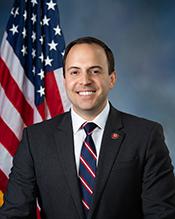
United States · Official source
1,153 records where Lance Gooden is listed as a sponsor, author, or other actor. Search with topics and years
United States · United States Congress · 8 September 2026
United States · United States Congress · 3 September 2026
United States · United States Congress · 13 August 2026
United States · United States Congress · 16 July 2026
United States · United States Congress · 29 June 2026
United States · United States Congress · 11 June 2026
United States · United States Congress · 11 June 2026
United States · United States Congress · 9 June 2026
United States · United States Congress · 2 June 2026
United States · United States Congress · 11 May 2026
United States · United States Congress · 7 May 2026
United States · United States Congress · 30 April 2026
United States · United States Congress · 29 April 2026
United States · United States Congress · 23 April 2026
United States · United States Congress · 20 April 2026
United States · United States Congress · 26 March 2026
United States · United States Congress · 25 March 2026
United States · United States Congress · 19 March 2026
United States · United States Congress · 19 March 2026
United States · United States Congress · 19 March 2026
United States · United States Congress · 26 February 2026
Bankruptcy Threshold Adjustment Act of 2026 This bill restores changes that expired in 2024 applicable to debt limits for Subchapter V (small business reorganization) and Chapter 13 (the wage earner's plan) bankruptcies. Specifically, the bill increases the debt limit under Subchapter V from approximately $3.4 million to $7.5 million and increases the cumulative debt limit under Chapter 13 from approximately $2.1 million to $2.75 million. The bill also applies both secured and unsecured debt towards the Chapter 13 limit. (Currently, separate limits apply to secured and unsecured debt under Chapter 13 bankruptcy.)
United States · United States Congress · 25 February 2026
Gun Owner Registration Information Protection Act This bill prohibits federal funding of, or support for, state databases that list (1) firearms lawfully owned or possessed by individuals, or (2) individuals who lawfully own or possess firearms.
United States · United States Congress · 24 February 2026
United States · United States Congress · 20 February 2026
Airspace Location and Enhanced Risk Transparency Act of 2026 or the ALERT Act This bill addresses aviation safety by increasing requirements for aircraft tracking and communication using Automatic Dependent Surveillance-Broadcast (ADS-B) technology and expanding oversight. As background, ADS-B for broadcasting (Out) and receiving (In) transmits information (e.g., location and weather) among aircraft and air traffic control (ATC). The bill requires the Department of Defense (DOD) and the Department of Transportation (DOT) to enter into an agreement regarding the use of collision prevention technologies on DOD aircraft. The agreement must require the use of ADS-B Out as the default practice for DOD helicopters operating in the national airspace, unless such use would affect operational security. For DOD helicopters that are carrying out special missions in the Washington, DC, metropolitan area and are exempt from ADS-B Out transmission requirements, DOD must coordinate with DOT to conduct a safety risk assessment and implement appropriate mitigations. By December 31, 2031, DOD aircraft (other than certain special mission aircraft) must be equipped with and operating integrated ADS-B In technology. With respect to civil aircraft, by December 31, 2031, the Federal Aviation Administration (FAA) must generally require aircraft that are currently required to be equipped with ADS-B Out to also be equipped with ADS-B In. Additionally, among other requirements, the FAA must establish time-on-position limits for supervisory ATC personnel; establish a process to timely notify parties involved in certain near-miss incidents; and evaluate and revise, as necessary, helicopter routes around Ronald Reagan Washington National Airport.
United States · United States Congress · 20 February 2026
United States · United States Congress · 12 February 2026
United States · United States Congress · 11 February 2026
Tribal Warrant Fairness Act This bill authorizes the U.S. Marshals Service (USMS) to assist with certain tribal law enforcement activities and allows tribal law enforcement agencies to participate in regional fugitive task forces. Specifically, the bill authorizes the USMS, upon the request of an Indian tribe, to investigate tribal fugitive matters. The USMS may investigate tribal fugitive matters both within and outside the United States, as directed by the Department of Justice (DOJ). Additionally, the USMS, upon the request of tribal law enforcement agencies, may assist these agencies in locating and recovering missing children. The bill also allows tribal law enforcement agencies to participate in regional fugitive task forces. DOJ must consult with tribes when establishing new task forces. (The USMS oversees regional fugitive task forces. Currently, these task forces combine the efforts of federal, state, and local law enforcement agencies to locate and apprehend fugitives.)
United States · United States Congress · 5 February 2026
United States · United States Congress · 4 February 2026
United States · United States Congress · 4 February 2026
United States · United States Congress · 3 February 2026
United States · United States Congress · 30 January 2026
Safeguard American Voter Eligibility Act or the SAVE America Act This bill requires individuals to provide documentary proof of U.S. citizenship when registering to vote, and requires photo identification to vote, in federal elections. Specifically, the bill prohibits states from accepting and processing an application to register to vote in a federal election unless the applicant presents documentary proof of U.S. citizenship. The bill specifies what documents are considered acceptable proof of U.S. citizenship, such as identification that complies with the REAL ID Act of 2005 that indicates U.S. citizenship. Further, the bill (1) prohibits states from registering an individual to vote in a federal election unless, at the time the individual applies to register to vote, the individual provides documentary proof of U.S. citizenship; and (2) requires states to establish an alternative process to demonstrate U.S. citizenship. Each state must take affirmative steps on an ongoing basis to ensure that only U.S. citizens are registered to vote, which shall include establishing a program to identify individuals who are not U.S. citizens using information supplied by certain sources. Additionally, states must remove noncitizens from their official lists of eligible voters. The bill (1) provides for a private right of action for certain violations, and (2) establishes criminal penalties for certain offenses. Individuals voting in federal elections must present an eligible photo identification document. An individual who votes by absentee ballot must submit a copy of their identification document with both the request for, and the submission of, the absentee ballot.
United States · United States Congress · 30 January 2026
United States · United States Congress · 21 January 2026
United States · United States Congress · 20 January 2026
United States · United States Congress · 13 January 2026
United States · United States Congress · 9 January 2026
United States · United States Congress · 18 December 2025
United States · United States Congress · 18 December 2025
United States · United States Congress · 17 December 2025
United States · United States Congress · 16 December 2025
Essential Caregivers Act of 2025 This bill prohibits certain health care facilities from limiting the access of essential caregivers to residents of those facilities, including during designated emergency periods. Specifically, the bill generally prohibits Medicare skilled nursing facilities, Medicaid nursing facilities, Medicaid intermediate care facilities, and associated inpatient rehabilitation facilities from restricting the access of essential caregivers to residents of the facilities, including during emergency periods in which visitation rights are otherwise restricted. During emergency periods, facilities may restrict access for an initial period of up to seven days and for one additional maximum seven-day period (if the additional period is approved by the state health department). Facilities may restrict access for a total of 7 days (or 14 days with the approval of the state health department) during an emergency period. Essential caregivers must agree to comply with any safety protocols set by the facility, which may be no more stringent for caregivers compared to those for staff. Caregivers who fail to comply with these requirements may be denied access, subject to an appeals process.
United States · United States Congress · 9 December 2025
United States · United States Congress · 5 December 2025
United States · United States Congress · 4 December 2025
United States · United States Congress · 3 December 2025
United States · United States Congress · 3 December 2025
United States · United States Congress · 21 November 2025
United States · United States Congress · 20 November 2025
United States · United States Congress · 20 November 2025
Rotorcraft Operations Transparency and Oversight Reform Act or the ROTOR Act This bill addresses aviation safety by increasing requirements for aircraft tracking and communication using Automatic Dependent Surveillance-Broadcast (ADS-B) technology and expanding oversight. As background, ADS-B for broadcasting (Out) and receiving (In) transmits information (e.g., location and weather information) between aircraft and air traffic control. Under the bill, aircraft must generally operate with ADS-B In equipment to provide the aircraft with location information of other aircraft and traffic advisories. Current law does not require this equipment. Current Federal Aviation Administration (FAA) regulations allow aircraft performing a sensitive government mission to be excepted from requirements for using ADS-B Out equipment. This bill limits which flights may be considered sensitive government missions (e.g., not training flights) and requires additional reporting for the exception. The Government Accountability Office must review the use of the ADS-B Out exception and the Office of Inspector General (OIG) of the Department of Transportation (DOT) must annually audit FAA oversight of operations that use the exception. Further, the bill repeals a 2018 law that prohibits DOT from requiring certain military aircraft to install or use ADS-B equipment. The bill also requires the OIG of the Army to audit the Army’s coordination with the FAA, the FAA to establish an office to coordinate airspace usage of military aircraft and review the safety of flight operations and routes around airports, and the FAA to enter into memoranda of understanding with military agencies for safety information sharing.
United States · United States Congress · 12 November 2025
This bill repeals the authority for a Senator to bring a civil action against the federal government if an internet service provider or the Senate Sergeant at Arms (SAA) accessed or disclosed, or accesses or discloses, data from the Senator's office to provide to a federal agency without following prescribed notice requirements. The authority applies to a qualifying instance occurring on or after January 1, 2022. The authority for the civil action was enacted in H.R. 5371, the Continuing Appropriations, Agriculture, Legislative Branch, Military Construction and Veterans Affairs, and Extensions Act, 2026 , which was signed by the President on November 12, 2026. The relevant provision requires written notice from the internet service provider or the SAA to the Senate office upon receipt of any legal process seeking access or disclosure of covered data. A Senator affected by a federal violation of the provision may sue the federal government for the greater of $500,000 per violation or the actual damages, plus attorney's fees and related costs.