Bill· HRH.R. 1628 (119th)referred
761st Tank Battalion Congressional Gold Medal Act
United States · United States Congress · 26 February 2025
The world's political record
Person
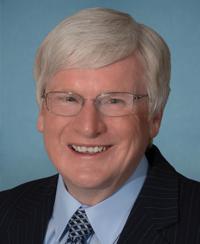
United States · Official source
2,213 records where Rep. Grothman, Glenn [R-WI-6] is listed as a sponsor, author, or other actor. Search with topics and years
United States · United States Congress · 26 February 2025
United States · United States Congress · 26 February 2025
United States · United States Congress · 25 February 2025
United States · United States Congress · 21 February 2025
North Platte Canteen Congressional Gold Medal Act This bill provides for the award of a Congressional Gold Medal to recognize the individuals and communities that provided financial and other support for the North Platte Canteen in North Platte, Nebraska, during World War II.
United States · United States Congress · 21 February 2025
United States · United States Congress · 21 February 2025
Disengaging Entirely From the United Nations Debacle Act of 2025 or the DEFUND Act of 2025 This bill directs the President to terminate U.S. membership in the United Nations (U.N.) and all formally affiliated bodies. It also ends U.S. participation in all U.N. conventions and agreements. Funds may be appropriated to facilitate U.S. withdrawal from the U.N. No funds may be made available for contributions or payments to any U.N. body. The bill prohibits U.S. participation in any U.N. peacekeeping operation. The bill also repeals diplomatic immunity for officers and employees of the U.N. and for officers and employees of foreign government missions to the U.N. The bill repeals various acts related to the U.N., including the United Nations Participation Act of 1945, the United Nations Headquarters Agreement Act, and a joint resolution establishing U.S. membership in the World Health Organization. The United States may not rejoin the U.N. or any formally affiliated body without the advice and consent of the Senate. Any agreement to rejoin the U.N. or a formally affiliated body must include the right of the United States to withdraw from the agreement.
United States · United States Congress · 21 February 2025
Unplug the Electric Vehicle Charging Stations Program Act This bill repeals grant programs that provide funding for electric vehicle charging infrastructure and alternative fueling infrastructure. Specifically, the bill repeals the Charging and Fueling Infrastructure Grant Program under which the Department of Transportation provides grants for acquiring and installing publicly accessible electric vehicle charging infrastructure, hydrogen fueling infrastructure, propane fueling infrastructure, or natural gas fueling infrastructure that is directly related to the charging or fueling of a vehicle. It also repeals the National Electric Vehicle Infrastructure Formula Program under which the Federal Highway Administration (FHWA) provides grants for deploying electric vehicle charging infrastructure and establishing a network to facilitate data collection, access, and reliability. In addition, the bill rescinds unobligated funds that were provided to the FHWA for the program and prohibits funds from being used to carry out the program.
United States · United States Congress · 18 February 2025
United States · United States Congress · 18 February 2025
Enhanced Iran Sanctions Act of 2025 This bill imposes sanctions on certain foreign persons (individuals and entities) that are involved in Iran's petroleum sector as well as certain associated persons. The bill also requires or authorizes actions to facilitate the enforcement of sanctions on Iran. Specifically, the bill requires the President to impose visa- and property-blocking sanctions on any foreign person that, after the bill's enactment, knowingly engages in any transaction related to the processing, export, or sale of oil, condensates, gas, liquefied natural gas, or other petrochemical products in whole or in part from Iran. The President must also impose sanctions on certain foreign persons associated with a sanctioned individual or entity. For example, the President must sanction the subsidiaries and corporate officers of a sanctioned business. The bill provides certain exceptions to these sanctions, including specifying that sanctions do not apply to the importation of goods or to conducting or facilitating transactions for humanitarian assistance. The Department of State must establish an interagency working group that shall seek to establish a multilateral contact group to coordinate international efforts to enforce sanctions on Iran. The bill expands the State Department rewards program to authorize a reward payment to any individual who furnishes information leading to the identification of a person (1) subject to sanctions under this bill, or (2) that has attempted or is attempting to evade sanctions under this bill.
United States · United States Congress · 14 February 2025
Fair-Value Accounting and Budget Act This bill requires the Congressional Budget Office (CBO) to provide certain fair-value estimates of federal loan and loan guarantee programs. Under the bill, the fair value is the price that would be received to sell an asset or paid to transfer a liability in an orderly transaction between market participants at the measurement date. Fair-value estimates generally use private-market interest rates to estimate the cost of a loan program rather than rates based on Treasury securities. The bill requires CBO to include fair-value estimates in (1) any estimate prepared for a measure that establishes or modifies a loan or loan guarantee program, and (2) its publication titled The Budget and Economic Outlook. If CBO provides a fair-value estimate pursuant to this bill, the chairs of the congressional budget committees must use the estimate to determine compliance with budget enforcement requirements. The bill also requires the Office of Management and Budget to submit an annual report to Congress on fair-value estimates of the costs of federal credit programs.
United States · United States Congress · 14 February 2025
Codifying Useful Regulatory Definitions Act or the CURD Act This bill establishes a statutory definition for natural cheese . Under the bill, natural cheese is defined as cheese (ripened or unripened soft, semi-soft, or hard) that is produced from animal milk or certain dairy ingredients and is produced in accordance with established cheese-making standards. The definition excludes pasteurized process cheeses, cheese foods, and cheese spreads. A food that does not meet this definition is deemed misbranded and may not be sold if its label includes the term natural cheese as a factual descriptor of a category of cheese.
United States · United States Congress · 13 February 2025
United States · United States Congress · 13 February 2025
Improving Care and Access to Nurses Act or the I CAN Act This bill allows other health care providers besides physicians (e.g., nurses) to provide certain services under Medicare and Medicaid. Among other changes, the bill (1) allows a nurse practitioner or physician assistant to fulfill documentation requirements for Medicare coverage of special shoes for diabetic individuals; (2) expedites the ability of physician assistants, nurse practitioners, and clinical nurse specialists to supervise Medicare cardiac, intensive cardiac, and pulmonary rehabilitation programs; and (3) allows nurse practitioners to certify the need for inpatient hospital services under Medicare and Medicaid.
United States · United States Congress · 13 February 2025
Reorganizing Government Act of 2025 This bill revives expedited congressional consideration of certain Presidential plans to reorganize the executive branch, expands permissible plan purposes, and changes the prohibitions on plan content. The bill reauthorizes through 2026 a currently expired authority that requires expedited congressional consideration of certain executive branch reorganization plans submitted by the President. The bill also expands the purposes for which such reorganization plans may be undertaken, to include reducing the number of federal employees; eliminating unnecessary and burdensome rules, regulations, and other requirements; and eliminating government operations that do not serve the public interest. The bill removes the following prohibitions on the contents of such plans: creating new executive departments or renaming existing executive departments; abolishing or transferring executive departments or independent regulatory agencies or all of their functions; and consolidating executive departments or independent regulatory agencies or all of their functions. The bill also adds a new prohibition on content, specifying that any such plan may not create a net increase in federal workers or expenditures.
United States · United States Congress · 13 February 2025
This joint resolution nullifies the final rule issued by the Consumer Financial Protection Bureau titled Overdraft Lending: Very Large Financial Institutions and published on December 30, 2024. The rule revises provisions regarding charges for insufficient funds in a customer’s bank account (i.e., overdrafts) at very large financial institutions. Under the rule, these institutions must (1) cap overdraft charges at $5; (2) with justification, cap charges at a higher amount; or (3) handle overdrafts as credit and comply with applicable Truth in Lending Act disclosure requirements.
United States · United States Congress · 13 February 2025
This concurrent resolution declares that Congress should not impose any new performance fee, tax, royalty, or other charge relating to the public performance of sound recordings on a local radio station for broadcasting sound recordings over the air, or on any business for such public performance of sound recordings.
United States · United States Congress · 13 February 2025
More Homes on the Market Act This bill increases the amount of gain from the sale of a principal residence that an individual may exclude from gross income (for federal tax purposes). Under the bill, an individual may exclude from gross income gain from the sale of a principal residence of up to $500,000 (currently $250,000), and taxpayers who are married and file a joint federal income tax return may exclude up to $1 million (currently $500.000). The bill also requires these amounts to be adjusted annually for inflation.
United States · United States Congress · 13 February 2025
This resolution supports the designation of National FFA (Future Farmers of America) Week. It also celebrates the 90th anniversary of New Farmers of America (NFA), which served Black vocational agriculture students in segregated public schools until NFA and FFA became one organization in 1965. The resolution also commemorates the 75th anniversary of the federal charter for the Future Farmers of America.
United States · United States Congress · 13 February 2025
Nationwide Consumer and Fuel Retailer Choice Act of 2025 This bill amends the Clean Air Act to address the limitations on Reid Vapor Pressure (a measure of gasoline's volatility) that are placed on gasoline during the summer ozone season. Specifically, the bill applies the waiver for Reid Vapor Pressure requirements that is applicable to gasoline blended with 10% ethanol (E10) to gasoline blended with up to 15% ethanol (E15). This change allows gasoline that is blended with 10% to 15% ethanol to be sold year-round. Currently, states may be excluded from the waiver for Reid Vapor Pressure requirements by submitting documentation supporting that the waiver would increase air pollution. The bill nullifies existing state exclusions, but states may submit documentation after enactment of the bill to be excluded going forward. The bill also modifies the Renewable Fuel Standard Program, which requires transportation fuel sold or introduced into commerce in the United States to contain minimum volumes of renewable fuel. Under the existing program, obligated parties, such as small refineries, must satisfy the volume obligations by either blending renewable fuels into their gasoline or diesel fuel products or by acquiring credits that represent the required renewable fuel volume. The bill directs the Environmental Protection Agency to return compliance credits to small refineries under certain circumstances.
United States · United States Congress · 13 February 2025
This bill specifies a legal standard for determining whether an individual is considered an independent contractor rather than an employee for the purposes of federal labor laws that address issues such as the federal minimum wage, overtime compensation, and collective bargaining. The rights and protections provided by these laws exclusively apply to employees. Under the bill, an individual is considered an independent contractor if (1) another individual or entity does not exercise significant control over the details of how the individual's work is performed, without regard to any control the other individual or entity may exercise over the final result of the work performed; and (2) while performing such work, the individual has opportunities and risks inherent with entrepreneurship (for example, the discretion to exercise professional judgment). The bill also sets forth factors that may not be used to determine whether an individual is an employee. Specifically, factors such as whether another individual or entity requires the individual to meet certain legal, health and safety, insurance, or performance requirements may not be used to make such a determination.
United States · United States Congress · 12 February 2025
United States-Israel Defense Partnership Act of 2025 This bill requires or authorizes certain actions to increase defense-related cooperation between the United States and Israel. Specifically, the bill requires the Department of Defense (DOD) to establish a cooperative program, with the concurrence of Israel's Ministry of Defense (MOD), to develop and deploy advanced technologies for countering unmanned systems that threaten the United States and Israel; establish in Israel an office of the Defense Innovation Unit (an organization that focuses on rapidly fielding and scaling commercial technology across the U.S. military); and seek to engage Israel's MOD on the ascension of Israel into the national technology and industrial base (currently defined in law as the persons and organizations engaged in research, development, production, integration, services, or information technology activities conducted within the United States, the United Kingdom, Australia, New Zealand, and Canada). The bill authorizes DOD, upon request of Israel's MOD, to jointly conduct research, development, test, and evaluation (RDT&E) of emerging technologies such as artificial intelligence and robotics to meet defense challenges. Additionally, the bill extends the authority for DOD to (1) carry out RDT&E on a joint basis with Israel to establish anti-tunnel and counter unmanned aerial systems capabilities through 2028, and (2) transfer defense articles intended for use as reserve stocks for Israel through January 1, 2029.
United States · United States Congress · 12 February 2025
United States · United States Congress · 12 February 2025
Give Kids a Chance Act of 2025 This bill expands the Food and Drug Administration’s (FDA’s) authority with respect to research on rare pediatric diseases, including by permitting the FDA to take enforcement action against drug sponsors that fail to satisfy pediatric study requirements and by reauthorizing programs that support pediatric research. Specifically, the bill modifies requirements relating to molecularly targeted pediatric cancer investigations to permit research on new drugs in combination with active ingredients that have already been approved, provided certain conditions are met; permits the FDA to take enforcement action against drug sponsors that fail to comply with pediatric study requirements, if such sponsors demonstrated a lack of due diligence in satisfying the requirement; renews the FDA’s authority to award priority review vouchers to sponsors of new products intended to treat rare pediatric diseases through September 30, 2029; and reauthorizes through FY2027 certain funding for the National Institutes of Health to support priority pediatric research. The bill also provides statutory authority for the FDA’s interpretation of the orphan drug exclusivity period. The bill specifies, consistent with FDA regulations, that the seven-year market exclusivity period for drugs for rare diseases or conditions (i.e., orphan drugs) prohibits the approval of the same drug for the same approved use or indication with respect to the disease or condition. (In Catalyst Pharmaceuticals, Inc. v. Becerra , a court rejected the FDA’s interpretation and held that orphan drug exclusivity extends to all uses or indications for the disease or condition.)
United States · United States Congress · 12 February 2025
Security And Fairness Enhancement for America Act of 2025 or SAFE for America Act of 2025 This bill eliminates the diversity visa program. This program provides up to 55,000 visas annually to individuals from countries with low rates of immigration to the United States.
United States · United States Congress · 12 February 2025
United States · United States Congress · 11 February 2025
Protecting Privacy in Purchases Act This bill prohibits payment card networks from using merchant codes that distinguish firearms retailers from general-merchandise retailers or sporting-goods retailers. The Department of Justice must enforce this bill and report annually on the resulting investigations and cases.
United States · United States Congress · 11 February 2025
United States · United States Congress · 10 February 2025
Health Care Provider Shortage Minimization Act of 2025 This bill provides statutory authority to classify qualified locum tenens physicians and advanced care practitioners as independent contractors for federal tax purposes. (Locum tenens generally refers to an individual who temporarily fulfills the duties of another individual and is commonly used to refer to temporary staffing in the healthcare industry.) Under current law, independent contractors are considered self-employed for federal tax purposes and, thus, are required to make quarterly estimated income tax payments and pay self-employment taxes (Social Security and Medicare taxes). (Other federal tax reporting requirements and obligations apply.) The bill defines a qualified locum tenens physician or advanced care practitioner as an individual who provides temporary services for not more than one continuous year at a site of service as (1) a doctor of medicine, osteopathy, dentistry, optometry, or podiatry (authorized to provide such services by the state, U.S. possession, or U.S. territory in which such services are performed); or (2) a nurse practitioner, physician’s assistant, or certified registered nurse anesthetist. The term also includes an individual who provides such temporary services and is otherwise considered a physician under the Social Security Act (e.g., certain chiropractors).
United States · United States Congress · 10 February 2025
Blind Americans Return to Work Act of 2025 This bill requires the Social Security Administration to carry out a demonstration project during which blind Social Security Disability Insurance (SSDI) beneficiaries receive reduced benefits commensurate with income above certain thresholds. Under current law, only individuals who earn under a specified monthly income, known as the substantial gainful activity (SGA) threshold, are considered disabled and thereby eligible for SSDI benefits. For blind workers, this limit is $2,700 per month in 2025. SSDI beneficiaries may earn beyond the SGA threshold for a limited period of time, known as the trial work period , before their benefits are suspended and ultimately terminate. The bill establishes a 20-year demonstration project during which individuals who are entitled to SSDI benefits by reason of blindness and who earn above the SGA threshold continue to receive benefits at an amount gradually reduced commensurate with their earnings beyond a specified amount. During this period, blind workers’ SSDI benefits must be reduced by $1 for every $2 that a worker earns above the sum of (1) the SGA threshold, and (2) the worker’s expenses reasonably attributable to their work. The SGA threshold may not be used to determine whether an individual is disabled during this period, and blind workers’ SSDI benefits may not be terminated due to work-related earnings. The trial work period also must not apply. After 10 years, affected beneficiaries may opt out of the modified benefits structure.
United States · United States Congress · 7 February 2025
United States · United States Congress · 7 February 2025
United States · United States Congress · 7 February 2025
Family Farm and Small Business Exemption Act This bill restores an exemption for certain family farms and small businesses on the Free Application for Federal Student Aid (FAFSA) form. The bill applies to the net worth of (1) a family farm on which the family resides, or (2) a small business with not more than 100 full-time or full-time equivalent employees that is owned and controlled by the family. Prior to recent changes made to the FAFSA, the net worth of these family farms and small businesses were excluded as assets when calculating a student's financial need to determine federal student aid eligibility. Beginning with the 2024-2025 academic year, the net worth of these farms and businesses are treated as an asset and therefore included in the calculation. This bill restores the exemption to exclude such net worth from the calculation.
United States · United States Congress · 7 February 2025
United States · United States Congress · 7 February 2025
Freedom to Invest in Tomorrow’s Workforce Act This bill expands the expenses eligible for tax-free withdrawals from a qualified tuition program (known as a 529 plan) to include tuition, fees (including test fees), books, supplies, equipment, and other expenses related to the enrollment or attendance in a recognized postsecondary credentialing program. Under the bill, a recognized postsecondary credentialing program includes certain programs identified by a state as providing training services, a program listed in the Web Enabled Approval Management System (WEAMS) maintained by the Department of Veterans Affairs, certain examinations required to obtain or maintain a credential, and other reputable credentialing programs. Further, under the bill, such programs must be designed for an individual to obtain an industry-recognized postsecondary employment credential (e.g., project management professional certificate, advanced emergency medical technician certificate, and welding supervisor certificate), a certificate of completion of a registered and certified apprenticeship, an occupational or professional license issued or recognized by a state or the federal government (and any certification required for obtaining such license), or an associate or baccalaureate degree.
United States · United States Congress · 6 February 2025
Respect State Housing Laws Act This bill eliminates a provision that requires a 30-day notice period before a landlord may begin eviction proceedings against a tenant in federally assisted or federally backed housing.
United States · United States Congress · 6 February 2025
This bill allows a national of the Czech Republic to qualify for E-1 nonimmigrant status if the Czech Republic provides similar nonimmigrant status to U.S. nationals. E-1 classification allows nationals of certain countries (i.e., those with a treaty of commerce and navigation with the United States, those under a qualifying international agreement, or those deemed to qualify through statute) to be admitted solely to engage in international trade, along with their families and employees.
United States · United States Congress · 6 February 2025
This concurrent resolution calls on the President to abandon the One China policy in favor of one that recognizes Taiwan as an independent country that is not a part of China. The resolution also urges the President to bolster diplomatic and economic relations between the United States and Taiwan through specified means.
United States · United States Congress · 6 February 2025
United States · United States Congress · 6 February 2025
Veterans 2nd Amendment Protection Act This bill prohibits the Department of Veterans Affairs (VA) from transmitting certain information to the National Instant Criminal Background Check System (NICS) utilized by licensed importers or dealers of firearms. Specifically, the bill prohibits the VA from transmitting personally identifying information of a veteran or a beneficiary to the NICS solely on the basis that such veteran or beneficiary has an appointed fiduciary to manage their benefits, unless there is an order or finding of a judicial authority that such veteran or beneficiary is a danger to themselves or others.
United States · United States Congress · 6 February 2025
Defending Education Transparency and Ending Rogue Regimes Engaging in Nefarious Transactions Act or the DETERRENT Act This bill expands oversight and disclosure requirements related to foreign sources and institutions of higher education (IHEs). Specifically, the bill requires an IHE to annually disclose to the Department of Education (ED) any year in which the IHE receives a gift from a foreign country of concern (e.g., China or Russia) or foreign entity of concern of any dollar amount; receives a gift or contract from a foreign source (other than a foreign country of concern or foreign entity of concern) that is valued at $50,000 or more, considered alone or in combination with all other gifts or contracts within a calendar year (current disclosure threshold is $250,000 or more), or which has an undetermined monetary value; enters into a contract with a foreign country of concern or foreign entity of concern after receiving a waiver for such contract; or is substantially controlled by a foreign source. Additionally, the bill prohibits IHEs from entering into contracts with a foreign country of concern or with a foreign entity of concern without obtaining a waiver, requires certain IHEs to disclose gifts or contracts between covered individuals (e.g., researchers) and foreign sources, and requires private IHEs with specified assets or investments to file annual investment disclosure reports. The bill requires ED to investigate possible violations of this bill and outlines the various penalties for each violation. Penalties may include losing eligibility for federal student financial aid.
United States · United States Congress · 5 February 2025
AM Radio for Every Vehicle Act of 2025 This bill requires the Department of Transportation (DOT) to issue a rule requiring AM radio capabilities to be standard in all new passenger vehicles. (AM radio is often used to deliver emergency alerts and news and entertainment programming; some newer vehicles do not include AM equipment.) Specifically, this bill applies to passenger vehicles (1) manufactured in the United States for sale in the United States, imported into the United States, or shipped in interstate commerce; and (2) manufactured after the rule's effective date. The rule must require all such vehicles to have devices that can receive signals and play content transmitted by AM stations or digital audio AM stations installed as standard equipment and made easily accessible to drivers. Prior to the rule's effective date, manufacturers that do not include devices that can access AM radio as standard equipment (1) must inform purchasers of this fact through clear and conspicuous labeling, and (2) may not charge an additional or separate fee for AM radio access. DOT may assess civil penalties for any violation of the rule. The Department of Justice may also bring a civil action to enjoin a violation. The rule, including DOT’s authority to enforce it, must expire 10 years after the bill’s enactment. Further, the Government Accountability Office must study and report on the dissemination of emergency alerts to the public, including by conducting an assessment of AM radio relative to other Integrated Public Alert and Warning System communication technologies.
United States · United States Congress · 5 February 2025
Cost Estimates Improvement Act This bill requires cost estimates prepared by the Congressional Budget Office or the Joint Committee on Taxation to include the costs of servicing the public debt.
United States · United States Congress · 5 February 2025
Fair Access to Banking Act This bill places restrictions on certain banks, credit unions, and payment card networks if they refuse to do business with a person who complies with the law. Restrictions include prohibiting the use of electronic funds transfer systems and lending programs, termination of an institution's depository insurance, and specified civil penalties. Banks and other specified financial institutions are allowed to deny financial services to a person only if the denial is justified by a documented failure of that person to meet quantitative, impartial, risk-based standards established in advance by the institution. This justification may not be based upon reputational risks to the institution. The bill establishes the right for a person to bring a civil action for a violation of this bill.
United States · United States Congress · 5 February 2025
This resolution supports the designation of Career and Technical Education Month to celebrate career and technical education across the United States.
United States · United States Congress · 4 February 2025
1071 Repeal to Protect Small Business Lending Act This bill repeals the statute that requires financial institutions to collect data regarding applications for women-owned, minority-owned, or small business loans. Currently, financial institutions must collect and report to the Consumer Financial Protection Bureau information on (1) how many applications were received; (2) the disposition of each application; (3) the type of loan; (4) the amount applied for; (5) the amount approved; and (6) each applicant’s census tract, revenue, race, sex, and ethnicity.
United States · United States Congress · 4 February 2025
Protecting Taxpayers from Student Loan Bailouts Act This bill limits the authority of the Department of Education (ED) to propose or issue regulations and executive actions related to federal student aid programs. The bill prohibits ED from issuing such a proposed rule, final regulation, or executive action if ED determines that the rule, regulation, or action (1) is economically significant, and (2) would result in an increase in a subsidy cost. Economically significant refers to a regulation or executive action that is likely to (1) have an annual effect on the economy of $100 million or more; or (2) adversely affect in a material way the economy, a sector of the economy, productivity, competition, jobs, the environment, public health or safety, or state, local, or tribal governments or communities.
United States · United States Congress · 4 February 2025
This joint resolution nullifies the Environmental Protection Agency (EPA) rule titled Waste Emissions Charge for Petroleum and Natural Gas Systems: Procedures for Facilitating Compliance, Including Netting and Exemptions and published on November 18, 2024. The rule outlines compliance requirements under the Methane Emissions Reduction Program. Under the program, the EPA collects an annual charge on emissions of methane and other greenhouse gases from the oil and gas sector if the emissions exceed specified waste emissions thresholds.
United States · United States Congress · 4 February 2025
American Consumer Awareness of National Source Act or the American CANS Act This bill revises country-of-origin labeling requirements for canned goods. Under current country-of-origin labeling requirements, every article of foreign origin entering the United States must be legibly marked with the English name of the country of origin of the article (with certain exemptions). This bill requires country-of-origin labeling for any agricultural product packaged in a can to (1) appear on the front label of the can; or (2) be stamped, embossed, or printed on the top of the can.
United States · United States Congress · 4 February 2025
United States · United States Congress · 31 January 2025
Pet and Livestock Protection Act of 2025 This bill directs the Department of the Interior to remove protections for the gray wolf under the Endangered Species Act of 1973 (ESA). Specifically, the bill requires Interior to reissue the final rule titled Endangered and Threatened Wildlife and Plants; Removing the Gray Wolf (Canis lupus) From the List of Endangered and Threatened Wildlife and published on November 3, 2020. The rule removed the gray wolf in the lower 48 United States, except for the Mexican wolf ( C. l. baileyi ) subspecies, from the endangered and threatened species list. However, the U.S. District Court for the Northern District of California vacated the rule on February 10, 2022. As a result, the gray wolf reattained the protection status it had prior to the rule's promulgation. The bill also prohibits the reissuance of the rule from being subject to judicial review.