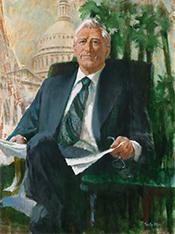
United States · United States Congress · 26 August 1976
Authorizes the President to issue a proclamation designating the week beginning October 3, 1976, and ending October 9, 1976, as "National Volunteer Firemen Week."
United States · United States Congress · 9 August 1976
Designates the following trails for study as potential additions to the national trails system: (1) Bartram Trail, extending through Georgia, North Carolina, South Carolina, Alabama, Florida, Louisiana, Mississippi, and Tennessee; (2) Daniel Boone Trail, extending through North Carolina, Virginia, Tennessee, and Kentucky; (3) Desert Trail, extending through Washington, Idaho, Oregon, California, Nevada, and Arizona; (4) Dominguez-Escalante Trail, extending through New Mexico, Colorado, Utah, and Arizona; (5) Florida Trail; (6) Indian Nations Trail, Oklahoma; (7) Nez Perce Trail, extending through Oregon, Idaho, and Montana; and (8) Pacific Northwest Trail, extending through Washington, Idaho, and Montana.
United States · United States Congress · 5 August 1976
National Neighborhood Policy Act - Establishes a National Commission on Neighborhoods which will include four members from the House and the Senate and 16 public members appointed by the President. Sets forth the duties of the Commission, which include studying the factors necessary to neighborhood survival and revitalization and making recommendations for modification of existing laws and policies. Makes provisions for the administration of this Commission. Authorizes to be appropriated funds necessary to carry out this Act.
United States · United States Congress · 2 August 1976
Constitutional Amendment - Provides that no law varying the compensation for the services of Senators and Representatives shall take effect until an election of Representatives shall have intervened.
United States · United States Congress · 1 July 1976
Federal Agency Control and Review Act - Requires the Office of Management and Budget to conduct a study lasting one to two years of each Federal agency's efficiency and effectiveness. Requires that such report be submitted to the President and Congress. Authorizes the President to submit to Congress his recommendations with respect to such report. States that a report must have been concluded on all existing agencies within 12 years after the enactment of this Act and on all agencies within ten years after their creation. Requires that such study be repeated every ten years. Terminates such Federal agency ten years after the Office's report is submitted to Congress unless Congress adopts legislation to continue such agency.
United States · United States Congress · 23 June 1976
Establishes in the House of Representatives a select committee to be known as the Select Committee on Narcotics Abuse and Control. Provides that the select committee shall conduct a continuing comprehensive study and review of the problems of narcotics abuse and control and shall review any recommendations made by the President, or by any department or agency of the executive branch of the Federal Government, relating to programs or policies affecting narcotics abuse or control. Authorizes the select committee to conduct field investigations or inspections. Requires the select committee to submit an annual report to the House which shall include a summary of the activities of the select committee during the calendar year to which such report applies.
United States · United States Congress · 11 June 1976
Authorizes the Architect of the Capitol to perform such work as may be necessary to prevent further deterioration of historically significant sections of the Congressional Cemetery. Directs the Secretary of the Interior to conduct a study of the purpose of formulating proposals for the renovation and maintenance of such areas by the United States.
United States · United States Congress · 10 June 1976
Requires that an election commissioner be appointed in American Samoa. States that the duty of the Commissioner will be to conduct a plebiscite on the issue of whether there should be a popular election for Governor and Lieutenant Governor of that country. Provides that a gubernatorial election be held within one year of such plebiscite if there is a majority of affirmative responses. Directs the legislature of American Samoa to establish rules and procedures regarding nomination, length of terms, and removal from the offices of Governor and Lieutenant Governor.
United States · United States Congress · 2 June 1976
Expresses the sense of the House of Representatives that the United States Postal Service shall not close or suspend the operation of any post offices, unless there is a clear and compelling need to do so. Encourages the service to continue cost-cutting programs which do not affect levels of service.
United States · United States Congress · 1 June 1976
Recommends that the Board on Geographic Names approve a proposal to name two mountains in Alaska after the later Congressmen Hale Boggs and Nick Begich.
United States · United States Congress · 28 April 1976
Solar Energy Incentive Act - Allows an individual to take a tax credit, under the Internal Revenue Code, in an amount equal to 25 percent of the qualified solar heating and cooling equipment expenditures incurred by the taxpayer with respect to his principal residence to the extent such expenditures do not exceed $8,000, plus that portion of the qualified State or local real property taxes paid or accrued for the taxable year or accrued for the taxable year attributable to such solar heating and cooling expenditures. Authorizes an individual to take a tax deduction for a part of the acquisition costs of any qualified solar heating and cooling equipment for any residence. Limits such deduction to the lesser of ten percent of the acquisition costs or $800 or $400 for the third year of such acquisition.
United States · United States Congress · 7 April 1976
Directs the Secretary of the Interior to convey by quit-claim deed to the present owners of record all phosphate interest of the United States in specified lands in Polk County, Florida.
United States · United States Congress · 25 March 1976
Consumer Cost Evaluation Act - Provides for a determination of costs to consumers of any proposed Federal legislation or regulation that may have a significant impact on costs to consumers. Requires that any proposed Federal legislation or regulation must be found to provide benefits to consumers or the public that bear a reasonable relationship to such costs. Requires that every agency of the Federal Government shall prepare, in conjunction with every applicable proposal it makes for legislation or a regulation, a draft consumer cost assessment and upon consultation with other Federal agencies, a final consumer cost assessment. Provides that the cost assessment must allow for public comment. Limits the requirements with respect to the preparation of draft and final consumer cost assessments to proposals for legislation or regulation other than those involving a military or foreign affairs function of the United States or relating to agency management or personnel or public property. Provides that under specified emergency situations the proposed regulation may be published and final action taken on the regulation without compliance with the cost assessment requirements of this Act. Requires that under such circumstances, the agency involved must meet specified alternative requirements. Directs the President to establish guidelines for the preparation of draft and final consumer cost assessments within 90 days after enactment of this Act. Provides for the review of existing regulations. Directs that if a substantial disparity is found between the consumer costs and benefits of such regulations, the agency shall propose amendments to the regulation to eliminate the disparity. Applies the requirement of cost assessment to committees of Congress dealing with proposed legislation that may have a significant impact on costs to consumers. States that guidelines for the preparation of cost assessments by committees of Congress shall be established by the Congressional Office of the Budget.
United States · United States Congress · 3 March 1976
Expresses the sense of Congress that the U.S. Postal Service should not close or otherwise suspend the operation of any post office during the six-month period beginning on the date of adoption of this resolution.
United States · United States Congress · 2 March 1976
Title I: Amends the Land and Water Conservation Fund Act of 1965 to increase the amount of appropriations authorized under such Act to $300,000,000 for fiscal year 1977, $450,000,000 for fiscal year 1978, $625,000,000 for fiscal year 1979, and $800,000,000 for each fiscal year thereafter through fiscal year 1989. Revises procedures for the apportionment of land and water conservation fund moneys to States by the Secretary of the Interior. Imposes public participation requirements with respect to the preparation of comprehensive statewide outdoor recreation plans. Authorizes Federal financial assistance for the planning and development of sheltered facilities for swimming pools and ice skating rinks, provided specified conditions are met. Title II: Amends the National Historic Preservation Act of 1966 to establish a historic preservation fund in the United States Treasury. Stipulates that $24,400,000 for fiscal year 1977, $75,000,000 annually for fiscal years 1978 and 1979 and $100,000,000 annually for each fiscal year thereafter until fiscal year 1989 be covered into the fund from revenues due and payable to the United States under the Outer Continental Shelf Lands Act and other Federal Mining laws. Stipulates that such moneys shall remain available until appropriated to carry out the purposes of the National Historic Preservation Act of 1966. Authorizes the appropriation of $175,000 per year for fiscal years 1977,1978, and 1979 for the International Center for the Preservation and Restoration of Cultural Property.
United States · United States Congress · 26 February 1976
Declares that the heating and cooling of buildings accounts for a significant portion of the consumption of oil, natural gas, coal, and electric power in interstate commerce, and that the use of solar heating and cooling equipment reduces reliance on natural resources. Prohibits State and local laws which permit the construction of buildings or other obstructions which would interfere with the amount of sunlight necessary for the operation of solar heating and cooling equipment in buildings. Declares that State and local laws which are not inconsistent with the purposes of this Act are not preempted by this Act.
United States · United States Congress · 23 February 1976
National Diabetes Advisory Board Act - Directs the Secretary of Health, Education, and Welfare to establish a National Diabetes Advisory Board to insure the implementation of the long-range plan formulated by the National Commission on Diabetes to combat diabetes. Specifies seven Federal health officers as members of the Board, in addition to seven health professionals and five members of the general public to be appointed by the Secretary. Makes provision for staffing and compensation. Authorizes the Board to enter into contracts or other arrangements, or to take such other action as may be necessary to carry out its functions. Authorizes the Board to engage in and sponsor activities, collect data, and provide technical assistance as it deems necessary and advisable in the performance of its functions. Requires the Board to submit simultaneously to the President and Congress an Annual Diabetes Report describing Board activities in the prior year and progress made in diabetes research, treatment, and education with specific reference to the long-range plan to combat diabetes mellitus and suggesting recommended future expenditures and legislation. Authorizes the appropriation of $500,000 for fiscal year 1976 and such sums as are necessary for each of the four fiscal years thereafter. Authorizes the Secretary to make distinguished scientist awards to individual scientists who have shown continuous and outstanding productivity in diabetes research for the purpose of continuing such research. Limits the amount of each grant to no more than $35,000 per year. Authorizes the appropriation of specified amounts for the purpose of making such grants in fiscal years 1976-1980. Authorizes, under the Public Health Service Act, the appropriation of specified sums in fiscal years 1977-1981 for the purpose of making grants to centers for research and training in diabetes mellitus and related endocrine and metabolic disorders.
United States · United States Congress · 17 February 1976
Authorizes the expenditure of up to $576,100 for the expenses of investigation and studies to be conducted by the House Committee on Interior and Insular Affairs. States that such expenditures shall be paid from the contingent fund of the House.
United States · United States Congress · 9 February 1976
Federal Energy Development Impact Assistance Act - Authorizes the Secretary of the Interior to make Federal grants, loans, and loan guarantees for acquisition, construction, and equipment of various public facilities to States, localities, and Indian tribes which are affected by the development of Federal energy resources. Limits the aggregrate amount of outstanding Federal assistance under this Act to $1,000,000,000. Stipulates that no Federal commitments shall be entered into after September 30, 1989. Lists the following "public facilities" as eligible for assistance under this Act: schools, libraries, roads and related improvements, water supply and sewer systems, and facilities for storm water drainage, waste treatment, health care, fire protection, police, recreational participation, and governmental administration. Directs the Secretary to establish a formula for the allocation of such Federal assistance, in accordance with the following factors: (1) projected population growth resulting from additional direct employment caused by development of Federal energy resources; (2) average costs of public facilities; (3) regional differences in construction costs; and (4) need for additional public facilities as related to the rate of expected population growth. Authorizes discretionary increases in allotments of up to five percent if justified by special environmental circumstances. Imposes conditions on the use and allocation of funds within each State and among Indian tribes. Limits the amount of grants to the lesser of (1) ten percent of the total allotment for each State or tribe, or (2) $1,000,000 for each impacted area. Authorizes the Secretary to forgive all or part of the principal of and interest on loans or guarantees where projected development or growth does not occur and such forgiveness would appropriately reflect any current and future inability of the borrower to repay. Establishes within the Treasury a Federal Energy Development Impact Assistance Fund to provide the assistance authorized under this Act. Authorizes the appropriation of $1,000,000,000 to provide capital to the fund, to remain available until September 30, 1989.
United States · United States Congress · 29 January 1976
Amends the Social Security Act to authorize payment under the medicare program for specified services performed by chiropractors, including x-rays and physical examinations, and related routine laboratory tests.
United States · United States Congress · 17 December 1975
Approves the compact of permanent union between Puerto Rico and the United States. Accords to Puerto Rico the right of self-government and jurisdiction over the population, territorial seas, and Island of Puerto Rico, as well as jurisdiction over the adjacent population, territorial seas, and islands. Gives the U.S. responsibility for and authority with respect to international relations and defense affecting Puerto Rico. Permits Puerto Rico to enter into specified categories of agreements with other countries consistent with the functions of the U.S. as determined by the President and the Governor of the Free Associated State of Puerto Rico on a case-by-case basis. States that all persons born in Puerto Rico are citizens of the U.S. Makes U.S. currency the exclusive currency of Puerto Rico. Declares that economic, trade, and commercial relations between the two parties shall be conducted within the framework of the common market previously and henceforth established. Lists related rights and responsibilities. Provides that U.S. immigration laws, rules, regulations, and procedures shall be applied to Puerto Rico except as the President and Governor agree to limit or increase the quota of aliens who may be admitted. Directs that Puerto Rico be represented by one elected representative in each House of Congress. Provides that U.S. laws, present and past, be given full effect. Allows, prior to passage of any legislation affecting Puerto Rico, the Governor to submit to Congress objections to its applicability. Exempts Puerto Rico from the provisions of such legislation if the respective Congressional committee or committees by vote express agreement with the objections. Prohibits this procedure if proposed laws directly affect the rights and duties of citizens, security and common defense, foreign affairs, or currency. Allows the U.S. to transfer to Puerto Rico, with its consent, the total or partial performance of Federal functions. Creates a six-member Joint Commission, three members and their successors to be appointed by the President, and three by the Governor. Subjects the Commission to review by the President and the Governor after an initial period of five years, such review to encompass the Commission's membership and continuation. Assigns the Commission to help in the perfection of relations between the U.S. and Puerto Rico, directing it to study: (1) the desirability of retaining, modifying, or eliminating the application of specific Federal laws to Puerto Rico, giving priority to laws pertaining to communications, coastal shipping, and administration of Selective Service; (2) the possible transfer of Federal functions to Puerto Rican agencies; and (3) the desirability of recommending a system of contributory payments from Puerto Rico to the U.S. Treasury, based upon disbursements by the Puerto Rican legislature from the general fund or any other sources subject to its legislative action. Grants concurrent jurisdiction to U.S. and Puerto Rican courts with respect to justifiable questions arising under this Act. Establishes a U.S. District Court for Puerto Rico. Declares that the public policy of the U.S. and Puerto Rico is to make the minimum wage in Puerto Rico equal to that of the U.S. as soon as economic conditions permit. Grants Puerto Rico exclusive jurisdiction over all matters pertaining to minimum wage and working hours, labor-management relations, and occupational health and safety regulation, except as those areas apply to the shipping and aviation industries, where the appropriate Federal law governs. Requires that this compact, to become effective: (1) be approved by the U.S. Congress; (2) be approved by the Puerto Rican electorate in a special referendum; and (3) be proclaimed approved by the electorate, such proclamation to include the effective date as agreed upon by the President and the Governor. (It must become effective within one year of approval). Directs that the provisions of this Act shall not interrupt or impair pending matters before courts or quasi-judicial agencies, and shall not affect franchises, permits, and other grants previously issued. Requires mutual agreement between the two governments for modification of this Act, and with respect to specified provisions concerning fundamental relations, the approval of the Puerto Rican electorate is also required.
United States · United States Congress · 2 December 1975
National Food Stamp Reform Act - Defines "household" under the Food Stamp Act as meaning a group of individuals who are sharing common living quarters, but who are not residents of an institution or boarding house, and who have access to cooking facilities and for whom food is customarily purchased in common. Provides that the Secretary of Agriculture may not approve any plan which permits any household to simultaneously participate in both the food stamp program and the distribution of federally donated foods. Requires the Secretary to establish uniform national standards of eligibility for participation by households in the food stamp program. States that the income standards of eligibility shall be the income poverty guidelines prescribed by the Office of Management and Budget adjusted pursuant to the Economic Opportunity Act. Directs the Secretary to prescribe additional standards of eligibility which shall include, but not be limited to, the amounts of liquid and nonliquid assets. Provides that household income for purposes of the food stamp program shall be the gross income of the household less: (1) a standard deduction of $100 a month applicable to all households; (2) an additional deduction of $25 a month for any household in which there at least one member who is age sixty-five or older. Limits eligibility to participate in the food stamp program to citizens and aliens lawfully admitted for permanent residency. States that no individual shall be considered eligible for the food stamp program as a member of a household if he is: (1) over 18; (2) is enrolled at an institution of higher education; and (3) is a dependent child for income tax purposes of a taxpayer who is not a member of an eligible household. Prohibits households which transfer liquid or nonliquid assets for the purpose of qualifying for the food stamp program from becoming eligible for at least a ninety-day period. Requires the Secretary to issue photo identification cards to households certified eligible to participate in the program. States that households shall be charged thirty percent of their income for the coupon allotment issued to them. Provides that if a State agency does not comply with the provisions of the Food Stamp Act, the Secretary may refer the matter to the Attorney General with a request for an injunction, or he may direct that there be no further inssuance of coupons in the political subdivisions where such failure has occurred until such time as satisfactory corrective action has been taken. Directs the Secretary to pay to each State agency out of funds appropriated by Congress an amount equal to 75 percent of all direct costs of State food stamp program investigations, prosecutions, and State activities related to recovering losses sustained in the food stamp program. Provides for a civil money penalty of up to $10,000 for each violation of the Food Stamp Act.
United States · United States Congress · 20 November 1975
Truth in Government Accounting Act - Requires that the United States Government prepare and make public annual consolidated financial statements utilizing the accrual method of accounting.
United States · United States Congress · 20 November 1975
Designates the week beginning April 4, 1976, as "National Rural Health Week." Urges that efforts in disseminating health information be intensified. Calls for improved health services for rural America.
United States · United States Congress · 7 November 1975
Authorizes the Secretary of the Interior, under the National Trails System Act, to conduct a study with respect to the feasibility of establishing the 1,300-mile Florida Trail as a national scenic trail.
United States · United States Congress · 7 November 1975
Provides that in any case where the Secretary of Transportation approves any project which would begin or continue the construction of a highway on the Interstate System within a State, such approval shall, at the request of the State, be a contractual obligation of the United States to pay from the Highway Trust Fund such amounts as may be necessary to pay the Federal share of the complete construction of such highway. Imposes specified requirements upon the States in order for the Secretary to approve any highway project.
United States · United States Congress · 23 October 1975
Condemns the resolution adopted by the Third Committee of the United Nations General Assembly which equates Zionism with racism, and urges the U.N. General Assembly to disapprove such resolution.
United States · United States Congress · 9 October 1975
Authorizes the President to issue a proclamation designating the week in November which includes Thanksgiving Day in each year as "National Family Week."
United States · United States Congress · 9 September 1975
Authorizes the people of the Virgin Islands to organize a government pursuant to a constitution of their own adoption under the provisions of this Act. Authorizes the Legislature of the Virgin Islands to call a constitutional convention to draft a constitution for the people of the Virgin Islands. Requires that such constitution shall include a bill of rights. Provides for eligibility for membership at the convention. Establishes voting procedures for the approval or disapproval of such constitution as may be drafted by the convention. Provides that upon taking effect, a constitution drafted and approved under this Act shall supersede such provisions of the Organic Act of the Virgin Islands as may be inconsistent with such constitution.
United States · United States Congress · 3 September 1975
Requires that any rule or regulation proposed by any officer or agency of the executive branch of the Federal Government to implement a law or a program pursuant to a law must be submitted to both Houses of Congress for review. States that such rule or regulation shall become effective 60 legislative days after submission if Congress neither disapproves it by resolution or passes a concurrent resolution specifically approving such rule or regulation. Incorporates the provisions of this Act into the rules of the two Houses of Congress. Establishes procedural rules with respect to the consideration of a resolution disapproving the proposed rule or regulation.
United States · United States Congress · 1 August 1975
Expresses the House of Representatives strong disapproval of efforts to expel Israel from the United Nations. States that if Israel is expelled the United States should reassess its relationship with the United Nations General Assembly. Provides that such reassessment shall include possible withdrawal from that body.
United States · United States Congress · 24 July 1975
Authorizes the Secretary of the Interior to convey islands and other public lands omitted from prior surveys to States or their political subdivisions. Prohibits such conveyance unless the applicant prepares, and the Secretary approves, a comprehensive land-use plan covering the lands involved. Directs the Secretary to charge the fair market value of such lands, unless he determines that it is in the public interest not to do so. Provides for an automatic reversion to the United States of those conveyed lands which are not used in accordance with the plan required by this Act.
United States · United States Congress · 21 July 1975
Broadcast License Renewal Act - Permits the Federal Communications Commission to extend three-year broadcast licenses for an additional two years upon a finding of public interest. Requires in making such determination, considerations of whether different term lengths for radio and television stations and for different categories of licensees are in the public interest. Limits other class licenses to a five-year maximum, prescribing the renewal procedures for such licenses and the criteria to be considered in renewal, including responsiveness and lack of serious deficiencies. Sets guidelines for expeditious action on applications for renewal of broadcasting station licenses by limiting material required to be filed. Requires the Commission to examine the renewal process and report within six months on methods of reducing and consolidating filings and supporting documents.
United States · United States Congress · 17 July 1975
Increases from $3,120,000 to $22,162,000 the amount authorized for the acquisition of private property to be included in the Gulf Islands National Seashore in the States of Mississippi and Florida.
United States · United States Congress · 15 July 1975
Authorizes the Secretary of the Interior to acquire the lands, waters and interests to forty-eight-mile segment of the Chattahoochee River in Georgia. Provides that such area be set aside to establish the Chattahoochee River National Recreation Area. Directs the Secretary to allow owners of land, within the recreation area, used for noncommercial residential or agricultural purposes to retain such land for a definite term not to exceed twenty-five years. Directs the Secretary of administer, protest, and develop the recreation area in accordance with the Atlanta Regional Commission Chattahoochee Corridor Study. Allows the Secretary to enter into written agreements with agencies of the State of Georgia for their participation in the administration and development of the recreation area.
United States · United States Congress · 11 July 1975
Disapproves the loan of three landing craft (LCM-8's) to Panama, as proposed by the letter from the Department of the Navy of May 5, 1975, to the Committee on Armed Services of the House of Representatives.
United States · United States Congress · 19 June 1975
Requires, under the Federal Water Pollution Control Act, a permit from the Secretary of the Army, acting through the Chief of Engineers, for the discharge of dredged or fill material into channels of navigable waters at sewage disposal sites.
United States · United States Congress · 18 June 1975
Provides for the designation of specified lands in the Point Reyes National Seashore, California, which constitute approximately 38,700 acres, as wilderness. Provides that the wilderness designated by this Act shall be known as the Reyes Miwok Point Wilderness, Reyes Esteros Wilderness, and Point Reyes Clem Miller Wilderness. Designates Point Reyes National Seashore as a natural area of the National Park System.
United States · United States Congress · 13 June 1975
Alaska Conservation Act - Provides for the addition of specified lands in the State of Alaska to the National Park, National Wildlife Refuge, National Forest, and Wild and Scenic Rivers Systems. Title I: National Park System - Adds specified areas to the existing Mount McKinley and Katmai National Parks. Establishes nine new areas in Alaska as national mounments, parks, rivers and reserves. Sets forth general administration provisions governing such areas, including: (1) boundaries and acquisition of property; (2) applicability of mining and mineral leasing laws; (3) sport hunting; (4) subsistence uses; (5) cooperative agreements; and (6) wilderness review for suitability of such areas. Designates seven additions to the Wild and Scenic River System. Authorizes to be appropriated such sums as may be necessary for the purposes of this title. Title II: National Wildlife Refuge System - Establishes twelve national wildlife refuges, one national arctic range and one national resource range, Sets forth general administrative procedures governing such lands. Authorizes to be appropriated such sums as may be necessary to carry out the provisions of this title. Title III: National Forest System - Establishes the Wrangell Mountains, Porcupine and Yukon - Kuskokwim National Forests. Authorizes to be appropriated such sums as necessary to carry out the provisions of this title. Title IV: Additions to National Wild and Scenic Rivers System Located Outside National Parks, National Wildlife Refuges, and National Forests - Designates specified streams, rivers, and segments in Alaska as scenic rivers. Authorizes to be appropriated such sums as necessary to carry out the provisions of this title.
United States · United States Congress · 12 June 1975
Occupational Safety and Health Amendments - Defines "employer," under the Occupational Safety and Health Act, to mean a person engaged in a business affecting commerce who has employees, but does not include the United States, any States or political subdivision of a State, any nonagricultural employer who employed no more than 25 employees at any time during the preceding calendar year, or a small farmer. Requires the evaluation of specified existing standards in order to determine the applicability of each such standard to each class of business concern with each industry. Provides, in specified cases, that the Secretary of Labor give an employer reasonable advance notice that an inspection will be made. Requires that notices of alleged violations of the Occupational Safety and Health Act be in writing and state allegations with particularity. Sets forth specified circumstances in which employers in violation of the provisions of such Act shall not receive notices, including: (1) if the employer can show that implementing a specified rule or standard would not materially affect the safety or health of his employees in the facility inspected; and (2) if he can show that he has employed alternative procedures to protect his employees from contemplated hazards. Sets forth procedures for enforcement of the provisions of such Act. Provides that no person shall discharge or discriminate against any employee because such employee has filed any complaint under such Act. Enumerates affirmative defenses to any proceedings brought under such Act. Allows the Secretary of Labor to enter into compliance agreements with employers believed to be in violation of standards. Directs the Secretary, upon request from an employer, to visit the workplaces of employers for the purpose of affording consultation and advice to such employer. Requires the Secretary to provide technical advice, assistance, and consultation to employers with less than 100 employees when it appears to the Secretary that such assistance is necessary.
United States · United States Congress · 20 May 1975
Comprehensive Health Care Insurance Act - States that the purpose of this Act is to establish a national health care insurance program that will provide comprehensive benefits, including institutional, medical, dental, and other health care, protecting against ordinary and catastrophic expenses of illnesses for all individuals. Requires every employer to offer each of his employees and their families qualified health care insurance. States that such coverage shall be optional with the employee. Provides that when an employee elects to obtain such coverage, the employer shall contribute to the cost of such coverage for the benefit of the employee and his family at least 65 percent of the premium; the employee shall contribute the balance. Permits the Attorney General to bring suit to compel an employer to comply with the provisions of this Act. Stipulates that employers experiencing substantial increases in payroll costs due to the provisions of this Act will be entitled to a cash payment by the Secretary of Health, Education, and Welfare or a credit against income tax. Authorizes appropriations of such sums as are necessary for the Secretary to make such payments. Provides that premiums for employee groups of one to 100 persons and self-employed persons shall not exceed 125 percent of the estimated average in the State of annual premium for employee groups of more than 100 persons. Establishes a program of Federal participation, through a system of certificates of entitlement issued by the Secretary and credits against income tax, in the premium for qualified health care insurance providing comprehensive hospital, medical, dental, and other health care services for non-employed and self-employed individuals and families. States that the amount of Federal participation shall be related to income of the individual or family, the Government to pay the full premium for those whose annual incomes are insufficient to create income tax liability, and to pay a gradually smaller proportion of the premium for others in relation to increasing amounts of income tax liability. Provides that if an individual or family incurs no income tax liability for a base year, such individual or family shall be eligible for a certificate of entitlement or a credit against income tax for 100 percent of the premium for qualified health care insurance. Stipulates that the premium rate to be charged for a qualified health care insurance policy offered under this part for any year shall in no case exceed 125 percent of the estimated average of premiums paid in the State for qualified health care insurance for groups of employees with more than 100 members. Excludes from qualified health care insurance coverage payment for stipulated items, including: (1) personal comfort items; (2) eyeglasses, hearing aids, or orthopedic shoes; and (3) private room inpatient hospital accomodations. Limits the aggregate amount of expenditures for castastrophic illness expenses. Sets forth requirements which must be met by qualified health care insurance plans. Defines terms used in this Act. Establishes the Federal Health Insurance Redemption Fund. Authorizes appropriations to the fund of amounts equal to the aggregate amount of premiums paid under this Act. Requires carriers offering qualified health care insurance policies to participate in an assigned-risk pool which may be established in such State by the State insurance department or by such agency as may be authorized by the State. Establishes a Health Insurance Advisory Board to: (1) prescribe such regulations as may be necessary to carry out the purposes and provisions of this Act; (2) establish minimum Federal standards for the use of State insurance departments in determining whether an insurance company and plan are qualified under this Act; (3) in consultation with carriers, providers of services, and consumers, plan, review, and develop, where necessary programs whose purposes are to provide for maintaining the quality of medical care; and (4) review the effectiveness of the program established in this Act. Stipulates that individuals collecting unemployment compensation are eligible for coverage under this Act, unless covered through an employed member of his family. Permits an income tax credit for premiums paid for qualified insurance plans under this Act.