Amendment· HAMDTHAMDT 851 (98th)passed
An amendment providing for the exemption of small employers from employer sanctions. It exempts employers of three or less employees.
United States · United States Congress
The world's political record
Person
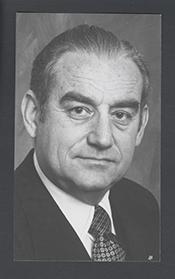
United States · Official source
No stored named vote for this person. House roll-calls come from Congress.gov; Senate member lists come from senate.gov LIS XML.
United States · United States Congress
United States · United States Congress
United States · United States Congress · 23 May 1985
Recognizes Camp Fire, Incorporated for its 75 years of service to our Nation.
United States · United States Congress · 9 May 1985
Amends the Federal charter of the General Federation of Women's Clubs to limit the Federation's operation to charitable and educational purposes within the meaning of a tax-exempt organization under the Internal Revenue Code. Requires the Federation, upon dissolution, to liquidate and distribute its assets to tax-exempt charitable organizations with similar purposes.
United States · United States Congress · 9 May 1985
Amends the Tariff Act of 1930 to include in the definition of "subsidy" (for countervailing duty purposes) any resource input subsidy as provided for under the provisions of this Act. States that a "resource input subsidy" is found to exist if: (1) (a) a product is provided or sold by a government-regulated or controlled entity within a country for input use within such country at a domestic price that is lower than the fair market value of the input product and is not freely available to U.S. producers; and (b) a product would, if sold at the fair market value, constitute a significant portion of the total cost of the manufacture or production of the merchandise in or for which the input product is used; or (2) under specified circumstances, the right to remove or extract such product is provided or sold by a government or a government-regulated or controlled entity within a country. Sets forth the method of calculation for the amount of a resource input subsidy. Defines "fair market value" and "input use" for purposes of this Act. Requires injury determinations by the U.S. International Trade Commission to be made in all countervailing duty investigations relating to the existence of resource input subsidies.
United States · United States Congress · 2 May 1985
Veterans' Compensation Benefits Amendments of 1985 - Directs the Administrator of Veterans Affairs to establish a regional office of the Veterans Administration (VA) in each State, while maintaining its central office in the District of Columbia. Adds the loss or loss of use of one hand or foot or one lung to those extremities given special consideration in the determination of veterans' disability compensation. Expresses the sense of the Congress that payments by the VA to veterans as compensation for service-connected disabilities should remain exempt from Federal taxation, and that the President should reject any proposals to tax such payments. Raises the coverage of life insurance benefits for veterans under the Servicemen's Group Life Insurance program. Allows veterans who are members of the Retired Reserve as of January 1, 1986, to receive such increased coverage. Makes conforming changes to the Veterans' Group Life Insurance program, similarly granting members of the Individual Ready Reserve and the Inactive National Guard eligibility under such program. Makes eligible for certain veterans' benefits members of the National Guard or Air National Guard who perform full-time duty for training purposes after September 30, 1985. Makes former members of the National Guard or Air National Guard eligible if such member continuously served in such status for 181 days or more. Extends through September 30, 1988, the authority of the VA to operate a regional office in the Republic of the Philippines. Entitles surviving spouses of the Commandant of the Coast Guard to the same dependency and indemnity compensation rate as that accorded to surviving spouses of the chief of the other military services. Makes technical amendments to the Veterans' Benefits Improvement Act of 1984 and other Federal law.
United States · United States Congress · 2 May 1985
Veterans' Housing and Memorial Affairs Amendments of 1985 - Directs the Administrator of Veterans Affairs to report to the Congress a plan to expand the national cemetery system in at least ten areas with the greatest need. Directs the Administrator to consider acquiring existing State cemeteries to meet such need. Gives contingent dates for the submission of the first such report. Amends provisions concerning national cemeteries and memorials to require that each grave marker in a national cemetery be upright. Provides an exception for individuals requesting flat markers. Requires the Administrator, no later than January 1, 1986, to designate for each cemetery in the National Cemetery System a section for graves with upright markers and a section for graves with flat markers. Directs the Administrator to establish a national cemetery in Merced County, California, on land which is donated by the Romero Ranch Company. Authorizes the Administrator to assist certain disabled veterans in acquiring a residence already adapted with special features deemed necessary due to the veteran's disability. Expresses the sense of the Congress that the one-percent loan origination fee charged by the Veterans Administration (VA) to veterans obtaining a home loan guaranteed by the VA should not be increased. Directs the President to request additional appropriations if he finds that additional funding for the VA home loan guarantee program is required.
United States · United States Congress · 25 April 1985
Expresses the sense of the Congress that the President should establish a task force of expert farmers to address the long-range concerns of the U.S. agricultural industry.
United States · United States Congress · 23 April 1985
Authorizes the President, on behalf of the Congress, to present a gold medal honoring George Gershwin to his sister, Frances Gershwin Godowsky, and a gold medal honoring Ira Gershwin to his widow, Lenore Gershwin. Directs the Secretary of the Treasury to provide for the sale of bronze duplicates of the medal. Authorizes appropriations.
United States · United States Congress · 22 April 1985
Increases the authorized membership of the Administrative Conference of the U.S. from 91 members to 101 members. Authorizes appropriations as necessary for the Conference for FY 1987 through 1990.
United States · United States Congress · 2 April 1985
Amends title II (Old Age, Survivors and Disability Insurance) of the Social Security Act to eliminate the benefit disparity between those born before 1916 and those born after 1916 which was effected by the enactment of the Social Security Amendments of 1977. Directs the Secretary of Health and Human Services to recompute the primary insurance amount so as to take into account the amendments made by this Act and to pay to any individual so entitled any additional lump sum amount to which such individual is entitled by reason of this Act. Prohibits the recomputation from reducing any individual's benefit.
United States · United States Congress · 2 April 1985
Authorizes the Comptroller General and the head of any Federal agency to grant equitable waivers of claims of the United States against persons for erroneous payments of travel, transportation, or relocation expenses if: (1) such payments occurred on or after January 1, 1985; and (2) an application for waiver is received within three years after such an erroneous payment was made.
United States · United States Congress · 20 March 1985
Fair Allocation of Government Fault Act - Directs a State court or a U.S. district court in any civil action brought by a Government employee (including a member of the U.S. armed forces or the National Guard) alleging liability of a Government contractor for harm concerning which the employee is entitled to receive Federal benefits: (1) at the request of any party, to make findings of fact as to the proportion of fault of the United States in causing such harm; and (2) to reduce any judgment of liability rendered against the contractor by the proportion of fault of the United States. Reduces the amount the United States is entitled to be reimbursed through right of subrogation for Federal benefits provided as a result of harm for which a contractor is liable by the proportion of fault of the United States. Prohibits any reduction of a judgment against a contractor in a civil action unless the contractor notifies the U.S. Attorney General, within 90 days after such civil action is filed, that the contractor intends to seek an equitable reduction of liability. Allows the United States 90 days after receipt of such notice to intervene as a party in such action. Sets forth factors to be considered by the court in determining the proportion of fault of the United States. Requires the United States to hold harmless and indemnify a contractor against any liability (for damages arising from personal injury, illness, or death or from damage to, or loss of use of, property) resulting from goods or services supplied pursuant to a Government contract to the extent such liability exceeds the amount of commercial insurance or qualified self-insurance protection the contractor is required to carry under the contract. Prohibits such indemnification of a contractor: (1) if the goods or services supplied under the contract are also sold by the contractor to nongovernmental purchasers for identical application or for nongovernmental use; (2) for liability caused by the gross negligence, willful misconduct, or lack of good faith of any of the directors, officers, or managing officials of the contractor; and (3) for liability resulting from any claim or action against the contractor unless the contractor notifies the contracting agency of such claim or action within a reasonable time. Permits the United States to control or assist in the settlement or defense of any such claim or action which can reasonably be expected to give rise to a claim for indemnification. Requires a contractor seeking indemnification to present a claim to the contracting agency. Allows a contractor aggrieved by the agency's determination to appeal such determination under the Contract Disputes Act of 1978. Permits the United States to discharge its indemnification obligation by making direct payments from specified funds to the contractor involved or the third persons to whom the contractor may be liable. Provides that the provisions of the Act shall not apply with respect to any risks against which indemnification may be obtained under the Atomic Energy Act of 1954. Declares that nothing in this Act shall be construed to create any liability of the Government to any person other than to contractors for indemnification.
United States · United States Congress · 20 March 1985
Amends the Immigration and Nationality Act to direct the Attorney General to reimburse air carriers for expenses incurred in detaining aliens pending their admission to, or deportation from, the United States. Includes within the grounds for a refund of the penalty expenses for transporting an illegal alien into the United States the fact that, despite documentary inadmissibility, such alien is admitted or paroled into the United States.
United States · United States Congress · 19 March 1985
Textile and Apparel Trade Enforcement Act of 1985 - Limits the total quantity of 1985 imports of textiles and textile products from a major exporting country to the lesser of an amount equal to 101 percent: (1) of the total quantity of textile products imported from such country if the total had increased by six percent annually (one percent annually for wool products) during 1981 through 1984; or (2) if the United States has an agreement with such country providing for an annual growth rate of less than six percent, of the total quantity of such products from such country imported during 1984. Limits the total quantity of 1985 imports of textiles and textile products from an exporting country to an amount equal to the total quantity of such products imported from such country during 1984 plus: (1) 15 percent of such quantity in the case of a category that is not an import sensitive category; or (2) one percent in the case of an import sensitive category. Provides for changing the classification of a country, except for a Caribbean country, from an exporting country to a major exporting country if the total textile imports from such country equals or exceeds one and one-quarter percent of all textiles imported into the United States. Sets forth a formula for adjusting the growth of textile imports annually. Sets forth certain minimum quantities of textile imports that all countries shall be allowed to export to the United States. Requires the Secretary of Commerce to enforce this Act. Directs the Secretary, within six months of enactment of this Act, to establish an import licensing system under which an importer of textiles will be required to present an import permit as a condition of entry of such textiles. Directs the President to report to the Congress annually on the administration of this Act.
United States · United States Congress · 6 March 1985
(Motion to refer to Committee on House Administration passed House, roll call #24 (168-167)) Proclaims March 17 through March 23, 1985, to be Camp Fire Week.
United States · United States Congress · 5 March 1985
Veterans' Employment Amendments of 1985 - Amends the Emergency Veterans' Job Training Act of 1983 to extend through July 1, 1986, the provisions of such Act. Increases the eligibility for job training assistance to veterans of the Korean and Vietnam conflicts by lowering the required period of unemployment necessary for such eligibility. Increases to GS-11 the level to which veterans may be appointed for veterans readjustment appointments and career-conditional appointments (currently to GS-9). Eliminates the disability requirement as a condition to such appointments for Vietnam-era veterans.
United States · United States Congress · 26 February 1985
Expresses the sense of the Congress that: (1) veterans' disability compensation payments should remain exempt from Federal income taxation; and (2) the President should reject any proposals to tax such payments.
United States · United States Congress · 25 February 1985
Authorizes the Armored Force Monument Committee, the United States Armor Association, the World Wars Tank Corps Association, the Veterans of the Battle of the Bulge, the 11th Armored Cavalry Regiment Association, the Tank Destroyer Association, the 1st, 2nd, 3rd, 4th, 5th, 6th, 7th, 8th, 9th, 10th, 11th, 12th, 13th, 14th, and 16th Armored Division Associations, and the Council of Armored Division Associations to erect a memorial in or near Arlington National Cemetery, Virginia, to honor and commemorate the American Armored Force. Directs the Secretary of the Interior, with the approval of the National Commission of Fine Arts and the National Capital Planning Commission, to select the site and approve the design and plans. Obligates the United States to expenses of maintenance only. Requires the commencement of the erection of the memorial within five years with a certification of sufficiency of funds necessary before commencement.
United States · United States Congress · 21 February 1985
Designates the week of May 12 through May 18, 1985, as National Science Week.
United States · United States Congress · 21 February 1985
Farm Credit Private Control Restoration Act of 1985 - Amends the Farm Credit Act of 1971 to provide that each Federal land bank, Federal intermediate credit bank, and district bank for cooperatives shall have a separate board of directors. Sets forth the composition of such boards. Provides that the eligibility requirements, terms, and compensation of directors and the election of officers by the directors shall be the same as provided for farm credit district boards. Authorizes the Farm Credit Administration to modify the charters or organization certificates of such banks only as necessary for compliance with such Act. Restricts the Administration's authority over the salaries of bank employees and chief executive officers. Prohibits Administration regulations from preventing such banks from exercising any powers granted under Federal statute. Increases: (1) by four the number of members of the board of directors of each farm credit district; and (2) by one the number of such directors appointed by the Governor of the Administration and the number of directors elected by the Federal land bank associations, the production credit associations, and the borrowers from, or subscribers to, the guaranty fund of the bank for cooperatives for the district. Limits the powers of such district boards to: (1) coordinating joint undertakings and joint properties of the district banks; (2) advising the boards of district banks on coordination of policies; and (3) formulating broad policies concerning the funding operations of the district banks and furnishing long-range policy guidelines for funding the Farm Credit System. Sets forth transitional provisions.
United States · United States Congress · 21 February 1985
Designates March 22, 1985, as National Energy Education Day.
United States · United States Congress · 20 February 1985
Designates 1985 as the 75th Anniversary of the Boy Scouts of America.
United States · United States Congress · 20 February 1985
Designates the week beginning May 12, 1985, as National Digestive Diseases Awareness Week.
Showing the 24 most recent records of 921. Browse the full list