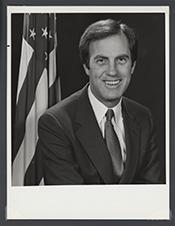
United States · United States Congress · 6 January 1981
Provides that annuity contracts with reserves based on a segregated asset account shall be treated, for tax purposes, in accordance with rules in effect before the issuance of Revenue Ruling 77-85.
United States · United States Congress · 5 January 1981
Amends the Internal Revenue Code to exclude from gross income a corporate stock distribution to a stockholder based upon the reinvestment of stock dividends in the corporation by such stockholder pursuant to his election to participate in a qualified dividend reinvestment plan, as defined in this Act. Limits the amount of such exclusion to $1,500 per year. Establishes a rebuttable presumption that a distribution made by a corporation which purchases its common stock within one year of such distribution shall not be deemed a distribution pursuant to a qualified dividend reinvestment plan.
United States · United States Congress · 5 January 1981
Small Business and Family Farm Preservation Act of 1981 - Amends the Internal Revenue Code to increase the unified credit against estate and gift taxes from $47,000 to $155,800. Increases the amount of the annual gift tax exclusion from $3,000 to $6,000.
United States · United States Congress · 5 January 1981
Campuses for the Elderly Act - Directs the Secretary of Housing and Urban Development to: (1) solicit and review plans for the development of campus-style residential and health care projects for the elderly; and (2) make interest subsidy payments to developers of such projects. Authorizes appropriations necessary to make such interest subsidy payments. Amends the National Housing Act to authorize the Secretary to insure and to make commitments to insure mortgages on properties being developed under this Act. Requires a report to the Congress evaluating projects developed under this Act by a committee of Congressional members, representatives of the medical profession, and administrators of health-care facilities. Authorizes appropriations for such committee.
United States · United States Congress · 5 January 1981
Limitation on Government Recordkeeping Requirements and Actions Act of 1981 - Prohibits any Federal agency from: (1) requiring any person to maintain, prepare, or produce records (other than records relating to a dangerous material) of an event more than four years after the event has occurred; and (2) commencing an action against a person for a violation of a regulation more than four years after such violation has occurred, except as otherwise provided by the Internal Revenue Code.
United States · United States Congress · 5 January 1981
Amends the Internal Revenue Code to permit taxpayers who do not itemize income tax deductions to claim a deduction from gross income for charitable contributions.
United States · United States Congress · 5 January 1981
Child Care Agency Tax Amendments of 1981 - Amends the Internal Revenue Code to exempt from the windfall profit tax oil produced from interests held by or for a residential child care agency. Defines such an agency as a tax-exempt charitable organization operated primarily for the residential placement, care, or treatment of delinquent, dependent, neglected, or handicapped children.
United States · United States Congress · 5 January 1981
Hobbs Act Amendment of 1981 - Amends the Hobbs Act to establish penalties for obstructing, affecting, or interfering with commerce by willfully injuring, damaging, burning, or destroying to the value of $2,000 or more any real or personal property of any person at or near any place where work or business of an employer or owner is carried on or where such employer or owner transports, stores, or maintains property for business or other purposes. States that such violation, as well as the offense of interfering with commerce by extortion, shall not be nullified or mitigated even if committed in the course of a legitimate labor dispute.
United States · United States Congress · 5 January 1981
Monetary Freedom Act - Title I: Assay, Inventory, and Audit of Gold Reserves - Directs the Secretary of the Treasury to conduct a full inventory of U.S. gold reserves and analyze the sufficiency of security measures for such reserves. Requires the General Accounting Office to contract with an independent, commercial auditing firm for the purposes of reviewing such inventory and, not later than nine months after the date of enactment of this Act, to transmit such inventory to Congress. Title II: Prohibition on Sale of Gold Bullion - Amends the Gold Reserve Act of 1934 to require Congressional authorization to sell gold bullion. Title III: Prohibition of Seizure of Privately Owned Gold - Amends the Trading With the Enemy Act to repeal the President's authority to regulate transactions in gold or silver coin or bullion during the time of war. Amends the Federal Reserve Act to repeal the Secretary's authority to require the exchange of gold coins, bullion, and certificates for other U.S. currency if necessary to protect the U.S. currency system. Repeals certain provisions of the Gold Reserve Act of 1934 prohibiting gold coinage. Reaffirms the constitutional right of the people to hold gold. Title IV: Repeal of Legal Tender Laws - Repeals specified provisions concerning gold and silver coins and bullion, clad coins, currency, and other legal tender. Repeals all other provisions conferring legal tender status upon any monetary instrument. Title V: Redemption of Federal Reserve Notes - Directs the Secretary to redeem in gold all Federal Reserve and U.S. notes. Makes gold the money of account of the U.S. Government. Authorizes the Secretary to issue gold certificates for redeeming such notes and gold coins in denominations by weight. Directs the Secretary and the Federal Reserve to cease issuing Federal Reserve and U.S. notes on enactment of this Act. Title VI: Open Banking - Requires all banks to keep sufficient money in their possession at all times to cover all outstanding promises to pay a sum of money on demand. Authorizes any association of persons, who file an organization certificate, to carry on the business of banking. Title VII: Judicial Application - Sets forth the rule to be used by courts in deciding controversies concerning redemption. Title VIII: Effective Date - Makes title VI effective 360 days after enactment. Makes all other titles effective on enactment of this Act.
United States · United States Congress · 5 January 1981
Anti-Inflation Tax Act of 1981 - Amends the Internal Revenue Code to require annual cost of living adjustments, based on the Consumer Price Index, to individual income tax rates, the personal tax exemption, withholding requirements, and minimum income tax return amounts.
United States · United States Congress · 5 January 1981
Requires that each State establish and maintain an approved workfare program as a condition of its eligibility for Federal payments or other assistance under the: (1) program of aid to families with dependent children under the Social Security Act; (2) food stamp program under the Food Stamp Act of 1977; and (3) public housing and assisted housing programs under the United States Housing Act of 1937. Requires that such State workfare program shall require every State resident applying for or receiving aid under such Federal public assistance program to perform work in return for, and as a condition for, such aid. Directs the appropriate Federal agencies to promulgate guidelines for approval, supervision, and oversight of such State workfare programs. Exempts from required participation in such programs those who are: (1) under age 18 or over age 65; (2) disabled; (3) regularly employed for at least 40 hours a week; or (4) primarily responsible for the care of a child less than three years old (or for the care of a child more than two but less than six years old if suitable child care is not available at reasonable cost). Requires that each State workfare program must provide that if any individual who is required to participate in such program refuses to accept a bona fide offer of qualified employment or to perform qualified employment, in any month, neither such individual nor any other person in the family or household of which such individual is a member shall be eligible to receive any aid under such Federal public assistance programs for that month. Requires that State workfare programs include provision for job counseling, assistance in obtaining employment outside the program, and job search activities. Provides for: (1) Federal matching funds to cover administrative costs of such State programs; (2) Federal cut-offs of funds to State agencies for failure to comply with this Act; and (3) Federal agency reports to Congress on such State programs. Authorizes appropriations.
United States · United States Congress · 5 January 1981
Youth Fair Labor Standards Amendments of 1981 - Amends the Fair Labor Standards Act of 1938 to permit employers, without prior certification by the Secretary of Labor, to pay 85 percent of the minimum wage: (1) to youths under age 20, for a 365-day period; and (2) to full-time students, with proof of enrollment at an institute of higher education, for part-time work up to 20 hours per week or full-time work during vacation periods. Directs the Secretary to insure against specified violations of requirements for such special minimum wages for youths and students. Makes employers liable for unpaid wages and overtime compensation for such violations.
United States · United States Congress · 5 January 1981
Amends the Internal Revenue Code to allow individual taxpayers a refundable income tax credit for the purchase of new passenger automobiles after December 31, 1980, and before January 1, 1982, which were manufactured by companies whose average fuel economy rating for passenger automobiles in model year 1979 equals or exceeds 120 percent of their rating for model year 1974. Establishes the amount of such credit as $500.
United States · United States Congress · 5 January 1981
Includes as creditable service for purposes of determining the amount of an individual's civil service annuity payment, any military service performed by that individual after December, 1956, regardless of that individual's eligibility for Social Security benefits for such military service.
United States · United States Congress · 5 January 1981
Constitutional Amendment - Prohibits the total appropriations of Congress from exceeding estimated revenues. Authorizes the suspension of such prohibition in time of war or national emergency. Prohibits any increase in the national debt as it exists on the date this article is ratified. Sets forth a schedule for repayment of the national debt.
United States · United States Congress · 5 January 1981
Constitutional Amendment - Prohibits a Federal court from requiring that a person be assigned to, or excluded from, a school on the basis of race, religion, or national origin.
United States · United States Congress · 5 January 1981
Declares the sense of Congress that the Constitution of the United States does not preclude the use of, and that public school authorities should recognize the value of, discretionary periods of silence for silent prayer, meditation, contemplation, or introspection in the public schools.