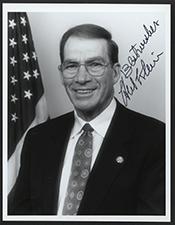
United States · United States Congress · 12 May 1993
Many Neighbors, One Earth Resolution - Urges the President to develop and implement a coordinated economic and development policy and program of action designed to promote broadbased, sustainable development that will reduce global hunger and poverty in environmentally sound ways. Specifies that such policy and program should have as its principal objectives: (1) expanding economic opportunities; (2) meeting basic human needs; (3) promoting environmental protection and sustainable use of natural resources; and (4) promoting pluralism, democratic participation, and human rights. Specifies that such policy and program should involve all relevant international activities of the U.S. Government. Urges the President to take specific actions, including: (1) proposing the enactment of legislation providing for a post-Cold War foreign assistance program to promote sustainable development, especially the reduction of hunger and poverty in environmentally sound ways; (2) developing and implementing development cooperation programs and projects in pursuit of such objectives; (3) ensuring that development cooperation programs take into account relevant local perspectives of the rural and urban poor during the design, planning, and implementation process for project and program assistance; and (4) encouraging and supporting the efforts of countries to reduce their level of military spending when such spending is disproportionate to security needs and to spending on health, education, and environmental protection.
United States · United States Congress · 11 May 1993
Nuclear Non-Proliferation Policy Act of 1993 - Declares that, in order to end nuclear proliferation and reduce current nuclear arsenals and supplies of weapons-usable nuclear materials, it shall be U.S. policy to pursue the following objectives: (1) encourage the Ukraine to ratify the START I treaty and Ukraine and Kazakhstan to vote to accede to the Nuclear Non-Proliferation Treaty as non-nuclear weapon states; (2) encourage Belarus, Ukraine, and Kazakhstan to remove all nuclear weapons from their territory, accept International Atomic Energy Agency (IAEA) safeguards over nuclear facilities, and implement effective controls on nuclear exports; (3) reach an agreement with the Russian Federation to deactivate weapons to be withdrawn under START I and II, place all fissile material from weapons under bilateral or international controls, and arrange for inspections and data exchanges; (4) prepare for the ratification of START II by seeking the exchange of information; (5) conclude a multilateral comprehensive nuclear test ban treaty by early 1995; (6) ratify START II in the United States and encourage the Russian Federation to do the same; (7) conclude multilateral agreements to reduce nuclear arsenals; (8) reach agreement with the Russian Federation to halt the production of fissile material for weapons purposes and other worldwide agreements respecting such materials and the placement of all nuclear facilities under IAEA safeguards; (9) strengthen IAEA safeguards and nuclear export controls; (10) reduce incentives for countries to pursue the acquisition of nuclear weapons by seeking to reduce regional tensions; (11) support the extension of the Nuclear Non-Proliferation Treaty at the 1995 conference; (12) adopt a U.S. policy of "no first use" of nuclear weapons, reach agreement with other nuclear weapon states to adopt such a policy, and assist any country which is a party to the Nuclear Non-Proliferation Treaty should weapons be initiated against such country; (13) conclude an agreement with the Russian Federation to dismantle all tactical nuclear weapons; and (14) sign the appropriate protocols to the South Pacific Nuclear Free Zone Treaty.
United States · United States Congress · 6 May 1993
TABLE OF CONTENTS: Title I: Programs and Related Provisions Subtitle A: Programs Subtitle B: Related Provisions Title II: Organization Title III: Reauthorization Subtitle A: National and Community Service Act of 1990 Subtitle B: Domestic Volunteer Service Act of 1973 Title IV: Technical and Conforming Amendments National Service Trust Act of 1993 - Amends the National and Community Service Act of 1990 and the Domestic Volunteer Service Act of 1973 to reauthorize, revise, and reorganize national and community service and domestic volunteer programs, establish a Corporation for National Service and a National Service Trust program of Federal investment in support of national service, and provide expanded opportunities for national service and educational awards for participants. Title I: Programs and Related Provisions - Subtitle A: Programs - (Sec. 101) Amends the National and Community Service Act of 1990 (the Act) to establish the National Service Trust program, replacing the current American Conservation and Youth Service Corps. Authorizes the Corporation for National Service (CNS) to make matching grants to State and local governments, Indian tribes, public and private nonprofit organizations, and higher education institutions for: (1) full- or part-time national service programs, including summer programs; and (2) subgrants for national service programs of other entities. Authorizes CNS to enter into agreements with other Federal agencies to support their national service programs. Directs CNS to approve national service educational awards for participants serving in CNS-assisted national service programs. Describes types of eligible national service programs addressing unmet human, educational, environmental, or public safety needs, including community corps, youth corps, service-learning, special skills or specialized training, individualized placement, campus-based, preprofessional training, professional corps, disadvantaged youth community service, national service entrepreneur, intergenerational, or other programs. Directs CNS to establish qualification criteria. Authorizes CNS to provide the following types of program assistance: planning, operational, replication, subgrantee, training, technical, and other special assistance (including support for State commissions and challenge grants for national service programs). Requires CNS to ensure that participants in VISTA or the Civilian Community Corps receive national service educational awards, except in specified circumstances. Sets forth application and program requirements. Requires an assurance that the program assisted will not perform service that provides a direct benefit to any: (1) for-profit business; (2) labor union; (3) partisan political organization; or (4) organization engaged in religious activities (unless such service does not involve use of assistance or participants to give religious instruction, conduct worship services, or engage in any form of proselytization). Sets a minimum age for national service participants of 17, except for certain youth programs where the beginning of service may be between age 16 and 25. Sets rules for selection of participants, including selection and training of a national leadership pool. Sets a term of service at a minimum of 1,700 hours during: (1) a full-time period of nine months to one year; or (2) a part-time period of one to two years. Establishes requirements for participant living allowances. Limits the Federal share to not more than 85 percent of the VISTA volunteer allowance. Makes those who serve in approved national service positions eligible for national service educational awards. (Sec. 102) Establishes the National Service Trust in the Treasury to provide for the payment of national service educational awards. Sets forth eligibility standards for national service educational awards. Bases such awards on only the first and second terms of service. Requires that the award be used within five years after completion of the term of service. Sets the award's value at $5,000 for each term of service (up to two terms). Allows the use of such awards to: (1) repay outstanding student loans; (2) pay current educational expenses; (3) enable participation in approved school-to-work programs; and (4) pay interest during forbearance on loan repayment. Provides that awards shall not be considered: (1) in a means-test for Federal or federally-assisted benefits; or (2) as taxable income under the Internal Revenue Code. Makes conforming amendments to student loan provisions of the Higher Education Act of 1965 (HEA). Makes Stafford loan forgiveness available. (Sec. 103) Establishes School-Based and Community-Based Service-Learning programs to replace current Programs for Students and Out-of-School Youth. Revises the Serve-America program (currently named Service-America) to include: (1) school-based programs for students; (2) community-based service programs for school-age youth; and (3) a service-learning clearinghouse. Authorizes CNS to make planning grants to local educational agencies (LEAs) with respect to service-learning coordinators participating in an assisted national service program or receive a national service educational award. Authorizes grants for school-based service-learning programs and community-based service programs. Directs CNS to provide financial assistance to eligible public and private nonprofit organizations to establish a service-learning clearinghouse. Adds priority criteria for the making of grants for Higher Education Innovative Programs for Community Service. (Sec. 104) Establishes an Investment for Quality and Innovation program to carry out specified innovation and quality improvement activities. Directs CNS to provide assistance to appropriate entities to establish one or more clearinghouses, including the service-learning clearinghouse. Authorizes the President, acting through CNS, to make Presidential awards for service to individuals providing significant service, and to outstanding service programs. Provides that Civilian Community Corps members may receive educational awards (or suitable alternative benefits if ineligible for such awards). Amends the National Defense Authorization Act for Fiscal Year 1993 to extend the authority to conduct the Civilian Community Corps Demonstration Program. Subtitle B: Related Provisions - (Sec. 111-121) Makes conforming amendments and repealers to specified Federal law. Title II: Organization - (Sec. 201) Amends the National and Community Service Act of 1990 to require the establishment of State commissions on national service as a condition for receiving certain grants or allotments or a distribution of approved national service positions. Sets commission membership standards, and duties, including planning. (Sec. 202) Establishes the Corporation for National Service (CNS) as a Government corporation to administer programs under the Act. Amends the Domestic Volunteer Service Act of 1973 to require the Director of the ACTION Agency to report directly to the CNS Chairperson (under interim authorities). Directs the Chairperson to establish (or request the Director of the Office of Personnel Management to provide) job search and related assistance to employees of the ACTION Agency who are not transferred to CNS. (Sec. 202 & 203) Transfers to CNS functions of: (1) the Commission on National and Community Service (under interim authorities); and (2) the ACTION Agency (under final authorities). Title III: Reauthorization - Subtitle A: National and Community Service Act of 1990 - Extends the authorization of appropriations for the National and Community Service Act of 1990. Subtitle B: Domestic Volunteer Service Act of 1973 - Domestic Volunteer Service Act Amendments of 1993 - Amends the Domestic Volunteer Service Act of 1978 (DVSA) to reauthorize, reorganize, and revise its programs. Chapter I: VISTA and Other Anti-Poverty Programs - (Sec. 321) Adds to VISTA program objectives generating private sector resource commitment, encouraging local level volunteer service, and strengthening local agencies and organizations to carry out the program. (Sec. 322) Revises procedures and other requirements for selection and assignment of VISTA volunteers. Allows a sponsoring organization to recruit VISTA volunteers, subject to final approval of the Director of the ACTION Agency (the Director). (Sec. 323) Revises provisions for terms and periods of service. Authorizes a VISTA summer associates program. (Sec. 324) Revises postservice stipends. (Sec. 325) Requires encouragement of participation of both younger (18 through 27) and older (55 and older) VISTA volunteers. (Sec. 328) Repeals authority for student community service programs grants and contracts. (Sec. 329) Renames the University Year for ACTION the University Year for VISTA program. Shortens the minimum period of participation to an academic semester or equivalent. Allows volunteers to receive a living allowance or such other support the Director deems appropriate. (Sec. 330) Revises authority to establish and operate special volunteer and demonstration programs. Requires a competitive process for any grant or contract exceeding $100,000. (Sec. 331) Permits the Director to provide technical and financial assistance to employers and other private organizations that use or desire to use volunteers. (Sec. 332) Repeals a separate authority for drug abuse education and prevention programs under special volunteer programs. Chapter 2: National Senior Volunteer Corps - (Sec. 342) Renames the retired senior volunteer program the Retired and Senior Volunteer Program (RSVP). (Sec. 343) Expands RSVP eligibility to include older working persons and those over 55 (currently 60). (Sec. 345) Requires certain adjustments and minimums for stipends for low-income volunteers. (Sec. 346) Allows non-low-income persons to participate in the Foster Grandparent and the Senior Companion programs, without any financial support except reimbursement for related expenses. (Sec. 347) Repeals certain conditions for grants and contracts under those two programs, including a requirement that volunteers no longer be in the regular work force. (Sec. 348) Eliminates one type of evaluation of the Senior Companion Program. (Sec. 349) Encourages agreements with other Federal agencies involving retired, senior, intergenerational, and conservation volunteer programs. (Sec. 352) Authorizes grants and contracts for demonstration programs of innovative activities involving older volunteers. Prohibits reducing other older volunteer programs to support such demonstrations. Chapter 3: Administration - (Sec. 365) Bases disability or death benefits for VISTA volunteers on a grade GS-5 (rather than GS-7) Federal employee entrance salary. (Sec. 370) Grants copyright protection for the programs of the ACTION Agency. (Sec. 371) Authorizes the Director to establish a Center for Research and Training on Volunteerism. (Sec. 372) Amends Federal law relating to Federal employees to make retirement credit for time served as a VISTA volunteer available to all who become Federal employees subsequent to such volunteer service, upon their paying a deposit based on their post-service stipend. Chapter 4: Authorization of Appropriations and Other Amendments - (Sec. 381-383) Extends the authorization of appropriations for various programs under the Domestic Volunteer Service Act of 1973. (Sec. 385) Repeals Youthbuild Projects authority. Chapter 5: General Provisions - (Sec. 391) Sets forth technical and conforming amendments. Title IV: Technical and Conforming Amendments - (Sec. 401-405) Sets forth various changes of definitions and references in specified Federal law.
United States · United States Congress · 5 May 1993
Environmental Research, Development, and Demonstration Authorization Act of 1993 - Authorizes appropriations to the Administrator of the Environmental Protection Agency (EPA) for FY 1994 for environmental research, development, and demonstration activities and for program management and support of the Office of Research and Development. Prohibits the Administrator from using any funds appropriated in this Act for office closings or reductions in force unless a congressional notice and wait procedure has been complied with by the Administrator. Requires the Administrator to establish separately identified core research programs consisting of fundamental ecological, health, and risk reduction research to support efforts to assess and mitigate serious environmental risks. Requires the Science Advisory Board to review and make recommendations on core research program activities. Directs the Administrator to establish an Environmental Monitoring and Assessment Program to conduct comprehensive, long-term environmental monitoring, data collection, and data analysis to assess and respond to the current and long-term status and trends of the ecological resources of the United States. Requires the Administrator to make available to the public and the Congress statistical data summaries and interpretive reports on ecological status and trends. Directs the Administrator to: (1) establish a modernization program to identify, acquire, and maintain modern buildings, facilities, supplies, and equipment needed to conduct high quality research; and (2) conduct studies and make assessments of the adequacy of the equipment and facilities to meet the needs of EPA and to attract well-qualified scientists, engineers, and other appropriate personnel. Repeals a required annual report from the Administrator of a five-year plan for environmental research, development, and demonstration. Directs the Administrator to: (1) carry out a program of environmental technology transfer and exchange of scientific information to make full use of EPA's research, development, and demonstration efforts; and (2) establish a separately identified research program to improve EPA's capability to identify and assess risks to public health and ecosystems resulting from environmental contamination.
United States · United States Congress · 5 May 1993
Qualified Football Coaches Plan Technical Corrections Act of 1993 - Amends the Employee Retirement Income Security Act of 1974 to make technical revisions which restore treatment of a qualified football coaches plan as a multiemployer plan for pension plan purposes.
United States · United States Congress · 4 May 1993
World War II Cadet Nurse Civil Service Fairness Act - Includes service of at least one year but less than two years in the Cadet Nurse Corps during World War II as creditable service for purposes of civil service retirement. (Current law provides for individuals with two or more years of service.) Requires the retirement annuity of an affected individual to be redetermined upon the filing of an appropriate application with the Office of Personnel Management and the deposit of required amounts into the Civil Service Retirement and Disability Fund.
United States · United States Congress · 4 May 1993
Calls for the U.S. Trade Representative to insist that any trade agreement negotiated pursuant to the Uruguay Round must provide U.S. copyright-based industries with: (1) fair and equal access to the markets of the nations that are party to the General Agreement on Tariffs and Trade; (2) equal opportunities to obtain government funding; (3) adequate and effective copyright protection, including full national treatment and recognition of contractual rights; and (4) a mechanism to resolve expeditiously disputes concerning market access, national treatment, and copyright protection.
United States · United States Congress · 28 April 1993
Amends title II (Old Age, Survivors and Disability Insurance) (OASDI) of the Social Security Act and the Internal Revenue Code to exclude from OASDI coverage all service performed during the calendar year by State and local election officials and workers if it is performed only on an election day.
United States · United States Congress · 21 April 1993
High Performance Computing and High Speed Networking Applications Act of 1993 - Amends the High-Performance Computing Act of 1991 to direct the Federal Coordinating Council for Science, Engineering, and Technology to: (1) establish an interagency applications program to develop applications of computing and networking advances under the National High-Performance Computing Program; and (2) develop a Plan for Computing and Networking Applications which shall identify application program goals and priorities and set forth specific Federal agency responsibilities. Requires the Plan to: (1) foster local network access programs and their connection with Internet; and (2) develop projects and technologies in the fields of education, health care, libraries, and government information access. Provides for the establishment of a high performance computing and applications advisory committee.
United States · United States Congress · 20 April 1993
Arson Prevention Act of 1993 - Amends the Federal Fire Prevention and Control Act of 1974 to direct the Administrator of the United States Fire Administration, through the Office of Fire Prevention and Arson Control, to carry out a demonstration program to provide two-year grants to States for programs relating to arson research, prevention, and control. Sets forth State funding requirements and provides for additional renewal periods for such grants. Authorizes appropriations, including appropriations for the expansion of arson investigator training programs at the National Fire Academy and the Federal Law Enforcement Training Center or through regional delivery sites.
United States · United States Congress · 7 April 1993
Dietary Supplement Health and Education Act of 1993 - Amends the Federal Food, Drug, and Cosmetic Act to: (1) define the term "dietary supplement"; and (2) exclude a dietary supplement from the definition of "food additive." Deems a dietary supplement adulterated if it: (1) contains an unsafe dietary ingredient which presents a substantial and unreasonable risk of illness or injury; or (2) contains a dietary ingredient that has not been adequately substantiated for safety. Prohibits the establishment of maximum limits on the potency of any dietary supplement, except in the case of a supplement represented to be for the use of individuals with specific diseases or disorders. Allows a dietary supplement's label to characterize the relationship between the supplement and a disease under specified conditions. Deems food misbranded unless the label lists the daily value of specified nutrients which shall reflect the daily intake of each nutrient that will promote optimal health. Prohibits such value from being less than the U.S. Recommended Daily Allowance. Establishes an Office of Dietary Supplements within the National Institutes of Health.
United States · United States Congress · 5 April 1993
Women in Military Service for America Memorial Commemorative Coin Act - Directs the Secretary of the Treasury to issue five-dollar gold coins and one-dollar silver coins symbolic of women's service in the armed forces.
United States · United States Congress · 2 April 1993
Independence Hall Commemorative Coin Act - Directs the Secretary of the Treasury to issue one-dollar coins emblematic of the shrines of liberty, showing the Liberty Bell on one side and the Independence Hall on the other. Mandates that surcharges from the sale of coins be distributed equally between the Treasury and the Independence Hall Preservation Fund.
United States · United States Congress · 1 April 1993
1994 Vietnam Veterans Memorial Commemorative Coin Act - Directs the Secretary of the Treasury to issue one-dollar silver coins emblematic of the Vietnam Veterans Memorial. Mandates that surcharges from the sale of such coins be paid to the Vietnam Veterans Memorial Fund to help raise an endowment to be a permanent source of support for the Memorial.
United States · United States Congress · 1 April 1993
Line Item Veto Act - Amends the Congressional Budget and Impoundment Control Act of 1974 to grant the President an additional method of rescinding budget authority. Allows the President to transmit to both Houses of the Congress, for expedited consideration, one or more special messages proposing to rescind all or part of any item of budget authority provided in an appropriation bill or the repeal of any tax expenditure in any revenue Act. Requires that such special message be transmitted not later than seven days after the President approves the appropriation bill or revenue Act and be accompanied by a draft bill or joint resolution that would, if enacted, rescind the budget authority proposed to be rescinded or repeal that tax expenditure. Sets forth House and Senate procedures for the expedited consideration of such proposals.
United States · United States Congress · 1 April 1993
Comprehensive Child Immunization Act of 1993 - Amends the Public Health Service Act to direct the Secretary of Health and Human Services to promulgate: (1) a list of vaccines that provide immunization against naturally occurring infectious diseases which are recommended for universal use in children; and (2) recommendations regarding the appropriate dosage and the ages of children at which each vaccine should be administered. Directs the Secretary to: (1) periodically purchase recommended childhood vaccines in amounts necessary for distribution to meet anticipated needs and for maintenance of a six-month reserve supply; and (2) negotiate a reasonable price for such vaccine. Requires a manufacturer of recommended childhood vaccine to provide costs or pricing data. Sets forth provisions regarding: (1) the confidentiality of such data; (2) the prohibition of additional shipping or handling charges; (3) multiple suppliers; and (4) reporting requirements. Directs the Secretary to provide for the distribution without charge of such vaccines to health care providers who serve children and meet other specified requirements. Permits a health care provider receiving a vaccine under such provisions to: (1) use such vaccine only for administration to children; and (2) impose a fee for the administration of the vaccine, but not for the vaccine itself, subject to specified limitations. Directs the Secretary to establish a national system to track the immunization status of children. Establishes in the Treasury a Comprehensive Child Immunization Account. Makes funds from such account available for vaccine purchases by the Secretary. Authorizes appropriations. Amends title XIX (Medicaid) of the Social Security Act to: (1) provide coverage of immunizations under early and periodic screening, diagnosis, and testing provisions of State Medicaid programs; and (2) require that payments to providers include reimbursement for administration of such vaccines. Sets forth provisions regarding: (1) termination of the vaccine purchase program; (2) use of the Vaccine Injury Compensation Trust Fund; (3) the permanent extension of authority to impose taxes for the Trust Fund; (4) the addition of vaccines to the vaccine injury table; (5) the extension of time for decision in proceedings on petitions for vaccine-related injuries or deaths; and (6) vaccine information materials (requiring a concise description of vaccine risks and benefits and a statement of program availability).
United States · United States Congress · 1 April 1993
Fairness to Condominium and Cooperative Owners Amendment of 1993 - Amends Federal bankruptcy law to preclude an individual debtor from being discharged from any debt for condominium or cooperative membership association fees if such fee is payable after the petition for relief in bankruptcy has been granted for any period during which the debtor occupied the dwelling unit.
United States · United States Congress · 31 March 1993
Restricted Weapons Act of 1993 - Amends the Federal criminal code to prohibit the possession or transfer of a restricted weapon, unless such weapon was lawfully possessed before the date it was most recently added to the published list required under this Act. Defines "restricted weapon" to mean any firearm which is on the list most recently published by the Secretary of the Treasury under this Act. Requires the Secretary to: (1) designate as a restricted weapon any semiautomatic rifle which is manufactured in the United States and is not generally recognized as suitable for, or readily adaptable to, sporting purposes and any firearm manufactured outside the United States the importation of which does not meet the sporting purposes standard; and (2) compile, publish, and periodically revise a list of the firearms so designated. Sets penalties for the unlawful possession or transfer of a restricted weapon. Provides for an enhanced penalty for possession or use of a restricted weapon during a crime of violence or a drug trafficking crime. Requires the Secretary to prescribe regulations governing the transfer of restricted weapons which shall allow such a transfer to proceed within 30 days after the Secretary receives the documentation submitted with respect to such a transfer. Authorizes the Secretary to assess a fee in connection with such a transfer. Sets penalties for violating such regulations. Prohibits: (1) the export of restricted weapons, with exceptions for U.S. departments or agencies and foreign governments (unless such a government engages in a consistent pattern of gross violations of human rights or has repeatedly provided support for international terrorism); and (2) the manufacture of a firearm to which a silencer or bayonet may be attached without alteration of the firearm. Sets penalties for violations of these provisions. Prohibits the possession or transfer of large capacity ammunition feeding devices, except where lawfully possessed before enactment of this Act. Defines such devices to include: (1) a detachable magazine, belt, or similar device which has, or can be readily converted to have, a capacity of more than seven rounds of ammunition; and (2) any part or combination of parts intended to convert a detachable magazine into such a device. Excludes from such definition any attached tubular device designed to accept and capable of operating with only .22 rimfire caliber ammunition. Sets penalties for violations. Requires the Secretary to promulgate regulations requiring manufacturers of such devices to stamp each such device with a permanent distinguishing mark.
United States · United States Congress · 30 March 1993
Comprehensive HIV Prevention Act of 1993 - Amends the Public Health Service Act to replace the title relating to the prevention of acquired immune deficiency syndrome (AIDS) with a new title on the prevention of human immunodeficiency virus (HIV) infection. Requires: (1) coordination of the HIV infection prevention activities of the Centers for Disease Control and Prevention, the Health Resources and Services Administration, the National Institutes of Health (NIH), and the Substance Abuse and Mental Health Services Administration (designated agencies); (2) establishment of the Secretary's Advisory Council on HIV Prevention; (3) a comprehensive plan for each designated agency's activities; (4) submission directly to the President, for review and transmittal to the Congress, of a budget for carrying out each plan; and (5) establishment, within each designated agency other than NIH, of an office to prepare the plan and carry out related activities. Authorizes the conduct or support of: (1) activities to obtain epidemiological data; (2) community-based activities; (3) counseling and testing regarding HIV infection (and resulting conditions), referrals, and partner notification; (4) activities to provide information to the public and to special populations; (5) prevention activities regarding adolescents, including through school-based programs; and (6) prevention programs in addition to those specified in this Act. Authorizes appropriations. Authorizes technical assistance.
United States · United States Congress · 25 March 1993
TABLE OF CONTENTS: Title I: Designation of Wilderness Title II: Administrative Provisions Utah BLM Wilderness Act of 1993 - Title I: Designation of Wilderness - Designates specified lands in the following areas of Utah as components of the National Wilderness Preservation System: (1) Great Basin wilderness areas; (2) Zion and Mojave Desert wilderness areas; (3) the Grand Staircase Wilderness and the Kaiparowits Plateau Wilderness; (4) Escalante Canyon wilderness areas; (5) the Henry Mountains Wilderness; (6) the Dirty Devil River Wilderness; (7) Cedar Mesa wilderness areas; (8) Canyonlands wilderness areas; (9) San Rafael Swell wilderness areas; and (10) Book Cliffs and Uinta Basin wilderness areas. Title II: Administrative Provisions - Reserves the Federal Government's rights to a quantity of water sufficient for each wilderness area designated by this Act.
United States · United States Congress · 24 March 1993
Voting Rights of Homeless Citizens Act of 1993 - Prohibits the imposition or application by any State or political subdivision or any standard, practice, procedure, or qualification or prerequisite to voting to deny or abridge the right of any U.S. citizen to vote because that citizen resides at or in a non-traditional abode. Authorizes the Attorney General to commence a civil action or an aggrieved citizen to institute a proceeding under this Act for injunctive relief against a violation of such provision.
United States · United States Congress · 23 March 1993
Calls upon: (1) the Government of Romania to allow the approximately 190 children and youths at the Romanian Institution for the Unsalvageables at Sighetu Marmatiei to come to the United States for humanitarian assistance, including proper medical attention and treatment; and (2) the Secretary of State to grant these persons expedited entry into the United States.
United States · United States Congress · 18 March 1993
Animal Medicinal Drug Use Clarification Act of 1993 - Amends the Federal Food, Drug, and Cosmetic Act to permit the extra-label use of drugs in animals if such use is upon the order of licensed veterinarian, is in compliance with appropriate regulations, and is in the context of a veterinarian-client-patient relationship. Prohibits such use if it results in unacceptable residues of a drug in food.
United States · United States Congress · 11 March 1993
Religious Freedom Restoration Act of 1993 - Prohibits any agency, department, or official of the United States or any State (the government) from burdening a person's exercise of religion even if the burden results from a rule of general applicability, except that the government may burden a person's exercise of religion only if it demonstrates that application of the burden to the person: (1) furthers a compelling governmental interest; and (2) is the least restrictive means of furthering that compelling governmental interest. Sets forth provisions pertaining to judicial relief, attorney's fees, and applicability.
United States · United States Congress · 9 March 1993
Expresses the sense of the Congress that the Federal Energy Regulatory Commission should refrain from further processing restructuring proceedings pursuant to a specified Order until 60 days after submission to the Congress of a General Accounting Office study of the economic impacts of such Order upon end-users of natural gas.
United States · United States Congress · 2 March 1993
Justice for Wards Cove Workers Act - Amends the Civil Rights Act of 1991 to remove a provision excluding from application of the Act any disparate impact case filed before March 1, 1975, and decided after October 30, 1983. (Wards Cove Packing Co. v. Atonio, 1989, held that, in cases brought under title VII of the Civil Rights Act, the burden is on the plaintiff to prove an employer had no business necessity for a practice with discriminatory effects.)
United States · United States Congress · 1 March 1993
Hate Crimes Sentencing Enhancement Act of 1993 - Amends the Federal judicial code to require the U.S. Sentencing Commission to: (1) promulgate or amend existing guidelines to provide for sentencing enhancements of not less than three offense levels for offenses that are hate crimes; and (2) ensure reasonable consistency with other guidelines, avoid duplicative punishments for substantially the same offenses, and take into account any mitigating circumstances that might justify exceptions.
United States · United States Congress · 24 February 1993
Establishes the Great Falls Historic District Commission to prepare a plan for the preservation, interpretation, development, and use of the historic, cultural, and architectural resources of the Great Falls of Passaic/S.U.M. National Historic District in Paterson, New Jersey. Authorizes appropriations for the preparation of the plan.
United States · United States Congress · 24 February 1993
Barnegat Bay Marine Environmental Improvement Act - Amends the Federal Water Pollution Control Act to require the Administrator of the Environmental Protection Agency to give priority consideration to the inclusion of Barnegat Bay, New Jersey, in the National Estuary Program.
United States · United States Congress · 24 February 1993
Declares that it is the sense of the Congress that any legislation enacted to reform the health care system must: (1) ensure that every person has access to coverage for medically and psychologically necessary treatments for mental disorders that is equitable to the coverage provided for treatments of physical illnesses; and (2) meet specified requirements concerning coverage, consumer choice, financial protection, financing policies, and coordination across Federal, State, and local programs.