Law· HJRESH.J.Res. 75 (103rd)enacted
Designating January 16, 1994, as "National Good Teen Day".
United States · United States Congress · 26 January 1993
Designates January 16, 1994, as National Good Teen Day.
The world's political record
Person
United States · Official source
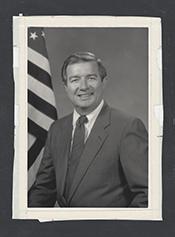
713 records where Rep. Laughlin, Greg [D-TX-14] is listed as a sponsor, author, or other actor. Search with topics and years
United States · United States Congress · 26 January 1993
Designates January 16, 1994, as National Good Teen Day.
United States · United States Congress · 26 January 1993
Expresses the sense of the Congress that: (1) hostilities, war crimes, and human rights violations in Bosnia-Herzegovina (Bosnia) should cease immediately; (2) in the event of continued Serbian attacks on Bosnian civilians, the United States and the European Community (EC) should persuade the United Nations (UN) Security Council to lift the arms embargo against Bosnian Muslims; (3) the UN should promptly authorize the enforcement of the "no-fly" zone over Bosnia; (4) the U.S. Government and EC members should propose and support decisive international efforts to achieve a prompt cessation of hostilities and alleviate the suffering of the Bosnian civilian population; (5) UN Security Council Resolution 770 (authorizing the use of all measures necessary to deliver humanitarian relief whenever it is needed to Bosnia) should be fully implemented; (6) the conclusions of the London Conference, including agreements between the parties of the conflict to collaborate in delivery of humanitarian relief in Bosnia, should be fully implemented; (7) the U.S. Government should implement the emergency provisions of the Refugee Act of 1980 to admit Bosnian refugees to the United States while encouraging EC members to initiate reciprocal action; (8) the UN and relevant international relief organizations should be given unrestricted access to all prisoners of war in the former Republic of Yugoslavia to monitor human rights conditions in the camps; and (9) the U.S. Government should support and encourage the formation and development of an international war crimes commission.
United States · United States Congress · 25 January 1993
Private Property Protection Act of 1993 - Prohibits any regulation issued by an executive agency after enactment of this Act from becoming effective until the issuing agency is certified by the Attorney General to be in compliance with Executive Order 12360 or similar procedures to assess the potential for the taking of private property in the course of Federal regulatory activity, with the goal of minimizing such takings where possible. Provides for limited judicial review of an action taken pursuant to this Act. Requires the Secretary of Agriculture to study and report to the Congress on the effect this Act will have on the farm economy and agricultural production.
United States · United States Congress · 21 January 1993
Prisoner-of-War Commemorative Coin Act - Directs the Secretary of the Treasury to issue a specified number of one-dollar coins emblematic of the experience of American prisoners of war. Requires that all sales of such coins include a surcharge of $5 per coin. Requires specified proceeds from such surcharges to be paid to the: (1) Secretary of the Interior for construction of the Andersonville Prisoner-of-War Museum in Andersonville, Georgia; (2) endowment fund established by this Act for the maintenance of such Museum; and (3) Secretary of Veterans Affairs to maintain national cemeteries.
United States · United States Congress · 5 January 1993
Securities Private Enforcement Reform Act - Amends the Securities Exchange Act of 1934 to declare that a defendant may be liable jointly and severally for damages in an implied private action only if the trier of fact specifically determines that the defendant knowingly engaged in securities fraud. Sets forth a liability allocation scheme to determine the percentage of responsibility among the defendants if the trier of fact finds that the defendant did not engage in knowing securities fraud. Prescribes guidelines for the award of reasonable fees and expenses incurred by the prevailing party in any implied private action. Declares that in any implied right of action that is certified as a plaintiff class action: (1) the share that is awarded to the representative plaintiff shall be calculated in the same manner as the share awarded to all other members of the plaintiff class; (2) a party may not be represented by any attorney who owns or has a beneficial interest in the securities that are the subject of the litigation, or who is obligated to pay remuneration to a third party for assistance in obtaining the representation of any party to the action; and (3) funds disgorged as a result of Securities and Exchange Commission action shall not be distributed as payment for attorneys' fees or expenses incurred by private parties seeking distribution of the disgorged funds. Sets a statute of limitations on private rights of action under this Act.
United States · United States Congress · 5 January 1993
Amends the Internal Revenue Code to make permanent the exclusion from gross income of amounts received under qualified group legal services plans.
United States · United States Congress · 5 January 1993
Amends Internal Revenue Code provisions governing the income tax deduction for the health insurance costs of self-employed individuals to: (1) make the deduction permanent; and (2) phase in an increase in the allowable deduction, reaching 100 percent for taxable years beginning in 1996 and thereafter.
United States · United States Congress · 5 January 1993
Federal Mandate Relief Act of 1993 - Provides that any requirement under a Federal statute or regulation that a State or local government conduct an activity (including a requirement that a government meet national standards in providing a service) shall apply to the government only if all funds necessary to pay the direct costs incurred by the government in conducting the activity are provided by the Federal Government.
United States · United States Congress · 5 January 1993
Life Imprisonment for Egregious Recidivists Act of 1993 - Amends the Federal criminal code to require the court, in the case of a conviction for a Federal violent felony, to sentence the defendant to life imprisonment if the defendant has previously been convicted of two other violent felonies. Specifies that this provision shall not be construed to prevent the imposition of the death penalty.
United States · United States Congress · 5 January 1993
Federal Employees Political Activities Act of 1993 - Prohibits an employee from using or attempting to use official authority or influence to interfere with or affect the result of any election. Prohibits the use of official authority to intimidate, threaten, coerce, or influence: (1) any individual for the purpose of interfering with the right to vote or not to vote for any candidate or measure in any election; (2) any person to give or withhold any political contribution; or (3) any person to engage, or not to engage, in any form of political activity. Prohibits an employee from: (1) giving or offering to give a political contribution to any individual either to vote or to refrain from voting; (2) soliciting, accepting, or receiving a political contribution to vote or refrain from voting; or (3) giving or handing over a political contribution to a superior. Prohibits an employee from soliciting, accepting, or receiving a political contribution: (1) from another employee (or a member of another employee's immediate family) with respect to whom the employee is a superior; or (2) in any room or building occupied in the discharge of official duties by a Federal employee, official, or contractor. Prohibits an employee from getting involved with political contributions with any person who: (1) has, or is seeking to obtain, contractual or other business relations with the employing agency; (2) conducts operations regulated by that agency; or (3) has interests which may be substantially affected by the performance of the employee's official duties. Prohibits an employee from engaging in political activity: (1) while on duty; (2) in any room or building occupied in the discharge of official duties by a Federal employee or official; (3) while wearing a uniform or official insignia identifying the office or position of the employee; or (4) while using any vehicle owned or leased by the Government. Exempts certain high level political appointees from such prohibitions if the costs associated with the political activity are not paid for by money derived from the Treasury. Authorizes leave without pay or accrued annual leave to an employee who is a candidate, upon request, to allow such employee to engage in activities relating to that candidacy. Applies this Act to postal employees and employees of the Postal Rate Commission.
United States · United States Congress · 5 January 1993
Merchant Mariners Fairness Act of 1993 - Provides that certain qualified service of a member of the U.S. merchant marine, including a vessel crewmember of the U.S. Army Transport Service, during World War II constituted active military service for purposes of eligibility for various veterans' benefits under the GI Bill Improvement Act of 1977. Requires the Secretary of Defense to issue an honorable discharge under such Act to each merchant marine member whose qualified service warrants such a discharge. Prohibits the payment of any retroactive benefits under this Act. Mandates a processing fee for any benefit application for such qualified service.
United States · United States Congress · 5 January 1993
Flight Attendant Duty Time Act - Amends the Federal Aviation Act of 1958 to direct the Secretary of Transportation to initiate a rulemaking proceeding to establish limitations on duty time for flight attendants. Requires the Secretary to issue final regulations by a specified deadline. Prohibits any air carrier from operating an aircraft using a flight attendant who has been on duty in excess of specified hours or who has had less than a specified number of hours of rest if such regulations have not been promulgated by a certain time. Permits modification of the specified hours of duty if the Secretary determines such modification is in the public interest and submits a copy of the modifying regulations to certain congressional committees.
United States · United States Congress · 5 January 1993
Directs the Administrator of the Environmental Protection Agency (EPA) to establish an office in a community in the United States located: (1) not more than ten miles from the border between the United States and Mexico; and (2) as close as practicable to the point that is halfway between San Diego, California, and Brownsville, Texas. Provides that the head of such office shall be the Regional EPA Administrator for the region. Directs the EPA Administrator to delegate to the Regional Administrator functions relating to: (1) administering EPA activities in such region; and (2) coordinating, and cooperating with the Government of Mexico in the implementation of, EPA programs relating to transboundary hazardous waste and air, soil, and water quality problems.
United States · United States Congress · 5 January 1993
Constitutional Amendment - Declares that nothing in the Constitution shall prohibit the inclusion of voluntary prayer in any public school program or activity. Provides that neither the United States nor any State shall prescribe the content of any such prayer.
United States · United States Congress · 5 January 1993
Declares that the Congress opposes any attempt to lower the estate tax exemption or raise the effective rate of taxes on estates because such measures contradict the fundamental goal of the United States Government of encouraging long-term private saving through which productive investment that promotes economic growth can be realized.
United States · United States Congress · 5 October 1992
Endangered Species Act Reform Amendments of 1992 - Title I: Ensuring the Integrity of the Listing, Critical Habitat Designation, and Consultation Processes - Amends the Endangered Species Act of 1973 (the Act) with respect to improved data collection and analysis, peer review, equal access to judicial review, recognition of State, local, and international activities, priority for species preservation, critical habitat designation, and consultation processes. Title II: Providing Significance to the Recovery Planning Process - Amends the Act with respect to ensuring the preparation and use of timely, comprehensive, and effective recovery plans. Requires either the Secretary of the Interior or the Secretary of Commerce, as program responsibilities are vested, to report biennially to specified congressional committees on the status of: (1) efforts to develop and implement recovery plans for listed endangered and threatened species; and (2) all species for which such plans have been developed. Title III: Ensuring that the Compliance Procedures and Standards for Private Landowners and Other non-Federal Persons Are Not More Burdensome, Time-Consuming, or Costly than Those Applicable to Federal Agencies - Amends the Act to: (1) make consultation procedures for Federal agencies available to private landowners and other non-Federal agencies available to private landowners and other non-Federal individuals and entities; (2) include permit or license applicants in consultations concerning Federal agency actions; (3) authorize the issuance of general permits for private and other non-Federal activities which have minimal effect on species listed under the Endangered Species Act of 1973; (4) facilitate the application for, and processing and issuance of, conservation plans for endangered or threatened species; (5) define the "take prohibition" for application in accordance with the intent of the Congress and in a manner providing more precise guidance to all parties wishing to avoid its violation and possible sanctions; (6) establish special limitations on application of take prohibitions; (7) provide for exemptions from the Act for non-Federal individuals and entities and remove payment requirements associated with obtaining such an exemption; and (8) give non-Federal property owners the option of purchase of their property by, or receipt of compensation for diminished value of their property from, the Federal Government when it requires that the property be managed to protect endangered or threatened species. Title IV: Species Enhancement - Amends the Act to authorize the Secretary to: (1) enter into cooperative management agreements for governing the administration and management of areas identified as habitats for listed species; (2) provide grants to private property owners for preserving the habitat of threatened or endangered species; and (3) permit activities otherwise prohibited when such actions are carried out by certain organizations for the sole purpose of promoting species conservation and population enhancement. Provides for guidance for the release of experimental populations. Title V: Reauthorization and Other Amendments - Makes technical amendments regarding application of Endangered Species Act prohibitions to threatened species and citizens suits. Reauthorizes the Endangered Species Act of 1973 at increased levels.
United States · United States Congress · 16 September 1992
Designates October 4 through 10, 1992, as National Bone Marrow Donor Awareness Week.
United States · United States Congress · 15 September 1992
Designates the week beginning October 18, 1992, as National Radon Action Week.
United States · United States Congress · 12 August 1992
Designates the Federal building located at 312 South Main Street, Victoria, Texas, as the Martin Luther King Jr. Federal Building.
United States · United States Congress · 12 August 1992
Designates November 30 through December 6, 1992, as National Education First Week.
United States · United States Congress · 4 August 1992
Authorizes the foreign sale of certain U.S.-flag tank vessels.
United States · United States Congress · 30 July 1992
Designates October 1992 as Polish-American Heritage Month.
United States · United States Congress · 29 July 1992
Designates October 30, 1992, as Refugee Day.
United States · United States Congress · 2 July 1992
Fiscal Accountability and Impact Reform Act (FAIR Act) - States that one purpose of this Act is to assist the Congress in consideration of proposed legislation establishing or revising Federal programs to assure that, to the maximum extent practicable, legislation enacted will: (1) minimize the burden of such legislation on expenditure of scarce local public resources by State and local governments; (2) minimize inefficient allocation of economic resources; and (3) reduce the adverse effect of such legislation on the ability of State and local governments to use local public resources to meet local needs, and on allocation of economic resources, full employment, and international competitiveness. States that a second purpose of this Act is to require Federal agencies to exercise discretionary authority and implement statutory requirements in a manner which, consistent with agency mission and Federal law, minimizes the impact of regulations and other major Federal actions affecting the economy on: (1) the ability of State and local governments to use local public resources to meet local needs; and (2) the allocation of economic resources, full employment, and international competitiveness of American goods and services. Title I: Legislative Reform - Provides that whenever a committee of either House reports a bill to its House which mandates unfunded requirements upon State and local governments or the private sector, the report accompanying that bill shall analyze the effect of the new requirements on: (1) State and local government expenditures necessary to comply with Federal mandates; (2) private businesses; and (3) economic growth and competitiveness. Title II: Agency Impact Analysis - Requires, to the fullest extent practicable, that: (1) the policies, regulations, and public laws of the United States be interpreted and administered in accordance with the purposes of this Act; (2) all Federal agencies, consistent with attainment of the requirements of Federal law, minimize the adverse effects of rules affecting the economy; and (3) Federal agencies take certain actions in promulgating new rules, reviewing existing rules, developing legislative proposals, or initiating any other major Federal action affecting the economy whenever an agency identifies two or more alternatives which will satisfy the agency's statutory obligations. Provides that, whenever an agency publishes a general notice of proposed rulemaking, promulgates a final rule, or before initiating or implementing any other major Federal action affecting the economy, the agency shall prepare and make available for public comment an Economic Impact Assessment. Specifies the contents of such an assessment. Provides for judicial review of final agency actions for compliance with this title.
United States · United States Congress · 2 July 1992
Designates October 8, 1992, as National Firefighters Day.
United States · United States Congress · 1 July 1992
Birth Defects Prevention Act of 1992 - Amends the Public Health Service Act to establish birth defects prevention and research programs. Authorizes the Secretary of Health and Human Services, acting through the Director of the Centers for Disease Control (CDC), to award grants to, enter into cooperative agreements with, or provide direct technical assistance in lieu of cash to, States, State health authorities, or health agencies of political subdivisions of a State for collection, analysis, and reporting of birth defects statistics from birth certificates, infant death certificates, hospital records, or other sources and to collect and disaggregate such statistics by gender and racial and ethnic group. Directs the Secretary to establish at least five regional birth defects monitoring and research programs to collect and analyze information on the number, incidence, correlation, and causes of birth defects, to include information regarding gender and different racial and ethnic groups, including Hispanics, non-Hispanic whites, African Americans, Native Americans, and Asian Americans. Authorizes the Secretary, acting through the Director of the CDC, to award grants or enter into cooperative agreements with specified entities to serve as Centers of Excellence for Birth Defects Prevention Research. Requires one of the Centers to focus on birth defects among ethnic minorities. Requires the CDC to establish a clearinghouse for the collection and storage of data and generated from birth defects monitoring programs developed under this Act. Directs the Secretary, acting through the Director of the CDC, to award grants to or enter into cooperative agreements with State departments of health, universities, or other private, or nonprofit entities to develop, evaluate, and implement prevention strategies designed to reduce the incidence and effects or (sic) birth defects. Directs the Secretary to establish an Advisory Committee for Birth Defects Prevention to provide advice and recommendations on prevention and amelioration of birth defects to the Secretary and the Director of the CDC. Requires the Secretary to report biennially to the House Committee on Energy and Commerce and the Senate Committee on Labor and Human Resources regarding the incidence of birth defects, the contribution of birth defects to infant mortality, the outcome of implementation of prevention strategies, and identified needs for research and policy development to include information regarding the various racial and ethnic groups, including Hispanic, non-Hispanic whites, African Americans, Native Americans, and Asian Americans. Authorizes appropriations.
United States · United States Congress · 30 June 1992
Designates October 1992 as Country Music Month.
United States · United States Congress · 25 June 1992
Designates the Department of Veterans Affairs medical center in Marlin, Texas, as the Thomas T. Connally Department of Veterans Affairs Medical Center.
United States · United States Congress · 24 June 1992
Directs that, in the administration of any benefits program established by or under Federal law which requires the use of data obtained in the most recent decennial census, the 1990 adjusted census data be considered the official data for such census.
United States · United States Congress · 22 June 1992
Nursing Facility Assistance Act of 1992 - Amends titles XVIII (Medicare) and XIX (Medicaid) of the Social Security Act to revise standards for decertification of nurse aide training and competency evaluation programs (programs) operated by nursing facilities. Repeals requirements under Medicaid for preadmission screening and annual resident review by such facilties. Repeals requirements under Medicare and Medicaid respecting: (1) annual external reviews of the use of psychopharmacologic drugs; and (2) repayments to the Federal Government of payments continued pending remediation if corrective action is not taken. Provides for an increase in the minimum amount required under Medicare and Medicaid for the separate deposit of nursing facility residents' personal funds. Provides for reimbursement under Medicaid for amounts spent for programs which are attributable to activities relating to individuals who are not enrolled under a State Medicaid plan. Makes this Act effective as if included in the enactment of the Omnibus Reconciliation Act of 1987.
United States · United States Congress · 18 June 1992
Gulf of Mexico Environmental and Economic Restoration and Protection Act of 1992 - Expresses the sense of the Congress with respect to environmental restoration of the Gulf of Mexico. Establishes a program for protection and preservation of the economic and environmental resources of the Gulf, to be known as the Gulf of Mexico Program. Directs the Administrator of the Environmental Protection Agency (EPA) to establish a Gulf of Mexico Program Office within EPA. Establishes a Gulf of Mexico Executive Board to: (1) prepare and update a joint plan for the Federal, State, interstate, local, and nongovernmental development of economic, ecological, and aesthetic resources of the Gulf and protection of the ecosystem; (2) develop long-range schedules for the collection and analysis of data and for planning and completion of projects in the Gulf and surrounding areas; and (3) approve and fund studies of economic, ecological, and aesthetic resource problems in the Gulf and surrounding areas. Sets forth required contents of the plan and requires the Administrator to submit the plan to the Congress. Provides for State cost-sharing of Gulf restoration activities. Requires the Administrator to award grants for the conduct of research to develop baseline scientific data regarding environmental quality of the Gulf for use in evaluating and implementing the plan. Authorizes grants to be awarded to any Gulf State agency, non-profit research organization, or university which meets eligibility requirements. Sets forth grant proposal, application, and cost-sharing requirements. Authorizes and allocates appropriations.
United States · United States Congress · 18 June 1992
Designates the Federal building and U.S. courthouse located at the corner of College Avenue and Mountain Street in Fayetteville, Arkansas, as the John Paul Hammerschmidt Federal Building and United States Courthouse.
United States · United States Congress · 18 June 1992
Designates the Federal building located at 200 Federal Plaza in Paterson, New Jersey, as the Robert A. Roe Federal Building.
United States · United States Congress · 16 June 1992
Foreign Aid Reform Act of 1992 - Amends the Foreign Assistance Act of 1961 to declare that economic support assistance should be provided principally through commodity import programs, project assistance, sector programs, or the provision of U.S. goods and services. Permits such assistance to be provided to a foreign government as a cash transfer only pursuant to an agreement requiring the recipient government to spend the cash transfer to purchase U.S. goods and services to the extent that the recipient government purchases goods and services not produced in that country. Exempts from this Act any recipient government that: (1) receives less than $25,000,000 cash transfer assistance for a fiscal year; or (2) as of April 1, 1989, was receiving such assistance and has an agreement with the United States under which it agrees to spend an amount equal to the amount of the cash transfer on U.S. goods and services, to carry 50 percent of all bulk shipments of U.S. grain on privately-owned U.S.-flag commercial vessels, to purchase U.S. grain at levels comparable to those purchased in prior years, and to comply with such requirements in any fiscal year in which it receives such assistance. Authorizes the President to waive the requirements of this Act if it is in the national interest to do so.
United States · United States Congress · 2 June 1992
Removes the annual and total limits on the number of Junior Reserve Officer Training Corps (JROTC) units that may be maintained at public and private secondary educational institutions. Includes, as a condition to establishing a JROTC unit at such institution, that the institution agrees to such establishment and maintenance for no less than five academic years.
United States · United States Congress · 28 May 1992
Amends the Foreign Assistance Act of 1961 to exclude construction and fire equipment from the definition of "excess defense articles" for purposes of restricting the transfer of such equipment to foreign countries.
United States · United States Congress · 28 May 1992
Animal Medicinal Drug Use Clarification Act of 1992 - Amends the Federal Food, Drug, and Cosmetic Act to allow, on order of a veterinarian: (1) a new animal drug approved for one use to be used for a different purpose, provided the use does not result in residues in food in violation of established safe levels for the drug; and (2) a new drug approved for human use to be used in non-food producing animals.
United States · United States Congress · 28 May 1992
Used Oil Recycling Act of 1992 - Amends the Solid Waste Disposal Act to prohibit the listing or identification of used oil destined for recycling, used oil to be burned for energy recovery, recycled oil, or affiliated material as hazardous wastes. Requires the Administrator of the Environmental Protection Agency to: (1) promulgate regulations for the management of used oil and to encourage recycling of such oil; and (2) take into account the effect of such regulatons on small businesses. Exempts from such regulations used oil generated, collected, or stored by an individual who removes oil from the engine of a motor vehicle, aircraft, household appliance, or item of domestic equipment if owned by such individual and used only for personal purposes. Sets forth regulation requirements for used oil generators, including to: (1) prohibit the storage of used oil in an underground tank unless it meets specified requirements of the Solid Waste Disposal Act; (2) prohibit the storage of used oil for more than 12 months; (3) make used oil in above ground tanks subject to the Spill Prevention and Countermeasure Control Plan requirements of the Federal Water Pollution Control Act; and (4) require owners or operators of such tanks or other used oil containers to notify the Administrator of releases of used oil in excess of 25 gallons and to clean up such releases and comply with closure or disposal requirements. Authorizes the transfer of used oil by generators only to: (1) a permitted used oil recycling facility or a burner of used oil for energy recovery that complies with specifed regulations; (2) a permitted hazardous waste management facility; or (3) a used oil transporter obligated by contract to deliver used oil to another such transporter or to one of the aforementioned facilities. Sets forth recordkeeping requirements for generators, transporters, and recyclers and requires records to be maintained for at least three years. Applies used oil storage and transfer requirements for generators to transporters, except permits transporters to store such oil for only 60 days before transferring it to another transporter or authorized facility. Requires transporters to: (1) comply with all requirements of the Secretary of Transportation for the shipping of used oil; (2) comply with financial responsibility requirements of the Hazardous Materials Transportation Act; and (3) have identification numbers provided by the Administrator. Sets forth regulation requirements for recyclers of used oil. Exempts from regulations used oil generated by: (1) petroleum refining or exploration, production or transportation facilities, or bulk terminals which is to be refined or processed along with normal process streams at a refining facility; and (2) a manufacturer or processor or by an electric or gas utility that is processed, reclaimed, or refined by such generator or its parent, subsidiary, or corporate affiliate, provided that the oil is reused by such entities and such activities meet certain storage, shipping, financial responsibility, contingency, and release detection requirements under this Act. Applies storage requirements similar to those for generators and transporters to recyclers, as well as requiring: (1) aboveground storage tanks and containers of used oil recyclers to comply with hazardous waste storage standards; (2) recyclers to maintain contingency plans to minimize unanticipated damage from used oil; (3) recyclers to comply with requirements for maintenance and operation of used oil recycling facilities and training of personnel; (4) detection of releases of used oil at recycling facilities and cleanup; (5) testing by recyclers, prior to processing, of all used oil received for levels of arsenic, cadmium, chromium, lead, halogens, polychlorinated biphenyls (PCBs), and other materials, as appropriate, and for the testing of fuel for such materials before it leaves the facility; (6) the separate storage of used oil contaminated with any hazardous waste for a specified time period; (7) financial responsibility equivalent to that required for hazardous waste facilities; and (8) class permits for recycling facilities. Requires the Administrator to conduct annual inspections of used oil recycling facilities to determine compliance with permit requirements. Makes a facility ineligible to apply for a permit if: (1) the facility has utilized any pit, pond, lagoon, or other surface impoundment for containing used oil; and (2) there has been a release from such impoundments which requires corrective action or is otherwise subject to post closure care requirements. Permits States to be authorized by the Administrator to carry out permit programs. Prohibits: (1) the placement of used oil in such impoundments or in any uncovered tank; (2) the mixing of used oil with a hazardous waste unless the mixture is managed as a hazardous waste; and (3) the use of used oil as a dust suppressant. Requires the Administrator to promulgate regulations for the closure of such impoundments and tanks containing used oil, to include requirements for: (1) corrective action or postclosure care; (2) allowable fuel specification levels for lead and halogens for the burning of used oil for energy recovery; and (3) lead levels for the burning of industrial specification used oil. Requires oil fuels failing to meet lead limitations to be burned in specified facilities. Directs the Administrator to implement education activities to inform the public about the hazards associated with the improper handling and disposal of used oil and the benefits derived from legitimate used oil recycling. Authorizes appropriations. Requires the Administrator to publish guidelines to assist State and local governments and other public service organizations in the development of used oil collection programs. Makes used oil generators who comply with this Act eligible for an exclusion from cost recovery authorities of the Comprehensive Environmental Response, Compensation and Liability Act. Directs the Administrator to propose regulations establishing guidelines for the procurement of used oil by Federal agencies and other governmental entities.
United States · United States Congress · 28 May 1992
Designates July 2, 1992, as National Literacy Day.
United States · United States Congress · 28 May 1992
Designates the week beginning November 8, 1992, as National Women Veterans Recognition Week.
United States · United States Congress · 21 May 1992
Rural Electrification Administration Improvement Act of 1992 - Amends the Rural Electrification Act of 1936 to provide that if a borrower of a loan made or guaranteed by the Rural Electrification Administration (REA) applies for an electric or telephone service loan from a private lender, REA shall grant the private lender a lien accommodation on the total assets securing the unpaid balance on an equal and pro rata basis with the Government lien, except if such private loan will adversely affect the borrower's ability to repay the Government. Subordinates the REA lien to a lien made by a private lender on a non-electric or non-telephone rural development loan if the borrower's revenues will be sufficient to meet all loan obligations. Revises discounted loan prepayment provisions to permit prepayment or sale of a loan that was advanced before a certain date or has been fully advanced for not less than two years. Limits future loan eligibility for prepaying borrowers. Repeals provisions regarding: (1) borrower net worth; and (2) the prepayment privatization demonstration program.
United States · United States Congress · 21 May 1992
Medical Cost Containment Act of 1992 - Amends the Internal Revenue Code to exclude from gross income medical care savings benefits. Describes such benefits as a health plan which provides that all or part of the premium differential realized by instituting a qualified higher deductible health plan is credited to participating employees to pay for medical care for a plan year. Requires amounts remaining at the end of such plan year to be deposited into a tax-exempt medical care savings account (subject to rules similar to those for retirement plans) for use by the participant for medical expenses.
United States · United States Congress · 21 May 1992
Designates February 21 through 27, 1993, as American Wine Appreciation Week. Commends the winegrape and fruit growers and vintners of the United States for the production of high quality agricultural products.
United States · United States Congress · 21 May 1992
Designates September 1992 as Childhood Cancer Month.
United States · United States Congress · 13 May 1992
National Breast Cancer Strategy Act of 1992 - Title I: Establishment of Office of Breast Cancer and National Breast Cancer Commission - Amends the Public Health Service Act to establish: (1) the Office of Breast Cancer in the Office of the Assistant Secretary for Health; and (2) the National Breast Cancer Commission to study public and private breast cancer prevention, early detection, treatment, education, and research. Title II: Duties of Director of the National Cancer Institute Relating to Breast Cancer - Authorizes appropriations for conducting and supporting breast cancer research. Adds biomedical and behavioral research, training, and dissemination of information regarding breast cancer to the duties of the National Cancer Institute Director. Establishes the Rose Kushner Scholarship Program of scholarships in exchange for completing post-graduate clinical oncology training and serving as National Institutes of Health (NIH) employees carrying out breast cancer programs. Establishes a program of educational loan repayments in exchange for breast cancer activities as NIH employees. Authorizes appropriations for at least ten programs for research on breast, lung, and prostate cancer under designated Specialized Programs of Research Excellence.
United States · United States Congress · 7 May 1992
Civil War Battlefield Commemorative Coin Act of 1992 - Directs the Secretary of the Treasury to issue a specified number of five-dollar gold coins, one-dollar silver coins, and half-dollar clad coins to commemorate the 100th anniversary of Civil War battlefield preservation. Sets forth certain features of such coins and provides for their design, issuance, and sale. Requires that all sales include a surcharge of $35 per coin for the five-dollar coins, $7 per coin for the one-dollar coins, and $1 per coin for the half-dollar coins. Requires that all surcharges be paid to the Civil War Battlefield Foundation for the preservation of historically significant Civil War battlefields.
United States · United States Congress · 6 May 1992
DeLauro-Lowey Water Pollution Control and Estuary Restoration Financing Act - Amends the Federal Water Pollution Control Act to extend the authorization of appropriations for the State water pollution control revolving fund program through FY 1999. Requires a specified percentage (increasing with each succeeding fiscal year) of such appropriations to be used by the Administrator of the Environmental Protection Agency to make capitalization grants for estuary plans to qualified States. Requires States to submit estimates of the need for assistance for implementing and monitoring such plans. Prohibits the submission of such estimates unless the estimates are approved by the appropriate management conference under the National Estuary Program. Makes States that fail to submit approved estimates ineligible for assistance. Directs States to establish separate Estuary Accounts in their water pollution control revolving funds, to be used for implementing approved estuary plans. Permits loans made with amounts in such Accounts to be for terms of up to 40 years or for the useful life of a facility constructed with the loan, whichever is less, if the borrower demonstrates financial hardship. Allows States to use interest earned on amounts in such Accounts to subsidize up to 90 percent of the principal portion of debt service of certain entities that are financially unable to carry out a necessary project for an estuary plan. Establishes a State matching requirement for deposits into Accounts. Authorizes the Administrator to make grants for the implementation of estuary conservation and management plans. Limits the Federal share to 75 percent of the total cost of implementation. Authorizes appropriations. Permits certain grants under the National Estuary Program to be used for interim actions adopted by management conferences to protect the water and sediment quality of estuaries. Extends the authorization of appropriations for management conferences, grants, conservation and management plans, and research under the National Estuary Program through FY 1999. Revises provisions concerning the purposes of management conferences. Directs the Administrator to issue a guidance document that establishes requirements for: (1) management conferences to follow in developing, implementing, and monitoring conservation and management plans; and (2) approving and implementing interim actions to protect water quality of estuaries for which plans are developed. Requires management conferences to be convened for periods of at least five years (currently, up to five years). Permits the extension of a conference for an additional five years if the affected Governors concur in the extension and the extension is necessary to meet requirements. Revises approval and implementation procedures for estuary conservation and management plans and establishes such procedures for interim actions.
United States · United States Congress · 6 May 1992
Designates November 13, 1992, as Vietnam Veterans Memorial 10th Anniversary Day.
United States · United States Congress · 5 May 1992
Designates September 18, 1992, as National POW/MIA Recognition Day. Requires the POW/MIA flag to be flown on a flagstaff of the White House, the Departments of State, Defense, and Veterans Affairs, the Selective Service Commission, each national cemetery, and the National Vietnam Veterans Memorial on such day. Requires the flag to be flown on a flagstaff of each national cemetery and the National Vietnam Veterans Memorial on May 30, 1992 (Memorial Day), and on November 11, 1992 (Veterans Day). States that the flag shall be displayed as a symbol of national concern and commitment to resolving the fates of Americans still prisoner, missing, and unaccounted for.
United States · United States Congress · 29 April 1992
Prisoner-of-War Commemorative Coin Act - Directs the Secretary of the Treasury to issue a specified number of one-dollar coins emblematic of the experience of American prisoners of war. Requires that all sales of such coins include a surcharge of $5 per coin. Requires specified proceeds from such surcharges to be paid to the: (1) Secretary of the Interior for construction of the Andersonville Prisoner-of-War Museum in Andersonville, Georgia; (2) endowment fund established by this Act for the maintenance of such Museum; and (3) Secretary of Veterans Affairs to maintain national cemeteries.