Resolution· HRESH.Res. 1131 (115th)referred
Expressing support for the designation of October 2018 as "National Youth Justice Action Month".
United States · United States Congress · 23 October 2018
Designates National Youth Justice Action Month.
The world's political record
Person
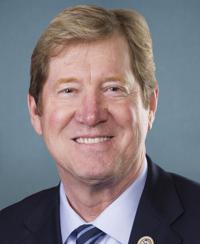
United States · Official source
127 records where Jason Lewis is listed as a sponsor, author, or other actor. Search with topics and years
United States · United States Congress · 23 October 2018
Designates National Youth Justice Action Month.
United States · United States Congress · 16 October 2018
Workforce Reentry Act This bill directs the Department of Labor to award grants for a period of not more than five years to eligible entities (private nonprofit organizations, local workforce development boards, state or local governments, or specified Native American entities) to enable such entities to provide job training, job placement services, and mentoring to ex-offenders.
United States · United States Congress · 28 September 2018
Juvenile Justice Reform Act of 2017 TITLE I--DECLARATION OF FINDINGS, PURPOSE, AND DEFINITIONS (Sec. 101) The bill amends the Juvenile Justice and Delinquency Prevention Act of 1974 (JJDPA) to revise an existing purpose area. Specifically, it requires the Department of Justice (DOJ) Office of Juvenile Justice and Delinquency Prevention (OJJDP), in disseminating information on juvenile delinquency prevention programs, to promote evidence-based programs and practices. It also adds, as a new purpose area, support for a continuum of evidence-based or promising programs that are trauma-informed, reflect the science of adolescent development, and are designed to meet the needs of at-risk youth who come into contact with the juvenile justice system. TITLE II--CHARLES GRASSLEY JUVENILE JUSTICE AND DELINQUENCY PREVENTION PROGRAM (Sec. 201) The bill requires the OJJDP, in developing objectives, priorities, strategies, and long-term plans, to take into account scientific knowledge regarding: (1) adolescent development and behavior, and (2) the effects of delinquency prevention programs and juvenile justice interventions on adolescents. The OJJDP, in consultation with Indian tribes with a criminal justice function, must develop a policy to implement the provisions of this bill relating to Indian tribes. (Sec. 202) It expands membership on the Coordinating Council on Juvenile Justice and Delinquency Prevention (Coordinating Council) to include the Assistant Secretary for Mental Health and Substance Use and the Secretary of the Interior. (Sec. 203) This section modifies requirements for the OJJDP annual report on juveniles in custody. Specifically, it adds ethnicity to the list of offender characteristics and expands the categories of information that must be summarized and analyzed. It adds requirements for the annual report to describe criteria used to determine what programs qualify as evidence-based and promising programs and funding provided to Indian tribes; and to analyze and evaluate the OJJDP internal controls and the total amount of payments recouped from grantees that violate the OJJDP policies and procedures. (Sec. 204) It increases from 2% to 5% the maximum amount of Formula Grant funds that may be used to provide technical assistance to states in complying with the core requirements and implementing a juvenile justice and delinquency plan. It increases each state's minimum allocation under the population-based Formula Grant program from $325,000 to $400,000 if the title II appropriation is less than $75 million in a fiscal year. A state's relative population of individuals under 18 years of age must be based on the most recent Census Bureau data. The 10% maximum amount of a state's Formula Grant allocation that can be used for planning and administration includes designation of at least one individual to coordinate and certify compliance with the core requirements. (Sec. 205) This section modifies the required components of a state's juvenile justice and delinquency plan. A state's annual update to the three-year plan must describe how the plan is supported by or takes account of scientific knowledge regarding adolescent development and behavior and regarding the effects of prevention programs and juvenile justice interventions. A state must post its plan or amended plan on a publicly accessible website. The bill modifies State Advisory Group membership qualifications to include representatives of public agencies that prevent or treat mental health, substance abuse, or disabilities in adolescents; and individuals who represent victim or witness advocacy groups. It also increases from 24 years to 28 years the maximum age of youth members at the time of appointment. It eliminates the requirement for an eligible Indian tribe to perform law enforcement functions. A state's juvenile justice and delinquency plan must contain additional components, including plans to: provide alternatives to detention, reduce children in secure detention and corrections facilities, engage family members, use community-based services, promote evidence-based and trauma-informed programs and practices, and limit the use of restraints on pregnant juvenile offenders. The bill modifies program areas under the Formula Grant program. It revises existing program areas to specify that: (1) alternatives to detention programs include programs for active or former gang members; (2) educational programs and support services include projects to prevent and reduce truancy; and (3) the scope of juveniles served by mentoring, counseling, and training programs includes juveniles whose parent or guardian is incarcerated in a tribal facility. It adds new program areas to expand access to legal counsel, to inform juveniles of the opportunity and process for expunging juvenile records, to address the needs of at-risk girls, and to monitor compliance and provide technical assistance with the core requirements. The bill prioritizes funding for entities that meet the criteria for evidence-based or promising programs. The bill modifies the core requirements with which a state must comply to receive a full allocation of funds under the Formula Grant program. First, it revises the deinstitutionalization of status offenders core requirement, which prohibits the secure detention or confinement of a juvenile who commits a status offense (i.e., an offense that would not be a crime if committed by an adult). Specifically, use of the valid court order exception to securely detain or confine a juvenile status offender must comply with additional requirements, such as issuance of a court order and a seven-day maximum length of detention. Second, it modifies the separation and jail removal core requirements to specify that sight or sound contact is the level of contact prohibited between juveniles and adults. Sight or sound contact means any physical, clear visual, or verbal contact that is not brief or inadvertent. Third, it revises the disproportionate minority contact requirement to require a state to implement policy, practice, and system improvement strategies to identify and reduce racial and ethnic disparities among youth who come into contact with the juvenile justice system. It retains the prohibition against using numerical standards or quotas. A state must provide for an effective (previously, adequate) system of monitoring compliance with the core requirements. The OJJDP must annually conduct, and publish the results of, a compliance determination for each state that participates in the Formula Grant program. (Sec. 206) The bill repeals the Juvenile Delinquency Prevention Block Grant program. (Sec. 207) This section requires (currently, authorizes) the OJJDP to annually publish a plan to identify (currently, plan and identify) the purposes and goals of funded initiatives to research and evaluate juvenile justice matters. It revises and expands the list of juvenile justice matters initiatives. The OJJDP must study the coordination of services and treatment between the juvenile justice and child welfare systems. It must describe best practices in discharge planning and assess post-confinement living arrangements of juveniles who cannot return home. This bill directs (currently, authorizes) the OJJDP to analyze juvenile justice statistics. The OJJDP must, with respect to juvenile recidivism data, establish a uniform collection method, establish a common measurement system, and publish cumulative data collected by states. (Sec. 208) It requires (currently, permits) the OJJDP to provide training, technical assistance, and information dissemination. It adds requirements for the OJJDP to provide: training to states to implement the JJDPA core requirements, current protocols and best practices for achieving monitoring compliance, and information sharing regarding evidence-based and promising programs or practices. It adds requirements for the OJJDP to provide technical assistance to state and local governments to comply with amendments to the core requirements and state plans; and to improve recruitment, selection, training, and retention of juvenile justice professionals. The OJJDP must disseminate best practices for the treatment of status offenders. Finally, the OJJDP must disseminate best practices regarding legal representation of children; coordinate training and technical assistance programs for local and state juvenile detention and corrections personnel; provide training and technical assistance to relevant decision makers with respect to appropriate services and placement for youth with mental health or substance abuse needs; and provide training and technical assistance to enhance the capacity of courts, judges, and judicial personnel. (Sec. 209) The OJJDP must, in developing guidance and procedures, consult state and local governments. It must ensure that requests for reports, compliance reports, state plan requirements, and other documentation respect confidentiality, encourage efficiency, and reduce duplication of reporting efforts. TITLE III--INCENTIVE GRANTS FOR LOCAL DELINQUENCY PREVENTION PROGRAMS (Sec. 301) The bill revises the short title of title V of the JJDPA. (Sec. 302) It adds definitions for the following terms: at-risk, eligible entity, delinquency prevention program, local policy board, mentoring, and state entity. (Sec. 303) It eliminates the explicit requirement for the OJJDP to issue rules to carry out title V of the JJDPA. (Sec. 304) This section revises the Incentive Grants for Local Delinquency Prevention Programs: to state that the purpose is to enable local communities to address unmet needs of at-risk or delinquent youth, including through a continuum of delinquency prevention programs; to direct the OJJDP to award grants to state entities for subgrants to eligible entities; and to limit the maximum set-aside for training and technical assistance. (Sec. 305) The bill creates a new section and moves, to that section, the statutory authority for grants for tribal delinquency prevention and response programs. Of the amount available for programs under title V of the JJDPA, 11% is reserved for tribal delinquency prevention and response program grants. (Sec. 306) The Government Accountability Office must evaluate the outcomes and results of delinquency prevention programs implemented by subgrantees. TITLE IV--MISCELLANEOUS PROVISIONS (Sec. 401) The Government Accountability Office must evaluate OJJDP performance and audit selected grant recipients. (Sec. 402) This section amends the JJDPA to add a new title: that expresses the sense of Congress that the OJJDP must restore meaningful enforcement of, and states must ensure full compliance with, the core requirements; that subjects juvenile justice grants to accountability provisions; and that requires DOJ to identify and report on duplicative grant awards. The bill reauthorizes through FY2023 programs and activities: (1) under title II of the JJDPA, including the State Formula Grants program and the Challenge Grants program; and (2) under title V of the JJDPA, including the Incentive Grants for Local Delinquency Prevention Program. Additionally, it reauthorizes through FY2020 programs and activities: (1) for missing and exploited children, under title IV of the JJDPA; and (2) for runaway and homeless youth, under title III of the JJDPA.
United States · United States Congress · 26 July 2018
Condemns Iranian state-sponsored terrorist attacks against U.S. citizens and officials and Iranian dissidents. Expresses support for the people of Iran who are engaged in legitimate and peaceful protests against the Iranian regime.
United States · United States Congress · 19 July 2018
Organ Donation Clarification Act of 2018 This bill specifies that certain payments and pilot programs relating to organ donation do not violate the National Organ Transplant Act, which prohibits the exchange of valuable consideration for human organs.
United States · United States Congress · 28 June 2018
Return Expenses Paid and Yielded Act or the REPAY Act This bill modifies certification and reporting requirements relating to certain sales of major defense equipment. It requires a review and report on options for expansion of the use of administrative surcharges under the foreign military sales program, monitoring on the performance of such program, and a report and briefing for determining the future-year needs for administrative surcharges under such program.
United States · United States Congress · 27 June 2018
This bill designates the U.S. courthouse at 300 South Fourth Street in Minneapolis, Minnesota, as the "Diana E. Murphy United States Courthouse."
United States · United States Congress · 22 June 2018
Real Estate Assets and Leasing Reform Act of 2018 or REAL Reform Act of 2018 This bill modifies requirements with respect to leases for federal buildings. Specifically, the bill: directs the General Services Administration (GSA) to establish, and operate through 2023, a pilot program to execute lease agreements using alternative procedures; temporarily authorizes the GSA to submit consolidated prospectuses for leases and projects to Congress for approval; requires approval by congressional resolution of an appropriation for any costs and expenses associated with administering an acquisition by exchange involving real property or in-kind consideration valued at or over a specified amount; sets a specified limitation regarding bargain-price purchase options; requires certain public buildings containing a public restroom to also contain a lactation room; authorizes the Department of Commerce to release the federal government's interest in certain economic adjustment grants; and requires the GSA to provide specified additional notice and justification to Congress regarding certain projects. The Government Accountability Office must conduct biennial audits of the GSA National Broker Contract and a review of the application of certain enhanced competition requirements. The GSA must sell or exchange part of the Department of Energy (DOE) Forrestal complex to fund the construction of a new DOE headquarters. In addition, the bill allows the Department of Homeland Security to authorize and train security personnel contracted to protect certain federal buildings or grounds to carry firearms and, under specified circumstances, detain individuals without a warrant.
United States · United States Congress · 7 June 2018
Strengthening the Tenth Amendment Through Entrusting States Act or the STATES Act This bill eliminates regulatory controls and administrative, civil, and criminal penalties under the Controlled Substances Act for marijuana-related conduct and activities that are authorized by state or tribal law, subject to specified exceptions.
United States · United States Congress · 21 May 2018
This bill establishes an Advisory Committee on Opioids and the Workplace to advise the Department of Labor on actions Labor can take to provide informational resources and best practices for addressing the impact of opioid abuse on the workplace and supporting workers abusing opioids. The bill terminates the committee after three years.
United States · United States Congress · 16 May 2018
Good Samaritan Charitable Physicians' Services Act of 2018 This bill amends the Internal Revenue Code to allow a tax deduction for direct primary care physicians who provide charity care. The care must be provided without expectation of reimbursement and to an individual enrolled in Medicaid or the Children's Health Insurance Program (CHIP). A "direct primary care physician" is a physician who provides primary care: (1) to individuals who have paid a periodic subscription fee, and (2) in exchange for a fee that is published on a publicly available website of the physician. The bill also amends the Public Health Service Act to specify that a physician is not liable under federal or state law for harm caused by an act or omission of the physician, or attending medical personnel supporting the physician, if the act or omission: (1) occurs in the course of furnishing charity care, and (2) was not grossly negligent. The bill preempts laws of a state or a political subdivision of the state that are inconsistent with this provision, unless the laws provide greater protection from liability for a defendant.
United States · United States Congress · 19 April 2018
Preserving America's Infrastructure Dollars Act of 2018 or the PAID Act of 2018 This bill requires the Department of Transportation to require each state to conduct a life-cycle cost analysis for each project of the state that: (1) receives federal highway financial assistancee; and (2) has an estimated total cost of $30 million or more.
United States · United States Congress · 12 April 2018
Stephen Michael Gleason Congressional Gold Medal Act This bill directs the Speaker of the House of Representatives and the President pro tempore of the Senate to arrange for the award of a Congressional Gold Medal to Stephen Michael Gleason.
United States · United States Congress · 26 March 2018
I mproving Veterans Access to Congressional Services Act of 2018 This bill directs the Department of Veterans Affairs (VA) to permit a Member of Congress to use a VA facility to meet with constituents during normal business hours.
United States · United States Congress · 21 March 2018
Developing Responsible Individuals for a Vibrant Economy Act or the DRIVE-Safe Act This bill directs the Department of Transportation to issue regulations relating to an apprenticeship program for licensed commercial motor vehicle drivers under the age of 21.
United States · United States Congress · 19 March 2018
Expresses support for the designation of April 2018 as Second Chance Month.
United States · United States Congress · 14 March 2018
Agricultural Certainty for Reporting Emissions Act This bill amends the Comprehensive Environmental Response, Compensation, and Liability Act of 1980 to exempt air emissions from animal waste at a farm from specified release notification requirements, recordkeeping requirements, and associated penalties.
United States · United States Congress · 14 March 2018
Retirement Enhancement and Savings Act of 2018 This bill amends the Internal Revenue Code and the Employee Retirement Income Security Act of 1974 (ERISA) to modify requirements for tax-favored retirement savings accounts, employer-provided retirement plans, and retirement benefits for federal judges. With respect to employer-provided plans, the bill modifies requirements regarding: multiple employer plans, automatic enrollment and nonelective contributions, loans, terminating or transferring plans, reporting and disclosure rules, nondiscrimination rules, selecting lifetime income providers, and Pension Benefit Guaranty Corporation premiums. The bill also increases the tax credit for small employer pension plan startup costs and allows a tax credit for small employers that establish retirement plans that include automatic enrollment. With respect to Individual Retirement Accounts (IRAs), the bill: treats taxable non-tuition fellowship and stipend payments as compensation, repeals the maximum age for traditional IRA contributions, and permits any IRA to be a shareholder of any S corporation that is a bank. The bill makes several modifications to retirement benefits for magistrate judges of the U.S. Tax Court and other federal judges. The bill also modifies various tax provisions to: reinstate and increase the tax exclusion for benefits provided to volunteer firefighters and emergency medical responders, revise the required distribution rules for pension plans, increase penalties for failing to file tax or retirement plan returns, and require the Internal Revenue Service to share returns and return information with U.S. Customs Border Protection to administer the heavy vehicle use tax.
United States · United States Congress · 13 March 2018
Trickett Wendler, Frank Mongiello, Jordan McLinn, and Matthew Bellina Right to Try Act of 2018 This bill amends the Federal Food, Drug, and Cosmetic Act to exempt, from specified requirements and restrictions under that Act and other laws, the provision of certain unapproved, investigational drugs to a terminally ill patient who has exhausted approved treatment options and is unable to participate in a clinical trial involving the drugs. The manufacturer or sponsor of an eligible investigational drug must publish annual summaries on any use of the drug in accordance with these provisions. The bill limits the liability of a sponsor, manufacturer, licensed physician, clinical investigator, or hospital that provides, or declines to provide, an eligible investigational drug to an eligible patient in accordance with the bill.
United States · United States Congress · 8 March 2018
Adoptee Citizenship Act of 2018 This bill amends the Immigration and Nationality Act to grant automatic citizenship to all qualifying children adopted by a U.S. citizen parent. (Currently, an adopted child must have been under 18 years old as of February 27, 2001, in order to qualify for automatic citizenship.) An individual born outside of the United States who was adopted by a U.S. citizen parent shall automatically become a U.S. citizen when the following conditions have been fulfilled: the individual was adopted by a U.S. citizen before the individual reached age 18, the individual was physically present in the United States in the citizen parent's legal custody pursuant to a lawful admission before the individual reached age 18, the individual never acquired U.S. citizenship before the enactment of this bill, and the individual was lawfully residing in the United States on the date of enactment of this bill. An individual who meets such criteria, except for lawfully residing in the United States on the date of enactment of this bill, shall automatically become a U.S. citizen on the date on which the individual is physically present in the United States pursuant to a lawful admission. A visa may not be issued to such an individual unless: the individual was subjected to a criminal background check, and the Department of Homeland Security and the Department of State coordinated with law enforcement agencies to ensure that appropriate action is taken regarding any unresolved criminal activity. Automatic citizenship may not be granted to an individual who was deported for an offense that involved the use of physical force against another person.
United States · United States Congress · 1 March 2018
Iranian Revolutionary Guard Corps Economic Exclusion Act This bill expands sanctions against Iran's Islamic Revolutionary Guard Corps (IRGC). The President shall report to Congress regarding: foreign and domestic supply chains that significantly aid the IRGC; Iranian state-owned entities that provide support to terrorist entities, including Mahan Air; and foreign persons owned or controlled by the IRGC, including companies listed on the Tehran Stock Exchange or companies with a value in excess of $100 million. The bill states that it is U.S. policy to prevent Iran's membership in the World Trade Organization and similar international bodies as long as Iran remains a state sponsor of terrorism.
United States · United States Congress · 1 March 2018
Bipartisan HSA Improvement Act of 2018 This bill amends the Internal Revenue Code to modify various requirements for health savings accounts (HSAs). The bill allows: individuals participating in an HSA to receive or be eligible to receive specified items and services at onsite employee clinics and retail health clinics, individuals who are covered by a spouse's health flexible spending arrangement to contribute to an HSA, high deductible health plans that are required for an HSA to include coverage with no deductible for care and prescription medications related to the treatment of medically complex chronic conditions, and HSAs to be used for certain sports and fitness expenses. The bill also: expands the definition of insurance that is permitted under an HSA to include insurance consisting of coverage for excepted benefits (Excepted benefits are not subject to certain requirements under the Patient Protection and Affordable Care Act.), modifies the definition of a dependent to include a child who has not attained the age of 27, and modifies the eligibility rules and other requirements for individuals who also participate in health flexible spending arrangements or health reimbursement arrangements.
United States · United States Congress · 27 February 2018
Expresses support for the designation of National Vitiligo Awareness Day. (Vitiligo is a condition in which skin color is lost in patches.) Recognizes the importance of providing support for individuals diagnosed with vitiligo.
United States · United States Congress · 29 January 2018
Permanent Tax Cuts for Americans Act This bill makes permanent the provisions of subtitle A (Individual Tax Reform) and subtitle B (Alternative Minimum Tax) of P.L. 115-97 (commonly known as the Tax Cuts and Jobs Act) that are currently scheduled to terminate on December 31, 2025.
United States · United States Congress · 19 January 2018
Pay Our Protectors Not Our Politicians Act of 2018 This bill provides FY2018 appropriations for military pay during any period in which interim or full-year appropriations for FY2018 are not in effect. The appropriations provided by this bill are available until the earlier of: (1) the enactment into law of specified appropriations legislation, or (2) January 1, 2019. The bill provides continuing appropriations for pay and allowances of: members of the Armed Forces, including reserve components, who perform active service; members of the reserve components of the Armed Forces who perform inactive-duty training; civilian personnel or contractors of the Department of Defense (and the Department of Homeland Security [DHS] in the case of the Coast Guard) who are providing support to members of the Armed Forces; and DHS employees who are performing national security activities. It also provides continuing appropriations for payments related to: death gratuities, funeral and burial expenses, authorized funeral travel and travel related to the dignified transfer of remains and unit memorial services, and the temporary continuation of a basic allowance of housing for dependents of members dying on active duty. The bill also prohibits Members of Congress from being paid when a government shutdown is in effect during the 116th and succeeding Congresses. During the 115th Congress, congressional pay must be withheld during a government shutdown and released at the end of the Congress.
United States · United States Congress · 21 December 2017
National Law Enforcement Museum Commemorative Coin Act This bill directs the Department of the Treasury to mint and issue up to 50,000 $5 gold coins, 400,000 $1 silver coins, and 750,000 half-dollar clad coins that are emblematic of the National Law Enforcement Museum in Washington, DC, and the service and sacrifice of law enforcement officers throughout the history of the United States. All sales of such coins shall include specified surcharges, which shall be distributed to the National Law Enforcement Officers Memorial Fund, Inc., for educational and outreach programs and exhibits.
United States · United States Congress · 1 December 2017
Promoting Real Opportunity, Success, and Prosperity through Education Reform Act or the PROSPER Act This bill amends the Higher Education Act of 1965 to revise the governance of federal financial aid provided to students pursuing a postsecondary education and institutions of higher education (IHEs), including by: removing restrictions on providing aid to for-profit institutions, correspondence courses, and certificate programs; modifying the eligibility requirements for IHEs and students to participate in federal student aid programs; revising accountability measures for IHEs, such as adding new measures for minority-serving institutions; requiring IHEs to implement programs to prevent the use of illicit drugs and the abuse of alcohol by students and employees; prohibiting aid to IHEs that deny religious student organizations the rights, benefits, or privileges that are afforded to other organizations; limiting the Department of Education's authority to issue regulations; revising requirements concerning sexual assault on campuses; authorizing an industry-led apprenticeship grant program; reauthorizing through FY2024 and revising specified programs, including the Federal Pell Grant program, the Federal Work-Study programs, and an aid program for students whose families are seasonal farm workers; revising requirements governing the Federal TRIO programs for students from disadvantaged backgrounds; repealing specified grant programs (e.g., the Federal Supplemental Educational Opportunity Grant program) and loan forgiveness programs (e.g., Public Service Loan Forgiveness) for new borrowers; replacing the existing student loan programs (i.e., the Federal Direct Loan program and the Federal Family Education Loan program) with a single loan program (i.e., ONE loan program); revising student loan limits for undergraduate students and establishing loan limits for graduate students; and replacing existing student loan repayment plans with an income-based repayment plan.
United States · United States Congress · 15 November 2017
State CHIP Flexibility Act of 2017 This bill establishes an exception to the requirement that unused Children's Health Insurance Program (CHIP) allotments to states for FY2017 be reduced by one-third. A state shall receive the exception if: (1) the remaining allotment amounts are with respect to expenditures incurred during any quarter of FY2017, (2) the state submitted a claim under its child health plan after September 30, 2017 and before December 31, 2017, and (3) the state could have alternatively submitted a claim for federal funding under its state Medicaid program.
United States · United States Congress · 13 November 2017
Help Students Repay Act This bill directs the Department of Education to consolidate student loan repayment options for new borrowers of William D. Ford Federal Direct Loans into one simplified income-driven repayment plan.
United States · United States Congress · 9 November 2017
College Completion and Success Act This bill amends the Higher Education Act of 1965 to modify the amount of federal student assistance provided to an institution of higher education (IHE) if a student withdraws from the IHE. Under current law, an IHE receives all of a student's financial assistance after the student completes 60% of the period of enrollment (e.g., semester). This bill requires a student to complete 100% of the period of enrollment before an IHE receives all of the student's financial assistance.
United States · United States Congress · 6 November 2017
Safe, Accountable, Fair, Effective Justice Act or the SAFE Justice Act This bill alters various provisions of federal sentencing laws to expand the existing safety valve, expand eligibility for early release, and reduce mandatory minimum sentences for certain drug offenses. The bill also makes several other changes, including the following: to limit the application of drug offense mandatory minimums to leaders, organizers, or employees of drug trafficking organizations; to establish a post-sentencing risk and needs assessment system for use in federal prison facilities; to allow prisoners to earn up to 54 days per year of the sentence imposed (instead of 54 days per year of the sentence actually served); and to permit prisoners to earn additional time credits for successful completion of recidivism reduction risk programs.
United States · United States Congress · 25 October 2017
Student Loan Disclosure Modernization Act This bill amends the Higher Education Act of 1965 to require the student loan disclosure forms under the Federal Family Education Loan Program to include the annual percentage rate applicable to the loan. In addition, the bill requires the student loan disclosure forms under the William D. Form Federal Direct Loan Program to be written in plain language to enable borrowers to understand loan terms, total costs of loans, and estimated monthly repayments. Direct loans may not be issued to borrowers unless they acknowledge in writing that they have read the form.
United States · United States Congress · 24 October 2017
USS Indianapolis Congressional Gold Medal Act This bill requires the House of Representatives and the Senate to make appropriate arrangements for the award, on behalf of Congress, of a single gold medal of appropriate design to the crew of the USS Indianapolis, in recognition of their perseverance, bravery, and service. Following the award of the gold medal, it shall be given to the Indiana War Museum in Indianapolis, Indiana, where it will be displayed and made available for research. The bill expresses the sense of Congress that the Indiana War Memorial Museum should make the gold medal available for display elsewhere, particularly at other locations and events associated with the USS Indianapolis.
United States · United States Congress · 24 October 2017
This bill provides that the Department of Veterans Affairs per diem payment calculation for an entity receiving homeless veterans shelter grants for a homeless veteran who has care of a minor dependent while receiving services from such entity shall be the sum of the daily cost of care for the veteran plus, for each minor dependent, an amount that equals 50% of the veteran's daily cost of care.
United States · United States Congress · 19 October 2017
Recognizes: (1) the achievements of the players, coaches, fans, and staff whose dedication has helped the Minnesota Lynx win the 2017 Women's National Basketball Association Championship; and (2) the Twin Cities area and Minnesota for supporting women's professional basketball.
United States · United States Congress · 4 October 2017
This bill amends the Higher Education Act of 1965 to repeal programs authorized under title VIII, including programs concerning: education services for low-income students (e.g., Project GRAD); education in science, technology, engineering and mathematics; job skill training, such as training for nontraditional students and training for writers who provide closed-captioned programming; registered nursing programs and schools of veterinary medicine; support and training for teachers (e.g., Teach for America Inc.); support for women and minorities (e.g., the Patsy T. Mink Fellowship program, funding for master's degree programs at historically black colleges and universities and predominantly black institutions, and funding for postbaccalaureate programs at Hispanic-serving institutions); student safety and campus emergency management; student work experiences; Centers of Excellence for Veteran Student Success; and education and services for young adults who have been released from juvenile detention centers or secure juvenile justice residential facilities.
United States · United States Congress · 2 October 2017
Minnesota's Economic Rights in the Superior National Forest Act This bill declares that minerals with the National Forest System (NFS) lands in Minnesota shall not be subject to withdrawal from disposition under U.S. mineral and geothermal leasing laws unless such withdrawal is approved by an Act of Congress. The bill prohibits any extension or establishment of national monuments on NFS lands in Minnesota except by express authorization of Congress. The bill declares that certain mineral leases issued within the exterior boundaries of NFS lands in Minnesota are indeterminate preference right leases that shall be: (1) issued for an initial 20-year period; and, (2) after such period, shall be renewable for 10-year periods if the lessee has complied with the terms and conditions of the lease during the 20-year period and on the condition that, at the end of each 10-year renewal period, Interior may readjust lease terms and conditions to encourage production or to address changing conditions within the lease area. Interior may: (1) suspend operations under a lease when the lease can only be operated at a loss due to market conditions or when operations are interrupted by strikes; and (2) issue permits for the use of surface lands subject to, but not included in, the lease for the exploration, development, and use of the deposits covered by the lease. The National Environmental Policy Act of 1969 shall apply to all such mineral leases.
United States · United States Congress · 26 September 2017
Veterans Opioid Abuse Prevention Act This bill directs the Department of Veterans Affairs (VA) to enter into a memorandum of understanding with a national network of state-based prescription drug monitoring programs under which VA health care providers shall query such network to support the safe and effective prescribing of controlled substances to patients who: (1) receive a prescription for a controlled substance for a period of 90 days or longer, and (2) are not receiving palliative care or enrolled in hospice care. Under such memorandum of understanding, VA health care providers practicing in: (1) a participating state shall query such network in accordance with the agreement between that state's prescription drug monitoring program and such network, and (2) a nonparticipating state shall query the network through the drug monitoring program of the closest participating state.
United States · United States Congress · 28 July 2017
Industrial Hemp Farming Act of 2017 This bill limits the regulation of industrial hemp and research hemp under the Controlled Substances Act (CSA). Specifically, the bill excludes industrial hemp and research hemp from the definition of marijuana under the CSA. The Drug Enforcement Administration may conduct administrative inspections of places where industrial hemp or research hemp is produced, stored, distributed, or used.
United States · United States Congress · 27 July 2017
Save Local Business Act This bill amends the National Labor Relations Act and the Fair Labor Standards Act of 1938 to provide that a person may be considered a joint employer in relation to an employee only if such person directly, actually, and immediately, and not in a limited and routine manner, exercises significant control over the essential terms and conditions of employment (including hiring employees, discharging employees, determining individual employee rates of pay and benefits, day-to-day supervision of employees, assigning individual work schedules, positions, and tasks, and administering employee discipline).
United States · United States Congress · 19 July 2017
Wounded Officers Recovery Act of 2017 This bill authorizes the Capitol Police Board to make payments from the United States Capitol Police Memorial Fund to employees of the U.S. Capitol Police who have sustained serious line-of-duty injuries. The board is required to issue specific regulations governing the fund's use for making such payments. These regulations shall ensure that the payments are in addition to, and do not otherwise affect, other forms of compensation payable to the employee, including worker's compensation benefits. The bill requires amounts received by the board in response to the shooting incident at the practice for the Congressional Baseball Game for Charity on June 14, 2017, to be deposited into the fund.
United States · United States Congress · 17 July 2017
President John F. Kennedy Commemorative Coin Act This bill directs the Department of the Treasury to mint and issue not more than 500,000 $1 silver coins in commemoration of President John F. Kennedy. The bill requires all sales of such coins to include a surcharge of $10 per coin, which shall be paid by Treasury to the John F. Kennedy Library Foundation to support the John F. Kennedy Presidential Library and Museum.
United States · United States Congress · 29 June 2017
Superior National Forest Land Exchange Act of 2017 This bill directs the Department of Agriculture (USDA), if the Poly Met Mining Corporation, Inc., offers to convey 6,690 acres of non-federal land within the Superior National Forest in St. Louis County and Lake County in Minnesota, to accept the offer and, in exchange, convey 6,650 acres of National Forest System land within the forest to Poly Met. The United States shall reserve the mineral rights on approximately 181 acres of such federal land parcel. Poly Met shall waive any payment otherwise owed to it by the United States to equalize the values of the exchanged lands. Upon conveyance, the non-federal lands shall become part of the forest and be managed in a manner consistent with the land and resource management plan applicable to adjacent federally owned lands in the forest. Upon conveyance, the federal land shall: (1) become private land and be made available for any lawful use in accordance with applicable federal, state, and local laws and regulations that pertain to mining and other uses of land in private ownership; and (2) be withdrawn from appropriation and disposal under public land laws and under laws relating to mineral and geothermal leasing.
United States · United States Congress · 26 June 2017
Nuclear Waste Policy Amendments Act of 2017 This bill amends the Nuclear Waste Policy Act of 1982 to direct the Department of Energy (DOE) to initiate a program to consolidate and temporarily store commercial spent nuclear fuel during the development, construction, and operation of a permanent nuclear waste repository. The bill addresses federal land withdrawal and related management issues, including the permanent withdrawal of specific federal land for repository use by DOE, updating the Nuclear Regulatory Commission licensing process and conditions for the repository, and limiting activities relating to developing a separate defense waste repository used for storing high-level radioactive waste and spent nuclear fuel derived from the atomic energy defense activities of DOE. DOE may enter into agreements to provide benefits to state, local, and Tribal governments that might host or be affected by facilities related to storing nuclear waste. The bill revises the method by which DOE funds its nuclear waste management activities though the collection and usage of the Nuclear Waste Fund.
United States · United States Congress · 22 June 2017
21st Century Aviation Innovation, Reform, and Reauthorization Act or the 21st Century AIRR Act This bill reauthorizes and modifies Federal Aviation Administration (FAA) programs. It also establishes the American Air Navigation Services Corporation as a federally chartered, not-for-profit corporation to assume operational control of FAA air traffic services on October 1, 2020. The bill revises requirements for the pilot program for passenger facility charges at nonhub airports and the airport improvement program. The bill extends the authorization for airport development at Midway Island Airport. The Department of Transportation (DOT): shall carry out an environmental mitigation pilot grant program for sponsors of public-use airports; and may make grants to such sponsors for environmental mitigation projects to reduce or mitigate aviation impacts on noise, air quality, or water quality at the airport or within five miles of the airport. DOT shall establish a Safety Oversight and Certification Advisory Committee. The FAA must establish: the FAA Task Force on Flight Standards Reform, a Regulatory Consistency Communications Board, and a safety workforce training strategy. DOT shall take appropriate actions to promote U.S. aerospace standards, products, and services abroad. DOT shall modify regulations regarding flight duty limitations and rest requirements to ensure that: (1) a flight attendant scheduled for a duty period of 14 hours or less is given a scheduled rest period of at least 10 consecutive hours, and (2) the rest period is not reduced under any circumstances. The bill prescribes certain requirements for improving passenger air service. The bill also reauthorizes the essential air service program and the small community air service development program. DOT shall: develop a comprehensive plan to accelerate the integration of civil unmanned aircraft systems (drones) into the national airspace system, establish a regional air transportation pilot program to provide operating assistance and grants to provide and maintain air service to communities not receiving sufficient air service, and establish a remote air traffic control tower pilot program for rural or small communities. The FAA shall initiate a review of its strategic aviation cybersecurity plan.
United States · United States Congress · 22 June 2017
Supplemental Nutrition Assistance Program Reform Act of 2017 This bill amends the Food and Nutrition Act of 2008 to modify the Supplemental Nutrition Assistance Program (SNAP, formerly known as the food stamp program) work requirements that apply to able-bodied adults without dependents (ABAWDs). The bill modifies the work requirements to: terminate the authority of the Department of Agriculture to waive the requirements, upon the request of a state agency, for individuals residing in an area that has an unemployment rate of over 10% or does not have a sufficient number of jobs to provide employment for the individuals; shorten from three months to one month the time limit for receiving benefits in a three-year period without meeting the requirements; decrease from 15% to 5% the portion of ABAWDs that a state may exempt from the requirements; allow participation in a supervised job search to satisfy the requirements; require states receiving SNAP funds to provide ABAWDs with opportunities to participate in a work program, a workfare program, or a supervised job search; and reduce SNAP allotments for states that fail to comply with requirements regarding eligibility disqualifications. The bill also modifies the congressional declaration of policy to specify that the purpose of SNAP is to increase employment, to encourage healthy marriage, and to promote prosperous self-sufficiency (maintaining an income above the poverty level without services and benefits from the federal government).
United States · United States Congress · 22 June 2017
Supports a National Day of Civility and urges Americans to be more respectful and polite to others in daily life.
United States · United States Congress · 16 June 2017
Drone Innovation Act of 2017 This bill directs the Department of Transportation (DOT) to publish a civil unmanned aircraft (drone) local operation policy framework in the Federal Register. The framework shall provide guidelines to standardize restrictions on the operation of drones and create an environment that encourages innovation and fosters the rapid integration of drones into the national airspace system. DOT shall establish pilot programs to provide technical assistance to governmental entities for regulating the operation of drones. DOT shall not authorize the operation of drones in local airspace above property where there is a reasonable expectation of privacy without the property owner's permission.
United States · United States Congress · 13 June 2017
Second Chance Reauthorization Act of 2017 This bill amends the Omnibus Crime Control and Safe Streets Act of 1968 to: revise and reauthorize grant programs for offender reentry demonstration projects; family-based substance abuse treatment; and evaluating and improving educational methods at prisons, jails, and juvenile facilities; and repeal grant programs for offender reentry courts and drug treatment alternatives to incarceration. Additionally, the legislation amends the Second Chance Act of 2007 to: rename, revise, and reauthorize grant programs for technology career training demonstration projects and reentry mentoring services, reauthorize offender reentry research and the grant program for offender reentry substance abuse and criminal justice collaboration, reauthorize and modify eligibility for an elderly offender early release pilot program, and repeal grant programs for the responsible reintegration of offenders and the study of Depot Naltrexone to treat heroin addiction. It amends the federal criminal code to establish partnerships between prisons and faith- or community-based nonprofit organizations to conduct activities to reduce recidivism. The Department of Justice (DOJ) Office of Inspector General must conduct annual audits of selected grant recipients to prevent waste, fraud, and abuse of funds. The bill prohibits grants to nonprofit organizations that hold money in an offshore account to avoid tax liability. It also prohibits a grantee from using grant funds to lobby DOJ or a state, local, or tribal government regarding the award of grant funding. DOJ, in collaboration with interested persons, providers, and organizations, and state, local, and tribal governments, must coordinate and report to Congress on federal reentry programs, policies, and practices. The bill limits the use of grants for conferences that use more than $20,000 in DOJ funds.
United States · United States Congress · 12 June 2017
Preserving Patient Access to Compounded Medications Act of 2017 This bill amends the Federal Food, Drug, and Cosmetic Act to expand the circumstances under which a drug may be compounded (manufactured at small scale) to allow pharmacists and physicians to compound drugs for administration to patients in an office or clinical setting, in accordance with state law. (Drugs that are compounded do not need to meet certain federal requirements regarding manufacturing, labeling, or approval.) Dietary supplements may be used in the compounding of a drug. The bill exempts from interstate distribution limits the dispensing of a compounded drug from the facility where it is compounded to a patient or health facility. The scope of Food and Drug Administration (FDA) inspections of compounding pharmacies is limited to pertinent equipment, materials, containers, and labeling, which is the same scope as inspections of pharmacies. (Currently, the scope of inspections of compounding pharmacies is the same scope as inspections of drug manufacturers.) The bill eliminates the requirement for compounding pharmacies to register with the FDA as drug manufacturers.