Bill· HRH.R. 6559 (119th)referred
Thiokol Memorial Gold Medal Act
United States · United States Congress · 10 December 2025
The world's political record
Person
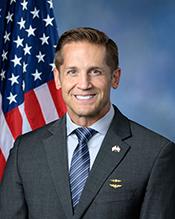
United States · Official source
621 records where Rep. McCormick, Richard [R-GA-7] is listed as a sponsor, author, or other actor. Search with topics and years
United States · United States Congress · 10 December 2025
United States · United States Congress · 10 December 2025
United States · United States Congress · 4 December 2025
United States · United States Congress · 3 December 2025
United States · United States Congress · 2 December 2025
United States · United States Congress · 20 November 2025
United States · United States Congress · 20 November 2025
Rotorcraft Operations Transparency and Oversight Reform Act or the ROTOR Act This bill addresses aviation safety by increasing requirements for aircraft tracking and communication using Automatic Dependent Surveillance-Broadcast (ADS-B) technology and expanding oversight. As background, ADS-B for broadcasting (Out) and receiving (In) transmits information (e.g., location and weather information) between aircraft and air traffic control. Under the bill, aircraft must generally operate with ADS-B In equipment to provide the aircraft with location information of other aircraft and traffic advisories. Current law does not require this equipment. Current Federal Aviation Administration (FAA) regulations allow aircraft performing a sensitive government mission to be excepted from requirements for using ADS-B Out equipment. This bill limits which flights may be considered sensitive government missions (e.g., not training flights) and requires additional reporting for the exception. The Government Accountability Office must review the use of the ADS-B Out exception and the Office of Inspector General (OIG) of the Department of Transportation (DOT) must annually audit FAA oversight of operations that use the exception. Further, the bill repeals a 2018 law that prohibits DOT from requiring certain military aircraft to install or use ADS-B equipment. The bill also requires the OIG of the Army to audit the Army’s coordination with the FAA, the FAA to establish an office to coordinate airspace usage of military aircraft and review the safety of flight operations and routes around airports, and the FAA to enter into memoranda of understanding with military agencies for safety information sharing.
United States · United States Congress · 17 November 2025
United States · United States Congress · 7 November 2025
United States · United States Congress · 7 November 2025
This resolution honors the service and sacrifice of America's veterans.
United States · United States Congress · 4 November 2025
United States · United States Congress · 4 November 2025
United States · United States Congress · 31 October 2025
Firearm Access During Shutdowns Act This bill requires various federal agencies to continue certain operations, functions, and services related to firearms during a government shutdown. The bill applies to the Federal Bureau of Investigation's National Instant Criminal Background Check System, including the processing of background checks in support of the operations of the Directorate of Enforcement Programs and Services of the Bureau of Alcohol, Tobacco, Firearms and Explosives (ATF); the ATF's Directorate of Enforcement Programs and Services; the activities of the Department of Commerce's Bureau of Industry and Security relating to firearms and firearm-related products, including activities related to processing of applications for export licenses; and the activities of the Department of State's Directorate of Defense Trade Controls relating to firearms and firearm-related products, including activities related to processing of applications for export licenses. Under the bill, (1) these operations, functions, and services are deemed to relate to an emergency involving the safety of human life or the protection of property; and (2) employees carrying out the operations, functions, and services are deemed to be excepted employees. (Under an exception in the Antideficiency Act, an employee whose duties involve the safety of human life or the protection of property may be required to work during a government shutdown. Employees who are required to work during a government shutdown because they fall under this or other exceptions are known as excepted employees.)
United States · United States Congress · 24 October 2025
United States · United States Congress · 21 October 2025
This resolution recognizes the religious and historical significance of Diwali.
United States · United States Congress · 17 October 2025
United States · United States Congress · 3 October 2025
United States · United States Congress · 30 September 2025
United States · United States Congress · 30 September 2025
Cashless Bail Reporting Act This bill requires the Department of Justice to publish annually a list of state and local governments that permit individuals who are charged with certain criminal offenses that pose a clear threat to public safety and order to be released pending trial on personal recognizance or upon execution of an unsecured appearance bond. Under the bill, the criminal offenses that pose a threat to public safety and order include criminal offenses involving a violent or sexual act (e.g., burglary, murder, or rape) and offenses that promote public disorder (e.g., looting or vandalism). On August 25, 2025, President Donald Trump issued an executive order that required the Department of Justice to submit to the Assistant to the President for Homeland Security a list of state and local jurisdictions that have substantially eliminated cash bail as a potential condition for pretrial release for crimes that pose a clear threat to public safety and order, including offenses involving violent, sexual, or indecent acts, or burglary, looting, or vandalism.
United States · United States Congress · 26 September 2025
United States · United States Congress · 23 September 2025
United States · United States Congress · 18 September 2025
United States · United States Congress · 18 September 2025
United States · United States Congress · 18 September 2025
United States · United States Congress · 18 September 2025
United States · United States Congress · 18 September 2025
United States · United States Congress · 17 September 2025
United States · United States Congress · 17 September 2025
United States · United States Congress · 16 September 2025
United States · United States Congress · 16 September 2025
United States · United States Congress · 16 September 2025
Pay Our Troops Act of 2026 This bill provides continuing appropriations for military pay for any period during which interim or full-year appropriations for FY2026 are not in effect (i.e., a government shutdown). Specifically, the bill provides FY2026 continuing appropriations for the pay and allowances of (1) members of the Armed Forces, including reserve components, who perform active service during the period; and (2) civilian personnel and contractors of the Department of Defense (and the Department of Homeland Security in the case of the Coast Guard) who are providing support to such members of the Armed Forces. If a government shutdown occurs, the bill provides the continuing appropriations until the earlier of (1) the enactment into law of specified appropriations legislation, or (2) January 1, 2027.
United States · United States Congress · 16 September 2025
This resolution (1) condemns the assassination of Charles "Charlie" James Kirk and all forms of political violence; and (2) honors the life, leadership, and legacy of Charlie Kirk.
United States · United States Congress · 15 September 2025
This bill designates the multispecialty clinic of the Department of Veterans Affairs in Marietta, Georgia, as the Colonel Michael H. Boyce Department of Veterans Affairs Multispecialty Clinic or the Colonel Michael H. Boyce VA Clinic.
United States · United States Congress · 15 September 2025
NSF AI Education Act of 2025 This bill establishes, or authorizes the National Science Foundation (NSF) to establish, various scholarship, fellowship, and grant programs to promote education and professional development related to artificial intelligence (AI). The bill authorizes NSF to award scholarships and fellowships to college students focusing their studies on AI. NSF may also support AI-related professional development fellowships for (1) students and faculty, (2) K-12 teachers and school professionals, and (3) industry professionals seeking short-term appointments to teach AI. NSF must also establish up to eight centers of AI excellence at community colleges or area career and technical education schools. Designated centers must develop best practices for AI research and education, integrating AI into the classroom, and facilitating partnerships with the private sector, among other topics. This program must be administered in coordination with the Department of Commerce Regional Technology and Innovation Hubs program. NSF may make merit-based grants to eligible entities, including institutions of higher education and nonprofit organizations, for research on AI teaching models, integration of AI in the classroom, and AI’s impact on educational outcomes for students through grade 12. Awards must be used to (1) prepare K-12 teachers to integrate AI into their classrooms; and (2) research, test, and implement AI-related instructional materials, teaching models, and professional development for teachers. Finally, NSF may establish a pilot program through which regional cohorts will provide AI-related peer support, mentoring, and research experiences to K-12 teachers and school leaders.
United States · United States Congress · 15 September 2025
Ensuring Patient Access to Critical Breakthrough Products Act This bill provides for Medicare coverage of medical devices that are approved under the Food and Drug Administration (FDA) Breakthrough Devices Program. (Under the program, manufacturers work with the FDA to expedite the review and approval of certain medical devices that provide for more effective treatment or diagnosis of life-threatening or irreversibly debilitating human diseases or conditions.) The bill allows designated medical breakthrough devices to be temporarily covered under Medicare during a four-year transitional period. Manufacturers must apply to the Centers for Medicare & Medicaid Services (CMS) to receive this designation. Qualifying devices must (1) have received priority review from the FDA, (2) received premarket approval (if applicable) based on clinical data that includes data from Medicare beneficiaries, (3) already generally qualify for Medicare coverage, and (4) not present an undue risk of harm that outweighs potential clinical benefits for Medicare beneficiaries. The CMS must approve or deny applications within six months of receipt and must provide an explanation in the case of a denial. In addition, the CMS must make permanent coverage decisions before the end of the transitional period upon a timely request to do so, as specified. The bill provides funds through FY2030 for the CMS to implement the bill.
United States · United States Congress · 15 September 2025
United States · United States Congress · 11 September 2025
This resolution condemns the assassination of Charlie Kirk, extends condolences and sympathies to his family, and honors his commitment to civil discussion and debate.
United States · United States Congress · 11 September 2025
United States · United States Congress · 10 September 2025
United States · United States Congress · 10 September 2025
United States · United States Congress · 10 September 2025
Reforming and Enhancing Sustainable Updates to Laboratory Testing Services Act of 2025 or the RESULTS Act This bill requires the use of particular data from the private sector to inform Medicare payment rates for certain widely available laboratory tests. Specifically, the Centers for Medicare & Medicaid Services (CMS) must contract with an entity that maintains a database of claims data for clinical diagnostic laboratory tests that (1) are not advanced diagnostic tests, and (2) were furnished by more than 100 providers and suppliers of such services over a specified six-month period (i.e., widely available tests). The database must meet specified requirements, such as having data that is representative of the entire country and from more than 50 private payors and claims administrators. The contracted entity must be a nonprofit entity that is not affiliated with any government agency, any insurance issuer or provider, or any other organization in the health care sector. Beginning January 1, 2028, the CMS must use the information obtained from the database to inform Medicare payment rates for these widely available laboratory tests. The bill additionally specifies processes for determining payment rates for laboratory tests that are not advanced diagnostic tests, are not widely available, and lack adequate claims data. The CMS must use certain existing processes to set appropriate rates. The bill also delays scheduled payment reductions for laboratory tests until 2028 and allows for judicial and administrative review of payment rates.
United States · United States Congress · 10 September 2025
United States · United States Congress · 3 September 2025
United States · United States Congress · 2 September 2025
Weather Research and Forecasting Innovation Reauthorization Act of 2025 or the Weather Act Reauthorization Act of 2025 This bill reauthorizes, revises, and establishes several programs related to weather forecasting, monitoring, and research. For example, the bill reauthorizes through FY2030 programs that are administered by the Office of Oceanic and Atmospheric Research in the National Oceanic and Atmospheric Administration (NOAA), including the U.S. Weather Research Program. It also provides statutory authority for NOAA's Verification of the Origins of Rotation in Tornadoes Experiment (known as VORTEX-USA). The bill also requires NOAA to establish programs that support weather forecasting technology, including improvements to radar accuracy, weather forecasting in underserved areas, and coastal flooding forecasting. NOAA must also acquire weather-related data from the private sector and establish a pilot program to test the compatibility of this data with NOAA infrastructure. In addition, NOAA must improve weather-related communication systems, including those related to hazardous weather events, through system upgrades that use more modern technology (e.g., cloud-based services) and that allow for expanded coverage (e.g., in rural areas). Finally, NOAA must administer programs that support weather forecasting for agricultural and water management, including pilot programs to improve precipitation forecasts in the western and central states and a soil moisture monitoring network.
United States · United States Congress · 29 August 2025
United States · United States Congress · 26 August 2025
United States · United States Congress · 22 August 2025
United States · United States Congress · 15 August 2025
United States · United States Congress · 5 August 2025
United States · United States Congress · 1 August 2025