Bill· HRH.R. 3134 (119th)referred
Emergency Care Improvement Act
United States · United States Congress · 1 May 2025
The world's political record
Person
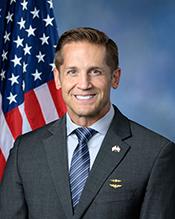
United States · Official source
621 records where Rep. McCormick, Richard [R-GA-7] is listed as a sponsor, author, or other actor. Search with topics and years
United States · United States Congress · 1 May 2025
United States · United States Congress · 1 May 2025
Ensuring Community Access to Pharmacist Services Act This bill provides for permanent coverage under Medicare of certain pharmacist services. Specifically, the bill provides for permanent coverage of testing and treatment services provided by pharmacists relating to (1) COVID-19, influenza, respiratory syncytial virus (RSV), and streptococcal pharyngitis (strep throat); and (2) other public health needs in relation to a declared public health emergency. (Similar authorities were temporarily granted during the COVID-19 public health emergency.) Such services must be provided in accordance with the applicable state laws governing pharmacists' scope of practice.
United States · United States Congress · 1 May 2025
United States · United States Congress · 1 May 2025
United States · United States Congress · 1 May 2025
United States · United States Congress · 30 April 2025
United States · United States Congress · 28 April 2025
Nucleic Acid Standards for Biosecurity Act This bill explicitly requires the National Institute of Standards and Technology (NIST) to support the development of best practices and technical standards for nucleic acid synthesis. Nucleic acids, including deoxyribonucleic acid (DNA) and ribonucleic acid (RNA), carry genetic information within cells. Nucleic acid synthesis is the process of designing and creating custom nucleic acids; it is used in the development of medications and agricultural products. However, this technology also poses a risk of misuse (e.g., the intentional or unintentional creation of dangerous biological agents). The bill requires NIST to carry out measurement research to support the development and improvement of biosecurity best practices and technical standards related to nucleic acid synthesis. This effort must address specified topics including nucleic acid synthesis screening, operational security, and conformity assessment. (A 2023 executive order titled Safe, Secure, and Trustworthy Development and Use of Artificial Intelligence directed NIST to develop and refine similar specifications and best practices for use by synthetic nucleic acid providers. NIST's work on this topic is ongoing.) In carrying out this effort, NIST must convene stakeholders to develop and periodically update consensus priorities and best practices for synthetic nucleic acid screening mechanisms. Within a specified period, NIST must submit a summary of the stakeholder group’s findings to Congress. NIST must also take steps to advance risk management best practices and technical standards for engineering biology and biomanufacturing, including with respect to risks associated with the use of artificial intelligence.
United States · United States Congress · 28 April 2025
United States · United States Congress · 17 April 2025
United States · United States Congress · 17 April 2025
Drone Espionage Act This bill makes it a federal crime under the Espionage Act to engage in certain activities related to obtaining, receiving, or transmitting video of national defense information. The term national defense information means information or other material that is related to national defense. The Espionage Act prohibits certain activities related to obtaining, receiving, or transmitting national defense information that could harm the United States or aid a foreign nation. Under current law, the prohibitions only apply if national defense information is obtained, received, or transmitted by certain means, such as a sketch, photograph, photographic negative, blueprint, plan, map, model, instrument, appliance, document, writing, or note. Under current law, a violator is subject to criminal penalties—a fine, a prison term of up to 10 years, or both. This bill makes the criminal prohibitions under the Espionage Act applicable if national defense information is obtained, received, or transmitted by means of video. Under this bill, a violator is subject to the same penalties as under existing law—a fine, a prison term of up to 10 years, or both.
United States · United States Congress · 14 April 2025
United States · United States Congress · 10 April 2025
United States · United States Congress · 10 April 2025
Combating Organized Retail Crime Act of 2025 This bill expands federal enforcement of criminal offenses related to organized retail and supply chain crime. The term organized retail and supply chain crime includes criminal offenses involving the interstate transportation of stolen property, the sale or receipt of stolen goods, or theft from an interstate or foreign shipment that is committed by, in coordination with, or at the instruction of an organization. First, with respect to criminal offenses involving the interstate transportation of stolen property or the sale or receipt of stolen goods, the bill broadens the scope of conduct that qualifies as offenses by allowing prosecutions to be based on the aggregate value of stolen items over a 12-month period. Additionally, the bill makes the offenses predicate offenses (i.e., underlying offenses) for prosecutions under the federal money laundering statute and authorizes the criminal forfeiture of any property obtained from the proceeds of an offense. Second, with respect to criminal offenses involving theft from an interstate or foreign shipment, the bill also makes an offense an underlying offense for prosecution under the federal money laundering statute and authorizes the criminal forfeiture of any associated property. Third, the bill expands the federal money laundering statute to include offenses involving general-use prepaid cards, gift certificates, or store gift cards. Finally, the bill temporarily establishes a center within the Department of Homeland Security to coordinate federal law enforcement activities related to organized retail and supply chain crime.
United States · United States Congress · 10 April 2025
Deregulating Restrictions on Interstate Vehicles and Eighteen-wheelers Act or the DRIVE Act This bill prohibits the Federal Motor Carrier Safety Administration (FMCSA) from issuing any rule or regulation to require vehicles that have a gross vehicle weight of more than 26,000 pounds and are operating in interstate commerce to be equipped with a speed limiting device set to a maximum speed. The FMCSA issued an advance notice of supplemental proposed rulemaking on this subject on May 4, 2022.
United States · United States Congress · 9 April 2025
United States · United States Congress · 8 April 2025
Nuclear Family Priority Act This bill imposes limits on various types of family-sponsored immigration visas. The non-U.S. national ( alien under federal law) parents of U.S. citizens shall not qualify for visas for immediate relatives, which are not subject to any direct numerical limits. Currently, the spouses, unmarried children under 21, and parents of citizens are considered immediate relatives. The bill also creates a nonimmigrant visa for such parents of citizens. Such non-U.S. nationals shall not be eligible for employment or any public benefits. The bill also reduces the baseline annual cap for family-sponsored visas from 480,000 to 88,000, and revises the methods for calculating the cap. Currently, the 480,000 cap may be adjusted depending on various factors but shall not be less than 226,000. The bill eliminates preference allocations (visa categories subject to various annual caps) for various family-sponsored visas, including those for the siblings and married children of citizens. The bill provides for a preference allocation for the unmarried children under 21 and spouses of permanent residents, subject to the 88,000 annual cap.
United States · United States Congress · 8 April 2025
United States · United States Congress · 7 April 2025
United States · United States Congress · 7 April 2025
United States · United States Congress · 7 April 2025
CBO Scoring Accountability Act This bill requires the Congressional Budget Office (CBO) to provide additional cost estimates and reports regarding major legislation that has been enacted into law. Under the bill, major legislation is any bill or joint resolution that would be projected to result in outlays of mandatory spending or receipts of federal revenue equal to or greater than 0.25% of the current projected gross domestic product of the United States for that year. For the first 10 years after major legislation has been enacted into law, the bill requires CBO to annually prepare and make publicly available an analysis of the results of carrying out the provisions of the legislation. The analysis must include an estimate of the costs and the change in federal revenue as a result of the legislation, a comparison of the current and previous estimates of the costs and change in revenue, and any applicable updates to the estimates. The bill also requires CBO to submit reports to Congress that explain any discrepancy between the actual and estimated costs and change in revenue that is greater than or equal to 10%.
United States · United States Congress · 7 April 2025
Remote Access Security Act This bill broadens the scope of the U.S. export control system to include remote access of items. Remote access means (1) access to an item subject to the jurisdiction of the United States by a foreign person through a network connection, including the internet or a cloud computing service, from a location other than where the item is physically located; or (2) any other form of access specified in regulations promulgated by the Department of Commerce. The Export Control Reform Act of 2018 (ECRA), which is implemented through the Export Administration Regulations, provides a permanent statutory basis for controlling the export of dual-use goods (e.g., items with both civilian and military uses) and certain military parts and components. This bill applies export controls under ECRA to remote access of items, thereby allowing Commerce's Bureau of Industry and Security to issue licenses and impose penalties related to remote access of controlled items.
United States · United States Congress · 7 April 2025
Fallen Servicemembers Religious Heritage Restoration Act This bill requires the American Battle Monuments Commission (ABMC) to establish the Fallen Servicemembers Religious Heritage Restoration Program to identify deceased members of the Armed Forces who were Jewish and buried in a U.S. military cemetery located outside of the United States under a marker indicating the member was not Jewish. The program must contact survivors and descendants of such members. The ABMC must seek to enter into a contract with a nonprofit organization to carry out the program during the first 10 fiscal years beginning after the date of enactment of the bill.
United States · United States Congress · 3 April 2025
United States · United States Congress · 3 April 2025
Haiti Criminal Collusion Transparency Act of 2025 This bill requires the President to impose visa- and property-blocking sanctions on foreign individuals and entities that are involved in or have direct ties to prominent criminal gangs in Haiti. Specifically, the Department of State must periodically report to Congress on the ties between criminal gangs and political and economic elites in Haiti. The report must list (1) prominent criminal gangs in Haiti and the leaders thereof, and (2) Haitian political and economic elites who have direct links to criminal gangs and any organizations or entities controlled by these individuals. The President must impose sanctions on listed individuals and entities. Under the bill, the term economic elites means board members, officers, and executives of groups, corporations, or other entities that exert substantial influence or control over Haiti’s economy, infrastructure, or particular industries. Political elites means current and former government officials and their high-level staff and political party or committee leaders. The bill also applies civil and criminal penalties to persons that violate, attempt to violate, conspire to violate, or cause a violation of the regulations promulgated to carry out such sanctions.
United States · United States Congress · 1 April 2025
United States · United States Congress · 1 April 2025
Sanctioning Russia Act of 2025 This bill imposes penalties on certain persons (individuals and entities) if the President determines that the Russian government or a person acting at Russia's direction is involved with (1) refusing to negotiate a peace agreement with Ukraine; (2) violating a negotiated peace agreement; (3) initiating another invasion of Ukraine; or (4) overthrowing, dismantling, or seeking to subvert the Ukrainian government. If the President makes such a determination, the bill requires certain actions including the President must impose visa- and property-blocking sanctions on specified persons such as the Russian president, certain Russian military commanders, and any foreign person that knowingly provides defense items to the Russian armed forces; the President must increase the rate of duty on all goods and services imported from Russia into the United States to at least 500% relative to the value of such goods and services; the President must increase the rate of duty on all goods and services imported into the United States from countries that knowingly engage in the exchange of Russian-origin uranium and petroleum products to at least 500% relative to the value of such goods and services; the Department of the Treasury must impose property-blocking sanctions on any financial institution organized under Russian law and owned wholly or partly by Russia, and any financial institution that engages in transactions with those entities; and the Department of Commerce must prohibit the export, reexport, or in-country transfer to or in Russia of any U.S.-produced energy or energy product.
United States · United States Congress · 1 April 2025
Nuclear Medicine Clarification Act of 2025 This bill requires the Nuclear Regulatory Commission (NRC) to revise its regulations so that health care providers must report to the NRC when a dose of a radioactive drug caused by an extravasation exceeds specified quantities. An extravasation generally means the unintentional presence of a radioactive drug in the tissue surrounding the blood vessel following an injection. Under the NRC’s current regulations, health care providers licensed by the NRC to use radioactive materials must submit a report to the NRC for any instance, known as a medical event, where the administered dose of a radioactive drug exceeds specified quantities or criteria. In 2024, the NRC published a draft proposed rule that would add an extravasation as a medical event that must be reported. The draft proposed rule’s reporting threshold is based on a physician’s determination that the administration results or may potentially result in a radiation injury from an extravasation. The reporting threshold proposed by the NRC does not contain a quantified dose. The bill requires the NRC to revise its regulations to add an extravasation as a medical event that must be reported, and it additionally requires the reporting threshold to be based on quantified doses (as specified in the bill).
United States · United States Congress · 31 March 2025
United States · United States Congress · 27 March 2025
United States · United States Congress · 27 March 2025
Reducing Medically Unnecessary Delays in Care Act of 2025 This bill requires Medicare coverage decisions, including prior authorization requirements and adverse coverage decisions, to be based on written clinical criteria that is developed in consultation with physicians.
United States · United States Congress · 27 March 2025
United States · United States Congress · 27 March 2025
United States · United States Congress · 26 March 2025
Creating Resources for Every American To Experiment with Artificial Intelligence Act of 2025 or the CREATE AI Act of 2025 This bill establishes a national program to provide U.S. researchers, educators, and students with access to artificial intelligence (AI) data, computational resources, educational tools and services, and testbeds. The program, to be known as the National Artificial Intelligence Research Resource (NAIRR), must be established by the National Science Foundation (NSF) to improve U.S. AI research capacity and spur the strategic development of AI capabilities. NAIRR may accept and use donated resources from the private sector and federal agencies. Those eligible to use NAIRR resources are (1) researchers, educators, and students based in the United States and affiliated with a U.S. institution of higher education, nonprofit, executive agency, or other specified entity; and (2) employees of U.S. executive agencies or federally funded research and development centers with a demonstrable mission need. NSF must select a nongovernmental organization to operate NAIRR (i.e., an operating entity ) through a competitive and transparent process. The operating entity must ensure that a significant percentage of the annual allotment of computational resources is provided to projects primarily focused on AI privacy, ethics, safety, security, risk mitigation, or trustworthiness. The operating entity must also establish minimum security requirements for all individuals interacting with NAIRR. The operating entity may establish a fee schedule for access to NAIRR, which must include a free tier of access and must ensure that the primary purpose of NAIRR is to support research.
United States · United States Congress · 26 March 2025
United States · United States Congress · 26 March 2025
United States · United States Congress · 25 March 2025
United States · United States Congress · 25 March 2025
United States · United States Congress · 24 March 2025
The Adams Memorial-Great American Heroes Act This bill extends through 2032 the Adams Memorial Commission, whose purpose is to establish a permanent memorial in Washington, DC, to honor John Adams and his legacy. The bill specifies that the Adams Memorial shall be located within the area specified by the Adams Memorial Commission in a February 25, 2025 map (i.e., south of the White House, adjacent to Ellipse Road and near Pennsylvania Avenue and 15th Street, Northwest). If the Commission determines that this location is not suitable or feasible due to physical or security constraints, the bill requires that the memorial be located in the Reserve , an area which generally extends from the United States Capitol to the Lincoln Memorial, and from the White House to the Jefferson Memorial.
United States · United States Congress · 24 March 2025
United States · United States Congress · 21 March 2025
Improving Law Enforcement Officer Safety and Wellness Through Data Act of 2025 This bill requires the Department of Justice to report on (1) targeted attacks on law enforcement officers, (2) the feasibility of incorporating such attacks into existing crime reporting systems, and (3) the mental health resources that are available to law enforcement officers.
United States · United States Congress · 21 March 2025
United States · United States Congress · 18 March 2025
Physician Led and Rural Access to Quality Care Act This bill expands flexibilities for physicians and physician-owned hospitals under the Stark law (i.e., the Physician Self-Referral Law). The Stark law generally prohibits physicians from referring patients to receive services that are payable under Medicare or Medicaid from entities in which the physician or an immediate family member has a financial relationship. The bill allows physicians or their immediate family members to have financial interests in rural hospitals that are located more than 35 miles (or 15 miles in certain mountainous areas or areas with only secondary roads) from a hospital or critical access hospital. The Stark law also generally prohibits physician-owned hospitals from expanding the number of operating rooms, procedure rooms, or beds beyond the number in existence as of March 23, 2010, in order to be excepted under the Stark law. The bill removes this restriction.
United States · United States Congress · 14 March 2025
United States · United States Congress · 14 March 2025
This bill treats Kenya, Mali, Burkina Faso, and Chad as combat zones for purposes of determining eligibility for certain federal tax benefits available to members of the U.S. Armed Forces. (Conditions apply.) Specifically, under the bill, a qualified hazardous duty area is treated as a combat zone for purposes of determining the filing status of an individual whose spouse is missing in action; excluding compensation received by a member of the Armed Forces serving in a combat zone from gross income and wages subject to withholding; forgiving the income tax liability of a member of the Armed Forces who dies in a combat zone; certain estate tax rules applicable to a member of the Armed Forces who dies in a combat zone or as a result of an injury, wound, or disease suffered while in a combat zone; the exemption from the federal excise tax imposed on certain telephone services for telephone calls originating from a combat zone by a member of the Armed Forces; and postponing certain federal tax deadlines (e.g., filing a tax return, paying taxes, and claiming a tax refund) for a member of the Armed Forces serving in a combat zone. The bill defines a qualified hazardous duty area as Kenya, Mali, Burkina Faso, and Chad if any member of the U.S. Armed Forces is entitled to special pay (e.g., hostile fire pay and imminent danger pay) for services performed in such locations.
United States · United States Congress · 14 March 2025
United States · United States Congress · 14 March 2025
This resolution commemorates the centennial of Delta Air Lines.
United States · United States Congress · 11 March 2025
Metastatic Breast Cancer Access to Care Act This bill expedites payment of Social Security Disability Insurance (SSDI) benefits and eligibility for Medicare coverage for those with metastatic breast cancer (i.e., breast cancer that has spread to other sites in the body). Specifically, the bill eliminates the 5-month waiting period for SSDI benefits and the subsequent 24-month waiting period for Medicare coverage for individuals with metastatic breast cancer. Under current law, individuals generally must wait 5 months after the onset of disability to begin receiving SSDI benefits and an additional 24 months to become eligible for Medicare.
United States · United States Congress · 11 March 2025
Resident Education Deferred Interest Act or the REDI Act This bill allows borrowers in medical or dental internships or residency programs to defer student loan payments until the completion of their programs.
United States · United States Congress · 11 March 2025
United States · United States Congress · 11 March 2025