Amendment· HAMDTHAMDT 984 (115th)passed
An amendment to strike all after the enacting clause and insert new text and title.
United States · United States Congress
The world's political record
Person
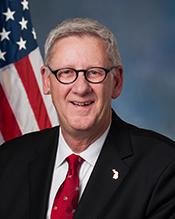
United States · Official source
470 records where Rep. Mitchell, Paul [R-MI-10] is listed as a sponsor, author, or other actor. Search with topics and years
United States · United States Congress
United States · United States Congress
United States · United States Congress
United States · United States Congress
United States · United States Congress
United States · United States Congress
United States · United States Congress
United States · United States Congress · 16 November 2020
This resolution expresses support for National Adoption Month and National Adoption Day and encourages people to consider adoption.
United States · United States Congress · 16 September 2020
This bill establishes funding for, expands, and provides additional economic assistance to small businesses in response to COVID-19 (i.e., coronavirus disease 2019). Specifically, the Small Business Administration is authorized to provide second draw loans of up to $2 million under the Paycheck Protection Program. A recipient shall be eligible for forgiveness of a second draw loan in the same manner as an initial paycheck protection loan. Further the bill modifies the Paycheck Protection Program by, among other things, (1) expanding forgivable expenses, (2) allowing borrowers to select an eight-week period through December 31, 2020, to use their paycheck protection loan, (3) simplifying the forgiveness application for smaller loans, (4) expanding eligibility to certain chambers of commerce and destination marketing organizations, and (5) establishing a specific loan calculation for farmers and ranchers.
United States · United States Congress · 15 September 2020
Bringing Enhanced Treatments and Therapies to ESRD Recipients Kidney Care Act or the BETTER Kidney Care Act This bill requires the Centers for Medicare & Medicaid Services (CMS) to establish a demonstration program for Medicare beneficiaries with end-stage renal disease (ESRD). Under the program, renal dialysis facilities, kidney disease specialists, physician practices, and other health care practitioners may form an organization that partners with certain health care entities to provide integrated care to beneficiaries with ESRD. Such care must include all covered Medicare benefits as well as transition services for transplantations, palliative care, and hospice. Each organization must have a minimum number or percentage of participating beneficiaries (350 or 60% of beneficiaries served at the organization's facilities) and must also comply with certain fiscal, governance, and quality of care requirements. Additionally, the Government Accountability Office must study certain data that is reported to the CMS regarding pediatric dialysis care, as well as the effects of race-based corrections to a specified kidney function test on referrals of ESRD patients for transplant evaluations.
United States · United States Congress · 11 September 2020
This resolution expresses support for the designation of National Kinship Care Month and encourages Congress to work to improve the lives of vulnerable children and families.
United States · United States Congress · 24 July 2020
Paycheck Protection Small Business Forgiveness Act This bill modifies loan forgiveness under the Paycheck Protection Program established to support small businesses in response to COVID-19 (i.e., coronavirus disease 2019). Specifically, the bill provides for automatic forgiveness of a paycheck protection loan that is not more than $150,000 if the recipient submits a one-page form. Such form must allow a recipient to submit specified demographc and expenditure information, and certain individuals (e.g., the President, the Vice President, or the head of an executive department) are not eligible for such forgiveness. Further, the bill prohibits any enforcement or other action against a lender relating to loan origination, forgiveness, or guarantee based on the lender's reliance on certifications or documentation submitted by a loan applicant or recipient.
United States · United States Congress · 13 July 2020
Coast Guard Combat-Injured Tax Fairness Act This bill extends the provisions of the Combat-Injured Veterans Tax Fairness Act of 2016 to the Department of Homeland Security, with respect to the U.S. Coast Guard when it is not operating in the Department of the Navy. That act directed the Department of Defense to identify (1) certain disability severance payments paid after January 17, 1991, to to veterans with combat-related injuries, from which it withheld amounts for tax purposes; and (2) the individuals to whom such severance payments were made.
United States · United States Congress · 25 June 2020
This bill designates the medical center of the Department of Veterans Affairs in Ann Arbor, Michigan, as the Lieutenant Colonel Charles S. Kettles Department of Veterans Affairs Medical Center or the Lieutenant Colonel Charles S. Kettles VA Medical Center.
United States · United States Congress · 22 June 2020
The COVID-19 Hospital and Health Provider Loan Forgiveness Act of 2020 This bill establishes and otherwise modifies requirements for the Medicare Accelerated and Advance Payment Program during the public health emergency relating to COVID-19 (i.e., coronavirus disease 2019). The program provides Medicare payments in advance to eligible providers experiencing claims or cash flow disruptions, such as during national emergencies; the program was specifically expanded in response to COVID-19 to encompass more types of providers, subject to certain recoupment and repayment provisions. The bill requires the Centers for Medicare & Medicaid Services to waive recoupment and repayment for providers who meet specified requirements. Among other criteria, providers must not have engaged in surprise billing practices with respect to COVID-19 patients. Providers must still repay any amounts not used for COVID-19 expenses; the bill caps the interest rate on such repayments at 2% upon a demonstration of hardship. The bill also requires private health insurers to treat out-of-network COVID-19 services as in-network for purposes of payment and cost-sharing.
United States · United States Congress · 18 June 2020
Flint Registry Reauthorization Act This bill extends through FY2031 a voluntary lead exposure registry supported by the Centers for Disease Control and Prevention. The registry collects data on the exposure of individuals in Flint, Michigan, to lead contamination in the local drinking water system.
United States · United States Congress · 18 June 2020
Just and Unifying Solutions To Invigorate Communities Everywhere Act of 2020 or the JUSTICE Act This bill addresses policies and issues regarding policing practices and law enforcement accountability. The bill funds state and local grants, incentivizes state and local reporting on the use of certain policing practices, creates new federal offenses for certain misconduct, establishes a commission to study the conditions affecting Black men and boys, and establishes best practices and training requirements.
United States · United States Congress · 18 June 2020
National Security Innovation Act This bill requires the Department of Defense (DOD) to establish a program office to be known as the National Security Innovation Network to, among other things, maintain a network throughout the United States that connects DOD to academic institutions, commercial accelerators and incubators, commercial innovation hubs, and nonprofit entities with missions and capabilities relating to national security innovation.
United States · United States Congress · 18 June 2020
Small Manufacturer Cybersecurity Enhancement Act This bill authorizes the Office of Economic Adjustment to make grants to a Manufacturing Extension Center established under the Hollings Manufacturing Extension Partnership for the purpose of providing cybersecurity services to small manufacturers. Grant funds may be used by a center to employ trained personnel to deliver cybersecurity services to small manufacturers.
United States · United States Congress · 8 June 2020
One Federal Decision Act of 2020 This bill provides statutory authority for the policy that requires federal agencies to coordinate environmental reviews and authorization decisions for major infrastructure projects. It also sets a goal for completing environmental reviews within two years. The Department of Transportation (DOT) must review existing practices, procedures, programmatic agreements, and applicable laws to identify potential changes that would facilitate an efficient environmental review process for projects. All authorization decisions for construction of a major project must be completed within 90 days of the issuance of a record of decision for the project, although the lead agency could extend the deadline in some cases. The lead agency must develop an environmental review schedule with the project sponsor that is consistent with an agency average of not more than two years for the completion of the environmental review process for major projects. DOT must also (1) establish a performance accountability system to track each major project, and (2) provide other relevant federal agencies with a list of categorical exclusions under the National Environmental Policy Act that are applicable to highway projects and that would accelerate project delivery.
United States · United States Congress · 13 May 2020
This resolution expresses support for the designation of National Foster Care Month.
United States · United States Congress · 13 May 2020
Pandemic Protection for Transition-age Foster Youth Act or the Pandemic Protection Act This bill extends eligibility for foster care services to youth who would otherwise age out of such services during the COVID-19 (i.e., coronavirus disease 2019) pandemic for three months after such emergency ends. Additionally, the bill removes certain work or education requirements for older foster youth during such period.
United States · United States Congress · 8 May 2020
Protecting Life in Crisis Act This bill specifies that federal funds allocated for COVID-19 (i.e., coronavirus disease 2019) response efforts may not, in general, be used for abortions. Current law (specifically, language that has historically been included in certain appropriations bills, commonly referred to as the Hyde Amendment) generally prohibits the use of federal funds for abortions. The bill also restricts the use of federal tax credits or other federal funding for health insurance coverage if the coverage includes abortions.
United States · United States Congress · 23 April 2020
Indo-Pacific Deterrence Initiative This bill directs the Department of Defense (DOD) to establish the Indo-Pacific Deterrence Initiative. The bill also authorizes various related programs. The initiative shall seek to (1) enhance U.S. presence in the region by positioning U.S. capabilities to allow timely response to adversarial threats, (2) strengthen the capability of U.S. forces and regional allies and partners, and (3) meet objectives under the National Defense Strategy. The U.S. Indo-Pacific Command may carry out social media-related activities to counter misinformation and propaganda in the region. The bill also authorizes for FY2021 various activities and projects, including a permanent and persistent land-based air and missile defense system in Guam; a homeland defense radar in Hawaii; Missile Defense Agency activities in the region; intelligence, reconnaissance, and related capabilities for the U.S. Indo-Pacific Command; a Marine Unit Deployment Program and Marine Corps rotational presence in the region; Air Force and Navy unit pre-positioning for regional activities; DOD procurement of key munitions for the Indo-Pacific Command; military construction, land acquisition, and military family housing functions; a program to enhance communications capabilities with allies and partners in the region; and various training activities, such as joint training through the Combatant Commanders Exercise Engagement and Training Transformation Program.
United States · United States Congress · 23 April 2020
Taxpayers and Savers Protection Act or the TSP Act This bill prohibits any sums in the Thrift Savings Fund from being invested in a security that is listed on an exchange in a jurisdiction in which the Public Company Accounting Oversight Board (1) has never conducted the mandatory inspection or investigation of a registered public accounting firm, and (2) is prevented from conducting such inspection or investigation because of a position taken by an authority in that jurisdiction.
United States · United States Congress · 3 April 2020
Helping Emergency Responders Overcome Emergency Situations Act of 2020 or the HEROES Act of 2020 This bill excludes from gross income, for income tax purposes, wages and other income up to $50,000 of qualified first responders for the period beginning on February 15, 2020, and ending on June 15, 2020. A qualified first responder is any individual (1) who is a physician, nurse, pharmacist, law enforcement officer, corrections officer, firefighter, emergency medical technician, or paramedic who provides services in a county with at least one confirmed case of COVID-19 (i.e., coronavirus disease 2019); or (2) who provides services in a licensed medical or care facility located in such county. The Department of the Treasury may extend the exclusion for an additional three-month period beyond June 15, 2020, if Treasury determines that the COVID-19 emergency is likely to be ongoing during the extended period.
United States · United States Congress · 27 March 2020
This resolution recognizes the contributions of frontline workers and essential critical-infrastructure personnel and reaffirms the responsibility of Congress to meet the needs of such workers with respect to personal protective equipment and necessary tools to safely carry out their jobs.
United States · United States Congress · 27 March 2020
This bill rescinds the appropriation to the John F. Kennedy Center for the Performing Arts provided for in the Coronavirus Aid, Relief, and Economic Security Act (CARES Act). The CARES Act appropriated $25 million to the center to prepare for and respond to COVID-19 (i.e., coronavirus disease 2019).
United States · United States Congress · 2 March 2020
This resolution expresses continued support for the A-10 Thunderbolt II attack aircraft, also known as the Warthog and A-10C or OA-10C, program as imperative to national security.
United States · United States Congress · 25 February 2020
Designates the facility of the United States Postal Service located at 108 West Maple Street in Holly, Michigan, as the "Holly Veterans Memorial Post Office."
United States · United States Congress · 25 February 2020
This resolution supports the designation of Career and Technical Education Month to celebrate career and technical education across the United States.
United States · United States Congress · 12 February 2020
Harriet Tubman Bicentennial Commemorative Coin Act This bill directs the Department of the Treasury to mint and issue 50,000 $5 gold coins, 400,000 $1 silver coins, and 750,000 half-dollar clad coins emblematic of the legacy of Harriet Tubman as an abolitionist. The Secretary may issue coins under this bill only during the period of January 1, 2022, through December 31, 2022. All surcharges received by Treasury from the sale of such coins must be paid to Project Legacy in Brooklyn, New York, for the purpose of accomplishing and advancing its mission.
United States · United States Congress · 27 January 2020
This resolution supports the designation of National School Choice Week.
United States · United States Congress · 17 January 2020
This resolution expresses the sense of the House of Representatives that Canada should not allow a permanent nuclear waste repository to be built within the Great Lakes Basin and that the President and the Department of State should work with Canada to (1) prevent the construction of such a repository, and (2) craft a solution for the long-term storage of nuclear waste that is safe, responsible, and does not threaten the Great Lakes.
United States · United States Congress · 16 January 2020
Michael Lecik Military Firefighters Protection Act This bill establishes a presumption of service-connection for specified diseases becoming manifest in certain veterans to a degree of disability of 10% or more within 15 years of the veteran's separation from active military, naval, or air service. Under a presumption of service-connection, specific diseases or disabilities diagnosed in certain veterans are presumed to have been caused by the circumstances of their military service. Health care benefits and disability compensation may then be awarded. Veterans addressed by this bill are those who (1) trained in fire suppression, and (2) served on active duty in a military occupational specialty or career field with a primary responsibility of firefighting or damage control for at least five years in the aggregate.
United States · United States Congress · 16 January 2020
This resolution expresses support for Australia, as well as greater collaboration between the United States and Australia to promote wildfire mitigation and prevention.
United States · United States Congress · 13 January 2020
Israel Anti-Boycott Act This bill prohibits participation by certain entities and individuals in boycotts or requests for boycotts imposed by international governmental organizations (i.e., the United Nations and the European Union). Specifically, the bill applies to covered persons the prohibition of specified actions in compliance with or in support of a boycott against a country that is friendly to the United States and that is not itself the object of a U.S. boycott. The bill defines a covered person as a domestic concern, the U.S. government or a state government, or a representative or official of such domestic concern or government. The bill also adds to the list of specified prohibited actions the act of furnishing information to any foreign country or international governmental organization that furthers an imposed boycott. Under current law, a person who violates the prohibitions against such boycotts may be subject to a monetary fine or imprisonment; however, the bill removes imprisonment as a potential penalty for certain violations.
United States · United States Congress · 9 January 2020
Family Support Services for Addiction Act of 2020 This bill directs the Substance Abuse and Mental Health Services Administration to award grants to certain nonprofits to develop or expand services for individuals with substance use disorders and their families. Activities may include (1) developing education, resources, and trainings on issues related to substance use disorders and family support; (2) reducing stigma; and (3) educating health care providers about substance use disorders in families.
United States · United States Congress · 16 December 2019
Recognizing the Protection of Motorsports Act of 2019 or the RPM Act of 2019 This bill authorizes the modification of a vehicle's air emission controls for vehicles that are not legal for operation on a street or highway and are used solely for competition.
United States · United States Congress · 9 December 2019
Lower Costs, More Cures Act of 2019 This bill establishes and modifies several requirements to address prescription drug prices under Medicare, Medicaid, and other programs. The bill generally limits payment amounts for drugs and biologics under Medicare medical services, reduces cost-sharing under the Medicare prescription drug benefit, modifies certain authorities and requirements under the Medicaid Drug Rebate Program, revises provisions relating to regulatory approval and commercial availability of generics and biosimilars, and establishes several reporting requirements for drug manufacturers with respect to drug prices.
United States · United States Congress · 26 November 2019
This resolution supports the designation of Purple Star Families Week.
United States · United States Congress · 22 November 2019
Preserving Family Farms Act of 2019 This bill amends the Internal Revenue Code to increase to $11.4 million (currently, $750,000) the limitation on the special use valuation for farmland or other trades or businesses for estate tax purposes. The increased amount is adjusted for inflation for estates of decedents dying after 2019.
United States · United States Congress · 19 November 2019
Pipeline Safety Improvement Act of 2019 This bill addresses pipeline safety with respect to natural gas and hazardous liquid pipelines. Among other provisions, the bill reauthorizes appropriations through FY2023 for pipeline safety activities; allows for limited safety-enhancing testing programs to evaluate innovative technologies and operational practices testing the safe operation of natural gas or hazardous liquid pipeline facilities; authorizes the Department of Transportation (DOT) to establish a confidential and non-punitive voluntary information-sharing system to encourage collaborative efforts to improve inspection information feedback and information-sharing on best practices, processes, and technology deployments with respect to such facilities; establishes a Liquefied Natural Gas division within the Office of Pipeline Safety of the Pipeline and Hazardous Materials Safety Administration (PHMSA) to ensure the safety and oversight of liquefied natural gas (LNG) facilities, including small-scale LNG facilities, peak shaving facilities, and import or export facilities; creates a Center of Excellence for Liquefied Natural Gas Safety and Training; increases staffing levels in the PHMSA to hire additional personnel with safety expertise; and directs DOT to initiate a study on technologies and measures that reduce the amount of natural gas released during venting and blowdowns of natural gas distribution systems and transmission pipelines.
United States · United States Congress · 14 November 2019
This bill revokes certain waivers of sanctions for nuclear activity in or with Iran, including for (1) the Arak reactor redesign, (2) the transfer into Iran of enriched uranium for the Tehran Research Reactor, and (3) the modification of centrifuge cascades at the Fordow facility.
United States · United States Congress · 12 November 2019
Farm Workforce Modernization Act of 2019 This bill contains provisions related to alien farmworkers, including provisions establishing a certified agricultural worker (CAW) status and changing the H-2A temporary worker program. The Department of Homeland Security (DHS) may grant CAW status to an applying alien who (1) performed at least 1,035 hours of agricultural labor during the two-year period prior to November 12, 2019, (2) was inadmissible or deportable on that date, and (3) has been continuously present in the United States from that date until receiving CAW status. The bill imposes additional crime-related inadmissibility grounds on CAW applicants and makes some other grounds inapplicable. CAW status shall be valid for 5.5 years and may be extended. DHS may grant dependent status to the spouse or children of a principal alien. An alien with a pending application may not be detained or removed by DHS and shall be authorized for employment until DHS makes a final decision on the application. A CAW alien (and dependents) may apply for lawful permanent resident status after meeting various requirements, including performing a certain amount of agricultural labor for a number of years. DHS shall create an electronic platform for (1) filing H-2A petitions, (2) facilitating the processing of H-2A cases, and (3) providing agencies a single tool for obtaining H-2A-related case information. The bill makes various changes to the H-2A program, such as (1) modifying the method for calculating and making adjustments to the H-2A worker minimum wage, (2) specifying how an employer may satisfy requirements that it attempted to recruit U.S. workers, (3) requiring H-2A employers to guarantee certain minimum work hours, and (4) making the program available for year-round agricultural work and reserving a visa allocation for the dairy industry. DHS shall establish a pilot program allowing certain H-2A workers to apply for portable status, which gives the worker 60 days after leaving a position to secure new employment with a registered H-2A employer. DHS shall establish an electronic system patterned on the E-Verify Program for employers to verify an individual's identity and employment authorization. Employers hiring individuals for agricultural employment must use the system. This bill permanently establishes the Housing Preservation and Revitalization Program, which provides financing assistance for rural rental housing and off-farm labor housing and rental assistance for qualified tenants of such housing. It also authorizes the Department of Agriculture to provide various assistance, including funding for insuring loans and grants for new farmworker housing.
United States · United States Congress · 5 November 2019
Family First Transition Act This bill provides additional funding for, and otherwise modifies, implementation of the Family First Prevention Services Act, which provides state, tribal, and territorial child welfare agencies with certain spending flexibilities to support substance abuse services, mental health services, and other services that prevent children's entry into foster care. Specifically, the bill provides one-time funding to jurisdictions to reduce adverse fiscal impacts associated with transitioning funding sources in relation to the new spending flexibilities. The bill also provides additional funding for FY2020 and FY2021 for jurisdictions with certain waivers (currently set to expire at the end of FY2019) that allow them to provide services not authorized under the traditional foster care program. In addition, the bill temporarily delays a requirement that at least 50% of certain funds be spent on programs and services that meet the criteria for well-supported practices. For FY2020 and FY2021, this requirement shall not apply, and for FY2022 and FY2023, programs and services that meet the criteria for supported practices shall be considered well-supported practices.
United States · United States Congress · 30 October 2019
Farm Workforce Modernization Act of 2019 This bill contains provisions related to alien farmworkers, including provisions establishing a certified agricultural worker (CAW) status and changing the H-2A temporary worker program. The Department of Homeland Security (DHS) may grant CAW status to an applying alien who (1) performed at least 1,035 hours of agricultural labor during the two-year period prior to October 30, 2019, (2) was inadmissible or deportable on that date, and (3) has been continuously present in the United States from that date until receiving CAW status. The bill imposes additional crime-related inadmissibility grounds on CAW applicants and makes some other grounds inapplicable. CAW status shall be valid for 5.5 years and may be extended. DHS may grant dependent status to the spouse or children of a principal alien. An alien with a pending application may not be detained or removed by DHS and shall be authorized for employment until DHS makes a final decision on the application. A CAW alien (and dependents) may apply for lawful permanent resident status after meeting various requirements, including performing a certain amount of agricultural labor for a number of years. DHS shall create an electronic platform for (1) filing H-2A petitions, (2) facilitating the processing of H-2A cases, and (3) providing agencies a single tool for obtaining H-2A-related case information. The bill makes various changes to the H-2A program, such as (1) modifying the method for calculating and making adjustments to the H-2A worker minimum wage, (2) specifying how an employer may satisfy requirements that it attempted to recruit U.S. workers, (3) requiring H-2A employers to guarantee certain minimum work hours, and (4) making the program available for year-round agricultural work and reserving a visa allocation for the dairy industry. DHS shall establish a pilot program allowing certain H-2A workers to apply for portable status, which gives the worker 60 days after leaving a position to secure new employment with a registered H-2A employer. DHS shall establish an electronic system patterned on the E-Verify Program for employers to verify an individual's identity and employment authorization. Employers hiring individuals for agricultural employment must use the system. This bill permanently establishes the Housing Preservation and Revitalization Program, which provides financing assistance for rural rental housing and off-farm labor housing and rental assistance for qualified tenants of such housing. It also authorizes the Department of Agriculture to provide various assistance, including funding for insuring loans and grants for new farmworker housing.
United States · United States Congress · 30 October 2019
Dignity for Aborted Children Act This bill requires abortion providers to offer patients specified options concerning the human fetal tissue from an abortion. Specifically, patients must be given an informed consent form specifying the options to (1) take possession of the tissue for transfer to an entity that provides interment or cremations services, or (2) in cases where the tissue is expelled on the provider’s premises, release the tissue to the provider. If the tissue is released to the abortion provider, the provider must ensure the tissue is interred or cremated within seven days of the procedure in a manner consistent with state law regarding the disposal of human remains. Abortion providers must report annually about the aggregate number of abortions performed and other specified information. The bill provides civil or criminal penalties for violations of disposal, informed consent, and reporting requirements.
United States · United States Congress · 28 October 2019
General James N. Mattis Congressional Gold Medal Act This bill directs Congress to award a Congressional Gold Medal to General James N. Mattis in recognition of his distinguished military career. Following the award, the medal shall be given to the Smithsonian Institution, where it shall be available for display as appropriate and made available for research. The U.S. Mint may strike and sell duplicates in bronze of the gold medal.
United States · United States Congress · 23 October 2019
Protecting Europe's Energy Security Act of 2019 This bill establishes sanctions related to the provision of vessels for the construction of Russian energy export pipelines. The Department of State must report to Congress (1) a list of vessels engaged in below sea-level pipe laying for the construction of Russian energy export pipelines, and (2) a list of foreign individuals and entities that provided or facilitated the provision of the vessels for such pipeline construction. The State Department shall impose property- and visa-blocking sanctions on (1) the identified foreign individuals and entities, and (2) each corporate officer and principal shareholder with a controlling interest in the identified vessels. The President may impose various sanctions on foreign individuals and entities that knowingly provide underwriting, insurance, or reinsurance for the identified vessels. The sanctions may include prohibitions from (1) receiving Export-Import Bank export assistance, (2) being designated as a primary dealer of U.S. government debt instruments, or (3) receiving U.S. government procurement contracts. The State Department shall develop a strategy on improving the energy security of U.S. allies in Europe. The State Department shall also report to Congress (1) on the effects of Russia's Nord Stream 2 natural gas pipeline on U.S. national security; and (2) a periodically updated list of entities providing goods, services, or technology for the construction or repair of the pipeline and whether such transactions are prohibited under certain U.S. laws.