Bill· HJRESH.J.Res. 90 (106th)passed
Withdrawing the approval of the United States from the Agreement establishing the World Trade Organization.
United States · United States Congress · 6 March 2000
See summary of: H.J.Res. 89
The world's political record
Person
United States · Official source
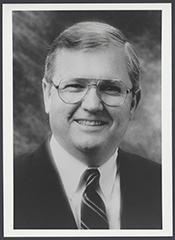
1,856 records where Rep. Norwood, Charles W. [R-GA-9] is listed as a sponsor, author, or other actor. Search with topics and years
United States · United States Congress · 6 March 2000
See summary of: H.J.Res. 89
United States · United States Congress · 29 February 2000
High-Speed Rail Investment Act of 2000 - Amends the Internal Revenue Code to allow a limited tax credit to holders of qualified intercity passenger rail carrier bonds. Sets forth definitions, State matching requirements, and other rules.
United States · United States Congress · 16 February 2000
2002 Winter Olympic Commemorative Coin Act - Directs the Secretary of the Treasury to mint and issue five dollar gold coins and one dollar silver coins emblematic of the participation of American athletes in the 2002 Olympic Winter Games. Mandates that coin design be selected by the Secretary after consultation with: (1) the Commission of Fine Arts; (2) the United States Olympic Committee; and (3) Olympic Properties of the United States-Salt Lake 2002 (created and owned by the Salt Lake Organizing Committee). States that all surcharges from the coin sales ($35 for a $5 coin and $10 for a $1 coin) shall be distributed by the Secretary to: (1) Salt Lake Organizing Committee for the Olympic Winter Games of 2002; and (2) the United States Olympic Committee.
United States · United States Congress · 16 February 2000
Medicaid DSH Preservation Act of 2000 - Amends title XIX (Medicaid) of the Social Security Act, with respect to provisions regarding adjustments in payments for inpatient hospital services furnished by disproportionate share hospitals (DSH), to require allotments for FY 2001 (currently, FY 2003) and succeeding fiscal years to DSH to be equal to the allotment for the State for the preceding fiscal year.
United States · United States Congress · 16 February 2000
Congressional Oversight and Audit of Agency Rulemaking Actions Act - Establishes a pilot project under which the Comptroller General may review a published economically significant proposed or interim rule at the request of a committee of either House of Congress with jurisdiction over the subject matter of the rule. Defines "economically significant rule" to mean any proposed, final, or interim rule: (1) that may have an annual effect on the economy of $100 million or more or adversely affect in a material way the economy, a sector of the economy, productivity, competition, jobs, the environment, public health or safety, or State, local, or tribal governments, small businesses, or communities; or (2) for which an agency has prepared an initial or final regulatory flexibility analysis. Requires that an independent audit and assessment of such a rule by the Comptroller General shall consist of: (1) an analysis of the agency's and the public's assessment of the potential benefits and costs of the rule and of alternative approaches that could achieve the agency's objectives in a more cost effective manner; (2) an analysis and assessment of any impact statement or report prepared by the agency as part of the rulemaking, including any assessment of impacts on State and local governments; and (3) a list of all analyses, groups, entities, and sources consulted in developing the analyses and assessments described above. Grants the Comptroller General discretion to develop procedures for determining the priority and number of requests for review. Requires each agency, upon request of the Comptroller General, to provide any available or existing records, information, or data upon which the agency relied in developing such a rule. Requires the Comptroller General to transmit an independent audit containing the prescribed assessments and analyses on a final rule, together with a summary of the differences between the proposed and final rule, within 30 days after publication in the Federal Register. Authorizes appropriations. Provides for the pilot project established under this Act to continue for a five-year period if specified appropriations are provided. Requires the Comptroller General to report to Congress on such project's effectiveness and on whether it should be authorized permanently.
United States · United States Congress · 10 February 2000
Rural Local Broadcast Signal Act - Amends the Rural Electrification Act of 1936 to authorize the Administrator of the Rural Utilities Service to make loan guarantees (through a specified date) to providers of multichannel video services, including direct broadcast satellite licensees, to improve access to local television broadcasting to all households desiring such service in unserved and underserved rural areas. Requires loan guarantee approval by the National Telecommunications and Information Administration. Sets forth satellite carrier loan guarantee qualifications. Authorizes appropriations. Sets forth conditions under which a borrower shall be obliged to carry local broadcast signals without charge.
United States · United States Congress · 10 February 2000
Emergency Commodity Distribution Act of 2000 - Amends the Richard B. Russell National School Lunch Act to revise provisions relating to the level of commodity purchases under the school lunch program. Requires a specified portion of such program assistance to be in the form of commodity assistance. Prohibits the Secretary of Agriculture from using commodities provided under the authority of any other Act to meet such program requirement for the school year.
United States · United States Congress · 10 February 2000
Timber and Agriculture Environmental Fairness Act - Amends the Federal Water Pollution Control Act to prohibit the Administrator of the Environmental Protection Agency from requiring a national pollutant discharge elimination system permit for discharges composed entirely of agricultural stormwater discharges or for discharges from silviculture operations. Excludes discharges of stormwater runoff from silvicultural operations from the definition of "point source."
United States · United States Congress · 8 February 2000
Installment Tax Correction Act of 2000 - Amends the Internal Revenue Code (as amended by the Ticket to Work and Work Incentives Improvement Act of 1999) to repeal revisions to the Code (made by the Act) which repealed the use of the installment method of accounting for accrual method taxpayers and modified the pledge rules of installment obligations.
United States · United States Congress · 8 February 2000
Authorizes presentation of a gold medal on behalf of Congress to former President Ronald Reagan and his wife Nancy Reagan. Authorizes specified sums to be charged against the United States Mint Public Enterprise Fund for medal costs. Mandates that sale proceeds from duplicate bronze medals be deposited into such Fund.
United States · United States Congress · 8 February 2000
Transit and Air Quality Improvement Act - Amends the Clean Air Act to treat mass transit projects as conforming to State implementation plans for national air quality standards and provides that no determination of conformity shall be required with respect to any such project. Defines a "mass transit project" as a project for: (1) fixed guideway modernization; (2) new fixed guideway systems and extensions to such systems; and (3) replacement, rehabilitation, and purchase of buses and related equipment and construction of bus facilities.
United States · United States Congress · 7 February 2000
Hospital Preservation and Equity Act of 2000 - Amends title XVIII (Medicare) of the Social Security Act (SSA), as amended by the Medicare, Medicaid, and SCHIP Balanced Budget Refinement Act of 1999 with regard to the one year sole community hospital payment increase, to reset the applicable percentage increase for FY 2001 and each subsequent fiscal year to the market basket percentage increase for hospitals in all areas for purposes of updating payments to prospective payment system (PPS) hospitals for inpatient hospital services.
United States · United States Congress · 3 February 2000
Student Athlete Protection Act - Amends the Federal judicial code to include as unlawful sports gambling a lottery, sweepstakes, or other betting, gambling, or wagering scheme based, directly or indirectly, on one or more: (1) competitive games in which high school or college athletes participate; (2) performances of high school or college athletes in competitive games; or (3) competitive games at the Summer or Winter Olympics.
United States · United States Congress · 2 February 2000
Keep Our Promise to America's Military Retirees Act - Includes as an employee, for purposes of Federal provisions authorizing enrollment under the Federal Employees Health Benefits (FEHB) Program: (1) a member of the armed forces who began service before June 7, 1956, and retired after a minimum of 20 years of such service or by reason of a service-connected disability; and (2) the surviving widow or widower of such member. Directs the Secretary of Defense to enter into an agreement with the Office of Personnel Management to provide FEHB coverage to the following eligible beneficiaries: (1) a member or former member entitled to military retired or retainer pay; (2) an unremarried former spouse who was married to a member for at least 20 years, during which such member performed at least 20 years of retirement-creditable military service; (3) a dependent of a deceased qualifying member or former member; (4) a dependent of a living member or former member; and (5) a family member of such member. Repeals a provision prohibiting coverage under the Civilian Health and Medical Program of the Uniformed Services for persons entitled to hospital insurance benefits under part A of title XVIII (Medicare) of the Social Act.
United States · United States Congress · 1 February 2000
Recognizes the 50th anniversary of the Korean War, and expresses the gratitude of the American people for the service of members of the armed forces during such War.
United States · United States Congress · 27 January 2000
Home Office Protection Enhancement Act - Amends the Occupational Safety and Health Act of 1970 to make the Act inapplicable to employment performed in a workplace which is located in the employee's residence.
United States · United States Congress · 27 January 2000
Amends the Fair Labor Standards Act of 1938 to prohibit the Secretary of Labor from issuing a special certificate, which allows payment of wages lower than the Federal minimum wage to handicapped workers, to any individual by reason of that individual's impaired vision or blindness.
United States · United States Congress · 24 January 2000
Amends the Occupational Safety and Health Act of 1970 to make the Act inapplicable to employment performed in a workplace through the use of a telephone, computer, or other electronic device which is located in the employee's residence.
United States · United States Congress · 18 November 1999
Designates the U.S. post office located at 451 College Street in Macon, Georgia, as the Henry McNeal Turner Post Office.
United States · United States Congress · 18 November 1999
United States Training on and Commemoration of the Armenian Genocide Resolution - Calls upon the President: (1) to provide for appropriate training and materials to all Foreign Service officers, officials of the Department of State, and any other executive branch employee involved in responding to issues related to human rights, ethnic cleansing, and genocide by familiarizing them with the U.S. record relating to the Armenian Genocide and the consequences of the failure to enforce the judgments of the Turkish courts against the responsible officials; and (2) in his annual message commemorating the Armenian Genocide issued on or about April 24, to characterize the systematic and deliberate annihilation of 1.5 million Armenians as genocide and to recall the proud history of U.S. intervention in opposition to the Armenian Genocide.
United States · United States Congress · 18 November 1999
Expresses the sense of the House of Representatives that a biennial budget process should be enacted in the second session of the 106th Congress.
United States · United States Congress · 17 November 1999
Radio Broadcasting Preservation Act of 1999 - Prohibits the Federal Communications Commission from prescribing any rules authorizing the operation of new, low power FM radio stations, or establishing a low power radio service, as currently proposed. Terminates previously prescribed rules which would violate such prohibition and voids licenses issued pursuant to such rules.
United States · United States Congress · 17 November 1999
Telehealth Improvement Act of 1999 - Amends the Balanced Budget Act of 1997 with regard to telehealth services to: (1) extend Medicare reimbursement for such services to all Medicare services furnished in all rural areas, including those by physical, occupational, and speech therapists; (2) revise related payment methodology; and (3) add additional congressional reporting requirements pertaining to the telehealth services program. Directs the Secretary of Health and Human Services, acting through the Director of the Office of Advancement of Telehealth, to make grants to eligible recipients for the purpose of expanding access to health care services for individuals in rural areas, frontier areas, and medically underserved areas through the use of telehealth. Authorizes appropriations. Directs the Joint Working Group on Telemedicine to ensure that individuals representing the interests of rural areas and medically underserved areas are members of the Group. Establishes the mission of the Joint Working Group, among other things, as identifying, monitoring, and coordinating Federal telehealth projects and programs. Authorizes appropriations.
United States · United States Congress · 16 November 1999
Equality for Israel at the United Nations Act of 2000 - Expresses the sense of the Congress that: (1) the United States must promote an end to the exclusion of Israel from any of the United Nations (UN) regional blocs, including rotating membership on the UN Security Council; and (2) the U.S. Ambassador to the UN should take all steps necessary to ensure Israel's acceptance in the Western Europe and Others Group (WEOG) regional bloc (membership which includes the non-European countries of Canada, Australia, and the United States). Directs the Secretary of State to report to appropriate congressional committees on efforts taken to achieve such goals.
United States · United States Congress · 10 November 1999
Authorizes the American Battle Monuments Commission to place within the Vietnam Veterans Memorial a plaque to honor those Vietnam veterans who died after service in the Vietnam War, but as a direct result of such service, and whose names are not otherwise eligible for placement on the Memorial wall.
United States · United States Congress · 10 November 1999
State's and Parental Rights Improvement Act of 2000 - Prohibits, notwithstanding any other provision of law, considering a State to have violated any term or condition of any Federal health care grant-in-aid program by requiring the consent or notification of a parent or guardian regarding dispensing a prescription drug or device (or any class of drugs or devices specified by the State) to a minor.
United States · United States Congress · 10 November 1999
Law Enforcement Officers Due Process Act of 1999 - Amends the Omnibus Crime Control and Safe Streets Act of 1968 to require at least five percent of the drug control program funds provided to a State to be reserved for distribution to law enforcement agencies to establish an administrative process which requires that a law enforcement agency that investigates a law enforcement officer for matters which could lead to disciplinary action (including dismissal, demotion, suspension, or transfer) provide recourse for such officer that includes access to the administrative process prior to the imposition of disciplinary action, as well as the right to a hearing, representation, and the confronting of witnesses. Authorizes the immediate suspension of an officer: (1) whose continued presence is considered a substantial and immediate threat to the welfare of such agency or the public; (2) who refuses to obey a direct order issued to conform with the agency's written and disseminated rules and regulations; or (3) who is accused of committing an illegal act. Exempts from this Act an employing agency that has in effect an established system, board, or procedure which meets or exceeds such minimum standards.
United States · United States Congress · 10 November 1999
Small Business Franchise Act of 1999 - Prohibits any person, in connection with the advertising, offering, sale, or promotion of any franchise, from: (1) employing a device, scheme, or artifice to defraud; (2) engaging in an act, practice, course of business, or pattern of conduct which operates or is intended to operate as a fraud upon any prospective franchisee; (3) obtaining property, or assisting others in so doing, by negligently making an untrue statement of a material fact or failing to state a material fact; or (4) making any claim or representation which is inconsistent with or contradicts a disclosure document. Requires the franchisor to provide a written statement specifying whether the franchise agreement contains a right of renewal. (Sec. 4) Prohibits any franchisor or subfranchisor, in connection with the performance, enforcement, renewal, or termination of any franchise agreement, from: (1) engaging in an act, practice, course of business, or pattern of conduct which operates as a fraud upon any person; (2) hindering, prohibiting, or penalizing the free association of franchisees for any lawful purpose, including the formation of or participation in any trade association made up of franchisees; or (3) discriminating against a franchisee by imposing requirements not imposed on other similarly situated franchisees or otherwise retaliating against any franchisee for membership or participation in a franchisee association. Prohibits a franchisor from: (1) terminating a franchise agreement prior to its expiration without good cause; or (2) prohibiting a franchisee from engaging in any business at any location after the expiration of a franchise agreement. (Sec. 5) Sets forth provisions concerning: (1) minimum standards of conduct (good faith, due care, and limited fiduciary duty) for each party to a franchise agreement; (2) a prohibition against requiring the inclusion of a franchise agreement term or condition which violates this Act or relieves a person from a duty or liability under this Act; (3) a prohibition against a waiver from compliance with this Act; and (4) authorized legal actions by State attorneys general on behalf of State residents for alleged violations. (Sec. 8) Authorizes a franchisee to assign a franchise interest to a transferee, provided such transferee satisfies reasonable qualifications applied by the franchisor in determining whether or not a current franchisee is eligible for renewal. Provides transfer conditions, including 30 days' prior written notice. Outlines events which shall not be considered transfers, such as successor management by a surviving heir or incorporation. (Sec. 9) Prohibits a franchisor from transferring a franchise interest unless: (1) the franchisor provides 30 days prior notice to all franchisees of such intent; (2) the notice is accompanied by a complete description of the business and financial terms of the proposed transfer; and (3) upon such transfer, the transferee entity has the appropriate business experience and financial means to perform all of the franchisor's obligations. (Sec. 10) Prohibits a franchisor from prohibiting a franchisee from obtaining equipment, fixtures, supplies, goods, or services (goods or services) used in the establishment or operation of the franchised business from sources of the franchisee's choosing, with the exception that such goods or services must meet reasonable quality standards promulgated or enforced by the franchisor. Requires the franchisor to: (1) provide and continuously update a list of approved vendors for such goods or services; and (2) report at least annually revenues and profits received from the sale of such goods or services to its franchisees. (Sec. 11) Prohibits a franchisor from placing one or more new outlets of a franchised business within unreasonable proximity to an existing franchise, with an exception. (Sec. 12) Sets forth provisions concerning: (1) legal actions brought by persons injured or damaged by violations; and (2) the right to arbitration, mediation, or other nonjudicial resolution in lieu of a legal action (with a statute of limitations).
United States · United States Congress · 9 November 1999
Peanut Labeling Act of 1999 - Requires retailers of peanuts or peanut products produced or imported into the United States to inform final point of sale consumers of such products' country of origin, unless: (1) waived by the Secretary of Agriculture because of the difficulty of determining product origin; or (2) the products are already labeled by the packer, importer, or other person. Authorizes civil penalties for violations of such requirement.
United States · United States Congress · 8 November 1999
Health Care Fairness Act of 1999 - Amends the Public Health Service Act to establish the National Center for Research on Minority Health and Health Disparities to conduct and support basic and clinical research, training, and disseminate information regarding minority health. Directs the Administrator of the Agency for Health Care Policy and Research to conduct and support research on minority health disparities. Directs the National Academy of Sciences to conduct a comprehensive study of the Department of Health and Human Services' data collection and reporting systems and practices required under any of the programs or activities of the Department relating to the collection of data on race or ethnicity. Authorizes awards of grants, contracts, or cooperative agreements to public and nonprofit private entities for the purpose of carrying out research and demonstration projects to develop curricula to reduce disparity in health care outcomes, including curricula for cultural competency in graduate medical education. Requires a national media campaign to inform the public of the programs and activities of the Office for Civil Rights, Department of Health and Human Services. Sets forth provisions concerning: (1) other minority health initiatives and programs; (2) reporting requirements; and (3) authorizations of appropriations.
United States · United States Congress · 8 November 1999
Protecting Women's Health Act of 1999 - Amends the Public Health Service Act to require the Secretary of Health and Human Services (HHS), acting through the Director of the Centers for Disease Control and Prevention, to: (1) enter into cooperative agreements with States and other entities to conduct sentinel surveillance or other special studies to determine the prevalence in various age groups and populations of specific types of human papillomavirus (HPV) in different sites in various U.S. regions through collection of special specimens for HPV using a variety of laboratory-based testing and diagnostic tools; and (2) develop and analyze data from the HPV sentinel surveillance system. Directs the Secretary to make a progress report to Congress with respect to such requirements. Requires the Secretary, acting through the Director, to conduct prevention research on HPV. Directs the Secretary to make a progress report to Congress on such research and develop a final proposal. Requires such report to outline steps needed to make HPV a reportable disease and the best strategies to prevent future infections. Directs the Secretary to require the Department of HHS and HHS contractors and grantees to specifically state the effectiveness or lack of effectiveness of condoms in preventing the transmission of HPV, herpes, and other sexually transmitted diseases (STDs) in all publicly available informational materials related to condoms or STDs. Amends the Federal Food, Drug, and Cosmetic Act to deem a condom to be misbranded unless its label bears information providing that condoms do not effectively prevent the transmission of HPV and that HPV can cause cervical cancer.
United States · United States Congress · 5 November 1999
Declares that a specified final rule relating to the Organ Procurement and Transplantation Network and the equitable and medically effective allocation of organs for transplantation shall have no force or legal effect. Prohibits the Secretary of Health and Human Services from implementing or exercising additional regulatory authority regarding the Network, as well as regulatory authority under specified provisions of the Social Security Act (SSA) (relating to general SSA regulations, disclosure of information, organ procurement, and general Medicare regulations), before the enactment of amendments to reauthorize and revise provisions of the Public Health Service Act relating to organ transplants.
United States · United States Congress · 27 October 1999
Calls upon the Secretary of the Navy and the Attorney General to ensure that the Federal property located at the Vieques training range, Puerto Rico, is safe and secure and for the Secretary to resume critical live fire training there. Calls on the President, as Commander-in-Chief, to ensure that U.S. forces deploy with 100 percent of the combat qualifications needed to meet national security requirements. Urges the Department of Defense and Government of Puerto Rico to reestablish a mutually supportive relationship, resolve issues, and implement a program that addresses the economic and social needs and safety concerns of residents of Vieques and citizens of Puerto Rico. Recognizes the significant contribution to U.S. defense by such residents and citizens.
United States · United States Congress · 14 October 1999
Victims of Rape Health Protection Act - Amends the Omnibus Crime Control and Safe Streets Act of 1968 to reduce by ten percent the funds available to a State under the drug control grant program unless such State demonstrates that in its laws or regulations with respect to a defendant against whom a rape charge is brought, such State requires that: (1) the defendant be tested for HIV if the nature of the crime would have placed the victim at risk of HIV and the victim requests such a test; (2) the defendant be so tested within 48 hours after the information or indictment is presented and that the test results be made immediately available to the victim; (3) the defendant undergo any appropriate follow-up tests and that those test results be made immediately available to the victim; and (4) if results indicate that the defendant has HIV, such fact may be considered in the judicial proceedings conducted for the crime. Allows funds reduced for noncompliance with such requirements to be redistributed to complying States.
United States · United States Congress · 14 October 1999
Illegal Alien Forfeiture Act of 1999 - Amends the Immigration and Nationality Act with respect to the civil penalty for illegal U.S. entry to: (1) make such penalty mandatory; and (2) authorize related asset seizure and forfeiture. (Sec. 4) Provides additional civil penalties (and asset seizure and forfeiture) for: (1) transporting illegal aliens into or in the United States; and (2) the alien so transported. (Sec. 5) Makes aliens owing a debt to the United States: (1) deportable; and (2) ineligible for admission or visas. (Sec. 6) Increases the civil penalty for entry of an alien at the improper time or place.
United States · United States Congress · 28 September 1999
Federalism Preservation Act of 1999 - Directs the head of each Federal agency to ensure that each agency activity carried out by the agency is carried out in accordance with all the provisions of Executive Order 12612 (as in effect on October 26, 1987). Provides that Executive Order 13132, issued August 4, 1999, shall have no force or effect.
United States · United States Congress · 28 September 1999
Keep Our Promise to America's Military Retirees Act - Amends Federal employee provisions to include the following as an employee, for purposes of authorized enrollment under the Federal Employees Health Benefits (FEHB) Program: (1) a member of the armed forces who began service before June 7, 1956, and retired after a minimum of 20 years of such service or by reason of a service-connected disability; and (2) the surviving widow or widower of such member. Directs the Secretary of Defense to enter into an agreement with the Office of Personnel Management to provide FEHB coverage to the following eligible beneficiaries: (1) a member or former member entitled to military retired or retainer pay who is also entitled to hospital insurance benefits under part A of title XVIII (Medicare) of the Social Security Act; (2) an unremarried former spouse who was married to a member for at least 20 years, during which such member performed at least 20 years of retirement-creditable military service; (3) a dependent of a deceased qualifying member or former member; (4) a dependent of a living member or former member who is entitled to Medicare hospital insurance benefits; and (5) a family member of such member. Repeals a provision prohibiting coverage under the Civilian Health and Medical Program of the Uniformed Services for persons entitled to hospital insurance benefits under part A of title XVIII (Medicare) of the Social Act.
United States · United States Congress · 28 September 1999
Sets forth the rule (modified open) for the consideration of H.R. 1136 (quality health care choice).
United States · United States Congress · 28 September 1999
Sets forth the rule (modified closed) for the consideration of H.R. 358 (consumer protection in managed care plans and other health coverage).
United States · United States Congress · 27 September 1999
Amends the Internal Revenue Code to allow businesses a limited reclamation credit of 20 percent of the basis of each qualified reclamation property placed in service during the taxable year. Defines qualified reclamation property as, among other things, qualified recycling property or qualified remanufacturing property.
United States · United States Congress · 22 September 1999
Calls upon the President: (1) not to participate in any international negotiation in which antidumping or antisubsidy rules are part of the negotiating agenda; (2) to refrain from submitting for congressional approval agreements that require changes to the current antidumping and countervailing duty laws and enforcement policies of the United States; and (3) to enforce the antidumping and countervailing duty laws vigorously in all pending and future cases.
United States · United States Congress · 17 September 1999
Expresses the sense of the Congress that the U.S. Government should: (1) request that the new Government of Panama, under the leadership of President Mireya Moscoso, nullify the lease agreements for the Balboa and the Cristobal port facilities on each end of the Panama Canal and initiate a new bidding process that is both transparent and fair; (2) request that the new Government of Panama investigate charges of corruption related to the granting of the Panama Canal port leases by the previous Balladares administration; and (3) negotiate security arrangements with the Government of Panama that will protect the canal and ensure the territorial integrity of the Republic of Panama.
United States · United States Congress · 15 September 1999
Constitutional Amendment - Declares that, to secure the people's right to acknowledge God according to the dictates of conscience: (1) neither the United States nor any State shall establish any official religion; (2) the people's right to pray and to recognize their religious beliefs, heritage, or traditions on public property, including schools, shall not be infringed; and (3) neither the United States nor any State shall require any person to join in prayer or other religious activity, prescribe school prayers, discriminate against religion, or deny equal access to a benefit on account of religion.
United States · United States Congress · 8 September 1999
Authorizes the President, on behalf of the Congress, to present congressional gold medals to astronauts Neil A. Armstrong, Buzz Aldrin, and Michael Collins, in recognition of their monumental and unprecedented feat of space exploration, as well as their achievements in the advancement of science and promotion of the space program. Authorizes the Secretary of the Treasury to strike and sell bronze duplicates. Requires receipts from such sales to be deposited in the U.S. Mint Public Enterprise Fund.
United States · United States Congress · 5 August 1999
Bipartisan Consensus Managed Care Improvement Act of 1999 - Title I: Improving Managed Care - Subtitle A: Grievances and Appeals - Requires a group health plan, and a health insurance issuer that provides health insurance coverage, to conduct utilization review activities that monitor or evaluate the use or coverage, clinical necessity, appropriateness, efficacy, or efficiency of health care services, procedures, or settings. (Sec. 102) Requires a plan and an issuer to provide appropriate notices to the participant, beneficiary, or enrollee for benefit claims it has denied that include reasons for denial and instructions for initiating specified internal appeals procedures, which must include procedures for an expedited review process in emergency situations. (Sec. 103) Outlines external appeals procedures for the timely resolution of certain denied claims through the use of qualified external appeal entities, which shall determine whether the plan's or issuer's decision is in accordance with the patient's medical needs. Declares that an external appeal entity's determination is binding on the plan and issuer involved. Provides for court-imposed civil monetary penalties and cease and desist orders against authorized officials of plan or issuers who refuse to timely follow the determination of an external appeal entity to provide a benefit. (Sec. 104) Requires a plan and an issuer to establish a system featuring specified components for the presentation and resolution of grievances brought by participants, beneficiaries, or enrollees, or health care providers or other individuals acting on behalf of an individual either with the individual's consent or without it if the individual is medically unable to provide it. Declares that grievances are not subject to appeal under this subtitle. Subtitle B: Access to Care - Provides that if an issuer offers coverage of services only if they are furnished through members of a network of health care professionals and providers contracting with the issuer, the issuer shall also offer the option of coverage of such services which are not furnished through members of such a network, unless enrollees are offered such non-network coverage through another plan or issuer in the group market. Makes the enrollee bear the cost of any additional premium the issuer charges for such option, and the amount of any additional cost sharing, unless it is paid by the health plan sponsor through agreement with the issuer. (Sec. 112) States that if a plan or an issuer requires or provides for designation of a participating primary care provider by a participant, a beneficiary, or an enrollee, then the plan or issuer shall permit each such person to designate any participating primary care provider available to accept such individual. Requires a plan and an issuer to permit each participant, beneficiary, or enrollee to receive medically necessary or appropriate speciality care, pursuant to appropriate referral procedures, from any qualified participating health care professional available to accept such individual. Waives such requirement in the case of specialty care if the plan or issuer clearly informs each participant, beneficiary, and enrollee of the limitations on choice of participating professionals with respect to such care. (Sec. 113) Requires a plan or an issuer providing any emergency hospital benefits to cover emergency services: (1) without the need for any prior authorization determination; (2) whether or not the health care provider furnishing such services is a participating health care provider; and (3) without regard to any other term or condition of such coverage (other than exclusion or coordination of benefits, or an affiliation or waiting period, permitted under the Public Health Service Act, the Employee Retirement Income Security Act of 1974 (ERISA), or the Internal Revenue Code, and other than applicable cost-sharing). Requires such coverage in a manner so that, if the emergency services are provided by a nonparticipating health care provider with or without prior authorization or by a participating provider without such authorization, the participant, beneficiary, or enrollee is not liable for amounts exceeding the liability that would be incurred if the services were provided by a participating provider with prior authorization. Prescribes the same coverage for maintenance care or post-stabilization care (subject to certain guidelines) by nonparticipating health care providers. (Sec. 114) Requires plans and issuers to refer participants, beneficiaries, or enrollees who have a serious disease or condition requiring treatment by a specialist to an appropriate specialist who is available and accessible (regardless of whether the specialist is participating or nonparticipating), provided the benefits for such treatment are covered by the plan or issuer. Sets forth rules governing referrals and specialists. (Sec. 115) Prohibits a plan or an issuer that requires or provides for designation of a participating primary care professional from requiring authorization or a referral by such primary care professional for gynecological care and pregnancy-related services provided by a participating health care professional (including a specialist). Requires the plan or issuer to treat the ordering of other obstetrical or gynecological care by such a participating professional as the authorization of the primary care professional. (Sec. 116) Requires certain plans and issuers to permit an enrollee to designate a pediatrician as a primary care provider for the enrollee's child. (Sec. 117) Prescribes requirements for continuity of care during a transition period for participants, beneficiaries, or enrollees undergoing treatment for an ongoing special condition in the event of a termination of: (1) a contract between the plan or an issuer and a health care provider; or (2) a contract between a plan and an issuer that results in the termination of coverage of services of a health care provider. Prescribes a 90-day basic transition period, with specified extensions in the case of scheduled surgery and organ transplantation, pregnancy, or terminal illness. (Sec. 118) Provides that a plan or issuer restricting prescription drug benefits to drugs included in a formulary to: (1) ensure participation of participating physicians in development of the formulary; (2) disclose to providers, and upon request to participants, beneficiaries, and enrollees, the nature of the formulary restrictions; and (3) consistent with the standards for a utilization review program, provide for exceptions from the formulary limitation when a non-formulary alternative is medically indicated. (Sec. 119) Prohibits a plan or issuer from: (1) denying individual participation in an approved clinical trial; (2) denying or limiting or imposing additional conditions on the coverage of routine patient costs for items and services furnished in connection with participation in the trial; and (3) discriminating against the individual on the basis of the enrollee's participation in such trial. Subtitle C: Access to Information - Specifies benefits, access, emergency coverage, prior authorization, grievance and appeals, and other pertinent information which plans and issuers shall provide to participants and beneficiaries at the time of initial coverage, annually, within a reasonable period before or after the date of significant changes, and upon request. Subtitle D: Protecting the Doctor-Patient Relationship - Prohibits any contract or agreement between a plan or issuer and a health care provider from prohibiting or otherwise restricting a health care professional from advising a participant, beneficiary, or enrollee who is the professional's patient about his or her health status or medical care or treatment for his or her condition or disease, regardless of whether benefits for such care or treatment are provided under the plan or coverage, if the professional is acting within the lawful scope of practice. Declares null and void any such contract or agreement provisions. (Sec. 132) Prohibits a plan or issuer from discriminating with respect to participation or indemnification as to any provider acting within the scope of the provider's license or certification, solely on the basis of such license or certification. (Sec. 133) Prohibits any plan or issuer from operating any physician incentive plan that does not meet certain requirements under title XVIII (Medicare) of the Social Security Act. (Sec. 134) Requires a plan or issuer to provide for prompt payment of claims in a manner consistent with Medicare clean claims requirements. (Sec. 135) Sets forth prohibitions and requirements for protection of: (1) participants, beneficiaries, enrollees, and health care providers in their use of a utilization review or grievance process; and (2) health care professionals for good faith disclosure of information to an appropriate agency or body in the interest of quality advocacy. Subtitle E: Definitions - Sets forth definitions. Title II: Application of Quality Care Standards to Group Health Plans and Health Insurance Coverage Under The Public Health Service Act - Amends the Public Health Service Act to require each plan and issuer to comply with the patient protection requirements of this Act. (Sec. 202) Requires each health insurance issuer to comply with such requirements with respect to individual health insurance coverage. Title III: Amendments to the Employee Retirement Income Security Act of 1974 - Amends ERISA to: (1) require each plan and issuer to comply with the patient protection requirements of this Act; and (2) deem a plan in compliance with subtitle A of title I of this Act to be in compliance with ERISA's claim procedure requirement with respect to claims denial. (Sec. 302) Declares that nothing in ERISA shall be construed to invalidate, impair, or supersede any cause of action under State law by a participant or beneficiary (or by his or her estate) to recover damages resulting from personal injury or wrongful death against any person (except employers and other plan sponsors) in connection with the provision of insurance, administrative services, or medical services by that person to or for a group health plan, or that arises out of the arrangement by that person for the provision of insurance, administrative services, or medical services by other persons. Denies plan or issuer liability for punitive damages in any cause of action relating to an externally appealable decision when: (1) the appeal has been completed; and (2) the plan or issuer has complied with the determination of the external appeal entity. Allows an action against an employer or other plan sponsor (or an employee of one or the other acting within the scope of employment) if it is based on the employer's or sponsor's exercise of discretionary authority to decide a claim for covered benefits, and such exercise has resulted in personal injury or wrongful death. Title IV: Application to Group Health Plans Under the Internal Revenue Code of 1986 - Amends the Internal Revenue Code to require a group health plan to comply with this Act. Deems the requirements of this Act to be incorporated into the Internal Revenue Code. Title V: Effective Dates; Coordination in Implementation - Sets forth effective dates for provisions of this Act. (Sec. 502) Requires the Secretaries of Labor, of Health and Human Services, and of the Treasury to ensure coordination in the implementation of this Act. Title VI: Health Care Paperwork Simplification - Establishes the Health Care Panel to Devise a Uniform Explanation of Benefits to devise a single form for use by third-party health care payers for the remittance of claims to providers.
United States · United States Congress · 4 August 1999
National Law Enforcement Museum Act - Authorizes the National Law Enforcement Officers Memorial Fund to construct a National Law Enforcement Museum in the District of Columbia. Prohibits the Secretary of the Interior from permitting construction of the Museum unless sufficient amounts are available to complete construction. Provides that the United States shall pay no expense incurred in the establishment or construction of the Museum. Terminates construction authority seven years after this Act's enactment date unless construction begins before such date.
United States · United States Congress · 30 July 1999
Separation of Powers Restoration Act - Repeals the War Powers Resolution. Terminates after 90 days all powers and authorities of the President and any other Federal officer or employee or executive agency from a declaration of national emergency. States that, to the extend that any Act of Congress grants to the President or any other executive officer or employee the power to declare a national emergency, such power is divested to Congress alone. Directs the President to include with each presidential order a statement of the specific statutory or constitutional authority for such action. States, with exceptions, that a presidential order neither constitutes nor has the force of law and is limited in application and effect to the executive branch. Authorizes both Houses of Congress, a Senator or Representative, certain State and local officials, and certain aggrieved persons to bring an action to challenge the validity of any presidential order which exceeds the power granted to the President by the relevant authorizing statute or the Constitution.
United States · United States Congress · 30 July 1999
Put Your Money Where Your Mouth Is - The VA Dentists Equity Act - Increases the authorized pay levels for full-time dentists and certain dental executive positions within the Veterans Health Administration of the Department of Veterans Affairs.
United States · United States Congress · 29 July 1999
Drug Addiction Treatment Act of 1999 - Amends the Controlled Substances Act to waive the requirement that practitioners who dispense narcotic drugs to individuals for maintenance or detoxification treatment annually obtain a separate registration for that purpose, and that the Attorney General register an applicant to dispense narcotic drugs to individuals for such treatment, in the case of the dispensing by a practitioner of narcotic drugs in schedule IV or V or combinations of such drugs (schedule IV-V drugs) if the practitioner and the drugs meet specified conditions. Requires that: (1) the practitioner, before dispensing schedule IV-V drugs to patients for maintenance or detoxification treatment, submit to the Secretary of Health and Human Services a notification of intent to begin dispensing such drugs for that purpose, including certifications that the practitioner is licensed under State law and has the ability to treat and manage opiate-dependent patients, has the capacity to refer the patients for appropriate counseling and other appropriate ancillary services, and meets other specified requirements; and (2) the schedule IV-V drugs have been approved for use in maintenance or detoxification treatment and have not been the subject of an "adverse determination" (i.e., requires additional standards regarding the qualifications of practitioners to provide such treatment, or requires standards regarding the quantities of the drugs that may be provided for unsupervised use). Sets forth specified procedural requirements to make the waiver effective. Authorizes the Secretary and the Attorney General, during the three-year period beginning on the date of this Act's enactment, to make determinations regarding whether: (1) treatments provided under such waivers have been effective forms of maintenance and detoxification treatment in clinical settings; (2) such waivers have significantly increased the availability of such treatment; and (3) such waivers have adverse public health consequences. Authorizes the Secretary to collect data from the practitioners for whom waivers are in effect. Sets forth further requirements with respect to the Secretary and the Attorney General, and further procedural requirements.
United States · United States Congress · 29 July 1999
Sound Scientific Practices Act - Requires the Secretary of Labor, upon determining that a standard should be promulgated under the Occupational Safety and Health Act of 1970, to appoint a panel of individuals (in lieu of an advisory committee, as currently) to review and report on: (1) the scientific and economic data which form the basis for such standard; and (2) the relevance of the data to industries and workers which would be affected by such standard. Requires such panel to: (1) be broadly representative and balanced; and (2) include persons with expertise in scientific and economic analysis and persons with expertise relevant to any industry which would be subject to such standard. Provides that persons with substantial and relevant expertise shall not be excluded from a panel merely because they represent entities which may have potential interest in a standard under consideration if that interest is fully disclosed to the Secretary. Prohibits any peer reviewer representing such entity from being included on any panel considering a standard affecting a single entity only.