Bill· HRH.R. 10247 (119th)referred
Future of America’s Workforce Act
United States · United States Congress · 3 September 2026
The world's political record
Person
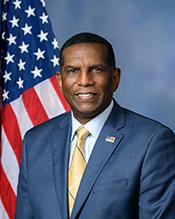
United States · Official source
954 records where Burgess Owens is listed as a sponsor, author, or other actor. Search with topics and years
United States · United States Congress · 3 September 2026
United States · United States Congress · 3 August 2026
United States · United States Congress · 23 July 2026
United States · United States Congress · 23 July 2026
United States · United States Congress · 22 July 2026
United States · United States Congress · 16 July 2026
United States · United States Congress · 9 July 2026
United States · United States Congress · 29 June 2026
United States · United States Congress · 11 June 2026
United States · United States Congress · 11 June 2026
United States · United States Congress · 10 June 2026
United States · United States Congress · 2 June 2026
United States · United States Congress · 21 May 2026
United States · United States Congress · 21 May 2026
United States · United States Congress · 14 May 2026
United States · United States Congress · 13 May 2026
United States · United States Congress · 12 May 2026
Restoration of Employment Choice for Adults with Disabilities Act This bill relaxes requirements that allow entities with a special wage certificate to pay subminimum wages to individuals with disabilities. Specifically, the bill eliminates a requirement that an individual with a disability who is age 24 or younger receive pre-employment transition services and meet specified vocational rehabilitation criteria before beginning subminimum wage work. The bill also relaxes career counseling and service referral requirements that apply to an individual with a disability who is paid at a subminimum wage. Current law requires an entity to ensure that an individual employed at subminimum wage receives periodic career counseling, information, and referrals to other services from the designated state agency. Under the bill, this requirement is met if the employer makes a documented effort to contact the state agency for those resources on behalf of the employee, and the state agency subsequently fails to provide the counseling, information, and referrals.
United States · United States Congress · 12 May 2026
United States · United States Congress · 7 May 2026
United States · United States Congress · 7 May 2026
United States · United States Congress · 30 April 2026
United States · United States Congress · 23 April 2026
United States · United States Congress · 21 April 2026
United States · United States Congress · 20 April 2026
United States · United States Congress · 16 April 2026
United States · United States Congress · 15 April 2026
United States · United States Congress · 14 April 2026
United States · United States Congress · 14 April 2026
United States · United States Congress · 9 April 2026
This bill designates the facility of the United States Postal Service located at 111 South Tremont Street in Tremonton, Utah, as the "Sorensen-Estrada Post Office".
United States · United States Congress · 9 April 2026
United States · United States Congress · 9 April 2026
United States · United States Congress · 2 April 2026
United States · United States Congress · 26 March 2026
United States · United States Congress · 26 March 2026
United States · United States Congress · 24 March 2026
United States · United States Congress · 12 March 2026
United States · United States Congress · 12 March 2026
No Aid for Ghost Students Act of 2026 This bill requires the Department of Education (ED) to establish an identity fraud detection system for the Free Application for Federal Student Aid (FAFSA). Beginning on October 1, 2026, ED must use an identity fraud detection system to review each submitted application to determine whether the applicant presents a reasonable suspicion of identity fraud. If ED makes such a determination, it must notify the applicant and each institution of higher education (IHE) designated on the application that the applicant is subject to additional identity verification. An IHE may not disburse federal financial aid to an applicant that presents a reasonable suspicion of fraud unless the IHE verifies the applicant's identity in person or by live video. If the applicant's identity is confirmed, the IHE must notify ED that the applicant's identity has been verified. ED must establish guidelines for the identity verification procedures conducted by IHEs. (On April 26, 2026, ED began implementing a real-time identity fraud detection process within the FAFSA form that places applicants into one of four risk categories. High-risk applicants must confirm their identity by presenting documentation during the online application process, including via a live camera process. Applicants who are rejected via this automated process must then have their identity verified in person by IHEs.)
United States · United States Congress · 4 March 2026
United States · United States Congress · 2 March 2026
United States · United States Congress · 26 February 2026
United States · United States Congress · 25 February 2026
United States · United States Congress · 24 February 2026
Stop the Sexualization of Children Act This bill prohibits the use of federal elementary and secondary education funds for sexually oriented material. Sexually oriented material is material that (1) includes any depiction, description, or simulation of sexually explicit conduct; or (2) involves gender dysphoria or transgenderism. Specifically, the bill prohibits the use of these funds to develop, implement, facilitate, host, or promote any program or activity for, or to provide or promote literature or other materials to, children under the age of 18 that includes sexually oriented material. This includes any program, activity, literature, or material that exposes children to nude adults, individuals who are stripping, or lewd or lascivious dancing. The bill does not prohibit the use of funds for the teaching of standard science coursework (e.g., biology, genetics, human health, and human anatomy), the texts of major world religions, classic works of literature or art (as defined by the bill), or security measures designed to help students recognize and safely respond to methods and attempts to sexually traffic children or groom children for sexual trafficking.
United States · United States Congress · 20 February 2026
Airspace Location and Enhanced Risk Transparency Act of 2026 or the ALERT Act This bill addresses aviation safety by increasing requirements for aircraft tracking and communication using Automatic Dependent Surveillance-Broadcast (ADS-B) technology and expanding oversight. As background, ADS-B for broadcasting (Out) and receiving (In) transmits information (e.g., location and weather) among aircraft and air traffic control (ATC). The bill requires the Department of Defense (DOD) and the Department of Transportation (DOT) to enter into an agreement regarding the use of collision prevention technologies on DOD aircraft. The agreement must require the use of ADS-B Out as the default practice for DOD helicopters operating in the national airspace, unless such use would affect operational security. For DOD helicopters that are carrying out special missions in the Washington, DC, metropolitan area and are exempt from ADS-B Out transmission requirements, DOD must coordinate with DOT to conduct a safety risk assessment and implement appropriate mitigations. By December 31, 2031, DOD aircraft (other than certain special mission aircraft) must be equipped with and operating integrated ADS-B In technology. With respect to civil aircraft, by December 31, 2031, the Federal Aviation Administration (FAA) must generally require aircraft that are currently required to be equipped with ADS-B Out to also be equipped with ADS-B In. Additionally, among other requirements, the FAA must establish time-on-position limits for supervisory ATC personnel; establish a process to timely notify parties involved in certain near-miss incidents; and evaluate and revise, as necessary, helicopter routes around Ronald Reagan Washington National Airport.
United States · United States Congress · 9 February 2026
United States · United States Congress · 5 February 2026
United States · United States Congress · 30 January 2026
This bill directs the President to impose an additional 30% duty (i.e., tariff) on sheep and lamb products originating from Australia or New Zealand.
United States · United States Congress · 30 January 2026
Safeguard American Voter Eligibility Act or the SAVE America Act This bill requires individuals to provide documentary proof of U.S. citizenship when registering to vote, and requires photo identification to vote, in federal elections. Specifically, the bill prohibits states from accepting and processing an application to register to vote in a federal election unless the applicant presents documentary proof of U.S. citizenship. The bill specifies what documents are considered acceptable proof of U.S. citizenship, such as identification that complies with the REAL ID Act of 2005 that indicates U.S. citizenship. Further, the bill (1) prohibits states from registering an individual to vote in a federal election unless, at the time the individual applies to register to vote, the individual provides documentary proof of U.S. citizenship; and (2) requires states to establish an alternative process to demonstrate U.S. citizenship. Each state must take affirmative steps on an ongoing basis to ensure that only U.S. citizens are registered to vote, which shall include establishing a program to identify individuals who are not U.S. citizens using information supplied by certain sources. Additionally, states must remove noncitizens from their official lists of eligible voters. The bill (1) provides for a private right of action for certain violations, and (2) establishes criminal penalties for certain offenses. Individuals voting in federal elections must present an eligible photo identification document. An individual who votes by absentee ballot must submit a copy of their identification document with both the request for, and the submission of, the absentee ballot.
United States · United States Congress · 27 January 2026
This resolution supports the designation of National School Choice Week.
United States · United States Congress · 16 January 2026
United States · United States Congress · 15 January 2026