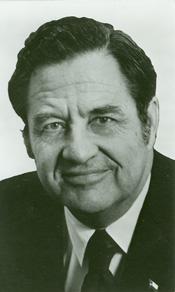
United States · United States Congress · 19 February 1980
Declares February 26, 1980, as a national day of prayer, meditation, and unity if the hostages being held in Iran are not released by February 25, 1980.
United States · United States Congress · 13 February 1980
Interest Rate Equalization Act of 1980 - Title I: Interest Rate Amendments Regarding State Usury Ceilings on Certain Loans - Amends the Federal Deposit Insurance Act, the National Housing Act, and the Federal Credit Union Act to permit federally insured banks, savings and loan associations, credit unions, and approved mortgagees under Federal mortgage insurance programs to charge interest at one percent in excess of the discount rate in effect in their Federal Reserve districts notwithstanding lower State usury ceilings. Penalizes the charging of interest in excess of such rate by forfeiture of the creditor's entire interest in the indebtedness. Terminates such preemption of State law on July 1, 1982. Amends the Small Business Investment Company Act of 1958 to permit qualified small business investment companies to charge interest on business loans at a rate equal to the lower of the following, if such rate would be higher than an applicable State usury law: (1) the maximum rate prescribed by regulation of the Small Business Administration for loans made by any small business investment company determined without regard to any State rate incorporated by such regulation; or (2) the higher of the Federal Reserve discount rate plus one percent or the applicable State usury ceiling. Terminates such preemption of State law on July 1, 1982. Establishes penalties for the charging of interest in excess of such ceilings. Authorizes a small business company aggrieved by a violation of this Act to recover twice the amount of the interest paid on a usurious loan by bringing a civil action in an appropriate court. Title II: Applicability of State Usury Ceilings to Certain Obligations Issued by Banks and Affiliates - Amends the Federal Reserve Act, the Federal Deposit Insurance Act, and the Federal Home Loan Bank Act to preclude specified financial institutions from pleading or claiming with respect to any deposit or obligation of such institution any defense or right under any State law regulating interest rates. Suspends any penalty which would otherwise attach under any such State law. Stipulates that the provisions of this title shall apply only with respect to deposits made or obligations issued during the period beginning with the enactment of this Act and ending on July 1, 1982. Title III: General Provisions - States that this Act shall not affect the applicability of provisions of Federal law governing rates of interest on certain business and agricultural loans in excess of $25,000. Provides for the severability of the provisions of this Act.
United States · United States Congress · 13 February 1980
Authorizes and requests the President to issue a proclamation extending best wishes and expressing appreciation to Carl Vinson for his devotion to the United States.
United States · United States Congress · 30 January 1980
Amends the Federal Election Campaign Act of 1971 to prohibit any Member of Congress from using funds received as contributions to pay personal expenses.
United States · United States Congress · 30 January 1980
Expresses appreciation to Canada for: (1) its historic close relations and cooperation with the United States in conducting foreign policy; (2) its support for U.S. efforts to obtain the safe release of the hostages in Iran; and (3) its efforts to protect and arrange the safe departure of certain U.S. citizens from Iran.
United States · United States Congress · 28 January 1980
Fusion Energy Research, Development, and Demonstration Act of 1980 - Directs the Secretary of Energy to establish research, development, and demonstration programs involving magnetic fusion energy systems to: (1) construct and operate a fusion engineering test facility by 1986; (2) construct and operate a magnetic fusion demonstration facility before the end of this century; (3) maintain and expand the base programs for fusion energy research and the development and testing of appropriate alternative confinement technologies; (4) maintain a strong research and development program in advanced fusion fuels; and (5) ensure an uninterrupted source of scientific and engineering talent from institutions of higher learning to support such effort. Requires such programs to include a study of the potential of using fusion energy for the production of synthetic fuels and the electrification of ground transportation systems. Directs the Secretary to disseminate information promoting the practical uses of fusion energy.
United States · United States Congress · 20 December 1979
Provides for an exemption from the windfall profits tax for independent oil producers for an amount equal to 1,000 barrels of crude oil multiplied by the number of days in the taxable period.
United States · United States Congress · 14 December 1979
Amends the Older Americans Act of 1965 to provide that area agencies on aging shall have authority to award funds to the providers of home delivered meals for older persons without requiring that such providers also furnish meals to older persons in a congregate setting.
United States · United States Congress · 12 December 1979
Authorizes the President to impose higher or additional duties on the products of any country which is not cooperating with the United States in its diplomatic or economic initiatives to terminate the unlawful actions of other foreign governments regarding U.S. citizens assigned to a U.S. diplomatic mission.
United States · United States Congress · 6 December 1979
Amends the Act establishing the Big Thicket National Preserve in the State of Texas, by increasing the authorization of appropriations for the acquisition of lands and interests in lands from $63,812,000 to $88,592,000.
United States · United States Congress · 4 December 1979
Requires each one-dollar, two-dollar, five-dollar, ten-dollar, and twenty-dollar bill to be trimmed in a manner which will enable the blind to determine its denomination.
United States · United States Congress · 14 November 1979
Wind Energy Systems Research, Development, and Demonstration Act of 1979 - Declares it to be the policy of the United States and the purpose of this Act to establish a research, development, and demonstration program for converting wind energy into electricity. Sets as a goal of such program the attainment of a total megawatt capacity of at least 800 megawatts from wind energy systems by fiscal year 1988 and the reduction of the average cost of electricity produced by such systems to a level competitive with conventional energy sources by the end of fiscal year 1986. Authorizes the Secretary of Energy to enter into agreements with public and private entities to obtain scientific, technological, and economic information on the design, fabrication, purchase, installation, and testing of wind energy systems. Authorizes the Secretary to provide financial assistance to entities seeking to install wind energy systems upon submission of the proper application. Sets forth terms and conditions for receiving such assistance. Terminates any Federal subsidization of purchases of such equipment upon the determination that such systems have become competitive with conventional energy sources or by a specified date. Sets forth the amount of such assistance, taking into consideration any tax credits allowed under the Internal Revenue Code for renewable energy source expenditures. Allocates a portion of the funds appropriated to carry out such assistance program for accelerated procurement and installation of wind energy systems by Federal agencies for demonstration purposes. Directs the Secretary to promulgate voluntary performance standards for such systems. Directs the Secretary to initiate a three-year national wind resource assessment program to: (1) validate existing assessments of known wind resources; (2) perform wind resource assessments in regions where the use of wind energy may prove feasible; (3) initiate a general site prospecting program; (4) establish standard wind data collection and siting techniques; (5) establish, in consultation with the Administrators of the National Oceanic and Atmospheric Administration, the Environmental Protection Agency, and the National Aeronautics and Space Administration, a national wind data center to make public information available on wind energy. Directs the Secretary to prepare a comprehensive program management plan for the research, development, and demonstration activities prescribed under this Act for submission to specified congressional committees. Sets forth criteria for selection of programs consistent with the purposes of this Act. Directs the Secretary to monitor, collect and evaluate data and information, and conduct studies and investigations relating to wind energy systems and programs. Directs the Secretary to assure that information relating to programs, projects and other activities conducted under this Act are widely disseminated to Federal, State, and local authorities, relevant segments of the economy, the scientific community and the public, so as to promote the use of wind energy to the maximum extent feasible. Directs the Secretary to assure that small businesses will have adequate opportunities to participate in the programs conducted under this Act to the maximum extent practicable. Authorizes the appropriation of $100,000,000 for fiscal year 1980 to carry out the purposes of this Act.
United States · United States Congress · 7 November 1979
Amends the Immigration and Nationality Act to include within the categories of deportable aliens foreign students who knowingly participated in a political demonstration resulting in, or intending to result in, injury or damage to another's person or property. Permits the Attorney General to suspend deportation of such foreign students.
United States · United States Congress · 25 October 1979
Amends the Vietnam Veterans Memorial Fund, Incorporated, to erect a memorial on public grounds in the District of Columbia in honor and recognition of the men and women of the armed forces who served in the Vietnam war.
United States · United States Congress · 16 October 1979
Bread Labeling Act - Amends the Agricultural Act of 1949 to require that every loaf of bread in packaged form distributed in interstate or foreign commerce shall bear a label specifying (in cents per pound) the cost to the manufacturer of the farm product ingredients of the bread. Permits the Attorney General, at the request of the Secretary of Agriculture, to seek an injunction or restraining order in the appropriate U.S. district court for violations of the labeling requirements imposed by this Act. Provides for civil penalties of up to $1,000 for each violation of this Act.
United States · United States Congress · 12 October 1979
Ixtoc I Oil Pollution Compensation Act of 1979 - Directs the Secretary of Transportation to compensate U.S. claimants for economic losses resulting from oil pollution from the blowout of Ixtoc I in the Bay of Campeche, Mexico. Sets forth the procedure for making such claims or settling such claims. Permits a claimant, whose claim is denied or not settled within 60 days of presentation, to commence a district court action against the Secretary in lieu of resubmitting such claim to the Secretary for a decision. Prohibits claimants receiving compensation from recovering under any other Federal or State law for the same injury. Permits States to impose additional requirements or liability. Directs the Secretary to make a grant to the Texas Parks and Wildlife Department for the construction and operation of a saltwater fish hatchery. Stipulates that the amount of compensation payable to Texas shall be reduced by the amount of such grant.
United States · United States Congress · 12 October 1979
Amends the Food and Agriculture Act of 1977 to extend to the 1980 and 1981 crops of rice, cotton, feed grains, and wheat the low yield and prevented planting disaster payment programs.
United States · United States Congress · 9 October 1979
Amends the Internal Revenue Code with respect to tax-exempt private foundations to exempt from the excise tax on self-dealing the leasing of office space to such a foundation by a disqualified person for use by the foundation in a building whose other tenants are not disqualified persons, if: (1) such leasing is pursuant to a binding lease in effect on October 9, 1969, or pursuant to renewals of such a lease; (2) the original execution of such lease was not a prohibited transaction; and (3) the space is made available to the foundation on a basis no less favorable than it would be if the transaction were at arm's length.
United States · United States Congress · 28 September 1979
National Historic Preservation Amendments of 1979 - Amends the Act known as the "National Historic Preservation Act of 1966" to officially entitle such Act the "National Historic Preservation Act." Declares under such Act, that it is the duty of the Federal Government, in cooperation with other nations, the States, local communities, and private organizations and individuals, to promote the preservation and conservation of the historic, architectural, archaeological, and cultural resources of the United States and of the international community of Nations. Declares that the Federal Government shall give priority to preservation activities for the revitalization of urban areas, the conservation of agricultural areas, the creation of local employment opportunities, and the conservation of energy. Directs the Administrator for Historic Preservation appointed pursuant to this Act to establish and maintain a National Register of Historic Places at the national, State, or local level in accordance with procedures set forth in this Act. Requires that such properties shall: (1) be of national or world heritage significance; (2) involve a direct or indirect public investment; and (3) be legally dedicated to preservation. Directs the Administrator, not later than one year after his initial appointment, to establish an Inventory of Historic Resources on a State-by-State basis. Declares that those properties which are determined to meet the criteria of significance, but which lack the other requirements for inclusion in the National Register, shall be designated as eligible for inclusion on the Register. Makes such Inventory available to all Federal, State, and local government departments, agencies, and instrumentalities. Requires the Administrator to promulgate regulations concerning nondisclosure to the public of any property location where such disclosure would be likely to endanger the property. States that properties included in such inventory and designated as eligible properties shall be treated as certified historic structures under provisions of the Internal Revenue Code, unless the Administrator finds that such treatment would not further the purposes of this Act. Declares that such properties shall be entitled to financial assistance in accordance with provisions of such Act. Directs the Administrator to review, during the one-year period following enactment of this Act, all properties included in the National Register under prior authority of law. Requires the Administrator to include each property designated as "National Historic Landmarks" under prior authority and each property which meets the requirements of this Act in the National Register. Provides that those properties included in the Register under prior authority, but which do not meet all the requirements under this Act shall be designated in the Inventory as "eligible properties." Allows any State or local government carrying out an approved program under this Act or any Federal agency to nominate a property for inclusion in the Register or for inclusion in the Inventory as an eligible property. Requires such information to be included in the Register, as appropriate, unless the Administrator disapproves such nomination within 30 days of its receipt. Allows the Administrator to accept a nomination from any person, if the property nominated is located in a State or political subdivision where there is no approved program. Requires the Administrator to determine the eligibility or inclusion of such property in the Register. Allows the Administrator on his own motion or at the request of any person, to include any property on the Inventory and designate such property as eligible if he determines such property to meet the requirements of this Act. Declares that a property shall be considered of national significance when: (1) the Congress so designates a property; (2) a property is included in the National Park System as a historical unit; or (3) the Administrator determines the property to be of national significance. States that a property shall be considered to be of World Heritage significance when it is included in the World Heritage list maintained in accordance with the Convention Concerning the Protection of the World Cultural and Natural Heritage. Declares that a property shall be considered a public investment if government agency fund expenditures directly or indirectly contribute substantially to the preservation of such property, or if a Federal income tax deduction or similar State or local measure is taken with respect to the amortization of amounts spent for rehabilitation of a certified historic structure. Provides that a property shall be treated as legally dedicated to preservation when: (1) an easement, or other property interest, requiring preservation of significant features of such property for not less than 30 years is held by any person or government entity or is otherwise legally binding on the owner; (2) such property is under public ownership and managed for preservation; or (3) any State or local law provides for the designation or preservation of such property. Requires the Administrator to promulgate regulations to carry out the purposes of this Act. Directs the Administrator to establish and administer grant-in-aid programs to States and the National Trust for Historic Preservation, and programs of direct grants, loans or loan guarantees for historic preservation. Authorizes the Administrator to make grants to States, upon application, for programs approved under this Act. Prohibits such grants from paying more than 50 percent of the costs of such programs. Provides that the remaining 50 percent shall be contributed by non-Federal sources, and of such percentage not more than 25 percent may be contributed in the form of property or services, or both. Requires the Administrator, upon approval of such programs, to evaluate such programs every four years to determine whether or not such programs are in compliance with the requirements of this Act. Requires the Administrator to conduct periodic fiscal audits of the recipients of Federal grants. States that State and local governments may assume the responsibility for financial and compliance audits of Federal grants received by them and other persons or organizations and their subgrantees. Declares that the Federal Government shall be responsible for audits which deal with economy, efficiency, and program results and for assuring that such financial and compliance audits are conducted under generally accepted audit standards. Directs State and local governments receiving grants to set forth in writing criteria by which they judge whether they are meeting program requirements, to be available for use by the auditors. Directs the Administrator to reimburse State and local governments for actual expenses incurred in conducting such audits. Sets forth the following requirements for approval of State programs: (1) designation by the Governor of a State historic preservation officer; (2) transfer of not less than 50 percent of the grants received to political subdivisions of the State having preservation programs; (3) provision of financial mechanisms for the development of properties on the National Register or in the Inventory of Historic Resources; (4) provision of mechanisms for the acquisition, acceptance of donations, and dedication of fee title in applicable properties; (5) provisions for relocation assistance to persons or businesses affected within the historic district; (6) giving priority to projects that will conserve energy, are labor intensive, or will further urban revitalization or agricultural conservation; (7) provision of a professional acceptable mechanism for the identification, evaluation, and protection of historic properties within the State; and (8) otherwise carrying out the purposes of this Act. Sets forth restrictions for grants made under this Act for the improvement of properties. Prohibits grants made under this Act for the improvement of properties. Prohibits grants made for any single property to exceed $50,000. Prohibits any grant to any State in any fiscal year to exceed ten percent of such funds to carry out a comprehensive statewide survey of historic resources. Requires that no more than 15 percent of such grant be used for improvement of government buildings used for governmental purposes. Sets forth procedures for the allocation by States of grants to political subdivisions. Allows the Administrator to allocate funds to any political subdivision of any State that does not have an approved program within two years after the date of enactment of this Act. Sets forth procedures for approval of State historic preservation programs in effect under prior authority of law. Sets forth conditions for grants and loans that may be made by the Administrator for: (1) the preservation of properties of national or world heritage significance; (2) demonstration projects to preserve any eligible property or property on the National Register; (3) the training and development of skilled labor in trades and crafts and in curation relating to historic preservation; and (4) Indian tribes for the preservation of historic properties. Provides that any such loans made by the Administrator shall be at an interest rate determined by the Secretary of the Treasury guided by applicable provisions of this Act. Authorizes the Administrator to make loan guarantees for any project approved by the State historic preservation officer, or the chief elected official of any State that does not have an approved program. Sets forth conditions for loans and loan guarantees made by the Administrator in consultation with the Secretary of Treasury. Authorizes the Administrator to deem any portion of any record, material, or data received in connection with any financial application as privileged or confidential within the meaning of applicable law. Establishes as an independent agency a Historic Preservation Agency to be under the direction of the Administrator for Historic Preservation, appointed by the President by and with the advice and consent of the Senate. Directs the President to establish an Advisory Council on Historic Preservation to be composed of the following members: (1) the Secretary of the Interior and the Architect of the Capitol; (2) four agency heads (other than the Department of the Interior) whose activities affect historic preservation; (3) representatives of the National Conference of State Historic Preservation Officers, the National Trust for Historic Preservation, and four professionals in the fields of history, architecture, archeology, urban planning, or related disciplines; (4) three State governors or mayors; and (5) three at large members of the general public. Sets forth requirements and procedures to be followed in the operation of the Council. Authorizes the Council to conduct hearings and make determinations and recommendations with respect to the protection of historic properties. Requires the Council, when transmitting legislative recommendations, testimony, or comments on legislation to the President or the Office of Management and Budget, to concurrently transmit such copies thereof to the House Committee on Interior and Insular Affairs and the Senate Committee on Energy and Natural Resources. Sets forth the duties of the Administrator including: (1) advising the President and the Congress on matters relating to historic preservation; (2) encouraging public interest and participation in historic preservation; (3) conducting studies relating to historic preservation and the effects of tax policies on such preservation; (4) assisting State and local governments in drafting appropriate legislation; (5) providing training and education in the field of historic preservation; and (6) maintaining the historic register, surveys, and records of the agency. Requires the Administrator to submit an annual comprehensive report of his activities and the results of his studies to the President and the Congress. Authorizes the Administrator to accept donations and bequests of money and real and personal property, and to use such donations in accordance with provisions of this Act. Directs the Administrator, consistent with the provisions of this Act, to institute a program of education and training relating to historic preservation for Federal agencies, State and local governments, private organizations and individuals, and other nations and international organizations connected with the World Heritage Convention. Directs the Administrator to increase the awareness of historic resources and preservation among the student population of the United States, to develop mechanisms to give the public a greater knowledge of historic resources in the cultural heritage of the United States, and to establish a program for training and development of skilled labor in trades and crafts relating to historic preservation. Requires the Administrator to review the policies and programs of Federal agencies whose activities are under the purview of this Act. Directs the Administrator to promulgate guidelines relative to archaeological and historical data for Federal agencies consistent with provisions of this Act. Directs the Administrator, within one year after his appointment, to establish, jointly with the Secretaries of the Interior, Agriculture, and Defense, and the Administrator of the General Services Administration, standards for the management and preservation of federally owned historic properties. Directs the Administrator to review and approve the plans of transferees of surplus federally owned properties eligible for or on the National Register to ensure historic preservation in the rehabilitation of such properties. Requires all Federal agencies administering any program of Federal assistance to any State or local government or under which any Federal approval is required to coordinate such program with the purposes of this Act. Requires such agencies to submit proposals to the Administrator, within 180 days after his appointment, relative to their preservation activities. Directs the Administrator to designate National Historic Landmarks and World Heritage properties and to submit such designations to the appropriate World Heritage properties and to submit such designations to the appropriate congressional committees 30 days after such designations become effective. Directs the Administrator to encourage and coordinate United States participation in the Convention Concerning the Protection of the World Cultural and Natural Heritage and other international historic preservation activities in cooperation with the Secretaries of the Interior and State, and the Smithsonian Institution. Requires the Administrator to establish a program to nominate historic properties to the World Heritage Committee on behalf of the United States. Requires such nominations to be submitted to the appropriate congressional committees 60 days prior to the intended action. Authorizes the participation of the United States as a member of the International Centre for the Study of the Preservation and Restoration of Cultural Property. Authorizes the appropriation of the sums necessary for United States membership in the Centre for fiscal years 1979 through 1989. Directs the Administrator to establish a program to encourage tourism by people of other nations to historic properties of the United States, reflecting the diverse, ethnic and cultural heritages of the citizens of the United States. Requires each Federal agency to notify the Administrator 45 days prior to any undertaking outside the United States that may affect a property on the World Heritage list or which has been nominated for inclusion on such list. Requires the head of each Federal agency to designate a Preservation Officer responsible for coordinating the agency's activities under this Act. Requires each agency having jurisdiction or control over properties on the National Register to submit property management plans to the Administrator for comment within one year after the date of enactment of this Act. Directs the Secretary of the Interior to study and investigate properties included in the National Register which are under the jurisdiction or control of Federal agencies. Authorizes the Secretary to recommend to the President the transfer of administrative jurisdiction or control of such properties to him as a unit of the National Park System. Requires such recommendation to be concurrently submitted to the House Committee on Interior and Insular Affairs and the Senate Committee on Energy and Natural Resources. Authorizes the Secretary, upon the concurrence of the Administrator, to accept gifts or donations of less than fee interests in any properties in the National Register, where such acceptance will facilitate the preservation of such property. Authorizes each Federal agency having authority for management of any real property, with the concurrence of the Administrator, to lease or exchange with any person or organization the management of properties on the National Register. Requires the proceeds of such leases to be retained by the agency to defray the expenses with respect to such properties, and the surplus proceeds to be deposited in the United States Treasury. Allows the heads of such agencies to enter into contracts for the management of such properties. Directs all Federal agencies to cooperate with purchasers and transferees of eligible property or property included in the National Register in the development of plans for uses of such property comparable with preservation and conservation objectives without imposing unreasonable economic burdens on public or private interests. Requires each Federal agency having direct or indirect jurisdiction over a proposed Federal or federally assisted undertaking in any State to survey the affected area to determine the effect of such undertaking on the protection of historic properties. Authorizes the Administrator to promulgate regulations or guidelines, as appropriate, under which Federal programs or undertakings may be exempted from the requirements of this Act. Authorizes all Federal agencies to expend appropriated funds for purposes of this Act. Requires each Federal agency to provide the Administrator a 45-day comment period with respect to any program or policy that may affect historic properties. Defines terms used in this Act. Establishes a Historic Preservation Fund in the Treasury of the United States to be funded from revenues payable to the United States under the Outer Continental Shelf Lands Act or the Act of June 4, 1920, or both. States that not less than two-thirds of appropriated funds shall be available for other grants or loans and for the Administrator to carry out his duties under this Act. Directs the Administrator to establish regulations to insure maximum public participation in all activities of the Administrator, the Council, other Federal agencies, States, and units of local governments in carrying out requirements under this Act. Declares that grants made under this Act may not be used to satisfy requirements of other provisions of law requiring matching by State or local funds nor shall they be treated as taxable income for purposes of the Internal Revenue Code of 1954. Grants attorney fees to any person who prevails in any civil action brought in any United States district court against any Federal agency to enforce the requirement relating to the protection of historic properties in connection with the action of a Federal agency. Authorizes the Administrator to establish an annual preservation awards program under which he makes awards to Federal, State, or local government officers or employees in recognition of their outstanding contributions to the preservation of historic resources. Allows the President to award any citizen of the United States recommended for such award by the Administrator. Directs the Administrator to promulgate regulations for carrying out the awards program. Authorizes the Administrator to delegate to any State having an approved program under this Act the authority to carry out responsibilities under the National Environmental Policy Act of 1969 with respect to such approved program. Transfers the provisions of various Acts relating to historic preservation responsibilities from the Secretary of the Interior to the Administrator for Historic Preservation. Authorizes the Administrator to issue an order to postpone for 60 days any action undertaken, or being undertaken, by any Federal agency, or agency or instrumentality of a State or local government, or by any other person if such action may adversely affect any property included in the National Register. Directs the Administrator, during the period, to endeavor to develop an acceptable preservation plan for the affected property, or to exercise his emergency acquisition authority provided under this Act. Provides procedures for the assessment of civil penalties for violations of such orders, and for judicial review in the United States District Court for the District of Columbia or any other district in which such person resides. Provides procedures for administrative hearings for the assessment of civil penalties. Establishes the Pension Building in Washington, District of Columbia, as a national historic site to be named the "National Center for the Building Arts." Requires the Administrator of the General Services Administration to transfer such building and lands to the jurisdiction of the Secretary of the Interior. Directs the Secretary to administer the management of the Center in accordance with provisions of this Act and other Acts generally applicable to units of the National Park System. Authorizes the Secretary to enter into contracts with the National Building Arts Foundation relating to management of such Center. Appropriates $15,000,000 to be used for the renovation of the Center. Establishes a National Building Arts Foundation and specifies programs it shall carry out relating to the building arts. Directs the Foundation to coordinate its activities with other public and private organizations and individuals in order to avoid duplication of efforts relating to the functions of the Foundation. Establishes a Board of Trustees of the Foundation and provides for the funding of the Foundation. Directs the General Accounting Office to review and audit regularly the accounts of the Foundation to determine the ability of the Foundation to pay for the functions of the Center. Requires the Foundation to submit annually a report to the appropriate congressional committees containing a statement of its activities pursuant to this Act and a proposal for its programs during the succeeding four years. Provides emergency acquisition procedures for the Administrator for any properties eligible for or in the National Register where such properties are threatened with demolition or impairment. Directs the Administrator, in consultation with the American Folklife Center of the Library of Congress and the Buildings Arts Foundation, to report within two years after the date of enactment of this Act, to the President and the Congress on preserving and conserving the intangible elements of our cultural heritage. Requires the report to include recommendations for legislative and administrative action by the Federal Government relating to such heritage. Directs the Administrator for the Historic Preservation Agency to submit the following reports: (1) to the President and the Congress within eight years on the operation of the Historic Preservation Fund; (2) to the Congress within 90 days of his appointment on his study of the Pennsylvania Avenue Development Corporation; (3) to the President and Congress within one year of his appointment on recommendations with respect to Federal tax laws relating to historic preservation; and (4) to the President and the Congress within two years of enactment of this Act on recommmendations for the creation of a National System of Cultural Parks. Amends the Pennsylvania Development Corporation Act to require any historic property demolition, or other rehabilitation, to be in accordance with applicable Federal and District of Columbia laws.
United States · United States Congress · 28 September 1979
Independent Contractor Tax Act of 1979 - Amends the Internal Revenue Code to specify standards for determining whether certain individuals qualify as independent contractors for purposes of social security taxation. Treats an individual as an independent contractor if such individual: (1) controls the total number and scheduling of his work hours; (2) pays fair rental value for business premises at which he performs more than one half of his services; (3) earns income based upon sales or output rather than upon number of hours worked, or as a result of business investments (other than in vehicles, tools, samples, etc.) which enable him to perform services for which he is remunerated; and (4) performs services pursuant to a prior written contract which specifies that the individual performing services is not an employee for purposes of social security and unemployment taxation and which provides written notice to such individual of his responsibility with respect to payment of income and self-employment taxes. Requires the recipient of services performed by an individual claiming independent contractor status to file returns disclosing payments made to such individual. Provides that the criteria established by this Act shall not be applicable to certain employees (i.e. agent-drivers, commission-drivers, full-time life insurance salesmen, home workers, and traveling or city salesmen) who are statutorily designated as employees for purposes of social security taxation. Provides that the failure of an individual claiming independent contractor status to meet the criteria established by this Act shall not create an inference that such an individual is an employee or that the recipient of his services is an employer. Limits the applicability of the criteria established by this Act to questions of employment status arising under the Federal Insurance Contributions Act, the Federal Unemployment Tax Act, self-employment tax provisions, and withholding requirements under the Internal Revenue Code. Requires recipients of services performed by an independent contractor to file an information return with respect to payments made for such services in excess of $600 for the taxable year. Requires businessmen who make direct sales of consumer goods to individuals for resale on a buy-sell basis or a deposit-commission basis to file information returns for sales in excess of $3,000. Requires individuals who file such information returns to furnish written statements to persons with respect to whom such information is reported which indicate the amount of payment reported. Provides penalties for failure to furnish information returns or statements. Requires recipients of services performed by an independent contractor to withhold ten percent of the payment made for such services. Sets forth exceptions to such withholding requirement. Provides a penalty for failure to comply with withholding requirements.
United States · United States Congress · 26 September 1979
Amends the Internal Revenue Code to provide that the standard mileage rate used in computing the charitable deduction for expenses incurred in the operation of a motor vehicle shall be the same as the standard mileage rate established by the Secretary of the Treasury for the business related deduction.
United States · United States Congress · 14 September 1979
Amends title II (Old Age, Survivors and Disability Insurance) of the Social Security Act to prevent, in calculating the deduction from an individual's benefits because of work, the charging of excess earnings to any month in which an individual did not engage in self-employment and did not render services for wages of more than the applicable exempt amount as determined under title II. Makes Medicare hospital insurance benefits available to individuals who are entitled to OASDI benefits but who have not applied for such benefits by providing for separate applications for the two types of benefits. Disregards after December 1977, for purposes of computing the amount of OASDI benefits, any income attributable to services performed before becoming eligible for OASDI.
United States · United States Congress · 14 September 1979
Prohibits States or local authorities from levying or collecting any tax or fee on coal or lignite mined from Federal lands, unless such tax or fee is fairly related to services provided by such State or local authority in connection with such mining. Limits the total of such State or local taxes or fees which may be levied or collected.
United States · United States Congress · 10 September 1979
Federal Firearms Law Reform Act of 1979 - Title I: Amendments to Gun Control Act - Amends the Gun Control Act of 1968 to redefine: (1) "manufacturer" to mean any person engaged in the "business of manufacturing" (instead of "manufacture" of) firearms or ammunition; and (2) "dealer" to exclude dealers in ammunition and persons engaged in the business of repairing firearms. Adds a new definition, "engaged in the business", with respect to manufacturers, dealers, and importers. Includes as a manufacturer of ammunition a person whose gross sales of his own ammunition exceed $1,000 in any calendar year. Includes as a dealer in firearms a person who deals in firearms as a regular course of business with the principal objective of livelihood and profit through the repetitive purchase and resale of firearms. Replaces the current term "crime punishable by imprisonment for a term exceeding one year" with a new definition of "disabling crime." Eliminates certain activities regarding ammunition from the coverage of the current prohibitions. Revises current provisions respecting the interstate sale or transfer of firearms. Revises the current prohibition against selling a firearm or ammunition to certain persons (such as persons under indictment for a felony or addicted to drugs) to apply such prohibition only to persons convicted of a disabling crime. Revises the current prohibition against certain persons transporting a firearm or ammunition in interstate commerce to: (1) extend such prohibition to possession or receipt in commerce or affecting commerce of any firearm or ammunition; (2) conform such prohibition to the new "disabling crime" provision; and (3) include as additional categories illegal aliens, persons dishonorably discharged from the Armed Forces, and persons who have renounced their United States citizenship. Makes the same changes to the current prohibition against certain persons who receive a firearm or ammunition which has been transported in interstate commerce, but applies such prohibition to persons who are employed by specified individuals. Excludes ammunition dealers from the current licensing requirements. Stipulates that the Secretary of the Treasury may revoke a license only where the holder of such license has "knowingly" violated a provision of the Act or regulation. Bars the Secretary from denying or revoking a license on the basis of violations under this Act which are alleged in criminal proceedings instituted against a licensee, but for which such individual has not been convicted. Imposes as a condition for the inspection or examination of records, documents, and any firearm or ammunition kept by an importer, manufacturer, or dealer pursuant to this Act that the Secretary has reasonable grounds to believe that a violation has occurred and that evidence may be found on the premises of such persons. Restricts the firearm information obtained from licensees which the Secretary may make available to State or local governments. Establishes a limited recordkeeping requirement for firearms collectors. Stipulates that the general penalty under this Act shall apply to whoever "willfully" violates any provision. Prohibits, with respect to a person's second or subsequent conviction for illegally using or carrying a firearm during the commission of a felony, the granting of parole before completion of the minimum sentence. Amends the forfeiture provision to subject to seizure any firearm or ammunition "involved in or used" in any violation of the Act (instead of "involved in or used or intended to be used"). Requires a court to award attorney's fees to the prevailing party (other than the United States) in an action or proceeding for the return of seized firearms or ammunition. Allows the court to award such fees in any other action upon a finding that the action was initiated in bad faith. Amends the rulemaking authority of the Secretary to provide that no regulation may require (1) the transfer of records required under this Act to a facility owned, managed, or controlled by the United States or any State or (2) the establishment of any system of registration of firearms, firearms owners, or firearms transactions. Requires a 90-day public comment period for proposed regulations (no period is currently specified). Allows one House of Congress to disapprove by resolution any firearms regulation within 90 days of continuous session of the promulgation of such rule. Set forth procedures for such resolutions. Prohibits the Secretary from prescribing any rules identical to regulations disapproved by Congress without the enactment of additional legislation respecting his authority. Prohibits the Secretary from prescribing regulations which require purchasers of black powder to complete affidavits or forms attesting to their exemption from certain provisions of the Federal criminal code. Makes any law or regulation promulgated by any State prohibiting the transfer of an unloaded and not readily accessible firearm or ammunition null and void. Title II: Amendments to title VII of the Omnibus Crime Control and Safe Streets Act of 1968 - Repeals title VII of the Omnibus Crime Control and Safe Streets Act (relating to the receipt, possession, or transportation of firearms by felons, veterans dishonorably discharged, mental incompetents, illegal aliens, and persons renouncing their United States citizenship).
United States · United States Congress · 1 August 1979
Employees Incentive Ownership Act of 1979 - Amends the Internal Revenue Code to remove restrictions on the use of restricted stock options and to eliminate the exercise of such stock options as an item of tax preference for purposes of the minimum tax.
United States · United States Congress · 26 July 1979
Establishes the Citizen's Commission for the Commemoration of the Federal Government Bicentenary Era to: (1) stimulate interest in the events relating to the development of the Federal Government during the years of 1776 through 1800; and (2) provide and coordinate activities to commemorate those events. Requires the Commission to submit to the President, Congress, and the Chief Justice of the United States an annual report on the activities and accounting of funds of the Commission. Requires a final report to be submitted by June 30, 2001. Terminates the Commission on the date the final report is submitted.
United States · United States Congress · 16 July 1979
Amends the Fishery Conservation and Management Act of 1976 to prohibit the Secretary of Commerce from approving the application for permits for foreign fishing vessels of any nation if it has been determined by the Secretary that the nationals of such nation are conducting fishing operations in a manner that undermines the effectiveness of international fishing conservation programs.
United States · United States Congress · 11 July 1979
Amends the Internal Revenue Code to repeal provisions which require tax-exempt private foundations with assets of $5,000 or more to make annual reports of their receipts and expenditures. Requires that information previously required by such annual reports be included in the foundation's annual tax return. Imposes the same reporting requirements on non tax-exempt charitable trusts and private foundations. Requires that such returns be opened to public inspection and imposes a fine for failure to do so. Permits private foundations to treat as confidential, and not to list on their tax returns, the name and address of any indigent or needy recipient of charitable gifts or grants amounting to $1,000 or less during the taxable year. Permits certain Government officials to accept payment from private foundations of limited traveling expenses between a point in the United States and a point outside the United States without being subject to the tax on self-dealing. Provides that charitable contributions attributable to charitable corporate trusts shall be treated as deductions from gross income for purposes of determining the minimum tax liability for adjusted itemized deductions. Permits the voluntary withholding of income taxes from sick pay under employer wage continuation plans. Excludes from gross income repayments of unemployment benefits, in the year of repayment, to a supplemental unemployment compensation trust which are required because of trade adjustment allowances under the Trade Act of 1974. Permits State taxing authorities which receive Federal tax return information to disclose such information to a State auditing agency for the purpose of auditing the tax authorities. Qualifies property used by the International Telecommunications Satellite Consortium, the International Maritime Satellite Organization, and any successor organizations, for the investment tax credit. Amends the Second Liberty Bond Act to allow the interest rates paid on United States retirement plan and individual retirement bonds to be increased so that the investment yield on such bonds is consistent with the yield on new offerings of such bonds.
United States · United States Congress · 10 July 1979
Declares it the sense of Congress that the Postmaster General and the Citizens Stamp Advisory Committee should give favorable consideration to the issuance of a commemorative postage stamp in honor of Americans of Italian descent and the 250th anniversary of the birth of Philip Mazzei on December 25, 1980, or as soon as possible thereafter. States that the Postmaster General and the Committee should honor other foreign-born contributors to the revolutionary cause, from countries which have not yet been commemorated, prior to the conclusion of the American Bicentennial celebration in 1983.
United States · United States Congress · 28 June 1979
Smaller Enterprise Regulatory Improvement Act - Amends the Small Business Act to require each Federal agency to publish semiannually an agenda of those rules which may be proposed during the upcoming six-month period affecting a substantial number of small business concerns and small organizations. Defines "small organizations" to include unincorporated businesses, sheltered workshops, nonprofit enterprises which are not dominant in their fields and such other groups and enterprises as each Federal agency shall establish by rule. Requires each published agenda to be transmitted to the Office of Advocacy of the Small Business Administration for comments. Directs each Federal agency to endeavor to provide notice of each agenda to affected small enterprises by means other than publication in the Federal Register. Directs each Federal agency to publish a written analysis prior to the issuance of any rule affecting a substantial number of small business concerns and organizations which considers: (1) the effect of such rule on small enterprises and competition; (2) whether an exemption could be provided such small enterprises; (3) whether lesser compliance standards could be adopted for small enterprises; and (4) the expected nature of reporting and recordkeeping requirements necessitated by such rule. Requires each Federal agency to issue a rule containing an exemption or differing compliance standards for such small business concerns and organizations if it is lawful, desirable, and feasible to do so. States that such small enterprises shall be given an opportunity to participate in agency rulemaking. Requires each agency to review its existing rules and prepare an analysis for purposes of eliminating those rules which are most burdensome to small businesses and organizations. Permits any agency to perform the analyses required by this Act in conjunction with any other analysis required by law. Declares that such other analysis shall not in itself satisfy the requirements of this Act.
United States · United States Congress · 27 June 1979
Amends the Internal Revenue Code to exempt private foundations which hold interests in independent local newspapers from the tax on excess business interests with respect to such holdings. Defines "independent local newspaper" as a newspaper publication which is not one of a chain of newspaper publications and which has all of its publishing offices in a single area.
United States · United States Congress · 21 June 1979
Amends the Powerplant and Industrial Fuel Use Act of 1978 to permit local distribution companies to provide natural gas service to residential customers for use in outdoor lighting fixtures installed before the enactment of such Act.
United States · United States Congress · 20 June 1979
Amends the Internal Revenue Code to permit married individuals to compute the amount of the income tax deduction for payments into retirement savings on the basis of one-half of their combined income.
United States · United States Congress · 18 June 1979
Amends the Safe Drinking Water Act to exempt from applicable Federal regulations any State having in effect a law, rule, or regulation applicable to underground injection control related to the production or recovery of oil or natural gas unless the Administrator of the Environmental Protection Agency finds that such law, rule, or regulation fails to protect underground sources of drinking water. Provides that any State for which such finding is made may amend its law, rule, or regulation in order to benefit from such exemption where approved by the Administrator. Exempts from the underground injection well permit requirements any State having in effect such law, rule, or regulation approved by the Administrator. Exempts from the administrative procedure and judicial review requirements of the United States Code any action relating to national interim primary drinking water regulations, revised national primary drinking water regulations, and State underground injection control program regulations, except as expressly provided by this Act. Directs the Administrator to establish a docket for such actions, and sets forth notice and public and agency commenting requirements for any proposed rulemaking. Sets forth procedures and other requirements for promulgating rules concerning drinking water regulations, and establishes procedures for judicial review of such actions. Amends the definition of "primary drinking water regulation". Revises the standard for the promulgation of primary drinking water regulations. Makes technical and conforming amendments to such Act. Requires any State having primary enforcement responsibility to submit notice to the Administrator that its public water system supervision program conforms to any revision or amendment to any national primary drinking water regulation made by the Administrator. States that failure to submit such notice shall be grounds for withdrawal of State primary enforcement responsibility. Amends such Act to authorize a State having such enforcement responsibility to exempt from maximum contaminant level requirements or treatment technique requirements any public water system not having any reasonable alter native source of drinking water available. Revises the dates for compliance by public water systems with contaminant level and treatment technique requirements. Extends the effective date for State underground injection control regulations approved by the Administrator. Authorizes the waiver of the prohibition against State grants being made for any period beginning more than one year after the date of a State's first grant having been made for a period of 18 months after the effective date of any amendment or revision of the national primary drinking water regulations if the State has assumed primary enforcement responsibility and is making diligent efforts to comply with such amendment or revision. Prohibits the Administrator from making grants to any State unless the State has assumed primary enforcement responsibility within two years after the Administrator promulgates State underground injection control program regulations.