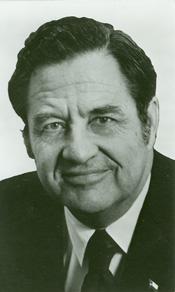
United States · United States Congress · 18 June 1979
Calls upon the President to urge: (1) the International Whaling Commission to adopt an indefinite moratorium on the commercial killing of whales; and (2) various countries to voluntarily comply with such moratorium.
United States · United States Congress · 7 June 1979
Coal Pipeline Act of 1979 - Title I: Rights-of-Way for Federal Lands - Authorizes the Secretary of the Interior to grant or renew rights-of-way over, under, upon, or through Federal lands for coal pipelines and related facilities, under terms and conditions set forth under this Act which are necessary: (1) to protect Federal property and economic interests; (2) to provide efficient management of such lands and protection of other lawful users of such lands; and (3) to carry out the purposes of this Act. Title II: Non-Federal Lands - Authorizes the Secretary to issue a certificate of public convenience and necessity to any person, upon application, proposing to construct a coal pipeline. Sets forth criteria for issuing such certificates, including requirements that specified findings be made by the Secretary of Transportation, the Secretary of Energy, and the Interstate Commerce Commission. Prohibits the issuance of such certificates to users or suppliers of coal to be transported by such pipelines. Directs the Attorney General to conduct an antitrust review to determine the effects upon competition of such certificates. Authorizes any person who proposes to construct a coal pipeline to acquire any right-of-way necessary for construction, operation, or maintenance of such pipeline and related facilities by the exercise of the power of eminent domain in the appropriate United States district court, but only if such person is unable to acquire such right-of-way by negotiation and such person holds a certificate of public convenience and necessity issued under this Act. Exempts specified lands from being taken by eminent domain. Title III: General and Miscellaneous Provisions - Authorizes the Attorney General, at the Secretary's request, to seek appropriate equitable remedies to enforce any provision under this Act or any regulation or order issued under this Act. Imposes civil and criminal penalties for any violation or failure to comply with the provisions of this Act. Authorizes any State issuing a State water permit or authorization to a pipeline for which a certificate of public convenience and necessity was issued or a right-of-way was granted under this Act to condition the water rights of such pipeline to effectuate a legitimate State public interest. Requires that right-of-way permits and certificates of public convenience and necessity issued under this Act contain terms and conditions necessary to protect the environment from adverse effects associated with the construction, operation, and maintenance of such pipeline. Requires that all such pipelines be buried underground.
United States · United States Congress · 6 June 1979
Amends title IV of the Public Health Service Act (National Research Institutes) to stipulate that the institute currently authorized to conduct research on neurological diseases shall be named the "National Institute of Neurological and Communicative Disorders and Stroke." Requires at least $16,000,000 of the sums appropriated for such Institute to be obligated for research in the area of regeneration of the spinal cord.
United States · United States Congress · 5 June 1979
Congratulates the men and women of the Apollo program upon the tenth anniversary of the first manned landing on the Moon and requests the President to designate the period of July 16 through July 24, 1979, as "United States Space Observance" in honor of such event.
United States · United States Congress · 26 April 1979
Expresses the sense of the House of Representatives that the Soviet Union should: (1) permit emigration from the Soviet Union; (2) remove restrictions on religious and cultural practices; (3) remove restrictions on scientific and intellectual endeavors; and (4) stop harassing individuals who wish to leave or practice their religion.
United States · United States Congress · 24 April 1979
Amends the Internal Revenue Code to repeal the requirement that the income of small business corporations which elect a Subchapter S tax exemption may not consist of more than 20 percent passive income (rents, royalties etc.)
United States · United States Congress · 24 April 1979
Amends the Second Liberty Bond Act to allow the interest rates paid on United States retirement plan and individual retirement bonds to be increased to the rate paid on United States series E savings bonds.
United States · United States Congress · 24 April 1979
Stipulates that the payment of retired or retainer pay which would otherwise be made to a member of the armed forces shall be paid by the Secretary concerned to another person to the extent provided for in the terms of any court decree of divorce, annulment, or legal separation.
United States · United States Congress · 10 April 1979
Amends the Federal Meat Inspection Act to exempt from pre-slaughter animal examination and post mortem carcass inspection requirements all meat food products processed by a federally inspected establishment and derived from meat which has been slaughtered or processed at a State-inspected establishment in a State whose meat inspection requirements have been determined by the Secretary to be at least equal to the Federal requirements.
United States · United States Congress · 10 April 1979
Amends titles XVI (Supplemental Security Income) and XIX (Medicaid) of the Social Security Act to deny benefits under such titles to persons who dispose, within a 12 month period preceding an application for benefits under such titles, of any type of property, worth in excess of $1,000, for less than its fair market value which, if retained, would cause such persons to be ineligible for benefits under such titles. Withholds eligibility for the length of time the market value of the property less encumbrances would have supported the applicant for the type of care for which such applicant applied.
United States · United States Congress · 10 April 1979
Soft Drink Interbrand Competition Act - Declares that exclusive territorial arrangements made as a part of a licensing agreement for the manufacture, distribution, or sale of a trademarked soft drink product are lawful under the antitrust laws provided such product is in substantial and effective competition with other products of the same general class. Prohibits recovery in private actions under the Clayton Act based on territorial provisions in a trademark licensing agreement prior to a final determination that such provisions are unlawful.
United States · United States Congress · 10 April 1979
Wind Energy Systems Research, Development, and Demonstration Act of 1979 - Declares it to be the policy of the United States and the purpose of this Act to establish a research, development, and demonstration program for converting wind energy into electricity. Sets as a goal of such program the attainment of a total megawatt capacity of at lease 500 megawatts from wind energy systems by fiscal year 1986 and the reduction of the average cost of electricity produced by such systems to a level competitive with conventional energy sources. Authorizes the Secretary of Energy to enter into such contracts and make such grants as may be necessary or appropriate for the development of wind energy systems for commercial production and utilization. Directs the Secretary to enter into arrangements with appropriate Federal agencies to carry out projects and activities with respect to Federal facilities as may be appropriate for the demonstration of wind energy systems which are suitable and effective for use in such facilities. Sets forth criteria for selection of programs consistent with the purposes of this Act. Directs the Secretary to monitor, collect and evaluate data and information, and conduct studies and investigations relating to wind energy systems and programs. Directs the Secretary to assure that information relating to programs, projects and other activities conducted under this Act are widely disseminated to Federal, State, and local authorities, relevant segments of the economy, the scientific community and the public, so as to promote the use of wind energy to the maximum extent feasible. Directs the Secretary to assure that small businesses will have adequate opportunities to participate in the programs conducted under this Act to the maximum extent practicable. Authorizes the appropriation of $100,000,000 for fiscal year 1980 to carry out the purposes of this Act.
United States · United States Congress · 9 April 1979
Solar Energy Employment and Training Act - Amends the Comprehensive Employment and Training Act of 1973 (CETA) to authorize the Secretary of Labor to provide financial assistance to certain CETA prime sponsors and other private nonprofit or public agencies, including community-based organizations, unions, and vocational education facilities, to provide employment and training programs in the fields of solar energy and energy conservation for persons who are: (1) unemployed or underemployed; or (2) in school and are ages 16 to 24, inclusive. Directs the Secretary, after consultation with the Secretary of Energy, to promulgate guidelines for such programs. Allows Governors or prime sponsors, in order to carry out such programs and after consultation with community-based organizations and nonprofit groups, to: (1) enter into contracts with project applicants or employers organized for profit (with limitations on payments to such employers); or (2) operate such programs directly. Requires the Secretary, in awarding financial assistance under the provisions of this Act, to assure that: (1) each geographical section of the country is awarded a project; (2) sufficient natural resources and technology are available to ensure a successful project; and (3) areas which are poor in conventional energy sources are awarded financial assistance. Directs the Secretary to use up to 20 percent of such funds to support certain apprenticeship projects, including those in the solar and energy conservation aspects of traditional building trades and new trades. Authorizes appropriations for such programs for fiscal years 1980 through 1984. Limits to 25 percent the amount of such funds which may be used for administrative and other allowable costs incurred by groups conducting such projects. Directs the Secretary to arrange for the implementation of solar energy and energy conservation education and training programs in suitable Job Corps centers.
United States · United States Congress · 9 April 1979
Amends title II (Old Age, Survivors and Disability Insurance) of the Social Security Act to prohibit the payment of benefits to any individual for any month in which such individual is confined in a penal institution. Stipulates that benefits withheld from such individuals shall be treated as having been paid to such individuals for purposes of determining the benefits to which other persons are entitled on the basis of the same wages and self-employment income.
United States · United States Congress · 2 April 1979
Urges (1) the International Whaling Commission to adopt a moratorium on the commercial killing of whales and (2) various countries to comply with such moratorium.
United States · United States Congress · 27 March 1979
Disability Insurance Amendments of 1979 - Amends title II (Old-Age, Survivors and Disability Insurance) of the Social Security Act to reduce the maximum amount of monthly benefits payable under such title on the basis of wages and self-employment income to the smaller of: (1) 80 percent of an individual's average indexed monthly earnings; or (2) 150 percent of an individual's primary insurance amount. Amends the procedure for computing the primary insurance amount of an individual by stipulating that in determining the number of benefit computation years one year of low earnings shall be dropped for every five working years. Limits the maximum number of years which may be dropped to five. Requires the Commissioner of Social Security to develop and carry out experiments and demonstration projects designed to compare various methods of treating the work activity of disabled beneficiaries under title II, including reductions in benefits based on earnings designed to encourage disabled beneficiaries to work. Requires the Commissioner to report to Congress on such projects. Excludes from an individual's earnings, in determining whether an individual can engage in gainful activity, an amount equal to the cost of any attendant care services, medical devices, and similar items and services necessary to enable such individual to work, whether or not such assistance is needed to enable such individual to carry out such individual's normal daily functions. Provides "trial work periods" for disabled widows and widowers. Provides, in the case of children, widows, and widowers, that the period of time to which such individuals are entitled to disability insurance benefit payments may extend to the 15th month following the end of an individual's "trial work period." Entitles individuals who have had "trial work periods" to hospital insurance benefits under title XVIII (Medicare) for a period of 24 months following such period where such individuals have had disability benefits under title II terminated due to work. Eliminates the requirement that the 24 months which an individual must be disabled in order to qualify for hospital insurance benefits under the Medicare program be consecutive. Requires States wishing to make disability determinations to notify the Secretary of Health, Education, and Welfare in writing of such desire. Directs the Secretary to promulgate regulations specifying performance standards and administrative procedures to be followed in making disability determinations. Directs the Secretary to make such findings if a State fails to make determinations in accordance with such regulations. Requires the Secretary to review specified percentages of disability determinations made by States so that at least 80 percent of such determinations are reviewed after fiscal year 1981. Requires the Secretary to provide specified information on which a decision concerning the rights of an applicant for title II benefits may be made. Limits the occasions on which a court may reward to the Secretary a case concerning eligibility for OASDI benefits for the taking of additional evidence to those cases in which it can be shown that there is material new evidence and that there was good cause for the failure to incorporate such evidence into the record in a prior proceeding. Requires the Secretary to submit to Congress a report recommending the establishment of appropriate time limitations governing decisions on claims for OASDI benefits. Authorizes the transfer from the Federal Old-Age and Survivors Insurance Trust Fund and the Federal Disability Insurance Trust Fund of such sums as may be necessary to reimburse the general fund in the U.S. Treasury for the Federal share and the State for twice the State share of the costs of vocational rehabilitation services furnished certain disabled individuals under a State plan for vocational rehabilitation services which result in their performance of substantial gainful activity. Directs the Secretary to study alternative methods of financing vocational rehabilitation services to disabled beneficiaries under title II to the end that maximum savings will result to the Trust Funds. Authorizes the continuation of disability insurance benefit payments to an individual whose impairment has ceased if such individual is participating in an approved vocational rehabilitation program and the Commissioner of Social Security determines that the completion of such program, or its continuation for a specified period, will increase the likelihood that such individual may be permanently removed from the disability benefit rolls. Requires, in any case in which an individual is determined to be under a disability, unless such disability is found to be permanent, that the case be reviewed for the purposes of continuing eligibility at least once every three years.
United States · United States Congress · 13 March 1979
Amends the Plant Variety Protection Act to: (1) make technical amendments; (2) repeal the bonding requirement for designated employees of the Plant Variety Protection Office; (3) extend the term of plant variety protection from 17 to 18 years; (4) authorize the Secretary of Agriculture to issue corrected certificates of plant variety protection instead of the current certificates of correction; and (5) allow application of its provisions to the seeds, plants or transplants of okra, celery, peppers, tomatoes, carrots, and cucumbers, which are currently excluded from the protection of the Act.
United States · United States Congress · 13 March 1979
Disability Insurance Reform Act of 1979 - Title I: Entitlement and Benefit Amount - Amends title II (Old Age, Survivors and Disability Insurance) of the Social Security Act to set, for individuals who attain age 62 after 1978 and become entitled to disability benefits after August 1979, a limit of 80 percent of the individual's average indexed monthly earnings as the maximum amount of total title II benefits that may be paid for any month. Stipulates that this reduction shall not apply to reduce the monthly benefits of such individual or such individual's beneficiaries, on the basis of the wages and self-employment income of such individual, for any month following the month preceding the month in which such individual dies. Amends the procedure for computing the primary insurance amount of a disabled worker by stipulating that, in determining the number of benefit computation years, one year of low earnings shall be dropped for every five working years. Limits the maximum number of years which may be dropped to five. Title II: Elimination of Disincentives to Engage in Substantial Gainful Activities - Eliminates the requirement that the 24 months which an individual must be disabled in order to qualify for hospital insurance benefits under the Medicare program be consecutive. Provides "trial work periods" for disabled widows and widowers. Provides, in the case of children, widows, and widowers, that the period of time to which such individuals are entitled to disability insurance benefits payments may extend to the 15th month following the end of an individual's "trial work period." Entitles individuals who have had "trial work periods" to hospital insurance benefits under title XVIII (Medicare) for a period of 24 months following such period where such individuals have had disability benefits under title II terminated due to work. Amends title XVI (Supplemental Security Income) of the Social Security Act to provide that an individual shall be considered disabled, if such individual's "trial work period" has ended, until: (1) the 15th month following the end of such individuals "trial work period", or (2) the month in which such individual's disability ceases. Prohibits such benefits from being paid solely by the application of the preceding sentence. Amends title XIX (Medicaid) of the Social Security Act to extend medicaid coverage to an individual who had received supplemental security income under title XVI on the basis of: (1) disability but whose coverage was terminated due to returning to work; and (2) blindness but whose benefits were terminated because of the amount of his or her income. Directs the Secretary of Health, Education, and Welfare, in determining when individuals can perform substantial gainful activity under the disability provisions of title II or the provisions of title XVI pertaining to blind individuals, to exclude from the earnings of such individuals costs incurred for attendant case or services which are necessary for them to engage in substantial gainful activity. Directs the Secretary to report to Congress concerning the amendments made by title II of this Act. Title III: Administrative Improvements - Directs the Secretary to promulgate regulations specifying performance standards and administrative procedures to be followed by States in making disability determinations. Authorizes the Secretary to make disability determinations if such regulations are not followed. Directs the Secretary to make disability determinations if a State no longer wishes to make such determinations. Amends part A (General Provisions) of title XI of the Social Security Act to authorize the Secretary to waive any of the requirements of titles II, XVI, or XVIII (Medicare) of the Social Security Act in order to carry out experimental or demonstration projects which, in the Secretary's judgment, are likely to assist in promoting the objectives of one or more of such titles. Title IV: Judicial Review - Amends title II of the Social Security Act to make the findings of the Secretary as to any fact, in any hearing or investigation under title II, conclusive and not subject to judicial review, and permits a court to review only the validity of regulations under title II. Amends title XVIII to set forth similar provisions concerning judicial review of claims under title XI and XVIII of the Social Security.
United States · United States Congress · 8 March 1979
Amends the Internal Revenue Code to repeal the carryover basis provisions enacted by the Tax Reform Act of 1976 which provide that beneficiaries receiving property from a decedent's estate will retain the decedent's basis in the property. Restores prior law which "stepped up" or "stepped down" the property's basis to its market value at the time of death without imposing tax consequences on the appreciation or depreciation the property underwent while held by the decedent.
United States · United States Congress · 8 March 1979
Amends the Atomic Energy Act of 1954 to direct the Chairman of the Nuclear Regulatory Commission to notify the Governor and other State officials, or the Tribal Council of any affected Indian tribe, of its intent to explore a site for a radioactive waste storage and disposal facility to be selected within such State or tribal lands. Directs the Chairman to establish a Federal and State Radioactive Materials Management Commission, upon the request of such Governor or Tribal Council, to allow for State or Tribal participation and to obtain concurrence with the Department of Energy regarding site selection and construction of such facilities. Prohibits any Federal agency from proceeding with any such project without resolution of any objections of a State or Tribal Council.
United States · United States Congress · 7 March 1979
Amends title XVIII (Medicare) of the Social Security Act to authorize payment under the medicare program for the trimming of club nails and the cutting and removal of corns, warts, and calluses.
United States · United States Congress · 6 March 1979
Authorizes and requests the President to encourage the American people to turn off electric lights in their homes for a "Minute of Tribute" to Thomas A. Edison on October 21, 1979.
United States · United States Congress · 5 March 1979
Senior Citizens Health Insurance Reform Act of 1979 - Directs the Secretary of Health, Education, and Welfare to institute a program of voluntary certification for health insurance policies sold in supplementation of medicare. Sets forth minimum standards for such certification with respect to liability, cancellation, reasonableness of premium charge, and economic benefit to the insured. Establishes criminal penalties for: (1) misrepresentations in connection with such certification; (2) the sale of specified types of duplicate insurance; and (3) certain activities in connection with the sale of insurance policies in States which have not approved such policies.
United States · United States Congress · 1 March 1979
Amends rule XI of the Rules of the House of Representatives to allow the Select Committee on Aging to appoint, by majority vote of the committee, not more than 18 professional staff members.
United States · United States Congress · 28 February 1979
Amends title VII (Administration) of the Social Security Act to authorize the National Commission on Social Security to negotiate and enter into contracts to carry out such studies and prepare such reports as the Commission determines are necessary in order to carry out its duties. Terminates the Commission on April 1, 1981.
United States · United States Congress · 27 February 1979
Amends the Internal Revenue Code to require the payment of excise tax on the sale of certain sporting goods at the close of the quarter immediately following the quarter in which shipment of such goods was made.
United States · United States Congress · 26 February 1979
Directs that all utility rate schedules which provide for the sale of electric power shall do so at price levels which have been subject to and ordered into effect after prior public notice and full hearing. Prohibits the sale of electric energy except in accordance with rate schedules fixed, approved or allowed to go into effect by a regulatory authority. Prohibits such regulatory authority from instituting a rate schedule without prior public notice and full hearing. Sets procedures for the adjudication of alleged violations of this Act.
United States · United States Congress · 15 February 1979
Congressional Award Program Act - Establishes the Congressional Award Program in the United States and its territories to recognize and promote youth leadership and excellence in the areas of expedition fitness, personal creative development, and public service. Creates a Congressional Award Board with a Director to supervise such program. Authorizes the appointment of State award directors under this Act. Exempts the Board, its property, and its income from present and future Federal, State, and local taxation, with specified exceptions. Creates three Congressional Award Medals to be awarded under this Act.
United States · United States Congress · 15 February 1979
Constitutional Amendment - Provides that total expenditures in any fiscal year shall not exceed the net amount of revenue received by the Government in that year. Authorizes the suspension of such prohibition in time of war declared by Congress or by a concurrent resolution passed by a two-thirds vote of both Houses of Congress. Stipulates that any unanticipated deficit in any fiscal year shall be considered an expenditure for the succeeding fiscal year. Directs the Congress to provide an appropriate increase in the level of total receipts if the amount of such deficit exceeds two percent of the total expenditures for the succeeding fiscal year. Authorizes the Congress to apportion any deficit over the four following fiscal years or, by a two-thirds vote of both Houses, to include such deficit in the debts of the United States.
United States · United States Congress · 8 February 1979
Disability Insurance Amendments of 1979 - Amends title II (Old-Age, Survivors, and Disability Insurance) of the Social Security Act to reduce the maximum amount of monthly benefits payable under such title on the basis of wages and self-employment income to the smaller of: (1) 75 percent of an individual's average indexed monthly earnings; or (2) 150 percent of an individual's primary insurance amount. Amends the procedure for computing the primary insurance amount of an individual to reduce the number of years of low earnings which must be discarded in determining the number of an applicant's benefit computation years in cases in which an individual ceased earning income before attaining age 45 because of a disability. Requires the Commissioner of Social Security to develop and carry out experiments and demonstration projects designed to compare various methods of treating the work activity of disabled beneficiaries under title II, including reductions in benefits based on earnings designed to encourage disabled beneficiaries to work. Requires the Commissioner to report to Congress on such projects. Excludes from an individual's earnings, in determining whether an individual can engage in gainful activity, an amount equal to the cost of any attendant care services, medical devices, and similar items and services necessary to enable such individual to work, whether or not such assistance is needed to enable such individual to carry out such individual's normal daily functions. Provides "trial work periods" for disabled widows and widowers. Provides, in the case of children, widows, and widowers, that the period of time to which such individuals are entitled to disability insurance benefit payments may extend to the 15th month following the end of an individual's "trial work period." Entitles individuals who have had "trial work periods" to hospital insurance benefits under title XVIII (Medicare) for a period of 24 months following such period where such individuals have had disability benefits under title II terminated due to work. Eliminates the requirement that the 24 months which an individual must be disabled in order to qualify for hospital insurance benefits under the Medicare program be consecutive. Authorizes the Secretary of Health, Education, and Welfare, in addition to previously designated State agencies, to determine whether or not an individual is disabled and the date on which the disability began or ceased. Directs the Secretary to review specified percentages of such determinations made by States so that at least 80 percent of such determinations are reviewed after fiscal year 1981. Requires the Secretary to provide specified information on which a decision concerning the rights of an applicant for title II benefits may be made. Directs the Commissioner of Social Security to carry out a demonstration project to determine the feasibility of simplifying and strengthening the initial disability determination process under title II. Requires the Commissioner to report to Congress on such project. Requires the Secretary to submit to Congress a report recommending the establishment of appropriate time limitations governing decisions on benefit claims. Authorizes the transfer from the Federal Old-Age and Survivors Insurance Trust Fund and the Federal Disability Insurance Trust Fund of such sums as may be necessary to reimburse the general fund in the U.S. Treasury for the Federal share and the State for twice the State share of the costs of vocational rehabilitation services furnished certain disabled individuals under a State plan for vocational rehabilitation services which result in a cessation of such an individual's disability. Directs the Secretary to study alternative methods of financing vocational rehabilitation services to disabled beneficiaries under title II to the end that maximum savings will result to the Trust Funds. Authorizes the continuation of disability insurance benefit payments to an individual whose impairment has ceased if such individual is participating in an approved vocational rehabilitation program and the Commissioner of Social Security determines that the completion of such program, or its continuation for a specified period, will increase the likelihood that such individual may be permanently removed from the disability benefit rolls. Requires, in any case in which an individual is determined to be under a disability, unless such disability is found to be permanent, that the case be reviewed for the purposes of continuing eligibility at least once every three years.
United States · United States Congress · 8 February 1979
Amends title XVIII (Medicare) of the Social Security Act to provide payment for optometric and medical vision care under the supplementary medical insurance program.
United States · United States Congress · 5 February 1979
Zero-Based Paperwork Act of 1979 - Requires a biennial justification for the continued use of any form used to solicit information from private sources and State and local government agencies.
United States · United States Congress · 1 February 1979
Amends title XVIII (Medicare) of the Social Security Act to extend until 1982 the waiver, permitted to certain rural hospitals, of the requirement that a hospital must have 24 hour nursing service in order to qualify as a hospital under the Medicare program.
United States · United States Congress · 1 February 1979
Amends the Internal Revenue Code to increase the adjusted gross income limitation on the credit for the elderly and extend such limitation to public retirement system employees under age 65 who are eligible for the credit.
United States · United States Congress · 31 January 1979
Small Business Regulatory Relief Act - Amends the Small Business Act to direct each Federal department, agency, and instrumentality engaged in rulemaking to prepare a written analysis of whether it is legal, feasible, and desirable to exempt small businesses (or classes thereof) from a rule or whether the agency should promulgate a rule with lesser compliance standards for small businesses. Sets forth information which must be present in such analysis.
United States · United States Congress · 29 January 1979
Amends the Federal Mine Safety and Health Amendments Act of 1977 to provide that provisions of such Act shall not apply to stone mining or sand and gravel mining operations.
United States · United States Congress · 25 January 1979
Amends the Saccharin Study and Labeling Act to extend to January 3, 1981 (or to the enactment, if earlier, of any law changing the conditions under which a food additive shall not be deemed safe) of the period during which the Secretary of Health, Education, and Welfare is prohibited from taking specified actions restricting the continued use of saccharin as a food, drug, or cosmetic. Declares void of all legal force or effect any such prohibited action which the Secretary may have taken after the expiration of the initial 18-month prohibition period.
United States · United States Congress · 23 January 1979
Amends the Agricultural Act of 1949 to raise the price support levels for milk, wheat, corn, soybeans, and cotton to 90 percent of their respective parity prices. Reduces the price levels at which producers participating in the wheat and feed grains storage program: (1) may redeem and market commodities securing price support loans (from between 140 to 160 percent of their respective parity prices to 100 percent); and (2) must repay such loans (from 175 to 110 percent of their respective parity prices).
United States · United States Congress · 22 January 1979
Amends Title XVIII (Medicare) of the Social Security Act to authorize payment under the supplementary medical insurance program for foot care involving the cutting and removal of corns, warts, and calluses and the trimming of club nails.
United States · United States Congress · 22 January 1979
Amends title XI (General Provisions) of the Social Security Act to require the appointment of an optometrist to the National Professional Standards Review Council and the participation by optometrists in the activities of local professional standards review organizations pursuant to the requirements of such title.
United States · United States Congress · 22 January 1979
Applies antitrust laws to joint agreements among professional baseball club owners for the telecasting of professional baseball games if such telecasting interferes with an intercollegiate or interscholastic football game scheduled on any Friday after six o'clock postmeridian between the second Friday in September and the second Saturday in December.
United States · United States Congress · 18 January 1979
Amends the Clean Air Act to postpone for one year the application of certain restrictions to areas which have failed to attain national ambient air quality standards and to delay for one year the date required for adoption and submission of State implementation plans applicable to these areas.
United States · United States Congress · 18 January 1979
Amends the Truth in Lending Act to provide that a creditor in substantial compliance with the provisions of the Act may not be held civilly liable under the Act.
United States · United States Congress · 18 January 1979
Meat Import Act of 1979 - Limits the maximum aggregate quantity of specified meat articles which may be entered, or withdrawn from warehouses, for consumption in the customs territory of the United States in any calendar year after 1978 to 1,204,600,000 pounds, adjustable according to a specified formula. Excludes from the domestic commercial production factor in such formula the carcass weight of live cattle specified in certain Tariff Schedules. Requires a further adjustment of such annual aggregate quantity by multiplying it by a ratio of: (1) the average annual per capita production of domestic cow beef during a calendar year (as estimated) and the four preceding calendar years; and (2) to the average annual per capita production of domestic cow beef in the calendar year (as estimated) and the preceding calendar year. Directs the Secretary of Agriculture, for each calendar year after 1978, to estimate and publish the aggregate quantity of meat articles prescribed for such year as well as the quantity that would be entered into the United States but for the limitations. Directs the President to limit by proclamation, upon giving 30 days notice in the Federal Register, the total quantity of meat articles entered into the United States, whenever such quantity equals or exceeds 110 percent of the Secretary's estimate; but prohibits any limitation below 1,200,000,000 pounds. Requires the termination of any limitation as of the first day of a calendar quarter, under most circumstances, if before such quarter the aggregate quantity is less than 110 percent of the Secretary's estimate. Permits the President, upon giving 30 days notice in the Federal Register, to suspend any proclamation or increase any amount proclaimed as required by the preceding provision if: (1) required by economic or national security interests; (2) supplies are inadequate to meet domestic demand at reasonable prices; or (3) trade agreements ensure the execution of the policy. Prohibits the President from increasing the total quantity of meat imports if the above ratio is less than 1.0 unless: (1) a period of national emergency is declared; or (2) supplies are inadequate because of a natural disaster to meet demand at reasonable prices. Prohibits such suspension or increase from extending beyond the termination of the national emergency. Requires the Secretary to allocate the entry quota of meat articles proclaimed by the President among supplying countries on the basis of their respective shares of the United States market for meat articles during the representative period, taking into account any special factors. Directs the Secretary to study the regional economic impact of imports of meat articles and report any recommendations to the appropriate committees of Congress by December 31, 1979.
United States · United States Congress · 18 January 1979
Amends the Internal Revenue Code to grant tax-exempt status to an unincorporated association operated exclusively to provide workmen's compensation for State and local employees.