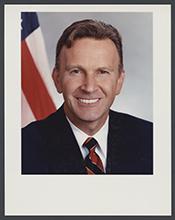
United States · United States Congress · 12 April 2000
National Museum of the American Indian Commemorative Coin Act of 2000, or American Buffalo Coin Commemorative Coin Act of 2000 - Directs the Secretary of the Treasury to mint and issue a maximum of 500,000 $1 dollar coins in commemoration of the opening of the National Museum of the American Indian of the Smithsonian Institution. Expresses the sense of Congress that the United States Mint Facility in Denver, Colorado, should strike such coins unless the Secretary determines that it would be technically or cost-prohibitive. Mandates that the proceeds from sales surcharges be paid promptly to the National Museum of the American Indian of the Smithsonian Institution to: (1) commemorate the opening of the Museum; and (2)supplement the Museum's endowment and educational outreach funds. Subjects the Museum to certain Federal audit requirements. Instructs the Secretary to take actions to ensure that coin minting and issuance will not result in any net cost to the Government.
United States · United States Congress · 12 April 2000
Cyber Security Information Act - Authorizes any Federal entity to expressly designate a request for the voluntary provision of information relating to cyber security (defined as the vulnerability of any computing system, software program, or critical infrastructure to, or its ability to resist, intentional interference, compromise, or incapacitation through misuse of the Internet or public or private telecommunications systems or other similar conduct that violates Federal, State, or international law, harms interstate commerce, or threatens public health or safety), including cyber security statements (conveyances of information by means of a cyber security Internet website relating to cyber security), as a cyber security data gathering request. Specifies that such a request shall: (1) specify an entity to gather responses to the request; (2) be from a private entity to a Federal entity; or (3) be deemed to have been made and to have specified such a private entity when the Federal entity has voluntarily been given cyber security information gathered by that private entity, including by means of a cyber security Internet website. Provides that a cyber security statement or other such information provided by a party in response to a request: (1) shall be exempt from disclosure under the Freedom of Information Act; (2) shall not be disclosed to or by any third party; and (3) may not be used by any Federal or State entity or by any third party in any civil action arising under Federal or State law. Makes exceptions regarding separately obtained information submitted in response to a request through the use of independent legal authorities and regarding information disclosed generally or broadly to the public with the express consent of the party. (Sec. 5) Makes the antitrust laws inapplicable to conduct engaged in solely for facilitating or communicating about the correction or avoidance of a cyber security related problem. Makes an exception with respect to conduct that involves or results in an agreement to boycott any person, to allocate a market, or to fix prices or output. (Sec. 6) Authorizes the President to establish working groups of Federal employees who will engage outside organizations in discussions to address cyber security and to share information related to cyber security.
United States · United States Congress · 12 April 2000
Working and Reacting (WAR) Against Meth Act of 2000 - Amends the Controlled Substances Act (CSA) and the Controlled Substances Import and Export Act (CSIEA) to make current penalties with respect to violations involving the manufacturing, distribution, importation, and exportation of specified amounts of methamphetamine applicable to such amounts of amphetamine. (Sec. 4) Modifies CSA provisions regarding endangering human life while illegally manufacturing a controlled substance to: (1) set penalties for harm to the environment, if the controlled substance consists of methamphetamine; (2) provide for imprisonment for up to 40 years, as well as a possible fine, for violations; and (3) make any penalty under provisions regarding the establishment of controlled substance manufacturing operations in addition to any penalty under such provisions regarding harm to human life or to the environment. Specifies that in any case where the conduct at issue is, relates to, or involves the manufacture of amphetamine or methamphetamine, such conduct shall, by itself, be rebuttably presumed to constitute the creation of a substantial risk of harm to human life or to the environment. (Sec. 5) Provides that the El Paso Intelligence Center (EPIC) and the Los Angeles County Regional Criminal Information Clearinghouse (LA Clearinghouse), at the direction of the Attorney General, shall jointly and in concert constitute the National Center for Methamphetamine Clandestine Laboratory Information. Requires: (1) EPIC's National Clandestine Laboratory Seizure Intelligence database to provide for the nationwide electronic reporting, capture, and retrieval of clandestine laboratory seizure information; and (2) such information to be analyzed by the LA Clearinghouse, in concert and coordination with EPIC, and disseminated to appropriate law enforcement agencies in a timely manner. Authorizes appropriations.
United States · United States Congress · 11 April 2000
IDEA Funding Clarification Act - Amends the Individuals with Disabilities Education Act (IDEA) to require that States receive certain amounts as formula grants under IDEA part B provisions for Assistance for Education of All Children with Disabilities. (The formula for determining such required grant amount for a State in a fiscal year is the same formula as that under current law for determining the maximum amount which a State may receive.)
United States · United States Congress · 6 April 2000
Noncommercial Broadcasting Freedom of Expression Act of 2000 - Amends the Communications Act of 1934 to allow a nonprofit organization or entity to hold a noncommercial educational radio or television license (license) if the station is used primarily to broadcast material that such organization or entity determines serves an educational, instructional, or cultural purpose (such purposes) in that community, unless such determination is arbitrary or unreasonable. Prohibits the Federal Communications Commission (FCC) from: (1) imposing or enforcing any requirement on such licenses based on the number of hours of programming that serve such purposes; (2) preventing religious programming from being determined to serve one of such purposes; or (3) imposing or enforcing any other programming content requirement that is not imposed on a licensee, permittee, or applicant for a commercial radio or television license. Prohibits the FCC from establishing, expanding, or otherwise modifying requirements relating to the service obligations of noncommercial educational radio or television stations except by means of agency rulemaking.
United States · United States Congress · 6 April 2000
Date Certain Tax Code Replacement Act - Prohibits the imposition of any tax by the Internal Revenue Code: (1) for any taxable year beginning after December 31, 2004; and (2) in the case of any tax not imposed on the basis of a taxable year, on any taxable event or for any period after December 31, 2004. Excepts the: (1) tax on self-employment income (chapter 2 of the Code); (2) Federal Insurance Contributions Act (chapter 21 of the Code); and (3) Railroad Retirement Tax Act (chapter 22 of the Code). Establishes the National Commission on Tax Reform and Simplification to review: (1) the present structure and provisions of the Code; (2) whether the tax systems of other countries could provide more efficient and fair methods of funding government revenue requirements; (3) whether the income tax should be replaced with a tax imposed in a different manner or on a different base; and (4) whether the Code can be simplified, absent wholesale restructuring or replacement. Requires a Commission report to Congress on review results, with recommendations for Code reform and simplification. Terminates the Commission 90 days after such report. Authorizes appropriations (with interim funding). Declares that any new Federal tax system should be approved by Congress in its final form before July 4, 2004.
United States · United States Congress · 6 April 2000
Constitutional Amendment - Requires any legislative measure changing the internal revenue laws to require the concurrence of two-thirds of the Members of each House voting and present, unless the legislative measure is determined not to increase the internal revenue by more than a de minimis amount. States that for the purposes of determining any increase in the internal revenue, there shall be excluded any increase resulting from the lowering of an effective rate of any tax. Permits Congress to waive such requirements when: (1) a declaration of war is in effect; or (2) the United States is engaged in military conflict which causes an imminent and serious threat to national security and is so declared by an adopted joint resolution. Prohibits any increase in the internal revenue enacted under such a waiver from being effective for longer than two years.
United States · United States Congress · 5 April 2000
Charles A. Lazzaretto Peace Officer Widows and Widowers Protection Act of 1999 - Provides that whoever maliciously, frivolously, or vexatiously files a civil action against the surviving widow or widower of a Federal law enforcement officer, arising out of the conduct of that officer in the course of duty, shall be liable for double damages and any other appropriate relief.
United States · United States Congress · 5 April 2000
Small Business Merger Fee Reduction Act of 2000 - Amends the Clayton Act to remove the notification requirement applicable to acquisitions of voting securities and assets that have an aggregate total value of $50 million or less. Sets filing fees (currently, $45,000) to be paid by acquiring persons required to file pre-merger notifications at: (1) $45,000 if the aggregate total amount of voting securities or assets to be acquired is less than $100 million; (2) $100,000 if the aggregate total amount is less than $200 million but not less than $100 million; and (3) $225,000 if the aggregate total amount is not less than $200 million.
United States · United States Congress · 3 April 2000
Designates the facility of the U.S. Postal Service located at 600 Lincoln Avenue in Pasadena, California, as the Matthew "Mack" Robinson Post Office Building.
United States · United States Congress · 28 March 2000
Amends the International Financial Institutions Act to direct the Secretary of the Treasury to instruct the U.S. Executive Director at the International Monetary Fund (IMF) to use the U.S. vote to oppose any new IMF loan to any country which the Secretary of Energy determines is a member of the Organization of Petroleum Exporting Countries (OPEC) and is acting to restrict oil production to the detriment of the U.S. economy, or is acting in concert with OPEC to do so, unless the provision of the loan is necessary to address a systemic risk to the international financial system.
United States · United States Congress · 23 March 2000
Amends the National Trails System Act to provide that whenever any right-of-way is subject to certain interim use provisions for railroad rights-of-way, no such right-of-way may be developed for public use as a trail unless compensation for such use has been tendered to the person to whom the right-of-way would revert upon abandonment for railroad purposes.
United States · United States Congress · 23 March 2000
Urges all contracting parties to the Hague Convention: (1) particularly Austria, Germany and Sweden, to comply fully with their international obligations; (2) to ensure their compliance by enacting effective implementing legislation and educating their judicial and law enforcement authorities; (3) to honor their commitments and return abducted or wrongfully retained children to their place of habitual residence without reaching the merits of any underlying custody dispute and to remove obstacles to the exercise of parental access rights; and (4) to further educate their central authority and local law enforcement authorities regarding the Convention, the severity of the problem of international child abduction, and the need for immediate action when a parent of an abducted child seeks their assistance. Urges the Secretary of State to disseminate to all Federal and State courts the Department of State's annual report to Congress on Convention compliance and related matters.
United States · United States Congress · 22 March 2000
Project Exile: The Safe Streets and Neighborhoods Act of 2000 - Amends the Violent Crime Control and Law Enforcement Act of 1994 to direct the Attorney General to provide firearms sentencing incentive grants to eligible States that: (1) demonstrate that they have implemented firearms sentencing laws requiring that any person who uses or carries a firearm during and in relation to any violent crime or serious drug trafficking crime be sentenced to a term of imprisonment of not less than five years (without the possibility of parole) in addition to the punishment provided for such crime, or requiring that any person who possesses a firearm, having at least one prior conviction for a violent crime, shall be sentenced to five years' imprisonment (without the possibility of parole); or (2) can demonstrate that they have in effect an equivalent Federal prosecution agreement; and (3) demonstrate that they have or will implement a public awareness and community support program that seeks to build support for, and warns potential violators of, such firearms sentencing laws; and (4) provide assurances that they will coordinate with Federal prosecutors and Federal law enforcement agencies to promote Federal involvement and cooperation in the enforcement of laws within that State and will allocate resources in a manner calculated to reduce crime in the high-crime areas of the State. Sets forth allowable uses for such grants, including to: (1) support law enforcement agencies, prosecutors, courts, probation officers, correctional officers, the juvenile justice system, the improvement of criminal history records, or case management programs involving the sharing of information about serious offenders; (2) carry out such a public awareness and community support program; and (3) build or expand correctional facilities. Sets forth the allocation formula for grants, authorizes appropriations, and sets forth reporting requirements.
United States · United States Congress · 22 March 2000
IDEA Full Funding Act of 2000 - Amends the Individuals with Disabilities Education Act (IDEA) to authorize funding to reach the Federal Government's goal of providing 40 percent of the national average per pupil expenditure to assist States and local educational agencies with the excess costs of educating children with disabilities. Authorizes appropriations for IDEA part B programs of assistance for education of all children with disabilities, in specified amounts for FY 2001 through 2010, and as necessary thereafter.
United States · United States Congress · 22 March 2000
Digital Divide Elimination Act of 2000 - Amends the Internal Revenue Code to provide earned income-eligible taxpayers with a credit (50 percent of expenses up to $500 annually) for the purchase of qualifying Internet-accessible computers and equipment. Extends and expands the deduction for charitable computer contributions to elementary and secondary schools.
United States · United States Congress · 22 March 2000
Congratulates: (1) the people of Taiwan for the successful conclusion of presidential elections on March 18, 2000; (2) President Lee Teng-hui for his significant contributions to freedom and democracy on Taiwan; (3) President-elect Chen Shui-bian and Vice-President-elect Annette Hsiu-lien Lu for their victory. Expresses the sense of the House of Representatives that the People's Republic of China should abandon its provocative threats against Taiwan and undertake steps that would lead to a substantive dialogue, including a renunciation of the use of force against Taiwan and progress toward democracy, the rule of law, and protection of human and religious rights in the People's Republic of China. Affirms the provisions of the Taiwan Relations Act as the legal standard by which U.S. policy toward Taiwan shall be determined.
United States · United States Congress · 16 March 2000
Russian Anti-Ship Missile Nonproliferation Act of 2000 - Prohibits the President from rescheduling or forgiving any outstanding bilateral debt owed by the Russian Federation to the United States, until the President certifies to Congress that the Russian Federation has permanently terminated all transfers of Moskit anti-ship missiles that endanger U.S. national security, particularly transfers to China. Requires the President, after making such certification, to report periodically to specified congressional committees, identifying the status of any contract and the date of the transfer of any version of the Moskit missile (particularly transfers to China) occurring on or after February 1, 2000.
United States · United States Congress · 15 March 2000
Designates cyberterrorism as an emerging threat to the national security of the United States and the nation's electronic infrastructure. Calls for: (1) a partnership between the Federal Government and private industry in combating the cyber menace; (2) a revised legal framework for the prosecution of hackers and cyberterrorists; and (3) a new interagency study to be conducted by the Departments of Commerce and Defense, the National Security Agency, the Central Intelligence Agency, and the Federal Bureau of Investigation to assess the threat posed by cyberterrorists.
United States · United States Congress · 9 March 2000
Commends the people of Taiwan for having established a democracy over the past decades, for repeatedly reaffirming their dedication to democratic ideals, and for carrying out the second free, fair and democratic direct presidential election in Taiwan's history in March 2000. Expresses the sense of Congress that: (1) it is the right of the people of Taiwan to freely elect their President without any interference from the People's Republic of China; (2) the ultimate status of Taiwan must have the express consent of the people of Taiwan and must be decided by peaceful means; and (3) the United States looks forward to working with the next democratically elected President of Taiwan.
United States · United States Congress · 2 March 2000
Expresses the sense of Congress that: (1) upon approval of the accession of China to the World Trade Organization (WTO), the United States representative to the WTO should request that the WTO General Council consider Taiwan's accession to the WTO as its next order of business; and (2) the United States should be prepared to counter any effort by any WTO member country, upon China's accession, to block Taiwan's.
United States · United States Congress · 1 March 2000
Recognizes the right of the Austrian people to express their political views through a democratic election, but reaffirms the right and obligation of the U.S. House of Representatives to express its opposition to the anti-democratic, racist, and xenophobic views that have been expressed by Joerg Haider and other leaders of the FPO and to state its opposition to the party's participation in the Austrian Government. Condemns the insulting, racist, and xenophobic statements which have been made over many years by Haider and other leaders of the party. Expresses regret and dismay that the FPO will play a major role in the new Austrian Government. Commends the leaders of the European Union (EU), the 14 other member states of the EU, Canada, Norway, and other countries which have expressed their serious concerns regarding the participation of the FPO in such Government. Calls upon: (1) the President, the Secretary of State, and other U.S. Government officials and agencies to emphasize to Austrian Government officials the concern about the inclusion of any party in the Austrian Government, including the FPO, that has been associated with xenophobic, racist policies, and statements supportive of Nazi-era programs; (2) Members of Congress to use any meetings with ministers and other political leaders of that Government to express concern for Austria's continued adherence to democratic standards and full respect for human rights; and (3) the Secretary of State to continue to scrutinize the policies of the new Austrian Government and to be prepared to take additional measures if circumstances so warrant.
United States · United States Congress · 29 February 2000
Internet Non-discrimination Act - Amends the Internet Tax Freedom Act to permanently extend provisions which prohibited a State or political subdivision from imposing, during the period beginning on October 1, 1998, and ending 3 years after the date of the enactment of such Act: (1) taxes on Internet access, unless such tax was generally imposed and actually enforced prior to October 1, 1998; and (2) multiple or discriminatory taxes on electronic commerce.
United States · United States Congress · 29 February 2000
Medicaid Safety Net Hospital Preservation Act of 2000 - Amends title XIX (Medicaid) of the Social Security Act, with respect to adjustments in payments for inpatient hospital services furnished by disproportionate share (DSH) hospitals, to require DSH allotments for FY 2002 to be equal to the State allotment for FY 2000. Sets the DSH allotment for FY 2001 and for FY 2002 at the FY 2000 level.
United States · United States Congress · 29 February 2000
Condemns the repressive anti-Baha'i policies and actions of the Government of Iran. Continues to hold such Government responsible for upholding the rights of all its nationals in a manner consistent with Iran's obligations under the Universal Declaration of Human Rights (UDHR) and other international agreements guaranteeing the civil and political rights of its citizens. Expresses concern that individual Baha'is continue to suffer from severely repressive and discriminatory government actions, including executions and death sentences, solely on account of their religion. Urges the Government of Iran to: (1) permit Baha'i students to attend and Baha'i faculty to teach at Iranian universities, return property confiscated from the Baha'i Open University (OU), free imprisoned faculty members of OU, and permit OU to continue to function; (2) implement fully the conclusions and recommendations on the emancipation of the Iranian Baha'i community made by the United Nations (UN) Special Rapporteur on Religious Intolerance, Professor Abdelfattah Amor, in his March 1996 report to the UN Commission of Human Rights; and (3) extend to the Baha'i community the rights guaranteed by UDHR and the international covenants of human rights. Calls upon the President to continue to: (1) assert the U.S. Government's concern regarding Iran's violations of the rights of its citizens, including members of the Baha'i community, along with expressions of its concern regarding the Iranian Government's support for international terrorism and its efforts to acquire weapons of mass destruction; (2) emphasize that the United States regards the Iranian Government's human rights practices, particularly its treatment of such community and other religious minorities, as a significant factor in the development of the U.S. Government's relations with the Government of Iran; (3) emphasize the need for the UN Special Representative for Human Rights to be granted permission to enter Iran; (4) urge the Iranian Government to emancipate the Baha'i community by granting rights guaranteed by UDHR and the international covenants on human rights; and (5) encourage other governments to continue to appeal to the Iranian Government, and to cooperate with other governments and international organizations, including the UN, in efforts to protect the religious rights of the Baha'is and other minorities through joint appeals and other appropriate actions.
United States · United States Congress · 16 February 2000
2002 Winter Olympic Commemorative Coin Act - Directs the Secretary of the Treasury to mint and issue five dollar gold coins and one dollar silver coins emblematic of the participation of American athletes in the 2002 Olympic Winter Games. Mandates that coin design be selected by the Secretary after consultation with: (1) the Commission of Fine Arts; (2) the United States Olympic Committee; and (3) Olympic Properties of the United States-Salt Lake 2002 (created and owned by the Salt Lake Organizing Committee). States that all surcharges from the coin sales ($35 for a $5 coin and $10 for a $1 coin) shall be distributed by the Secretary to: (1) Salt Lake Organizing Committee for the Olympic Winter Games of 2002; and (2) the United States Olympic Committee.
United States · United States Congress · 16 February 2000
Santa Rosa and San Jacinto Mountains National Monument Act of 2000 - Designates the Santa Rosa and San Jacinto Mountains National Monument in southern California, to be managed jointly by the Secretaries of the Interior and of Agriculture. Provides that nothing in the establishment of the Monument shall be construed as: (1) affecting Indian Reservations, individually held trust lands, Indian allotments, lands or interests in lands held by the State of California or its political subdivision, a special district, or the Mount San Jacinto Winter Park Authority, or private property rights within the Monuments boundaries; nor (2) granting the Secretaries authority on or over non-Federal lands not already provided by law. Requires the Secretaries to prepare a management plan for the conservation and protection of the Monument. Provides for the continued use by the University of California of certain Federal lands within the Monument (including other specified existing and historical uses). Authorizes the Secretary of the Interior, without further authorization by law, to exchange lands with the Agua Caliente Band of Cahuilla Indians for purposes of this Act. Requires the Secretaries to jointly establish an advisory committee for the Monument to advise them with respect to the preparation and implementation of the management plan. Authorizes appropriations.
United States · United States Congress · 16 February 2000
United States-Panama Partnership Act of 2000 - Authorizes the President to certify and report to specified congressional committees that the United States and the Government of Panama have reached an agreement permitting the United States, for a period of not less than 15 years, to maintain a presence, alone or in conjunction with other friendly countries, sufficient to carry out counternarcotics, search and rescue, logistical, training, and related missions at Howard Air Force Base, Fort Kobbe, Rodman Naval Station, and Fort Sherman, under terms similar to those applied to the U.S. presence at those facilities during the period from October 1, 1979, to December 31, 1999. (Sec. 4) Authorizes certain assistance to Panama upon the President's certification and report, including: (1) grants for the construction of a new bridge across the Panama Canal and the construction of a new sewage treatment plant for Panama City; (2) an allocation of funds each year to the Cooperative Association of States for Scholarships program for scholarships for deserving students from Panama to study in the United States; and (3) certain preferential and duty-free treatment of, and no quantitative restrictions on, certain textile and apparel products (including certain other products) from Panama. Sets forth penalties and requirements for illegal transshipments and circumvention of existing quotas with respect to such products.
United States · United States Congress · 16 February 2000
Directs the Secretary of Defense to expand and make permanent a demonstration project which allows individuals eligible for medical care and services under the Civilian Health and Medical Program of the Uniformed Services (CHAMPUS) to obtain pharmaceuticals by mail in order to permit individuals who are entitled to hospital insurance benefits under part A of title XVIII (Medicare) of the Social Security Act and who are members or former members of the armed forces, dependents of certain former members, or dependents of members who died while on active duty for a period of more than 30 days to participate in the project. Requires the Secretary to modify each managed health care program which includes a managed care network of community retail pharmacies in order to supply pharmaceuticals to the above individuals.
United States · United States Congress · 16 February 2000
Medicaid DSH Preservation Act of 2000 - Amends title XIX (Medicaid) of the Social Security Act, with respect to provisions regarding adjustments in payments for inpatient hospital services furnished by disproportionate share hospitals (DSH), to require allotments for FY 2001 (currently, FY 2003) and succeeding fiscal years to DSH to be equal to the allotment for the State for the preceding fiscal year.
United States · United States Congress · 16 February 2000
Congressional Oversight and Audit of Agency Rulemaking Actions Act - Establishes a pilot project under which the Comptroller General may review a published economically significant proposed or interim rule at the request of a committee of either House of Congress with jurisdiction over the subject matter of the rule. Defines "economically significant rule" to mean any proposed, final, or interim rule: (1) that may have an annual effect on the economy of $100 million or more or adversely affect in a material way the economy, a sector of the economy, productivity, competition, jobs, the environment, public health or safety, or State, local, or tribal governments, small businesses, or communities; or (2) for which an agency has prepared an initial or final regulatory flexibility analysis. Requires that an independent audit and assessment of such a rule by the Comptroller General shall consist of: (1) an analysis of the agency's and the public's assessment of the potential benefits and costs of the rule and of alternative approaches that could achieve the agency's objectives in a more cost effective manner; (2) an analysis and assessment of any impact statement or report prepared by the agency as part of the rulemaking, including any assessment of impacts on State and local governments; and (3) a list of all analyses, groups, entities, and sources consulted in developing the analyses and assessments described above. Grants the Comptroller General discretion to develop procedures for determining the priority and number of requests for review. Requires each agency, upon request of the Comptroller General, to provide any available or existing records, information, or data upon which the agency relied in developing such a rule. Requires the Comptroller General to transmit an independent audit containing the prescribed assessments and analyses on a final rule, together with a summary of the differences between the proposed and final rule, within 30 days after publication in the Federal Register. Authorizes appropriations. Provides for the pilot project established under this Act to continue for a five-year period if specified appropriations are provided. Requires the Comptroller General to report to Congress on such project's effectiveness and on whether it should be authorized permanently.
United States · United States Congress · 15 February 2000
Expresses the sense of the Congress that: (1) the people of the Republic of Croatia are to be congratulated on successful parliamentary and presidential elections and the outgoing Government of Croatia is to be commended for the democratic standards with which it managed the elections; (2) the United States should support the efforts of the new Government of Croatia to increase its work on refugee return, privatization reform, media reform, and further cooperation with the International Criminal Tribunal for Former Yugoslavia (ITCY); (3) Congress strongly supports Croatia's commitment to western democratic standards and will give its full support to the new Government to fully implement democratic reforms; (4) the United States continues to promote Croatian-American economic, political, and military relations and recognizes Croatia as a loyal partner in south central Europe; and (5) Congress recommends establishing a strategic partnership with the Republic of Croatia and supports its membership in the North Atlantic Treaty Organization's Partnership for Peace program and its accession into the World Trade Organization.
United States · United States Congress · 8 February 2000
Authorizes presentation of a gold medal on behalf of Congress to former President Ronald Reagan and his wife Nancy Reagan. Authorizes specified sums to be charged against the United States Mint Public Enterprise Fund for medal costs. Mandates that sale proceeds from duplicate bronze medals be deposited into such Fund.
United States · United States Congress · 8 February 2000
10-20-Life Act - Amends the Brady Handgun Violence Prevention Act to increase penalties for using, carrying, or possessing a firearm during and in relation to a crime of violence or drug trafficking crime. Sets penalties of life imprisonment or a term of at least 25 years imprisonment if an individual is injured by the discharge of a firearm. Defines "juvenile delinquency" to exclude such violation committed by a person age14 or older (thus providing for their trial as adults).
United States · United States Congress · 8 February 2000
National Free Public Internet Access Act of 2000 - Amends the Internal Revenue Code to allow a business a credit of up to $100,000 annually for providing free public Internet access.
United States · United States Congress · 7 February 2000
Hospital Preservation and Equity Act of 2000 - Amends title XVIII (Medicare) of the Social Security Act (SSA), as amended by the Medicare, Medicaid, and SCHIP Balanced Budget Refinement Act of 1999 with regard to the one year sole community hospital payment increase, to reset the applicable percentage increase for FY 2001 and each subsequent fiscal year to the market basket percentage increase for hospitals in all areas for purposes of updating payments to prospective payment system (PPS) hospitals for inpatient hospital services.
United States · United States Congress · 3 February 2000
Social Security Right To Know Act - Amends the Social Security Act to require a certain annual report by the Board of Trustees of the Federal Old-Age and Survivors and Disability Insurance Trust Funds on the operation and status of such Funds to include information on: (1) the unfunded long-term projected liability of the social security system and any change in such amount from the preceding year as well as the deficit or surplus that the system will run in the last year of the long-term projection period, with any aggregate assets or liabilities held by the Trust Funds in that final projected year; and (2) the economic model and relevant data used to make such projections. Requires social security account statements to contain: (1) a comparison of the annual social security tax inflows to the amount paid in benefits annually and a statement whether the ratio will result in a cash flow deficit and what year such deficit will commence as well as the first year in which funds in the Trust Funds will cease to be sufficient to cover the deficit and the percentage of benefits due at that time that could be paid from annual tax inflows; and (2) an explanation of the average rate of return that a taxpayer can expect to receive on old- age insurance benefits as compared to the total amount of social security taxes a taxpayer expects to pay. Makes Social Security Administration Continuous Work History Sample data publicly available for statistical research purposes subject to certain limitations.
United States · United States Congress · 2 February 2000
Keep Our Promise to America's Military Retirees Act - Includes as an employee, for purposes of Federal provisions authorizing enrollment under the Federal Employees Health Benefits (FEHB) Program: (1) a member of the armed forces who began service before June 7, 1956, and retired after a minimum of 20 years of such service or by reason of a service-connected disability; and (2) the surviving widow or widower of such member. Directs the Secretary of Defense to enter into an agreement with the Office of Personnel Management to provide FEHB coverage to the following eligible beneficiaries: (1) a member or former member entitled to military retired or retainer pay; (2) an unremarried former spouse who was married to a member for at least 20 years, during which such member performed at least 20 years of retirement-creditable military service; (3) a dependent of a deceased qualifying member or former member; (4) a dependent of a living member or former member; and (5) a family member of such member. Repeals a provision prohibiting coverage under the Civilian Health and Medical Program of the Uniformed Services for persons entitled to hospital insurance benefits under part A of title XVIII (Medicare) of the Social Act.
United States · United States Congress · 1 February 2000
Recognizes the 50th anniversary of the Korean War, and expresses the gratitude of the American people for the service of members of the armed forces during such War.
United States · United States Congress · 27 January 2000
Pope John Paul II Congressional Gold Medal Act - Authorizes the presentation of a gold medal to Pope John Paul II in recognition of his contributions to peace and religious understanding. Authorizes appropriations. Mandates that proceeds from duplicate bronze medal sales be deposited in the Numismatic Public Enterprise Fund.
United States · United States Congress · 24 January 2000
Home Workplace Preservation Act of 2000 - Amends the Occupational Safety and Health Act of 1970 to make the Act inapplicable to employment performed in a workplace which is located in the employee's residence.
United States · United States Congress · 24 January 2000
Amends the Occupational Safety and Health Act of 1970 to make the Act inapplicable to employment performed in a workplace through the use of a telephone, computer, or other electronic device which is located in the employee's residence.
United States · United States Congress · 18 November 1999
United States Training on and Commemoration of the Armenian Genocide Resolution - Calls upon the President: (1) to provide for appropriate training and materials to all Foreign Service officers, officials of the Department of State, and any other executive branch employee involved in responding to issues related to human rights, ethnic cleansing, and genocide by familiarizing them with the U.S. record relating to the Armenian Genocide and the consequences of the failure to enforce the judgments of the Turkish courts against the responsible officials; and (2) in his annual message commemorating the Armenian Genocide issued on or about April 24, to characterize the systematic and deliberate annihilation of 1.5 million Armenians as genocide and to recall the proud history of U.S. intervention in opposition to the Armenian Genocide.
United States · United States Congress · 17 November 1999
Urges the Government of Germany to: (1) uphold its commitments to take effective measures to prevent and eliminate discrimination against individuals or communities on the grounds of religion or belief' and to foster a climate of mutual tolerance and respect between believers of different communities as required by the Organization on Security and Cooperation in Europe's Vienna Concluding Document of 1989; and (2) enter into a constructive dialogue with minority groups subject to government discrimination based on religion or belief. Declares that the House of Representatives continues to hold the Government of Germany responsible for protecting the right of freedom of religion or belief of U.S. citizens who are living, performing, doing business, or traveling in Germany. Calls upon the President to assert the concern of the U.S. Government to the Government of Germany regarding government discrimination in Germany.
United States · United States Congress · 17 November 1999
Calls upon the United States Trade Representative: (1) to consider the issues of runaway film production and market access for American-filmed entertainment as part of the discussion at the World Trade Organization (WTO) talks in Seattle; (2) to ensure that the United States enters into discussions with its trading partners and take steps to address issues that threaten employment and trade in the film industry; and (3) as a top U.S. priority at the WTO talks in Seattle, to make effective use of trade agreements to liberalize cultural content restrictions while addressing countries' cultural content and cultural sovereignty concerns.
United States · United States Congress · 16 November 1999
Requires the Secretary of Defense to report to Congress on the results of a study of production alternatives for the Joint Strike Fighter aircraft program and the effects on the tactical fighter aircraft industrial base of each alternative considered.
United States · United States Congress · 10 November 1999
Authorizes the American Battle Monuments Commission to place within the Vietnam Veterans Memorial a plaque to honor those Vietnam veterans who died after service in the Vietnam War, but as a direct result of such service, and whose names are not otherwise eligible for placement on the Memorial wall.