Resolution· HCONRESH.Con.Res. 57 (114th)referred
Supporting National Men's Health Week.
United States · United States Congress · 18 June 2015
Expresses support for National Men's Health Week.
The world's political record
Person
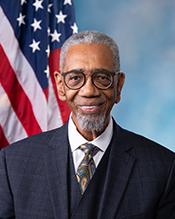
United States · Official source
6,916 records where Rep. Rush, Bobby L. [D-IL-1] is listed as a sponsor, author, or other actor. Search with topics and years
United States · United States Congress · 18 June 2015
Expresses support for National Men's Health Week.
United States · United States Congress · 17 June 2015
Recognizes the Islamic faith as one of the great world religions. Acknowledges the onset of Ramadan and expresses deepest respect to Muslims in the United States and throughout the world on this significant occasion.
United States · United States Congress · 17 June 2015
Recognizes the unique challenges facing children who are growing up with one or both parents in prison. Recognizes that more resources and services need to target the specific needs of children of incarcerated parents in order to reduce the cycle of families in the criminal justice system. Supports research and the building of community partnerships to provide a comprehensive plan to meet the needs of individual children struggling to balance the difficulties of academic, social, and economic stability while a parent is incarcerated. Supports strengthening the access parents have to health care, education, housing, and job training services so they can be productive role models for their children post-release from a correctional institution.
United States · United States Congress · 12 June 2015
Affirms that the policies of aggression and ethnic cleansing implemented by Serb forces in Bosnia and Herzegovina from 1992 to 1995 meet the terms of genocide. Urges the Atrocities Prevention Board, a U.S. interagency committee established by the Administration in 2012, to study the lessons of Srebrenica and issue guidance on how to prevent similar incidents from recurring in the future. Encourages the United States to reaffirm its policy of supporting the independence and territorial integrity of Bosnia and Herzegovina, peace and stability in southeastern Europe, and the right of all people living in the region to return to their homes and enjoy the benefits of democratic institutions, as well as to know the fate of missing relatives and friends. Recognizes the achievement of the International Commission for Missing Persons in accounting for those missing in conflicts or natural disasters around the world. Welcomes the arrest and transfer to the International Criminal Tribunal for the former Yugoslavia of all persons indicted for war crimes, crimes against humanity, genocide and grave breaches of the 1949 Geneva Conventions, particularly those of Radovan Karadzic and Ratko Mladic. Asserts that it is in the U.S. national interest that those individuals who are responsible for these crimes should continue to be held accountable for their actions. Honors the thousands of innocent people killed or executed at Srebrenica in Bosnia and Herzegovina in July 1995, along with all individuals who were victimized during the conflict and genocide in Bosnia and Herzegovina from 1992 to 1995, as well as the foreign nationals who risked and in some cases lost their lives during their defense of human rights and fundamental freedoms.
United States · United States Congress · 12 June 2015
Filipino Veterans Fairness Act of 2015 Deems certain service performed before July 1, 1946, in the organized military forces of the Philippines and the Philippine Scouts as active military service for purposes of eligibility for veterans' benefits through the Department of Veterans Affairs. Directs the Secretary of Veterans Affairs, in determining eligibility under this Act, to take into account any relevant service documentation, including documentation other than the Missouri List (the list of all discharged and deceased veterans from the 20th century).
United States · United States Congress · 11 June 2015
National Collegiate Athletics Accountability Act or the NCAA Act This bill amends title IV of the Higher Education Act of 1965 to require program participation agreements to prohibit an institution with an intercollegiate athletic program from membership in a nonprofit athletic association unless the association: requires annual baseline concussion testing prior to a student athlete's participation in contact sports; requires certain due process procedures for students and institutions prior to enforcing a remedy for any infraction; requires athletically related student aid to be guaranteed for the duration of the student's attendance, up to four years, and irrevocable due to skill or injury; and permits member institutions to pay stipends to student athletes. The legislation also establishes the Presidential Commission on Intercollegiate Athletics to review, analyze, and report to the President and Congress on certain issues related to intercollegiate athletics, including the interaction of athletics and academics, the financing of intercollegiate athletics, the recruitment and retention of student athletes, oversight and governance practices, health and safety protections for student athletes, and due process and equal enforcement of student athlete rules and regulations.
United States · United States Congress · 11 June 2015
Cancer Drug Coverage Parity Act of 2015 This bill amends the Public Health Service Act to require a group or individual health plan that covers anticancer medications administered by a health care provider to provide no less favorable coverage for anticancer medications administered by a patient. A plan may apply to patient-administered anticancer medications only the cost-sharing and limitations that apply to anticancer medications administered by a health care provider. These requirements apply to medication approved by the Food and Drug Administration that is prescribed based on a finding by the treating physician that the medication is medically necessary for cancer treatment and is clinically appropriate in terms of type, frequency, extent site, and duration. To comply with these requirements, health plans may not, for anticancer medications: (1) change or replace benefits to increase out-of-pocket costs; (2) reclassify benefits to increase costs; or (3) apply more restrictive limitations to orally administered medications than to intravenously administered or injected medications.
United States · United States Congress · 11 June 2015
Do Not Track Kids Act of 2015 Amends the Children's Online Privacy Protection Act of 1998 to apply the prohibitions against collecting personal information from children to online applications and mobile applications directed to children. Establishes additional privacy protections against the collection of personal or geolocation information from children and minors. Revises the definition of: "operator" to include online and mobile applications (currently, only Internet websites and online services) and to make such definition apply specifically to operators and providers of such websites, services, or applications who, for commercial purposes, in interstate or foreign commerce, collect or maintain personal information from or about their users, allow another person to collect such personal information, or allow users of such websites, services, or applications to publicly disclose personal information; and "disclosure" to mean the release of personal information (currently, the release of personal information collected from a child in identifiable form). Requires verifiable parental consent, under specified circumstances, for the collection, use, or disclosure of personal information of a child, including certain online contact information collected in response to a specific request from a child when such information is used to contact a different child. Prohibits, without verifiable parental consent in the case of a child or without consent of the minor in the case of a minor, an operator of a website, online service, online application, or mobile application directed to children or minors, or an operator having actual knowledge that personal information being collected is from children or minors, from: (1) using, disclosing to third parties, or compiling personal information collected from children or minors for targeted marketing purposes; and (2) collecting geolocation information in a manner that violates the regulations prescribed under this Act. Defines a "minor" as an individual over the age of 12 and under the age of 16. Prohibits an operator from discontinuing service provided to a child or minor on the basis of a refusal, by the child's parent or the minor, to permit the further use or maintenance in retrievable form, or future collection, of certain personal or geolocation information from such individuals, to the extent that the operator is capable of providing such service without such information. Requires an operator of a website, online service, online application, or mobile application directed to children or minors to treat all users as children or minors for purposes of this Act, except as permitted by regulation. Prohibits an operator of a website, online service, or such applications directed to minors from collecting personal information from minors unless such operator has adopted, and complies with, a Digital Marketing Bill of Rights for Teens that is consistent with the Fair Information Practices Principles established by this Act. Requires the Federal Trade Commission (FTC) to promulgate regulations that require operators to implement mechanisms that permit a user to erase content submitted by such user that is publicly available through such websites, services, or applications and that contains or displays personal information of children or minors. Sets forth enforcement provisions for the FTC, other federal agencies, and states.
United States · United States Congress · 11 June 2015
Global Democracy Promotion Act States that, with respect to eligibility for assistance under part I of the Foreign Assistance Act of 1961, foreign nongovernmental organizations shall not be ineligible for such assistance solely on the basis of health or medical services provided by such organizations with non-U.S. government funds if such services do not violate the laws of the country in which they are being provided and would not violate U.S. federal law if provided in the United States. Declares in addition that foreign nongovernmental organizations shall not be subject to requirements relating to the use of non-U.S. government funds for advocacy and lobbying activities other than those that apply to U.S. nongovernmental organizations receiving assistance under part I of such Act.
United States · United States Congress · 11 June 2015
Filipino Veterans of World War II Congressional Gold Medal Act of 2015 Directs the President pro tempore of the Senate and the Speaker of the House of Representatives to make appropriate arrangements for the award of a single Congressional Gold Medal to the Filipino Veterans of World War II in recognition of their dedicated service during World War II. Requires that the medal, following its award, be given to the Smithsonian Institution where it will be available for research and for display at other appropriate locations associated with such veterans.
United States · United States Congress · 11 June 2015
Recognizes the historical significance to the nation, and supports the continued celebration, of Juneteenth Independence Day. Declares the sense of the House of Representatives that: (1) history should be regarded as a means for understanding the past and solving the challenges of the future, and (2) the celebration of the end of slavery is an important and enriching part of the history and heritage of the United States.
United States · United States Congress · 10 June 2015
Apollo 11 50th Anniversary Commemorative Coin Act This bill directs the Department of the Treasury to mint and issue gold, silver, half-dollar clad, and proof silver coins in recognition and celebration of the 50th anniversary of the first manned landing on the moon. Treasury may issue coins minted under this Act for only a one-year period, beginning January 1, 2019. All sales of coins minted under this Act shall include a surcharge of $35 per gold coin, $10 per silver coin, $5 per half-dollar clad coin, and $50 per proof silver coin. All of the surcharges received from the sale of such coins shall be paid as follows: one-half to the Smithsonian Institution's National Air and Space Museum's "Destination Moon" exhibit; one-quarter to the Astronauts Memorial Foundation; and one-quarter to the Astronaut Scholarship Foundation, to aid its missions by providing college scholarships for the very best and brightest students pursuing degrees in science, technology, engineering, or mathematics (STEM).
United States · United States Congress · 10 June 2015
Breast Cancer Awareness Commemorative Coin Act This bill directs the Department of the Treasury to mint and issue up to 50,000 $5 gold coins, 400,000 $1 silver coins, and 750,000 half-dollar clad coins emblematic of the fight against breast cancer. The Treasury shall: select the design for the coins based upon the winning design from a juried, compensated design competition following certain specifications; and issue the coins only during the one-year period beginning on January 1, 2018. All such coin sales must include the following surcharges: $35 per $5 gold coin, $10 per $1 dollar silver coin, and $5 per half-dollar coin. The Treasury shall pay received surcharges promptly to the Susan G. Komen for the Cure and the Breast Cancer Research Foundation according to a specified distribution formula.
United States · United States Congress · 10 June 2015
Pathways Out of Poverty Act of 2015 DIVISION A--EDUCATION TITLE I--STRONG START FOR AMERICA'S CHILDREN Subtitle A--Access to Voluntary Prekindergarten for Low- and Moderate-Income Families Directs the Department of Education (ED) to allot matching grants to states and, through them, subgrants to local educational agencies (LEAs), childhood education program providers, or consortia of those entities to implement high-quality prekindergarten programs for children from low-income families. Allots grants to states based on each state's proportion of children who are age four and who are from families with incomes at or below 200% of the poverty level. Defines "high-quality prekindergarten programs." Conditions grant eligibility on a state demonstrating to ED that it: (1) has established or will establish early learning and development standards, (2) has established or will develop the ability to link prekindergarten data with elementary and secondary school data, (3) offers state-funded kindergarten for children, and (4) has established a State Advisory Council on Early Childhood Education and Care. Directs ED and the Department of Health and Human Services (HHS) to develop a process to provide Head Start program services to children who are younger than age four in states or regions that provide four-year-olds whose family income is at or below 200% of the poverty level with sustained access to high-quality prekindergarten programs. Subtitle B--Prekindergarten Development Grants Directs ED to award competitive, matching, capacity-building grants to states that assure that they will use their grant to become eligible, within three years of receiving the grant, for this Act's grants for high-quality prekindergarten programs. TITLE II--RESTORING SUMMER PELL GRANTS Amends title IV (Student Assistance) of the Higher Education Act of 1965 to allow ED to award a student two Pell Grants during a single award year if the student is enrolled in an associate or baccalaureate degree program or a certificate program at an institution of higher education (IHE) on at least a half-time basis for the equivalent of more than one academic year during the Pell Grant award year. TITLE III--RESTORING TITLE IV ABILITY-TO-BENEFIT ELIGIBILITY Allows students who are not high school graduates or have not met certain home schooling requirements to receive student assistance under title IV of the HEA if they demonstrate that they can benefit from the education or training being offered by an IHE through: (1) their performance on an independently administered examination, (2) a state prescribed process, or (3) their satisfactory completion of six credit hours or the equivalent coursework toward a degree or certificate offered by the IHE. TITLE IV--YOUTH PROMISE/FEDERAL COORDINATION OF LOCAL AND TRIBAL JUVENILE JUSTICE INFORMATION AND EFFORTS Amends the Juvenile Justice and Delinquency Prevention Act of 1974 to establish a PROMISE Advisory Panel to assist the Office of Juvenile Justice and Delinquency Prevention (OJJDP) in assessing and developing standards and evidence-based practices to prevent juvenile delinquency and criminal street gang activity. Requires the Administrator of the Office to award grants to organizations to collect and use data in designated geographic areas to assess the needs and existing resources for juvenile delinquency and criminal street gang activity prevention and intervention. TITLE V--PROMISE GRANTS Subtitle A--PROMISE Assessment and Planning Grants Authorizes the OJJDP to award grants to local governments and Indian tribes to assist local PROMISE Coordinating Councils (PCCs) with planning and assessing evidence-based and promising practices for juvenile delinquency and criminal street gang activity prevention and intervention, especially for at-risk youth. Subtitle B--PROMISE Implementation Grants Directs the OJJDP to award additional grants to assist PCCs to implement PROMISE plans for coordinating and supporting the delivery of juvenile delinquency and gang prevention and intervention programs in local communities. Subtitle C--General PROMISE Grant Provisions Directs the OJJDP, in conjunction with the PROMISE Advisory Panel, to establish and utilize a system for evaluating applications for PROMISE Assessment and Planning grants and for PROMISE Implementation grants. DIVISION B--HOUSING TITLE VI--COMMON SENSE HOUSING INVESTMENT Amends the Internal Revenue Code, with respect to the tax deduction for mortgage interest, to: allow, in lieu of such deduction, a tax credit for 15% of mortgage interest paid in a taxable year for the taxpayer's principal residence and one other residence; provide for a phaseout of the tax deduction for mortgage interest between 2017 and 2021; allow a deduction for interest and taxes relating to land for dwelling purposes owned or leased by cooperative housing corporations; and increase the state housing credit ceiling for the low-income housing tax credit. Directs the Department of the Treasury to apply the savings from the enactment of this Act to the Housing Trust Fund, for assistance under the Section 8 low-income housing program, and for the Public Housing Capital Fund. TITLE VII--LOW-INCOME HOUSING TAX CREDIT FOR HOMELESS YOUTH Amends the Internal Revenue Code to qualify low-income building units that provide housing for full-time students who were homeless youth or homeless veterans prior to occupying a low-income housing unit for the low-income housing tax credit. TITLE VIII--RENTERS TAX CREDIT Amends the Internal Revenue Code to allow a business-related tax credit for a portion of the rent paid by a qualified renter. Defines "qualified renter" as a family unit with income not greater than the higher of 60% of local median income or 150% of the federal poverty line. Establishes the amount of such credit as the rent reduction amount, which: (1) is the amount by which the fair market rent for a rental unit exceeds the rent charged to the qualified renter; and (2) shall not exceed the excess of the rent charged to the qualified renter (or, if lower, specified modest rent) over 30% of the qualified renter's income (prorated monthly). DIVISION C--NUTRITION TITLE IX--IMPROVING THE TEMPORARY ASSISTANCE TO NEEDY FAMILIES PROGRAM Amends part A (Temporary Assistance for Needy Families Act) (TANF) of title IV of the Social Security Act to require state TANF plans to address whether and how states will give priority to providing assistance in areas with the greatest need. Extends the TANF program. Establishes matching grants to the states for subsidized employment. Sets a flat minimum participation rate of 50% with respect to all families residing in a state that include a work-eligible individual.. Gives TANF recipients the option to have trained personnel assess certain barriers to employment. Revises the contents of individual responsibility plans. Authorizes a state to develop a modified employability plan for a TANF recipient with, or caring for a family member with, a disability. Prohibits a state from imposing a lifetime sanction or full-family sanction on assistance to any individual or family on the basis of a family member's failure to comply with a program requirement. Prohibits sanctioning individuals for failure to engage in work if the failure results from the inability to secure child care or after-school arrangements for a child under age 13. Prohibits imposing a limit of less than 60 months on duration of TANF assistance. Makes the durational limit inapplicable during a recession. Requires that states establish personnel standards through a merit-based system in the administration of TANF programs. Requires TANF assistance to meet basic family economic needs. Makes reducing child poverty a purpose of the TANF program. Requires that states adopt standards and procedures to address domestic and sexual violence suffered by TANF recipients. Requires a state to guarantee child care services to TANF recipients employed or participating in a work activity. Eliminates the ban on providing assistance to families not assigning certain support rights to the state. Gives states the option to extend TANF eligibility to children through age 21. Prohibits considering financial aid tied to education of a child in determining eligibility for or the amount of TANF. Eliminates bars to TANF assistance for persons convicted of drug felonies, unwed teen parents not in school, and teens not in an adult-supervised living arrangement. TITLE X--EMPLOYMENT ADVANCEMENT, RETENTION, AND NAVIGATION ACT Makes it a purpose of TANF to promote employment among needy families. Requires a state to use any funds received under a grant from the TANF Contingency Fund for State Welfare Programs solely to support training programs leading to a credential directly linked to the employment opportunities in the local area or region. Eliminates the maintenance of effort requirement, and related administrative penalty, for state use of amounts from the Contingency Fund. Revises the definition of vocational educational training as a work activity to include up to 24 months of such training for any individual participating in a training program leading to a credential directly linked to employment opportunities in the individual's local area or region. Removes from the limitation on the number of persons who may be treated as engaged in work by reason of participation in educational activities all single heads of household or married individuals under age 20 who maintain satisfactory school attendance. TITLE XI--RESTORING SUPPLEMENTAL NUTRITION ASSISTANCE PROGRAMS FUNDING CUTS INSTITUTED IN FARM BILL (HEAT-AND-EAT) Amends the Food and Nutrition Act of 2008 to remove restrictions on providing standard utility allowances under the Supplemental Nutrition Assistance Program (SNAP, formerly food stamps) to certain households based on the receipt of nominal benefits under the Low-Income Home Energy Assistance Act of 1981 or similar energy assistance programs. TITLE XII--HELPING HUNGRY STUDENTS LEARN Amends the Richard B. Russell National School Lunch Act to expand the school lunch program, provide free breakfast to students, and establish a pilot program to provide commodities to state agencies to assist in providing food to at-risk children on weekends and during school holidays. TITLE XIII--FOOD ASSISTANCE TO IMPROVE REINTEGRATION ACT Amends the Personal Responsibility and Work Opportunity Reconciliation Act of 1996 to repeal provisions making individuals convicted of certain drug-related offenses ineligible for SNAP benefits. DIVISION D--LABOR/JOB TRAINING TITLE XIV--ASSISTANCE FOR THE UNEMPLOYED AND PATHWAYS BACK TO WORK Subtitle A--Supporting Unemployed Workers Supporting Unemployed Workers Act of 2015 Amends the Supplemental Appropriations Act, 2008 to extend emergency unemployment compensation (EUC) payments for eligible individuals to weeks of employment ending on or before January 1, 2016. Amends the Assistance for Unemployed Workers and Struggling Families Act to extend until December 31, 2015, requirements that federal payments to states cover 100% of EUC. Amends the Unemployment Compensation Extension Act of 2008 to exempt weeks of unemployment between enactment of this Act and June 30, 2016, from the prohibition in the Federal-State Extended Unemployment Compensation Act of 1970 (FSEUCA of 1970) against federal matching payments to a state for the first week in an individual's eligibility period for which extended compensation or sharable regular compensation is paid if the state law provides for payment of regular compensation to an individual for his or her first week of otherwise compensable unemployment. Amends FSEUCA of 1970 to postpone similarly from December 31, 2013, to December 31, 2015, termination of the period during which a state may determine its "on" and "off" indicators according to specified temporary substitutions in its formula. Amends the Railroad Unemployment Insurance Act to extend through December 31, 2015, the temporary increase in extended unemployment benefits. Establishes the Reemployment NOW program to facilitate the reemployment of individuals receiving emergency unemployment compensation (EUC claimants). Requires a state to submit for approval by the Secretary of Labor a plan meeting certain minimum requirements in order to be eligible for an allotment of federal funds under such program. Authorizes a state to use its allotted funds to establish: a Bridge to Work program to provide EUC claimants with short-term work experience placements with eligible employers; a wage insurance program to pay, for up to two years, an EUC claimant who obtains reemployment up to 50% of the difference between the wages received at the time of work separation and the wages received for reemployment; and a program of enhanced reemployment services to EUC claimants, including unemployed individuals who have exhausted their EUC rights. Prescribes requirements for federal financing of state short-time compensation programs. Subtitle B--Long-Term Unemployed Hiring Preferences Amends the Internal Revenue Code to allow an increased work opportunity tax credit for long-term unemployed individuals (individuals who are unemployed and receiving unemployment compensation for six months or more). Subtitle C--Pathways Back to Work Pathways Back to Work Act of 2015 Directs the Department of Labor to make certain allocations of federal funds to states with approved plans, qualifying outlying areas (U.S. Virgin Islands, Guam, American Samoa, the Commonwealth of the Northern Mariana Islands, and the Republic of Palau), and Native American program grantees to provide: (1) subsidized employment to unemployed, low-income adults; and (2) summer and year-round employment opportunities to low-income youth. Requires Labor to award competitive grants to local entities for work-based training and other work-related and educational strategies and activities of demonstrated effectiveness to provide unemployed, low-income adults and low-income youths with skills that will lead to employment. Subjects activities funded under this Act to federal labor standards and nondiscrimination protections. Subtitle D--Prohibition of Discrimination in Employment on the Basis of an Individual's Status as Unemployed Fair Employment Opportunity Act of 2015 Makes it an unlawful practice for certain employers to: publish a job advertisement or announcement that includes provisions indicating that an individual's status as unemployed disqualifies the individual for employment or that the employer will not consider or hire an individual for employment based on such status, fail or refuse to consider or hire an individual because of such status, or direct or request that an employment agency take an individual's status into account to disqualify an applicant for consideration for employment or when screening or referring employees. Makes it an unlawful practice for an employment agency to commit similar acts, including to: (1) screen, or fail or refuse to consider or refer, an individual for employment because of the individual's unemployed status; or (2) limit, segregate, or classify any such individual in any manner that would limit access to job information or consideration, screening, or referral for jobs. Makes it unlawful for any employer or employment agency to: (1) interfere with, restrain, or deny the exercise of any right provided under this Act; or (2) fail or refuse to hire, discharge, or otherwise discriminate against an employee because such individual opposed any practice made unlawful by this Act or asserted any right under it. Prescribes enforcement authorities and legal remedies for violations of this Act. TITLE XV--LIVING AMERICAN WAGE Amends the Fair Labor Standards Act of 1938 to increase the federal minimum wage to at least the amount determined by Labor according to the formula prescribed by this Act beginning September 1, 2014. Requires Labor to determine such minimum wage rate by June 1, 2014, and once every four years thereafter. Prohibits any adjustment if the determination would result in a minimum wage lower than the current one. Requires the minimum wage so determined to be the minimum hourly wage sufficient for a person working for it 40 hours per week, 52 weeks per year, to earn an annual income 15% higher than the federal poverty threshold for a four-person household, with two children under age 18, and living in the 48 contiguous states, as published for each such year by the Census Bureau. DIVISION E--ANTI-POVERTY TAX PROVISION TITLE XVI--CHILD TAX CREDIT PERMANENCY Amends the Internal Revenue Code, with respect to the child tax credit, to: (1) make permanent the reduction (from $10,000 to $3,000) of the eligibility threshold for the refundable portion of such credit, and (2) require an annual inflation adjustment to the allowable amount of such credit (i.e., $1,000) after 2015. TITLE XVII--EARNED INCOME TAX CREDIT Amends the Internal Revenue Code, with respect to the earned income tax credit, to: increase the rate of such credit for individuals with no qualifying children; allow an annual inflation adjustment to the increased phaseout amount of such credit for taxable years beginning after 2016; and expand eligibility for such credit to individuals who have attained age 21 (currently, age 25) but have not attained the full retirement age under the Social Security Act. TITLE XVIII--CHILD CARE ACCESS AND REFUNDABILITY EXPANSION ACT Amends the Internal Revenue Code, with respect to the tax credit for dependent care expenses, to: (1) make such credit refundable, (2) deny such credit to nonresident aliens, and (3) allow an annual cost-of-living adjustment after 2015 to the amounts used to determine an income-based reduction in the amount of such credit. DIVISION F--MISCELLANEOUS TITLE XIX--POVERTY IMPACT TRIGGER Amends Rule XXI (Restrictions on Certain Bills) of the Rules of the House of Representatives to make it out of order to consider a public bill or joint resolution authorizing an appropriation of $10 million or more, unless: (1) the accompanying committee report includes a Congressional Budget Office (CBO) Poverty Impact Division impact statement, or (2) the chair of the committee reporting the legislation submits such statement for publication in the Congressional Record before consideration of the measure. Amends the Congressional Budget Act of 1974 to establish the CBO Poverty Impact Division to prepare and submit poverty impact statements to the chairs of House committees. TITLE XX--HALF IN TEN ACT TO CREATE A NATIONAL STRATEGY TO REDUCE POVERTY Establishes within HHS a Federal Interagency Working Group on Reducing Poverty, which shall develop a National Strategy to reduce the number of persons living in poverty in America by half within 10 years after release of the 2012 Census report on Income, Poverty and Health Insurance Coverage in the United States: 2011.
United States · United States Congress · 10 June 2015
Stop Child Summer Hunger Act of 2015 This bill amends the Richard B. Russell National School Lunch Act to require the Department of Agriculture to establish a program providing eligible households with summer Electronic Benefits Transfer (EBT) cards in order to give children access to food during the summer months to: (1) reduce or eliminate children's food insecurity and hunger, and (2) improve their nutritional status. An "eligible household" is a household that includes one or more children who are eligible to receive free or reduced price meals under the school lunch or breakfast programs. The amount on each summer EBT card is set at $150 per child in 2017, with adjustments thereafter reflecting changes in reimbursement rates for school meals under the school lunch program. If children are enrolled to receive free or reduced price meals under the school lunch or breakfast programs, they must be enrolled in this program without further application. Summer EBT cards may be used only to purchase food from retail food stores that have been approved for participation in the supplemental nutrition assistance program (SNAP, formerly known as the food stamp program).
United States · United States Congress · 4 June 2015
Anti-Spoofing Act of 2015 Amends the Communications Act of 1934 to expand the prohibition on the provision of inaccurate caller identification information (which makes it unlawful to cause a caller identification service to knowingly transmit misleading or inaccurate caller identification information with the intent to defraud, cause harm, or wrongfully obtain anything of value) to persons outside the United States if the recipient is within the United States. Revises the definitions of "caller identification information" and "caller identification service" to include text messages sent using a text messaging service. Defines "text message" as real-time or near real-time messages consisting of text, images, sounds, or other information transmitted from or received by a device identified by a telephone number. Excludes from such definition a real-time, two-way voice or video communication. Expands the categories of IP-enabled voice services that are subject to such prohibition to include services with interconnection capability, whether part of a bundle of services or separately, that can originate traffic to the public switched telephone network.
United States · United States Congress · 4 June 2015
Helping Families in Mental Health Crisis Act of 2015 This bill creates the position of Assistant Secretary for Mental Health and Substance Use Disorders to take over the responsibilities of the Administrator of the Substance Abuse and Mental Health Services Administration (SAMHSA). Mental health programs are extended and training regarding mental health is expanded. SAMHSA must establish the National Mental Health Policy Laboratory and the Interagency Serious Mental Illness Coordinating Committee. This bill amends the Public Health Service Act to require the National Institute of Mental Health to translate evidence-based interventions and the best available science into systems of care. Certain mental health care professional volunteers are provided liability protection. Pediatric mental health subspecialists are eligible for National Health Service Corps programs. An underserved population of children or a site for training in child psychiatry can be designated as a health professional shortage area. The protected health information of an individual with a serious mental illness may be disclosed to a caregiver under certain conditions. This bill amends title XIX (Medicaid) of the Social Security Act (SSAct) to conditionally expand coverage of mental health services. Part D (Voluntary Prescription Drug Benefit Program) of title XVIII (Medicare) of the SSAct is amended to require coverage of antidepressants and antipsychotics. If it will not increase Medicare spending, Medicare's 190-day lifetime limit on inpatient psychiatric hospital services is eliminated. Health information technology activities and incentives are expanded to include certain mental health and substance abuse professionals and facilities. This bill restricts the lobbying and counseling activities of protection and advocacy systems for individuals with mental illness. These systems must focus on safeguarding the rights of individuals with mental illness to be free from abuse and neglect.
United States · United States Congress · 4 June 2015
Wise Investment in our Children Act or the WIC Act This bill amends the Child Nutrition Act of 1966 and title XIX (Medicaid) of the Social Security Act to increase the allowable age from five to six for children to participate in the Special Supplemental Nutrition Program for Women, Infants, and Children (WIC).
United States · United States Congress · 4 June 2015
Pregnant Workers Fairness Act Declares that it is an unlawful employment practice for employers, employment agencies, labor organizations, and other specified entities to: (1) fail to make reasonable accommodations to known limitations related to the pregnancy, childbirth, or related medical conditions of job applicants or employees, unless the accommodation would impose an undue hardship on such an entity's business operation; (2) require such job applicants or employees to accept an accommodation that they choose not to accept, if such accommodation is unnecessary to perform the job; (3) deny employment opportunities based on the need of the entity to make such reasonable accommodations; (4) require such employees to take paid or unpaid leave if another reasonable accommodation can be provided to their known limitations; or (5) take adverse action in terms, conditions, or privileges of employment against an employee requesting or using such reasonable accommodations. Sets forth enforcement procedures and remedies under the Civil Rights Act of 1964, the Congressional Accountability Act of 1995, the Government Employee Rights Act of 1991, and the rights and protections extended to presidential offices. Directs the Equal Employment Opportunity Commission to issue regulations to carry out this Act, including the identification of reasonable accommodations addressing known limitations related to pregnancy, childbirth, or related medical conditions. Prohibits state immunity under the Eleventh Amendment to the Constitution from an action for a violation of this Act.
United States · United States Congress · 3 June 2015
Recognizes the challenges in addressing health outcomes among people with Sickle Cell Trait and Sickle Cell Disease. Encourages the medical community to make individuals aware of their Sickle Cell Trait status. Urges the Department of Health and Human Services to develop a public awareness campaign regarding the importance of individuals knowing their Sickle Cell Trait status and to expand access for screening and counseling. Commits to supporting research on Sickle Cell Trait and Sickle Cell Disease.
United States · United States Congress · 2 June 2015
Virgin Islands of the United States Centennial Commission Act This bill establishes the Virgin Islands of the United States Centennial Commission to carry out activities to commemorate the 100th anniversary of the date the U.S. Virgin Islands became an unincorporated U.S. territory.
United States · United States Congress · 2 June 2015
Expresses the sense of the House of Representatives that: (1) gun violence is a public health issue; and (2) Congress should expand enforceable background checks for all commercial gun sales, improve the mental health system, and make gun trafficking and straw purchasing a federal crime.
United States · United States Congress · 2 June 2015
Expresses the sense of the House of Representatives that the Postmaster General should issue a first-class postage stamp commemorating the 100th Anniversary of the Virgin Islands becoming a part of the United States.
United States · United States Congress · 2 June 2015
Patriot Employer Tax Credit Act Amends the Internal Revenue Code to allow a Patriot employer a business-related tax credit for up to 10% of the first $15,000 of wages paid to any employee in a taxable year. Sets forth criteria for designation as a Patriot employer, including requirements that such employer: (1) maintains its headquarters in the United States and does not expatriate to avoid payment of U.S. income taxes, (2) complies with the employer mandate to provide minimum essential health care coverage to its employees under the Patient Protection and Affordable Care Act, (3) compensates at least 90% of its employees at a level that is 156% of the federal poverty level for a family of three and provides 90% of its employees with a basic level of retirement benefits, (4) provides for differential wage payments to its employees who are members of the Uniformed Services, and (5) increases the number of its employees performing substantially all of their services inside the United States to offset the number of employees who work outside the United States. Sets forth a rule for the deferral of the tax deduction for foreign-related interest expense.
United States · United States Congress · 26 May 2015
TSCA Modernization Act of 2015 This bill amends the Toxic Substances Control Act (TSCA) to revise regulations on chemicals. TSCA's scope is revised by requiring the Environmental Protection Agency (EPA) to regulate chemicals so that they no longer present unreasonable risks of injury to health or environment instead of requiring the EPA to provide adequate protection against those risks using the least burdensome requirements. The EPA must conduct and publish a risk evaluation for a chemical if: (1) the EPA determines it may present an unreasonable risk of injury to health or the environment, or (2) a manufacturer of a chemical requests an evaluation. The EPA must initiate 10 or more risk evaluations in each fiscal year. The EPA is authorized to require testing on a chemical when it is necessary to conduct an evaluation. If an evaluation determines a chemical will pose an unreasonable risk, the EPA must issue a risk management rule for the chemical. The bill establishes deadlines for conducting and publishing evaluations as well deadlines for publishing risk management rules. The EPA may grant exemptions from risk management requirements for a specific use of a chemical if: (1) the requirement is not cost-effective with respect to that use; and (2) the specific use is a critical or essential use, or the requirement would significantly disrupt the national economy, national security, or critical infrastructure. The EPA must: (1) publish a list of certain persistent, bioaccumulative, and toxic (PBT) chemicals; (2) designate certain chemicals as PBT chemicals of concern; and (3) promulgate rules with respect to those designated PBTs to reduce likely exposure to the extent practicable. This bill revises requirements concerning the disclosure of confidential business information, preemption of state law, fees to defray the cost of administering TSCA, and scientific standards and evidence.
United States · United States Congress · 22 May 2015
Millennium Compacts for Regional Economic Integration Act or the M-CORE Act This bill amends the Millennium Challenge Act of 2003 to establish beginning with FY2013 new assistance criteria for a low-income or a lower middle income candidate country eligible to enter into a Millennium Challenge Compact with the United States. Such a country must: have a per capita income equal to or less than the lower middle income country threshold established by the International Bank for Reconstruction and Development for the fiscal year; be among the 75 countries identified by the Bank as having the lowest per capita income; and not be ineligible to receive U.S. economic assistance under part I of the Foreign Assistance Act of 1961. Reclassification limits are set forth as follows: if the per capita income of a low-income candidate country changes during the fiscal year so that it would be reclassified as a lower middle income country, it shall be deemed to continue to meet the per capita income requirements for that fiscal year and the two subsequent fiscal years; and if the per capita income of a lower middle income candidate country changes during the fiscal year so that it would be reclassified as a low-income country, it shall be deemed to continue to meet the per capita income requirements for that fiscal year and the two subsequent fiscal years. An eligible country that has entered into and has in effect a Millennium Challenge Compact may enter into and have in effect at the same time not more than one additional Compact if: one or both of the Compacts are or will be for purposes of regional economic integration, increased regional trade, or cross-border collaborations; and the country is making considerable and demonstrable progress in implementing the terms of the existing Compact. Congressional and public notification and disclosure provisions are revised.
United States · United States Congress · 21 May 2015
Military Spouses Achieving College Education for Survivors Act of 2015 or ACES Act of 2015 This bill amends the Veterans Access, Choice, and Accountability Act of 2014 to deem any member of the Armed Forces who died between September 11, 2001, and December 31, 2005, to have died on January 1, 2006, in order to make that member's surviving spouse eligible for the Marine Gunnery Sergeant John David Fry scholarship. (Surviving spouses of service members who die in the line of duty after September 11, 2001, are eligible for such assistance until the earlier of the date they remarry or the date that is 15 years after the military spouse's death.) A surviving spouse of a member of the Armed Forces who died between September 11, 2001, and December 31, 2005, who elected before enactment of this Act to receive educational benefits under the Survivors and Dependents Educational Assistance program or the Marine Gunnery Sergeant John David Frye program may revoke such choice. (Such an election is currently irrevocable.)
United States · United States Congress · 21 May 2015
Veterans E-Health & Telemedicine Support Act of 2015 or VETS Act of 2015 Allows a health care professional who is authorized to provide health care through the Department of Veterans Affairs and who is a licensed, nationally registered, or certified professional to practice at any location in any state, the District of Columbia, or a U.S. commonwealth, territory, or possession, regardless of where the professional or patient is located, if the professional is using telemedicine to provide treatment. Allows such treatment regardless of whether such professional or patient is located in a facility owned by the federal government.
United States · United States Congress · 21 May 2015
Breast Cancer Patient Education Act of 2015 Amends the Public Health Service Act to direct the Department of Health and Human Services to provide for the planning and implementation of an education campaign to inform breast cancer patients anticipating surgery about the availability and coverage of breast reconstruction, prostheses, and other options, with a focus on informing patients who are members of racial and ethnic minority groups.
United States · United States Congress · 21 May 2015
Black Box Privacy Protection Act Amends the Automobile Information Disclosure Act to require manufacturers of new automobiles to disclose on the information label affixed to the window of the automobile: (1) the presence and location of an event data recorder (commonly referred to as a "black box"), (2) the type of information recorded and how such information is recorded, and (3) that the recording may be used in a law enforcement proceeding. Sets forth similar requirements for motorcycle manufacturers. Defines "event data recorder" as any device or means of technology installed in an automobile that records information such as automobile or motorcycle speed, seatbelt use, application of brakes, or other information pertinent to the operation of the automobile or motorcycle. Prohibits the manufacture, sale, offering for sale, or import into the United States of an automobile manufactured after 2015 (bearing a model year of 2016 or later) that is equipped with an event data recorder, unless the consumer can control the recording of information. Makes violators liable to the U.S. government for a civil penalty of up to $5,000 for each violation with a maximum penalty of $35 million for a related series of violations. Requires the event data recorder in an automobile or motorcycle, and any data recorded, to be considered the property of the owner of the automobile or motorcycle. Makes the retrieval or downloading of recorded data by any other person unlawful, except: (1) with the owner's consent, (2) in response to a court order, or (3) by a dealer or automotive technician to service the vehicle. Requires certain violations to be treated as unfair or deceptive acts or practices under the Federal Trade Commission Act.
United States · United States Congress · 21 May 2015
Hero Street USA Commemorative Coin Act This bill directs the Department of the Treasury to mint and issue coins emblematic of Hero Street (in Silvis, Illinois) in the following amounts in commemoration of the semi-centennial of the naming of Hero Street: (1) 50,000 $5 gold coins, (2) 400,000 $1 silver coins, and (3) 750,000 half-dollar clad coins. Coins may be issued only between January 1 and December 31, 2018. There must be surcharges of: (1) $35 per coin for the $5 coin, (2) $10 per coin for the $1 coin, and (3) $5 per coin for the half-dollar coin, all to be paid to implement the Wounded Warrior Project. The Treasury must act to ensure that coin minting and issuance do not result in any net cost to the federal government.
United States · United States Congress · 21 May 2015
Helping Veterans Save for Health Care Act of 2015 Amends the Internal Revenue Code to provide that a veteran receiving hospital care or medical services for a service-connected disabililty is not disqualified from participating in or contributing to a tax-preferred health savings account.
United States · United States Congress · 21 May 2015
Expresses the sense of Congress that an appropriate site in the Memorial Amphitheater in Arlington National Cemetery should be provided for a memorial marker (to be paid for with private funds) to honor the memory of those who have been awarded or are eligible for the Korean Defense Service Medal who are missing in action or unaccounted for, or who died in-theater, if the Secretary of the Army has exclusive authority to approve the site and design of the marker.
United States · United States Congress · 21 May 2015
TIGER Grants for Job Creation Act This bill provides $7.5 billion in supplemental FY2016 appropriations to the Department of Transportation for National Infrastructure Investments under a competitive grant program known as the Transportation Investment Generating Economic Recovery (TIGER) program. The bill permits the funds to remain available through FY2021. The funding provided by this bill is designated as an emergency requirement pursuant to the Balanced Budget and Emergency Deficit Control Act of 1985. Emergency spending is exempt from limits on discretionary spending and other budget enforcement rules. The funding is only available if the President subsequently designates the amount as an emergency and submits the designation to Congress. The funding is also exempt from sequestration under the Balanced Budget and Emergency Deficit Control Act of 1985. Sequestration is a process of automatic, usually across-the-board spending reductions under which budgetary resources are permanently cancelled to enforce specific budget policy goals.
United States · United States Congress · 21 May 2015
Applauds the contributions made by the House music genre and artists such as Frankie Knuckles to the culture of the United States. Supports the designation of a national day of recognition for Chicago House music pioneer Frankie Knuckles. Recommits the House of Representatives to ensuring that musical artists such as Frankie Knuckles receive fair protection under the copyright laws of the United States. Declares that the House of Representatives endeavors to support the protection of House music artists' content globally.
United States · United States Congress · 20 May 2015
Private Prison Information Act of 2015 Subjects records relating to the operation of and prisoners in a prison or other correctional or detention facility that is owned or operated by a nongovernmental entity, state, or local government and that incarcerates or detains federal prisoners pursuant to a contract or agreement with a federal agency to the Freedom of Information Act in the same manner as records maintained by a federal agency operating a federal prison or detention facility.
United States · United States Congress · 20 May 2015
Minority Inclusion in Clinical Trials Act of 2015 This bill expresses the sense of Congress that the National Institute on Minority Health and Health Disparities shall include within its strategic plan ways to increase representation of underrepresented communities in clinical trials. The bill directs the Department of Health and Human Services (HHS) to award grants for expanding existing opportunities for scientists and researchers, and for promoting the inclusion of underrepresented minorities in the health professions, to eligible entities that demonstrate a commitment to health workforce development in underrepresented communities. To be eligible to receive a grant, an entity must be an educational institution or entity that historically produces or trains meaningful numbers of underrepresented minority health professionals. Grants shall be used to implement, expand, or evaluate workforce diversity programs that shall enhance diversity by considering minority status as part of an individualized consideration of qualifications. HHS must carry out the following activities to eliminate disparities in maternal health outcomes: conduct research into the determinants and the distribution of disparities in maternal care, health risks, and health outcomes and improve the capacity of the performance measurement infrastructure to measure such disparities; expand access to services that have been demonstrated to improve the quality and outcomes of maternity care for vulnerable populations; and establish a demonstration project in up to eight states to compare the effectiveness of interventions to reduce disparities in maternity services and outcomes and implement and assess effective interventions. HHS must establish and coordinate a health and health care disparities education program to support, develop, and implement educational initiatives and outreach strategies that inform health care professionals and the public about the existence of, and methods to reduce, racial and ethnic disparities in health and health care.
United States · United States Congress · 20 May 2015
Calls on Turkey to lift restrictions on freedom of expression, including expression online or in social media. Urges Turkey to fully respect universal human rights consistent with its Organization for Security and Cooperation in Europe commitments. Reaffirms the long-standing U.S. partnership and friendship with the people of Turkey.
United States · United States Congress · 19 May 2015
Generating Renewal, Opportunity, and Work with Accelerated Mobility, Efficiency, and Rebuilding of Infrastructure and Communities throughout America Act or the GROW AMERICA Act Prescribes requirements for environmental reviews with respect to state and federal agency engagement, obstruction of navigation, historic sites, categorical exclusion of multimodal projects from environmental review, and creation in the Department of Transportation (DOT) of an Interagency Infrastructure Permitting Improvement Center. Directs DOT to establish a multimodal freight incentive grant program and a National Freight Infrastructure Program. Redesignates the Dwight D. Eisenhower System of Interstate and Defense Highways as the National Highway System and the National Freight Network. Requires the federal long-range transportation plan to include a transportation system resilience assessment. Prescribes criteria for high performing metropolitan planning organizations (MPOs) representing urbanized areas with populations of over 200,000. Removes the congestion management process from the transportation planning process for MPOs. Directs DOT to establish a pilot program for up to 10 MPOs to improve multimodal connectivity and increase connections for disadvantaged Americans and neighborhoods with limited transportation options. Revises requirements with respect to congestion mitigation and air quality improvement, including electric vehicle charging stations and commercial motor vehicle anti-idling facilities in rest areas along the Interstate System. Establishes in DOT: a discretionary TIGER Infrastructure Grant Program for various transportation projects; and a discretionary FAST Grant Program to reform the way surface transportation investments and decisions are made, implemented, and funded to achieve national transportation outcomes. Revises requirements for the funding of railroad rehabilitation and improvement financing, the state infrastructure bank program, toll roads, bridges, tunnels, and ferries. Establishes within DOT the position of Assistant Secretary for Innovative Finance. Reauthorizes the federal-aid highway and related programs through FY2021, including revised obligation limitation and apportionment requirements. Directs DOT to: establish a nationally significant federal lands and tribal projects program to fund construction, reconstruction, or rehabilitation of nationally significant federal lands and tribal transportation projects; carry out a broadband infrastructure deployment initiative; create a program to make critical and immediate improvements to infrastructure and highway safety; set-aside specified funds for states for highway safety data improvement activities on public roads; and create and maintain data sets and data analysis tools to assist MPOs, states, and the DOT in carrying out performance management analyses. Federal Public Transportation Act of 2015 Revises fixed guideway capital investment grants requirements. Authorizes grants to state and local governments for very small starts projects. Revises requirements for formula grants for enhanced mobility and for rural areas, workforce development programs, and the public transportation safety program. Requires recipients of transportation assistance to meet certain standards for hiring locally. Reauthorizes specified public transportation assistance programs through FY2021. Authorizes DOT to make competitive grants to state and local governmental entities for bus rapid transit projects. Authorizes appropriations for specified highway safety programs through FY2021, and revises related requirements. Revises criteria for state graduated driver licensing incentive grants. Adds a 24-7 sobriety program to criteria for state repeat offender and open container laws. Authorizes specified amounts of grant funds to states for distracted driving enforcement. Authorizes appropriations for specified motor vehicle safety programs through FY2021, and increases penalties for safety violations. Revises certain reporting requirements for tire manufacturers. Requires DOT to conduct a pilot grant program to evaluate the feasibility and effectiveness for a state process for informing consumers of open motor vehicle recalls at the time of motor vehicle registration. Revises specified requirements for commercial motor vehicle and commercial driver safety. Requires disqualification to operate a commercial motor vehicle for anyone who fails to pay an assessed civil penalty for a motor vehicle safety violation. Revises certain medical and registration requirements for commercial motor vehicle operators. Revises requirements for the Motor Carrier Safety Assistance Program. Directs DOT to administer a High Priority Program, an innovative technology deployment grant program, and a Commercial Motor Vehicle Operators Grant Program. Authorizes DOT to establish: a motor carrier safety facility working capital fund, and a financial assistance program for commercial driver's license program implementation. Directs DOT to maintain for the Federal Motor Carrier Safety Administration a motor carrier safety advisory committee. Revises requirements for the Unified Carrier Registration System plan. Repeals the authorization for self-insurance by motor carriers. Prescribes notice requirements relating to decisions that electronic logging devices fail to comply with standards. Authorizes DOT to issue regulations: governing contractors that exercise control over motor carrier operations; and requiring motor vehicle employers to track and compensate employees for on-duty, not-driving time. Authorizes DOT, with respect to unsafe conditions or practices in the transportation of hazardous materials (hazmat transportation), to order necessary: operational controls, restrictions, and prohibitions without prior notice or an opportunity for a hearing; and removal, remediation, or disposal of hazardous materials causing unreasonable risk of death, personal injury, or significant harm to the property or the environment. Authorizes DOT to collect reasonable fees for the administration of the special permits and approvals for deposit into a Hazardous Materials Approvals and Permits Fund. Revises requirements for planning and training grants under the Emergency Planning and Community Right-To-Know Act of 1986. Reauthorizes the program for regulating hazmat transportation through FY2021. Amends the Internal Revenue Code to extend through FY2023 specified highway-related taxes as well as requirements for expenditures from the Sport Fish Restoration and Boating Trust Fund. Replaces the Highway Trust Fund with a Transportation Trust Fund, and authorizes appropriations to it through FY2021. Directs DOT to establish and support a National Cooperative Freight Transportation Research Program and a Priority Multimodal Research Program. Revises the competitive selection process for the university transportation centers consortia program. Requires the Director of the Bureau of Transportation Statistics (BTS) to create data sets and data analysis tools for intermodal transportation data. Establishes in the BTS a National Transportation Library. Authorizes the BTS Director to establish a Port Performance Statistics Program to provide nationally consistent measures of performance of the nation's maritime ports. Revises requirements for the intelligent transportation system (ITS) program. Includes as an ITS program goal the development and deployment of automated vehicles in all modes of surface transportation. Prescribes requirements for the use of funds to develop ITS infrastructure, equipment, and systems. Rail for America Act Directs DOT to facilitate by financial assistance the establishment of a National High-Performance Rail System of integrated passenger and freight rail services, including a Current Passenger Rail Service Program and a Rail Service Improvement Program. Authorizes appropriations through FY2021 for the System and for the planning, development, construction, and implementation of rail corridors and related infrastructure improvements. Requires Amtrak to submit to the Secretary draft 5-year business line plans and draft 5-year capital asset plans. Authorizes DOT to establish Regional Rail Development Authorities, including a Regional Committee, to facilitate the development of multi-state high-performance rail services, and to coordinate these investments with other rail, transit, highway, and aviation system services. Prescribes requirements for the standardization of passenger equipment and level-entry boarding platforms. Directs DOT to: evaluate the shared-use of right-of-way by passenger and freight rail systems and the operational, institutional, and legal structures that would best support improvements to both of these systems; and conduct a nationwide disparity and availability study to establish the availability and utilization of small business concerns owned and controlled by socially and economically disadvantaged individuals in publicly funded railroad projects. Requires DOT to complete a National Rail Development Plan meeting certain criteria, and facilitate development of Regional Rail Development Plans. Authorizes DOT to prescribe regulations or issue orders to require host railroads for joint operations that occur within a small geographic area to develop unified rules governing all operations within that area. Revises or prescribes requirements relating to positive train control, hours of service, maximum employee duty hours, safety appliances, locomotive inspections, noise emission standards, and damaged track inspection equipment. Authorizes federal agency heads to construct, install, operate, and maintain electric charging infrastructure for official agency vehicles.
United States · United States Congress · 19 May 2015
America's Red Rock Wilderness Act Designates specified lands in the following areas of Utah as components of the National Wilderness Preservation System: (1) Great Basin, (2) Grand Staircase-Escalante, (3) Moab-La Sal Canyons, (4) Henry Mountains, (5) Glen Canyon, (6) San Juan-Anasazi, (7) Canyonlands Basin, (8) San Rafael Swell, and (9) Book Cliffs and Uinta Basin. Sets forth administrative requirements for: (1) the exchange of state-owned lands within such areas, (2) federal reservation of water rights, (3) measurement of setbacks for roads with wilderness, (4) authorized livestock grazing, and (5) withdrawal of such lands from disposition under certain public land laws.
United States · United States Congress · 19 May 2015
Therapeutic Fraud Prevention Act Prohibits sexual orientation or gender identity conversion therapy from being provided in exchange for monetary compensation. Bars advertisements for such therapy that claim to: (1) change an individual's sexual orientation or gender identity, (2) eliminate or reduce sexual or romantic attractions or feelings toward individuals of the same gender, or (3) be harmless or without risk. Makes this Act inapplicable to practices that do not seek to change sexual orientation or gender identity if the therapy provides: (1) assistance to an individual undergoing a gender transition; or (2) acceptance, support, and understanding of clients or facilitation of clients' coping, social support, and identity exploration and development, including sexual orientation-neutral interventions to prevent or address unlawful conduct or unsafe sexual practices. Provides authority to Federal Trade Commission to enforce this Act and treats violations as unfair or deceptive acts or practices under the Federal Trade Commission Act.
United States · United States Congress · 19 May 2015
Student Loan Tax Debt Relief Act Amends the Internal Revenue Code to expand the exclusion from gross income of income attributable to the discharge of student loan indebtedness to include indebtedness discharged pursuant to income-contingent and income-based repayment plans.
United States · United States Congress · 19 May 2015
21st Century Cures Act This bill amends the Public Health Service Act to reauthorize the National Institutes of Health (NIH) through FY2018. The NIH Innovation Fund is established to fund a strategic plan, early stage investigators, and high-risk, high-reward research. The NIH may require scientific data to be shared if the research is fully funded by the NIH. The NIH and the Food and Drug Administration (FDA) must implement a system that allows further research on clinical trial data. The Centers for Disease Control and Prevention must expand surveillance of neurological diseases. The Council for 21st Century Cures is established to accelerate the discovery, development, and delivery of innovative cures, treatments, and preventive measures. The Department of Health and Human Services must monitor the use of antibacterial and antifungal drugs and resistance to these drugs. Requirements are established for interoperability and certification of health information technology. Practices that discourage the exchange of electronic health information are prohibited. This bill amends the Federal Food, Drug, and Cosmetic Act to revise the drug approval process, including by: (1) allowing patient experience data to be considered in the risk-benefit assessment of a new drug, (2) requiring the FDA to qualify drug development tools, (3) allowing the FDA to rely upon data previously submitted for a different purpose to expedite the development of certain drugs, and (4) establishing a streamlined data review program for approval of a drug for an additional indication. Manufacturers and distributors of investigational drugs for serious conditions must publish their policies on compassionate use requests. The marketing exclusivity period is extended by six months for a drug approved for a new indication that is a rare disease or condition. The priority review voucher program for rare pediatric diseases is revised and extended. The FDA must: (1) establish a program for priority review of breakthrough medical devices, (2) identify types of devices that do not require a report preceding introduction, and (3) rely on a third-party to determine the safety and effectiveness of changes to medical devices. Regarding medical devices, this bill defines “valid scientific evidence” and makes changes to classification panels and the humanitarian device exemption. “Health software” is defined and, with certain exceptions, exempted from FDA regulations. This bill amends title XVIII (Medicare) of the Social Security Act to require the Centers for Medicare & Medicaid Services (CMS) to: (1) increase certain payments for new antimicrobial drugs, (2) establish a payment methodology for certain medical devices, and (3) publish online estimated payments for certain outpatient items and services. A pharmaceutical and technology ombudsman within the CMS must respond to complaints from manufacturers of medical products. Medicare prescription drug plan sponsors may limit the access of certain beneficiaries to frequently abused drugs. This bill amends the Controlled Substances Import and Export Act to allow exported controlled substances to be re-exported within the European Economic Area.
United States · United States Congress · 15 May 2015
Global Respect Act Directs the President to submit to Congress a list of each foreign person that the President determines is responsible, or acted as an agent, for extrajudicial killings, torture, or other gross violations of internationally recognized human rights committed against an individual in a foreign country based on actual or perceived sexual orientation or gender identity. Makes a listed foreign person ineligible to enter or be admitted to the United States. Requires revocation of any visa issued for such person. Authorizes the Secretary of State and the Secretary of Homeland Security to waive such prohibition if in U.S. national security interests or if necessary for compliance with the Agreement between the United Nations (U.N.) and the United States regarding the U.N. Headquarters. Requires congressional notification prior to any such waiver. Directs the Assistant Secretary for Democracy, Human Rights and Labor to designate a senior officer or officers to track violence, criminalization, and restrictions on fundamental freedoms in foreign countries based on actual or perceived sexual orientation or gender identity. Amends the Foreign Assistance Act of 1961 to include information on sexual orientation or gender identity violence or restrictions in the annual country reports on human rights practices.
United States · United States Congress · 14 May 2015
Constitutional Amendment Declares that women shall have equal rights in the United States and every place subject to its jurisdiction. Prohibits the United States or any state from denying or abridging equal rights under the law on account of sex.
United States · United States Congress · 13 May 2015
National Credit Union Administration Budget Transparency Act This bill amends the Federal Credit Union Act to require the National Credit Union Administration Board, before the annual submission of its required detailed business-type budget, to: (1) print a draft of the budget in the Federal Register; (2) hold a public hearing to receive comments from the public on the draft; and (3) include in the required integral set of accounts statements in which the budget will address any of such comments.
United States · United States Congress · 13 May 2015
Police Training and Independent Review Act of 2015 Requires states receiving funds under the Edward Byrne Memorial State and Local Law Enforcement Assistance Program, the Local Government Law Enforcement Block Grants Program, or the Edward Byrne Memorial Justice Assistance Grant Program to: (1) require all individuals enrolled in an academy of a law enforcement agency and all law enforcement officers of the state to fulfill a training session on sensitivity each fiscal year, including training on ethnic and racial bias, cultural diversity, and police interaction with the disabled, mentally ill, and new immigrants; and (2) certify to the Attorney General that such training sessions have been completed. Subjects a state that fails to comply to a reduction of up to 20% of such funds that would otherwise be allocated to the state. Authorizes the Attorney General to waive such requirements if compliance would violate a state's Constitution. Directs the Attorney General to reduce by 20% the amount that would otherwise be awarded to a state or local government under such grant programs for a fiscal year if it fails to enact or have in effect by the end of the previous fiscal year a statute requiring the appointment of an independent prosecutor to conduct any criminal investigation and prosecution in which: (1) one or more of the possible defendants is a law enforcement officer, (2) one or more of the alleged offenses involves the law enforcement officer's use of deadly force in the course of carrying out that officer's duty, and (3) the law enforcement officer's use of deadly force resulted in a death or injury.
United States · United States Congress · 13 May 2015
Eliminates the time limit for ratification of the equal rights amendment (prohibits discrimination on account of sex) proposed to the states in House Joint Resolution 208 of the 92nd Congress, as agreed to in the Senate on March 22, 1972. Declares that such amendment shall be part of the Constitution whenever ratified by the legislatures of three-fourths of the several states.
United States · United States Congress · 12 May 2015
Authorizes the National Emergency Medical Services Memorial Foundation to establish a commemorative work on federal land in the District of Columbia and its environs to commemorate the commitment and service represented by emergency medical services. Prohibits the use of federal funds to pay any expense of the establishment of such work. Makes the Foundation solely responsible for acceptance of contributions for, and payment of the expenses of, the establishment of such work. Provides for the deposit of excess funds received for such work into a National Park Foundation account.
United States · United States Congress · 12 May 2015
Password Protection Act of 2015 Amends the federal criminal code to subject to a fine any employer who knowingly and intentionally: compels or coerces any person to provide the employer with a password or similar information to access a protected computer not owned by such employer; or discharges, disciplines, discriminates, or threatens to take such actions, against any person who fails to authorize access to such computer, has filed a complaint or instituted a proceeding regarding such action, or testified or is about to testify in any such proceeding. Declares that nothing in this Act shall be construed to limit the authority of a court of competent jurisdiction to grant equitable relief in a civil action, if the court believes that the information sought to be obtained is relevant to protecting the intellectual property, a trade secret, or confidential business information of the party seeking relief. Exempts an employer's actions from such prohibition if: the employer discharges or disciplines an individual for good cause; the employer complies with federal or state laws or regulations governing brokers, dealers, and investment advisers; a state enacts a law that specifically waives such prohibition with respect to a particular class of state or agency employees and the employer's action relates to an employee in such class; or an executive agency, military department, or other executive branch entity specifically waives the prohibition with respect to a particular class of employees who may have access to classified information.