Law· HJRESH.J.Res. 457 (102nd)enacted
Designating January 16, 1993, as "Religious Freedom Day".
United States · United States Congress · 31 March 1992
Designates January 16, 1993, as Religious Freedom Day.
The world's political record
Person
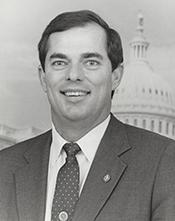
United States · Official source
800 records where Rep. Sarpalius, Bill [D-TX-13] is listed as a sponsor, author, or other actor. Search with topics and years
United States · United States Congress · 31 March 1992
Designates January 16, 1993, as Religious Freedom Day.
United States · United States Congress · 26 March 1992
Designates August 15, 1992, as 82d Airborne Division 50th Anniversary Recognition Day.
United States · United States Congress · 26 March 1992
Designates the seven-day period beginning on October 1, 1992, as National Myasthenia Gravis Awareness Week.
United States · United States Congress · 26 March 1992
Recognizes the commitment of Cal Farley's Boys Ranch and Girlstown U.S.A. to raising young people, many from broken homes, without the financial support of any religious or governmental organization.
United States · United States Congress · 25 March 1992
Good Government Act - Prohibits an elected or appointed official or employee of an executive or judicial agency, or a relative, from receiving from any Government office or employee a service or other benefit, at Government expense, that is not equally available to all other persons, with specified exceptions. Directs the General Accounting Office to report to the Senate and House of Representatives on services and benefits that are available to such officials and employees or relatives that are not equally available to all other persons and on the manner in which each service or benefit contributes to the performance of the duties of the Government, if at all. Requires the Senate and House of Representatives' committees of jurisdiction over this subject matter to introduce a resolution that: (1) identifies services and benefits that may properly be made available at Government expense and those that may not; and (2) directs the appropriate executive and judicial agency officers to make arrangements for the provision of those services and benefits that may appropriately be made available at the expense of officials and employees at fair market value. Directs that all payments for services and benefits received from officials and employees or their relatives, and all rent or other payments received from private contractors that provide such services and benefits, be paid into a specified account to reduce the public debt.
United States · United States Congress · 25 March 1992
Fair Market Standards Act - Prohibits a Member or employee of Congress from receiving from any office, officer, employee, or other entity in the Congress or in a U.S. department or agency any service or other benefit, at Government expense, that is not equally available to all other persons, with specified exceptions. Requires the Sergeant at Arms and Doorkeeper of the Senate and the Sergeant at Arms of the House of Representatives to survey and report to specified congressional committees on all the services and benefits available to Members and employees that are not equally available to all other persons, and the manner in which each service or benefit contributes to the performance of their duties. Requires each Committee to introduce a resolution that describes: (1) each service and benefit that may properly be made available to Members and employees for specified reasons; (2) each service and benefit that should not properly be made available to them; and (3) each service and benefit that may not properly be made available to them but may be made available in or near the Senate or House buildings, at the expense of Members and employees, and provided by employees of the Government or by private contractors. Directs the appropriate officers of the Senate and House to make arrangements for the necessary services and other benefits at fair market value. Mandates that all payments received from Members and employees of Congress for unnecessary services and benefits provided by Government employees, all rent, or other payments received from private contractors that provide such services and benefits be deposited into the deficit reduction account of the Treasury.
United States · United States Congress · 25 March 1992
Savings Associations Interstate Branching Reform Act of 1992 - Amends the Home Owners' Loan Act to preclude a savings association from establishing or operating a new branch outside its home State unless it has the written approval of the Director of the Office of Thrift Supervision. Restricts the Director's authority to approve interstate branching by a savings association to situations where: (1) the law of the host State allows interstate branching; (2) the interstate branch is operated pursuant to the laws of the host State; and (3) the savings association is adequately capitalized under Federal law.
United States · United States Congress · 24 March 1992
Expresses the sense of the Congress that the Vatican should grant recognition to and establish diplomatic relations with Israel.
United States · United States Congress · 20 March 1992
Condemns the March 17, 1992, bombing of the Israeli embassy in Buenos Aires, Argentina. Declares that the U.S. Government should fully cooperate with the Governments of Argentina and Israel in identifying and bringing to justice all of the individuals responsible.
United States · United States Congress · 18 March 1992
Nuclear Reactor Licensing Act of 1992 - Amends the Atomic Energy Act of 1954 to prescribe guidelines for: (1) issuance by the Nuclear Regulatory Commission of nuclear reactor combined construction and operating licenses; and (2) post-construction hearings on such licenses. Provides for judicial review of final Commission orders affecting such licenses.
United States · United States Congress · 18 March 1992
Amends the Immigration and Nationality Act to designate special inquiry officers as immigration judges and provide for their compensation.
United States · United States Congress · 17 March 1992
Designates May 16 through 22, 1992, as National Awareness Week for Life-Saving Techniques.
United States · United States Congress · 5 March 1992
Small Business Innovation Development Amendment Act of 1992 - Amends the Small Business Innovation Development Act of 1982 to extend the Small Business Innovation Research (SBIR) Program from October 1, 1993, to October 1, 2000. Amends the Small Business Act regarding small business eligiblity for Federal agency research and development awards to include in the three-phase evaluation process determining the technological feasibility of ideas those ideas which appear to have commercial potential. Prescribes minimum SBIR expenditure amounts for FY 1992 through 1997 and after. Requires each Federal agency that is required to establish an SBIR program to: (1) determine unilaterally research topics within its SBIR solicitations, giving special consideration to topics which permit substantial applicant participation in research project formulation; and (2) make payments in full to SBIR funding agreement recipients, subject to specified audit deadlines. Directs the Administrator of the Small Business Administration (the Administrator) to modify directives for the conduct of general SBIR policy to provide for: (1) rights to data; (2) continued use of agency property; (3) follow-on contracts; and (4) increased amounts of Phase 1 awards. Repeals the requirement for an annual report by the Office of Science and Technology Policy. Provides that if a Federal agency required to establish an SBIR program makes an SBIR solicitation award for which it receives only one proposal, it shall provide written justification of such award in its next annual report. Requires the Comptroller General to report to the Congress on specified aspects of SBIR program implementation.
United States · United States Congress · 5 March 1992
Amends Federal law relating to unlicensed shipping personnel to require merchant mariner's documents for individuals serving on a vessel of at least five gross tons (currently, at least 100 gross tons), subject to certain exceptions, including small passenger vessels (currently, including vessels operating only on rivers and lakes, except the Great Lakes). Removes provisions excepting barges.
United States · United States Congress · 5 March 1992
Amends the Harmonized Tariff Schedule of the United States to extend, through December 31, 1998, the suspension of duty on tamoxifen citrate.
United States · United States Congress · 5 March 1992
Medicare Geographic Data Accuracy Act of 1992 - Amends title XVIII (Medicare) of the Social Security Act to require the Secretary of Health and Human Services to consult with State medical societies in revising the geographic adjustment factors used to determine reimbursements for physician services under part B (Supplementary Medical Insurance) of Medicare. Requires the Secretary to base geographic-cost-of-practice indices under Medicare upon the most recent available data.
United States · United States Congress · 27 February 1992
Prohibits a State, political subdivision, or agency or organization of two or more States (entities) from enacting or enforcing any law, rule, regulation, or standard relating to interstate or intrastate rates, routes, or services: (1) of a corporate compensated carrier not operating under the jurisdiction of the Interstate Commerce Commission (ICC); (2) involving transportation by a motor vehicle and driver leased by a shipper from a single source when certain conditions exist; and (3) of any transportation of property provided by motor vehicles leased, with or without drivers, from a motor private carrier, to the extent that such law, rule, regulation, or standard is in addition to, or more stringent than, the requirements for such operations established by the ICC. Prohibits such entities from enacting or enforcing any law, rule, regulation, or standard that: (1) prohibits or limits the ability of a person providing transportation to obtain a motor common carrier certificate or motor contract carrier permit to provide intrastate transportation of property, whether under the same corporate structure as the nontransportation primary business or as a separate transportation subsidiary, by virtue of the person's status as a nontransportation primary business, or that subjects such person to criteria that are not applied to a transportation business seeking the same authority to operate as a motor common or contract carrier; or (2) prohibits, limits, or places requirements on transportation services other than requirements for the safety of operations and minimum financial responsibility. Defines "dedicated contract driver" to mean a motor contract carrier that assigns vehicles management personnel drivers, and other related workers for the exclusive use of a contracting shipper.
United States · United States Congress · 27 February 1992
Designates May 4 through 10, 1992, as Public Service Recognition Week.
United States · United States Congress · 27 February 1992
Designates March 17, 1992, as Irish Brigade Day.
United States · United States Congress · 27 February 1992
Designates the week beginning April 19, 1992, as National Credit Education Week.
United States · United States Congress · 26 February 1992
Designates May 10, 1992, as Infant Mortality Awareness Day.
United States · United States Congress · 25 February 1992
Designates May 1992 as Neurofibromatosis Awareness Month.
United States · United States Congress · 19 February 1992
Depository Institutions Interstate Branching Reform Act of 1992 - Amends Federal banking law, the Federal Deposit Insurance Act, the Home Owners' Loan Act, and the International Banking Act of 1978 to authorize interstate branching by national banks, State nonmember insured banks, Federal and State savings associations, and foreign banks, subject to the law of the State in which such branches are to be located and to Federal bank capitalization requirements.
United States · United States Congress · 19 February 1992
Individualized Rehabilitation Services Program Selection Act of 1992 - Amends the Rehabilitation Act of 1973 to provide handicapped individuals eligible for services under such Act with the right to select their vocational rehabilitation service providers pursuant to an individualized written rehabilitation program.
United States · United States Congress · 18 February 1992
Designates September 13 through 19, 1992, as National Rehabilitation Week.
United States · United States Congress · 11 February 1992
Designates April 14, 1992, as Education and Sharing Day, U.S.A., the birthday and the start of the 91st year of Rabbi Menachem Mendel Schneerson, leader of the worldwide Lubavitch movement.
United States · United States Congress · 7 February 1992
Repeals penalties for noncompliance by States with a program requiring the use of safety belts and motorcycle helmets.
United States · United States Congress · 5 February 1992
Secured Credit Availability Amendments of 1992 - Amends Federal bankruptcy law to preclude a debtor from avoiding a lien on certain property that would otherwise be exempt if: (1) the lien is a nonpossessory, nonpurchase-money security interest in specified trade-related property; and (2) State law prohibits the debtor from avoiding a lien on such otherwise exempt property.
United States · United States Congress · 5 February 1992
Designates January 16, 1993, as National Good Teen Day.
United States · United States Congress · 5 February 1992
Designates June 11, 1992, as National Alcoholism and Drug Abuse Counselors Day.
United States · United States Congress · 5 February 1992
Designates the week of June 1 through 7, 1992, as National Polio Awareness Week.
United States · United States Congress · 4 February 1992
Designates October 1992 as Italian-American Heritage and Culture Month.
United States · United States Congress · 28 January 1992
Amends the Internal Revenue Code to allow a deduction for interest on indebtedness secured by a domestically-manufactured highway vehicle acquired after December 31, 1991.
United States · United States Congress · 28 January 1992
Expresses the sense of the House of Representatives that: (1) any verbal commitments by Japan to reduce its trade barriers to U.S. products or services should be reduced to a binding agreement; (2) the President should initiate negotiations with Japan to reduce such barriers, with the goal of protecting U.S. jobs; (3) in addition to the Structural Impediment Initiative talks, the President should pursue negotiations with respect to auto parts, automobiles, semiconductors, insurance, agriculture, aerospace, and other areas in which he considers Japan maintains a market barrier; and (4) U.S. citizens should purchase more U.S. goods and services.
United States · United States Congress · 24 January 1992
Small Business Credit Crunch Relief Act of 1992 - Amends the Small Business Act to authorize deferred participation loans and other financings in FY 1992 through 1994, including general business loans, pollution control loan guarantees, and development company loans and debenture guarantees. Authorizes appropriations to the Small Business Administration for FY 1992 through 1994 for salaries and expenses to implement the debenture and loan guarantee programs authorized by this Act.
United States · United States Congress · 22 January 1992
Title I: Short Title, Findings, and Definitions - Trade Enhancement Act of 1992 - Sets forth congressional findings and purposes with respect to access to Japanese markets by U.S. manufacturers of motor vehicles and motor vehicle parts. Title II: Merchandise Trade Deficit Reduction - Sets forth annual merchandise trade deficit reduction targets with respect to Japan's trade deficit with the United States. Requires the Secretary of Commerce (Secretary) to compute annually whether the target has been met for each year, and if it has not, to publish in the Federal Register the import and production restriction implementation period for such year. Authorizes the Secretary to impose temporary quantitative import restrictions on Japanese or Japanese-related motor vehicles (foreign motor vehicles) entered during the first three months of the calendar year following the year for which such computation is made. Requires the Secretary to submit a report to the Congress. Expresses the sense of the Congress that representatives of the United States and Japan should continue discussions regarding measures, to be selected by the Japanese Government, to achieve the merchandise trade deficit reduction targets. Urges the United States Trade Representative (USTR) during such discussions to address market access priorities for U.S. exports to Japan. Title III: Import and Production Restrictions to Be Implemented If Trade Deficit Reduction Target Not Met - Directs the Secretary to compute for calendar years 1993 through 1999 quantitative import restrictions on foreign motor vehicles and domestic motor vehicle production restrictions for transplanted Japanese-related auto manufacturers, except such computations are not required for calendar years 1997 through 1999 if trade deficit reduction targets for calendar years 1992 through 1996 are met. Sets forth civil penalties. Requires each person that has one or more motor vehicle or motor vehicle parts manufacturing facilities within the United States to certify to the Secretary whether it is a domestic vehicle or parts manufacturer or a transplanted Japanese-related vehicle manufacturer. Sets forth provisions with respect to: (1) the Secretary's authority to obtain information and data; and (2) enforcement of this Act. Sets forth civil penalties. Sets forth provisions with respect to the enforcement and judicial review of such penalties. Requires the Secretary to report annually to the Congress on implementation of this Act. Title IV: Negotiations and Other Actions - Requires the USTR to enter into negotiations with Japan to enter into a bilateral agreement that: (1) provides a phased-in increase in the use by transplanted motor vehicle manufacturers of domestically-produced motor vehicle parts to the point where such parts constitute 60 percent or more of the total parts used in the production of such vehicles; and (2) eliminate those aspects of the Japanese automotive distribution system that affect the access of domestically-produced motor vehicle parts to Japanese markets. Directs the USTR to enter into negotiations with representatives of the European Community, Japan, and the governments of other major vehicle-producing countries to enter into multilateral agreements that rationalize world-wide market access and production of motor vehicles and motor vehicle parts. Considers acts, practices, and policies of Japan (including, but not limited to, acts, policies, and practices utilized in the Japanese automotive distribution system known as "Keiretsu") that affect the access of manufacturers of domestic motor vehicle parts to the Japanese market as being unjustifiable and burdensome or restrictive to U.S. commerce, according to the Trade Act of 1974. Adds to response authority under such Act authority to increase the percentage of domestically-produced motor vehicle parts used in the production of motor vehicles for purposes of the qualification of Japanese manufacturers as domestic vehicle manufacturers. Specifies certain objectives to be included in negotiations with Japan if the USTR decides to take action with respect to such practices. Requires the USTR to make certain estimates with respect to the percentage of the Japanese market that is accounted for by domestic motor vehicle parts manufacturers. Directs the Secretary to commence an antidumping duty investigation under the Tariff Act of 1930 to determine whether imports or sales (or the likelihood of sales) of Japanese motor vehicle parts to the United States warrant the imposition of antidumping duties. Requires the Secretary of the Treasury to study and report to the Congress on the extent to which: (1) "Keiretsu" operations in the United States are in compliance with the internal revenue laws, particularly those relating to transfer pricing; and (2) the Internal Revenue Service is auditing such operations. Amends the Harmonized Tariff Schedule of the United States to classify for the purposes of tariff treatment certain light trucks as motor vehicles for the transport of goods.
United States · United States Congress · 3 January 1992
Amends the Railroad Retirement Solvency Act of 1983 to make permanent the transfer to the Railroad Retirement Account of income tax revenues attributable to the taxation of tier II railroad retirement benefits.
United States · United States Congress · 26 November 1991
Directs the Secretary of Health and Human Services and the Secretary of Agriculture to jointly report to the President and the Congress on the differences in program rules under the food stamp program, Aid to Families with Dependent Children program (part A of title IV of the Social Security Act), and Medicaid program (title XIX of the Social Security Act) and how such rules could be made uniform. Requires coordination of such report with the report of the Advisory Committee on Welfare Simplification and Coordination.
United States · United States Congress · 26 November 1991
United States Commercial Center Pilot Program Act of 1990 - Directs the Secretary of Commerce to establish, as a pilot program, a United States Commercial Center in one country each in the Baltics, including one of the former Soviet republics, Asia, and Latin America to provide additional resources for the promotion of exports of U.S. goods and services to such countries. Requires the Secretary to use the Market Development Cooperator Program to assist the Centers in providing such resources. Authorizes appropriations.
United States · United States Congress · 26 November 1991
Steel Trade Liberalization Program Extension Act - Amends the Steel Import Stabilization Act to express the sense of the Congress with respect to the quantity of steel products imported into, or exported to, the United States from April 1, 1992, through September 30, 1994, under the steel trade liberalization program.
United States · United States Congress · 26 November 1991
Crop-Sharing Hunger Relief Act - Amends the Internal Revenue Code to allow a deduction for charitable contributions of agricultural commodities on the surplus commodity list to tax-exempt organizations (other than certain private foundations) if the use of the property by the donee is solely for the purpose of feeding individuals in famine, disaster, or other economically depressed areas and if such use meets other specified requirements. Excludes such contribution from the definition of capital gain property for purposes of the alternative minimum tax.
United States · United States Congress · 26 November 1991
Constitutional Amendment - Requires the Congress and the President, prior to each fiscal year, to agree on an estimate of total receipts (except those derived from borrowing) for that fiscal year by enactment of a joint single subject resolution. Prohibits outlays for that year (except those for repayment of debt principal) from exceeding this amount unless the Congress, by a three-fifths rollcall vote of each House, authorizes a specific excess of outlays over receipts. Requires a three-fifths rollcall vote of each House to increase the public debt. Directs the President to submit a balanced budget to the Congress. Requires the amount by which outlays exceed receipts to be eliminated or reduced by equal amounts of outlay reductions and revenue increases, to be approved by a majority of each House by rollcall vote. Requires any elimination by unequal amounts of outlay reductions and revenue increases to be approved by three-fifths rollcall vote of each House. Requires amounts by which receipts exceed outlays to be used for reducing the public debt. Prohibits total receipts for any fiscal year from increasing by a rate greater than the rate of increase in the gross national product in the second prior fiscal year, unless approved by a three-fifths rollcall of each House. Waives these provisions when a declaration of war is in effect. Makes this Act effective beginning with FY 1997 or with the second fiscal year beginning after its ratification.
United States · United States Congress · 25 November 1991
Constitutional Amendment - Prohibits a person from serving in the U.S. Government in the following positions, either individually or cumulatively, for more than 12 years: (1) President of the United States; (2) Vice-President of the United States; (3) member of the President's Cabinet; (4) Member of the Congress; (5) position within the District of Columbia or a contiguous area for which appointment by the President is required, by and with the advice and consent of the Senate; and (6) Justice of the Supreme Court.
United States · United States Congress · 22 November 1991
Designates 1993 as the Year of American Craft: A Celebration of the Creative Work of the Hand.
United States · United States Congress · 22 November 1991
Commends: (1) the people of Guam for their patriotism, bravery, loyalty to the United States, and many sacrifices during World War II, particularly during the invasion and occupation of the Guam territory; (2) the members of the Navy Insular Force and U.S. Navy and Marine Corps for the efforts and sacrifices they made in defense of the U.S.; (3) the Hawaiians for their sacrifices and contributions to the U.S. war effort during the attack on Pearl Harbor on December 7, 1941; and (4) the Hawaii Territorial Guard members, Varsity Victory Volunteers, the civilian workers at the Pearl Harbor Naval Ship Yard and other Hawaiian military installations, 100th Infantry Battalion, Military Intelligence Service, and 442nd Regimental Combat Team for their sacrifices and contributions to the U.S. war effort during such attack.
United States · United States Congress · 21 November 1991
Taxpayer Bill of Rights Act of 1991 - Title I: Additional Safeguards to Protect Taxpayers' Rights - Subtitle A: Taxpayers' Advocate - Amends the Internal Revenue Code to establish in the Internal Revenue Service (IRS) the Office of Taxpayers' Advocate, headed by the Taxpayers' Advocate, appointed by the President, by and with the advice and consent of the Senate. Requires the Office to: (1) assist taxpayers in resolving problems with the IRS; (2) identify areas in which taxpayers have problems in dealings with the IRS; (3) propose changes in the administrative practices of the IRS to mitigate such problems; and (4) identify potential legislative changes which may be appropriate to mitigate such problems. Requires the Taxpayers' Advocate to annually report to specified congressional committees on Office activities. Requires the Commissioner of Internal Revenue to establish procedures requiring a formal response to all recommendations submitted to the Commissioner by the Taxpayers' Advocate. Authorizes the terms of a Taxpayer Assistance Order to require the Secretary of the Treasury to take certain actions (currently, only to cease or refrain from taking such actions). Subtitle B: Modifications to Installment Agreement Provisions - Requires prior notification to taxpayers under an installment agreement to pay tax liability before altering, modifying, or terminating such an agreement. Provides for administrative review of denials of requests for installment agreements. Suspends the failure to pay penalty during any period an installment agreement is in effect. Subtitle C: Interest - Extends from ten days to 21 days the period for which interest will not be imposed after notice and demand for payment, if such payment is less than $100,000. Provides for the abatement of interest in the case of an assessment due to the error or delay of an IRS managerial act. Increases the interest rate for overpayment of tax from two percent to three percent (making such rate equal to the interest rate for underpayment of tax). Waives interest on all overpayments refunded within 45 days after a return is filed. Subtitle D: Joint Returns - Requires separate deficiency notices in the case of a joint income tax return if the most recent data available to the IRS shows that such spouses did not file a joint return with each other. Allows the disclosure of collection activities to an individual requesting such information in the case of a joint return where such individual is no longer married to or resides in the same household as the other joint filer. Removes limitations on filing a joint return after filing separate returns. Subtitle E: Collection Activities - Authorizes the Secretary, if it is determined to be in the best interest of the taxpayer and the United States, to: (1) withdraw a notice of a lien; (2) return property that has been levied upon; and (3) offer compromises in civil or criminal cases. Requires the Secretary, at the request of the taxpayer, to make reasonable efforts to notify credit reporting agencies and financial institutions of such withdrawal notice. Subtitle E (sic): Erroneous and Fraudulent Information Returns - Requires payee statements to provide the phone number of the person providing payment. Establishes civil damages for the fraudulent filing of information returns. Requires the Secretary to take reasonable steps to corroborate the accuracy of an information return when making a determination of a deficiency by a third party, when such return is disputed by the taxpayer. Subtitle F: Modifications to Penalty for Failure to Collect and Pay Over Tax - Declares that a person shall not be liable for any penalty for failure to collect and pay over tax if such person: (1) is not a significant owner, or highly compensated employee of the trade or business; (2) notifies the Secretary within ten days after such failure; and (3) such notification was before any notice by the Secretary with respect to such failure. Requires the Secretary to disclose certain information where more than one person is liable for a penalty. Subtitle G: Awarding of Costs and Certain Fees - Repeals the "substantially justified" test for determining whether a taxpayer may recover costs and fees incurred as part of an administrative or court proceeding. Provides for the awarding of reasonable litigation or administrative costs to a prevailing party who represents himself in an administrative or court proceeding. Makes IRS employees personally liable in certain cases. Provides that any failure to agree to an extension of time for the assessment of any tax shall not be taken into account in determining whether a prevailing party has exhausted all administrative remedies. Subtitle H: Other Provisions - Revises provisions on the required content of tax due, deficiency, and other notices. Provides for the treatment of returns prepared for or executed by the Secretary for purposes of certain tax penalties. Provides protection for taxpayers who rely on certain guidance published by the IRS. Title II: Form Modifications, Studies - Subtitle A: Form Modifications - Directs the Secretary to: (1) ensure that taxpayers are aware of permission to pay tax in installments, extensions of time for payment of tax, and compromises of tax liability; (2) improve procedures for taxpayers to notify the Secretary of changes in names and addresses; (3) include in a specified publication a section on the rights and responsibilities of divorced individuals; (4) ensure that employees are aware of their responsibilities under the Federal tax system and that the public is aware of penalties for failure to collect and pay over tax; and (5) notify taxpayers any payments that cannot be associated with any outstanding tax liability. Subtitle B: Studies - Requires the Secretary to report to the tax-writing committees on: (1) a pilot program for appeals of certain enforcement actions (including lien, levy, and seizure actions; (2) a study on ways to assist the elderly, physically impaired, foreign-language speaking, and other taxpayers with special needs to comply with IRS laws; (3) the scope and content of the IRS taxpayer-rights education program for its officers and employees; and (4) cases involving complaints about misconduct of IRS employees and the disposition of such complaints. Requires the Comptroller General to report to the tax-writing committees on: (1) a study of notices of deficiency; (2) the accuracy and clarity of 25 of the most commonly used IRS forms, notices, and publications; and (3) a study of IRS employee-suggestion programs.
United States · United States Congress · 21 November 1991
Federal-State Pesticide Regulation Partnership Act of 1991 - Amends the Federal Insecticide, Fungicide, and Rodenticide Act to remove the authority of political subdivisions to inspect records of persons selling or delivering pesticides for purposes of enforcing such Act. Prohibits local governments from imposing or continuing any requirement regarding pesticides or devices.
United States · United States Congress · 19 November 1991
Second National Blue Ribbon Commission to Eliminate Waste in Government Act - Establishes the Second National Blue Ribbon Commission to Eliminate Waste in Government to: (1) conduct a private sector survey on management and cost control in the Federal Government; (2) review executive agency operations and existing General Accounting Office, Congressional Budget Office, Inspector General Reports, and other existing governmental and nongovernmental recommendations for reducing waste; and (3) submit to the President and the Congress a list of those recommendations with estimated savings that the Commission determines are most significant and recommendations for improving the budget process, management, and reducing waste and costs in the Government. Requires the Commission to identify, address, and to report to the President and the Congress on: (1) opportunities for increased efficiency and reduced costs in the Government that can be realized by executive action or legislation; (2) areas in the Government where managerial accountability can be enhanced and administrative control can be improved; (3) specific Federal programs that have accomplished their objectives and ought to be terminated; (4) specific Federal program services that could be provided at a lower cost by the private sector; (5) specific reforms of the budget process that would yield savings, increase accountability and efficiency, and enhance public confidence in the budget process; (6) specific areas in the Government where further study can be justified by potential savings; and (7) specific recommendations for legislative and administrative actions. Requires the Commission to be funded, staffed, and equipped, to the extent practicable and permitted by law, by the private sector without cost to the Government.
United States · United States Congress · 19 November 1991
National Fallen Firefighters Foundation Act - Establishes the National Fallen Firefighters' Foundation. Declares that the Foundation is: (1) a charitable and nonprofit corporation to be organized under the laws of the State of Maryland; and (2) not an agency or establishment of the United States. Provides that the Foundation is to: (1) primarily encourage, accept, and administer private gifts of property for the benefit of the National Fallen Firefighters' Memorial and its annual memorial service; (2) provide financial assistance to the families of firefighers who die in the line of duty; and (3) assist in the recognition of such firefighters. Sets forth provisions for establishment and membership of a Board of Directors of the Foundation. Makes the Administator of the U.S. Fire Administration of the Federal Emergency Management Agency an ex officio nonvoting member of the Board, who shall appoint Directors of the Board. Sets forth rights and obligations of the Foundation, including having its principal offices in the State of Maryland. Authorizes the Administrator to: (1) provide, and accept reimbursements for, personnel, facilities, and other administrative services to the Foundation; and (2) accept the services of the Foundation, the Board, and the Board's officers and employees as volunteers in performing functions authorized under this Act. Sets forth requirements relating to audits and annual reports. Provides for relief for certain Foundation acts or failures to act. Provides that the United States is not liable for any debts, defaults, acts, or omissions of the Foundation. Authorizes appropriations.
United States · United States Congress · 19 November 1991
Designates December 1, 1991, as World AIDS Day.