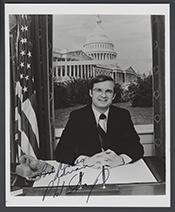
United States · United States Congress · 23 February 1993
Extends the authorization of appropriations for the National Historical Publications and Records Commission. Requires an appropriation separate from the appropriation for the National Archives and Records Administration.
United States · United States Congress · 18 February 1993
TABLE OF CONTENTS: Title I: Regulatory Impact on Credit Availability Subtitle A: General Provisions Subtitle B: Impact of Accounting and Capital Issues on Credit Availability Subtitle C: Disincentives to Risk-Taking Subtitle D: Miscellaneous Credit Availability Provisions Title II: Regulatory Micromanagement Title III: Unnecessary Cost, Paperwork and Regulation Subtitle A: General Provisions Subtitle B: Holding Company Efficiencies Title IV: Consumer Inconvenience, Paperwork, and Cost; Other Non-Supervisory Reforms Subtitle A: Consumer Benefits and Lending Process Improvements Subtitle B: Other Non-Supervisory Reforms Title V: Community Investment Economic Growth and Financial Institutions Regulatory Paperwork Reduction Act of 1993 - Title I: Regulatory Impact on Credit Availability - Subtitle A: General Provisions - (Sec. 101) Amends the Federal Deposit Insurance Act (FDIA) to direct the appropriate Federal banking agencies to minimize the negative impact upon credit availability for small business, residential, and agricultural purposes and on low-and moderate-income communities when prescribing real estate lending standards. (Sec. 102) Amends the Financial Institutions Reform, Recovery, and Enforcement Act of 1989 to direct the Appraisal Subcommittee to encourage the States to develop reciprocity agreements among themselves so as to readily authorize licensed appraisers in good standing to perform appraisals in sister States. Subtitle B: Impact of Accounting and Capital Issues on Credit Availability - (Secs. 111-113) Amends the FDIA to amend the regulatory scheme with respect to: (1) audits of insured depository institutions; (2) recourse agreements; and (3) market value accounting. (Sec. 114) Requires the Department of the Treasury to report to certain congressional committees on the effect on the national economy resulting from implementation of risk based capital standards (including the Basle international capital standards). Subtitle C: Disincentives to Risk Taking - (Sec. 121) Amends the FDIA and the Federal Credit Union Act with respect to the due process protections accorded the attachment of assets, and the statutory authority to require a depository institution to prohibit a person from alienating property under certain circumstances. Subtitle D: Miscellaneous Credit Availability Provisions - (Sec. 131) Mandates the establishment of a regulatory appeals process within each appropriate Federal banking agency and the National Credit Union Administration. (Secs. 132 and 133) Amends the Federal Reserve Act to modify the aggregate limits on insider lending for specified small banks. Mandates that certain agencies study and report to the Congress on the advisability and budgetary impact of requiring insured depository institutions to maintain sterile reserves. (Sec. 134) Amends the FDIA to prescribe guidelines under which the Federal Deposit Insurance Corporation (FDIC) may, with respect to an undercapitalized insured depository institution, waive its right to repudiate an agreement to sell credit card accounts receivable. (Sec. 135) Amends the Federal Home Loan Bank Act to permit FHLBA banks to: (1) make secured advances upon obtaining a security interest in certain nonresidential real estate-related collateral; and (2) invest surplus funds to purchase participation interests in residential construction loans originated by member institutions. Title II: Regulatory Micromanagement - (Secs. 201-204) Amends the FDIA to modify the regulatory scheme with respect to: (1) safety and soundness standards; (2) paperwork reduction; (3) rules on deposit taking; and (4) a transition period for new regulations. Title III: Unnecessary Cost, Paperwork and Regulation -Subtitle A: General Provisions - (Secs. 301-303) Amends the FDIA with respect to: (1) bank examinations; (2) coordination of State and Federal examinations; and (3) the use of accounting principles. (Secs. 304-306) Prescribes guidelines for the reduction of call report requirements and capital compliance requirements. Excludes automated teller machines and specified bank branches from FDIA branch closure notice requirements. (Sec. 307) Amends Federal law regarding monetary instruments transactions to direct the Secretary of the Treasury to annually: (1) review all regulations pertaining to monetary instruments transaction requirements, seeking public comment; and (2) publish all written rulings interpreting such law, as well as staff commentaries. (Sec. 309) Amends the FRA and the FDIA to cite conditions under which accounts of U.S. banks are shielded from liability to repay] deposits made at foreign branches. Subtitle B: Holding Company Efficiencies - (Secs. 321-325) Amends the Bank Holding Company Act of 1956 to modify the procedures under which bank holding companies: (1) are formed; and (2) acquire interests in nonbanking activities. Reduces the post-approval waiting period for bank holding company acquisition and bank mergers. Title IV: Consumer Inconvenience, Paperwork, and Cost; Other Non-Supervisory Reforms - Subtitle A: Consumer Benefits and Lending Process Improvements - (Sec. 401) Mandates a Federal Reserve study and report to the Congress on ways to streamline the credit-granting process. (Secs. 402-403) Amends the Truth in Lending Act regarding: (1) certain exemptions from credit cost disclosure requirements; (2) modification of waiver of the debtor's rescission rights; and (3) alternative disclosures for adjustable rate mortgages. (Sec. 405) Amends the Truth in Savings Act to exempt business accounts from its purview. Subtitle B: Other Non-Supervisory Reforms - (Secs. 411-413) Amends the Expedited Funds Availability Act regarding: (1) the availability of Treasury checks and local checks; (2) new accounts; and (3) the allocation of risks of loss and liability to the States and political subdivisions. (Secs. 414 and 421) Amends the Electronic Fund Transfer and the Truth in Lending Act to increase the consumer liability limit in specified circumstances of unauthorized electronic fund transfers and unauthorized use of credit cards where the cardholder has substantially contributed to the unauthorized transfer or use. (Sec. 432) Amends the Housing and Urban Development Act of 1968 to reduce the homeownership debt counseling notification requirement to no more than once per year. (Sec. 433) Prohibits a Federal banking agency from imposing data collection requirements upon an institution under its jurisdiction other than the information required under the Home Mortgage Disclosure Act of 1975. (Secs. 441 and 442) Amends the Real Estate Settlement Procedures Act of 1974 to: (1) modify the disclosure guidelines for the servicing of mortgage loans; and (2) exempt certain credit transactions from its purview. Title V: Community Investment - (Sec. 501) Amends the Community Reinvestment Act of 1977 (the Act) with respect to: (1) minimizing the regulatory paperwork costs and burdens associated with compliance; (2) conditions under which an application for a deposit facility shall not be denied on the basis of compliance; (3) granting credit to a financial institution for making investments and loans to either minority and women's depository institutions, or to entities providing benefits to distressed communities; (4) assessments of special purpose banks; and (5) the acceptability of State examinations in lieu of Federal examinations.
United States · United States Congress · 18 February 1993
ASRM Termination Act - Prohibits the expenditure of Federal funds for the National Aeronautics and Space Administration's Advanced Solid Rocket Motor Program.
United States · United States Congress · 4 February 1993
Constitutional Amendment - Prohibits outlays for a fiscal year (except those for repayment of debt principal) from exceeding total receipts (except those derived from borrowing) for that fiscal year unless the Congress, by a three-fifths roll call vote of each House, authorizes a specific excess of outlays over receipts. Requires a three-fifths roll call vote of each House to increase the public debt. Directs the President to submit a balanced budget to the Congress. Requires the approval of a majority of each House by roll call vote before any bill to increase revenue may become law. Waives these provisions when a declaration of war is in effect. Waives these provisions when the United States is engaged in a military conflict which poses a threat to national security as declared by a joint resolution adopted by a majority of each House.
United States · United States Congress · 3 February 1993
TABLE OF CONTENTS: Title I: Modification of Passive Loss Rules Title II: Provisions Relating to Real Estate Investments By Pension Funds Title III: Discharge of Indebtedness Real Estate Stability and Recovery Amendments Act of 1993 - Title I: Modification of Passive Loss Rules - Amends the Internal Revenue Code to exclude certain rental real estate development activities from treatment as a passive activity for purposes of determining passive activity losses and credits. Title II: Provisions Relating to Real Estate Investments by Pension Funds - Modifies exceptions to the exclusion of real property acquired by a qualified organization from the meaning of acquisition indebtedness. Makes certain exceptions inapplicable to sales out of foreclosure by a financial institution. Applies the meaning of acquisition indebtedness to investments in certain large partnerships where the principal purpose of partnership allocation is not tax avoidance. Repeals the special rule for publicly traded partnerships with respect to the treatment of unrelated business taxable income. Permits a tax-exempt title-holding company to receive unrelated business taxable income of up to ten percent of its gross income, if the income is incidentally derived from the holding of real property. Excludes from unrelated business taxable income: (1) gains from the sale, exchange, or other disposition of real property acquired from financial institutions that are in conservatorship or receivership; (2) amounts received or accrued as consideration for entering into agreements to make loans; and (3) all gains on the lapse or termination of options, written by an organization in connection with its investment activities, to buy or sell real property. Provides for the tax treatment of pension fund investments in real estate investment trusts. Title III: Discharge of Indebtedness - Excludes from gross income, the income from the discharge of qualified real property business indebtedness. Applies the excluded amount to reduce the basis of the depreciable real property. Limits such amount to the amount of outstanding indebtedness over the fair market value of the property, reduced by any other qualified real estate business indebtedness. Excludes qualified farm indebtedness from the definition of "qualified real property business indebtedness."
United States · United States Congress · 3 February 1993
Amends the Internal Revenue Code with respect to the tax-exempt status of a cooperative telephone company to provide for the tax treatment of income received from a nonmember telephone company for services by the cooperative which are indirectly paid for by members of the cooperative. Includes billing and collection services for a nonmember telephone company under such treatment. Provides for the tax treatment of account reserve income that does not exceed a specified percentage of the company's total income. Subjects a portion of such investment income to unrelated business income tax.
United States · United States Congress · 3 February 1993
Energy Efficiency and Conservation Act of 1993 - Amends the Internal Revenue Code to allow a deduction for energy conservation expenditures by an electric or gas utility during a taxable year in connection with its trade or business, as long as the rates for the sale of such electricity or natural gas have been approved by the appropriate governing body.
United States · United States Congress · 21 January 1993
Prisoner-of-War Commemorative Coin Act - Directs the Secretary of the Treasury to issue a specified number of one-dollar coins emblematic of the experience of American prisoners of war. Requires that all sales of such coins include a surcharge of $5 per coin. Requires specified proceeds from such surcharges to be paid to the: (1) Secretary of the Interior for construction of the Andersonville Prisoner-of-War Museum in Andersonville, Georgia; (2) endowment fund established by this Act for the maintenance of such Museum; and (3) Secretary of Veterans Affairs to maintain national cemeteries.
United States · United States Congress · 6 January 1993
Requests the Occupational Safety and Health Administration to publish, within one year, proposed amended regulations that specify the components of an adequate operator training program and that provide that only trained employees be authorized to operate powered industrial trucks.
United States · United States Congress · 5 January 1993
Federal Employees Political Activities Act of 1993 - Prohibits an employee from using or attempting to use official authority or influence to interfere with or affect the result of any election. Prohibits the use of official authority to intimidate, threaten, coerce, or influence: (1) any individual for the purpose of interfering with the right to vote or not to vote for any candidate or measure in any election; (2) any person to give or withhold any political contribution; or (3) any person to engage, or not to engage, in any form of political activity. Prohibits an employee from: (1) giving or offering to give a political contribution to any individual either to vote or to refrain from voting; (2) soliciting, accepting, or receiving a political contribution to vote or refrain from voting; or (3) giving or handing over a political contribution to a superior. Prohibits an employee from soliciting, accepting, or receiving a political contribution: (1) from another employee (or a member of another employee's immediate family) with respect to whom the employee is a superior; or (2) in any room or building occupied in the discharge of official duties by a Federal employee, official, or contractor. Prohibits an employee from getting involved with political contributions with any person who: (1) has, or is seeking to obtain, contractual or other business relations with the employing agency; (2) conducts operations regulated by that agency; or (3) has interests which may be substantially affected by the performance of the employee's official duties. Prohibits an employee from engaging in political activity: (1) while on duty; (2) in any room or building occupied in the discharge of official duties by a Federal employee or official; (3) while wearing a uniform or official insignia identifying the office or position of the employee; or (4) while using any vehicle owned or leased by the Government. Exempts certain high level political appointees from such prohibitions if the costs associated with the political activity are not paid for by money derived from the Treasury. Authorizes leave without pay or accrued annual leave to an employee who is a candidate, upon request, to allow such employee to engage in activities relating to that candidacy. Applies this Act to postal employees and employees of the Postal Rate Commission.
United States · United States Congress · 5 January 1993
Merchant Mariners Fairness Act of 1993 - Provides that certain qualified service of a member of the U.S. merchant marine, including a vessel crewmember of the U.S. Army Transport Service, during World War II constituted active military service for purposes of eligibility for various veterans' benefits under the GI Bill Improvement Act of 1977. Requires the Secretary of Defense to issue an honorable discharge under such Act to each merchant marine member whose qualified service warrants such a discharge. Prohibits the payment of any retroactive benefits under this Act. Mandates a processing fee for any benefit application for such qualified service.
United States · United States Congress · 5 January 1993
Amends the National Labor Relations Act and the Railway Labor Act to prohibit permanent replacement of strikers. Amends the National Labor Relations Act to make it an unfair labor practice for an employer to promise, threaten, or take other action to hire a permanent replacement for an employee who: (1) at the beginning of a labor dispute was in a bargaining unit in which a labor organization either was the certified or recognized exclusive representative or had filed, at least 30 days before such dispute began, a petition for a representational election on the basis of written authorizations by a majority of unit employees and the National Labor Relations Board (NLRB) has not completed the representation proceeding; and (2) in connection with that dispute has engaged in concerted activities for collective bargaining or other mutual aid and protection through that labor organization. Makes it an unfair labor practice for an employer to withhold or deny any other employment right or privilege to such an employee as described above who is working for or has unconditionally offered to return to work for the employer, out of preference for any other individual based on that individual's performing, having performed, or having indicated a willingness to perform bargaining unit work for the employer during the dispute. Amends the Railway Labor Act to prohibit any carrier or its officer or agent from offering or granting: (1) permanent replacement employee status in a craft or class during a labor dispute; or (2) any employment preference to an individual who worked or indicated a willingness to work in a craft or class during a labor dispute over an employee who exercised specified rights during such dispute and who is working for, or has unconditionally offered to return to work for, the carrier.
United States · United States Congress · 5 January 1993
TABLE OF CONTENTS: Title I: General Provisions Regarding Title IV of Public Health Service Act Title II: National Institutes of Health in General Title III: General Provisions Respecting National Research Institutes Title IV: National Cancer Institute Title V: National Heart, Lung, and Blood Institute Title VI: National Institute on Diabetes and Digestive and Kidney Diseases Title VII: National Institute on Arthritis and Musculoskeletal and Skin Diseases Title VIII: National Institute on Aging Title IX: National Institute of Allergy and Infectious Diseases Title X: National Institute of Child Health and Human Development Title XI: National Eye Institute Title XII: National Institute of Neurological Disorders and Stroke Title XIII: National Institute of Environmental Health Sciences Title XIV: National Library of Medicine Title XV: Other Agencies of National Institutes of Health Title XVI: Awards and Training Title XVII: National Foundation for Biomedical Research Title XVIII: Research With Respect to Acquired Immune Deficiency Syndrome Title XIX: Studies Title XX: Miscellaneous Provisions Title XXI: Effective Dates National Institutes of Health Revitalization Amendments of 1993 - Title I: General Provisions Regarding title IV of Public Health Service Act - (Sec. 101) Amends the Public Health Service Act to condition research funding on human subject review and scientific and technical peer review. Prohibits withholding funding on ethical grounds unless an ethics advisory board so recommends. (Sec. 111) Regulates human fetal tissue transplantation research. (Sec. 121) Removes provisions regarding: (1) biomedical ethics; (2) waiver of a risk standard; and (3) the construction of title IV (National Research Institutes). Declares ineffective a Federal regulation relating to ethical advisory boards. (Sec. 131) Requires inclusion of women and minorities as subjects in each clinical research project under such title IV. (Sec. 141) Establishes: (1) the Office of Research on Women's Health; (2) the Coordinating Committee on Research on Women's Health; and (3) the Advisory Committee on Research on Women's Health. Mandates: (1) study of the representation of women among senior physicians and scientists of the national research institutes (NRIs) and among those conducting supported research; and (2) activities to increase that representation. Establishes a data system containing information on research on women's health. (Sec. 151) Establishes the Office of Scientific Integrity. Requires grant, contract, or cooperative agreement applicants to have a scientific misconduct report review process. Establishes the Commission on Scientific Integrity. Provides for employee whistle blower protection. Mandates measures against financial conflicts of interest. Title II: National Institutes of Health in General - (Sec. 201) Modifies the duties of the National Institute of Health's (NIH's) Associate Director for Prevention. (Sec. 202) Establishes a program to enhance competitiveness in States receiving little funding from the NRIs. (Sec. 203) Mandates activities, consistent with the global Children's Vaccine Initiative, to develop vaccines. Authorizes appropriations. (Sec. 204) Requires a plan regarding the use of animals in research. Establishes the Interagency Coordinating Committee on the Use of Animals in Research. Repeals similar provisions. (Sec. 205) Authorizes activities to increase the number of women and individuals from disadvantaged backgrounds in biomedical and behavioral research. (Sec. 206) Regulates surveys of human sexual behavior conducted or supported through NIH. (Sec. 207) Establishes a fund for use by the NIH Director to carry out NIH activities. Authorizes appropriations. (Sec. 208) Modifies NRI advisory council terms of office. Requires that at least half of NIH health education materials not exceed functional literacy. Authorizes a day care service for NIH employees. Title III: General Provisions Respecting National Research Institutes - (Sec. 301) Requires that the Secretary of Health and Human Services receive directly all funds appropriated for the Institute. Removes provisions authorizing the National Cancer Institute to directly receive such funds. Modifies requirements regarding the establishment of technical and scientific peer review groups. (Sec. 302) Requires expansion of research on osteoporosis, Paget's disease, and related bone disorders. Establishes a clearinghouse. Authorizes appropriations. (Sec. 303) Establishes a program of trauma research and the Trauma Research Interagency Coordinating Committee. Title IV: National Cancer Institute - (Sec. 401) Requires expanding National Cancer Institute (NCI) activities on breast and ovarian cancer, other cancers of the reproductive system of women, and prostate cancer. Authorizes appropriations. Removes authorizations of appropriations for NCI and the National Heart, Lung, and Blood Institute (NHLBI). Title V: National Heart, Lung, and Blood Institute - (Sec. 501) Requires NHLBI to conduct intramural training and education. Authorizes centers on cardiovascular diseases in children. Establishes the National Center on Sleep Disorders. Authorizes appropriations for NHLBI. Title VI: National Institute on Diabetes and Digestive and Kidney Diseases - (Sec. 601) Establishes a program on nutritional disorders. Provides for research and training centers. Title VII: National Institute on Arthritis and Musculoskeletal and Skin Diseases - (Sec. 701) Establishes a children's arthritis and musculoskeletal disease center. Renames the National Arthritis Advisory Board as the National Arthritis and Musculoskeletal and Skin Diseases Advisory Board and modifies its composition. Title VIII: National Institute on Aging - (Sec. 802) Mandates research into the aging processes of women. Authorizes appropriations for the National Institute on Aging. Title IX: National Institute of Allergy and Infectious Diseases - (Sec. 901) Includes tropical diseases in the purposes of the National Institute of Allergy and Infectious Diseases. Authorizes grants or contracts for centers for research on chronic fatigue syndrome. Establishes an extramural study section. Title X: National Institute of Child Health and Human Development - (Sec. 1001) Mandates grants or contracts for centers on contraception and infertility. Authorizes appropriations. (Sec. 1002) Establishes programs of: (1) agreements with health professionals to conduct research on contraception or infertility in return for educational loan repayment; and (2) obstetrics and gynecology intramural laboratory and clinical research. (Sec. 1021) Mandates child health research center support. (Sec. 1031) Mandates a longitudinal, large-scale study on the well-being of U.S. adolescents. Allocates funding. Title XI: National Eye Institute - (Sec. 1101) Authorizes grants for diabetic eye care clinical research centers. Title XII: National Institute of Neurological Disorders and Stroke - (Sec. 1201) Mandates research on multiple sclerosis. Title XIII: National Institute of Environmental Health Sciences - (Sec. 1301) Establishes the Applied Toxicological Research and Testing Program. Title XIV: National Library of Medicine - (Sec. 1401) Increases the limit on grants to medical libraries and related instrumentalities. Authorizes appropriations for the National Library of Medicine. Mandates grants for new educational technologies research. Establishes the National Information Center on Health Services Research and Health Care Technology. Title XV: Other Agencies of National Institutes of Health - (Sec. 1502) Authorizes grants to alter or construct research facilities. Establishes the Scientific and Technical Review Board on Biomedical and Behavioral Research Facilities. Authorizes appropriations. Reserves funds to construct or improve regional primate research centers. (Sec.1511) Redesignates the National Center for Nursing Research as the National Institute for Nursing Research. (Sec. 1521) Makes the National Center for Human Genome Research an NIH agency. Includes in Center purposes the mapping and sequencing of individual genes. Title XVI: Awards and Training - (Sec.1601) Provides for research recruitment and training for women and individuals from disadvantaged backgrounds. (Sec. 1611) Modifies existing and authorizes or mandates various new programs of scholarships and loan repayments for health professionals' education in exchange for specified service. (Sec. 1641) Authorizes appropriations related to National Research Service Awards. Requires a set-aside for provisions relating to residency programs in general dentistry. Title XVII: National Foundation for Biomedical Research - (Sec. 1701) Mandates the convening, by a specified date, of a meeting to appoint the Board of the National Foundation for Biomedical Research. Adds references to the Stevenson-Wydler Technology Innovation Act of 1980. Authorizes appropriations. Title XVIII: Research with Respect to Acquired Immune Deficiency Syndrome - (Sec. 1801) Modifies the duties of: (1) the AIDS Clinical Research Review Committee; and (2) the acquired immune deficiency syndrome (AIDS) clinical evaluation units at the National Cancer Institute and National Institute of Allergy and Infectious Diseases. Modifies international AIDS efforts support requirements. Authorizes appropriations. Requires that model protocols for clinical AIDS care include treatment and prevention for women. Authorizes appropriations. Requires the AIDS epidemiological data base to include information on the natural history of AIDS infection. Authorizes appropriations. Mandates a comprehensive plan for NIH AIDS research. Authorizes appropriations for fellowship and training programs relating to AIDS. Title XIX: Studies - (Sec. 1901) Mandates studies regarding AIDS on: (1) parallel-track drug-release mechanisms; (2) third-party payment incident to participation as subjects in clinical trials; and (3) coordination of AIDS advisory committees. Requires a plan for the inclusion in NIH human immunodeficiency virus (HIV) vaccine studies of women, infants, and children infected with HIV. Authorizes appropriations. (Sec. 1902) Requires studies on malnutrition and the elderly. Establishes an advisory panel. (Sec. 1903) Mandates reports or studies on NIH: (1) research on chronic fatigue syndrome; (2) assuming responsibility for all Federal research relating to medical countermeasures against biowarfare; (3) support staff retention, recruitment, vacancy, and turnover rates; and (4) procurement. Title XX: Miscellaneous Provisions - (Sec. 2001) Redesignates the Senior Biomedical Research Service as the Silvio O. Conte Senior Biomedical Research Service and increases the limit on the number of its members. (Sec. 2004) Mandates a master plan to replace or refurbish NIH infrastructure. (Sec. 2006) Authorizes appropriations (currently, authorizes the use of funds) to carry out cancer registries provisions. Title XXI: Effective Date - (Sec. 2101) Sets forth the effective date of this Act and its amendments.
United States · United States Congress · 23 September 1992
Passenger Motor Vehicle Content Information Disclosure Act - Amends the Motor Vehicle Information and Cost Savings Act to require new passenger motor vehicle manufacturers to establish for each model year and cause to be prominently affixed, and each dealer to cause to be maintained, on each such vehicle manufactured after October 1, 1994, one or more labels indicating: (1) the percentage (by value) of passenger motor vehicle equipment installed on such vehicles within a carline which originated in the United States and Canada; (2) the final assembly point by city, State, and country of such vehicle; (3) in the case of any country (other than the United States and Canada) in which 15 percent or more (by value) of equipment installed on such vehicle within a carline originated, the names of at least the two countries in which the greatest amount (by value) of such equipment originated and the percentage (by value) of the equipment originating in each such country; and (4) the country of origin of the engine and the transmission of such vehicle. Requires the Secretary of Transportation to promulgate regulations establishing a procedure to verify such labeling information. Sets forth penalties for violations committed under this Act.
United States · United States Congress · 12 August 1992
Filipino Veterans' Equity Act of 1992 - Amends the Immigration Act of 1990 to extend the naturalization application deadline for certain Filipino veterans of World War II. States that military service records authenticated by the Government of the Philippines shall be accepted to certify qualifying military service. Permits the naturalization examination and oath to be given in the Philippines. Grants special immigrant status for spouses and sons and daughters of such veterans.
United States · United States Congress · 21 July 1992
Amends the Federal Election Campaign Act of 1971 to prohibit candidates for Federal office from using campaign contributions for inherently personal purposes.
United States · United States Congress · 8 July 1992
Medicaid Quality Control Reform Act of 1992 - Amends title XIX (Medicaid) of the Social Security Act to create a new Medicaid quality control system applicable to erroneous excess payments by States for medical assistance provided under the Medicaid program.
United States · United States Congress · 25 June 1992
National Institutes of Health Revitalization Amendments of 1992 - Title I: General Provisions Regarding title IV of Public Health Service Act - Subtitle A: Research Freedom - Part I: Review of Proposals for Biomedical and Behavioral Research - Amends the Public Health Service Act to prohibit the Secretary of Health and Human Services from approving certain research or financial assistance to conduct research unless specified review has taken place and the review entity has recommended approval. Prohibits the Secretary from withholding, on ethical grounds, funding for research that has received such review approval unless: (1) an ethics advisory board recommends the withholding; or (2) such a board recommends against withholding, but the Secretary finds that the recommendation is arbitrary and capricious. Part II: Research on Transplantation of Fetal Tissue - Permits the Secretary to conduct or support research on the transplantation of human fetal tissue for therapeutic purposes regardless of whether the tissue is obtained from a spontaneous or induced abortion or a stillbirth, in accordance with State and local law. Requires the researcher, if the tissue bank established under a specified executive order is in operation, to obtain the tissue from that bank, unless the bank does not provide requested tissue within a specified time of a request. Requires certain statements by the woman providing the tissue, the researcher, and the donee. Imposes criminal penalties for certain commercial transactions involving the transfer or directed donation of human fetal tissue. Prohibits: (1) any official of the executive branch from imposing a policy prohibiting the Department of Health and Human Services from conducting or supporting any research on the transplantation of human fetal tissue for therapeutic purposes; and (2) the Secretary from withholding funds for research which is in accordance with this Act. Deems a specified report of the Human Fetal Tissue Transplantation Research Panel to be a report issued by an ethics advisory board finding, on a basis that is neither arbitrary nor capricious, that there are no ethical grounds for withholding funds for such research. Part III: Miscellaneous Repeals - Removes certain provisions of the Public Health Service Act relating to: (1) biomedical ethics; (2) a study by the Biomedical Ethics Advisory Committee on waiver of a specified risk standard; and (3) the construction of title IV (National Research Institutes) of the Act. Subtitle B: Clinical Research Equity Regarding Women and Minorities - Part I: Women and Minorities as Subjects in Clinical Research - Requires that women and minorities be included as subjects in each clinical research project under such title IV. Requires projects to be designed and carried out so as to provide for an analysis of whether the variables being tested affect women or minorities differently than other subjects. Requires the establishment of inclusion guidelines. Requires that technical and scientific peer review conducted under existing provisions include an evaluation of the merit of the proposal regarding women and minorities. Part II: Office of Research on Women's Health - Establishes in the National Institutes of Health (NIH) the Office of Research on Women's Health. Requires the Director of the Office to establish: (1) the Coordinating Committee on Research on Women's Health; and (2) the Advisory Committee on Research on Women's Health. Mandates: (1) a determination of the extent to which women are represented among senior physicians and scientists of the national research institutes and among those conducting research supported by the institutes; and (2) as appropriate, activities to increase the extent of such representation. Requires establishment of: (1) a data system, available to the public, for the collection, analysis, and dissemination of information regarding research on women's health conducted or supported by the institutes; and (2) a program to provide information on research and prevention activities of the institutes relating to women's health research. Subtitle C: Scientific Integrity - Replaces provisions relating to protection against scientific fraud with provisions establishing as an independent entity in the Department of Health and Human Services the Office of Scientific Integrity. Requires: (1) applicants for a grant, contract, or cooperative agreement under the Act for biomedical or behavioral research to have an administrative process to review reports of scientific misconduct and agree to report any investigation of such reports; and (2) a response process for the Office. Establishes the Commission on Scientific Integrity. Provides for employee whistle blower protection. Mandates measures for identifying, responding to, and reporting the existence of a financial interest that will or may create a bias in favor of obtaining results, in a project to evaluate the safety or effectiveness of a drug, medical device, or treatment, that are consistent with the interest. Title II: Protection of Health Facilities - Prohibits stealing or otherwise converting personal property or damaging real property of a health facility assisted under the Public Health Service Act, or deterring, through physical restraint, any individual from entering or exiting the facility. Includes in the prohibitions various acts interfering with the use of animals for research. Provides for fines, imprisonment, restitution, and private civil actions. Title III: National Institutes of Health in General - Modifies the duties of the NIH's Associate Director for Prevention. Establishes a program to enhance the competitiveness of research entities in States which have historically had low success in obtaining funds from the national research institutes for biomedical and behavioral research. Mandates activities, consistent with the global Children's Vaccine Initiative, to develop affordable new and improved vaccines. Authorizes appropriations. Requires a plan regarding research methods that do not require the use of animals, reduce the number of animals used, and produce less distress in the animals. Establishes the Interagency Coordinating Committee on the Use of Animals in Research. Repeals similar provisions. Authorizes the Secretary of Health and Human Services to conduct and support research, research training, recruitment, and other activities to increase the number of women and individuals from disadvantaged backgrounds in biomedical and behavioral research. Requires that any survey of human sexual behavior conducted or supported through NIH: (1) undergo review in accordance with specified provisions; and (2) have been determined by the Secretary to assist in reducing the incidence of infectious disease or improve health conditions. Establishes a fund for use by the NIH Director to carry out NIH activities. Authorizes appropriations. Modifies the term of office of members of advisory councils of the national research institutes. Requires that at least half of all new or revised health education and promotion materials developed or funded by NIH be in a form that does not exceed a level of functional literacy. Authorizes a program to provide day care service for NIH employees. Title IV: General Provisions Respecting National Research Institutes - Requires that the Secretary receive from the President and the Office of Management and Budget directly all funds appropriated by the Congress for obligation and expenditure by the Institute. Removes provisions authorizing the Director of the National Cancer Institute to directly receive such funds. Modifies the authority of the directors of the national research institutes to establish and appoint the members of technical and scientific peer review groups in addition to those appointed under specified provisions. Makes the Federal Advisory Committee Act inapplicable to such additional groups. Requires expansion and intensification of programs of research and related activities concerning osteoporosis, Paget's disease, and related bone disorders. Provides for the establishment, through a grant, cooperative agreement, or contract, of a clearinghouse to enhance knowledge and understanding of professionals, patients, and the public. Authorizes appropriations. Establishes: (1) a comprehensive program of conducting basic and clinical research on trauma, including diagnosis, treatment, rehabilitation, and general management of trauma; and (2) the Trauma Research Interagency Coordinating Committee. Title V: National Cancer Institute - Requires expanding, intensifying, and coordinating the activities of the National Cancer Institute (NCI) regarding breast and ovarian cancer, other cancers of the reproductive system of women, and prostate cancer. Requires inclusion of the conduct and support of research and demonstration centers. Authorizes appropriations. Removes provisions authorizing appropriations for NCI and the National Heart, Lung, and Blood Institute (NHLBI). Title VI: National Heart, Lung, and Blood Institute - Requires NHLBI to conduct intramural training and education. Authorizes development of three centers for basic and clinical research into, training in, and demonstration of, advanced diagnosis, prevention, and treatment for cardiovascular diseases in children. Authorizes appropriations for NHLBI. Title VII: National Institute on Diabetes and Digestive and Kidney Diseases - Establishes a program of conducting and supporting research, training, health information dissemination, and other activities regarding nutritional disorders, including obesity. Provides for the development or substantial expansion of centers for research and training. Title VIII: National Institute on Arthritis and Musculoskeletal and Skin Diseases - Removes provisions stating that the purpose of the National Institute on Arthritis and Musculoskeletal and Skin Diseases (NIAMSD) includes sports-related injuries. Requires NIAMSD to place emphasis on arthritis affecting children. Establishes a multipurpose arthritis and musculoskeletal disease center focusing on children. Modifies the composition of the National Arthritis Advisory Board and its annual report requirements. Title IX: National Institute on Aging - Transfers to the Public Health Service Act provisions of the Health Research Extension Act of 1985 authorizing a grant to develop a registry for epidemiological data on Alzheimer's disease and related data collection training. Removes the existing authorization of appropriations. Mandates research into the aging processes of women, with particular emphasis on menopause and into the diagnosis, disorders, and complications related to aging and loss of ovarian hormones. Authorizes appropriations for the National Institute on Aging. Title X: National Institute of Allergy and Infectious Diseases - Includes programs regarding tropical diseases in the purposes of the National Institute of Allergy and Infectious Diseases. Authorizes grants or contracts for centers to conduct basic and clinical research on chronic fatigue syndrome. Establishes an extramural study section for the syndrome. Title XI: National Institute of Child Health and Human Development - Subtitle A: Research Centers with Respect to Contraception and Research Centers with Respect to Infertility - Mandates grants or contracts for three centers to conduct activities to improve methods of contraception and two centers to conduct activities to improve methods of diagnosis and treatment of infertility. Authorizes appropriations. Establishes a program of agreements with health professionals, including graduate students, to conduct research on contraception or infertility in consideration of the Government repaying a limited amount of the educational loans of the professionals. Subtitle B: Program Regarding Obstetrics and Gynecology - Establishes in the National Institute of Child Health and Human Development (NICHHD) an intramural laboratory and clinical research program in obstetrics and gynecology. Subtitle C: Child Health Research Centers - Mandates development of and support for centers for conducting research on child health. Subtitle D: Study Regarding Adolescent Health - Mandates a longitudinal, large-scale study on the general health and well-being of adolescents in the United States. Allocates funding from amounts appropriated to NICHHD. Title XII: National Eye Institute - Authorizes not more than three grants for the establishment and support of centers for clinical research on eye care for individuals with diabetes. Allows grant funds to be used for equipment and for construction and modification of facilities. Title XIII: National Institute of Neurological Disorders and Stroke - Mandates the conduct and support of research on multiple sclerosis. Title XIV: National Institute of Environmental Health Sciences - Establishes the Applied Toxicological Research and Testing Program. Title XV: National Library of Medicine - Subtitle A: General Provisions - Directs the Secretary to promote the use of computers and telecommunications by health professionals. Increases the dollar limit on grants to medical libraries and related instrumentalities. Authorizes appropriations for the National Library of Medicine (NLM). Subtitle B: Financial Assistance - Mandates grants for research on, and development and demonstration of, new educational technologies. Requires recipient institutions to make grant projects available for: (1) training health professions students; and (2) enhancing the capabilities of health professionals regarding research and teaching. Authorizes appropriations to carry out provisions relating to medical libraries and related matters. Subtitle C: National Center for Biotechnology Information - Authorizes appropriations to carry out provisions relating to the National Center for Biotechnology Information. Subtitle D: National Information Center on Health Services Research and Health Care Technology - Establishes in NLM the National Information Center on Health Services Research and Health Care Technology to collect, analyze, and disseminate information on health services research and health care technology. Authorizes appropriations. Requires the Administrator of the existing information center on health care technologies and health care technology assessment and the NLM Director to enter into an agreement on the implementation of these provisions. Title XVI: Other Agencies of National Institutes of Health - Subtitle A: Division of Research Resources - Redesignates the Division of Research Resources as the National Center for Research Resources. Authorizes grants to alter existing or construct new research facilities. Establishes the Scientific and Technical Review Board on Biomedical and Behavioral Research Facilities to advise the Center director and the existing advisory council. Conditions grant approval on Board approval. Authorizes appropriations. Requires the NIH Director to reserve a specified sum from amounts appropriated under this authorization for grants and contracts to construct or improve regional centers for research on primates. Subtitle B: National Center for Nursing Research - Redesignates the National Center for Nursing Research as the National Institute for Nursing Research and adds the Institute to the list of NIH's national research institutes. Subtitle C: National Center for Human Genome Research - Adds the National Center for Human Genome Research to the list of NIH agencies. Declares the purpose of the Center to be to characterize the structure and function of the human genome, including the mapping and sequencing of individual genes. Title XVII: Awards and Training - Subtitle A: National Research Service Awards - Directs the Secretary to carry out provisions relating to National Research Service Awards in a manner that will recruit into biomedical or behavioral research, and provide research training to, women and individuals from disadvantaged backgrounds. Subtitle B: Acquired Immune Deficiency Syndrome - Modifies a program of agreements (under which certain health professionals conduct research regarding acquired immune deficiency syndrome (AIDS) as NIH employees in consideration of Government repayment of educational loans) to remove provisions requiring a minimum of three years as an NIH employee. Authorizes appropriations. Authorizes the Commissioner of Food and Drugs to carry out a similar program regarding the review of applications concerning AIDS. Subtitle C: Loan Repayment for Research Generally - Mandates a program of agreements with health professionals who have a substantial amount of educational loans relative to income and who meet other requirements to conduct research, as NIH employees, in consideration of Government repayment of a limited amount of the educational loans of the professionals. Authorizes appropriations. Subtitle D: Scholarship and Loan Repayment Programs Regarding Professional Skills Needed by Certain Agencies - Authorizes a program of contracts with individuals from disadvantaged backgrounds for scholarships for undergraduate programs for professions needed by NIH in consideration of service by the individuals as NIH employees. Authorizes a program of contracts with health professionals from disadvantaged backgrounds who have a substantial amount of educational loans relative to income to conduct clinical research as NIH employees in consideration of the Government repaying a limited amount of the educational loans of the professionals. Subtitle D: (SIC) Funding - Authorizes appropriations for making payments under National Research Service Awards and under grants for such Awards. Modifies set-aside amounts and requires a set-aside for provisions relating to residency programs in the general practice of dentistry. Title XVIII: National Foundation for Biomedical Research - Excludes from voting rights the ex officio members of the National Foundation for Biomedical Research. Authorizes appropriations. Title XIX: Research with Respect to Acquired Immune Deficiency Syndrome - Modifies the duties of the AIDS Clinical Research Review Committee, including requiring the Committee to: (1) give advice to other agencies of NIH as well as to the National Institute of Allergy and Infectious Diseases (NIAID); and (2) make recommendations on research projects regarding diagnosing immune deficiency and predicting, diagnosing, preventing, and treating opportunistic cancers and infectious diseases. States that the requirement that the clinical evaluation units at the National Cancer Institute and NIAID conduct evaluations of treatments for acquired immune deficiency syndrome (AIDS) includes evaluations of methods of: (1) diagnosing immune deficiency; and (2) predicting, diagnosing, preventing, and treating opportunistic cancers and infectious diseases. Modifies provisions relating to the support of international efforts to add to the purpose of grants, cooperative agreements, and contracts for such efforts provisions promoting and expediting: (1) international training; (2) research and training concerning the natural history and pathogenesis of the human immunodeficiency virus; and (3) the development and evaluation of vaccines and treatments for opportunistic infections. Authorizes appropriations for each fiscal year. Requires that model protocols (developed with grants under existing provisions) for the clinical care of individuals infected with the etiologic agent for AIDS include treatment and prevention of human immunodeficiency virus (HIV) infection and related conditions among women. Authorizes appropriations. Adds collection of data on the natural history of infection with the etiologic agent to the purposes of the epidemiological data base mandated by current provisions. Authorizes appropriations for each fiscal year. Requires the Director of NIH to develop and implement a comprehensive plan for the conduct and support of AIDS research by NIH agencies. Authorizes appropriations for each fiscal year for fellowship and training programs relating to AIDS under existing provisions. Title XX: Certain Authorities of Centers for Disease Control - Authorizes grants to States and local health departments for programs for specified activities relating to prostate cancer, including screening, public information, and improving professional training. Authorizes appropriations. Authorizes: (1) grants or contracts for population-based, statewide cancer registries; (2) grants for developing plans that meet the requirements of specified provisions; and (3) technical assistance to States, either directly or through grants and contracts. Mandates a study on the factors contributing to elevated breast cancer mortality rates in specified States. Authorizes appropriations. Requires a survey to determine which entities collect data on traumatic brain injuries and the nature of their data collection systems. Authorizes cooperation and assistance to establish traumatic brain injury as a specific reportable condition or disability. Authorizes appropriations. Title XXI: Studies - Mandates studies on: (1) the impact, with regard to acquired immune deficiency syndrome (AIDS), of parallel-track drug-release mechanisms on clinical research and on the activities of the Commissioner of Food and Drugs regarding drug approval; (2) third-party payor policies regarding payment of costs incident to the participation of individuals as subjects in AIDS drug clinical trials; and (3) whether AIDS advisory committees in NIH are being sufficiently coordinated. Requires a plan for the inclusion of HIV-infected women, infants, and children in HIV vaccine studies conducted by or through NIH. Authorizes appropriations. Mandates an annual report on the leading causes of death in the United States and related spending by the Department of Health and Human Services for research, prevention, and education. Requires three-year studies on: (1) nutrition screening and intervention regarding the elderly; and (2) the extent of malnutrition in hospitals, in long-term care facilities, and among those living independently. Establishes an advisory panel to oversee the studies. Mandates a report on the feasibility of developing a plan for the conduct of research at NIH on the prevention of traumatic injuries. Directs the Secretary to: (1) review existing data and research concerning whether there is a relationship between legal and illegal drug use; and (2) if necessary, conduct additional research. Mandates reports on: (1) research conducted or supported by NIH on chronic fatigue syndrome; (2) the appropriateness and impact of NIH assuming responsibility for the conduct of all Federal research, development, testing, and evaluation relating to medical countermeasures against biowarfare threat agents. Requires a study on the potential for, the prevalence of, and the issues related to the contamination of worker's homes with substances from their work places. Requires: (1) establishment of the Worker's Family Protection Task Force to take specified actions, including developing an investigative strategy for obtaining any needed additional data; and (2) each Federal department or agency to fulfill the role assigned by the strategy. Authorizes appropriations. Mandates studies: (1) of the retention, recruitment, vacancy and turnover rates of NIH support staff, including fire fighters, law enforcement, procurement officers, technicians, nurses, and clerical employees; and (2) to develop a streamlined procurement system for NIH. Title XXII: Miscellaneous Provisions - Redesignates the Senior Biomedical Research Service as the Silvio Conte Senior Biomedical Research Service and increases the limit on the number of its members. Renames the AIDS Clinical Research Review Committee as the AIDS Research Advisory Committee. Prohibits the Secretary from conducting or supporting the SHARP survey of adult sexual behavior. Requires that a report on carcinogens be submitted biennially (currently, annually). Mandates a report analyzing the report of the National Committee on Sleep Disorders Research and presenting a plan for the conduct and support of sleep disorders research at NIH. Mandates presentation to the Congress of a master plan to provide for the replacement or refurbishment of less than adequate buildings, utility equipment and distribution systems, roads, walkways, parking areas, and grounds of NIH laboratory and clinical facilities. Allows the plan to make recommendations for the undertaking of new projects consistent with the objectives of these provisions. Title XXIII: Effective Date - Sets forth the effective date of this Act.
United States · United States Congress · 21 May 1992
Rural Electrification Administration Improvement Act of 1992 - Amends the Rural Electrification Act of 1936 to provide that if a borrower of a loan made or guaranteed by the Rural Electrification Administration (REA) applies for an electric or telephone service loan from a private lender, REA shall grant the private lender a lien accommodation on the total assets securing the unpaid balance on an equal and pro rata basis with the Government lien, except if such private loan will adversely affect the borrower's ability to repay the Government. Subordinates the REA lien to a lien made by a private lender on a non-electric or non-telephone rural development loan if the borrower's revenues will be sufficient to meet all loan obligations. Revises discounted loan prepayment provisions to permit prepayment or sale of a loan that was advanced before a certain date or has been fully advanced for not less than two years. Limits future loan eligibility for prepaying borrowers. Repeals provisions regarding: (1) borrower net worth; and (2) the prepayment privatization demonstration program.
United States · United States Congress · 21 May 1992
Designates February 21 through 27, 1993, as American Wine Appreciation Week. Commends the winegrape and fruit growers and vintners of the United States for the production of high quality agricultural products.
United States · United States Congress · 20 May 1992
Designates the Federal building and U.S. courthouse located at 204 South Main Street in South Bend, Indiana, as the Robert A. Grant Federal Building and United States Courthouse.
United States · United States Congress · 7 May 1992
Central Valley Project Improvement Act - Prohibits the Secretary of the Interior from entering into any new short-term, temporary, or long-term contracts or agreements for water supply from the Central Valley Project (CVP), California (a Bureau of Reclamation facility) for any purpose other than fish and wildlife before certain requirements have been met. Provides an exception to such prohibition for long-term contracts for the sale of the CVP water to California water agencies for municipal and industrial purposes. Requires the revenues from such long-term contracts to be covered into the Restoration Fund established by this Act. Authorizes the Secretary to renew any existing long-term repayment or water service contract for the delivery of CVP water for up to 20 years, provided that the Secretary has analyzed such contract's impact pursuant to Federal environmental laws and complied with applicable State environmental laws. Requires the Secretary to prepare a programmatic environmental impact statement on CVP water contract renewals. Establishes the terms and conditions for all new and newly renewed or amended CVP water contracts for agricultural, municipal, or industrial purposes. Places restrictions on the transfer of water under contract to users in California. Requires contractors to: (1) meter ground and surface water; (2) ensure that drainage discharges meet all applicable State and Federal water quality standards; and (3) make all CVP water subject to contract available pursuant to a specified system of tiered water pricing. Directs the Secretary: (1) to establish and administer an office on CVP water conservation best management practices that develops criteria for evaluating the adequacy of all water conservation plans developed by CVP contractors; (2) to periodically review and evaluate all existing conservation plans submitted by contractors to determine whether they meet conservation and efficiency criteria; and (3) in developing criteria, to grant substantial deference to the recommendations of the Final Report of the San Joaquin Valley Drainage Program. Provides that all increased revenues received by the Secretary as a result of increased water prices established under this Act shall be covered to the Restoration Fund (and, to the extent that such funds are actually expended, credited toward the reimbursable fish, wildlife, and habitat restoration costs established under this Act). Authorizes and directs the Secretary to operate CVP so as to: (1) protect, restore, and enhance affected fish, wildlife, and related habitat; and (2) permit the use of CVP water for fish and wildlife purposes. Directs that mitigation for fish and wildlife losses incurred as a result of construction, operation, or maintenance of the CVP be concurrent with or prior to such activity and be based on the replacement of ecologically equivalent habitat. Authorizes and directs the Secretary to: (1) develop and implement a program to ensure that, by the year 2002, natural production of anadromous fish in Central Valley rivers and streams will be sustained, on a long-term basis, at levels not less than twice the average levels attained during the period of 1981-1990; (2) assign to 1.5 million acre-feet of project yield, upon enactment of this Act, the primary purpose of implementing the fish, wildlife, and habitat restoration purposes and measures authorized by this Act, subject to specified requirements; (3) develop and implement a program to mitigate fully for fishery impacts associated with operations of the Tracy Pumping Plant; (4) develop and implement a program to mitigate fully for fishery impacts resulting from operations of the Contra Costa Canal Pumping Plant No. 1; (5) install and operate a structural temperature control device at Shasta Dam to control water temperatures in the Upper Sacramento River; (6) meet flow standards and objectives and diversion limits set forth in all existing State regulatory and judicial decisions which apply to CVP facilities; (7) investigate the feasibility of using short pulses of increased water flows to increase the survival of migrating juvenile anadromous fish in the Sacramento-San Joaquin Delta and Central Valley rivers and streams; (8) develop and implement a program which, to the extent possible, will eliminate losses of anadromous fish due to flow fluctuations caused by the operation of any CVP storage facility; (9) develop and implement measures to correct fish passage problems for adult and juvenile anadromous fish at the Red Bluff Diversion Dam; (10) rehabilitate and expand the Coleman National Fish Hatchery by implementing the U.S. Fish and Wildlife Service's Coleman National Fish Hatchery Development Plan, and modify the Keswick Dam Fish Trap to provide for its efficient operation at all project flow release levels; (11) develop and implement a program to restore the natural channel and habitat values of Clear Creek, construct new fish passage facilities at the McCormick-Saeltzer Dam, and provide flows in Clear Creek to provide optimum spawning, incubation, rearing, and outmigration conditions for all races of salmon and steelhead trout; (12) develop and implement a program for restoring and replenishing, as needed, spawning gravel lost due to the construction and operation of CVP dams, bank protection programs, and other actions that have reduced the availability of spawning gravel in the rivers impounded by CVP facilities; (13) develop and implement a program for closure of the Delta Cross Channel and Georgiana Slough during times when significant numbers of striped bass eggs, larvae, and juveniles approach the Sacramento River intake to the Delta Cross Channel or Georgiana Slough; (14) construct a barrier at the head of Old River to be operated on a seasonal basis to increase the survival of young outmigrating salmon that are diverted from the San Joaquin River to CVP and State Water Project pumping plants; (15) deliver firm water supplies of suitable quality, in support of the objective of the Central Valley Habitat Joint Venture, to maintain and improve wetland habitat on units of the National Wildlife Refuge System in the Central Valley of California, the Gray Lodge, Los Banos, Volta, North Grasslands, and Mendota state wildlife management areas, and the Grasslands Resource Conservation District in the Central Valley; (16) establish a comprehensive assessment program to monitor fish and wildlife resources in the Central Valley and to assess the biological results of actions implemented pursuant to this Act; (17) develop and implement a plan to resolve fishery passage problems at the Anderson-Cottonwood Irrigation District Diversion Dam; (18) assist, if requested by the State of California (the State), in developing and implementing management measures to restore the striped bass fishery of the Bay-Delta estuary; and (19) evaluate and revise, as appropriate, existing operational criteria in order to maintain minimum carryover storage at Sacramento and Trinity River reservoirs sufficient to protect and restore the anadromous fish of the Sacramento and Trinity Rivers. Directs the Fish and Wildlife Advisory Committee to investigate and provide recommendations to specified congressional committees concerning: (1) alternative means of improving the reliability and quality of water supplies currently available to privately owned wetlands in the Central Valley and the need, if any, for additional supplies; (2) water supply and delivery requirements necessary to permit full habitat development for water dependent wildlife on 120,000 acres and feasibility means of meeting that water supply requirement; (3) measures to maintain suitable temperatures for anadromous fish survival in the Sacramento and San Joaquin rivers and their tributaries and the Sacramento-San Joaquin Delta by controlling or relocating the discharge of irrigation return flows and sewage effluent, and restoring riparian forests; (4) opportunities for additional hatchery production to mitigate the impacts of water development on Central Valley fisheries where no other feasible means of mitigation is available; (5) measures to eliminate losses of juvenile anadromous fish resulting from unscreened or inadequately screened diversions on the Sacramento and San Joaquin rivers, their tributaries, and in the Sacramento-San Joaquin Delta; (6) measures to eliminate barriers to upstream migration of adult salmonids in the Central Valley; and (7) construction of temperature control structures on Trinity, Lewiston, and Whiskeytown Dams to conserve cold water for fishery protection. Requires the Secretary to: (1) investigate and report to specified congressional committees on all effects of the CVP on anadromous fish populations and the fisheries, communities, tribes, businesses, and other interests and entities that have now or in the past had significant economical, social, or cultural association with those fishery resources; and (2) develop readily usable and broadly available models and supporting data to evaluate the ecologic and hydrologic effects of existing and alternative operations of public and private water facilities and systems in the Sacramento, San Joaquin, and Trinity river watersheds. Directs the Secretary, commencing in the water year following the year in which this Act is enacted, to: (1) charge full cost for the delivery of CVP water (other than water delivery under a water rights or exchange contract) used in the production of any crop of an agricultural commodity for which an acreage reduction program is in effect, unless the Secretary of Agriculture determines that the domestic stocks of the program commodity are inadequate to provide for a reserve that can reasonably be expected to meet a shortage caused by foreseeable disruptions in the supply of the commodity, subject to specified requirements; and (2) allocate reductions in contract deliveries of CVP water, when hydrologic or weather conditions are deemed by the Secretary to necessitate such reductions, first to contracting districts or agencies by amounts which equal the amount of CVP water (other than water delivery under a water rights or exchange contract) used in the district or agency in the preceding water year to produce crops of an agricultural commodity for which an acreage reduction program is in effect under the provisions of the Agricultural Act of 1949. Establishes the Central Valley Project Restoration Fund for the receipt of revenues and funds provided by this Act. Provides revenues for the Restoration Fund by directing the Secretary to impose an annual operations and maintenance charge on CVP power and water sales. Specifies that the charge shall be added to the costs of CVP water and power sales in a manner that results in rate increases of equal proportion as measured against total revenues received annually from each sector. Authorizes the Secretary to provide funding to non-Federal entities to implement actions authorized by this Act and for specified purposes. Bars the Secretary from expending any funds on construction of capital facilities for which the State is required to contribute a share of total costs until the State has agreed to meet such cost-sharing requirements. Outlines additional authority granted to the Secretary by this Act with respect to the CVP. Specifies that: (1) this Act does not and shall not be interpreted to authorize construction of water storage facilities; and (2) contract modification required solely to implement the provisions of this Act shall not subject CVP contractors, including exchange and water rights contractors, to the provisions of the Reclamation Reform Act of 1982. Sets forth reporting requirements. Authorizes the Secretary to purchase: (1) from willing sellers at fair market value agricultural land and associated water rights and other property interests which receive CVP water under a contract executed with the United States; and (2) agricultural land which, in the Secretary's opinion, would, if permanently retired from irrigation, improve the quality of an irrigation district's agricultural wastewater and assist the district in implementing specified agricultural wastewater management activities, or which are no longer suitable for sustained agricultural production. Establishes: (1) the Central Valley Project Fish and Wildlife Advisory Committee (to make recommendations with respect to fish, wildlife, and environmental restoration actions identified in this Act); and (2) the Central Valley Project Transfer Advisory Committee (to report to the Congress and the President on all issues associated with the transfer of CVP facilities and assets to California). Directs the Secretary to investigate and, if feasible, develop and implement a program using dredged material to restore, protect, and expand San Francisco Bay and Delta wetlands. Authorizes appropriations.
United States · United States Congress · 28 April 1992
Petroleum Marketing Practices Act Amendments of 1992 - Amends the Petroleum Marketing Practices Act to allow as grounds for nonrenewal of a franchise relationship the failure of the parties to agree to changes to the franchise provisions as long as such failure is not the result of the franchisor's insistence for the purpose of converting a franchisee operation into one operated by the franchisor's employees or agents (that is, turning the franchise into a company-owned station). Prohibits a State or any political subdivision from implementing any law or regulation which requires payment for a franchisee's goodwill upon either termination or nonrenewal of a franchise. Permits State law to specify the terms and conditions under which a franchise or franchise relationship may be transferred to a franchisee's designated successor upon the franchisee's death. Requires a franchisor that does not wish to exercise its underlying lease options to lease or purchase the marketing premises, to offer to assign them to the franchisee as a prerequisite to termination or nonrenewal of the franchise relationship. Bars a franchisor from requiring, as a condition of the franchise relationship, that the franchisee waive or release its rights under Federal or State law. Declares invalid and unenforceable any franchise provision which specifies that franchise interpretation or enforcement shall be governed by the law of any State other than the one in which the franchisee has its principal place of business.
United States · United States Congress · 8 April 1992
Amends the Harmonized Tariff Schedule of the United States to suspend, through December 31, 1994, the duty on: (1) four-cycle compression ignition engines having more than 671 kilowatts and a displacement of 35 liters or greater, not principally used in motor vehicles; and (2) turbochargers and parts for compression ignition diesel engines which are not used with passenger car engines.
United States · United States Congress · 26 March 1992
Assassination Materials Disclosure Act of 1992 - Provides that except for assassination material or particular information in assassination material the disclosure of which is postponed, all assassination materials shall be transferred to the National Archives and made available for inspection by the general public. Requires the Archivist to charge fees for copying and grant waivers of such fees pursuant to the standards established by the Freedom of Information Act. Authorizes the Archivist to provide copies of assassination materials of broad public interest to the Government Printing Office (GPO), which shall print copies for sale to the public. Requires assassination materials printed by GPO to be placed in Government depository libraries. Establishes as an independent agency the Assassination Materials Review Board. Requires the division of the U.S. Court of Appeals for the District of Columbia Circuit charged with appointment of independent counsels to appoint five distinguished and impartial private citizens outside of the Government who have had no prior involvement with inquiries into the assassination of President John F. Kennedy to serve as members of the Review Board. Allows the Review Board to appoint an Executive Director. Requires the Review Board to consider and render decisions on referrals by the Executive Director and appeals for a determination whether a: (1) record constitutes assassination material subject to this Act; and (2) record or particular information in a record qualifies for postponement of disclosure under this Act. Describes the circumstances under which the Review Board will terminate. States that disclosure to the general public of assassination material or particular information in assassination material may be postponed if its release would: (1) reveal an intelligence agent, an intelligence source or method currently utilized by the Government, or any other matter currently relating to military defense, intelligence operations, or the conduct of U.S. foreign relations which, if disclosed, would pose such a threat as to outweigh any public interest in its disclosure; (2) constitute an invasion of privacy of a living person, whether or not that person is identified in the material, that is so substantial as to outweigh any public interest in its disclosure; (3) constitute a substantial and unjustified violation of an understanding of confidentiality between a Government agent and a witness or a foreign government; or (4) disclose a security or protective procedure currently utilized by a Federal agency responsible for protecting Government officials, and that disclosure is so harmful that it outweighs any public interest in its disclosure. Requires each executive agency to make available to the Executive Director of the Review Board all assassination materials in its possession. Requires agencies that are uncertain as to whether or not a record is assassination material to make that record available to the Executive Director. Makes the Executive Director responsible for: (1) inquiring as to the existence of further records beyond those made available that may be assassination materials; (2) obtaining access to such records; (3) recommending that the Review Board subpoena such records in the event access is denied; and (4) reviewing all records that are made available by executive agencies. Requires the Executive Director to order release of any assassination material or particular information in the absence of clear and convincing evidence that it falls within the exemptions from disclosure. Requires the Executive Director, after review of each record, either to: (1) notify the originating body or bodies that the record is assassination material that is appropriate for release in its entirety; or (2) refer the record to the Review Board. Provides that in the former event, the Executive Director shall transmit the record to the Archivist of the United States who shall make the record available for public inspection, unless an originating body files an appeal with the Review Board. Requires the Review Board to review and apply the standards for release set forth in this Act to all records that are the subject of appeals and referred to the Review Board by the Executive Director. Provides that: (1) after review of each record, the Review Board shall determine whether such record is assassination material, and, if so, whether such assassination material, or particular information in the assassination material, qualifies for postponement of disclosure; (2) any reasonably segregable particular information in an assassination material shall be considered for release after deletion of information in that assassination material that qualifies for postponement of disclosure; (3) where an entire assassination material qualifies for postponement of disclosure, the Board may create and prepare for release a summary of the assassination material in order to provide for the fullest disclosure feasible; and (4) where the Board determines that a record is not assassination material, or that a record, or particular information in the record, qualifies for postponement of disclosure, the Board shall transmit to the originating body written notice of such determination, together with a copy of the record at issue, and, if the originating body is an executive agency, a copy of such notice and record shall be transmitted to appropriate congressional committees. Provides that in the case of records for which the Warren Commission or specified congressional committees are originating bodies, where the Review Board determines that a record is assassination material, and that a record, particular information in a record, a summary of a record, or a substitution for particular information in a record is appropriate for release pursuant to this Act, the Review Board shall transmit the record, particular information, summary, or substitution to the Archivist in order for it to be made public. States that the Review Board's decision to release shall not be subject to review by the President or any other entity of the Government and shall not be subject to judicial review. Provides that in the case of records for which the originating body is an executive agency, excluding the Warren Commission, where the Review Board determines that a record, particular information in a record, a summary of a record, or a substitution for particular information in a record is appropriate for release pursuant to this Act, the Review Board shall transmit to the originating body written notice of its determination. Provides that in such event, the Review Board shall transmit the record, particular information, summary, or substitute to the Archivist in order for such material to be made public, unless the President has certified to the Review Board and the Archivist that the material qualifies for postponement of disclosure, in which case release of the material shall be postponed, and this decision shall not be subject to judicial review. Prohibits the President from delegating this authority to any other official or entity. Provides that whenever the President makes such a certification, the President shall submit to the appropriate congressional committees a written statement setting forth the reasons for superseding the Board's determination and a copy of the material at issue. Requires the Review Board to periodically make available for public inspection a notice of all postponements of assassination materials. Provides that in any case in which a determination of the Review Board to release assassination material is superseded by the President, the President shall publish in the Federal Register notice of such action. Sets forth special rules for the marking and review of materials the disclosure of which is postponed. Authorizes the Review Board to request the Department of Justice to petition any court to release any information relevant to the assassination of President Kennedy that has been sealed. Authorizes the Review Board to request the Attorney General to petition any U.S. court to release any such information that is held under injunction of secrecy of a grand jury. Requires the Review Board to seek access to the autopsy photographs and x-rays donated to the National Archives by the Kennedy family and submit to appropriate congressional committees a report on the status of these materials and on access to these materials by individuals consistent with the deed of gift. Expresses the sense of the Congress that: (1) the Attorney General should assist the Review Board in good faith to unseal any records that the Board determines to be relevant and held under seal by a court or under the injunction of secrecy of a grand jury; (2) the Secretary of State should contact the government of the Republic of Russia and any other foreign government that may hold relevant information and seek the disclosure of all such information; and (3) all executive agencies should cooperate in full with the Review Board to seek the disclosure of all information relevant to the Kennedy assassination consistent with the public interest. Authorizes appropriations.
United States · United States Congress · 19 March 1992
Declares that it is the sense of the Congress that any legislation passed by the Congress to address American health care needs must include coverage for mental disorders.
United States · United States Congress · 18 March 1992
Buddy System Computer Education Act - Directs the Secretary of Education to award a grant to each of three States to create a computer-based education project for children in grades six through eight. Requires such awards to be on an competitive basis. Gives preference to applications: (1) from States with demonstrated ability or commitment to computer-based technology education; and (2) describing projects serving school districts serving a large number or percentage of economically disadvantaged students. Requires site selection and project implementation within nine months after funds are appropriated. Requires such projects to: (1) be provided in a continuous three-year form to two consecutive groups of sixth, seventh, and eighth graders; (2) be conducted in not more than seven public schools within the State; and (3) ensure each student in such classes participates and has access to a computer at school during the school year and at home during the school year and summer. Sets forth application requirements. Requires the use of grant funds to provide: (1) hardware and software components to all sites; and (2) training for classroom teachers as well as parents, administrators, and technical personnel. Requires the Secretary to evaluate such demonstration program and report to the Congress. Authorizes appropriations.