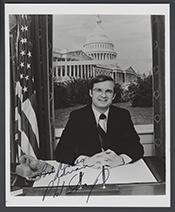
United States · United States Congress · 19 February 1992
Creates the Congressional Office of Inspector General (Office), independent of the executive departments and under the control and direction of the Speaker and minority leader of the House of Representatives. Sets forth the functions of the Office. Makes an Inspector General (Inspector), to be appointed by the Speaker and minority leader, head of the Office for a seven-year term, unless removed by the Speaker and minority leader for cause. Makes the Inspector ineligible for reappointment. Requires the Inspector to appoint: (1) an Assistant Inspector General for Auditing to supervise the auditing of the office procedures and operations of each Member or committee of the House and any other House office whose employees are paid by the Clerk; and (2) an Assistant Inspector General for Investigations to supervise investigations of such office procedures and operations. Sets forth the duties and responsibilities of the Inspector. Requires each Inspector General to report annually to the Speaker and minority leader of the House. Authorizes the Inspector to receive and investigate complaints or information from a House employee concerning the possible existence of a violation of law or the Rules of the House, mismanagement, gross waste of funds, abuse or authority, or a substantial and specific danger to the public health and safety. Prohibits the Inspector, upon receiving the complaint or information, from disclosing the complainant's identity without the employee's consent, unless such disclosure is unavoidable during the course of the investigation. Prohibits any employee who has authority to take, directs others to take, or recommends or approves any personnel action, from taking action against an employee as reprisal for making a complaint or disclosing information to an Inspector, unless the complaint was false and the complainant knew this or willfully disregarded truth or falsity.
United States · United States Congress · 19 February 1992
Expresses the sense of the Congress that: (1) consideration of the Low Income Home Energy Assistance Program (LIHEAP) should be a high priority; (2) LIHEAP funding for FY 1993 should be increased to a level greater than or equal to funding for FY 1992; and (3) the President should accept the LIHEAP funding level for FY 1993 as recommended by the Congress.
United States · United States Congress · 14 February 1992
Automobile Content Information Disclosure Act - Requires manufacturers and dealers of passenger motor vehicles, light trucks, and sport utility vehicles to display on each vehicle a label specifying: (1) the estimate of the manufacturer of the average range of the minimum and maximum components of each model line of such vehicle which are produced in the United States; and (2) the location of the final assembly of such vehicle. Treats violations under this Act as violations of the label and entry requirements under the Automobile Information Disclosure Act and as unfair or deceptive acts or practices in or affecting commerce under the Federal Trade Commission Act.
United States · United States Congress · 5 February 1992
Coalbed Methane Development Act of 1992 - Amends the Mineral Leasing Act to direct the Secretary of the Interior to publish in the Federal Register a list of States ("affected States") where: (1) there is legal uncertainty regarding methane gas ownership; (2) such uncertainty impedes development of significant deposits of coalbed methane gas; (3) no legal scheme is in effect which permits and encourages coalbed methane gas development prior to the resolution of ownership of the gas; and (4) there is no extensive development of coalbed methane gas. Names West Virginia, Pennsylvania, Kentucky, Ohio, Tennessee, Indiana, and Illinois as affected States as of enactment of this Act. Requires affected States to establish State agencies or instrumentalities ("State Boards") to promulgate regulations for the expeditious and economical development of coalbed methane gas deposits. Prescribes coalbed gas development and drilling guidelines. Proscribes the drilling of any well for coalbed methane gas production without State Board approval.
United States · United States Congress · 30 January 1992
Expresses the sense of the Congress that the President should attend the United Nations Conference on Environment and Development in June 1992 as the leader of the U.S. delegation.
United States · United States Congress · 22 January 1992
Title I: Short Title, Findings, and Definitions - Trade Enhancement Act of 1992 - Sets forth congressional findings and purposes with respect to access to Japanese markets by U.S. manufacturers of motor vehicles and motor vehicle parts. Title II: Merchandise Trade Deficit Reduction - Sets forth annual merchandise trade deficit reduction targets with respect to Japan's trade deficit with the United States. Requires the Secretary of Commerce (Secretary) to compute annually whether the target has been met for each year, and if it has not, to publish in the Federal Register the import and production restriction implementation period for such year. Authorizes the Secretary to impose temporary quantitative import restrictions on Japanese or Japanese-related motor vehicles (foreign motor vehicles) entered during the first three months of the calendar year following the year for which such computation is made. Requires the Secretary to submit a report to the Congress. Expresses the sense of the Congress that representatives of the United States and Japan should continue discussions regarding measures, to be selected by the Japanese Government, to achieve the merchandise trade deficit reduction targets. Urges the United States Trade Representative (USTR) during such discussions to address market access priorities for U.S. exports to Japan. Title III: Import and Production Restrictions to Be Implemented If Trade Deficit Reduction Target Not Met - Directs the Secretary to compute for calendar years 1993 through 1999 quantitative import restrictions on foreign motor vehicles and domestic motor vehicle production restrictions for transplanted Japanese-related auto manufacturers, except such computations are not required for calendar years 1997 through 1999 if trade deficit reduction targets for calendar years 1992 through 1996 are met. Sets forth civil penalties. Requires each person that has one or more motor vehicle or motor vehicle parts manufacturing facilities within the United States to certify to the Secretary whether it is a domestic vehicle or parts manufacturer or a transplanted Japanese-related vehicle manufacturer. Sets forth provisions with respect to: (1) the Secretary's authority to obtain information and data; and (2) enforcement of this Act. Sets forth civil penalties. Sets forth provisions with respect to the enforcement and judicial review of such penalties. Requires the Secretary to report annually to the Congress on implementation of this Act. Title IV: Negotiations and Other Actions - Requires the USTR to enter into negotiations with Japan to enter into a bilateral agreement that: (1) provides a phased-in increase in the use by transplanted motor vehicle manufacturers of domestically-produced motor vehicle parts to the point where such parts constitute 60 percent or more of the total parts used in the production of such vehicles; and (2) eliminate those aspects of the Japanese automotive distribution system that affect the access of domestically-produced motor vehicle parts to Japanese markets. Directs the USTR to enter into negotiations with representatives of the European Community, Japan, and the governments of other major vehicle-producing countries to enter into multilateral agreements that rationalize world-wide market access and production of motor vehicles and motor vehicle parts. Considers acts, practices, and policies of Japan (including, but not limited to, acts, policies, and practices utilized in the Japanese automotive distribution system known as "Keiretsu") that affect the access of manufacturers of domestic motor vehicle parts to the Japanese market as being unjustifiable and burdensome or restrictive to U.S. commerce, according to the Trade Act of 1974. Adds to response authority under such Act authority to increase the percentage of domestically-produced motor vehicle parts used in the production of motor vehicles for purposes of the qualification of Japanese manufacturers as domestic vehicle manufacturers. Specifies certain objectives to be included in negotiations with Japan if the USTR decides to take action with respect to such practices. Requires the USTR to make certain estimates with respect to the percentage of the Japanese market that is accounted for by domestic motor vehicle parts manufacturers. Directs the Secretary to commence an antidumping duty investigation under the Tariff Act of 1930 to determine whether imports or sales (or the likelihood of sales) of Japanese motor vehicle parts to the United States warrant the imposition of antidumping duties. Requires the Secretary of the Treasury to study and report to the Congress on the extent to which: (1) "Keiretsu" operations in the United States are in compliance with the internal revenue laws, particularly those relating to transfer pricing; and (2) the Internal Revenue Service is auditing such operations. Amends the Harmonized Tariff Schedule of the United States to classify for the purposes of tariff treatment certain light trucks as motor vehicles for the transport of goods.
United States · United States Congress · 3 January 1992
Targeted Small Business Investment Tax Credit Act of 1992 - Amends the Internal Revenue Code to allow small businesses an investment tax credit for the acquisition of productive equipment which is placed in service within six months of enactment of this Act.
United States · United States Congress · 26 November 1991
Uranium Enrichment Facility Decontamination and Decommissioning Act of 1991 - Amends the Atomic Energy Act of 1954 to establish in the Treasury the Uranium Enrichment Decontamination and Decommissioning Fund to pay decontamination and decommissioning costs of Department of Energy uranium enrichment facilities. Provides for: (1) licensee decontamination and decommissioning fees; and (2) a Department of Energy study of cost-effective methods facility decontamination, decommissioning, and environmental restoration.
United States · United States Congress · 25 November 1991
Urges the President to propose to Canada and Mexico an expanded rule of origin for the North American Free Trade Agreement (NAFTA) which will: (1) require a higher level of North American content for manufactured goods qualifying for a reduced tariff benefit under the United States-Canada Free Trade Agreement; (2) measure such content using only manufacturing costs, and in accordance with generally accepted accounting practices; (3) expand the benefits available to North American firms whose goods meet specified NAFTA rule of origin requirements to include significantly preferential relief from Canadian and Mexican nontariff barriers; (4) assure an equitable distribution of NAFTA economic benefits to U.S., Canadian, and Mexican workers, consumers, and firms by stipulating a further qualification in the NAFTA rule of origin that specifies a minimum and levels of national and industry value-added within the overall North American content standard; and (5) engender higher confidence for free trade agreements among North American workers and consumers, provide greater certainty to North American firms, and maximize economic growth in the United States, Canada, and Mexico.
United States · United States Congress · 14 November 1991
Amends the Harmonized Tariff Schedule of the United States to provide a duty on leaf springs and leaves for motor vehicles of 0 to 33,000 lbs. GVW. Excludes such items imported from Mexico from duty-free treatment.
United States · United States Congress · 29 October 1991
1996 Atlanta Centennial Olympic Games Commemorative Coin Act - Provides for the minting and sale of commemorative gold and silver coins to support the 1996 Atlanta Centennial Olympic Games and the programs of the United States Olympic Committee.
United States · United States Congress · 24 October 1991
Authorizes the Air Force Association to establish a memorial on Federal land in the District of Columbia or its environs to honor the men and women who have served in the U.S. Air Force.
United States · United States Congress · 24 October 1991
Nuclear Testing Moratorium Act - Prohibits the Secretary of Energy from conducting any explosive nuclear weapons test during the one-year period following the enactment of this Act unless the President certifies to the Congress that the Soviet Union has conducted such a test during such period.
United States · United States Congress · 21 October 1991
Medicaid Moratorium Amendments of 1991 - Amends the Technical and Miscellaneous Revenues Act of 1988 to: (1) delay until September 30, 1992, the issuance of regulations changing the treatment under the Medicaid program (title XIX of the Social Security Act) of voluntary contributions and provider-specific taxes; and (2) maintain current regulations that allow intergovernmental transfers as a source of a State's expenditures for which Federal matching funds are available under the Medicaid program. Directs the Secretary of Health and Human Services to submit to specified congressional committees a report on: (1) regulations to limit the use of voluntary contributions and provider-specific taxes to obtain Federal financial participation; (2) specific types of voluntary contributions and provider-specific taxes that may be used as sources of State expenditures for which Federal financial participation is available; and (3) any legislation that the Secretary believes is appropriate. Sets forth budget compliance provisions.
United States · United States Congress · 11 October 1991
Declares that Members of Congress are no longer exempted from Federal laws, including the: (1) Americans with Disabilities Act; (2) title VII of the 1964 Civil Rights Act; (3) Equal Opportunity Act; (4) Occupational Safety and Health Act; (5) Fair Labor Standards Act; and (6) Freedom of Information Act. Makes it illegal to furnish any Member of the Congress, at the expenses of the Federal Government, free or at reduced costs: (1) medicine; (2) hospital care; (3) ambulance services; (4) meals; (5) flowers or plants; (6) pictures or picture frames; (7) haircuts; or (8) other items, services, or privileges, except official office expenses such as supplies and stationery.
United States · United States Congress · 24 September 1991
Medicare EKG Payment Restoration Act of 1991 - Amends part B (Supplementary Medical Insurance) of title XVIII (Medicare) of the Social Security Act to: (1) reestablish separate payment for the interpretation of electrocardiograms (EKGs) that are ordered or performed during an office visit or consultation with a physician; and (2) require the Secretary of Health and Human Services to establish separate fee schedule amounts for EKG interpretations and to adjust the relative values established for office visits to or consultations with a physician to reflect the establishment of such separate fee schedule amounts. Directs the Secretary to: (1) establish practice guidelines for the use of EKGs for dissemination along with other educational information relating to the use of EKGs to physicians; (2) develop a profile of the use of EKGs by physicians; and (3) conduct a study and report to the Congress on the utilization and costs of EKGs.
United States · United States Congress · 1 August 1991
Insurance Fraud Prevention Act of 1991 - Amends the Federal criminal code to establish penalties for persons engaged in the business of insurance whose activities affect commerce, who: (1) knowingly make a materially false statement or report or willfully overvalue land, property, or security in connection with reports or documents presented to an insurance regulatory official or agency, or to any agent or examiner (official) appointed to examine the affairs of such person for the purpose of influencing in any way the actions of such official; (2) embezzle or willfully misappropriate funds or property while acting as an officer, director, agent, or employee (officer) of such person; (3) knowingly make a false entry of material fact in any book, report, or statement of such person with intent to deceive any person about the financial condition or solvency of such business, or to deceive any officer of such person or any insurance regulatory official; and (4) by threats or force, corruptly influences, obstructs, or endeavers corruptly to influence or obstruct the proper administration of the law under which a proceeding (involving the business of insurance whose activities affect interstate commerce) is pending before an insurance regulatory official to examine the affairs of such person. Authorizes the Attorney General to seek civil penalties and injunctions for violations of this Act. Sets penalties for obstructing criminal investigations with respect to the prosecution of cases of insurance fraud.
United States · United States Congress · 1 August 1991
Monetary Policy Reform Act of 1991 - Amends the Federal Reserve Act to establish the Federal Open Market Advisory Committee to advise the Board of Governors of the Federal Reserve System on the conduct of open-market operations.
United States · United States Congress · 31 July 1991
Establishes a Joint Committee on the Organization of the Congress to: (1) make a full and complete study of the organization and operation of the Congress; and (2) recommend improvements in such organization and operation with a view toward strengthening its effectiveness, simplifying its operations, improving its relationships with other branches of the Government, and improving the orderly consideration of legislation. Requires a report to the Senate and the House of Representatives not later than the adjournment sine die of the 102d Congress.
United States · United States Congress · 30 July 1991
Directs the Federal Communications Commission (FCC) to require each of the regional holding companies formed as a consequence of the divestiture of the American Telephone and Telegraph Company of its local telephone companies to submit an annual plan for increasing procurement from business enterprises which are owned by minorities and women. Directs the FCC to establish regulations for: (1) implementing programs pursuant to this Act that will govern such companies and their affiliates; (2) verifying and determining the eligibility of business enterprises that are owned by minorities and women for procurement contracts; (3) requiring company outreach programs to inform and recruit such enterprises to apply for such contracts; and (4) enforcing this Act. Allows the FCC to waive the provisions set forth above if procurement from such enterprises results in undue hardship or unreasonable expense to a regional holding company. Provides sanctions for the: (1) false representation of a business as a business enterprise owned by minorities or women; and (2) false implementation by holding companies of the programs to be implemented pursuant to this Act. Prohibits discrimination against such qualified business enterprises in procuring contracts from telephone utilities. Allows such enterprises to bring civil actions in appropriate U.S. district courts against any regional holding company which is resisting full compliance with this Act.
United States · United States Congress · 29 July 1991
Medicare Physician Payment Reform Amendments of 1991 - Amends title XVIII (Medicare) of the Social Security Act to revise the transition rules for phasing in the resource-based relative value scale (RB RVS) method of payment for physician services to prohibit adjustments for asymmetry in the transition and for behavioral responses. Declares spending under this Act to be an emergency requirement under the Balanced Budget and Emergency Deficit Control Act of 1985 (Gramm-Rudman-Hollings Act) and exempt from sequestration.
United States · United States Congress · 25 July 1991
Fairness in Product Liability Act of 1991 - Governs any product liability action brought in either State or Federal court against a manufacturer or product seller on any theory for harm caused by a product, superseding State law in specified ways and degrees. Makes a product seller liable only if the seller: (1) failed to exercise reasonable care regarding the product, and the failure was the proximate cause of the harm; (2) made an express warranty, independent of any express warranty by the manufacturer, the product failed to conform to the warranty and the failure caused the harm; or (3) engaged in international wrongdoing which was a proximate cause of the harm. Makes a product seller liable as if the seller were the manufacturer if: (1) the manufacturer is not subject to service of process under State laws; or (2) a court determines the claimant would be unable to enforce a judgment against the manufacturer. Allows, in certain circumstances, a complete defense of alcohol or controlled substance use. Reduces damages by the percentage of harm attributable to misuse or alteration of a product by any person, subject to exception involving misuse or alteration by the claimant's employer or coemployees. Allows punitive damages against a manufacturer or seller for conscious, flagrant indifference to user safety. Prohibits, in certain circumstances, punitive damages regarding a drug or device, as defined in the Federal Food, Drug, and Cosmetic Act, unless packaging of a drug is substantially out of compliance with tamper-resistant packaging regulations. Declares manufacturer or seller liability to be several and not joint for noneconomic damages. Requires a product liability action to be brought within two years after the harm and its cause is, or with reasonable diligence should have been, discovered. Sets the time limit at 25 years for products which are capital goods. Requires offset of workers' compensation benefits. Sets forth rules regarding subrogation, contribution, indemnity, and liens. Provides for tort actions against employers. Prohibits U.S. district courts from having jurisdiction under specified provisions of Federal law over any civil action arising under this Act.
United States · United States Congress · 23 July 1991
Amends the Natural Gas Act to establish procedures for coalbed methane gas extraction in areas of uncertain ownership, including: (1) creation of a list of affected States (initially West Virginia, Pennsylvania, Kentucky, Ohio, Tennessee, Indiana, and Illinois shall be included in such list; Colorado, Montana, New mexico, Wyoming, Utah, Virginia, and Alabama shall not be included); (2) establishment of State administering agencies (State Boards); and (3) requirements for well spacing and drilling, pooling arrangements and escrow accounts, and mining safety.
United States · United States Congress · 17 July 1991
St. Croix, Virgin Islands Historical Park and Ecological Preserve Act of 1991 - Establishes the St. Croix, Virgin Islands Historical Park and Ecological Preserve. Authorizes the Secretary of the Interior to acquire lands within the park. Prohibits the acquisition of lands containing dwellings within the park boundary as of July 1, 1991, without the consent of the owner. Authorizes the Secretary to enter into cooperative agreements with the Virgin Islands or political subdivisions for the management of the park. Requires the Secretary to submit a general management plan for the park to the House Committee on Interior and Insular Affairs and the Senate Committee on Energy and Natural Resources. Directs the Secretary, for a ten-year period, to provide funds for employees of the Government of the Virgin Islands engaged in the management of the park and to implement a program under which Virgin Islands citizens may be trained in phases of park operations and management. Establishes the St. Croix, Virgin Islands Historical Park and Ecological Preserve Commission. Authorizes appropriations.
United States · United States Congress · 11 July 1991
FHA Energy Efficiency Incentives Act of 1991 - Amends the National Housing Act to require the Secretary of Housing and Urban Development to provide mortgage financing incentives for energy efficiency housing subject to mortages insured under such Act. Obligates specified funding for the promotion of such program. Increases mortgage limits for energy efficiency improvements.
United States · United States Congress · 9 July 1991
Pipeline Safety Reauthorization Act of 1991 - Title I: Natural Gas - Natural Gas Pipeline Safety Authorization Act of 1991 - Amends the Natural Gas Pipeline Safety Act of 1968 (NGPSA) to revise the definition of "transportation of gas" to include the control of natural gas being delivered in consumer-owned pipe. Authorizes only a State agency that has submitted a current certification of jurisdiction and enforcement to adopt additional or more stringent safety standards for such intrastate pipeline transportation if they are compatible with the Federal minimum pipeline safety standards. (Currently a State agency may adopt more stringent standards even if it does not submit a current certification.) Authorizes the Secretary of Transportation (Secretary) to extend Federal Safety standards requiring new gas transmission facilities to accommodate instrumented internal inspection devices (smart pigs) to require that existing transmission facilities be modified to accommodate such devices. Excludes municipalities from the meaning of "State agency" in such Act to the extent that: (1) Federal pipeline safety standards shall not apply to intrastate gas pipeline transportation when similar safety standards are regulated by State agencies; and (2) in certain cases, the Secretary may enter into an agreement authorizing a State agency to assume responsibility for enforcing Federal safety standards for intrastate gas pipeline transportation. Changes from $5,000 to an amount established by the Secretary the threshold amount of property damage per accident that State annual certifications must report on regarding gas pipeline accidents within the State during the preceding 12 months. Increases from $10,000 to $25,000 the civil penalty per day for violations of Federal pipeline safety inspection and maintenance standards committed by persons engaged in the transportation of gas or pipline facility operators. Grants jurisdiction to district courts to order persons who refuse to obey a subpeona or allow authorized persons to conduct Federal gas pipelines safety standard compliance inspections or record examinations to comply with such orders or be found in contempt of court. Authorizes the Secretary to request the Attorney General to request such court enforcement of subpoenas. Authorizes the Secretary to: (1) assess costs incurred by the Department of Transportation in monitoring the design and construction of gas pipeline facilities prior to their operation; and (2) collect them from the persons responsible for the development of such facilities. Requires such assessments to be deposited into the Pipeline Safety Fund to pay such costs. Requires the Secretary to submit to the Congress on August 15 (currently, April 15) of each year a report on the administration of Federal gas pipeline safety standards during the preceding calendar year. Authorizes appropriations for FY 1992 and 1993. Title II: Hazardous Liquids - Hazardous Liquid Pipeline Safety Authorization Act of 1991 - Amends the Hazardous Liquid Pipeline Safety Act of 1979 (HLPSA) to require Federal safety standards established by the Secretary for the transportation of hazardous liquids and pipeline facilities to be designed to meet the need for the protection of the environment. Requires operators of hazardous liquid pipeline facilities to report to the Secretary any condition that constitutes a hazard to the environment. Requires the Secretary in prescribing such standards to consider the extent to which they will contribute to environmental protection. Makes changes to the HLPSA similar to those in the NGPSA with respect to: (1) the necessity of a current certification for any State agency that would adopt additional or more stringent safety standards for intrastate pipeline facilities; (2) authority to require existing hazardous liquid pipeline facilities to be modified to accommodate instrumented internal inspection devices; (3) changes in threshold dollar amount of property damages that must be reported in State certifications regarding hazardous liquid pipeline accidents; (4) increases in civil penalties for violations of Federal pipeline safety inspection and maintenance standards; (5) district court jurisdiction to order persons to comply with Federal hazardous liquid pipeline safety standard inspections or record examinations; (6) the levy of assessments for costs incurred by the Department of Transportation in monitoring the design and construction of hazardous liquid pipeline facilities prior to their operation; and (7) the submission of a report on the administration of Federal hazardous liquid pipeline standards during the preceding year. Directs the Secretary to require operators of hazardous liquid pipeline facilities to provide information that includes, among other things, an accurate map, including geographic description of environmentally sensitive areas, showing the location of such operator's facilities. (Currently such description need not refer to such areas.) Requires the Secretary to order a person operating a hazardous liquid pipeline facility to take corrective action whenever he or she finds that such facility is hazardous to the environment. Requires the Secretary when making such findings to consider, if relevant, the aspects of the areas in which the pipeline facility is located, particularly, among other factors, proximity to environmentally sensitive areas. Requires the Secretary in determining the adequacy of inspection and maintenance plans of persons who engage in the transportation of hazardous liquids or own or operate pipeline facilities to consider, among other factors, the extent to which such plans will contribute to the protection of the environment. Revises criteria the Secretary must use when making recommendations as to the frequency and type of testing and inspection of hazardous liquid pipeline facilities to include consideration of the proximity of such facilities to environmentally sensitive areas. Authorizes appropriations for FY 1992 and 1993.
United States · United States Congress · 27 June 1991
Amends the Natural Gas Act to require the Federal Energy Regulatory Commission to permit environmental documents or environmental assessments that are provided in connection with an application for the construction or operation of a natural gas pipeline facility to be prepared by the applicant, contractor, consultant, or other person selected by such applicant.
United States · United States Congress · 26 June 1991
Amends the Employee Retirement Income Security Act of 1974 (ERISA) to provide that title I (Protection of Employee Benefit Rights) does not preempt any State law which provides for: (1) the payment of prevailing wages; or (2) standards or other requirements relating to apprenticeship or other training programs.
United States · United States Congress · 26 June 1991
Constitutional Amendment - Requires the Congress and the President, prior to each fiscal year, to agree on an estimate of total receipts (except those derived from borrowing) for that fiscal year by enactment of a law devoted solely to that subject. Prohibits outlays for that year (except those for repayment of debt principal) from exceeding this amount unless the Congress, by a three-fifths roll call vote of each House, authorizes a specific excess of outlays over receipts. Requires a three-fifths roll call vote of each House to increase the public debt. Directs the President to submit a balanced budget to the Congress. Requires the approval of a majority of the total membership of each House by roll call vote before any bill to increase revenue may become law. Waives these provisions when a declaration of war is in effect. Makes this article effective beginning with FY 1995 or with the second fiscal year after its ratification, whichever is later.