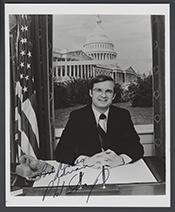
United States · United States Congress · 13 June 1991
Productive Investment Incentive Act - Amends the Internal Revenue Code to allow a business expense deduction for up to $250,000 (currently, $10,000) of depreciable business assets if property is used as an integral part of manufacturing, production, or extraction. Reduces such allowance by the amount by which the cost of such property exceeds $1,000,000 (currently, $200,000) for a taxable year. Excludes such depreciation deduction from the alternative minimum tax.
United States · United States Congress · 12 June 1991
International Mergers and Acquisitions Review Act of 1991 - Amends the Clayton Act to bar the acquisition by one person (acquiring person) of the voting securities or assets (assets) of another (acquired person) unless both parties (or in the case of a tender offer, the acquiring person) file notifications pursuant to this Act and the waiting period under such Act has expired, if specified conditions apply. Requires such notifications of mergers and acquisitions where the acquiring or acquired person is engaged in commerce or in activity affecting commerce and: (1) in a case in which both parties are domiciled outside of the United States or organized under the laws of a foreign country, the combined annual net sales in the United States of both persons exceed $350,000,000 and as a result of the acquisition the acquiring person would hold five percent or more of the assets of the acquired person; (2) the acquired person has a contract with the U.S. Government that involves access to classified information, is required to register with the Secretary of State pursuant to the Arms Export Control Act (because such person is engaged in the United States in the business of manufacturing or exporting defense articles or furnishing defense services), has technology on which export controls are in effect under the Export Administration Act of 1979 (EAA), or engages in activity for which a license is required under the Atomic Energy Act of 1954 and, as a result of the acquisition, the acquiring person would hold either five percent or more of the assets of the acquired person or an aggregate total amount of such assets in excess of $1,000,000; (3) as a result of the acquisition a facility may be considered to be under foreign ownership or control under Executive Order 10865; or (4) the acquiring person is a national of, or is controlled by the Government or a national of, a country whose government has been determined under the EAA to have repeatedly provided support for acts of international terrorism and any other country whose government the National Security Liaison Committee (NSLC) (established under this Act) determines engages in acts inimical to the national security or foreign policy of the United States. Sets forth notification requirements with respect to tender offers. Establishes the NSLC to review all notifications filed under premerger notification provisions of the Clayton Act. Specifies: (1) that the NSLC shall reside at the Federal Trade Commission (FTC); and (2) the composition of the NSLC. Requires the NSLC to refer specified notifications, including any that may threaten or impair national security, to the President or the President's designee (President) under the Defense Production Act of 1950 (DPA) for investigation. Grants the NSLC authority currently held by the Assistant Attorney General with regard to provisions authorizing termination of the waiting period. Authorizes the NSLC to: (1) require that certain required notifications contain such additional documentary information and material as necessary to enable the NSLC to determine whether a proposed acquisition should be referred to the President under the DPA; (2) determine, for purposes of specified exemptions, classes of persons, acquisitions, transfers, or transactions which are not likely to threaten to impair national security; and (3) prescribe such other rules as necessary to enable the NSLC to carry out its functions. Directs the FTC to require persons filing notifications with respect to cases in which both parties are domiciled outside of the United States or organized under foreign laws, the combined annual net sales in the United States of both persons exceeds $350,000,000, and as a result of the acquisition the acquiring person would hold five percent or more of the acquired person's assets, to submit detailed information on the nature of the acquisition, the ownership and control of the acquiring and acquired persons, their financial and personal relationship, the products or services in which such persons engage in commerce, and the relevant markets that will be affected by the acquisition. Extends the waiting period in the case of a referral of a notification to the President under the DPA. Requires the FTC to report annually to the Congress with respect to mergers and acquisitions not later than January 1 of each year (currently, beginning not later than January 1, 1978), with the concurrence of the NSLC (currently, Assistant Attorney General). Amends the DPA to require or authorize the President to make an investigation to determine the effects on national security of proposed acquisitions which the NSLC has referred, depending on the category of the referral. Requires the President to notify the parties to the acquisition, and specified congressional committees (except for the names of the parties to the investigation), of such investigation. Authorizes the President to: (1) require the parties to the acquisition to agree to divest assets or make such other modification in the acquisition as deemed necessary in the case of acquisitions threatening to impair national security (current law allows only action to suspend or prohibit the acquisition) where there is credible evidence that an interest exercising control, whether foreign or domestic (currently, foreign), might take action that threatens to impair national security; and (2) consider control of domestic industries and commercial activity by U.S. or foreign citizens (currently, foreign only). Specifies that the President's designee shall be a committee composed of specified officials, with the Secretary of the Treasury as chairman. Directs the Secretary of Energy to: (1) review policies, procedures, and regulations issued under Executive Orders 10865 and 11858 governing foreign ownership, control, or influence and mergers or acquisitions for foreign persons or persons engaged in interstate commerce in the United States; and (2) ensure that the Office of Safeguards and Security of the Department of Energy (or any successor office or agency with primary responsibility for safeguards and security with respect to nuclear fuel and nuclear weapons) has primary responsibility for making investigations and determinations pursuant to regulations issued under Executive Order 10865. Requires such Secretary to provide information to the committee on whether a proposed acquisition, merger, or takeover, or foreign ownership, control, or influence of a person engaged in interstate commerce in the United States, in a matter under investigation by the Committee, is likely to increase the risks of proliferation of nuclear weapons, nuclear weapons technology, or special nuclear material and thereby threaten to impair the national security. Sets forth additional requirements with respect to testimony on investigations and reporting requirements. Urges the President to consider entering into negotiations with other countries for the purpose of reaching agreements on safeguarding exchanges of certain commercial and market information that can be used to assist in the determination of the possible anticompetitive effect of transnational mergers and acquisitions, and on establishing dispute resolution mechanisms to deal with the regulatory overlap among countries with respect to such mergers and acquisitions.
United States · United States Congress · 6 June 1991
Octane Display and Disclosure Act of 1991 - Amends the Petroleum Marketing Practices Act to require certification and posting for all liquid automotive fuels (currently, automotive gasolines). Authorizes States or local governments to provide for any investigative or enforcement action, remedy, or penalty permitted under such Act. Revises Federal Trade Commission enforcement provisions regarding acts or practices constituting violations of the Federal Trade Commission Act. Changes the Environmental Protection Agency's authority to conduct field testing of the octane rating of automotive fuels from mandatory to discretionary. Directs the Administrator of the Environmental Protection Agency to carry out a study to determine whether, and if so, how, the anti-knock characteristics of nonliquid fuels usable as motor vehicle fuels can be determined. Directs the Secretary of Energy to study the feasibility and desirability of using dye to: (1) differentiate automotive fuels with different fuel ratings so that the rating can be determined by its color; and (2) identify transportation fuels required by law for clean air or other environmental benefits. Directs the Federal Trade Commission to study the need for, and the desirability of, having a uniform national label on devices used to dispense automotive fuel to consumers that would consolidate information required to be posted on such devices. Requires reports to the Congress on the studies carried out under this Act within one year.
United States · United States Congress · 6 June 1991
Federal Aid Surface Transportation Act of 1991 - Title I: Federal-Aid Highway Act of 1991 - Federal-Aid Highway Act of 1991 - Authorizes appropriations out of the Highway Account of the Highway Trust Fund (HTF) for: (1) the National Highway and Bridge System; (2) the Urban and Rural Highway and Bridge Program; (3) emergency relief; (4) the Federal Lands Highway Program; (5) the University Transportation Centers Program; (6) the Right-of-Way Revolving Fund; and (7) the Territorial Highway Program. Specifies that unobligated balances of funds apportioned or allocated to a State under Federal highway provisions before October 1, 1991, shall be available for obligation in such State under the law, regulations, policies, and procedures relating to the obligation and expenditure of those funds in effect on September 30, 1991. Repeals the FY 1993 authorization under the Federal-Aid Highway Act of 1956. Authorizes appropriations for Interstate construction to complete the Interstate System out of the Highway Account of the HTF for each of FY 1992 through 1995. Provides for certain allocations for Massachusetts for such fiscal years. Sets forth a formula for the apportionment of authorized funds for such fiscal years among the States. Authorizes appropriations out of the Highway Account of the HTF for highway projects for the Interstate Substitution Program. Sets forth provisions with respect to obligation ceilings for Federal-aid highway programs, distribution of and limitations on obligation authority, and redistribution of unused obligation authority. Declares that national resources should be focused upon preserving the nation's investment in its Interstate systems, that broad national defense, economic, safety, and international policy goals are advanced by efficient transportation systems, that national transportation investments should increasingly encourage domestic and international commerce and trade, and that, based on congressionally established national transportation policy and objectives, a new Federal high priority highway network should be designated. Establishes the National Highway and Bridge System, to consist of all currently designated Interstate highways, an appropriate portion of the rural and urban principal arterial routes, including toll facilities, and national defense highways, and routes which meet specified criteria (including nationally significant truck routes, routes that provide nationally significant commodities with access to markets, access points to significant national parks, facilities that will provide logical connection between major population centers and the National Highway and Bridge System, and major urban corridors). Specifies that the National Highway System shall be based on a functional reclassification of roads and streets in each State which shall be designated not later than September 30, 1993, in accordance with guidelines issued by the Secretary of Transportation, and that the Secretary may add segments to the National Highway System as necessary to meet National Highway Program objectives. Directs the Secretary to establish criteria for reviewing projects to be funded as part of the National Highway and Bridge System which: (1) define eligible projects to include rehabilitation, resurfacing, restoration, capacity expansion, operational improvement, safety, and new highway construction; (2) ensure as a first priority for the use of available funds the protection of investments made in the Interstate highways in each State and the provision of suitable traveling quality by such highways; (3) permit funding in urbanized areas to be used to improve highway and transit systems, where it can be shown that the improvement will increase the level of service within the corridor of the National Highway and Bridge System; and (4) permit the use of such funds for intercity rail projects and projects for access to ports, airports, and related facilities. Sets forth additional provisions with respect to the discharge of responsibilities by the Secretary for National Highway and Bridge System projects. Directs the Secretary to establish an Urban and Rural Highway and Bridge Program to provide a category of funds that minimizes Federal requirements and provides flexibility in the use of available funds for either highway or transit projects. Specifies: (1) that the Urban and Rural Highway and Bridge Program shall consist of all public highways (including bridges) functionally classified as arterials, urban collectors, and rural collectors other than those designated as part of the National Highway and Bridge System; (2) that each State shall establish guidelines for implementing this program; and (3) eligible highways and projects. Sets forth provisions with respect to the obligation of funds, and the Federal share of projects, for the construction of toll roads, bridges, tunnels, and ferries. Requires the Secretary, in each fiscal year, to allocate among the States amounts sufficient to ensure that: (1) the total of apportionments and minimum allocation for each State in each such fiscal year shall not be less than 90 percent (currently, 85 percent) of the percentage of estimated tax payments into the Highway Account of the HTF attributable to highway users in the State of total apportionments in each such fiscal year and allocations for the prior year; and (2) each State's total apportionment from the Highway Account of the HTF for the year is not less than that made during FY 1991 (excluding any Interstate construction funds in excess of FY 1992 one-half percent minimum, Interstate substitution, and amounts for demonstration or discretionary funding programs or projects). Directs the Secretary to cooperate with State and local officials in urbanized areas in the development of transportation plans and programs which are formulated with due consideration to comprehensive long-range land use plans, development objectives, innovative financing mechanisms, overall social, economic, environmental, and system performance, energy conservation goals and objectives and with due consideration to their probable effect on the future development of the area. Specifies that the transportation planning process, at a minimum, shall cover the existing urbanized area and the area expected to become urbanized within the forecast period, and that it may encompass the entire Metropolitan Statistical Area/Consolidated Metropolitan Statistical Area at the discretion of the Governor and the affected units of local government. Requires that transportation plans and programs in urbanized areas of more than 200,000 population be based on a continuing transportation planning process which: (1) is carried out by a metropolitan planning organization and is comprehensive to the degree appropriate based on the complexity of transportation problems in the area, including transportation-related air quality problems; and (2) considers all modes of transportation, including intermodal connectivity, the balance between future development and transportation needs, and an areawide multimodal congestion management system. Specifies that in nonattainment areas for transportation-related pollutants the multimodal congestion management system shall address air quality considerations and be coordinated with the process for development of the transportation element of the State Implementation Plan required by the Clean Air Act. Requires that the costs and impacts of proposed action on both mobility and air quality be evaluated. Bars the Secretary from approving any highway project in urbanized areas of more than 200,000 population that by reconstruction or new construction significantly increases the vehicle carrying capacity of a transportation corridor unless the project is consistent with the congestion management system. Directs the metropolitan planning organization to cooperate with the State in the development of a congestion management, bridge management, pavement management, safety management, and traffic monitoring system. Requires that: (1) a metropolitan planning organization be designated in each urbanized area by agreement among the units of general purpose local government and the Governor to carry out such transportation planning process; (2) such organization develop a transportation improvement program that includes all projects proposed for funding within the study area under the National Highway and Bridge Program, the Urban and Rural Highway and Bridge Program, and the Bridge Program; and (3) in urbanized areas of 200,000 population or less, such organization, the State, and transit operators, at a minimum, meet the requirements of this Act by the development of such a transportation improvement program (including consideration of transportation-related air quality problems.) Requires the Federal highway research program to include coordinated long-term programs of research: (1) on Intelligent Vehicle Highway Systems; and (2) for the development, use, and dissemination of performance indicators to measure the performance of the surface transportation system. Requires such program to continue those portions of the Strategic Highway Research Program that the Secretary deems important. Directs the Secretary to create and administer the Dwight David Eisenhower Transportation Fellowship Program, a program to attract qualified students to the field of transportation engineering and research. Provides for the funding of such program. Directs the Secretary to cooperate with the States in carrying out: (1) statewide transportation planning; and (2) State highway research. Sets forth provisions regarding State matching fund requirements and waiver of such requirements. Directs the Secretary: (1) in the Secretary's reports regarding future highway needs of the nation, to report as well on the condition and performance of the existing system and on the bridge needs of the nation; and (2) beginning with the report due in January 1995, to include the results of studies of the air quality impacts of transportation programs including the air quality benefits realized from transportation control measures required under the Clear Air Act. Establishes within the Department of Transportation a Bureau of Transportation Statistics, which shall pursue a comprehensive, long-term program for the collection and analysis of data relating to the performance of the national transportation system. Requires the Director of such Bureau to: (1) produce annually unbiased and comparable estimates of factors including productivity in the various portions of the transportation sector, traffic flow, travel times, travel costs of intracity commuting and intercity trips, frequency of vehicle and transportation facility repairs, accidents, and collateral damage to the human and natural environment; and (2) submit reports beginning on October 1, 1992, and every 12 months thereafter, to specified congressional committees describing the status of the U.S. transportation system. Authorizes the Secretary to: (1) undertake, on a cost-shared basis, collaborative research and development with non-Federal entities, including State, local, and foreign governments; and (2) enter into cooperative research and development agreements, except that the average Federal share in such agreements shall not exceed 50 percent (but allows the Secretary to approve a higher Federal level of participation where there is substantial public interest or benefit). Authorizes the Secretary to withhold project approvals on National Highway and Bridge Program projects for failure of a State to have a bridge management, pavement management, safety management, and congestion management system. Requires each State to have a traffic monitoring system to provide statistically-based traffic data. Sets forth provisions regarding: (1) acquisition of rights-of-way; (2) private, State, and local donations; (3) access to rights-of-way to accommodate needed passenger or commuter rail, high speed ground transportation systems (including magnetic levitation systems), and highway and nonhighway public mass transit facilities; and (4) the definition and scope of the Interstate System. Declares that: (1) the nation must redirect its efforts toward moving people, information, and goods rather than moving vehicles; (2) the new Federal program shall refocus national policies to respond to increasing inter-regional travel, relieving urban congestion, improving rural access, fostering intermodalism, enhancing air quality, conserving energy, and giving priority to projects that offer the best solutions to the transportation problems and environmental considerations of each region; and (3) the essential element for an effective future program is a new Federal, State, and local partnership that provides more funding, greater program flexibility, and greater program management and resource contribution responsibilities at the State and local levels. Sets forth provisions with respect to the apportionment of funds, including apportionment formulas under the: (1) National Highway and Bridge Program, based on the State's rural and urban lane miles, rural vehicle miles traveled, and diesel fuel consumption; and (2) Urban and Rural Highway and Bridge Program, in the ratio of tax payments of the Highway Account of the HTF attributable to the highway users of each State. Sets forth provisions with respect to: (1) project agreements and obligations of funds; (2) availability of funds; (3) the Federal share payable with respect to certain projects; (4) project litigation expenses; and (5) the allocation and administration of Federal lands highways funds, and the establishment of a coordinated Federal Lands Highways Program. Authorizes (subject to specified limitations): (1) States to use Federal highway funds to construct improved lanes, paths, or shoulders, traffic control devices, shelters, and parking facilities for bicycles and pedestrians, and carry out nonconstruction projects related to safe bicycle and pedestrian use; (2) the Secretary, where a highway bridge deck being replaced or rehabilitated with Federal financial participation is located on a highway on which bicycles or pedestrians are permitted to operate at each end of the bridge and the Secretary determines that the safe accommodation of bicycles or pedestrians can be provided at reasonable cost, to replace or rehabilitate such bridge, making such accommodations; (3) Federal lands highways funds to be used for the construction of pedestrian walkways and bicycle routes; and (4) a State to expend Urban and Rural Highway and Bridge Program funds for such construction. Provides for: (1) a functional reclassification of all public roads; (2) the transfer of funds for transit projects to, for administration by, the Urban Mass Transportation Administration; and (3) a recodification of Federal highway-related provisions. Requires that construction standards adopted for the National Highway and Bridge System be those approved by the Secretary in cooperation with the State highway departments and the American Association of State Highway and Transportation Officials (currently, with respect to construction standards for the Interstate System, cooperation with such Association is not required). Directs the Secretary to issue guidelines for minimizing soil erosion from highway construction. Bars the Secretary from approving projects that will result in the severance or destruction of an existing major route for nonmotorized transportation traffic and light motorcycles, unless the project provides a reasonable alternative route or an alternative route exists. Requires: (1) projects for resurfacing, restoring, or rehabilitating specified highways to be constructed in accordance with standards to preserve and extend highway service life and enhance highway safety; and (2) States to charge, at a minimum, fair market value for the sale, use, lease, or lease renewals of right-of-way airspace acquired as a result of a project funded in whole or in part with Federal assistance made available from the Highway Account of the HTF, with exceptions. Provides that: (1) Indian contractors certified by State transportation or highway departments shall receive preference in the award of contracts on Indian reservations to the maximum extent practicable; and (2) contracts for Urban and Rural Highway and Bridge Program projects may be entered into with the prior concurrence of the Secretary in the award. Authorizes: (1) the State transportation or highway department to include warranty or guarantee provisions in construction contracts which, if used, shall be for a specified construction product or feature and may not include routine maintenance; and (2) projects (currently, requires projects) approved to include the amount of any interest earned and payable on bonds issued by the State to the extent that the proceeds of the bonds have actually been expended in the construction of the project. Authorizes the Secretary, except for projects administered under the Urban and Rural Highway and Bridge Program, to make payments to a State for costs incurred on a project. (Current law authorizes payment to States for construction.) Specifies that total payments shall not exceed total costs incurred by the State for the project. Requires any State transportation or highway (currently, highway) department which submits plans for a National Highway and Bridge Program or Interstate System project (currently, Interstate System project) to make its certification and report, indicating that consideration was given to the economic, social, environmental, and other effects of the plan, highway location or design, and various alternatives which were raised during the hearing or which were otherwise considered (current law does not mention the latter requirement). Authorizes the Secretary to approve for Federal financial assistance from National Highway and Bridge Program funds: (1) projects designed to encourage the use of carpools, subject to specified limitations; and (2) the construction of exclusive or preferential high occupacy vehicle (HOV) lanes, highway traffic control devices, intercity and urban bus passenger loading areas and facilities, and fringe and transportation corridor parking to serve HOV, intercity bus, and public transportation passengers. Specifies that if fees are charged for the use of any carpool or other publicly owned parking facility constructed pursuant to Federal highway provisions, the revenue in excess of that required for maintenance and operation of the facility and the cost of providing shuttle service to and from the facility including compensation to any person for operating the facility and for providing shuttle service shall be used for purposes authorized under Federal highway provisions. Requires that National Highway and Bridge System funds be made available to finance the Federal share of projects for exclusive or preferential HOV, truck, and emergency vehicle routes or lanes. Permits such routes on the Interstate System to have less than four lanes of traffic. Prohibits the approval of HOV projects unless the Secretary has received assurances from the owner or operator of the facility that HOV vehicles will fully utilize the proposed project and that essential operations and enforcement support of the facility will be provided. Specifies that, in any case where sufficient land exists within the publicly acquired rights-of-way of the National Highway System to accommodate needed nonhighway public mass transit facilities and where the accommodation can be accomplished without impairing automotive safety or future highway improvements, the Secretary may authorize a State to make those lands and rights-of-way available without charge to a publicly owned mass transit authority for such purposes wherever the public interest will be served. Directs the Secretary to require assurance from any State desiring to avail itself of benefits under Federal highway provisions that employment in connection with proposed projects be provided without discrimination based on race, color, religion, national origin, age, disability, or sex (currently, specifies "without regard to race, color, creed, national origin, or sex"). Requires that not to exceed one fourth of one percent of the funds apportioned to a State be available for highway construction training. Prohibits discrimination on the basis of sex under programs or activities receiving Federal assistance. Repeals a requirement that each State certify that it is enforcing all speed limits on public highways and that the Secretary not approve projects in States failing to make such certification. Requires each State to establish a procedure to certify that highway bridge inspectors meet national qualifications. (Current law requires that standards established by the Secretary include a procedure for national certification of such inspectors.) Directs the Secretary to withhold ten percent of the amount to be appropriated to any State on the first day of each fiscal year in which the purchase or public possession in that State of any alcoholic beverage by a person who is less than 21 years of age is lawful (current law specifies five percent on the first day of the fiscal year succeeding the first fiscal year beginning after September 30, 1985, and ten percent after the second fiscal year beginning after such date). Specifies that funds withheld from apportionment shall be apportioned to the other States in compliance and remain available for the period of time applicable to the category of funds withheld (currently, treatment of such funds varies based on whether funds were withheld on or before September 30, 1988). Directs that construction estimated to cost $50,000 (currently, $15,000) or more per mile or per project for projects with a length of less than one mile on forest development roads and trails be advertised and let to contract, and allows projects with less than such cost, if no acceptable bid is received, to be done by the Secretary of Agriculture. Repeals provisions under the Territorial Highway Program: (1) that Federal financial assistance be granted on the basis of a Federal contribution of 100 percent of the cost of any project; and (2) under which the Governor must agree not to impose any toll, or permit any such toll to be charged, for use by vehicles or persons of any portion of the facilities constructed or operated to qualify for funding. Provides that, in addition to a specified percentage, sums provided (currently, two percent) for each fiscal year may be expended upon request of the Governor with the Secretary's approval under such Program. Requires (currently, authorizes the Secretary to make) expenditures with respect to the reconstruction of the Alaska-Canada international highway. Authorizes the Secretary to give priority of approval to, and expedite the construction of, projects that are recommended as important to the national defense. Modifies provisions regarding the National Highway Institute to: (1) require that private agencies and individuals pay the full cost of any education and training received by them; and (2) authorize the Institute to engage in all phases of contract authority for training purposes authorized under Federal highway provisions and to carry out its authority independently or in cooperation with any other branch of Government, authority, association, or person. Authorizes the Institute to establish and collect fees from any entity and place them in a special account.
United States · United States Congress · 5 June 1991
Provides that for purposes of determining the minimum allocation paid to a State under Federal-aid highway provisions and the amount of any other allocation or appointment of Federal-aid highway funds, the amount of taxes treated as paid into the Highway Trust Fund with respect to alternative sources of energy shall be determined as if such energy sources were taxed as gasoline.
United States · United States Congress · 3 June 1991
Expresses the sense of the Congress that: (1) the American public should observe the 100th anniversary of filmmaking; and (2) the American Film Institute has a leadership role in preserving the art of film.
United States · United States Congress · 23 May 1991
Generic Drug Enforcement Act of 1991 - Amends the Federal Food, Drug, and Cosmetic Act to require that any person convicted of a felony under Federal law for conduct relating to the development or approval, including the process for development or approval, of any abbreviated drug application (ADA) be debarred from submitting any ADA. Allows debarment, if there is reason to believe the person may undermine the regulatory process, of a person: (1) convicted of a Federal misdemeanor or a State felony in connection with an ADA; (2) convicted of bribery, fraud, or similar crimes; (3) convicted of obstruction of justice; (4) who materially participated in acts that were the basis for such convictions; or (5) who knowingly used the services of a debarred person. Provides for: (1) the term of debarment; (2) termination of debarment; and (3) publication of a list of debarred persons. Allows an ADA to be denied in certain circumstances, including: (1) involving a bribe or a pattern of false statements; or (2) if a significant question has been raised regarding the integrity of the approval process or the reliability of data. Requires, in the case of a bribe or a pattern of false statements, or if there are flagrant, repeated, and uncorrected violations of good manufacturing practice or good laboratory practice which may undermine the safety and efficacy of the drugs: (1) the suspension of distribution of all drugs the development or approval of which was related to such actions; or (2) the suspension of all drugs approved under ADAs of such person. Allows waiver of the suspension requirement if necessary to protect the public health. Provides for termination of suspensions. Adds a requirement that an ADA contain: (1) a certification that the applicant did not and will not use the services of a person debarred in connection with the application; and (2) a list of all convictions within the last five years of the applicant and affiliated persons responsible for the development or submission of ADAs. Prescribes civil penalties for certain actions in connection with ADAs, including: (1) false statements or bribes; (2) destruction, alteration, or secretion of evidence; (3) failure to disclose facts; (4) obstruction; (5) use of a debarred person; or (6) provision of services by a debarred person. Allows the Secretary of Health and Human Services to make a monetary award for information leading to the imposition of a civil penalty. Declares the Secretary's decision on such an award not reviewable. Requires withdrawal of approval of an ADA facilitated, in whole or in part, through bribery, fraud, or false statement. Allows withdrawal if the applicant has repeatedly demonstrated a lack of ability to produce the drug with the formulations or manufacturing practice in the ADA and has introduced, or attempted to introduce, the adulterated or misbranded drug into commerce. Authorizes the Inspector General (IG) to investigate certain matters, including any allegation of: (1) misconduct by Food and Drug Administration (FDA) employees; (2) violation of existing provisions listing prohibited acts; (3) violation, or a class of violations, which the FDA Commissioner has requested the IG to investigate; and (4) violation, or a class of violations, for which the Secretary delegates authority to the IG or requests the IG to investigate. Mandates maintaining for public inspection, with regard to each ADA, the applicant's name, the name of the drug, and the persons and dates of assignment for chemistry and bioequivalence reviews. Repeals provisions requiring a hearing before the Secretary reports a violation to a U.S. attorney for institution of a criminal proceeding.
United States · United States Congress · 14 May 1991
Safety of Pesticides in Food Act of 1991 - Amends the Federal Food, Drug, and Cosmetic Act to exclude pesticide chemicals from the definition of "food additive." (Current law excludes from that definition a pesticide chemical: (1) in or on a raw agricultural commodity; or (2) used in the production, storage, or transportation of a raw agricultural commodity.) Modifies the circumstances in which the presence of a pesticide chemical residue renders a food adulterated. Replaces provisions relating to tolerances for pesticide chemicals in or on raw agricultural commodities with provisions relating to tolerances and exemptions for pesticide chemical residues. Deems a pesticide chemical residue unsafe, unless it is within an established tolerances or an exemption is in effect Allows a tolerance only if the risk to human health from dietary exposure to the residue is negligible. Sets forth criteria for determining whether the risk is negligible. Requires, in determining dietary exposure, consideration of all other sources (including drinking water) of dietary exposure occurring over a lifetime. Sets forth a special exposure rule allowing, in certain circumstances, calculation of exposure based on the percent of the food in which the residue actually occurs. Requires, if a tolerance or exemption is revoked and the residue will unavoidably persist in the environment and contaminate food, that a new tolerance be established at the lowest level that permits only the unavoidable levels to remain in the food. Allows establishment, modification, or revocation of a tolerance or establishment or revocation of an exemption from a tolerance in response to a petition or on the initiative of the Administrator of the Environmental Protection Agency. Defines, for certain provisions of this Act, modification of a tolerance to mean lowering. Allows an exemption if the residue is not a human or animal carcinogen and otherwise presents no risk to human health from dietary exposure. Requires, in determining dietary exposure, consideration of all other sources of dietary exposure occurring over a lifetime. Conditions establishment and continuation of a tolerance or exemption on the existence of a practical method of residue detection that can be performed by the Secretary of Health and Human Services on a routine basis as part of surveillance and compliance sampling for residues. Allows any person to petition the Administrator for the establishment, modification, or revocation of a tolerance or exemption. Sets forth required contents of a petition to establish a tolerance or exemption and procedures and timetables for processing the petition. Provides for revocation or modification of existing tolerances and exemptions. Regulates the confidentiality of and access to data submitted in support of a petition. Provides for the treatment of pesticide chemicals which were, before this Act, generally recognized (by the Administrator or others) as safe. Directs the Secretary to conduct surveillance and compliance sampling of food for pesticide chemical residues, charging fees sufficient to provide, equip, and maintain an adequate service. Allows continuation of a tolerance or exemption to be conditioned on payment of an annual fee. Requires the Administrator to evaluate each existing tolerance or exemption and: (1) if there is sufficient data to conclude that the residue does not meet the standards of this Act, change or revoke the tolerance; or (2) if there is insufficient data to determine whether the standards are met, require the submission of data. Sets forth deadlines by which the Administrator is required to have made a determination on a specified percentages of tolerances or exemptions in effect on enactment of this Act. Requires the Administrator to determine, for each method of detecting and measuring levels of residues, whether the method meets certain requirements of this Act. Requires revision of any method which does not meet the requirements. Revokes any tolerance or exemption based on a method which, after three years, does not meet the requirements. Mandates fees sufficient to provide, equip, and maintain adequate service with regard to the review of existing tolerances and exemptions and the review of methods of detecting and measuring levels of residues.
United States · United States Congress · 9 May 1991
Amends Federal defense procurement provisions to allow as a reimbursable defense contractor cost the payment to foreign nationals employed by a U.S. defense contractor of severance pay in excess of that normally paid in the United States when necessary to comply with host country law, international bilateral agreements, or host country employment practices. Allows as a reimbursable cost the payment of severance pay to foreign nationals by a defense contractor when required due to a base closure or curtailment at the request of the host country to the extent that such pay is not reimbursed by the host country. Amends the National Defense Authorization Act for Fiscal Years 1990 and 1991 to state that the President should endeavor to include in status-of-forces or other international agreements a provision which would require the governments of other countries to grant an exemption, waiver, or determination of nonapplicability of any host nation law, bilateral agreement, or employment practice which establishes severance pay for foreign nationals employed by the U.S. Government or its service contractors at a rate that exceeds the amount typically paid in such industry in the United States. Expresses the sense of the Congress that: (1) the U.S. Government or host nation should pay severance costs if either nation initiates a base closing or curtailment of activities; and (2) U.S. defense contractors should endeavor to minimize potential U.S. liability for severance pay paid to their employees outside the United States.
United States · United States Congress · 8 May 1991
Amends the Federal Aviation Act of 1958 to direct the Secretary of Transportation not to give consideration to the availability of slots (a reservation for an instrument flight rule takeoff or landing of an aircraft) at high density airports in determining the provision of basic essential air service to small communities and selecting an air carrier to provide such service. Requires the Secretary to ensure that a sufficient number of such slots are available to the air carrier providing such service at such airports. Provides for the transfer of slots at such airports.
United States · United States Congress · 2 May 1991
Federal Facilities Compliance Act of 1991 - Amends the Solid Waste Disposal Act to waive the sovereign immunity of the United States for purposes of enforcing Federal, State, interstate, and local requirements with respect to solid and hazardous waste management. Absolves Federal employees from personal liability for civil penalties under any Federal or State solid or hazardous waste law if the act or omission was within the scope of official duties. Makes such employees subject to criminal sanctions under such laws. Prohibits Federal agencies from being subject to such sanctions. Authorizes the Administrator of the Environmental Protection Agency to commence an administrative enforcement action against any Federal agency pursuant to the authorities of the Solid Waste Disposal Act. Requires fines collected by States from the Federal Government for violations of hazardous and solid waste management requirements to be used only for projects to improve or protect the environment or to defray the costs of environmental protection or enforcement.
United States · United States Congress · 1 May 1991
Expedited Consideration of Proposed Rescissions Act of 1991 - Amends the Congressional Budget and Impoundment Control Act of 1974 to require a special message, in the case of budget authority proposed to be rescinded or reserved, to include language amending the law authorizing such programs to allow them to continue to function at the proposed new level of budget authority. Allows the President to transmit to both Houses of the Congress, for expedited consideration, one or more special messages proposing to rescind all or part of any item of budget authority provided in an appropriation bill. Requires that such special message be transmitted not later than three days after the President approves the appropriation bill and be accompanied by a draft bill or joint resolution that would, if enacted, rescind the budget authority proposed to be rescinded. Sets forth House and Senate procedures for the expedited consideration of such a proposal.
United States · United States Congress · 25 April 1991
Revere Beach Study Act of 1991 - Directs the Secretary of the Interior to study and report to the President and the Congress on the feasibility of establishing Revere Beach, Massachusetts, as a unit of the National Park System. Authorizes appropriations.
United States · United States Congress · 24 April 1991
Amends the Solid Waste Disposal Act to authorize a State to enforce laws collecting fees in connection with the treatment and disposal within such State of solid waste generated in another State. Permits a State, after the submission to the Administrator of a certification under this Act, to enforce laws regulating the treatment and disposal of solid waste within the State. Authorizes any State which has adopted a 20-year solid waste management plan to submit a certification to the Administrator of the Environmental Protection Agency on the solid waste treatment and disposal capacity of the State. Sets forth minimum requirements of the plan. Permits the Governor of each State which has adopted a 20-year management plan to certify to the Administrator that the State has adequate capacity to manage all solid waste generated in the State or received from other States for the following 60-month period. Exempts specified types of waste from regulation under this Act. Grants congressional approval to agreements or compacts entered into by two or more States for cooperative efforts and mutual assistance for solid waste management. Authorizes the Administrator to promulgate regulations exempting waste types or recycling practices from the authority granted to States under this Act if such action promotes the development of an interstate market for recyclable materials or is necessary to promote environmentally sound waste disposal practices.
United States · United States Congress · 24 April 1991
Designates September 20, 1991, as National POW/MIA recognition Day. Requires the display of the National League of Families POW/MIA flag: (1) at all national cemeteries and the National Vietnam Veterans Memorial on May 30, 1991 (Memorial Day), September 20, 1991 (National POW/MIA Recognition Day), and November 11, 1991 (Veteran's Day); and (2) on, or on the grounds of, the White House, and the buildings containing the primary offices of the Secretaries of State, Defense, and Veterans Affairs, and the Director of the Selective Service Commission on September 20, 1991 (National POW/MIA Recognition Day).
United States · United States Congress · 24 April 1991
Declares that it is the sense of the House of Representatives that the United States implement the recommendations of the National Academy of Sciences in its report "Policy Implications of Greenhouse Warming."
United States · United States Congress · 24 April 1991
Expresses the sense of the House of Representatives that: (1) Japan has not fully complied with the 1986 U.S. - Japan Semiconductor Trade Agreement and that such failure has had an adverse effect on the national security and economic future of the United States; (2) the United States and Japan should enter into a new agreement that will open the Japanese semiconductor market and will address the threat of future dumping of semiconductors by Japan; and (3) the President, the United States Trade Representative, and the Secretary of Commerce should take all steps necessary to negotiate a strong, effective semiconductor trade agreement with Japan.
United States · United States Congress · 23 April 1991
Amends the Davis-Bacon Act (the Act) to apply it to any contract (relating to public buildings or public works of the United States or the District of Columbia or buildings or works financed in whole or part by Federal loans, grants, or loan guarantees, with specified exceptions) in excess of $100,000 for new construction (including painting and decorating) or in excess of $15,000 for alteration, repair, renovation, rehabilitation, or reconstruction (including painting and decorating). Provides that State, local, or tribal government requirements for wages or fringe benefits applied to such contracts for federally-assisted construction or repair of buildings or works shall not be preempted by the Act unless there is a conflict in compliance with both. Provides that an individual shall be considered a laborer or mechanic if the contractor or subcontractor paid the individual, directly or through a subcontract, for such services performed to carry out the contract. Prohibits the use of multiple contracts to avoid application of the Act. Requires that any two or more contracts shall be treated as a single contract if they: (1) individually do not exceed the minimum amount necessary for the Act to apply; (2) in the aggregate do exceed such amount; and (3) all relate to the same work or related work at the same site. Permits any interested person to seek relief from violations of such provision in U.S. district court. Applies the Act also to contracts for the lease of a facility if construction, alteration, repair, renovation, rehabilitation, or reconstruction is required for a contract's fulfillment. Defines the terms "apprentice," "trainee," and "helper." Prescribes circumstances under which such persons may be paid less than the required wage rate under the Act. Directs the Secretary of Labor (the Secretary) to promulgate regulations defining such persons and prescribing the conditions under which they will not be subject to the required rate, the rate at which they will be employed, and other appropriate conditions. Requires the contractor or subcontractor to post the scale of wages required to be paid under such contract in a prominent and easily accessible place at the contract worksite. Provides that the wages required to be paid under the Act shall be the wages determined by the Secretary to be prevailing within three years of the date the contract was entered into. Provides that, if the Secretary has not made a prevailing wage determination within such three-year limitation, the prevailing wage shall be the highest wage prevailing in a comparable area in the State in which the contract is performed. Directs the Secretary, in making a prevailing wage determination, to consider the wages paid for all projects of the same character in the area under contracts for amounts not less than the minimum amounts necessary for the Act to apply. Provides that a contractor or subcontractor may only include contributions and costs relating to employee fringe benefits, as part of their prevailing wage payment, in an amount not exceeding the aggregate of such contributions and costs prevailing in the area. Authorizes the Secretary to investigate and secure compliance with requirements of the Act. Allows any interested person to petition the Secretary to review the determination of a Secretary of a department or an agency head that a contract entered into is not subject to the Act. Provides for judicial review of such coverage determinations. Permits any laborer, mechanic, or any interested person to petition the Administrator of the Wage and Hour Division of the Department of Labor to review the wage payments received to determine if they have been made in accordance with the Secretary's prevailing wage determination. Sets forth procedures for such wage review. Provides that the determination of the Administrator, an administrative law judge, or the Secretary on a petition for review of the wage payments may include the award of damages to the petitioner in the amount of twice the amount of wages not paid in accordance with the prevailing wage determination, if it is found that the petitioner was willfully not paid the required wages. Requires the defendant in such cases to pay a reasonable attorney's fee and the cost of the action. Makes any employer who violates the required wage rate provisions of the Act liable to each affected employee in the amount of unpaid wages and, if the violation was willful, in an additional equal amount as liquidated damages. Allows an action to recover such liability to be maintained against any employer in any Federal or State court of competent jurisdiction by any interested party, or by any employee on behalf of affected employees and other employees similarly situated. Prohibits any employee from being a party plaintiff to such an action unless the employee gives consent in writing to become a party and the consent is filed in the court in which the action is brought. Prohibits employees from bringing such a civil action with respect to their wages if they file a petition for review. Directs the court, in addition to any judgment awarded to the plaintiff or plaintiffs, to allow a reasonable attorney's fee and the cost of the action to be paid by the defendant. Requires the Comptroller General to pay directly to laborers and mechanics from any accrued payments withheld under the contract any wages found by the Secretary to be due. Directs the Secretary to distribute to all departments of the Government a list of the names of persons or firms who: (1) are found to have disregarded their obligations to employees and subcontractors; and (2) are debarred from Federal contracts for a specified time. (Removes the Comptroller General from such debarment process.) Declares that employees may bring an action against contractors and their sureties for the payment of unpaid wages. Specifies that the Secretary or the contracting officer may order accrued payments in amounts necessary to cover unpaid wages to be withheld from contractors found to have violated the Act. Requires that contracts subject to the Act contain a provision allowing the Government to terminate the contract if less than the required wage rate has been or is being paid. Makes the contractor and its sureties liable for any excess costs incurred by the Government because of such termination. Directs the Secretary to: (1) enforce the Act; and (2) promulgate standards and procedures to be observed by contracting officers. Amends the Copeland Anti-Kickback Act (which provides for the Secretary of Labor to make reasonable regulations for contractors and subcontractors in the construction or repair of public buildings or public works or buildings or works financed in whole or part by Federal loans or grants) to require such employers to report certain payroll information on a monthly (rather than a weekly) basis. Requires such information to include specified items (including rates of contributions or costs anticipated for bona fide fringe benefits). Requires such employers to maintain payroll and other related basic records for three years after completion of such work. Permits any interested person to obtain from any Federal department or agency a copy of any such payroll statement which has been filed by the contractor or subcontractor with the department or agency under such Act. Directs the Secretary of Labor to: (1) study the feasibility of employers using electronic methods to comply with reporting requirements under such Act; and (2) report to the Congress within one year on actions taken by the Secretary and employers to facilitate electronic reporting of payroll information.
United States · United States Congress · 17 April 1991
Amends the Internal Revenue Code with respect to the tax-exempt status of a cooperative telephone company to provide for the tax treatment of income received from a nonmember telephone company for services by the cooperative which are indirectly paid for by members of the cooperative. Includes billing and collection services for a nonmember telephone company under such treatment.
United States · United States Congress · 16 April 1991
Design Innovation and Technology Act of 1991 - Amends the copyright law to provide for the protection of industrial designs of useful articles (including typefonts), except designs that are: (1) not original; (2) staple or commonplace; (3) different from commonplace or staple designs in insignificant ways; (4) determined solely by a utilitarian function; (5) embodied in a useful article that was made public by the designer or owner in the United States or a foreign country more than one year before the date of application for registration; (6) composed of three-dimensional features of shape and surface in wearing apparel; (7) a semiconductor chip product already protected under another provision; (8) embodying a process or idea or system; or (9) for motor vehicle glass. States that protection for a design shall be available for subject matter usually excluded if the design is a substantial revision, adaptation, or rearrangement of such subject matter. Sets the term of protection at ten years. Requires the design to be marked with a design notice when it is made public. States that omission of such notice shall not cause loss of protection or prevent recovery for infringement against any person who receives written notice of the protection. Grants the owner of a protected design the exclusive right to make, import, or distribute for sale or use in trade any useful article embodying such design. Specifies the criteria for determination of infringement of a protected design. Provides that protection of a design shall be lost if application for registration is not made within one year after the date on which the design is first made public. Provides procedures for application for the protection of a design through a certificate of registration. Sets fees for services relating to the administration of this Act. Specifies the ownership and transfer rights of designs subject to protection. Provides remedies for infringement of a registered design, including injunctive relief and damages. Allows judicial review of a final refusal of the Register of the Copyright Office to register a design. Prescribes penalties for fraudulent registration, false marking, and false representation of any design. Requires the Secretary of Treasury and the U.S. Postal Service to issue regulations for the enforcement of rights concerning importation of useful articles. Provides that this Act shall take effect one year after the date of enactment. States that no design made public prior to the effective date shall be protected.
United States · United States Congress · 22 March 1991
Amends the Internal Revenue Code to: (1) extend for five years, through 1996, the investment tax credit in connection with depreciable solar energy property and geothermal property; and (2) permit this credit against the taxpayer's entire regular tax liability and minimum tax liability.
United States · United States Congress · 20 March 1991
Telecommunications Equipment Research and Manufacturing Competition Act of 1991 - Amends the Communications Act of 1934 to authorize any Bell Telephone Company (BTC), through an affiliate of such company, to manufacture and provide telecommunications equipment, except that no BTC may engage in such manufacturing with an unaffiliated BTC or affiliates thereof. Allows such manufacturing or provision to be conducted only through an affiliate that is separate from any BTC. Requires the Federal Communications Commission (FCC) to prescribe regulations to ensure that: (1) such manufacturing affiliate maintains separate accounts and records from its affiliated BTC which identify all financial transactions with the BTC; (2) neither a BTC nor any of its non-manufacturing affiliates carry out sales, advertising, installation, production, or maintenance operations for a manufacturing affiliate, except under specified conditions, such manufacturing affiliate conducts all of its manufacturing activity within the United States and uses component parts manufactured in the United States unless specified requirements regarding good faith efforts to obtain such component parts in the United States and domestic content are met; (3) such affiliate incurs debt entirely separate from and without recourse against the affiliated BTC; (4) such affiliate shall not be required to operate separately from any other affiliates of its BTC; (5) if an affiliate of a BTC becomes affiliated with a manufacturing entity, it shall be treated as a manufacturing affiliate of the BTC; (6) such affiliate shall make available any telecommunications equipment manufactured by such affiliate to any purchasing carrier, so long as each such purchaser does not manufacture such equipment or agrees to make available to the BTC or any of its affiliates any telecommunications equipment manufactured by such purchasing carrier or any of its affiliates for use with the public telecommunications network by such carrier or any of its affiliates; and (7) such affiliate shall not discontinue or restrict sales to other local exchange telephone companies of any telecommunications equipment until arrangements are made to provide to them the specifications, plans, and tools to allow them to arrange for the manufacture of such equipment by another entity. Directs the FCC to require that each BTC maintain and file with the FCC complete information with respect to the protocols and technical requirements for connections with and use of its telephone exchange service facilities. Prohibits a BTC from disclosing any such information to its affiliates unless such information is immediately so filed. Requires any two or more carriers providing regulated telephone exchange service in the same area to notify each other of the deployment of telecommunications equipment. Requires the FCC to ensure that manufacturers in competition with a BTC's manufacturing affiliate have access to information with respect to the protocols and technical requirements for connection with and use of its telephone exchange service facilities required for such competition that such BTC makes available to its affiliate. Requires the FCC to prescribe regulations to require any BTC which has a manufacturing affiliate to: (1) provide to other manufacturers of telecommunications equipment and customer premises equipment that is functionally equivalent to equipment manufactured by BTC affiliates opportunities to sell such equipment to such BTC which are comparable to opportunities the BTC provides to its affiliates; (2) not subsidize its manufacturing affiliate with revenues from its regulated telecommunications service; and (3) only acquire equipment from its manufacturing affiliate at the open market price. Allows a BTC and its affiliates to engage in close collaboration with any manufacturer of customer premises or telecommunications equipment during the design and development of hardware and software relating to such equipment.
United States · United States Congress · 20 March 1991
National Electric Vehicle Act of 1991 - Title I: Electric Vehicle and Battery Research and Development Program - Defines "advanced battery technology" to mean electro-chemical storage devices, including fuel cells, and associated technology to charge such devices, for use as a power source in electric vehicles. Directs the Secretary of Energy to establish a cooperative program with the electric utility industry, the automobile industry, and such other persons or industries to conduct joint cooperative research and development projects in areas of: (1) high efficiency electric power trains; (2) light-weight body structures; (3) advanced battery technology for electric vehicles; (4) primary batteries and fuel cells for hybrid vehicles; and (5) photovoltaics for electric vehicles. Authorizes the Secretary to include in such program any projects that were entered into under the Federal Nonnuclear Energy Research and Development Act of 1974 or the Electric and Hybrid Vehicle Research, Development, and Demonstration Act of 1976. Requires the Secretary to prepare a comprehensive multi-year program plan for implementation of this title. Requires the Secretary to conduct a program designed to accelerate wider application of advanced electric vehicle technology, including advanced battery technologies. Requires the Secretary to consult with the Administrator of the Environmental Protection Agency and the Secretary of Transportation. Authorizes appropriations. Title II: Electric Vehicle Commercial Demonstration Program - Subtitle A: Electric Vehicle Cost-Share Commercial Demonstrations - Requires the Secretary to request proposals to demonstrate electric vehicles and associated equipment in one or more eligible metropolitan areas. Sets forth specified information to be included in such proposal. Authorizes the Secretary to select one or more proposals (not to exceed ten) to receive financial assistance under this section. Sets forth criteria to be used by the Secretary in selecting a proposal. Requires the Secretary to provide a discount payment reimbursing a proposer for a discount provided to users of electric vehicles if the proposer makes a specified certification to the Secretary. Requires the Secretary to report annually to the Congress on the progress of demonstration projects to accelerate the development and use of electric vehicles. Authorizes appropriations. Subtitle B: Data Acquisition Program - Directs the Secretary to establish a data collection program to be conducted in at least five geographically and climatically diverse regions in the United States which would be useful to persons seeking to manufacture, sell, own, or operate electric vehicles or other clean alternative fuel vehicles. Subtitle C: Federal Fleet Demonstration Program - Amends the Energy Policy and Conservation Act to require the Secretary to ensure that the maximum number of passenger automobiles and light duty trucks acquired for use by the Federal Government be alcohol powered vehicles, dual energy vehicles, natural gas powered vehicles, natural gas dual energy vehicles, or electric vehicles. Authorizes appropriations. Title III: Electric Vehicle Infrastructure Development Program - Subtitle A: Infrastructure Joint Venture Program - Directs the Secretary to enter into joint ventures with one or more non-Federal persons for cost-shared research, development, or demonstration of an infrastructure program or system designed to support the use of electric vehicles. Requires the Secretary to solicit no more than five different proposals for such joint ventures. Authorizes appropriations. Subtitle B: State and Local Incentives Programs - Directs the Secretary to issue regulations establishing guidelines for comprehensive State electric vehicle and other clean alternative fuel vehicle incentives and implementation plans designed to accelerate the use of such vehicles. Sets forth specified requirements with respect to such State plans. Authorizes the Secretary to provide Federal assistance to such States. Requires the Secretary to undertake a study to determine the means by which electric utilities may invest in, own, sell, lease, or service batteries used to power electric vehicles. Authorizes appropriations.
United States · United States Congress · 20 March 1991
Requires the Architect of the Capitol to replace all incandescent light bulbs, with specified exceptions, in the House of Representatives office buildings with compact fluorescent light bulbs. Requires the Comptroller General to study and report to the House on the economic and environmental effects of the program, together with recommendations for implementing a similar program in all Federal office buildings.
United States · United States Congress · 19 March 1991
Pipeline Safety Act of 1991 - Amends the Natural Gas Pipeline Safety Act of 1968 and the Hazardous Liquid Pipeline Safety Act of 1979 to require Federal safety standards for the transportation of gas and hazardous liquids through pipelines to meet the need for protection of the environment as well as pipeline safety. Requires the Secretary of Transportation to issue regulations establishing criteria for the identification by operators of: (1) gas pipelines (except natural gas distribution lines) that are located in high-density population areas; and (2) hazardous liquid pipelines and gathering lines that are located in areas unusually sensitive to environmental damage, that cross a river, or that are located in high-density population areas. Requires the Secretary to issue regulations requiring a periodic instrumented internal inspection of such pipelines and gathering lines. Directs the Secretary to develop an instrumented internal inspection device (smart pig) capable of detecting potential seam failures, including those in electric resistance weld pipe. Requires the Secretary to submit to the Congress a report on the status of the development of such device. Requires the Secretary to issue regulations prescribing the circumstance under which operators of natural gas distribution systems must install excess flow valves in such systems. Authorizes the Secretary to waive such requirements. Revises the composition of the Technical Pipeline Safety Standards Committee and the Technical Hazardous-Liquid Pipeline Safety Standards Committee to include on such committees two members who have education, background, or experience in environmental protection. Makes the application of Federal safety standards for the transportation of gas and hazardous liquids by pipeline mandatory with respect to the design, installation, inspection, testing, maintenance, and construction of such pipelines. (Currently, such application is discretionary only.) Requires such standards to include a requirement that operators of such pipelines be tested and certified to recognize and appropriately react to abnormal operating conditions of pipelines which may indicate a dangerous situation or a condition exceeding design limits. Prohibits the Secretary from exempting from Federal safety standards for the transportation of hazardous liquids any pipeline solely on the basis that such pipeline operates at low internal stress. Amends the Consolidated Omnibus Budget Reconciliation Act of 1985 to direct the Secretary of Transportation to establish a schedule of fees based on, in the case of pipelines not in operation, the performance of activities by the Secretary of Transportation under the Natural Gas Pipeline Safety Act of 1968 or the Hazardous Liquid Pipeline Safety Act of 1979 in preparation for the operation of such pipelines. Requires the Secretary to issue regulations establishing a periodic inspection program for: (1) all offshore gas and hazardous liquid pipelines; and (2) other such pipelines which cross navigable waters and could pose a hazard to navigation or public safety. Prohibits the Secretary from exempting from regulation under this Act any offshore pipeline solely on the basis that such pipeline serves to transfer hazardous liquids in underwater pipelines between vessels and onshore facilities. Redefines the term "transportation of gas" to include the movement of gas and hazardous liquids through regulated gathering lines. Directs the Secretary to define by regulation the term "gathering lines". Revises specified reporting requirements with respect to State safety standards regarding pipeline transportation of gas and hazardous liquids. Amends the Solid Waste Disposal Act to revise the definition of "underground storage tank". Authorizes appropriations.
United States · United States Congress · 19 March 1991
Miami Nation of Indiana Restoration Act - Restores Federal recognition and associated benefits to the Miami Nation of Indiana and to all of its enrolled members. Authorizes appropriations.
United States · United States Congress · 14 March 1991
Amends the Comprehensive Environmental Response, Compensation, and Liability Act of 1980 to exclude from the definition of "owner or operator," for purposes of limiting liability for releases of hazardous substances, a person who, without participating in the management of a vessel or facility, holds indicia of ownership primarily to protect a security interest in such vessel or facility. Defines "indicia of ownership" as an interest in a vessel or facility acquired either for: (1) securing payment of a loan or indebtedness or the performance of an obligation; or (2) protecting a security interest. Makes liable for any release or threatened release of a hazardous substance attributable to their activities: (1) any person who causes the transfer of a vessel or facility subject to a security interest; or (2) a fiduciary or trustee who acquires ownership or control of a vessel or facility. Makes conforming amendments to the Resource Conservation and Recovery Act of 1976.
United States · United States Congress · 13 March 1991
Amends the Internal Revenue Code to provide for the treatment of rental and nonrental real estate activities under the limitations on losses from passive activities.
United States · United States Congress · 12 March 1991
Savings and Investment Incentive Act of 1991 - Title I: Retirement Savings Incentives - Amends the Internal Revenue Code to remove the limitations on deductions for individual retirement plans and provides a cost-of-living adjustment for deductible amounts. Establishes special individual retirement accounts that are nondeductible. Makes such accounts nontaxable if earnings on contributions are held for at least five years. Applies the early withdrawal penalty to distributions made before the end of the five year-period. Title II: Penalty-Free Distributions - Provides exemptions from the ten-percent penalty on early withdrawals from individual retirement plans for: (1) first home purchases; (2) higher education expenses; and (2) financially devastating medical expenses.
United States · United States Congress · 7 March 1991
Amends the Defense Production Act of 1950 to exempt from termination a provision of such Act which authorizes the President to review and prohibit certain mergers, acquisitions, and takeovers that the President determines would threaten or impair national security.
United States · United States Congress · 7 March 1991
Plastic Recycling Assistance Act of 1991 - Directs the Administrator of the Environmental Protection Agency to require plastic containers manufactured or offered for sale in the United States to be coded to identify the principal plastic resin used in such containers. Establishes a symbol and numbers identifying specific types of resins, including degradable resins, for such codes. Prohibits States or political subdivisions from: (1) enforcing any law applicable to plastic coding unless requirements are the same as requirements under this Act; and (2) enforcing any ban on plastic containers coded in compliance with this Act unless such ban is equally applicable to containers made from other materials. Prescribes civil and criminal penalties for violations of this Act. Requires the Administrator to study and report to the Congress on technology to facilitate the automated sorting of recyclable and nonrecyclable plastics in municipal solid waste and to separate such plastics by resin type. Authorizes appropriations.
United States · United States Congress · 6 March 1991
Authorizes the President to present a gold medal to General H. Norman Schwarzkopf in recognition of his exemplary performance in coordinating the planning, strategy, and execution of U.S. combat action and his invaluable contributions to the United States and to the liberation of Kuwait. Authorizes appropriations.
United States · United States Congress · 5 March 1991
Women's Health and Mental Health Research Act - Amends the Public Health Service Act to establish in the Office of the Administrator of the Alcohol, Drug Abuse, and Mental Health Administration (ADAMHA) the Office of Research on Women's Health and Mental Health (Office) to ensure that women's health and mental health research is identified and addressed by ADAMHA. Establishes in the Office the Coordinating Committee for Research on Women's Health and the Advisory Committee for Research on Women's Health. Requires that the Administrator establish: (1) a single data system for the collection, analysis, and dissemination of information regarding women's health and mental health research, including a registry of clinical trials of experimental treatments; and (2) a program to provide information on women's health and mental health research. Provides for grants or contracts for the development and operation of Centers of Excellence in Women's Health and Mental Health Research using a single institution or a consortium for each Center. Provides, subject to appropriations, for three centers, with support covering five years. Allows extension of support if recommended by a technical and scientific peer review group. Authorizes appropriations.
United States · United States Congress · 5 March 1991
Women's Health Research Act - Amends the Public Health Service Act to establish within the Office of the Director of the National Institutes of Health (NIH) the Office of Research on Women's Health (Office) to ensure that women's health research is identified and addressed by NIH. Establishes in the Office the Coordinating Committee for Research on Women's Health and the Advisory Committee for Research on Women's Health. Mandates that the Director of the Office prepare and annually review a plan for establishing a program for clinical research on obstetrics and gynecology to be conducted by the Director of the National Institute of Child Health and Human Development (NICHHD). Requires the NICHHD Director to establish a program of contracts with individuals who agree to conduct obstetrics and gynecology research in return for the Federal Government paying, to a specified maximum, the educational loans of the individuals. Requires the NIH Director to establish a single data system for the collection, analysis, and dissemination of information regarding women's health research conducted or supported by NIH, including a registry of clinical trials of experimental treatments. Requires the NIH Director to establish and operate a program to provide information on research and prevention activities relating to women's health research. Provides for grants or contracts for the development and operation of Centers of Excellence in Women's Health Research using a single institution or a consortium for each Center. Provides, subject to appropriations, for three centers, with support covering five years. Allows extension of support if recommended by a technical and scientific peer review group. Authorizes appropriations for specified provisions of this Act.
United States · United States Congress · 27 February 1991
State Thrift Deposit Insurance Premium Act of 1991 - Amends the Federal Deposit Insurance Act to direct the Federal Deposit Insurance Corporation to determine and apportion among the States the cumulative cost of Federal assistance provided to State-chartered savings associations for case resolutions. Declares as "high risk" any State whose share of State resolution costs exceeds twice its share of 1980 State deposits. Mandates that each high risk State pay to the Savings Association Insurance Fund (SAIF) prescribed premiums reflecting such risk. Sets forth insurance termination procedures if a State fails to pay the required premium. Requires depositor notification of such insurance termination. Mandates that the premium paid by high-risk States into the SAIF shall be available to pay the thrift resolution costs incurred by the FSLIC Resolution Fund or the Resolution Trust Corporation, as appropriate.