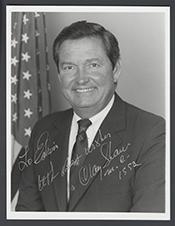
United States · United States Congress · 14 June 1989
Expresses the sense of the House of Representatives that there should be: (1) better coordination between Federal, State, and local law enforcement agencies through additional Blue Lightening task force projects to stem the flow of illegal drugs; (2) reform of the assets forfeiture program of the U.S. Customs Service and the Justice Department; (3) civil monetary penalties instituted and Federal benefits revoked for those convicted of drug dealing and repeat possession offenses; (4) mandatory random drug testing for specified transportation workers in sensitive positions and a comprehensive accrediting program for laboratories performing such tests; (5) an assessment of the advisability of instituting a federally funded needle exchange program for IV-drug abusers to prevent the transmission of AIDS; (6) a possible expansion of the military role in drug law enforcement and greater U.S. military and law enforcement support of joint antidrug operations in foreign countries; and (7) stronger extradition treaties and voluntary drug eradication agreements with foreign drug-producing countries.
United States · United States Congress · 8 June 1989
Workers' Political Rights Act of 1989 - Amends the Federal Election Campaign Act of 1971 to include political committees among those entities to which contributions by national banks, corporations, or labor organizations are restricted. Provides that communications to its members and their families and the establishment of, and solicitation of contributions for, a separate segregated political fund by a labor organization shall not be considered to be prohibited political contributions or expenditures only if such organization provides to employees it represents written notification of the following information: (1) that no employee is required to join the labor organization, and if the collective bargaining agreement purports to require membership in, or the payment of any amounts to, such organization, the employee instead may pay an agency fee to such organization; (2) the amount of the agency fee for the current year and the amount of union membership dues, initiation fees, and assessments for the current year; (3) that employees who choose to join the union will be subject to the labor organization's reasonable internal rules, regulations, and discipline; (4) that employees who resign from such organization may do so without being subject to internal union discipline for any post-resignation conduct; (5) that the amount of the agency fee for the current year is limited to the employee's pro rata cost of the labor organization's exclusive representation services to the collective bargaining unit; (6) that a procedure is in place to determine those costs which are chargeable to agency fee payors and such procedures are fully explained; and (7) that due regard is given to the fact that the labor organization holds a fiduciary position of trust with respect to the employees it represents and that the rights of employees to associate freely are not infringed any more than necessary for such organization to defray its reasonable costs of providing exclusive representation services. Requires a labor organization which does not provide employees with such notification to finance those political activities which are not considered contributions or expenditures with funds collected for its separate, segregated political fund.
United States · United States Congress · 8 June 1989
Designates the Department of Veterans Affairs outpatient clinic located at 1900 Mason Avenue, Daytona Beach, Florida, as the William V. Chappell, Jr., Veterans' Outpatient Clinic.
United States · United States Congress · 8 June 1989
Directs the Secretary of Health and Human Services to enter into an agreement for the transfer of specified monkeys used in research at the Institute for Behavioral Research in Silver Spring, Maryland, to Primarily Primates, Inc., an animal sanctuary in San Antonio, Texas, the teaching zoo known as Moorpark College in Moorpark, California, or the San Diego Zoo in San Diego, California.
United States · United States Congress · 7 June 1989
Amends the Internal Revenue Code with respect to the allocation and apportionment of qualified research and experimental expenditures to sources within and outside the United States for income tax purposes. Requires that any such expenditures made solely to meet a political jurisdiction's legal requirements concerning products or processes unlikely to yield extrajurisdictional income be allocated only to income within that political jurisdiction. Increases from 50 to 67 percent the amount of research and experimental expenditures that a company must allocate to income from U.S. sources. Requires companies to report on a consolidated basis with respect to the expenditures associated with these source rules.
United States · United States Congress · 6 June 1989
Fair Housing for Americans of All Ages Act of 1989 - Amends the Fair Housing Act to repeal the prohibitions with respect to familial status-based discrimination. Directs the United States Commission on Civil Rights to: (1) conduct a study of familial status-based housing discrimination; and (2) report the results of such study to the Congress.
United States · United States Congress · 1 June 1989
Improved Penalty Administration and Compliance Tax Act - Title I: Document and Information Return Penalties - Amends the Internal Revenue Code to revise penalty provisions in connection with tax return administration. Imposes a uniform penalty of $50 per offense to a maximum of $250,000 per year on any person who fails to: (1) file timely and correct information returns; (2) furnish correct payee statements; or (3) comply with other information reporting requirements. Reduces penalties if corrections are made within a specified time period. Allows exceptions for de minimis failures. Increases penalties and removes the annual penalty ceiling in cases of intentional disregard of filing requirements. Revises requirements governing regulations prescribed by the Secretary of the Treasury in connection with returns that must be filed on magnetic media or in other machine-readable form. Directs the Comptroller General to study and report to specified congressional committees concerning: (1) ways to resolve discrepancies between taxpayer identity information shown on information returns and that in Internal Revenue Service (IRS) records; and (2) whether persons in the business of transmitting information returns and other documents to the IRS on behalf of others should be subject to registration. Title II: Revision of Accuracy-Related Penalties - Replaces current law governing additions to tax and other additional amounts with respect to tax administration violations with provisions that impose a 20 percent penalty in the form of additional tax in connection with underpayments attributable to at least one of the following: (1) negligence or disregard of relevant rules; (2) any substantial understatement of income tax; (3) any substantial valuation overstatement in connection with income tax; (4) any substantial overstatement of pension liabilities; or (5) any substantial estate or gift tax valuation understatement. Increases the penalty to 40 percent in cases of gross valuation misstatements. Imposes: (1) a 75 percent penalty in the form of additional tax with respect to any underpayment attributable to fraud; and (2) a 50 percent penalty in connection with underpayments of or failure to pay any stamp tax. Title III: Preparer, Promoter, and Protester Penalties - Revises provisions governing damages assessable for offenses related to Tax Court litigation to: (1) grant the Tax Court discretion in requiring a taxpayer to pay the United States a penalty (current law requires the penalty); (2) increase the amount of the permissible penalty from a $5,000 to a $25,000 maximum; (3) authorize the Tax Court to impose a penalty upon any attorney who unreasonably multiplies the proceedings in question. Authorizes similar sanctions in cases brought before other courts. Modifies penalty provisions associated with understatements of taxpayer liability by income tax return preparers to: (1) increase penalty amounts; and (2) institute penalties for understatements due to unrealistic positions or reckless or intentional disregard of tax laws. Increases from $25 to $50 (to an annual maximum of $25,000) the penalty imposed on income tax return preparers who fail to furnish copies to taxpayers, sign returns, or furnish identifying numbers. Modifies penalties imposed on tax preparers who fail to file correct information returns. Increases the possible penalty imposed on persons who promote abusive tax shelters. Broadens the scope of persons subject to penalties for aiding and abetting understatements of tax liability. Increases from $500 to $1,000 the penalty for filing a frivolous income tax return. Repeals a provision prohibiting injunctions against any income tax return preparer who files a surety bond. Requires that regulations governing disclosure or use of information by tax return preparers permit disclosures for quality or peer reviews. Title IV: Failures to File or Pay - Increases penalties imposed on persons whose failure to file any return is fraudulent or intentional. Revises penalty provisions in connection with failures to make deposits of taxes, varying the penalty rate as a function of the time involved in the deposit delay.
United States · United States Congress · 24 May 1989
Directs the Secretary of Defense and the Secretary of Commerce to establish a five-year joint program for collecting operational and reconnaissance data, conducting research, and analyzing data on tropical cyclones to assist the forecast and warning program and increase the understanding of the causes and behavior of tropical cyclones. Sets forth the responsibilities of each Secretary. Directs those Secretaries to jointly develop and submit to the Congress management plans for: (1) the program established by this Act; and (2) continued tropical cyclone surveillance and reconnaissance which will adequately protect the citizens of U.S. coastal areas.
United States · United States Congress · 24 May 1989
Older Americans' Freedom to Work Act of 1989 - Amends title II (Old Age, Survivors and Disability Insurance) of the Social Security Act to remove the limitation on the amount of outside income which beneficiaries who have attained retirement age may earn without incurring a reduction in benefits.
United States · United States Congress · 17 May 1989
Amends the Internal Revenue Code to: (1) extend for three years, through 1992, the investment tax credit in connection with depreciable solar energy property and geothermal property; and (2) permit this credit against the taxpayer's entire regular tax liability and minimum tax liability.
United States · United States Congress · 16 May 1989
Directs the U.S. Postal Service to establish procedures to provide that, upon a written request of the head of any unit of general local government, ZIP code boundaries do not cross the boundaries of such general local government unit. Declares that ZIP code areas having the same first five digits shall be considered to have the same ZIP code in order to apply this Act to areas using more than five digits.
United States · United States Congress · 16 May 1989
Worker's Option Act of 1989 - Amends title II (Old Age, Survivors and Disability Insurance) (OASDI) of the Social Security Act to eliminate the limitation on the amount of outside income which beneficiaries who have attained retirement age may earn without incurring a reduction in benefits. Increases the delayed retirement credit rate for individuals who work beyond retirement age. Eliminates the recomputation of an individual's primary insurance amount when such individual has wages or self-employment income after entitlement to old-age or disability insurance benefits. Charges off an individual's excess earnings by eliminating such individual's entitlement to retroactive OASDI benefits for months preceding such individual's attainment of retirement age. Authorizes the appropriation of revenues received by reason of this Act's amendments to the Federal Old-Age and Survivors Insurance Trust Fund from 1990 through 1994.
United States · United States Congress · 11 May 1989
Constitutional Amendment - Requires the Congress and the President, prior to each fiscal year, to agree on an estimate of total receipts (except those derived from borrowing) for that fiscal year by enactment of a joint single subject resolution. Prohibits outlays for that year (except those for repayment of debt principal) from exceeding this amount unless the Congress, by a three-fifths roll call vote of each House, authorizes a specific excess of outlays over receipts. Requires a three-fifths roll call vote of each House to increase the public debt. Directs the President to submit a balanced budget to the Congress. Requires the approval of a majority of the total membership of each House by roll call vote before any bill to increase revenue may become law. Waives these provisions when a declaration of war is in effect.
United States · United States Congress · 9 May 1989
Infectious Disease Control Act of 1989 - Amends the Public Health Service Act to direct the Secretary of Health and Human Services to establish a National Program for Tropical Medicine to achieve optimal prevention of human infectious diseases originating in the tropics and to plan and coordinate governmental and non-governmental activities. Requires the Program to be administered by a Director selected by the Secretary. Sets forth Program responsibilities of the Director and requires the Director to prepare a plan for the implementation of those responsibilities. Establishes the National Committee on Tropical Medicine to advise the Director. Authorizes appropriations for FY 1990 through 1992.
United States · United States Congress · 4 May 1989
Davis-Bacon Reform Act of 1989 - Amends the Davis-Bacon Act to increase from $2,000 to $250,000 the threshold amount subjecting certain contracts to such Act and requiring them to specify the minimum wages to be paid to laborers and mechanics. Directs the Secretary of Labor to establish as the prevailing wage for a class of laborers or mechanics the entire range of wages being paid to a corresponding class of such workers in the particular urban or rural subdivision of the State in which the work is to be performed. Sets out the means for determining such prevailing wage in cases when more than a single wage is being paid to corresponding classes of workers. Excludes from the computation of wages the basic hourly rates of pay for workers on local Federal projects. Establishes a separate classification for helpers of laborers or mechanics, with their prevailing wages to be determined on the basis of the corresponding class of helpers. Prohibits the division of contracts into units of $250,000 or less for purposes of avoiding wage computation under such Act. Provides for administrative enforcement of such prohibition. Applies the increased contract amount threshold for coverage provided in this Act to other related Federal laws which use the Davis-Bacon Act prevailing wage rate determination requirements. Provides that wages found to be due to laborers and mechanics pursuant to the Davis-Bacon Act shall be paid to them directly from accrued payments withheld under the contract, in accordance with specified regulations issued by the Secretary of Labor. (Currently the Comptroller General makes such payments.) Directs the Administrator of General Services (rather than the Comptroller General) to distribute a list to all Federal agencies giving the names of persons or firms that the Secretary of Labor (rather than the Comptroller General) has found to have disregarded their obligations to employees and subcontractors. Amends the Copeland Act to require certain contractors or subcontractors to furnish compliance statements concerning weekly wages at the beginning, midpoint, and conclusion of the period covered by the contract, instead of every week as the wages are paid. Requires such statements at least every three months. Directs the Secretary of Labor and the Comptroller General to submit to the Congress annual reports describing the effects of the Davis-Bacon Act, the Copeland Act, and this Act on local wages and on local and national economies.
United States · United States Congress · 3 May 1989
De Soto Trail Commission Act of 1989 - Title I: De Soto Expedition Trail Commission - Establishes in the Department of the Interior the De Soto Expedition Trail Commission to assist with the establishment of a commemorative highway route of the De Soto expedition through the States of Alabama, Arkansas, Florida, Georgia, Louisiana, Mississippi, North Carolina, South Carolina, Tennessee, and Texas. Authorizes appropriations. Title II: Highway Route of the De Soto Expedition - Directs the Secretary of the Interior to designate a vehicular route as the Highway Route of the De Soto Expedition. Authorizes appropriations.
United States · United States Congress · 3 May 1989
Amends the Fair Housing Act to extend the transition period with respect to housing qualifying as housing for older persons based on the age of the residents.
United States · United States Congress · 2 May 1989
Designates September 8, 1989, as National Pledge of Allegiance Day. Expresses the sense of the Congress that the Christopher Columbus Quincentenary Jubilee Commission should include the centennial observance of the Pledge of Allegiance in its commemorative activities.
United States · United States Congress · 2 May 1989
Condemns the use of excessive and lethal force by Soviet troops in responding to the demonstrations of April 9, 1989, in Tbilisi, Georgian Soviet Socialist Republic. Urges the Soviet Union to investigate allegations of the use of toxic chemical agents against the demonstrators in Tbilisi and, if true, to take steps to prevent the reoccurrence of such use. Supports the demands of the people of Georgia for human rights and fundamental freedoms.
United States · United States Congress · 26 April 1989
Expresses the sense of the House of Representatives that the Bankruptcy Court and all involved parties should facilitate the prompt restoration of Eastern Airlines to full operations through appropriate action which may include appointment of a trustee, pending the sale of the company.
United States · United States Congress · 25 April 1989
Amends the Internal Revenue Code to extend the targeted jobs income tax credit through 1992 (under current law the credit will expire after December 31, 1989). Amends the Economic Recovery Tax Act of 1981 to authorize appropriations through FY 1992 in connection with the targeted jobs credit. Raises from 23 to 25 years the age limitation with respect to economically disadvantaged youth targeted for credit purposes. Adds as a targeted group under the credit economically disadvantaged individuals who have completed a qualified drug rehabilitation program.
United States · United States Congress · 25 April 1989
States that it is the policy of the United States to: (1) bring about lasting peace, pluralism, and democracy in Nicaragua; and (2) guarantee that the February 1990 elections in Nicaragua are free and fair. Urges: (1) the Government of Nicaragua to undertake specified reforms, such as reinstating due process and fair trials, ending torture, allowing an uncensored free press, ensuring the right to strike and to publish for unions, and ending the forced relocation of Indians and Creoles; (2) such government to permit independent, international, and non-governmental human rights observers to meet and travel freely without harassment; and (3) all countries in Central America to continue to work toward achieving the democratic principles and processes specified in the August 7, 1987, Central American peace accord.
United States · United States Congress · 18 April 1989
Expresses the sense of the Congress that, in seeking to reduce the Federal deficit, any proposal which would diminish, defer, or otherwise adversely affect periodic cost-of-living adjustments in Federal retirement benefits should be uniformly applied.
United States · United States Congress · 13 April 1989
Expresses the sense of the Congress that the United States should: (1) give the highest priority to fully accounting for the Americans still missing in Southeast Asia and to negotiating the return of Americans still held captive; (2) maintain an ongoing dialogue with Vietnamese, Cambodian, and Lao officials so that the prisoners of war issue may be resolved; (3) continue joint field investigations with such officials; and (4) heighten public awareness of the prisoners of war issue through the dissemination of factual data.
United States · United States Congress · 10 April 1989
Amends the Impoundment Control Act of 1974 to require the President to transmit any message proposing a rescission of budget authority to the Congress within three days after enactment of the law providing the budget authority in question. Effects any such proposed rescission unless the Congress, within 45 days, completes action on legislation disapproving the proposal. Prohibits funds made available for obligation by such congressional veto from inclusion in subsequent rescission proposals.
United States · United States Congress · 6 April 1989
Everglades National Park Protection and Expansion Act of 1989 - Title I: Everglades National Park Expansion - Modifies the boundaries of the Everglades National Park, Florida. Authorizes the Secretary of the Interior to acquire lands for addition to the Park. Authorizes appropriations. Authorizes the Secretary to expedite the construction of a visitor center facility at Everglades City, Florida. Designates the facility the Marjory Stoneman Douglas Center. Title II: Fort Jefferson National Monument Redesignation Study - Requires the Secretary, within two years after enactment of this Act, to transmit to specified congressional committees a study of the feasibility of expanding and redesignating Fort Jefferson National Monument as Fort Jefferson National Park.
United States · United States Congress · 5 April 1989
Consumer Products Safe Testing Act - Prohibits Federal department or agency heads from considering LD50 test results when determining product safety, labeling, or transportation requirements for purposes of Federal regulation. (LD50 is a procedure whereby toxicity is measured in terms of the median dose that will kill 50 percent of the test animals within a specified time.) Requires Federal department and agency heads to: (1) review and evaluate directives that call for the use of an animal toxicity test; and (2) promulgate regulations specifying the use of nonanimal alternatives. Requires that animal toxicity testing regulations be subject to periodic agency review and to public comment in certain cases.
United States · United States Congress · 5 April 1989
Urges the Government of Iran to uphold the human rights of all its nationals, including members of the Baha'i faith, and to extend the rights guaranteed by the Universal Declaration of Human Rights. Calls upon the President to continue to: (1) emphasize human rights improvements as an important factor in the development of relations between the U.S. and Iranian Governments; (2) cooperate with other governments to initiate and support actions by the United Nations and its agencies to promote the protection of the religious rights of the Baha'is; and (3) provide, and urge others to provide, for refugee and humanitarian assistance for those Baha'is fleeing their homelands to escape religious repression.
United States · United States Congress · 3 April 1989
Designates the week of October 22 through October 29, 1989, as Drug-Free America Week. Encourages every American to wear red during such week to symbolize a commitment to a drug-free lifestyle.
United States · United States Congress · 23 March 1989
Declares it to be the policy of the United States that Federal records, books, and publications of enduring value be produced on acid-free permanent papers. Makes recommendations relating to such papers to Federal agencies and to American publishers. Recommends that the Secretary of State make known such national policy to foreign governments and appropriate international agencies. Directs the Librarian of Congress, the Archivist of the United States, the Director of the National Library of Medicine, and the Administrator of the National Agricultural Library to monitor progress in implementing such policy.
United States · United States Congress · 23 March 1989
Designates the week beginning September 1, 1989, as World War II Remembrance Week in commemoration of the 50th anniversary of the outbreak of that War.