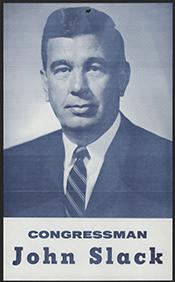
United States · United States Congress · 5 February 1974
Makes it the sense of the House that, during the period pending consideration and action by the Senate upon the bill H.R. 10710, as introduced in the first session of the Congress, cited as the "Trade Reform Act of 1973" and as amended and passed by the House, no loan, guarantee, insurance, or credit shall be extended by the Export-Import Bank of the United States to any nonmarket economy country (other than any such country whose products are eligible for column 1 tariff treatment on the date of the enactment of this resolution), and no such country shall participate in any program of the Government of the United States which extends credits or credit guarantees or investment guarantees, directly or indirectly.
United States · United States Congress · 30 January 1974
Establishes a formula for income averaging under the Internal Revenue Code in the event of a downward fluctuation in income. Provides that if an eligible individual has reduced income for the computation year and the amount of such income exceeds $3,000, then the tax imposed under the Internal Revenue Code for the computation year shall be the tax which would be imposed on 80 percent of the average base period income, minus five times the decrease in such tax which would result from subtracting 20 percent of reduced income from 80 percent of average base period income.
United States · United States Congress · 29 January 1974
Reduces from 60 to 55 the age at which a woman may become entitled to actuarially reduced widow's insurance benefits, under title II (Old-Age Survivors, and Disability Insurance) of the Social Security Act.
United States · United States Congress · 21 December 1973
Emergency Coal Administration Act - Establishes within the Federal Energy Office of the President an Emergency Coal Administration, to be administered by the Administrator of the Federal Energy Office. Authorizes the Administrator to take such action as may be necessary to insure the maximum increase in the production, transportation, and conversion of coal so long as the present energy crisis exists. Sets forth the powers and authority of the Administrator under the provisions of this Act, including the following: (1) to set goals for the production and conversion of coal into energy; (2) to encourage, assist, and take such steps as shall provide for increased production, transportation, and conversion of coal into energy; (3) to issue orders which shall constitute a prior claim upon producers of materials and supplies essential to the increased production, transportation, and conversion of coal into energy; and (4) to afford necessary, reasonable, and proper financial assistance to persons, firms, or corporations converting to the use of coal as a source of energy. Authorizes the Administrator to enter into contracts directly or for the account of any person, firm, or corporation engaged in the production, transportation, and conversion of coal upon terms he deems fair and reasonable for any equipment or parts or other essential articles necessary to increase the production, transportation, and conversion of coal. States that the Administrator may engage in such research and development as he deems necessary, including, but not limited to, the construction and operation of pilot plants and projects relating to the production, transporation, and conversion of coal. Authorizes to be appropriated such sums as may be necessary to carry out the purposes of this Act.
United States · United States Congress · 30 November 1973
Allows a tax deduction under the Internal Revenue Code of not more than $750 for ordinary and necessary expenses paid during the taxable year for the repair or improvement of property used by the taxpayer as his principal residence. Permits any person who is the owner of rental housing and who rehabilitates or restores such housing to deduct the cost of such restoration, with respect to the amortization of the adjusted basis of such housing as so restored, based on a period of 60 months. Entitles any person who acquires rehabilitated or restored rental housing from a taxpayer who elected the amortization deduction and who did not discontinue the amortization deduction, to a deduction with respect to the adjusted basis of such facility based on the remaining amount of the 60 month period taken by the person who rehabilitated the house. Provides procedures for the election and termination of the amortization deduction and defines the terms used in this Act.
United States · United States Congress · 27 November 1973
Directs the Secretary of Transportation to prescribe regulations within sixty days of the date of enactment of this Act prohibiting any motor vehicle from being equipped with any starter interlock system associated with seatbelts or upper torso restraints.
United States · United States Congress · 7 November 1973
Commodities Exchange Commission Act - Establishes a Commodity Exchange Commission, composed of five commissioners appointed by the President by and with the advice and consent of the Senate, as an independent agency in the executive branch of the Government. Transfers specified functions from the Secretary of Agriculture to the Commission and delegates enumerated housekeeping functions to the Chairman. Authorizes the employment of persons without regard to Civil Service laws. Provides, with regard to rules governing registration of Commission merchants and brokers, that if after requesting a contract market to make specified changes in its rules and practices, the contract market has not made the changes, the Commission may order the contract market to alter the rules of such contract market as necessary to effect changes in specified areas. Requires that contract markets serve an economic purpose. Prohibits orders by futures commission merchants for their own accounts. States that no member of a contract market shall execute any order for future delivery and on the same intentionally enter into any transaction for future delivery in such commodity for any account in which such member has trading discretion, with specified exceptions. Provides that if any contract market, director, officer or agent is not enforcing or is violating any of the provisions of this Act, the Commission may enter an order directing that such contract market, director, officer, agent, or employee cease and desist from such violation and assess a civil penalty of not more than $100,000 for each such violation. Increases the amount of specific penalties for violations of this Act. Empowers the Commission with injunctive authority to restrain potential violations of this Act. Penalizes, with treble damages, the use of confidential information in violation of this Act.
United States · United States Congress · 25 October 1973
Authorizes appropriations of $150,000,000, $175,000,000, and $200,000,000 for fiscal years 1975-1977, respectively for the nutrition program for the aged under title VII of the Older American Act.
United States · United States Congress · 18 October 1973
Declares it to be the sense of the House that the President, acting in accordance with the announced policy of the United States Government to maintain Israel's deterrent strength, and under existing authority, should continue to transfer to Israel the Phantom aircraft and other equipment in the quantities needed by Israel to repel the attack and to offset the military equipment and supplies furnished to the Arab States by the Soviet Union.
United States · United States Congress · 25 September 1973
Pollution Control Facility Loan Act - Authorizes the Secretary of Labor to make loans to finance projects within eligible areas for acquisition, construction, rehabilitation, alteration, expansion, or improvement of a certified pollution control facility. States that such loans shall not exceed 65 percent of the aggregate cost to the applicant of the project. Establishes a revolving fund in the Treasury for making such loans. Authorizes an appropriation of $750,000,000 to carry out this Act.
United States · United States Congress · 2 August 1973
Provides, under the Merchant Marine Act, that the appropriate agencies take steps to assure that at least 20 per cent of the gross tonnage of all petroleum and petroleum products imported into the United States on ocean vessels be transported on privately owned United States flag commercial vessels. Requires that the quantity to be carried in United States-flag commercial vessels be at least 25 per cent after June 30, l975, and at least 30 per cent after June 30, l977. (Amends 46 U.S.C. 1241))
United States · United States Congress · 19 June 1973
Authorizes the President to issue annually a proclamation designating the fourth Sunday of November of each year as "National Grandparents' Day". Calls upon the people of the United States and interested groups and organizations to observe such day with appropriate ceremonies and activities.
United States · United States Congress · 6 June 1973
Provides for voluntary agreements between ministers and their employers to treat such ministers as employed persons for purposes of coverage under title II of the Social Security Act (Old-Age, Survivors' and Disability Insurance).
United States · United States Congress · 24 May 1973
Foreign Trade and Investment Act - Declares the purpose of the Act to insure that the production of goods which have historically been produced in the United States is continued and maintained, to encourage the return of production of goods that has been transferred abroad, and to encourage the development of new product production in the United States. Title I : - Provides that if a foreign corporation is a controlled foreign corporation for an uninterrupted period of 30 days or more during any taxable year, every United States shareholder of such corporation who owns stock in such corporation on the last day in such year on which such corporation is a controlled foreign corporation shall include in its gross income, for the taxable year on which the corporation ends, its pro rata share of the corporations' earnings and profits for such year. Defines the pro rata share of the stockholder and the earnings and incomes of such corporations. Provides that the earnings and profits of a foreign corporation attributable to amounts which are, or have been, included in the gross income of a United States shareholder shall not, when distributed to such shareholder or to a trust of which such shareholder is a beneficiary, be again included in the gross income of such United States shareholder or trust. Provides that, under regulations prescribed by the Secretary of the Treasury or his delegate, the basis of a United States shareholder's stock in a controlled foreign corporation shall be increased by the amount required to be included in its gross income with respect to such stock, but only to the extent to which such amount was included in the gross income of such United States shareholder. Authorizes the Secretary or his delegate to require by regulation that each person who is or has been a United States shareholder of a foreign corporation to maintain such records as may be prescribed. Repeals the foreign tax credit allowed corporations. Requires the Treasury Department, by December 31, 1974, to submit to Congress a report on the administration of the income tax imposed by the Internal Revenue Code as it applies to business activities carried on outside the United States by United States corporations. Title II: United States Foreign Trade and Investment Commission - Provides that the United States Foreign Trade and Investment Commission shall be composed of three commissioners to be appointed by the President with the consent of the Senate. Prescribes the qualifications for the Commissioners. Title III: Quantitative Restraints on Imports - Limits the total quantity of each category of goods produced in a foreign country which may be entered during the calendar year 1974 to the average annual quantity determined by the Commission to have entered during the calendar years 1965 to 1969. Limits the total quantity of such goods which may be entered during any calendar year after 1974 to the total determined as above plus the increase estimated by the Commission to be necessary to make the total quantity of imports in each category bear the same relationship to United States production of goods in such category as existed during the period 1965-1969. Authorizes the President to make bilateral or multilateral arrangements for regulating the quantity of articles produced in such foreign countries which may be imported into the United States. Title IV: Amendments to the Antidumping and Countervailing Duty Acts - Provides that whenever a class or kind of foreign merchandise is being sold in the United States at less than its fair value and an industry in the United States is being hurt or prevented from being established by reason of the importation of such merchandise, there shall be levied in addition to other duties a special dumping duty in an amount equal to the difference between the purchase price or the exporter's sales price and the foreign market value. Authorizes an additional duty where any country pays a bounty for the production of any goods and those goods are then imported into the United States, the duty to be equal to the bounty. Title V: Amendments to the Trade Expansion Act of 1962 - Adjustment Assistance - Provides for the presentation, consideration, and disposition of petitions for tariff adjustments. Title VI: Foreign Investment and Technology Export Controls - Authorizes the President to prohibit any person within the jurisdiction of the United States from engaging in any transaction involving a direct or indirect transfer of capital to or within any foreign country or to any national thereof when in the judgment of the President the transfer would result in the net decrease in employment in the United States. Imposes a fine of not more than $100,000 and imprisonment of not more than one year for each violation. Title VII: Other Foreign Trade Provisions - Requires the Export-Import Bank of Washington to submit to Congress semi-annually a complete report of its operations. Requires that all goods having foreign made components be clearly marked, indicating the origin of such foreign made components.
United States · United States Congress · 7 May 1973
Extends until November 1, 1978, the existing exemption of the steamboat Delta Queen from vessel laws requiring fire-retardant material to be used in the construction of large vessels. (Amends 46 U.S.C. 369(b))
United States · United States Congress · 3 May 1973
Food Supplement Amendment - Defines the term "food supplement" for purposes of the Federal Food, Drug, and Cosmetics Act to mean food for special dietary uses, and defines the meaning of "special dietary uses" as particular uses of food for man which meets specified requirements. Provides that in administering such Act the Secretary of Health, Education, and Welfare: (1) shall not limit the potency, number, combination, amount, or variety of any synthetic or natural vitamin, mineral, substance, or ingredient of any food supplement unless such article is intrinsically injurious to health in the recommended dosage; and (2) shall not require a warning label on any food supplement unless such article is intrinsically injurious to health in the recommended dosage.
United States · United States Congress · 11 April 1973
Makes it the sense of Congress that it shall be the policy of the United States to require repayment of the longstanding debts which are delinquent in nature. Makes it the sense of Congress that the Department of the Treasury submit to the Congress within ninety days of passage of this resolution a list and report on the extent of such indebtedness on the part of foreign nations. Declares that it is the sense of Congress that the Department of the Treasury, through the appropriate departments and agencies, should, immediately after the filing of this report, begin consultations with foreign governments involved for the purpose of making arrangements for the prompt repayment of those longstanding debts which are delinquent.
United States · United States Congress · 4 April 1973
Extends specified transitional rules, under the Internal Revenue Code of 1954, for allowing a charitable contribution deduction for purposes of the estate tax in the case of certain charitable remainder trusts. (Adds 26 U.S.C. 2055(e)(3)
United States · United States Congress · 2 April 1973
Directs the Secretary of Health, Education, and Welfare to conduct research on multi- layered dried paint film containing lead compounds to determine the safe level of lead in residential paint products and report to Congress within eight months his findings and recommendations for legislation. Redefines 'lead-based paint' to mean any paint containing more than five-tenths of 1 per centum (formerly: more than 1 per centum) lead by weight in the total non-volatile content of liquid paints or in the dried film of paint already applied. States that this Act shall preempt state or local laws purporting to establish different standards relating to the lead content in paints. (Amends 42 U.S.C. 4821, 42 U.S.C. 4841(3))
United States · United States Congress · 12 March 1973
Makes it the sense of the House of Representatives that should United States gold be offered for public sale, the sale of such gold must be restricted to the domestic market and American citizens for a period of 30 days before being offered on the world market.
United States · United States Congress · 1 March 1973
Provides that no license granted for the operation of a broadcasting station under the Communications Act of 1934 shall be for a longer term than five years. Provides for renewal of such license where the Federal Communications Commission finds that the public interest, convenience, and necessity would be served. Provides that an applicant for renewal who is legally, financially and technically qualified shall be awarded the license if such applicant shows that its broadcast service during the preceding license period has reflected a good-faith effort to serve the needs and interests of its area as represented in its immediately preceding and pending license renewal application and if it has not demonstrated a callous disregard for law or the Commission's regulations.
United States · United States Congress · 27 February 1973
Extends the authorizations through fiscal year 1974 for the following programs under the Public Works and Economic Development Act of 1965: (1) grants for public works and development facilities; (2) public works and development facility loans; (3) technical assistance, research and information related to public works and development facilities; (4) financial assistance for projects in economic development districts; and (5) supplemental funds for Federal grants-in-aid programs for economic development regions. Provides that no area designated as a redevelopment area for purposes of the Act shall have such designation terminated or modified before June 1, 1974, unless the qualified local governing body of the county specifically requests the such action.
United States · United States Congress · 20 February 1973
Fair International Trade Act - States that the purpose of this Act is to prevent the destructive effects of an undue increase of imports on the domestic economy while providing for the expansion of imports in proportion to the domestic market for the same or similar products. Directs the Tariff Commission to make an investigation as required by this Act upon the request of the President, upon resolution of either the Senate Committee on Finance of the House Committee on Ways and Means, upon its own motion, or upon a filing of a petition by a trade association, a national labor union, or other interested party. Defines terms such as "domestic consumption,: and "share of domestic consumption,: for purposes of this Act. Authorizes the President, within 120 days after the effective date of this Act to limit the total quantity of each category of imported domestic goods produced after January 1, 1973, to the average annual quantity of such category of goods as was imported during the three-year period of 1970 - 1972, as determined by the Tariff Commission. Prohibits the importation of any article on which an unexpired patent has been issued by the United States Patent Office to a domestic producer in an amount that shall exceed 5 percent of the annual apparent domestic consumption of the same article in the United States during the first five years after the issuance of the patent, or more than 10 percent of such consumption during the second five-year period, or more than 15 percent after the third five year period after the issuance of the patent. Provides for quantitative import limitations where excessive imports are concentrated in one or more regional areas of the United States. Requires the Secretary of Commerce upon the request of the Tariff Commission to supply such import statistics as the Commission may need in order to carry out the provisions of this Act. Provides for quantitative limitations on imports of agricultural products under the same conditions with respect to the share of domestic consumption supplied by imports as govern other articles under this Act/
United States · United States Congress · 5 February 1973
Provides for the preservation of historical and archeological data. Extends coverage to all Federal and federally assisted or licensed programs which alter the terrain and potentially cause loss of scientific, prehistorical, historical or archeological data. Directs Federal agencies to notify the Secretary of the Interior if in their operations archeological or other scientific data is revealed or threatened. Provides that whenever any Federal agency finds or is made aware by a responsible authority that its operations in connection with any Federal, federally assisted, or federally licensed activity or program affects or may affect adversely significant scientific, prehistorical, historical, or archeological data, such agency may request the Secretary to undertake protection measures, or may itself expend program or activity funds for the recovery, protection, and preservation of such data (including preliminary survey, analysis, and publication) and shall provide the Secretary with appropriate information concerning the project and the investigation. Provides that the Secretary shall keep the responsible agency notified at all times of the progress of any survey or other investigation made under this Act, or of any work undertaken as a result of such survey, in order that there will be as little disruption or delay as possible in the carrying out of the functions of such agency. Provides that the Secretary in the administration of this Act shall: (1) accept and utilize funds transferred to him by any Federal agency; (2) enter into contracts or make cooperative agreements with any Federal or State agency, any educational or scientific organization, or any institution, corporation, association, or qualified individual; (3) obtain the services of experts and consultants or organizations thereof; and (4) accept and utilize funds made available for salvage archeological purposes by any private person or corporation. Authorizes such appropriations as necessary to carry out the purposes of this Act.
United States · United States Congress · 31 January 1973
Title I: Airline Passenger Right to Travel Act - Provides for the implementation of the Convention for the Suppression of Unlawful Seizure of Aircraft under the Federal Aviation Act of 1958. Authorizes the President to suspend air service to any foreign nation which he determines is encouraging aircraft hijacking by acting in a manner inconsistent with the Convention for the Suppression of Unlawful Seizure of Aircraft, or which he determines is used as a base of operations or training or as a sanctuary for terrorist organizations using the illegal seizure of aircraft as an instrument of policy. Authorizes the Secretary of Transportation to revoke, with the approval of the Secretary of State, the operating authority of foreign air carriers who fail to meet the minimum standards set by the Convention to effectively maintain the security measures relating to the transportation of persons in foreign air transportation covered by the Convention. Title II: Air Transportation Security Act - Directs the Administrator of the Federal Aviation Administration to prescribe regulations requiring that all passengers and property intended to be carried in the aircraft cabin be screened by weapon-detecting devices operated by the air carrier's employees. Requires the Administrator to acquire and furnish for the use by air carriers sufficient devices necessary for the purpose of this Act. Requires the Administrator to establish and maintain an air transportation security force of sufficient size to provide a law enforcement presence and capability at airports in the United States adequate to insure safety from criminal violence and air piracy of persons traveling in air transportation. Sets forth criminal penalties for carrying a weapon aboard an aircraft. Sets forth penalties for the willful and malicious imparting or conveying of false information concerning an attempt to carry out any prohibited act contained in the provisions of this Act.
United States · United States Congress · 29 January 1973
Requires the President to notify within ten days each House of the Congress by special message of every instance in which he impounds funds or authorizes such impoundment by any officer of the United States. States that such message must specify the amount of impounded funds, the specific programs affected, and the reasons for the impoundment of funds. Provides that the President shall cease the impounding of funds set forth in each special message within sixty days of continuous session after the message is received by the Congress unless the specific impoundment shall have been ratified by the Congress by the passage of a resolution in accordance with the provisions of this Act.
United States · United States Congress · 24 January 1973
Forestry Incentives Act - Authorizes the Secretary of Agriculture to develop and carry out a forestry incentives program to encourage the protection, development and management of small nonindustrial private lands and non-Federal public forest lands. Provides that the Secretary shall share up to 50 percent of the cost of forest practices on non-Federal public lands and small nonindustrial private lands. Provides that no private forest landowner shall receive cost sharing under this Act in excess of $2,500 in any one fiscal year. Requires the Secretary to cooperate with local associations or groups of nonindustrial forest owners, and to pay up to 50 percent of the cost of manpower, equipment, planting stock and other materials required to carry out essential forest management practices. Authorizes the Secretary to utilize the services of State and local committees established under the Soil Conservation and Domestic Allotment Act. Sets forth factors to consider prior to the distribution of funds under this Act. Provides that Federal funds may be allocated for cost sharing on a bid basis with priority accorded landowners contracting to carry out approved forestry practices for the smallest Federal cost share. States that the Secretary shall consult with the State forester or other appropriate official of each State in the conduct of the forestry incentives program provided for in this Act. Provides that the Secretary shall coordinate the administration of this Act with other related programs. Authorizes to be appropriated not to exceed $25,000,000 to carry out the provisions of this Act.
United States · United States Congress · 23 January 1973
Makes it a Federal crime to kill or assault a fireman or law enforcement officer engaged in the performance of his duties when the offender travels in interstate commerce or uses any facility of interstate commerce for such purpose. Provides for imposition of a sentence for a term of years up to life or upon the recommendation of the jury, death for the killing of such persons. (Adds 18 U.S.C. 1116)
United States · United States Congress · 23 January 1973
Voluntary Military Special Pay Act - Sets forth special pay rates of officers of the Army or Navy in the Medical or Dental Corps, officers of the Air Force designated as medical officers or dental officers, and medical and dental officers of the Public Health Service. Authorizes a member of a uniformed service who has completed at least 21 months of active duty, who has a critical military skill, and who reenlists in the service to be paid an incentive amount, not to exceed six months of the basic pay to which he was entitled at the time of his discharge or release, multiplied by the number of years of additional obligated service, not to exceed 6 years, or $15,000, whichever is the lesser amount. Provides that a person who enlists in an armed force for a period of at least 3 years, or who extends his initial period of active duty in that armed force to a total of at least 3 years, may be paid an incentive amount of up to $3,000. Grants special incentive pay, not to exceed $12,000 annually, for officers of the uniformed services in critical health professions, who execute written agreements to remain on continuous active duty for a specified number of years. Requires an annual report on this special pay program to the House and Senate Committees on Armed Services. Authorizes special incentive pay, not to exceed $4,000 annually, for officers of armed forces who agree to serve on continuous active duty in a critical shortage specialty for a period of between one to six years. Provides for special incentive pay at specified rates for specified periods for participants in the Selected Reserve of the Ready Reserve of an armed force. Sets forth conditions participants must meet for eligibility. (Amends 38 U.S.C. 302, 308, 308a, 311, 313, 314)
United States · United States Congress · 18 January 1973
Provides that whoever, while engaged in the commission of any offense which is a Federal crime of violence, is armed with any firearm, in addition to the punishment provided for such crime shall be sentenced to a term of imprisonment for not less than one year nor more than ten years. States that a person convicted for a second or subsequent time of committing such a crime of violence while armed with a firearm shall be sentenced to a term of imprisonment for not less than twenty-five years. Provides that in the case of any sentence imposed under this Act the court shall not suspend such sentence or give a probationary sentence nor shall the term of imprisonment imposed under this section run concurrently with any other term of imprisonment imposed for the commission of such crime of violence. (Adds 18 U.S.C. 2401, 2402)
United States · United States Congress · 18 January 1973
Rehabilitation Act - Declares that it is the purpose of this Act to provide a statutory basis for the Rehabilitation Service Administration and to establish within the Department of Health, Education and Welfare an Office for the Handicapped, and to authorize specified programs. Establishes within the Department of Health, Education, and Welfare a Rehabilitation Services Administration which shall be administered by a Commissioner. Provides that the Commissioner shall carry out and administer all programs and direct the performance of all services for which authority is provided to the Secretary of H.E.W. under titles I through IV of this Act. Creates within such administration a Division of Research, Training and Evaluation which shall be responsible for carrying out programs and projects under title IV of this Act. Authorizes the inclusion of appropriations under this Act in appropriations for the fiscal year preceding the fiscal year for which they are available for obligation. Provides that where funds are provided for a single project by more than one Federal agency to an agency or organization assisted under this Act, the Federal agency principally involved may be designated to act for all in administering such funds, pursuant to regulations prescribed by the President. Sets forth definitions of terms used in this Act. Title I: Vocational Rehabilitation Services - States it to be the purpose of this title to authorize grants to assist States to meet the current and future needs of handicapped individuals, so that such individuals may prepare for and engage in gainful employment to the extent of their capabilities. Authorizes to be appropriated $800,000,000 for fiscal year 1973, and $975,000,000 for fiscal year 1974 for the purpose of making grants to States to assist them in meeting the costs of vocational rehabilitation services. Authorizes to be appropriated $50,000,000 for fiscal year 1973, $60,000,000 for fiscal year 1974, and $75,000,000 for fiscal year 1975, for the purpose of making grants to States and public and nonprofit agencies to assist them in meeting the costs of projects to initiate or expand services to handicapped individuals. Sets forth the requirements of State plans to be submitted and approved for participation in programs under this title and under title II of this Act. Authorizes judicial review in United States district courts of decisions by the Commissioner of the Rehabilitation Services Administration affecting State plans. Provides that the Commissioner shall insure that the individualized written rehabilitation program required in a State plan in the case of each handicapped individual shall be developed jointly by the vocational rehabilitation counselor or coordinator and the handicapped individual. Defines vocational rehabilitation services provided under this Act as any goods or services necessary to render a handicapped individual employable, including, but not limited to, the following: (1) evaluation of rehabilitation potential; (2) counseling, guidance, referral, and placement services for handicapped individuals; (3) vocational and other training services for handicapped individuals; (4) physical and mental restoration services; (5) maintenance, not exceeding the estimated cost of subsistence, during rehabilitation; (6) interpreter services for the deaf, and reader services for the blind; (7) recruitment and training services for handicapped individuals; (8) rehabilitation teaching services and orientation and mobility services for the blind; (9) occupational licenses, tools, equipment, and initial stocks and supplies; (10) transportation in connection with the rendering of any vocational rehabilitation services; and (11) telecommunications, sensory, and other technological aids and devices. Provides a formula for the allotment and payment of funds to States for providing rehabilitation services under this title. Directs the Commissioner to establish offices in ten to twenty geographically dispersed regions for client assistance pilot projects to provide counselors to inform and advise all clients and client applicants in the project area of all available benefits under this Act and to assist them in their relationships with projects, programs, and facilities providing services to them under this Act. Directs the Commissioner to pay to a State or, at the option of the State, to a public or nonprofit organization or agency a portion of the cost of planning, preparing for, and initiating special programs under the State plan to expand vocational rehabilitation services. Title II: Comprehensive Rehabilitation Services - States it to be the purpose of this title to authorize grants to assist the several States in developing and implementing continuing plans for meeting the current and future needs of handicapped individuals for whom a vocational goal is not possible or feasible authorizes to be appropriated $30,000,000 for fiscal year 1973, $50,000,000 for fiscal year 1974, and $80,000,000 for fiscal year 1975 for grants to carry out the purposes of this title. Specifies the formula to be utilized in alloting such funds to the States. Directs the Commissioner to make grants to States and public and nonprofit agencies or organizations to pay part of the cost of projects for research and demonstration and training which hold promise of making a substantial contribution to the solution of problems related to the rehabilitation of individuals under this title. Title III: Special Federal Responsibilities Authorizes the Commissioner to make grants and contracts to assist in meeting the costs of construction of public or nonprofit rehabilitation facilities, initial staffing, and planning assistance. Authorizes to be appropriated for such grants and contracts $35,000,000 for fiscal year 1973, $40,000,000 for fiscal year 1974, and $45,000,000 for fiscal year 1975. Authorizes the Commissioner to make grants to States and public or nonprofit organizations and agencies to pay up to 90 percent of the cost of projects for providing vocational training services to handicapped individuals, especially those with the most severe handicaps, in public or nonprofit rehabilitation facilities. Authorizes to be appropriated for such grants and contracts $30,000,000 for fiscal year 1973, $35,000,000 for fiscal year 1974, and $40,000,000 for fiscal year 1975. Authorizes the Commissioner to insure up to 100 percent of any mortgage on the construction of facilities for programs for handicapped individuals. Creates a Rehabilitation Facilities Insurance Fund to be used by the Commissioner as a revolving fund for carrying out the insurance provisions of this part. Provides that the total amount of outstanding mortgages shall not exceed $250,000,000. Authorizes to be appropriated such sums as may be necessary for initial capital for such Fund. Authorizes the Commissioner to make annual interest grants to assist States and public or nonprofit agencies and organizations to reduce the cost of borrowing from other sources for the construction of rehabilitation facilities. Authorizes to be appropriated such sums as may be necessary for the payment of annual interest grants in accordance with this part. Authorizes the Commissioner to make grants to States and public or nonprofit agencies and organizations for paying part of the cost of special projects and demonstrations: (1) for establishing facilities and providing services which hold promise of expanding or otherwise improving rehabilitation services to handicapped individuals, especially those with the most severe handicaps; and (2) for applying new types or patterns of service or devices. Allows the Commissioner to make grants to pay up to 90 percent of the cost of projects or demonstrations for the provision of vocational or comprehensive rehabilitation services to handicappped individuals who are migratory agricultural workers or seasonal farmworkers, and to members of their families who are with them. Provides that the Commissioner may make contracts or jointly finance cooperative arrangements with employers and organizations for the establishment of projects designed to prepare handicapped individuals for gainful and suitable employment in the competitive labor market under which such handicapped individuals are provided training and employment in a realistic work setting and such other services as may be necessary for such individuals to continue to engage in such employment. Authorizes the Commissioner to provide technical assistance to rehabilitation facilities, and for the purpose of removal of architectural and transportation barriers, to any public or nonprofit agency, institution, organization or facility. Authorizes to be appropriated, for the purpose of making grants under this part, $50,000,000 for fiscal year 1973, $125,000,000 for fiscal year 1974, and $150,000,000 for fiscal year 1975. Authorizes to be appropriated $5,000,000 for construction, $800,000 for operations for fiscal year 1973, $1,200,000 for operations for fiscal year 1974, and $2,000,000 for operations for fiscal year 1975, for establishing and operating a National Center for Deaf-Blind Youths and Adults. Authorizes to be appropriated $2,000,000 for fiscal year 1973, $4,000,000 for fiscal 1974, and $7,000,000 for fiscal year 1975 and for making grants and contracts for the expansion and improvement of vocational or comprehensive rehabilitation services for deaf and blind individuals. Authorizes to be appropriated, for the purpose of establishing and operating National Centers for Spinal Cord Injuries, $15,000,000 for fiscal year 1973, $25,000,000 for fiscal year 1974, and $30,000,000 for fiscal year 1975. Authorizes to be appropriated, for providing services for the treatment of individuals suffering from end-stage renal disease, $25,000,000 for fiscal year 1973, $25,000,000 for fiscal year 1974, and $25,000,000 for fiscal year 1975. Establishes a National Advisory Council on Rehabilitation of Handicapped Individuals in the Department of Health, Education, and Welfare to: (1) provide policy advice and consultation to the Secretary of Health, Education, and Welfare, and the Commissioner; (2) review the administration and operation of vocational rehabilitation programs under this Act; and (3) advise the Secretary and the Commissioner with respect to the conduct of independent evaluations of programs carried out under this Act. Authorizes appropriations of $100,000 for fiscal year 1973 and $150,000 for each of fiscal years 1974 and 1975 to carry out the functions of the Council. Title IV: Research and Training - Authorizes the Commissioner to make grants to and contracts with States and public or nonprofit agencies and organizations to pay part of the cost of projects for the purpose of planning and conducting research, demonstrations, and related activities, which bear directly on the development of methods, procedures, and devices to assist in the provision of vocational and comprehensive rehabilitation services to handicapped individuals, especially those with the most severe handicaps. Authorizes to be appropriated for such research activities $75,000,000 for fiscal year 1973, $100,000,000 for fiscal year 1974, and $150,000,000 for fiscal year 1975. Authorizes the Commissioner to make grants to and contracts with States and public and nonprofit agencies and organizations to pay part of the cost of projects for training, traineeships, and related activities designed to assist in increasing the numbers of personnel trained in providing vocational and comprehensive rehabilitation services to handicapped individuals and in performing other functions necessary to the development of such services. Authorizes to be appropriated for such training grants $50,000,000 for fiscal year 1973, $75,000,000 for fiscal year 1974, and $100,000,000 for fiscal year 1975. Title V: Administration and Program and Project Evaluation - Provides that, in carrying out his duties under this Act, the Commissioner shall: (1) cooperate with, and render technical assistance to States in matters relating to the rehabilitation of handicapped individuals; (2) provide short-term training and instruction in technical matters relating to vocational and comprehensive rehabilitation services; and (3) disseminate information relating to vocational and comprehensive rehabilitation services, and otherwise promote the cause of the rehabilitation of handicapped individuals and their greater utilization in gainful and suitable employment. Directs the Secretary to measure and evaluate the impact of all programs authorized by this Act. Title VI: Office for the Handicapped - Establishes an Office for the Handicapped in the Department of Health, Education, and Welfare to: (1) prepare a long-range projection for the provisions of comprehensive services to handicapped individuals; (2) analyze program operations; (3) encourage coordinated and cooperative planning; (4) provide assistance to other committees advising the Secretary; (5) develop means of promoting scientific research to bring about the full integration of handicapped individuals into all aspects of society; and (6) provide a central clearinghouse for information and resource availability for handicapped individuals. Authorizes to be appropriated for purposes of this title $1,000,000 for fiscal year 1973, $2,000,000 for fiscal year 1974, and $2,000,000 for fiscal year 1975. Title VII: Miscellaneous - Provides that the Vocational Rehabilitation Act is repealed ninety days after the date of enactment of this Act. Establishes an Interagency Committee on Handicapped Employees to insure the adequacy of hiring, placement, and advancement practices with respect to handicapped individuals by each department, agency, and instrumentality of the executive branch of Government. Establishes a National Commission on Transportation and Housing for Handicapped Individuals to identify and eliminate transportation barriers that impede the mobility of handicapped individuals and aged handicapped individuals, and to prepare plans and proposals for such further action as may be necessary to the goals of adequate transportation and housing for handicapped individuals. Establishes an Architectural and Transportation Barriers Compliance Board to investigate and examine alternative approaches to the architectural, transportation, and attitudinal barriers confronting handicapped individuals. Authorizes appropriations of $1,000,000 for fiscal year 1973; $1,250,000 for fiscal year 1974; and $1,500,000 for fiscal year 1975 to carry out the duties and functions of the Board.
United States · United States Congress · 18 January 1973
Provides, under title II (Old-Age, Survivors', and Disability Insurance) of the Social Security Act, that all benefits shall be increased by 20 percent. Increases the lump-sum payment upon death to $306. Increases the old-age and survivors monthly benefit payments to those in a transitionally insured status to $55.20 for husbands and widows, and to $27.60 for wives. Makes the same amount of increase applicable to those uninsured individuals who have attained the age of 72 and have at least 3 quarters of coverage. Provides that full benefits (when based on attainment of retirement age) will be payable to both men and women at age 60. Applies the same retirement age criterion to those persons covered by the Railroad Retirement Act of 1937.
United States · United States Congress · 15 January 1973
Provides, under the Federal Trade Commission Act, that exclusive territorial arrangements in any trademark licensing contract or agreement for the manufacture, distribution and sale of a trademarked food product shall not be deemed unlawful, provided: (1) that such product is in free and open competition with products of the same general class manufactured, distributed, and sold by others; (2) the licensee is in free and open competition with vendors of other products of the same general class; and (3) the licensor retains control over the nature and quality of such product in accordance with the provisions of the Trademark Act. (Amends 15 U.S.C. 41)
United States · United States Congress · 15 January 1973
Provides that, notwithstanding any other provision of law or any other regulation, no State shall receive a lesser allocation of water pollution control funds in fiscal year 1973 or fiscal year 1974 than it received in fiscal year 1972.
United States · United States Congress · 15 January 1973
Provides that in the determination of the annual income of recipients of vetetans' pensions and dependency and indemnity compensation the Administrator of Veterans' Affairs shall not reduce the amount of such pension or compensation because of increases in monthly social security benefits under Public law 92-336. (Adds 38 U.S.C. 415(g)(4) 503(d))