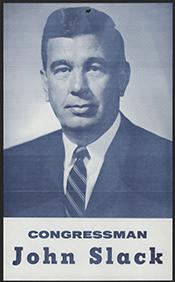
United States · United States Congress · 26 February 1976
Expresses the disapproval of the House of Representatives with regard to proposed deferral numbered D76-98 (relating to budget authority for the juvenile justice and delinquency prevention program administered by the Law Enforcement Assistance Administration in the Department of Justice), as set forth in the special message of January 23, 1976, which was transmitted to the Congress by the President under the Impoundment Control Act of 1974.
United States · United States Congress · 19 February 1976
Authorizes and requests the President to issue a proclamation designating the week beginning on November 7, 1976, as "National Respiratory Therapy Week".
United States · United States Congress · 8 December 1975
Rehabilitation Act Amendments - Extends under the Rehabilitation Act, the authorization of appropriations for: (1) vocational rehabilitation services; (2) research and training; (3) grants for construction of rehabilitation facilities; (4) vocational training services for handicapped individuals; (5) special projects and demonstrations; (6) the National Center for Deaf-Blind Youths and Adults; (7) program and project evaluation; (8) secretarial responsibilities; and (9) the Architectural and Transportation Barriers Compliance Board.
United States · United States Congress · 14 November 1975
Black Lung Benefits Reform Act - Stipulates that if a miner was employed for 30 years or more in an underground coal mine, or for 25 years or more in an anthracite coal mine, such miner shall be entitled to the payment of black lung benefits under the Federal Coal Mine Health and Safety Act. Permits a miner to file a claim for workmen's compensation benefits whether or not such miner is employed by an operator of a coal mine at the time the miner files the claim. Directs the Secretary of Labor to notify a miner as soon as practicable after receiving a claim for benefits on whether or not such miner is eligible for benefits. Permits the utilization of affidavits in cases of deceased miners where there is no relevant medical evidence sufficient to establish that the miner was totally disabled due to pneumoconiosis or that his death was due to such disease. Sets forth new regulations and provisions regarding the administration of the workmen's compensation program, and claims thereunder. Requires the Secretary to promulgate regulations providing for prompt and equitable hearing of appeals by claimants aggreivated by adverse workmen's compensation decisions. Establishes the Black Lung Disability Insurance Fund. Sets forth provisions governing administration of the Fund. States that amounts in the fund shall be available for making expenditures to meet the obligations of the fund, including the expenses of providing medical benefits. Requires operators of coal mines in States not providing workmen's compensation benefits to pay premiums into the fund in order to assure coverage. Provides that the initial premium rate of each operator shall be established by the Secretary as a rate per ton of coal mined by such operator. Authorizes appropriations to the Fund of sums necessary to provide the fund with amounts equal to 50 percent of the amount which the Secretary estimates is necessary for payment of benefits over the initial 12-month period. Directs the Secretary of Health, Education, and Welfare and the Secretary of Labor to disseminate to interested persons and groups the changes in the Black Lung Benefits Act made by this Act.
United States · United States Congress · 11 November 1975
Title I: Emergency Natural Gas Authority - Natural Gas Emergency Standby Act - Declares the finding of the Congress that the Nation will suffer severe shortages of natural gas during the heating season from November 1975 through March 1976. Grants the Federal Power Commission authority to allow natural gas companies which transport natural gas in interstate commerce with inadequate quantities of natural gas to meet the requirements of their high priority consumers of natural gas, to purchase natural gas from sources not in interstate commerce and from other such companies on an emergency basis free from specified requirements of the Natural Gas Act. Grants the Federal Energy Administration the authority to prohibit the use of natural gas as boiler fuel. Grants the President the standby authority to allocate propane gas during periods of actual or threatened severe shortages of natural gas. Authorizes civil penalties of not more than $2,500 for each violation or violations of orders or regulations issued by the President under such standby authority. Provides that this title shall expire on midnight April 4, 1976. Title II: Natural Gas Act Amendments - Provides for the termination of the regulation by the Federal Power Commission of the sale of new natural gas to natural gas companies for resale in interstate commerce pursuant to the Natural Gas Act. Directs the Commission to conduct studies of the production, gathering, shortage, distribution, and sale of natural, artificial, or synthetic gas throughout the United States and its possessions. Requires the Commission to secure and keep information regarding the ownership, management, and control of all facilities for production and distribution of such gas. Requires a report by the Commission to the President and the Congress. Directs the Commission to establish a national ceiling for rates and charges for the sale or transfer in interstate commerce by any person of new natural gas produced from offshore Federal lands on or after January 1, 1975, through December 31, 1980.
United States · United States Congress · 28 October 1975
Provides that whoever is armed with a firearm during the commission of a crime of violence, in addition to the punishment provided for such crime, shall be sentenced to a term of imprisonment for not less than one year nor more than ten years. Requires that a person convicted a second or subsequent time of committing such a crime shall be sentenced to a term of imprisonment for not less than 25 years. Direct that such sentences shall not be suspended nor shall any court give a probationary sentence nor shall the term of imprisonment run concurrently with any other term of imprisonment. (Adds 18 U.S.C. 2401, 2402)
United States · United States Congress · 22 October 1975
Condemns the resolution adopted by the Third Committee of the United Nations General Assembly which equates Zionism with racism, and urges the U.N. General Assembly to disapprove such resolution.
United States · United States Congress · 9 October 1975
Authorizes the President to issue a proclamation designating the week in November which includes Thanksgiving Day in each year as "National Family Week."
United States · United States Congress · 8 October 1975
Expresses the sense of Congress that the United States Government while engaged in a lessening of tensions with the People's Republic of China, do nothing to compromise continued close relations with the Republic of China.
United States · United States Congress · 3 October 1975
Emergency Medical Services Systems Act Amendments - Extends through fiscal year 1979, under the Emergency Medical Services Systems Act, the prohibition of grants or contracts made by the Secretary of Health, Education, and Welfare, for the modernization of emergency facilities to States, units of local government, or other public service entities which did not receive a grant or contract for the same purpose the preceeding fiscal year. Authorizes the Secretary to make a second grant to or enter into a second contract with an eligible entity for the expansion and improvement of emergency medical services. Includes planning costs in the coverage of grants and contracts for expansion and improvement of emergency medical services. States that emphasis in awarding grants or contracts for research relating to the delivery of emergency medical services in rural areas should be placed on identifying and using techniques and methods to apply the results of such research. Authorizes recipients of grants or contracts for the: (1) establishment and operation; or (2) expansion and improvement of an emergency medical services system to use funds under such grant or contract for a training program related to such a system. Authorizes through fiscal year 1977 appropriations for the making of payments pursuant to grants and contracts for feasibility studies and planning in connection with the establishment and operation of an emergency medical services system. Authorizes through fiscal year 1980 appropriations for grants and contracts for the establishment and operation, and planning and improvement of such emergency systems. Directs that at least 20 percent of the funds appropriated be made available for feasibility studies and planning from 15 percent to 10 percent of the funds appropriated. Authorizes through fiscal year 1978 appropriations for the making of payments pursuant to grants and contracts for the support of research in emergency medical techniques, methods, devices, and delivery. Defines the duties of the unit established within the Department of Health, Education and Welfare for the administration of grants made and contracts entered into under the Emergency Medical Services Act. Directs the Secretary to make grants and enter into contracts with schools of medicine, dentistry, osteopathy, and nursing and similar institutions to assist programs of training in the field of emergency medical service. Authorizes through fiscal year 1980 appropriations for the making of payments pursuant to grants and contracts for such training programs. Directs the Secretary to conduct two studies in areas related to the improvement of emergency medical services.
United States · United States Congress · 29 September 1975
National Coal Policy Act - Declares that it shall be the policy of the Federal Government to place major emphasis on the use of coal. Title I: Coal Substitution - Declares that national energy self-sufficiency can be facilitated by the substitution of coal for natural gas and petroleum products. Calls for coal to be utilized as a primary steam-generating fuel. Directs that all new electric powerplants should be equipped with the capability for utilizing coal. Calls for all existing fossil fuel burning electric powerplants not scheduled for retirement, to be utilizing coal as their primary energy source by the end of ten years, in conformance with applicable environmental requirements. Title II: Clean Air Act Amendments - States that it is the finding of the Congress that the Federal Government and the States should achieve a greater compatibility between energy requirements and environmental standards. Directs that where environmental regulations are more restrictive than necessary for the attainment of ambient air quality standards, action should be taken to reduce such requirements. Revises the criteria for granting variances from established regulations. Provides that technological and economic factors shall be given equal consideration with the environment. Title III: Utility Investment tax Credits - Allows electric utilities an investment tax credit under the Internal Revenue Code for construction of qualified facilities. Allows a one-year straight-line amortization under the Code for the installation of pollution control facilites in a pre-1969 plant and for conversion of a facility to nonpetroleum fuel. Allows a utility to elect to begin depreciation for purposes of Federal income income tax, during the construction period, of accumulated construction progress expenditures. Authorizes shareholders of regulated public electric utilities to postpone tax on dividends paid by the utility on its common stock by electing to take additional common stock of utility in lieu of cash dividends. Title IV: Assistance to Railroads - Authorizes low cost federal loans to railroads in serious financial difficulties. Allows a Federal income tax credit of twelve percent for construction of new facilities designed primarily for coal transportation. Allows a one-year writeoff for the cost of construction and improvements of facilities designed for coal transportation. Title V: Coal Pipeline Development - Authorizes railroads to operate coal pipelines on their right-of-way. Authorizes the Secretary of the Interior to grant certificates of public convience and necessity for such railroads to exercise the power of eminent domain in order to acquire necessary rights-of-way for pipeline construction. Title VI: Mining and Mineral Research and Manpower Training - Authorizes Federal grants, on a matching State fund basis, to public colleges and universities for programs dealing with mineral engineering, mining, mine safety, and mineral research. Title VII: Funding Authorizations For Coal Mining and Preparation Research - Authorizes the appropriation of $60,000,000 to the Bureau of Mines for a coal extraction technology program. Title VIII: Pilot Testing of Coal Land Reclamation Proposals - Authorizes the Bureau of Mines to make grants to States for reclamation research. Title IX: Synthetic Fuels Development Assistance - Allows a one-year amortization for purposes of Federal income tax, for the cost of construction of facilities designed for the purpose of developing synthetic fuels from coal. Authorizes the Federal Government to enter into long-term purchase contracts for synthetic fuels produced from coal. Title X: Writeoff for Coal Mine Equipment - Allows coal procedures to elect a one-year amortization for new coal mining equipment. Title XI: District, or Centralized, Heating Systems - Authorizes financial incentives such as guaranteed Federal loans, investment tax credits, and one-year tax writeoffs, for construction and operation of centralized heating systems. Title XII: Definitions and Report - Directs that the Secretary of the Interior shall have responsibility for carrying out the national coal policy. Requires the Secretary to include in his annual report the state of such program and recommendations for additional legislation as may be necessary to implement the policy of this Act.
United States · United States Congress · 31 July 1975
Congressional Public Financing Act - Adds a new subtitle to the Internal Revenue Code: the Congressional Election Campaign Fund Act. Directs the Secretary of the Treasury to maintain in the Presidential Election Campaign Fund a separate account to be known as the Congressional Election Payment Account. Directs the Secretary to deposit into the Congressional Election Payment Account that portion of the annual amounts designated by taxpayers on their income tax returns that equals the excess above 25 percent of the total amount made available in the last Presidential election. Authorizes the Federal Election Commission to conduct an examination and audit of the campaign contributions raised for purposes of obtaining matching funds and the qualified campaign expenditures made by all candidates for Federal office and official political party committees who received payments under this Act. Provides criminal penalties for violations of this Act. Provides for payments of funds in amounts matching the contributions received by candidates for the office of U.S. Senator or U.S. Representative. Imposes limitations on the amounts of such funds to be disbursed to any individual candidate, and restricts the uses to which such matching funds may be put.
United States · United States Congress · 23 July 1975
Provides under the Social Security Act that an Old-Age, Survivors, and Disability Insurance claimant shall be entitled to an informal conference reconsidering an initial adverse decision concerning such claimant's eligibility for benefits. Prescribes the procedures for such reconsideration hearings. Requires that such a hearing be presided over by an administrative law judge and conducted on the record.
United States · United States Congress · 8 July 1975
Entitles specified veterans of the Mexican border period and of World War I and their widows and children to a veterans' pension benefit on the same basis as that accorded to veterans of the Spanish American War and their widows and children, respectively. Provides for an increase in pension rates applicable to such classes of veterans.
United States · United States Congress · 20 June 1975
Departments of State, Justice, and Commerce, the Judiciary, and Related Agencies Appropriation Act - Title I: Department of State - Department of State Appropriation Act - Makes appropriations for the Department of State for fiscal year 1976 and for the period ending September 30, 1976. Includes appropriations for: (1) the administration of foreign affairs; (2) international organizations and conferences; (3) international commissions; (4) educational exchange programs; and (5) United States-Japan Friendship Activities. Title II: Department of Justice - Department of Justice Appropriation Act - Makes appropriations for the Department of Justice for fiscal year 1976 and for the period ending September 30, 1976. Includes appropriations for: (1) the Federal Bureau of Investigation; (2) the Immigration and Naturalization Service; (3) the Federal Prison System; (4) the Law Enforcement Assistance Administration; and (5) the Drug Enforcement Administration. Title III: Department of Commerce - Department of Commerce Appropriation Act - Makes appropriations for the Department of Commerce for fiscal year 1976, and for the period ending September 30, 1976. Includes appropriations for: (1) the Economic Development Administration; (2) the Minority Business Enterprise; (3) the National Oceanic and Atmospheric Administration; (4) the Patent and Trademark Office; and (5) the Maritime Administration. Title IV: The Judiciary - Judiciary Appropriation Act - Makes appropriations for the Federal Judiciary for fiscal year 1976 and for the period ending September 30, 1976. Includes appropriations for: (1) the Supreme Court and all other Federal courts; (2) the Administrative Office of the United States; and (3) Bicentennial expenses for the Judiciary. Title V: Related Agencies - Makes appropriations for specified Federal agencies and commissions for fiscal year 1976 and for the period ending September 30, 1976. Includes appropriations for: (1) the Arms Control and Disarmament Agency; (2) the Equal Employment Opportunity Commission; (3) the Federal Communications Commission; and (4) the Marine Mammal Commission. Title VI: General Provisions - Sets forth administrative matters relative to this Act.
United States · United States Congress · 19 June 1975
Authorizes the President to present, on behalf of the Congress, to Brigadier General Charles E. Yeager, United States Air Force, a silver medal equivalent to a noncombat Medal of Honor for piloting the XS-1 research airplane faster than the speed of sound on October 14, 1947. Authroizes the appropriation of $5,500 for such purpose. Directs the Secretary of the Treasury to coin duplicates in bronze of such medal to be sold in order to cover the costs of this Act.
United States · United States Congress · 13 June 1975
Broadcast License Renewal Act - Permits the Federal Communications Commission to extend three-year broadcast licenses for an additional two years upon a finding of public interest. Requires in making such determination, considerations of whether different term lengths for radio and television stations and for different categories of licensees are in the public interest. Limits other class licenses to a five-year maximum, prescribing the renewal procedures for such licenses and the criteria to be considered in renewal, including responsiveness and lack of serious deficiencies. Sets guidelines for expeditious action on applications for renewal of broadcasting station licenses by limiting material required to be filed. Requires the Commission to examine the renewal process and report within six months on methods of reducing and consolidating filings and supporting documents.
United States · United States Congress · 11 June 1975
Provides for inclusion of the services of licensed (registered) nurses under the medicare and medicaid, titles XVIII and XIX of the Social Security Act.
United States · United States Congress · 5 June 1975
Requires under the Social Security Act the continued application of the 8 1/2 percent nursing salary cost differential which is presently allowed in determining the reasonable cost of inpatient nursing care for purposes of reimbursement to providers under the medicare program.
United States · United States Congress · 23 April 1975
Creates a select committee in the House of Representatives with authority to conduct a full and complete investigation of the problem of United States servicemen missing in action or known to be dead whose bodies have not been recovered, as a result of military operations in North Vietnam, South Vietnam, Laos and Cambodia. Provides that such investigation shall include an examination of the need for additional international inspection teams to determine whether there are servicemen still held as prisoner of war. Authorizes the Committee to hold hearings, issue subpenas, and maintain a staff as necessary to carry out its responsibilities under this resolution. Directs the committee to report to the House the results of its investigation no later than one year after adoption of this resolution. Provides that the committee's authority shall expire 30 days after the filing of such report. Directs that the expenses of the select committee shall be paid from the contingent fund of the House of Representatives upon vouchers signed by the Chairman.
United States · United States Congress · 24 March 1975
Provides that, in the determination of the annual income of recipients of veterans' pensions and dependency and indemnity compensation, the Administrator of Veterans' Affairs shall not reduce the amount of such pension or compensation because of increases in monthly social security benefits under Public Law 92- 336 or the 20 percent increase in railroad retirement pensions and annuities provided by Public Law 92-460. (Adds 38 U.S.C. 415 (g) (4), 503 (d))
United States · United States Congress · 13 March 1975
Allows a tax deduction up to $750 for ordinary and necessary expenses incurred by a taxpayer under the Internal Revenue Code in making repairs and improvements to his residence during the taxable year. Allows the owner of rental housing to amortize at an accelerated rate (over a 60-month period) the cost of rehabilitating or restoring such housing. Authorizes the taxpayer to switch from such accelerated amortization to the regular depreciation deduction allowable under the Internal Revenue Code for property used in a trade or business or held for the production of income.
United States · United States Congress · 13 March 1975
Disapproves the deferral of certain budget authority (D75-94) relating to the Department of Commerce, National Oceanic and Atmospheric Administration, proposed in the President's special message of November 26, 1974, transmitted under the Impoundment Control Act of 1974, and subsequently revised in the supplementary message of January 30, 1975, transmitted under such Act.
United States · United States Congress · 27 February 1975
Repeals the provisions of the Flood Disaster Protection Act of 1973 which makes flood insurance coverage and community participation in the national flood insurance program prerequisites for approval of any financial assistance in a flood hazard area.
United States · United States Congress · 19 February 1975
Allows a tax deduction up to $750 for ordinary and necessary expenses incurred by a taxpayer under the Internal Revenue Code in making repairs and improvements to his residence during the taxable year. Allows the owner of rental housing to amortize at an accelerated rate (over a 60-month period) the cost of rehabilitating or restoring such housing. Authorizes the taxpayer to switch from such accelerated amortization to the regular depreciation deduction allowable under the Internal Revenue Code for property used in a trade or business or held for the production of income.
United States · United States Congress · 5 February 1975
Black Lung Benefit Act - Defines "total disability" under the Federal Coal Mine Health and Safety Act as having the meaning given it by regulation of the Secretary of Health, Education, and Welfare, except that: (1) in the case of a living miner, such regulations shall provide that a miner shall be considered totally disabled when pneumoconiosis prevents him from engaging in gainful employment requiring the skills and abilities comparable to those of any employment in a mine or mines in which he previously engaged with some regularity and over a substantial period of time; (2) in the case of a deceased miner, such regulations shall provide that the fact that a miner was employed by a mine at the time of his death shall not be used as evidence that the miner was not totally disabled; and (3) such regulations shall not provide more restrictive criteria than those applicable under the Social Security Act. States that if a miner was employed for 15 years or more in one or more underground coal mines, there shall be an irrebuttable presumption that he is totally disabled due to pneumoconiosis or that at the time of his dealth he was totally disabled by pneumoconiosis. Directs the Secretary of Health, Education, and Welfare to pay benefits to all previous claimants who have become eligible for benefits as a result of the enactment of this Act. Requires that at least 5 members of the Advisory Committee on Coal Mine Health Research be miners or retired miners.
United States · United States Congress · 3 February 1975
Provides under title II (Old-Age, Survivors, and Disability Insurance) of the Social Security Act, that persons who are blind and have at least six quarters of coverage shall be eligible for disability insurance benefits. Outlines those regulations which apply to the amount of benefits to be received. Defines blindness as used in this Act. Continues payment of such benefits as long as the blindness lasts, notwithstanding the amount of the individual's earnings.
United States · United States Congress · 23 January 1975
Provides for the designation of the Wheeling Suspension Bridge, at Wheeling, West Virginia, as a national historic site. Provides for the administration and maintenance of the site by the Secretary of the Interior in consultation with the Wheeling Suspension Bridge Advisory Commission (established by this Act).
United States · United States Congress · 15 January 1975
Natural Gas Agricultural Priority Act - Provides, under the Natural Gas Act, a priority system for specified agricultural uses of natural gas. Directs the Federal Power Commission to prohibit any interruption or curtailment of natural gas and take such other steps as are necessary to assure as soon as possible the availability in interstate commerce of sufficient quantities of natural gas for use as a raw material feedstock or process fuel in the production of fertilizer, animal feed grade chemicals, essential agricultural chemicals, and for use in agricultural crop drying. Defines "sufficient quantities of natural gas" for purposes of this Act. Provides that the rule implemented by the Commission shall also apply with respect to the availability of natural gas sold in intrastate commerce in any State which has not, within ninety days, adopted a rule to implement the purposes of the first provision of this Act. Directs the Commission to, by rule, prohibit boiler fuel use of natural gas and propane in interstate and intrastate commerce not contracted for prior to the date of enactment of this Act by users other than residential or small commercial users unless, upon petition by a user, the Commission determines that enumerated criteria are met.
United States · United States Congress · 14 January 1975
Black Lung Benefit Act - Defines "total disability" under the Federal Coal Mine Health and Safety Act as having the meaning given it by regulation of the Secretary of Health, Education, and Welfare, except that: (1) in the case of a living miner, such regulations shall provide that a miner shall be considered totally disabled when pneumoconiosis prevents him from engaging in gainful employment requiring the skills and abilities comparable to those of any employment in a mine or mines in which he previously engaged with some regularity and over a substantial period of time; (2) in the case of a deceased miner, such regulations shall provide that the fact that a miner was employed by a mine at the time of his death shall not be used as evidence that the miner was not totally disabled; and (3) such regulations shall not provide more restrictive criteria than those applicable under the Social Security Act. States that if a miner was employed for 15 years or more in one or more underground coal mines, there shall be an irrebuttable presumption that he is totally disabled due to pneumoconiosis or that at the time of his dealth he was totally disabled by pneumoconiosis. Directs the Secretary of Health, Education, and Welfare to pay benefits to all previous claimants who have become eligible for benefits as a result of the enactment of this Act. Requires that at least 5 members of the Advisory Committee on Coal Mine Health Research be miners or retired miners.
United States · United States Congress · 12 December 1974
Provides for the designation of the Wheeling Suspension Bridge, at Wheeling, West Virginia, as a national historic site. Provides for the administration and maintenance of the site by the Secretary of the Interior in consultation with the Wheeling Suspension Bridge Advisory Commission (established by this Act).
United States · United States Congress · 11 October 1974
Black Lung Benefits Act - Directs that in the implementation of the provisions of the Federal Coal Mines Health and Safety Act of 1969 the Advisory Committee on Coal Mine Health Research established under such Act shall include in its membership a minimum of five members who are miners or retired miners. Requires that the standards prescribed by the Secretary of Health, Education, and Welfare for determining the total disability of a miner due to pneumoconiosis, in the case of claims filed after July 1, 1973, shall not be more restrictive than such standards prescribed by the Secretary for evaluating claims filed prior to July 1, 1973. Requires that if a miner claiming black lung benefits under the Act after December 31, 1972, was employed for fifteen years or more in one or more underground coal mines there shall be an irrebuttable presumption that the miner is totally disabled due to pneumoconiosis or that at the time of his death he was totally disabled by pneumoconiosis. Authorizes the Secretary of Health, Education, and Welfare to utilize procedures including affidavits similar to those utilized by him in determining entitlement to disability insurance benefit payments under the Social Security Act in cases under the Federal Coal Mine Health and Safety Act of 1969 where there is no medical evidence in the case of a deceased miner, in order to establish that the miner claiming benefits thereunder was totally disabled due to pneumoconiosis or that his death was due to such disease. Provides that the Secretary shall include a State workmen's compensation law on the list of State laws found by the Secretary to provide adequate coverage for pneumoconiosis for purposes of such Act if he finds that any claim for benefits on account of total disability or death of a miner due to pneumocomiosis is deemed by such State law to be timely filed if such claim is filed within three years of the date of last coal mine employment of such miner, and if it meets other criteria under the Act. Directs the Secretary to review all claims which were filed with the Secretary of Health, Education, and Welfare under the Act and which were denied or were pending at the time of the enactment of the Black Lung Benefits Act of 1974.
United States · United States Congress · 1 October 1974
Removes the provisions of the Flood Disaster Protection Act of 1973 which make flood insurance coverage and community participation in the national flood insurance program prerequisites for approval of any financial assistance in a flood hazard area.
United States · United States Congress · 30 September 1974
Prohibits the interstate shipment of dogs trained for or intended to be used in dog fights for purposes of sport, wagering, or entertainment. Specifies punishments for persons involved in such commerce and for promoters of and participants in activities which include such dog fights if at least one of the dogs involved had been moved in such commerce.
United States · United States Congress · 24 September 1974
Expresses the sense of the House of Representatives that: (1) all military, economic, or other assistance, all sales of defense articles and services, all sales of agricultural commodities and services, and all licenses with respect to the transportation of arms, ammunitions, and implements of war (including technical data relating thereto) to the Government of Turkey should be suspended on the date of adoption of this resolution; and (2) the provisions of this resolution should cease to apply when the President reports to the Congress that the Government of Turkey has withdrawn all of its armed forces from Cyprus.
United States · United States Congress · 15 August 1974
Establishes a Select Committee on Aging in the House of Representatives. Authorizes the committee to conduct a full and complete investigation and study of any and all matters pertaining to problems of older people, including, but not limited to, problems of maintaining health, of assuring adequate income, of finding employment, of engaging in productive and rewarding retirement activity, of securing proper housing, and, when necessary, of assuring adequate care or assistance. Directs the Committee to report to the House from time to time the results of its investigation and study, together with such recommendations as it deems advisable.
United States · United States Congress · 14 August 1974
Prohibits a petroleum refiner or distributor from cancelling, failing to renew, or otherwise terminating a franchise unless he furnishes notification in writing to each affected distributor or retailer by certified mail not less than ninety days prior to the date on which such franchise will be canceled, together with a statement of the reasons of such cancellation and of the remedies available. Provides that a petroleum refiner or distributor shall not cancel, fail to renew, or otherwise terminate a franchise unless the retailer or distributor whose franchise is terminated failed to comply substantially with any essential and reasonable requirement of such franchise or failed to act in good faith in carrying out the terms of such franchise. States that if a refiner or distributor engages in conduct prohibited under this Act, a retailer or distributor may maintain a suit against such refiner or distributor.
United States · United States Congress · 2 July 1974
Entitles specified veterans of the Mexican border period and of World War I and their widows and children to a veterans' pension benefit on the same basis as that accorded to veterans of the Spanish American War and their widows and children, respectively. Provides for an increase in pension rates applicable to such classes of veterans.
United States · United States Congress · 14 June 1974
Increases from $25,000,000 to $50,000,000 the amount authorized to be appropriated for the forestry incentive program administered under the Agricultural Act of 1970. Increases from 500 acres to 1000 acres the size of a tract which may be affected by such program.
United States · United States Congress · 5 June 1974
Provides that, under the Internal Revenue Code of 1954, real property which is farmland, woodland, or open land and forms part of an estate may be valued, for estate tax purposes, at its value as farmland, woodland, or open land (rather than at its fair market value). Provides that real property which is listed on the National Register of Historic Places may be valued, for estate tax purposes, at its value for its existing use. Provides for the revocation of such lower valuation and recapture of unpaid tax with interest under specified circumstances.
United States · United States Congress · 16 May 1974
Designates the premises occupied by the Chief of Naval Operations as the official residence of the Vice President, effective upon the termination of service of the incumbent Chief of Naval Operations. Authorizes the Administrator of General Services to provide for the care, maintenance, repair, improvement, alteration, and furnishing of the official residence and grounds. Authorizes to be appropriated such sums as may be necessary from time to time to carry out the foregoing purposes. Expresses the sense of Congress that living accommodations, generally equivalent to those available to the highest ranking officer on active duty in each of the other military services, should be provided for the Chief of Naval Operations. Repeals the Federal law authorizing the planning, design, construction, furnishing, and maintenance of an official residence for the Vice President of the United States.
United States · United States Congress · 27 March 1974
Provides that recipients of veterans' pensions and compensation shall not have the amount of such pension or compensation reduced because of increases in monthly social security benefits which result from the enactment of Public Law 92-336 or any subsequent cost-of-living increase under title II of the Social Security Act. Provides that the provisions of this Act shall apply for annual income determinations made for calendar years after 1972.
United States · United States Congress · 27 March 1974
Directs the President to submit to Congress, within thirty days, a report which sets forth, for each calendar year during the period 1965 through 1973: (1) the volume and value of all exports of critical resources to all countries from each foreign country which at any time during such period exported to the United States any critical mineral; (2) the volume and value of each critical mineral exported to the United States from each such foreign country; and (3) the volume and value of each critical mineral exported in world trade from any foreign country which was subject, at any time during such period, to economic sanctions applied by the United States pursuant to the United Nations Participation Act of 1945.