Law· HJRESH.J.Res. 500 (102nd)enacted
Designating March 1993 as "Irish-American Heritage Month".
United States · United States Congress · 1 June 1992
Designates March 1993 as Irish-American Heritage Month.
The world's political record
Person
United States · Official source
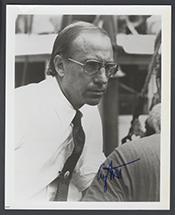
3,666 records where Rep. Studds, Gerry E. [D-MA-10] is listed as a sponsor, author, or other actor. Search with topics and years
United States · United States Congress · 1 June 1992
Designates March 1993 as Irish-American Heritage Month.
United States · United States Congress · 28 May 1992
Amends title XVIII (Medicare) of the Social Security Act to direct the Secretary of Health and Human Services to include a description of the medical assistance for Medicare cost-sharing available under title XIX (Medicaid) of such Act in the annual notice of benefits provided to Medicare beneficiaries.
United States · United States Congress · 28 May 1992
Animal Medicinal Drug Use Clarification Act of 1992 - Amends the Federal Food, Drug, and Cosmetic Act to allow, on order of a veterinarian: (1) a new animal drug approved for one use to be used for a different purpose, provided the use does not result in residues in food in violation of established safe levels for the drug; and (2) a new drug approved for human use to be used in non-food producing animals.
United States · United States Congress · 28 May 1992
Prohibits, unless a certification under this Act is in effect: (1) U.S. economic assistance to the Government of Russia; and (2) the U.S. Executive Director of the International Monetary Fund (IMF) from consenting to an increase in the U.S. quota in the IMF. Requires the Secretary of the Treasury, unless such certification is in effect, to instruct the U.S. Executive Directors of the IMF and other international financial institution to oppose any loan to the Government of Russia. Describes such certification as a certification by the President to the Congress that: (1) progress has been achieved toward removal of Russian armed forces from Estonia, Latvia, and Lithuania; (2) additional Russian armed forces have not been brought into such countries for any purpose without their permission; (3) artillery exercises or training operations are not being conducted by Russian armed forces on the territory of such countries without their permission; (4) Russian military installations in such countries are open to inspection by the governments of such countries; (5) Russian air and naval forces are not interfering with traffic in the air space or territorial waters of such countries; and (6) the Russian Government is keeping such governments informed regarding the number and location of Russian armed forces in such countries. Makes such certifications effective for six months and authorizes the President to make recertifications for additional six-month periods. Terminates the restrictions under this Act if the President certifies that all Russian armed forces have been withdrawn from such countries.
United States · United States Congress · 28 May 1992
Designates July 2, 1992, as National Literacy Day.
United States · United States Congress · 21 May 1992
United States - Flag Passenger Vessel Act of 1992 - Amends the Merchant Marine Act, 1920 to prohibit a passenger from being transported on a covered passenger voyage (a voyage of a vessel from a State or U.S. possession to a point outside of such State or possession and during which the passenger does not disembark to a foreign country, or between points in the United States, either directly or by way of a foreign port) in any other vessel than one built and documented under U.S. laws, with specified exceptions. Sets forth a civil penalty of $1,000 per passenger transported in violation of this prohibition.
United States · United States Congress · 21 May 1992
Tax Extension Act of 1992 - Amends the Internal Revenue Code to extend from August 1, 1992, until August 1, 1993, the provisions governing the allocation of research and experimental expenditures for purposes of determining sources of income. Extends the following provisions from June 30, 1992, until December 31, 1993: (1) the tax credit for increasing research activities; (2) the targeted jobs credit; (3) the authority to issue qualified mortgage bonds and qualified mortgage credit certificates; (4) the authority to issue qualified small issue bonds to finance manufacturing facilities and farm property; (5) employer-provided educational assistance; (6) the tax exclusion for employer-provided group legal services plans; (7) the energy investment credit for solar and geothermal property; (8) the credit for clinical testing expenses for certain drugs for rare diseases or conditions; and (9) health insurance costs of self-employed individuals. Extends the low-income housing credit until December 31, 1993 with modifications. Expands the ten-year anti-churning rule waiver to certain projects substantially assisted, financed, or operated under the National Housing Act. Allows units occupied by certain full-time students to qualify for such credit. Authorizes the Treasury Department to waive penalties for certain de minimis errors and recertifications. Provides that certain community service facilities in projects in qualified census tracts are included in eligible basis as functionally related and subordinate facilities. Allows certain building owners to elect to use apartment size or family size in determining the credit's gross rent limitation. Provides for the tax treatment of resale price control and subsidy lien programs under mortgage revenue bond provisions. Repeals the tax preference for the appreciated property charitable deduction during 1992 and 1993. Requires a report by the Secretary of the Treasury to certain congressional committees on an advance valuation procedure.
United States · United States Congress · 19 May 1992
Prohibits a member of the armed forces or person seeking to become a member from being discriminated against by the armed forces on the basis of sexual orientation.
United States · United States Congress · 14 May 1992
Designates the week beginning February 14, 1993, as National Visiting Nurse Associations Week.
United States · United States Congress · 13 May 1992
National Breast Cancer Strategy Act of 1992 - Title I: Establishment of Office of Breast Cancer and National Breast Cancer Commission - Amends the Public Health Service Act to establish: (1) the Office of Breast Cancer in the Office of the Assistant Secretary for Health; and (2) the National Breast Cancer Commission to study public and private breast cancer prevention, early detection, treatment, education, and research. Title II: Duties of Director of the National Cancer Institute Relating to Breast Cancer - Authorizes appropriations for conducting and supporting breast cancer research. Adds biomedical and behavioral research, training, and dissemination of information regarding breast cancer to the duties of the National Cancer Institute Director. Establishes the Rose Kushner Scholarship Program of scholarships in exchange for completing post-graduate clinical oncology training and serving as National Institutes of Health (NIH) employees carrying out breast cancer programs. Establishes a program of educational loan repayments in exchange for breast cancer activities as NIH employees. Authorizes appropriations for at least ten programs for research on breast, lung, and prostate cancer under designated Specialized Programs of Research Excellence.
United States · United States Congress · 7 May 1992
Civil War Battlefield Commemorative Coin Act of 1992 - Directs the Secretary of the Treasury to issue a specified number of five-dollar gold coins, one-dollar silver coins, and half-dollar clad coins to commemorate the 100th anniversary of Civil War battlefield preservation. Sets forth certain features of such coins and provides for their design, issuance, and sale. Requires that all sales include a surcharge of $35 per coin for the five-dollar coins, $7 per coin for the one-dollar coins, and $1 per coin for the half-dollar coins. Requires that all surcharges be paid to the Civil War Battlefield Foundation for the preservation of historically significant Civil War battlefields.
United States · United States Congress · 7 May 1992
Trade Expansion Act of 1992 - Title I: Market Access Provisions - Subtitle A: Enforcement of United States Rights Under Trade Agreements and Response to Certain Foreign Trade Practices - Amends the Trade Act of 1974 to extend through calendar year 1997 the requirement that the United States Trade Representative (USTR) identify U.S. trade liberalization priorities. Expresses the sense of the Congress that foreign countries that have substantial trade surpluses with the United States, and maintain acts, policies, or practices that are major barriers to, or distortions of, potential U.S. export trade, should be identified (for purposes of "Super 301" under the Trade Act of 1974) as priority foreign countries, and such acts, policies, or practices identified as priority practices. Amends the Trade Act of 1974 to authorize any interested person to request the USTR to review to determine whether a foreign country is in material compliance with the terms of a trade agreement. Defines an "interested person" as any person with a significant economic interest that is being or has been adversely affected by a foreign country's failure to comply materially with terms of a trade agreement. Requires the USTR to determine what action to take if a foreign country is found not in material compliance with such agreement. Directs the USTR to initiate an investigation of all acts, policies, and practices of Japan, Korea, and Taiwan that affect the access of U.S. rice to their markets. Requires the USTR to negotiate the elimination of such acts, policies, and practices, and report to the Congress on the progress of such negotiations. Subtitle B: International Trade in Motor Vehicles and Motor Vehicle Parts - Directs the USTR to initiate an investigation of all acts, policies, and practices of Japan that affect the access of U.S. motor vehicles and motor vehicle parts to its market, including but not limited to: (1) acts, policies, and practices utilized in the Japanese automotive distribution system; (2) toleration of anticompetitive activities by private Japanese firms (including "Keiretsu"); (3) exclusionary business practices; and (4) testing requirements and other government regulations. Requires the USTR to negotiate with Japan for a trade agreement that: (1) eliminates such acts, policies, and practices; (2) provides enforcement of Japan's commitments under the Structural Impediments Initiative, the Market -Oriented Sector Specific agreements, and the Action Plan announced at the Tokyo Summit in January 1992 with respect to trade in, and purchase of, motor vehicles and motor vehicles parts; (3) establishes long term goals for the purchase by Japanese motor vehicle manufacturers of high value-added motor vehicle parts and accessories; and (4) establishes procedures for the exchange of information between the United States and Japan that will permit the accurate assessment of the bilateral trade in motor vehicle parts. Requires the USTR to report to the Congress if such negotiations prove unsuccessful. Directs the President to negotiate with Japan for a voluntary restraint agreement that will provide for the imposition of limitations on the aggregate number of Japanese passenger automobiles and light trucks that may be exported to the United States between 1992 and 2000. Authorizes the President to enforce such agreements. Requires specified reports with respect to such negotiations. Expresses the sense of the Congress that the USTR should refer to the U.S. Government all information pertaining to Japanese acts, policies, and practices that adversely affect access to the purchasing by Japanese motor vehicle manufacturers in the United States of U.S. motor vehicle parts by Japanese-owned or-controlled producers. Requires the Board established by the Foreign-Trade Zones Act to: (1) review the operations of U.S. and foreign motor vehicle and motor vehicle parts producers to determine any positive economic effect on the United States of such Act; and (2) take appropriate action, including revocation or modification of a foreign-trade zone or subzone grant, with respect to any producer whose operations in such zone are determined not to have a net positive effect on the U.S. economy. Title II: Customs Modernization - Customs Modernization and Informed Compliance Act - Subtitle A: Improvements in Customs Enforcement - Amends the Tariff Act of 1930 to revise customs procedures with respect to: (1) electronic transmission of forged, altered, or false data to the United States Customs Service with regard to the entry of imported merchandise; (2) penalties for failure to declare imported controlled substances; (3) examination and detention of imported merchandise; (4) certain recordkeeping requirements; (5) examination of books and witnesses; (6) review of protests by the Customs Service; (7) a repeal of a provision relating to the reliquidation on account of fraud; (8) penalties relating to manifests, false drawback or refund claims, and for fraud, gross negligence, and negligence; (9) unlawful unlading or transshipment; (10) public access to Customs Service interpretative rulings and decisions; and (11) seizure of imported merchandise. Subtitle B: National Customs Automation Program - Directs the Secretary of the Treasury (Secretary) to establish the National Customs Automation Program which shall be an automated and electronic system for the processing of commercial imports. Provides for electronic data transmission relating to: (1) remote location filing; (2) effective date of rates of duty on imported merchandise; (3) merchandise manifests; (4) imported merchandise invoices; (5) entry and release of imported merchandise; (6) admissibility in administrative and judicial proceedings of electronically transmitted information; (7) appraisement and liquidations of imported merchandise; (8) the payment of duties; (9) abandonment and damage to imported merchandise; (10) protests of Customs Service decisions; (11) refunds and errors; (12) bonds and other security; and (13) customs house brokers. Requires a refund (drawback) of duties (less one per cent of such duties) on articles produced in the United States with imported merchandise that have been destroyed under Customs Service supervision, provided such articles have not been used prior to such destruction. Sets forth provisions with respect to customs officer's immunity in regard to the appraisement of or collection of duties on imported merchandise. Subtitle C: Miscellaneous Amendments to the Tariff Act of 1930 - Amends the Tariff Act of 1930 to authorize the Secretary to disregard the difference, but not less than $20 (currently ten dollars), between the total estimated duties deposited with respect to imported merchandise and the total amount actually due on such merchandise. Authorizes the Secretary to admit duty-free: (1) gifts from persons in foreign countries to persons in the United States whose value does not exceed $100 (currently, $50), or $200 (currently, $100) in the case of gifts from persons in the Virgin Islands, Guam, and American Samoa; (2) articles accompanying persons for personal or household use whose value does not exceed $200 (currently, $25); or (3) articles whose value does not exceed $200 (currently, five dollars) in other cases. Authorizes the Secretary to waive collection of duties due on merchandise that are worth less than $20, or such greater amount as prescribed by him or her. Requires masters of vessels that have visited a hovering vessel or received merchandise while outside the U.S. territorial sea to report their arrival to the nearest customs facility. Provides for the electronic transmission of vessel documentation to the Customs Service. Requires the following vessels to report to the nearest Customs Service facility within 24 hours (or other period of time) as provided after arrival to a U.S. port: (1) vessels from a foreign port; (2) foreign vessels from a domestic port; (3) U.S. vessels having bonded or foreign merchandise for which entry has not been made; or (4) vessels which visited a hovering vessel or received merchandise outside the U.S. territorial sea. Authorizes the Secretary to permit masters of vessels to make preliminary entry of their vessel with the Customs Service in lieu of or before formal entry is made. Requires U.S. and foreign vessels to obtain clearance from the Customs Service before proceeding from a U.S. port for: (1) a foreign port; (2) another U.S. port (for foreign vessels only), or (for U.S. vessels only) another U.S. port if the vessel has bonded or foreign merchandise for which entry has not been made; or (3) outside the U.S. territorial sea to visit a hovering vessel or to receive merchandise. Exempts from entry and clearance requirements certain passenger vessels on excursion from the U.S. Virgin Islands to the British Virgin Islands and returning, U.S. documented vessels with recreational endorsement, or (as under current law) undocumented U.S. pleasure vessels not engaged in trade, except such vessels must comply upon arrival with specified customs reporting requirements and navigation laws and must not have visited any hovering vessel. Prohibits merchandise, passengers, or baggage from being unladen from any vessel required to make entry or vehicle required to report its arrival until such entry or report of arrival is made and a permit for unlading has been issued by the Customs Service. Authorizes the issuance of such permits through electronic data transmission. Requires every importer of record of merchandise to make and file electronically or otherwise a declaration stating whether such merchandise is imported pursuant to a purchase or purchase agreement and that all other required documents are true and correct. Requires persons who gained any benefit from, or met any obligation to the United States as the result of the prior exportation of merchandise that has returned as undeliverable to inform the Customs Service of the return of such merchandise within a reasonable time. Provides for electronic data transmission of entry information to complete any incomplete entry of imported merchandise. Declares entered or unentered merchandise that remains in customs custody for six months, with an extension at the importer's request of up to a year (currently, for merchandise that remains in custody for one year), and in which duties, taxes, fees, storage, and other charges have not been paid, to be unclaimed merchandise which shall be appraised and sold by the Customs Service at public auction. Authorizes the sale of imported gunpowder and other explosive merchandise that if permitted to remain in a bonded warehouse for six months (currently, one year) would depreciate in value to the extent that its sale would be insufficient to pay such duties, taxes, fees, storage, and other charges. Authorizes the Customs Service, in lieu of sale, to provide notice to interested parties that, unless, within 30 days of such notice, the subject merchandise is entered or withdrawn for consumption and payment made of all duties, taxes, and fees, transfer and storage charges and other expenses that title to such merchandise shall be deemed to vest in the United States. Authorizes the Secretary to pay to a party that has lost a substantial interest in merchandise by virtue of title vesting in the United States, and can establish that it did not receive a vesting notice, an amount from the Customs Forfeiture Fund equal to what such party would have received if such merchandise had been sold and a proper claim filed. Requires any surplus of the proceeds from the sale of such merchandise to be deposited into the Fund if a claim for such surplus is not filed with the Customs Service. Authorizes the Secretary to prescribe regulations for the declaration and entry of merchandise whose value does not exceed a certain amount, not more than $2,500 (currently not greater than $1,250), and/or when different commercial facilitation and risk considerations that may vary for different classes or kinds of merchandise or different classes of transactions may dictate. Requires the Secretary upon seizure and forfeiture of imported merchandise bearing a counterfeit mark to dispose of such merchandise more than 90 days (currently, one year) after such forfeiture. Authorizes withdrawal of imported merchandise from a warehouse for transfer to a foreign trade zone. Authorizes the Customs Service to order the destruction or other appropriate disposition of vessels, vehicles, aircraft, merchandise, or baggage that has been seized under the customs laws if it determines that the expense of keeping such items is disportionate to their value (currently applies only to items of less than $1,000 in value). Authorizes the use of funds from the Customs Forfeiture Fund for the payment of: (1) certain transfer and storage charges and expenses; and (2) claims against Customs Service employees. Requires actions for fraud, gross negligence, and negligence, false drawback or refund claims, and restoration of lawful duties with respect to imported merchandise to be instituted within five years after the alleged violation or discovery of such fraud. Requires the Customs Service to be reimbursed the administrative cost and expense incurred in collecting fees on behalf of other Federal agencies. Authorizes the Secretary to settle, for no more than $50,000 in each case, claims for personal injury, death, or damage to, or loss of, privately owned property caused by an investigative or law enforcement officer of the Customs Service. Authorizes the Secretary to contract with persons for collection services to recover indebtedness arising under the customs laws, provided the Customs Service has exhausted all administrative efforts to collect such indebtedness. Subtitle D: Miscellaneous Provisions and Consequential and Conforming Amendments to Other Laws - Amends the Harmonized Tariff Schedule of the United States to exempt from such Schedule articles which are returned within 45 days after being exported from the United States as undeliverable and which have not left the custody of the carrier or foreign customs service. Prohibits such exportations from satisfying any requirement for exportation in order to receive a benefit from, or meet an obligation, to the United States as a result of such exportation. Declares that certain railway locomotives and railway freight cars on which no duty is owed are not subject to the entry or release requirements for imported merchandise under the Tariff Act of 1930. Exempts instruments of international trade, such as containers, lift vans, rail cars and locomotives, truck cabs and trailers, etc., from formal entry procedures. Requires them to be accounted for however, when imported to and exported from the United States through the manifesting procedures required for international carriers by the U.S. Customs Service. Amends the Internal Revenue Code and other specified Federal law with respect to: (1) certain expenditures from the Harbor Maintenance Trust Fund; and (2) coastwise trade vessels and U.S. vessels visiting foreign ports. Amends Federal law to grant the Court of International Trade exclusive jurisdiction of any civil action for review decisions of the Customs Service that deny, suspend, or revoke accreditation of private customs laboratories. Bars the commencement of such actions unless brought before such Court within 60 days of such decisions. Repeals specified provisions of Federal law. Requires the Commissioner of Customs to report to the Congress each fiscal year after FY 1992 on the collection of duties imposed under the antidumping and countervailing duty laws. Amends the Omnibus Budget Reconciliation Act of 1987 to authorize the Commissioner of Customs to obtain from the operators of centralized cargo examination stations information on fees paid for the provision of services at such stations. Requires the Commissioner to report to specified congressional committees on the payment of such fees. Amends the Customs and Trade Act of 1990 to require the Commissioner of Customs to: (1) devise a methodology for estimating the level of compliance with the U.S. customs laws; and (2) evaluate the extent to which such compliance was obtained during the 12-month period preceeding the 60th day before each fiscal year 1993 through 1995. Directs the Commissioner to initiate, and submit to the Congress, a compliance review of certain carrier services. Title III: Customs and Trade Agency Authorizations for Fiscal Years 1993 and 1994 - Amends the Tariff Act of 1930 to authorize appropriations to the United States International Trade Commission (ITC) for FY 1993 and 1994. Earmarks a specified amount for reception and entertainment expenses. Prohibits use of such funds for any special study, investigation, or report requested by an agency of the executive branch unless such agency reimburses the ITC for its costs. Amends the Customs Procedural Reform and Simplification Act of 1978 to authorize appropriations to the United States Customs Service for FY 1993 and 1994 for: (1) noncommercial operations; (2) commercial operations; and (3) the air interdiction program. Amends the Trade Act of 1974 to authorize appropriaitons to the Office of the United States Trade Representative for FY 1993 and 1994. Amends the Tariff Act of 1930 to authorize apropriations for FY 1993 and 1994 for certain expenditures from the Customs Forfeiture Fund relating to purchases by the Customs Service of evidence of smuggling of controlled substances. Amends the Trade Act of 1974 to eliminate the East-West Trade Statistics Monitoring System. Title IV: Miscellaneous Trade Provisions - Subtitle A: Nontariff Provisions - Directs the President to negotiate trade agreements that eliminate the adverse effects of anticompetitive practices on international trade. Requires the President to report to the Congress on the status of such negotiations. Expresses the sense of the Congress that the President, with respect to ensuring the effectiveness of the U.S. embargo of Cuba, should seek negotiations with countries that trade with Cuba to seek their agreement to restrict trade relations with it. Amends the Omnibus Trade and Competitiveness Act of 1988 to require the Secretary of the Treasury, at the request of the Secretary of Commerce (currently, authorizes the Secretary of the Treasury): (1) to take necessary action to ensure the attainment of the objectives of the machine tool decision of the President on May 20, 1986, and on December 27, 1991; and (2) to enforce any imported machine tool quantitative limitations, restrictions, or other terms contained in related bilateral arrangements. Requires the Secretary of the Treasury to enforce the quantitative limitations and other provisions of bilateral arrangements negotiated with Taiwan on December 31, 1991, pursuant to the President's machine tool decision of May 20, 1986, until bilateral agreements are negotiated with such country pursuant to the President's December 27, 1991, decision. Directs the ITC to report to the Congress propsals for consolidating and simplifying U.S. international trade laws. Requires the Director of the Congressional Research Service to make recommendations to the Congress about establishment of a special unit that would: (1) integrate the resources of the Service, the ITC, and other appropriate agencies; and (2) serve as a central and objective source of information for the Congress on data and trends in trade between the United States and foreign countries. Subtitle B: Foreign Subsidies and Countervailing and Antidumping Duty Amendments - Amends the Tariff Act of 1930 to require completion of reviews by the administering authority of the amount of duty with respect to countervailing and antidumping duty orders by the 270th day after the day on which a request for review was received. (Currently, there is no such deadline for completion of such a review.) Requires the ITC to consider contracts with long lead time as a factor when making material injury determinations with respect to an affected domestic industry in countervailing and antidumping duty investigations. Declares that the presence or absence of any factor the ITC is required to consider shall not give decisive guidance with respect to any threat of material injury determinations. Provides that, with respect to the determination of foreign market value of imported merchandise under investigation, no allowance shall be made to account for differences in input costs that are based on whether the end product made from the input is sold in the home market or exported. Requires the United States Customs Service to report annually to the administering authority on the amount of duties collected during each year under each countervailing and antidumping duty order. Requires the administering authority to make such data available to interested parties. Requires the administering authority, when determining whether imported parts or components are circumventing an antidumping or countervailing duty order or finding, and whether to include such parts or components in such order or finding, to consider: (1) the pattern of trade; (2) the value and sources of supply of parts or components historically used in completion or assembly of the merchandise subject to such order; (3) whether the manufacturer or exporter of such parts or components is related to the person who assembles or completes the merchandise sold in the United States from the parts or components produced in the foreign country with respect to which the order or finding applies; and (4) whether imports into the United States of the parts or components produced in such foreign country have increased after the issuance of such order or finding. Authorizes the administering authority to include within the scope of such order or finding imported parts or components that are used in the completion or assembly of certain merchandise sold in the United States and subject to such order or finding, provided: (1) such merchandise is completed or assembled in the United States from parts or components supplied by the exporter or producer with respect to which such order or finding applies, from suppliers that have historically supplied the parts or components to that exporter or producer, or from any party in the exporting country supplying parts or components on behalf of such exporter or producer; (2) the value of such imported parts and components is significant in relation to the total value of all parts and components used in the assembly or completion operation, excluding packing, of the imported merchandise covered by such order or finding; or (3) consideration of specified factors establishes a pattern of circumvention of a countervailing and antidumping duty order or finding. Enables the administering authority to base such a decision on any of such factors by itself, rather than on all of them together. Sets forth similar provisions for merchandise completed or assembled in other foreign countries. Directs the Secretary of Commerce and the ITC to study and report to the Congress on modification of standards applicable to the initiation of countervailing and antidumping duty actions in order to make petitioning for such initiations less costly and more accessible for domestic petitioners. Requires the USTR to report to the Congress on the operation of the Agreement Concerning the Application of the GATT Agreement on Trade in Civil Aircraft between the United States and the European Community. Expresses the sense of the Congress that the President should not enter into any international trade agreement on antidumping requiring changes in U.S. antidumping laws that would reduce the effectiveness of such laws as a remedy against injurious dumped imports. Urges the President to review antidumping provisions contained in the Draft Final Act Embodying the Results of the Uruguay Round of Multilateral Trade Negotiations dated December 21, 1991 and seek changes to strengthen the effectiveness of U.S. antidumping laws, including, but not limited to, changes in provisions dealing with cumulation of injury and dispute settlement. Expresses the sense of the Congress that the U.S. Government should not condone the use by foreign governments of trade distorting subsidies, including development subsidies, that cause material injury to U.S. industries. Subtitle C: Other Tariff Provisions - Amends the Trade Act of 1974 to remove the Union of Soviet Socialist Republics from the list of countries ineligible for designation as a beneficiary developing country under the Generalized System of Preferences. Amends the Harmonized Tariff Schedule of the United States to create a new tariff classification to cover imports of motor fuel blending stocks. Imposes a duty on such stocks. Revises the classification of linear alkylbenzenesulfonates and linear alkylbenzene sulfonic acids. Revises a specified subheading relating to nonalloy iron and steel pipes and tubes to include non-galvanized forms of such products. Increases the duty on certain other iron and steel pipes and tubes. Imposes a duty on galvanized nonalloy iron and steel pipes and tubes having a specified thickness. Increases the duty on certain stainless steel pipes and tubes. Authorizes the USTR to negotiate compensation for claims made pursuant to the General Agreement on Tariffs and Trade, or any other trade agreement to which the United States is a party, as a result of the amendments made by this Act. Requires the Secretary of the Treasury, with respect to producers of watches in the insular possessions of the United States who are wage certificate holders, to pay to such a holder, at the holder's election, the face value of such certificates less the value of: (1) any duty refunds claimed by the holder under the certificate; and (2) any duty refunds under such certificate that are sold by such holder. Grants duty-free treatment of articles (not over $600 in value) acquired in Bermuda. Grants duty-free treatment to sweaters in which the number of U.S. citizens, nationals, or resident aliens who perform the assembly operations (in Guam) comprise at least 50 percent of the total number of assembly production workers. Sets forth specified exceptions. Provides that stuffed dolls and doll skins that are imported into the United States on or after December 31, 1985, and before October 1, 1988, shall be liquidated as duty free as of October 1, 1988. Declares that a specified production incentive certificate shall be deemed to have been reissued on the 15th day after the enactment of this Act, and shall expire one year after such day. Amends the Tariff Act of 1930 to exempt semiconductors from the country of origin marking requirements under such Act. Amends the Foreign Trade Zones Act to extend until December 31, 1994, the exclusion of bicycle component parts from the exemption from customs laws provided by such Act. Treats certain entries of fabric wholly of polyamide as having been exported from the United States in accordance with and in satisfaction of the temporary importation bond and obligations of The Umbrellas: Joint Project for Japan and U.S.A. Corporation if specified conditions are met. Amends the Harmonized Tariff Schedule of the United States to authorize the extension of time (not to exceed five years) for the exportation of articles to be repaired, altered, or processed, including processes which result in articles manufactured or produced in the United States, that are imported duty-free under bond, provided that any extension beyond the third year must be accompanied by the importer's certification that such articles are to be incorporated into a communications satellite. Subjects to liquidated damages any such articles imported after January 1, 1983, and before the effective date of this Act, that are certified by the importer as having been dedicated for incorporation into a communications satellite, and as not having been exported within the time required because of launch schedule delays. Limits such liquidated damages to a maximum one percent of the liquidated damages established under the bond.
United States · United States Congress · 6 May 1992
Congratulates the residents of Jerusalem and the peopole of Israel on the 25th anniversary of the reunification of that city. Urges that: (1) Jerusalem remain an undivided city in which the rights of every ethnic and religious group are protected; and (2) the President and Secretary of State issue an unequivocal statement in support of such principle.
United States · United States Congress · 5 May 1992
Title I: Authorization of Appropriations - Coast Guard Authorization Act of 1992 - Authorizes appropriations for the Coast Guard for: (1) operation and maintenance; (2) acquisition, construction, rebuilding, and improvement of aids to navigation, shore and offshore facilities, vessels, and aircraft; (3) research, development, test, and evaluation; (4) retirement pay and benefits; (5) alteration or removal of bridges; and (6) environmental compliance and restoration. Authorizes the Coast Guard end-of-year strength for active duty personnel and the average military training student loads. Earmarks funds for specified purposes relating to Group Cape Hatteras, North Carolina; Traverse City, Michigan; Houston, Texas; Galveston, Texas; and Buzzards Bay, Massachusetts. Declares specified bridges in Louisiana and Massachusetts to be unreasonable obstructions to navigation. Title II: Boating Safety - Amends Federal law to create an increased civil penalty for subsequent offenses of operating a vessel while intoxicated. Mandates reports to specified congressional committees regarding: (1) a plan to increase the availability of voluntary safe boating education to individuals under 17 years old; and (2) ways to enlarge the mission of the Coast Guard Auxiliary and to increase Auxiliary participation in Coast Guard activities. Mandates a demonstration project in the Ninth Coast Guard District in conjunction with other appropriate Government agencies to increase coordination of enforcement of boating laws and regulations. Title III: Miscellaneous - Amends Federal law relating to Coast Guard user fees to prohibit a fee or charge for the inspection of training ships operated by State maritime academies. Subjects foreign vessels certified by countries with inspection laws similar to those of the United States to an inspection to ensure that the condition of the vessel is (currently, only the condition of the vessel's propulsion and lifesaving equipment are) as stated in its certificate. Prohibits a foreign vessel (currently, a foreign or domestic vessel of more than a specified size) from departing from a U.S. port with passengers who embarked at that port if the vessel does not comply with the standards stated in the Convention for the Safety of Life at Sea. Mandates submission to specified congressional committees of a report on the application of the V-22 Osprey tiltrotor technology to Coast Guard missions.
United States · United States Congress · 29 April 1992
Wild Bird Conservation Act of 1992 - Prohibits, as of four years after enactment of this Act, the U.S. importation of any exotic bird species which is not included in an approved species list to be established by the Secretary of the Interior (Secretary) or otherwise permitted by the Secretary. Authorizes the Secretary to establish specific annual species quotas based upon specified criteria. Requires the Secretary, in the absence of any specific quota, to establish general quotas which shall reduce imports by 25 percent during each year of the four-year phase-in period. Directs the Secretary to establish an approved list of exotic birds which may be imported without an import permit. Sets forth inclusion criteria. Authorizes any person to petition the Secretary to establish or remove a quota, restriction, or moratorium under this Act. Makes it unlawful to import into the United States a species subject to a moratorium, or to import beyond permitted limits a species subject to import restrictions. Authorizes the Secretary to allow, through the issuance of import permits, the importation of any exotic bird upon determination that such importation is not detrimental to the species' survival and that the bird is being imported for one of the following reasons: (1) scientific research; (2) a personal pet; (3) zoological display; (4) religious purposes; or (5) cooperative breeding programs. Sets forth civil penalties. Authorizes the Secretary to take specified action with regard to the conservation or conditions for international trade of other wildlife and plant species. Establishes the Exotic Bird Conservation Fund. Authorizes the Secretary to review opportunities for a voluntary program of bird labeling, retail outlet and breeding facilities certification, and privately run foreign technical assistance. Authorizes appropriations.
United States · United States Congress · 29 April 1992
Designates October 4 through 10, 1992, as Mental Illness Awareness Week.
United States · United States Congress · 28 April 1992
Petroleum Marketing Practices Act Amendments of 1992 - Amends the Petroleum Marketing Practices Act to allow as grounds for nonrenewal of a franchise relationship the failure of the parties to agree to changes to the franchise provisions as long as such failure is not the result of the franchisor's insistence for the purpose of converting a franchisee operation into one operated by the franchisor's employees or agents (that is, turning the franchise into a company-owned station). Prohibits a State or any political subdivision from implementing any law or regulation which requires payment for a franchisee's goodwill upon either termination or nonrenewal of a franchise. Permits State law to specify the terms and conditions under which a franchise or franchise relationship may be transferred to a franchisee's designated successor upon the franchisee's death. Requires a franchisor that does not wish to exercise its underlying lease options to lease or purchase the marketing premises, to offer to assign them to the franchisee as a prerequisite to termination or nonrenewal of the franchise relationship. Bars a franchisor from requiring, as a condition of the franchise relationship, that the franchisee waive or release its rights under Federal or State law. Declares invalid and unenforceable any franchise provision which specifies that franchise interpretation or enforcement shall be governed by the law of any State other than the one in which the franchisee has its principal place of business.
United States · United States Congress · 28 April 1992
Designates October 4 through 10, 1992, as National Customer Service Week.
United States · United States Congress · 9 April 1992
Wild Bird Conservation Act of 1992 - Prohibits, as of four years after enactment of this Act, the U.S. importation of any exotic bird species which is not included in an approved species list to be established by the Secretary of the Interior (Secretary) or otherwise permitted by the Secretary. Authorizes the Secretary to establish specific annual species quotas based upon specified criteria. Requires the Secretary, in the absence of any specific quota, to establish general quotas which shall reduce imports by 25 percent during each year of the four-year phase-in period. Directs the Secretary to establish an approved list of exotic birds which may be imported without an import permit. Sets forth inclusion criteria. Authorizes any person to petition the Secretary to establish or remove a quota, restriction, or moratorium under this Act. Makes it unlawful to import into the United States a species subject to a moratorium, or to import beyond permitted limits a species subject to import restrictions. Authorizes the Secretary to allow, through the issuance of import permits, the importation of any exotic bird upon determination that such importation is not detrimental to the species' survival and that the bird is being imported for one of the following reasons: (1) scientific research; (2) a personal pet; (3) zoological display; (4) religious purposes; or (5) cooperative breeding programs. Sets forth civil and criminal penalties. Authorizes the Secretary to take specified action with regard to the conservation or conditions for international trade of other wildlife and plant species. Establishes the Exotic Bird Conservation Fund. Authorizes the Secretary to review opportunities for a voluntary program of bird labeling, retail outlet and breeding facilities certification, and privately run foreign technical assistance. Authorizes appropriations.
United States · United States Congress · 9 April 1992
Innovative Ecological Wastewater Treatment Promotion Act - Amends the Clean Water Act to authorize the Administrator of the Environmental Protection Agency to conduct up to five demonstration projects to: (1) determine the feasibility and effectiveness of advanced ecologically engineered technologies for wastewater treatment, reclamation, and reuse; (2) examine the potential applications of such technologies for warm- and cold-weather municipal wastewater treatment, municipal septage treatment, and agricultural wastewater purification and recycling; and (3) run for up to five years. Directs the Administrator to give priority to the following projects: (1) a project for Harwich, Massachusetts, to satisfy highly variable municipal septage treatment requirements; (2) a project for San Francisco, California, to produce water which meets specified Safe Drinking Water Act standards by treating effluent from a municipal wastewater treatment facility; (3) a project in Vermont to process municipal sewage in a cold-climate application; (4) an agricultural project to purify a specified amount of wastewater generated in conjunction with feedlot activities and to reclaim such water; and (5) other projects to examine the application of such technologies. Authorizes appropriations.
United States · United States Congress · 9 April 1992
Federal Facilities Toxics Release Act - Amends the Emergency Planning and Community Right-To-Know Act to require Federal facilities that are subject to safety or chemical inventory reporting requirements under such Act or that manufacture or use a toxic chemical listed under such Act in excess of threshold amounts to comply with all Federal, State, and local requirements respecting emergency planning, notification, and reporting on substances covered by such Act. Waives sovereign immunity and the immunity of Federal employees for purposes of enforcement and injunctive relief. Authorizes the President to exempt a facility from requirements for one year if it is in the U.S. interest. Prohibits such an exemption due to lack of appropriations unless the President has specifically requested the appropriation as part of the budgetary process and the Congress failed to make it available. Authorizes additional exemptions for periods of up to one year. Permits the Administrator of the Environmental Protection Agency to commence administrative enforcement actions against Federal agencies pursuant to this Act. Authorizes appropriations. Directs the Administrator to study and report to the Congress on making chemicals used by Federal facilities subject to toxic chemical release form requirements under the Emergency Planning and Community Right-To-Know Act.
United States · United States Congress · 9 April 1992
Establishes an Old-Growth Forest Reserve, which shall be closed to timber sales, including salvage. Directs the Secretaries of Agriculture and of the Interior to implement a specified land management requirement for non-Reserve lands.
United States · United States Congress · 9 April 1992
Multiple Employer Self-Insurance Enforcement Act of 1992 - Amends the Employee Retirement Income Security Act of 1974 (ERISA) to revise the applicability of title I (Protection of Employee Benefit Rights) to: (1) multiple employer welfare arrangements (MEWAs); and (2) employee leasing welfare arrangements. Provides for certification requirements and revises provisions relating to State regulation of both such types of arrangements. Sets forth special preemption rules governing treatment and State regulation of MEWAs. Requires certain disclosures, by any MEWA which is not fully insured, to participating employers, participants, and beneficiaries. Provides for administrative adjudication of MEWA benefit claims. Directs the Secretary of Labor (the Secretary) to: (1) provide for an Office of Special Counsel for MEWA Affairs in the Department of Labor; and (2) appoint a Special Counsel as head of such Office. Sets forth requirements for: (1) filing of charges; (2) investigation by the Special Counsel, including an Early Resolution Program; (3) review by an administrative law judge; (4) standards of review by the Wage and Employee Benefits Appeals Board (currently, the Wage Appeals Board); (5) time limitations for review by such Board; (6) service of notice and decision; (7) exhaustion of administrative remedies; (8) final and appealable decisions; and (9) review by the appropriate U.S. Court of Appeals. Provides for State regulation of MEWAs by restricting the preemption of State laws regarding them. Provides for unlimited applicability of State insurance laws to MEWAs that are not fully insured. Provides for an exemption from State laws for MEWAs which provide medical care benefits solely (exclusive of occupational illness injury benefits), and which are not fully-insured, but which meet specified certification requirements or an approved qualified model for State certification procedures superseding such requirements. Makes State laws applicable to: (1) enforcement of such certification requirements or qualified State certification procedures; (2) the services of a contract administrator or any other third party services procured by a MEWA; and (3) collection of necessary information. Provides for treatment of certified MEWAs as employee welfare benefit plans, for specified purposes. Sets forth requirements for certification of MEWAs. Directs the Secretary to issue a certificate of operation for MEWAs that are not fully insured if they meet the specified requirements for: (1) location of participants or beneficiaries in two or more States or in States not requiring specific standards; (2) complete and accurate application; (3) minimum coverage of at least 500 participants and beneficiaries; (4) sponsors; (5) sponsor membership of all participating employers; (6) control by an operating committee under a trust agreement; (7) (upon certificate issuance) identification of all individuals commencing coverage as active or retired owners, officers, directors, or employees of, or partners in, participating employers, or beneficiaries of such individuals; (8) treatment of the sponsor as the plan sponsor; and (9) certain reserves and excess/stop loss coverage. Sets forth requirements for application for certification, including filing fee and comment period, and information relating to: (1) identification of the MEWA sponsor, operating committee members, participating employers, and all participants and beneficiaries; (2) States in which the MEWA is intended to do business; (3) evidence of meeting bonding requirements; (4) plan documents; (5) agreements with service providers; and (6) a funding report (including reserves and excess/stop loss coverage, the adequacy of contribution rates, current and projected values of assets and liabilities, costs of coverage to be charged and other expenses). Requires denial of a certificate to any MEWA subject to disqualification for its sponsor's or any other associated person's: (1) intentional material misstatements in the application; (2) previous misrepresentations or fraud; (3) previous misappropriation or conversion of funds; (4) disqualification for service under fiduciary responsibility provisions of ERISA; (5) previous failures to appear before the Secretary; (6) previous denial, suspension, or revocation of certificate; and (7) other violations. Sets forth additional filing requirements for MEWA certification, including: (1) notice of material changes in information required by the application; (2) annual reports; (3) quarterly financial statements; (4) quarterly reserves statements; (5) engagement of a qualified actuary; (6) filing certificates of operation with States; and (7) notification of expansion of operation in a State (with annual reports to the Secretary to insure compliance with this notification requirement). Requires each certified MEWA to maintain specified claims reserves and surplus accounts. Allows State enforcement of such requirements. Sets certain solvency requirements for certified MEWAs, specified amounts (depending on the number of covered individuals) of aggregate and specific excess/stop loss coverage from a State-licensed insurer, including: (1) coverage in the event of termination of the MEWA; (2) a participating employer's fund; (3) State enforcement of such requirements; and (4) approval of such excess/stop loss coverage and related terms by the Secretary as a prerequisite for certification. Requires operating committees of certified MEWAs to take certain corrective actions to: (1) avoid suspension or revocation of certification; (2) give notice of a likely termination of the MEWA and develop plans for the timely payment of all benefits for which the MEWA is obligated; and (3) in specified cases of failure to comply with certain requirements, take other actions required by the State insurance commissioner to terminate the MEWA and ensure the timely payment of all benefits for which the MEWA is obligated. Allows State enforcement of such corrective action requirements. Provides for expiration of MEWA certificates of operation after three years, and renewal by application. Authorizes the Secretary to suspend or revoke such certificates in specified circumstances. Requires the Secretary to provide for publication and notice of all such expirations, suspensions, or revocations. Authorizes State insurance commissioners to exercise the Secretary's powers of suspension and revocation. Makes such State actions effective: (1) with respect to participants and beneficiaries located in that State; and (2) only after notification to the Secretary and all other State insurance commissioners. Allows State law to provide for rehabilitation, supervision, or liquidation of MEWAs in cases of specified findings or of suspensions, revocations, or expirations of certification. Requires supporting statements for any suspension or revocation decision by the Secretary or a State insurance commissioner. Requires notice and opportunity for a hearing for review before a suspension or revocation becomes effective. Requires surrender of certificates which expire or are suspended or revoked. Sets forth requirements and procedures for review of actions of the Secretary with respect to certification, including decisions on applications and suspensions or revocations of certificates. Allows participating employers of an MEWA to use the alternative method of distributing plan summaries by sending them by first class mail to the last known addresses of participants and beneficiaries. Sets forth conditions of ERISA title I applicability to employee leasing welfare arrangements (ELWAs). Requires ELWAs to have fully insured group health plans for all employees whose services are provided under the ELWA, unless the ELWA meets certain exemption requirements or meets requirements of an approved qualified model for State certification procedures superceding such exemption requirements. Includes under such exemption requirements: (1) a minimum three-year lessor tenure; (2) solicitation restrictions; (3) creation of an employment relationship, involving disclosure statements, informed consent, and informed recruitment of the lessee's employees; (4) a requisite employer-employee relationship under the ELWA, with specified characteristics; and (5) additional requirements under specified provisions for MEWAs which are applicable to ELWAs. Makes expiration, suspension, and revocation provisions for MEWA certificates also applicable to ELWA certificates. Provides for treatment of ELWAs as employee welfare benefit plans for specified purposes. Modifies the definition of MEWA to: (1) include certain collectively bargained arrangements; (2) add to special rules relating to control groups and joint ventures; (3) include ELWAs, except those which meet applicable requirements for exemption added by this Act. Adds other requirements relating to MEWAs and ELWAs, including: (1) insured status reports for determinations of insured status, and enforcement of such reporting requirements by civil penalty; (2) actions by States in Federal court to enjoin violations of specified requirements; (3) criminal penalties for certain willful misrepresentations; and (4) inapplicability of certain requirements to group health plans maintained under ELWAs. Requires timely issuance by the Secretary of regulations under specified ERISA provisions for MEWAs. Provides for treatment of existing MEWAs as certified during the pendency of the application for certification. Provides for continuation of such treatment until the exhaustion of certain administrative remedies. Provides for termination of such treatment upon State intervention. Sets forth requirements for issuance and approval of a qualified model for State certification procedures. Provides that, if the National Association of Insurance Commissions (NAIC) develops and submits to the Congress such a model within one year after enactment of this Act, then such model will go into effect as approved by the Congress by enactment of a joint resolution. Sets forth requirements for: (1) development of model standards; and (2) terms, discharge, consideration, and rules for such joint resolution.
United States · United States Congress · 9 April 1992
Orphan Drug Amendments of 1992 - Amends provisions of the Federal Food, Drug, and Cosmetic Act (FDCA) relating to designation of drugs for rare diseases or conditions to require that the number of people affected be determined three years after the request for designation as well as on the date of the request. Creates additional exceptions from the protection of exclusive approval, certification, or license for drugs for rare diseases for drugs which qualified for protection because the disease or condition for which they are used affected less than a specified number of persons, but which have ceased to so qualify. Provides for the approval, certification, or license of a drug with the same active ingredient as an orphan drug when the orphan drug has cumulative sales over a specified amount. Provides for the termination of orphan drug status for drugs having cumulative sales over a certain amount, provided the costs of developing the drug in the United States are not over the same amount. Amends the Public Health Service Act to replace provisions establishing the Orphan Products Board with provisions establishing the Office for Orphan Diseases and Conditions. Includes in the functions of the Office dealing with drugs, devices, and medical foods (currently, the Board deals with drugs and devices). Establishes an advisory committee within the Office. Amends the FDCA to authorize appropriations for grants and contracts for development of drugs for rare diseases and conditions.
United States · United States Congress · 9 April 1992
Designates September 16, 1992, as National Occupational Therapy Day.
United States · United States Congress · 9 April 1992
Designates the second Sunday in October 1992 as National Children's Day.
United States · United States Congress · 8 April 1992
Designates April 26 through May 2, 1992, as National Crime Victims' Rights Week.
United States · United States Congress · 7 April 1992
Designates the week beginning March 21, 1993, as National Endometriosis Awareness Week.
United States · United States Congress · 2 April 1992
Global Climate Protection Act - Directs the President to promulgate final regulations that will achieve stabilization of carbon dioxide emissions by January 1, 2000. Requires the Administrator of the Environmental Protection Agency to evaluate and report biennially to the Congress on the progress made pursuant to such regulations. Directs the President to promulgate additional regulations to achieve stabilization if the Administrator finds that the regulations will not achieve stabilization. Permits citizen suits against officers of the United States for failures to perform duties in accordance with this Act.
United States · United States Congress · 1 April 1992
Marine and Coastal Environment and Global Climate Protection Act of 1992 - Title I: Ocean and Coastal Resources Management and Development Block Grants - Ocean and Coastal Resources Management and Development Block Grant Act - Establishes the Ocean and Coastal Resources Management and Development Fund. Directs the Secretary of Commerce (the Secretary) to provide to each State from amounts paid into such Fund a national ocean and coastal resources management and development block grant to ameliorate any adverse impacts resulting from activities of coastal-related energy facilities. Prescribes eligibility and implementation guidelines. Precludes a block grant from being paid to a State unless it has established a trust fund to receive it. Prescribes procedural guidelines under which recipient States must allocate their respective block grants among local governments. Requires a recipient State to submit to the Secretary a financial audit of its block grant trust fund for each fiscal year in which it receives such grant. Sets forth procedural guidelines for the withholding of a State's future block grant if the Secretary determines that block grant funds have been misused. Directs the Secretary to promulgate regulations to implement this Act. Title II: Global Climate Change Response Fund - Directs the Secretary of the Treasury to establish the Global Climate Change Response Fund. Requires the Secretary of the Interior to deposit into the Fund ten percent of all royalties received (after enactment of this Act) under the Outer Continental Shelf Lands Act. Terminates authority to make such contributions on October 1, 2003. Mandates that Fund monies be used by the President to make annual contributions to any agreed-upon financial mechanism provided for in the Framework Convention on Climate Change. Title III: Revisions to the Outer Continental Shelf Program - Prohibits oil and gas lease sales in certain Outer Continental Shelf planning areas unless the Secretary of the Interior determines that: (1) adequate scientific and technical information is available regarding specified aspects of such planning areas; and (2) development of such areas is needed to meet domestic economic energy needs. Declares moratoria on preleasing activities and lease sales, and imposes restrictions and requirements upon: (1) the Mid-Atlantic Planning Area; (2) the South Atlantic Planning Area; (3) the Straits of Florida Planning Area; (4) the Eastern Gulf of Mexico Planning Area; (5) Southern California, Central California, and Northern California Planning Areas; (6) Washington-Oregon Planning Area; and (7) North Aleutian Basin Planning Area. Provides for exceptions to such proscribed lease sales upon request of the affected State (unless the Governor of another affected State objects to such leasing). Title IV: Environmental Studies Program - Amends the Outer Continental Shelf Lands Act to require the Secretary of the Interior to include within a statutorily mandated environmental assessment study of the Outer Continental Shelf and coastal areas affected by its oil and gas development, an assessment of the adequacy of available physical oceanographic, ecological and socioeconomic information. Mandates completion of such study, subject to peer review by at least three qualified scientists at least two of whom shall not be employed by the Federal Government, and publication, not later than 180 days before the date on which the lease sale is held. Authorizes appropriations. Title V: Miscellaneous - Makes conforming amendments to the Outer Continental Shelf Lands Act regarding lease cancellations to reflect the changes made by this Act. Directs the Secretary of the Interior to promulgate lease cancellation regulations which state that compensation for lease cancellation may be made in the form of cash, or credit against rent or royalty payments that would otherwise be paid to the Federal Government, or a combination of cash with such credit.
United States · United States Congress · 1 April 1992
Designates the week beginning July 26, 1992, as Lyme Disease Awareness Week.
United States · United States Congress · 1 April 1992
Prohibits a Government motor vehicle or driver from being assigned to a Member of the House because he or she is a political party whip.
United States · United States Congress · 31 March 1992
Housing Improvement Act for Land Management Agencies - Authorizes the Secretaries of Agriculture and of the Interior (Secretaries) to make available employee rental or leasing housing on or off lands under each Secretary's jurisdiction. Authorizes joint public-private competitive leases for construction of field employee quarters. Allows for: (1) Federal contributions; (2) occupancy guarantees; (3) joint development authority by the Secretaries; and (4) contracts for field employee quarters management. Authorizes the sale of field employee quarters, or the lease of land for such quarters, to agency employees or to a cooperative made up exclusively of such employees. Authorizes the leasing of seasonal employee quarters where the need is temporary and leasing is more cost effective than construction. Allows nongovernmental leasing when not required for agency use. Requires each of the Secretaries to: (1) survey and prioritize for repair existing employee housing for land management agencies under their respective jurisdictions; and (2) submit such survey to the appropriate congressional committees. Requires housing funds to follow such priority survey. Requires rental income to be deposited in an agency special fund. Authorizes cooperative agreements with Federal, State or local, Indian, or private entities to provide utility and other infrastructure facilities necessary to field employee housing. Authorizes appropriations.
United States · United States Congress · 31 March 1992
Housing Improvement Act for Land Management Agencies - Authorizes the Secretaries of Agriculture and of the Interior (Secretaries) to make available employee rental or leasing housing on or off lands under each Secretary's jurisdiction. Authorizes joint public-private competitive leases for construction of field employee quarters. Allows for: (1) Federal contributions; (2) occupancy guarantees; (3) joint development authority by the Secretaries; and (4) contracts for field employee quarters management. Authorizes the sale of field employee quarters, or the lease of land for such quarters, to agency employees or to a cooperative made up exclusively of such employees. Authorizes the leasing of seasonal employee quarters where the need is temporary and leasing is more cost effective than construction. Allows nongovernmental leasing when not required for agency use. Amends the Internal Revenue Code, with regard to the rollover of gain on the sale of a principal residence, to suspend (for up to six years) the two-year residential repurchase period for Department of the Interior or the Forest Service field employees. Requires each of the Secretaries to: (1) survey and prioritize for repair existing employee housing for land management agencies under their respective jurisdictions; and (2) submit such survey to the appropriate congressional committees. Requires housing funds to follow such priority survey. Requires rental income to be deposited in an agency special fund. Authorizes cooperative agreements with Federal, State or local, Indian, or private entities to provide utility and other infrastructure facilities necessary to field employee housing. Authorizes appropriations.
United States · United States Congress · 31 March 1992
Designates the week beginning October 25, 1992, as World Population Awareness Week.
United States · United States Congress · 31 March 1992
Designates January 16, 1993, as Religious Freedom Day.
United States · United States Congress · 24 March 1992
Anti-Car Theft Act of 1992 - Title I: Tougher Law Enforcement Against Auto Theft - Subtitle A: Enhanced Penalties for Auto Theft - Amends the Federal criminal code to provide for a fine, up to 20 years imprisonment, or both, for taking (or attempting to take) a motor vehicle from the person or presence of another by force, violence, or intimidation. Increases penalties for: (1) the importation and exportation of stolen motor vehicles, off-highway mobile equipment, vessels, or aircraft (stolen vehicles); and (2) the transportation, sale, or receipt of stolen vehicles. Makes altering or removing motor vehicle identification numbers, exporting or importing stolen vehicles, and dealing in counterfeit obligations or securities predicate offenses to a violation of the Racketeer Influenced and Corrupt Organizations Act. Subtitle B: Targeted Law Enforcement - Requires the Director of the Bureau of Justice Assistance to make grants to Anti-Car Theft Committees submitting applications in compliance with the requirements of this subtitle. Sets forth application requirements, including a statement from a chief executive of such committee that the applicant committee: (1) is either a State agency, an agency of a unit of local government, or a nonprofit entity organized pursuant to specific authorizing legislation by a State or such unit; (2) is or will be financed in part by a tax or fee on motor vehicles registered by or possessed within the State of not less than one dollar per vehicle; and (3) will devote its resources entirely to combating motor vehicle theft. Establishes formulas for the allocation of grant funds. Authorizes appropriations. Title II: Automobile Title Fraud - Directs the Attorney General: (1) by March 1, 1993, to conduct a review of information systems pertaining to the titling of motor vehicles utilized by one or more States or by a third party which represents the interests of States, and promulgate such regulations as the Attorney General deems necessary to the establishment of an information system to serve as a clearinghouse for information pertaining to the titling of motor vehicles; and (2) within six months of the promulgation of regulations, and by no later than September 1, 1993, to establish such a system. Sets forth additional provisions with respect to: (1) system operation; (2) user fees; (3) minimum capabilities of the system (such as enabling the user to determine the validity and status of a document purporting to be a certificate of title); and (4) information availability. Authorizes appropriations. Authorizes a State, by written notice to the operator, to elect to participate in the system. Grants the Director of the Federal Bureau of Investigation authority to deny access to the National Crime Information Center system to any State failing to participate in the information system pursuant to this Act. Sets forth: (1) title verification requirements (by participating States); (2) reporting requirements (by operators of junk or salvage yards and by insurance carriers); and (3) enforcement provisions (providing for the assessment and collection by the Attorney General of a civil penalty, which sum may be deducted from any sums owed by the United States to the person charged, subject to specified requirements). Title III: Illicit Trafficking in Stolen Auto Parts - Directs the Attorney General to promulgate a vehicle theft prevention standard which conforms to the requirements of this Act and which applies with respect to major automobile parts and replacement parts. Sets forth provisions regarding: (1) deadlines for promulgation of a proposed and final standard, extensions, and the effective date of such standard; and (2) application of such standard (to major parts installed by the motor vehicle manufacturer in automobiles with a model year designation later than the calendar year in which such standard takes effect and major replacement parts manufactured after such standard takes effect). Requires that engines and transmissions installed by the motor vehicle manufacturer be permanently stamped with the vehicle identification number and that other major parts have labels affixed meeting certain specifications. Prohibits the standard, in the case of major replacement parts, from requiring identification of any part which is not designed as a replacement for a major part required to be identified under such standard and the inscribing or affixing of any identification other than a symbol identifying the manufacturer and a common symbol identifying the part as a major replacement part. Prohibits such standards from imposing costs, to comply with such standard, upon any manufacturer of: (1) motor vehicles in excess of $15 per vehicle; or (2) major replacement parts in excess of such reasonable lesser amount per major replacement part as the Attorney General specifies in such standard. Specifies that the cost of identifying engines and transmissions shall not be taken into account in calculating a manufacturer's costs under such provision. Directs the Secretary of Labor, at the beginning of each calendar year commencing on or after January 1, 1993, as data becomes available, to certify to the Attorney General and publish in the Federal Register the percentage difference between the average of the Consumer Price Index for the 12 months preceding the beginning of such calendar year and such average for the base period. Specifies that, effective for model years beginning in such calendar year, the amounts specified in the previous paragraph shall be adjusted by such percentage difference. Requires every manufacturer of a motor vehicle part which is subject to the standard and any manufacturer of major replacement parts subject to such standards: (1) to establish and maintain such records, make such reports, and provide such items and information as the Attorney General may reasonably require to enable the Attorney General to determine whether such manufacturer has acted or is acting in compliance with this Act and such standard; and (2) upon request of an officer or employee (officer) designated by the Attorney General, to permit such officer to inspect vehicles and major parts subject to the standard and appropriate documents relevant to determining whether such manufacturer has acted or is acting in compliance with this Act and such standard. Sets forth additional requirements with respect to inspections, certification of compliance with such standard, notification of errors to the Attorney General, and inapplicability of certification requirements (to motor vehicles or major replacement parts intended solely for export, which are so labeled or tagged on the vehicle or replacement part itself and on the outside of the container, if any, until exported, and which are exported). Directs the Attorney General to enter into an agreement for the operation of an information system containing the identification numbers of stolen motor vehicles and motor vehicle parts and to designate an individual or entity as the operator of such system. Requires such system to include, at a minimum, the following information pertaining to each motor vehicle reported to a law enforcement authority as stolen and not recovered: (1) the vehicle identification number; (2) the make and model year; (3) the date on which the vehicle was reported as stolen; (4) the location of the law enforcement authority that received the reports of the vehicle's theft; and (5) if the vehicle at the time of its theft contained parts bearing identification numbers different from the vehicle identification number of the stolen vehicle, such identification numbers. Sets forth additional provisions regarding availability of information, recordkeeping, and user fees. Authorizes appropriations. Prohibits (with exceptions) any person from: (1) manufacturing for sale, selling, offering for sale, or introducing or delivering for introduction in interstate commerce or import into the United States any motor vehicle subject to the theft prevention standard under this Act or any major replacement part subject to such standard which is manufactured on or after the date the standard takes effect unless it is in conformity with such standard; (2) failing to comply with any rule prescribed by the Attorney General under this Act; (3) failing to keep specified records (or refusing access to or copying of records), make reports or provide items or information, or permit (or refusing to permit) entry or inspection as required by this Act; or (4) failing to furnish certification, or issuing a certification if such person knows that such certification is materially false or misleading, pursuant to this Act. Prohibits (with exceptions) any person from selling, transferring, or installing a major part marked with an identification number without: (1) first making a request of the operator of the system and determining that such major part has not been reported as stolen; and (2) providing the transferee with a written certificate bearing a description of such major part and the identification number affixed to such major part. Establishes civil and criminal penalties for violation of this Act, including injunctions (upon petition by the Attorney General) to restrain specified violations of, and criminal contempt for violation of an injunction or restraining order issued pursuant to, this Act. Sets forth provisions with respect to venue and subpoenas. Sets forth provisions regarding: (1) the confidentiality of information reported to, or otherwise obtained by, the Attorney General pursuant to this Act, with exceptions; (2) judicial review; and (3) coordination of State and local law with the Federal vehicle theft prevention standard. Directs the Attorney General to conduct three- and five-year studies regarding motor vehicle theft and make recommendations to the Congress. Title IV: Export of Stolen Vehicles - Amends the Tariff Act of 1930 to require the Commissioner of Customs to direct customs officers to conduct random inspections of motor vehicles and shipping containers that contain motor vehicles being exported for purposes of determining whether such vehicles were stolen. Directs the Commissioner to require all persons or entities exporting used self-propelled vehicles by air or ship to provide to the U.S. Customs Service, at least 72 hours before the export, the vehicle identification number of each such vehicle and proof of ownership of such vehicle. Makes such requirement applicable to vehicles exported for personal use. Requires the Secretary of the Treasury to conduct a pilot study of the utility of a nondestructive examination system for inspection of containers that contain motor vehicles leaving the country for the purpose of determining whether such vehicles are stolen.
United States · United States Congress · 24 March 1992
Civil Liberties Act Amendments of 1992 - Amends the Civil Liberties Act of 1988 to increase the authorization of appropriations to the Civil Liberties Public Education Fund. Includes non-Japanese spouses and parents of an individual of Japanese ancestry in the definition of the term "of Japanese ancestry." Modifies requirements regarding payments made in the case of deceased persons. Terminates the duties of the Attorney General a specified period after the Fund terminates (currently, when the Fund terminates).
United States · United States Congress · 19 March 1992
Declares that it is the sense of the Congress that any legislation passed by the Congress to address American health care needs must include coverage for mental disorders.
United States · United States Congress · 18 March 1992
Authorizes appropriations for the Maritime Administration for: (1) operating-differential subsidies; (2) manpower, education, and training; (3) operating programs; and (4) national security support capabilities.
United States · United States Congress · 18 March 1992
Designates June 1992 as National Scleroderma Awareness Month.
United States · United States Congress · 18 March 1992
Designates the week beginning May 17, 1992, as National Senior Nutrition Week.
United States · United States Congress · 12 March 1992
Designates April 9, 1992, as Child Care Worthy Wage Day.
United States · United States Congress · 12 March 1992
Expresses the sense of the House of Representatives that: (1) the veterans' health care system administered by the Department of Veterans Affairs should be maintained within that Department uniquely for providing health care for veterans; and (2) eligibility for health care services provided by such health care system should not be expanded to non-veterans other than to provide care for veterans' dependents or to enter into sharing arrangements with other health-care providers.
United States · United States Congress · 12 March 1992
Expresses the sense of the Congress that, consistent with national sovereignty considerations, the position of the United States at the United Nations Conference on Environment and Development should: (1) place the highest priority on the success of the Conference by participating actively, particularly through the personal participation of the President; (2) negotiate international agreements that effectively reduce the threat of climate change and biological diversity loss; (3) propose or support an initiative on financing global environmental cooperation efforts that takes into account the additional costs of international environmental protection and the basic development goals of developing countries and increases accountability for the use of funds provided for environmental purposes; (4) seek to advance the development of a stronger international legal framework and the creation of appropriate institutional mechanisms for protecting the global environment; (5) promote public participation in environmental and development decisions at all levels; and (6) support new programs and institutions to help developing countries become more energy efficient and otherwise increase their capacity for acquiring and using technology to make their economies more environmentally sustainable, global goals of slowing deforestation of primary forests, the creation of a global action plan to raise the status of women, the development of new agreements to eliminate land-based sources of marine pollution, a process of international consultations aimed at identifying ways that poverty can be alleviated and natural resources better conserved through reduction of developing country debt burdens, the development of a reformed system of national accounting that would reflect full economic costs of environmental and resource degradation and the benefits of the sustainable use of natural resources, and programs that provide maternal and child health care, education and training especially for women, and voluntary family planning.
United States · United States Congress · 11 March 1992
Paper Recycling Act of 1992 - Amends the Internal Revenue Code to impose an excise tax of four percent on the sale by the manufacturer, producer, or importer of any designated paper product that does not meet applicable minimum recycled content standards. Provides a higher tax on products which fail to satisfy the applicable standard and one or more levels below such standard. Allows a business-related tax credit for the production of high recycled content paper. Amends the Solid Waste Disposal Act to establish minimum recycled content standards for paper products for 1993 through 2004 and thereafter.
United States · United States Congress · 10 March 1992
Dire Emergency Job Creation Appropriations Act, 1992 - Makes dire emergency appropriations for FY 1992 to stimulate the economy and to create and retain productive jobs. Title I: Immediate Job Creation Through Vital Public Investments - Appropriates funds for the following investments in transportation to: (1) accelerate the resurfacing, restoration, and rehabilitation of the nation's interstate highway system; (2) accelerate the construction, reconstruction, restoration, and rehabilitation of highways and transit systems; (3) accelerate the construction, alteration, and rehabilitation of runways, taxiways, aprons, and roads within airport boundaries; and (4) accelerate the construction and rehabilitation of National Park Service roads and parkways and the completion of the Appalachian Development Highway System. Declares the Federal share payable for highway projects to be 95 percent. Provides for the apportionment to the States of such funds and exempts such funds from specified limitations. Makes additional funds available for: (1) community development grants; (2) community services block grants to encourage the creation of business and employment opportunities; and (3) child care and development block grants to improve the availability and quality of child care services. Makes additional funds available for investments in: (1) wastewater treatment facilities; (2) water resource, hydroelectric power, irrigation, and reclamation projects; (3) natural resource protection and enhancement; (4) urban forest maintenance; and (5) park and recreation area improvements. Appropriates additional funds for investments in: (1) public housing modernization; (2) rural housing improvements; (3) energy conservation home improvements for low-income households; and (4) military family housing improvements in the United States. Appropriates an additional amount to restore the prior level of Federal support for economic development purposes as in effect immediately before September 30, 1982. Appropriates additional amounts to create jobs and promote economic development in the Appalachian and Tennessee Valley regions. Makes additional new and direct guaranteed loan authority available to increase small business opportunities. Makes available additional loan authority and additional funding for investments in: (1) rural electrification and telephone system upgrades; (2) watershed and conservation development; and (3) rural water and sewer improvements. Appropriates additional funds for: (1) maintaining and protecting public investment in Federal buildings; (2) improving facilities for veterans; (3) expanding and modernizing correctional facilities; (4) improving Indian health/reservation facilities; (5) constructing Federal biomedical research facilities; and (6) accelerating library construction. Appropriates funds to the Department of Labor to establish the emergency job creation program to provide productive jobs in an expeditious manner. Sets forth administrative provisions for such program. Requires the use of such funds to provide unemployed individuals with temporary employment for not more than six months for the repair, maintenance, and rehabilitation of publicly-owned facilities or for the conservation, rehabilitation, and improvement of public lands. Provides for allocating such funds to the territories, native Americans, and the States. Title II: Short-Term Assistance for Those Adversely Affected by the Economic Downturn - Makes additional funds available for: (1) the emergency food and shelter program of the Federal Emergency Management Agency; (2) retraining displaced workers who have been adversely affected by the recession; (3) the special supplemental food program for women, infants, and children (WIC); and (4) the emergency food assistance program. Title III: Investments for Long-Term Economic Expansion - Appropriates additional funds for certain research and development and advanced technology programs concerning: (1) high energy physics; (2) advanced technology and technology transfer; (3) research facility upgrades; and (4) oceanic and atmospheric research. Appropriates additional funds for investments in education through: (1) the Head Start program; (2) vocational skills improvement; (3) construction, reconstruction, or rehabilitation of academic and residential facilities; and (4) science and engineering education and human resources programs. Title IV: General Provisions - Prohibits appropriations contained in this Act from remaining available for obligation beyond the current fiscal year unless expressly so provided. Designates all funds in this Act as emergency requirements for purposes of the Balanced Budget and Emergency Deficit Control Act of 1985 (Gramm-Rudman-Hollings Act).
United States · United States Congress · 9 March 1992
Designates April 2, 1992, as Chuck Taylor Day.
United States · United States Congress · 5 March 1992
Amends Federal law relating to unlicensed shipping personnel to require merchant mariner's documents for individuals serving on a vessel of at least five gross tons (currently, at least 100 gross tons), subject to certain exceptions, including small passenger vessels (currently, including vessels operating only on rivers and lakes, except the Great Lakes). Removes provisions excepting barges.
United States · United States Congress · 5 March 1992
National Marine Sanctuaries Reauthorization Act - Amends title III (Marine Sanctuaries) of the Marine Protection, Research, and Sanctuaries Act of 1972 to modify: (1) various definitions; (2) the factors to be considered, and the procedures to be used, in designating sanctuaries; and (3) provisions relating to certain access and use rights. Directs the Secretary of Commerce to carry out research, monitoring, and education activities. Declares that proceeds from forfeiture actions constitute a separate recovery in addition to any amounts recovered as civil penalties or damages. Declares that specified other provisions of Federal law limiting the liability of a vessel owner do not limit recovery under the Act. Removes provisions regulating the use of civil penalties. Modifies the required use of other recovered amounts. Authorizes appropriations. Authorizes establishment of advisory councils to assist in the management of sanctuaries. Prohibits: (1) destruction or injury of any marine sanctuary resource; (2) possession, sale, or transportation of any sanctuary resource taken in violation of these prohibitions; and (3) any violation of the title amended by this Act. Designates title III as the National Marine Sanctuaries Act.